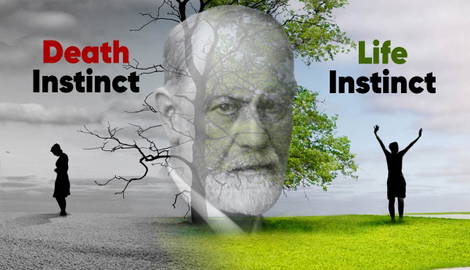

Sigmund Freud’s “death instinct” (German: todestrieb, also translated as “death drive”) enters the picture in his 1920 essay Beyond the Pleasure Principle. Here, Freud complicates his own picture of instinctual motivation in humans, which he previously theorized as being dominated by the “life instinct” or eros. Whereas eros is the drive that we tend to associate with Freud’s thought—this is the drive that concerns sexual desire, and which is central in theorizing the Oedipus complex—the death instinct, or Thanatos, is Freud’s attempt to explain our destructive impulses.
The Life Instinct
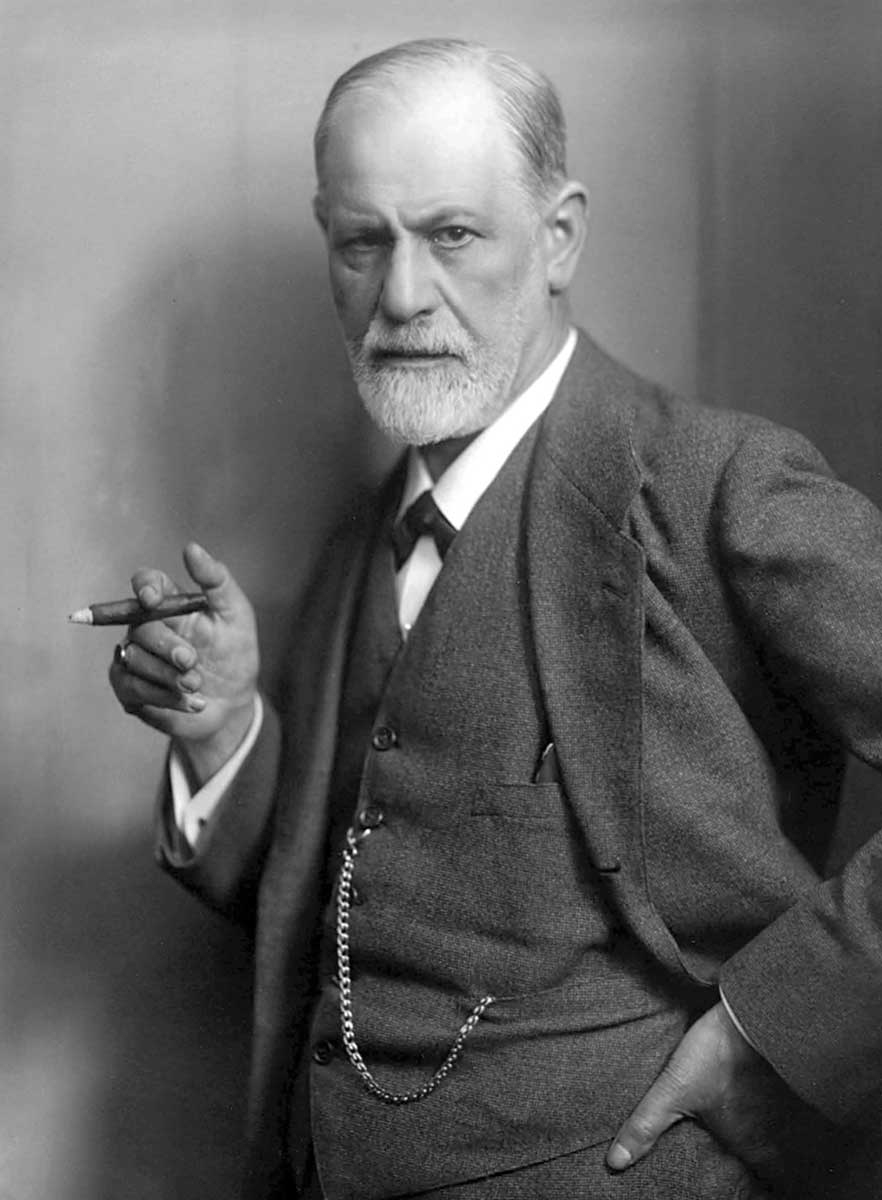
The life instinct in Freud’s work is explicitly theorized for the first time alongside the death instinct in Beyond the Pleasure Principle, late in his development of psychoanalysis. Unlike the death instinct, however, the life instinct has clear—though not perfect—analogues in Freud’s earlier work. In essence, the life instinct consists of the drive to sustain oneself and to sexually reproduce.
Before theorizing the existence of a death instinct, eros had featured in Freud’s work as essentially interchangeable with the “sexual instincts,” and included many of the features later attached to the notion of the death instinct. These features included the urge to harm or destroy others (sadism), to destroy oneself (masochism), and to regress to a state of minimal stimulation reminiscent of the womb (and death).
Crucially, the life instinct is what drives people towards the achievement of pleasure, and the avoidance of pain. Freud, acknowledging the elusiveness of these two phenomena, and wanting to avoid the ramifications and impasses of narrower definitions, writes:
“We have decided to consider pleasure and ‘pain’ in relation to the quantity of excitation present in the psychic life—and not confined in any way—along such lines that ‘pain’ corresponds with an increase and pleasure with a decrease in this quantity.”
Freud, Beyond the Pleasure Principle, 1920
The Death Instinct

The death instinct introduces a second, powerful principle which acts opposite to eros and self-preservation: an instinct that is aggressive and destructive. As Freud explains in Beyond the Pleasure Principle, the introduction of this second instinct complicates the picture he had previously arrived at. This earlier position can be distilled thus: “If the self-preservative instincts are also of a libidinous kind, then perhaps we have no other instincts at all than libidinous ones.” Freud uses the death instinct to explain impulses previously attributed to the “narcissistic libido,” impulses which seem to be oriented towards neither self-preservation nor sexual reproduction.
In particular, Freud is concerned with the explanation of those behaviors which appear to be actively opposed to those instincts we take to be the self-evident motivations behind the activity of all living things. Freud is interested in this structural opposition—between the life instincts and the death instincts—at every level, ranging from the biological to the philosophical.
As Freud explains in the 1920 essay, what he calls the life instinct is that which, in the broadest sense, is responsible for the proliferation of connections between organisms and objects: relations of sexual partnership, attachment to objects, parenthood, social ties, and so on. As Freud puts it: “the Libido of our sexual instincts would coincide with the Eros of poets and philosophers, which holds together all things living.” By contrast, the death instinct drives towards disconnection, isolation, and an inorganic state.
Repetition Compulsions and the Fort/Da Game

In Freud’s earlier works, the sexual instincts were taken to drive all repetition compulsions, most famously described through the fort/da game played by Freud’s grandson. The fort/da game is described in Beyond the Pleasure Principle, where Freud deepens his exploration of repetition compulsions in order to highlight the insufficiency of his understanding of human drives. Freud’s grandson would repeatedly throw an object from his cot, and was only satisfied when his mother returned the object. Freud describes as repetition compulsions those behaviors, whether physical or mental, that seem to seek the re-enactment of some earlier unpleasant or traumatic event.
The problem, for Freud, was that the pleasure principle was unable to accommodate this kind of repetition compulsion. In many cases of repetition compulsion, there existed no apparent pleasure to be gained through repetition, no joyous relief that could plausibly be achieved. If not for the sake of pleasure, Freud asks, then for whose sake are these behaviors repeated?
Freud concludes that the fort/da game cannot be explained solely in terms of the pleasure the child enjoyed upon having his toy returned, since: “the first act, the going away, was played by itself as a game and far more frequently than the whole drama with its joyful conclusion” (Beyond the Pleasure Principle, 1920). There must be some other instinct, separate from those that drive outward-directed sexual activity, that obtains its satisfaction in apparently self-destructive behaviors. This observation is fundamental to the work of later psychoanalysts including Jacques Lacan.
Sadism and Masochism
Sadism, for the earlier Freud, describes a perversion of the sexual instincts: a misdirection of the libido into aggression, rather than an opposed principle, or conflicting instinct. Sadism here is a form of instinctual misunderstanding, such that the subject feels “amorous possession is still one and the same as annihilation of the object.” Freud writes:
“We have long recognised a sadistic component of the sexual instinct: it can, as we know, attain independence, and as a perversion, dominate the whole sexual trend of a person. […] But how is one to derive the sadistic impulse, which aims at the injury of the object, from the life-sustaining Eros! Does not the assumption suggest itself that this sadism is properly a death-instinct […]?”
Freud, Beyond the Pleasure Principle, 1920
If sadism was already secondary for the earlier Freud, it being a misfiring of the constructive sexual instincts, masochism was at another remove still from the primacy of the libido. Treated purely as a “recoil” of sadistic impulses towards the self, masochism was in Freud’s conception a basically dependent phenomenon, albeit one seen frequently in patients suffering from traumatic neuroses. Freud claims that this view was “forced upon” him by clinical observations, but given his new meditations on the origins of sadism, he is ready to even more radically overhaul his conception of masochistic, or self-destructive, impulses.
Freud suggests that what he had previously described as a “recoil” of the aggressive instinct towards the self is in fact the originary form of the death instinct. Since the death instinct is theorized as inherently introspective—in contrast with eros’ connective and outward-facing structure—masochism must surely be its quintessential form: “masochism may also be what I was there concerned to deny, primary.”
Fenichel’s Critique

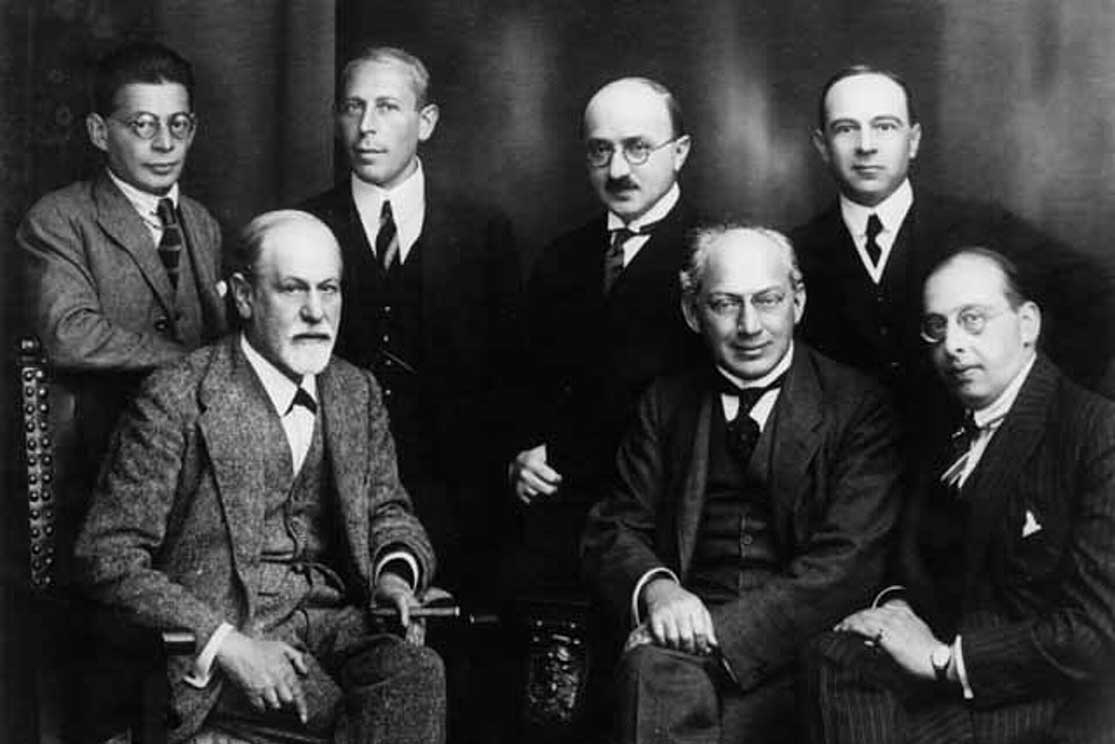
Otto Fenichel, an Austrian psychoanalyst and a student of Freud, produced a thorough critique of the concept of the death instincts, treating its introduction into Freudian theory as a significant misstep. In both his Psychoanalytic Theory of Neurosis (1945) and A Critique of the Death Instinct (1953), Fenichel explains that the death instinct should not be thought of as an independent aggressive drive, but as at most an alternative cathexis for some neutral instinctual energy: that is, energy not predisposed to either libidinal or destructive ends. At most because Fenichel is also reluctant to abandon Freud’s prior conceptualization of the libido as the sole primary drive, one whose manifestations in aggressive or self-destructive behavior are most often “in response to frustrations” of the ordinary libidinal will.
More broadly, Fenichel treats Freud’s death instinct theory as a flattening of psychoanalysis. Whereas in Freud’s earlier model, where the sexual instincts are singular and unified, neurotic and destructive behaviors had to be theorized as a complex interaction between libido, ego, and world. They involve frustration, sublimation, repression, and cathexis. The introduction of the death instinct allowed much of this complexity to be stripped away. In the model of the later Freud, destructive behavior could simply come from the destructive drive, with no intervening processes of libidinal attachment or investment.
This criticism was also relevant to what we might call Fenichel’s political objection to the death instinct. If aggressive behavior is considered to be a product of one of our primary drives, as much a biological fact as our urge to reproduce, then there is little room for the role of repression in the formation of neuroses and self-destructive patterns of behavior. In short, for Fenichel, the ideas of the later Freud eliminated the role of society, and indeed the world at large, in understanding and treating neurotic patients.