
Deleuze and Guattari are daring modern philosophers who question fixed thought systems. Among the most notable of their ideas is the rhizome, which denies any form of linear organization, celebrates multiplicity, and claims that unity is always lacunae. Instead of plain beginnings or derivations with separate independent growths, we now have interwoven thickets. Such kinds of webs spread out and unite in very unforeseen manners. This is a contradiction to the authority. It changes our perspective on structures. It encourages innovation. But what does this term mean—rhizome?
The Origin of the Rhizome: Deleuze and Guattari’s “A Thousand Plateaus”
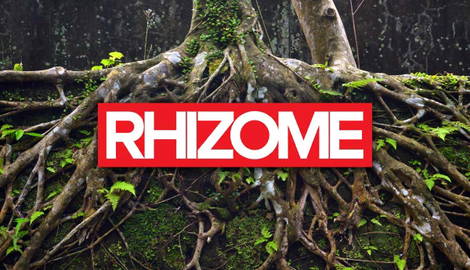
The concept of rhizome was first presented by Deleuze and Guattari in the book A Thousand Plateaus. This term was taken from botany. The rhizome is a kind of root system that extends sideways. It grows in unexpected directions and does not fit into any neat category. That’s what they meant.
In the late 20th century, philosophy underwent many debates on structuralism and post-structuralism. Foucault, among others, had ideas on power and order. Deleuze and Guattari also took part in this discussion. They tried to avoid being tied down by normal ways of thinking, which are found in traditional philosophy, which is characterized by the use of certain hierarchies.
For example, Plato positioned his theory of forms higher than the world people see every day, while Aristotle divided knowledge into different groups, with each group being more general than those below it. These kinds of models draw distinct lines separating one thing from another, thus giving rise to authoritarian systems.
A New Way of Thinking
Deleuze and Guattari criticized this approach. According to them, knowledge is not fixed; it is fluid. They also saw that information does not have a linear point of origin but rather links together like the rhizome, which can be seen as an illustration of this concept.
It follows then that everything can be linked to everything else. There is no one ruling center, and every connection is important because of this lack.
The book A Thousand Plateaus symbolizes their rebellion. They do not agree with the multiplicity of truths. Instead, they promote an evolving philosophy. Just as in a rhizome, new linkages may develop from any point while the old ones change their position again and again. Everything keeps on moving and developing all the time.
By going against the grain with their use of rhizome, Deleuze and Guattari attacked the inflexibility inherent in Occidental logic. They require us to think about different ways in which we can reason. In simple terms, they teach us to look at all options open to us today.
The Rhizome vs. the Tree: A Metaphor for Knowledge and Structure
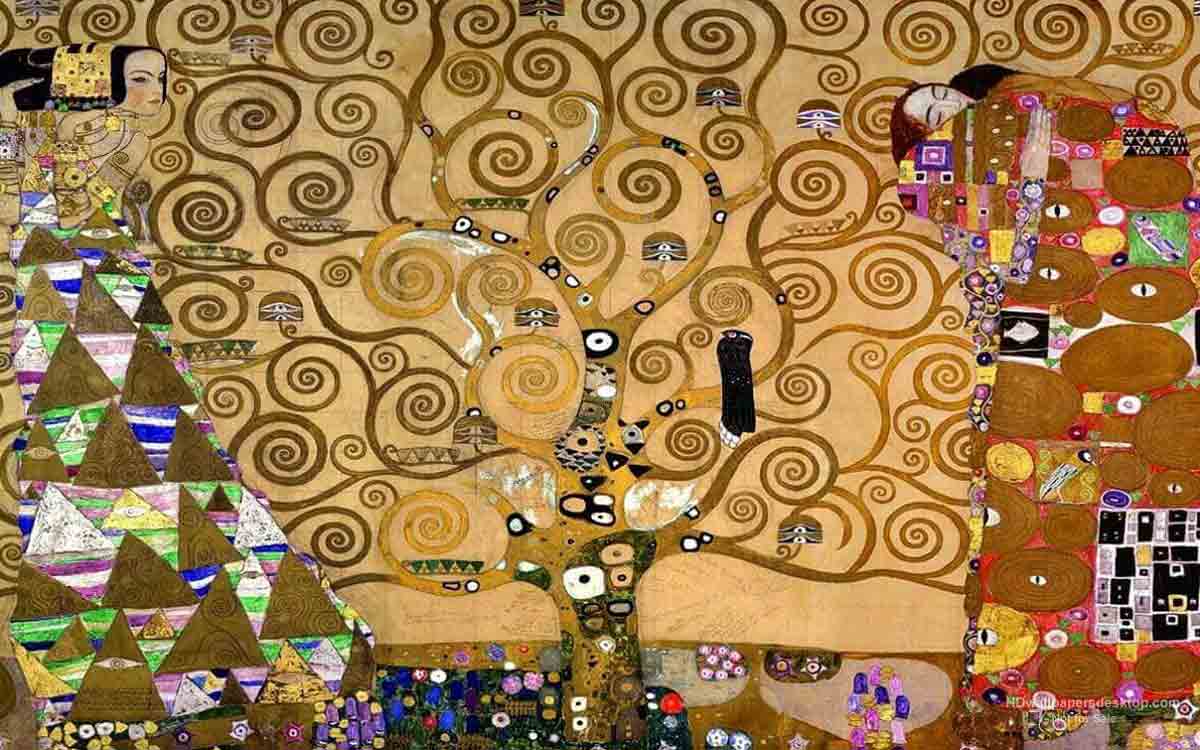
The authors Deleuze and Guattari compare the rhizome and the tree, which are very expressive. To them, the tree is a representation of the conventional type of reasoning that is arborescent. It can be seen as follows: there is one main trunk with branches emerging from it.
The tree can also symbolize a hierarchy, such as Aristotelian classification, in which every step follows logically from previous ones. This system is clear and understandable. In this kind of arrangement, one part or stage naturally brings about the other part or stage.
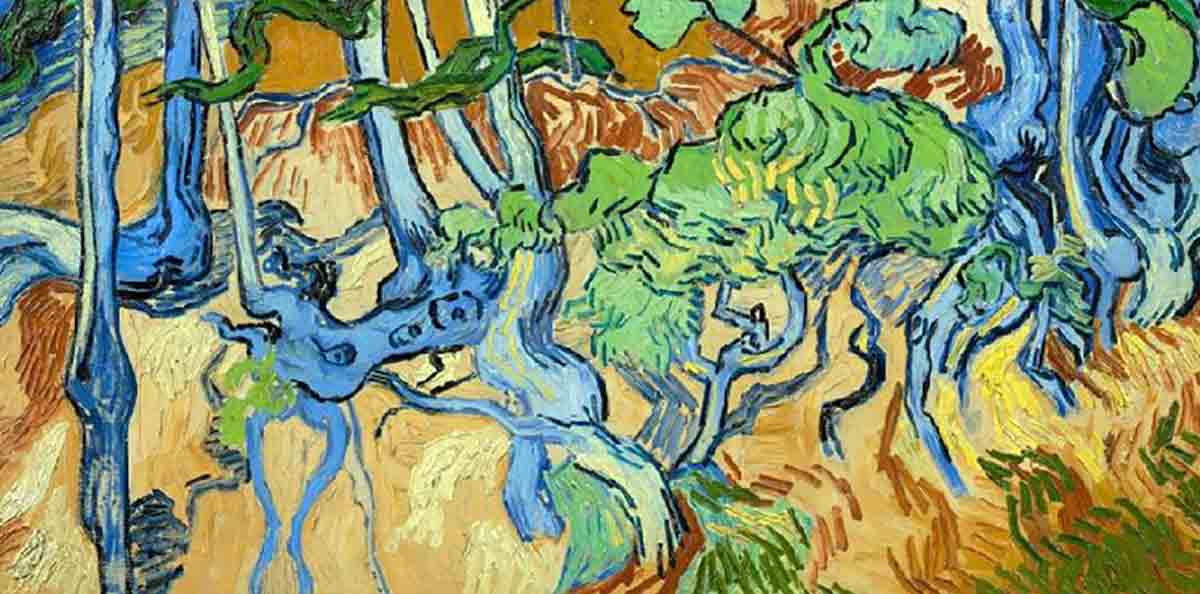
On its part, a rhizome does not resemble this kind of structure. A rhizome grows uncontrollably and irrationally. It propagates sideways, laterally sending off shoots everywhere but without any specific point of origin or culmination—multiple connections across space!
This has nothing to do with linearity or regular arrangement. Rather than being linear, it’s just like what we call a “network.”
The distinction between a tree and a rhizome is very important. A tree is used to represent the view that there is a definite way in which knowledge and society are organized.
In this case, knowledge is believed to originate from one point before spreading outwards, just as in a tree trunk. On its part, the rhizome contradicts this perspective. It promotes variety and complexity. Knowledge is not stagnant; rather, it keeps on growing, joining, and changing itself with other knowledge unexpectedly.
This leads to the conclusion that by adopting rhizomatic thought, Deleuze and Guattari provide cultural and social options. Viewing knowledge as a web helps us understand that not everything makes sense all the time, and that’s fine, too. The rhizome calls for inventiveness and continuous change of mind.
Key Characteristics of the Rhizome: Connection, Heterogeneity, and Atemporality
The rhizome is not only a figure of speech but an important concept that changes our perception of knowledge and life because of some unique features. These characteristics include connection, heterogeneity, and atemporality.
To start with, connection. A rhizome is all about interconnection. Every part links to others. There’s no central point or hierarchy. Think of the internet. It’s decentralized. Information can travel all over, forming links in a chain. Rhizomatic thinking mirrors this—everything is connected, but there’s no single origin or authority.
The next principle is heterogeneity. The rhizome resists homogeneity. It accommodates distinction and variety. A rhizome differs from a tree because a tree has branches that follow one way from the trunk, while the former can go in any direction at all. There is nothing like another shoot. This non-compliance with one personality is very important.
To finish with, atemporality. The rhizome goes against time linearity. It doesn’t follow a straight, chronological path. Events or ideas don’t go in order from past to future, but maybe all over the place at once—this seems clearer.
Such an idea helps us break free from our normal view of chronology so that we can see history, development, and advancement differently than before.
The Rhizome and Social Theory: Disrupting Traditional Power Structures
The rhizome not only disrupts our conventional perception of knowledge but also interferes with the concepts of power and organization. The highest rank usually holds power in a normal setup.
Think about governments or corporations. There is a clear chain of command where leaders make decisions and pass them on to lower-level employees. However, this is not the case with rhizome because it is organized in a manner that does not have one person in control at any point.
This concept can well be applied in sociology. Rhizomatic thinking is resistant to oppressive forms of authority as it contests stable orders. Many times, social movements act just like rhizomes, for instance, feminism and Black Lives Matter.
These are characterized by their resistance against being controlled by one party or included in one story. Such movements are capable of growing and adjusting themselves before linking up with additional causes.
Everywhere in the world today, there are rhizomatic networks. Again, a good example is the internet. Information, ideas, and activism move across easily on various social media platforms that have no central leadership.
There is potential for movement growth even when there is no single leader or organization. Similar is a case of grassroots activism. Through a larger rhizomatic connection, many small local societies join together, and thus, they become influential, thereby bringing about changes in society.
From the rhizome, we learn that power may not emanate mainly from one point, as it was traditionally thought. On the contrary, this kind of power can give rise to unique modes of resistance and organization.
The Rhizome and Art: Aesthetic Implications in Creativity and Expression
Artists are often limit breakers. They experiment with forms and meanings. The rhizome allows them to push the limits even further: it offers a model without a central trunk, without a single point of origin. It thrives on unexpected connections.
This freedom speaks for itself in postmodernism in art and literature. Authors like Jorge Luis Borges played around with labyrinthine stories against all linearity of the plot. There is John Cage, whose musical compositions embraced chance rather than being set in fixed arrangement—a very rhizomatic approach.
Rhizomatic thinking is against strict categorization. It stands for fragmentation, multiplicity, and permanent reinvention, which is probably the reason why so many contemporary artists find this type of thinking so attractive.
They break free from traditional genres: they mix photography with performance and digital art, weaving sound, text, and movement into one piece, and all those can be interconnected with each other very often, surprisingly.
Rhizomatic creativity is also evident in online platforms, whereby you can find some collaborative projects carried out by great minds globally who change and add to the work of others.
The center of such collaborative art cannot be said to belong to any single author. Rather than being authored individually, it is said to be composed through the collaboration of numerous individuals. These networks mirror the decentralized nature of the rhizome.
Art, as we embrace the rhizome, turns into a process that evolves continuously and forever since there is no fixed endpoint. This view goes against the traditional understanding of authorship and originality.
It creates space for new means of creativity. In this perspective, art is better seen as a mesh with endless possibilities than otherwise.
Criticisms and Limitations of the Rhizome Concept
The rhizome is a very interesting and innovative idea, but it also has been critiqued. One such criticism is the tendency of the rhizome to generalize too much. It seems hard to put into practice the concept of unlimited associations because such connections are so abstract that they cannot be pinned down.
Opponents posit that one cannot straightforwardly apply rhizome in day-to-day life affairs, such as studying political systems or managing some organizations, due to inherent complexity.
A number of scholars have raised concerns as to whether rhizome is really non-hierarchical. Although it disobeys normal forms of rule, some see it as simply exchanging one kind of order with another kind.
For instance, even within a network where power is evenly spread out on paper, certain people or factions will still be more influential than others. The rhizome does not completely eliminate problems related to unequal distribution of power.
The rhizome is not clearly understood in academic circles. Due to its non-hierarchical and flowing nature, it becomes a challenge to determine its extent or measure. Determining how a rhizomatic structure actually appears can be very tricky.
Nonetheless, rhizomatic thought continues to be important. This is because it provides new perspectives on issues of knowledge, culture, and socio-political matters that need to be taken into consideration today.
Future development in rhizomatic theory is expected to focus on improving how it is used, with some attention paid to changing this issue, which may have become too theoretical.
So, What Is Rhizome?
Rhizome is a dynamic concept developed by Deleuze and Guattari. It denies the idea of one single trunk or root. It grows laterally, connecting everything at once. Think of it like a web, not a ladder.
In a rhizome, there is no central authority. Power is not forced from top to bottom. Rather, different points link up in surprising ways. This allows for flexibility and room for new ideas. It also invites multiple perspectives.
The rhizome is philosophically opposed to the notion of fixed truth, as it is a philosophy of constant movement and reinvention. No path is privileged; any node can become the center.
Socially, too, the rhizome challenges hierarchy and promotes bottom-up innovation, feeding new forms of activism. Online networks can assume this form, supporting rapid idea travel.
Of course, critics say it can be too broad or even vague. Yet the rhizome remains inspiring. It hints at a world in which things are fluid and interrelated with one another. That is an act of the rhizome: it keeps growing, reaching out, connecting.