
In his collection of aphorisms, The Gay Science, Nietzsche offers us three inter-related ideas that are the key to his philosophy as a whole: the death of God, amor fati, and the eternal recurrence. Here, we will pay particular attention to aphorism #341—Nietzsche’s best known aphorism on eternal recurrence and how it relates to Thus Spoke Zarathustra, which he considered his masterpiece. Using aphorism #341 as our central guide, we can see Nietzsche’s most radical idea—the revaluation of all our values.
The Gay Science
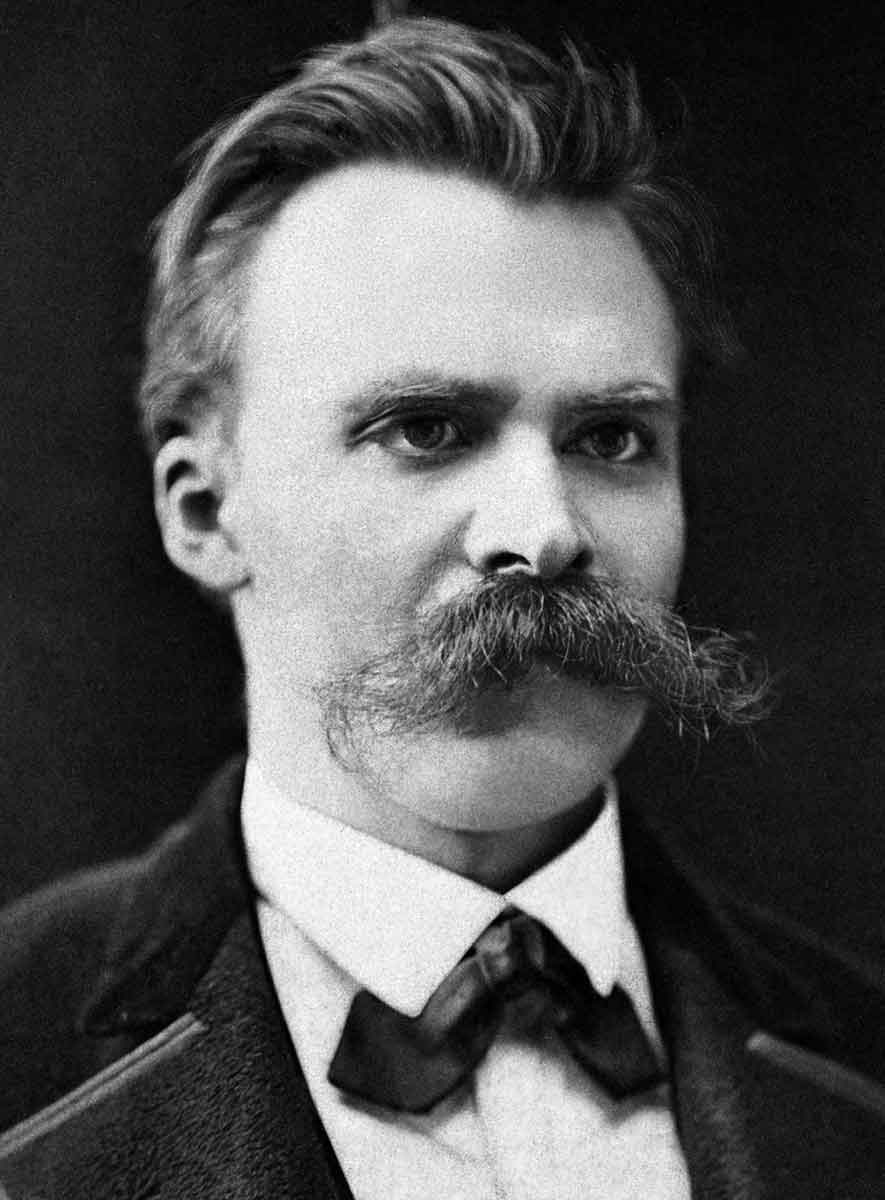
Friedrich Nietzsche (1844-1900) published the first edition of The Gay Science in 1882. It consisted of four sections (or books, as they are sometimes known). A second edition was published five years later in 1887, which included a brand new section of material and songs he had written in a new appendix.
Between the publication of the two editions of The Gay Science, Nietzsche published two other very important works: Thus Spoke Zarathustra (1883-1885) and Beyond Good and Evil (1886). Zarathustra was extremely important to Nietzsche. He felt that this long poem, written in a style reminiscent of the Old Testament, was his greatest achievement. Nietzsche believed that understanding Zarathustra was the key to understanding his entire philosophy.
In German, the title of the work is Die fröhliche Wissenschaft. This is most often translated into English as The Gay Science but is sometimes also rendered as The Joyful Wisdom. ‘Gay’ refers to a sense of happiness or joy, but ‘Science’ is slightly misleading. Nietzsche is not referring to what we today might think of as science but rather a seeking out of knowledge more compatible with the arts. His book is best thought of as a joyful quest for wisdom.
The Gay Science is a book of aphorisms, split into four (and later, into five) sections. An aphorism is a short piece of writing that typically seeks to capture a single idea. The author usually offers this idea as some general truth to consider. However, these ‘truths’ are not expressed as facts to be received and understood but something to be pondered and reflected upon. The reader must tease out the meaning for themselves. Within the pages of The Gay Science, Nietzsche introduces us to three of his most important ideas: amor fati (love of fate), the death of God, and the eternal recurrence.
Gay Science’s Ties to Zarathustra
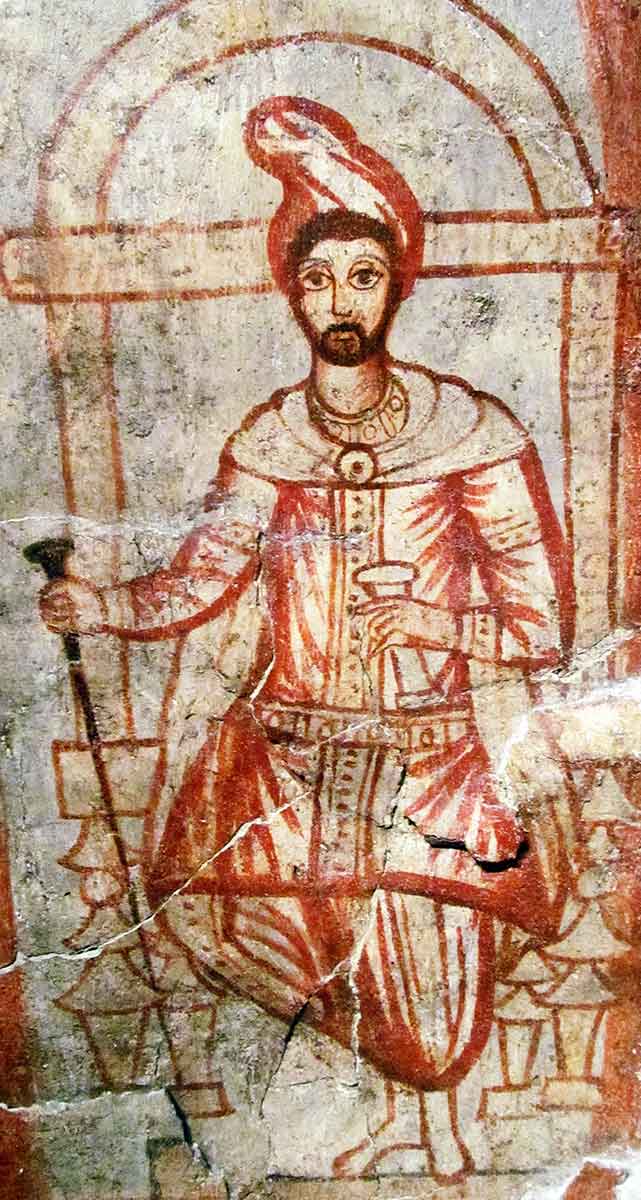
Nietzsche’s best-known aphorism on the eternal recurrence (sometimes referred to as eternal return) is aphorism #341 of The Gay Science.
In the aphorism immediately following, we find Nietzsche’s first mention of Zarathustra. These two aphorisms, 341 and 342, are the last two of book four. This was originally where The Gay Science ended. As we saw above, after the publication of Thus Spoke Zarathustra, Nietzsche felt the need to go back and add a fifth book to The Gay Science. Indeed, after the publication of Zarathustra, Nietzsche said that all his subsequent works were aimed at making it more comprehensible.
Zarathustra is an extremely difficult text to understand. Nietzsche wrote it in a matter of days, and it is presented in the style of a religious text somewhat similar to that of the Old Testament. The book is full of strange imagery and characters. It is a fascinating and very confusing read. One critic at the time commented that he had read the text but failed to understand a single word. Nietzsche replied that if this man had comprehended just six sentences, he would have been raised to a higher level of existence than most people can achieve!
The section of Zarathustra that concerns us is in the third part under the title “On the Vision and the Riddle.” Zarathustra is a hermit, loosely based on Zoroaster, who has spent many years in the company of his two friends, an eagle and a serpent. One day he decides to go down and share his wisdom with the world. After a few adventures, he finds himself recounting the story of a strange life or death experience he had on a mountaintop. It is here that Nietzsche vividly depicts the idea of the eternal recurrence.
“On the Vision and the Riddle”
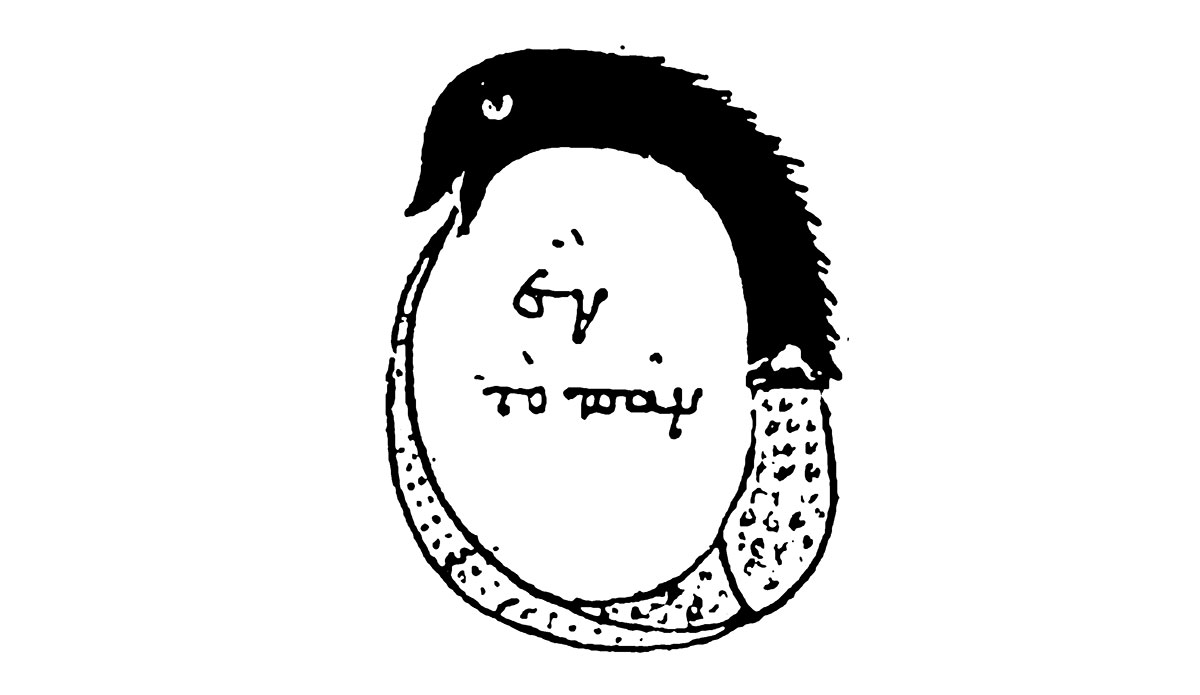
In “On the Vision and the Riddle,” in book III of Thus Spake Zarathustra, the titular hero climbs a mountain when attacked by a bizarre dwarf-like creature resembling a gruesome mole. Zarathustra refers to this creature as “the spirit of heaviness.”
The creature jumps onto Zarathustra’s shoulders and whispers demoralizing thoughts into his ears. Zarathustra describes himself, as he trudges the mountain path under the weight of this creature, as “the loneliest one.” As we shall see, in aphorism #341 of The Gay Science, Nietzsche asks us to imagine ourselves in our “loneliest of loneliness.” Zarathustra realises that he will succumb to his dispiriting words if he does not fight the creature off his shoulders. It is a life-or-death moment and only Zarathustra or the creature can be the victor. What the creature is telling Zarathustra is that life is not worth having. He said that he was at the end of his life and that it was not worth the effort. Everything is pointless.
Zarathustra hurls the creature from his shoulders. As it lies at his feet, Zarathustra cries “Was that life? Well then! One More Time!” With this declaration, Zarathustra joyfully affirms life. Far from being meaningless suffering, life is something Zarathustra would willingly live, over and over again.
At this point in the story, a mysterious gateway appears. Two paths lead off in both directions. At the gateway where Zarathustra and the creature are standing, a sign reads “Moment.” These paths continue eternally. When Zarathustra asks the creature if someone could walk down one path forever, the creature replies that time is a circle. If someone entered the gate at this “moment” and kept on walking, they would eventually end up circling back to the gate.
Aphorism #341: “The Heaviest Weight”
Standing at the gateway, Zarathustra says to the creature:
“And this slow spider that creeps in the moonlight, and this moonlight itself, and I and you in the gateway whispering together, whispering of eternal things—must not all of us have been here before?—And return and run in that other lane, outward, before us, in this long, eerie lane—must we not return eternally?” (Z, III, ‘Vision and Riddle’ 2)
As we turn now to aphorism #341, notice the similar imagery:
“What if a demon crept after thee into thy loneliest loneliness some day or night, and said to thee: ‘This life, as thou livest it at present, and hast lived it, thou must live it once more, and also innumerable times… and all in the same series and sequence—and similarly this spider and this moonlight among the trees, and similarly this moment, and I myself…’ Wouldst thou not throw thyself down and gnash thy teeth, and curse the demon that so spake? Or hast thou once experienced a tremendous moment in which thou wouldst answer him: ‘Thou art a God, and never did I hear anything so divine!’” (Nietzsche, GS 341)
The demon is asking: would we be devastated by this news or overcome with joy? A very important detail, often missed in the commentaries, is that the demon is most interested in knowing “how well disposed would you have to become to yourself to long for nothing more fervently than for this ultimate confirmation and seal?”
There are many ideas to unpack here. As we do, we will see that Nietzsche’s idea of the eternal recurrence is intimately related to two other ideas found in The Gay Science: the death of God and amor fati.
Nietzsche’s Demon
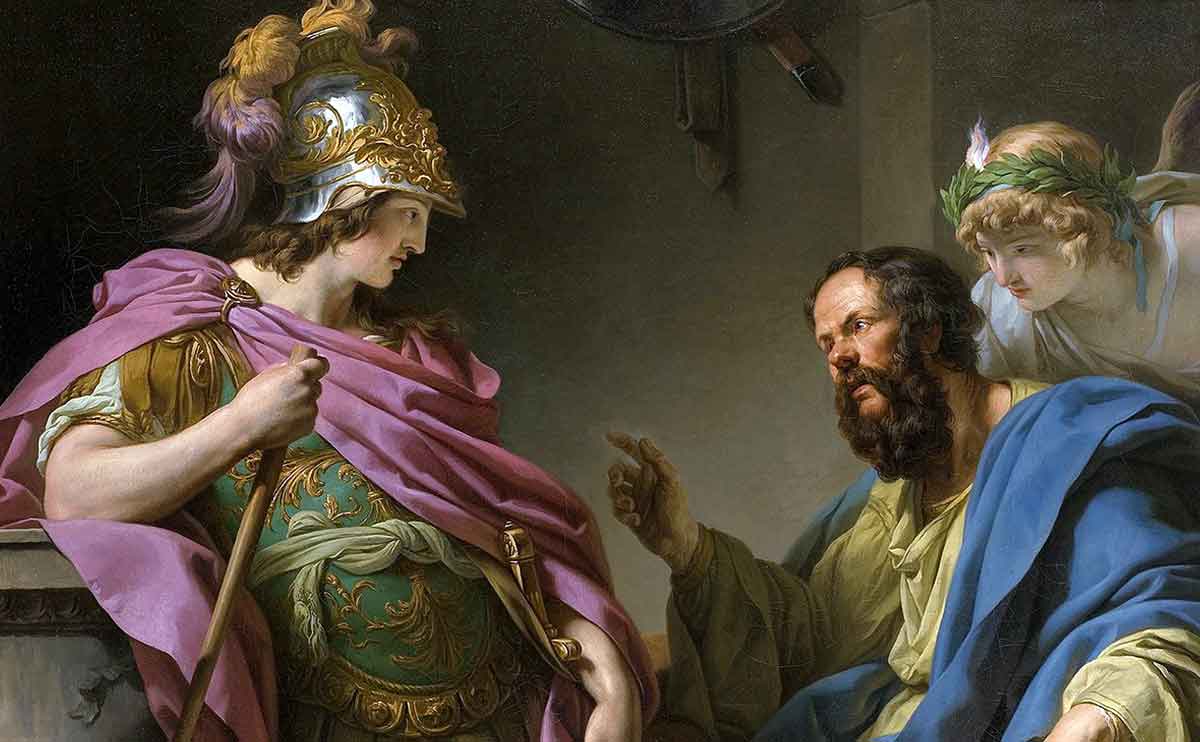
We should not think of Nietzsche’s demon as some monstrous creature, similar to that experienced by Zarathustra. It is not supposed to be an evil entity but rather something closer to the daimon that supposedly guided Socrates. Ancient Greek daimons were intermediaries between human beings and the gods. Their role was to interpret and transport information from the latter to the former. Seen this way, the “demon” that Nietzsche refers to in aphorism #341 is a messenger with supernatural knowledge. This is similar to an angel bringing word from God. This idea will become key to understanding the aphorism. For now, we can understand Nietzsche’s use of the demon imagery as a way of saying “suppose you found out for certain, that…”
Remember, Nietzsche is interested in our reaction to the Demon’s revelation. He wants to know if we would be devastated or overcome with joy at the idea of the eternal recurrence. With his use of a daimon delivering the news, Nietzsche takes away the option of responding with disbelief. That is, we must imagine ourselves finding out for certain that everything in the universe recurs eternally.
Although it is easy enough to understand why Nietzsche would want his audience, for the sake of the aphorism, to accept that eternal recurrence is a fact of the universe, it does seem odd that he only offers two choices regarding our response. Someone might react very badly to the news and another person might be overcome with joy, but is there not a third possibility? Would there not be some people who simply do not care all that much? Indeed, many commentators have wondered why Nietzsche would not have considered this the most common reaction to the demon’s revelation.
Possible Responses to Nietzsche’s Demon
It is a puzzle, given what Nietzsche’s demon has to say about eternal recurrence and why anyone would react in the ways described in the aphorism. However, aphorisms are supposed to be puzzling! Many commentators have pointed out what seems obvious: it would not matter if everything repeated exactly the same way. This is because we would be entirely unaware of it happening. Indeed, everything we did today and yesterday, and will do tomorrow, and on all the days of our lives might have already happened an infinite number of times. And we would never know.
The reason why this would be the case is simple. Currently, we have no memory of everything repeating in life. This means that if life repeats exactly the same way each time, we cannot remember the previous go-around. If we do, the time we remember will be different from when we do not. In addition, there is nothing useful we can do with the news of eternal recurrence. Why? Because of everything we could possibly choose to do, we have already done it infinite times and will do it again for all time.
One philosopher has asked us to imagine the demon telling us that there are infinite parallel universes, all identical to this one. This means that there exist unlimited versions of ourselves, all identical. If we discovered this was actually the case, would we really care all that much? There’s nothing we can do with the information. It is hard to see how this scenario is significantly different in impact from the idea of eternal recurrence.
This approach has two problems stemming from a failure to consider the religious aspect of Nietzsche’s aphorism.
Christian Responses to Nietzsche’s Demon
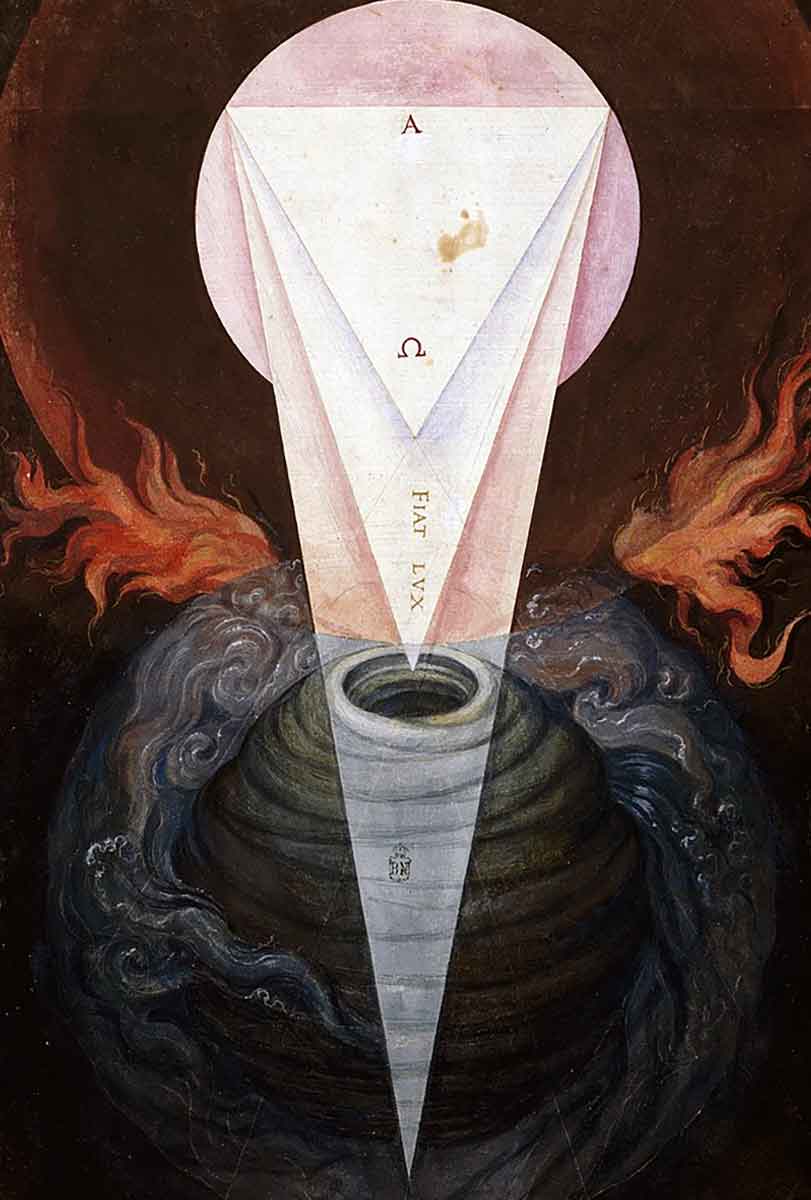
For Christians time is linear: there is a beginning and an end. In Genesis 1:1 we read: “In the beginning God created the heavens and the Earth.” In the last book of the Bible, we read that a time will come when there will be a new heaven and earth [Revelation 21:1]. This idea is completely incompatible with the idea of eternal recurrence. Further, the fundamental belief for Christians, the kerygma, or proclamation of the good news of Jesus’s life, death and resurrection, rests on a sequence of events unfolding on a single and one-time only sequence of events. If we were to wonder who would be dismayed by Nietzsche’s demon telling them that time repeats eternally, the answer would be Christians.
For them, a significant consequence of the demon’s revelation is that their faith is undermined to destruction. In aphorism #341, Nietzsche refers to the “gnashing of teeth” in response to the demon. Teeth gnashing occurs eleven times in the Bible. Each time, it is either a response to a challenge to or from the kerygma. When Nietzsche asks if you would gnash your teeth and curse the demon, he is asking you to imagine the devastating loss of your religious belief.
The key to unravelling the mysteries of aphorism #341 comes in the final part. Nietzsche asks how well disposed towards ourselves would we have to be to “long for nothing more fervently” than the demon to be correct. We can understand why a Christian would fervently long for time to be linear and for God to exist and his promises to be true. But why would someone fervently long for time to be otherwise, and what does this have to do with being well disposed to yourself?
The Death of God and Amor Fati
The Christian faith rests on the concept of time with a beginning and end. Nietzsche’s emphasis here is not on the destruction of a religion but something closer to the foundation of a new one. His idea of eternal recurrence, the joyous news spread by a divine being, is a kind of creation myth for a new set of ideas.
For Nietzsche, all mythology is an attempt to overcome the wisdom of Silenus. Silenus was a companion to Dionysus and an intermediary between humans and the gods. His terrible wisdom is that what is best for humans is to have never been born with the second best thing being to die as soon as possible. Nietzsche’s demon offers (to some) a new wisdom—a joyous wisdom (or ‘Gay Science’).
In aphorism #125, Nietzsche introduces the idea of the death of God. Here a madman proclaims to atheists that because they have ‘killed God’ all meaning in the universe is lost. His awe-inspiring news is that it is up to atheists to create a new meaning; one that in generations to come will see them worshiped by their descendants as gods. Unfortunately, the atheists fail to appreciate the task ahead of them. Nietzsche’s point here is that atheists believe they have ‘killed belief in God’ but they persist in seeing the world through the lens of Christianity. They are unaware that new ideas must replace the old.
For Nietzsche, the burden of revaluing our values should be met with joy. But most of us are simply not up to the task. Returning to aphorism #341, only those who are overjoyed at the demon’s news and wishing as fervently for it to be true as Christians who wish for the opposite can seize this opportunity.
What Is Amor Fati?
A question we must now ask ourselves concerns the relationship between longing for eternal recurrence and how well-disposed we would have to be towards ourselves to do so. Remember, Nietzsche ends aphorism #341 by asking, “how well disposed would you have to become to yourself to long for nothing more fervently than for this ultimate confirmation and seal?”
Nietzsche’s reference to the confirmation and seal can be understood as a reference to Ephesians 1:13, which states that God approves human beings and justifies their faith. Nietzsche’s eternal recurrence promises a different, but no less mysterious, approval and justification for believers’ lives.
Being “well disposed” to yourself means being okay with everything in your life—good and bad—happening an infinite number of times. To fervently long for this, you must not only approve of absolutely everything in your life but love it too. Of course, this includes not only terrible things you have experienced—and have done yourself—but all the terrible things that have ever happened. In other words, you must love your fate. Something Nietzsche calls amor fati.
In aphorism #276, Nietzsche writes: “I want to learn more and more how to see what is necessary in things as what is beautiful in them – thus I will be one of those who makes things beautiful. Amor fati: let that be my love from now on!”
Having now seen the link between GS 124 (Death of God) and GS 276 (amor fati) we can appreciate how aphorism #341 is not just a call to action but Nietzsche’s appeal for a radical new way of life.