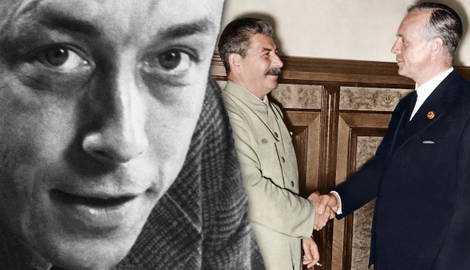

Up until the publication of The Rebel in 1951, Albert Camus was firmly established as a member of the French left-wing intelligentsia. However, he was not a member of the Communist Party at a time when most people on the Left believed this to be the only effective means of left-wing activism. Camus refused to ignore the oppression and purges taking place in the USSR. In this article, we look at how Camus’ philosophy of the absurd influenced his beliefs that led to his falling out with the Left.
Was Camus a Communist?
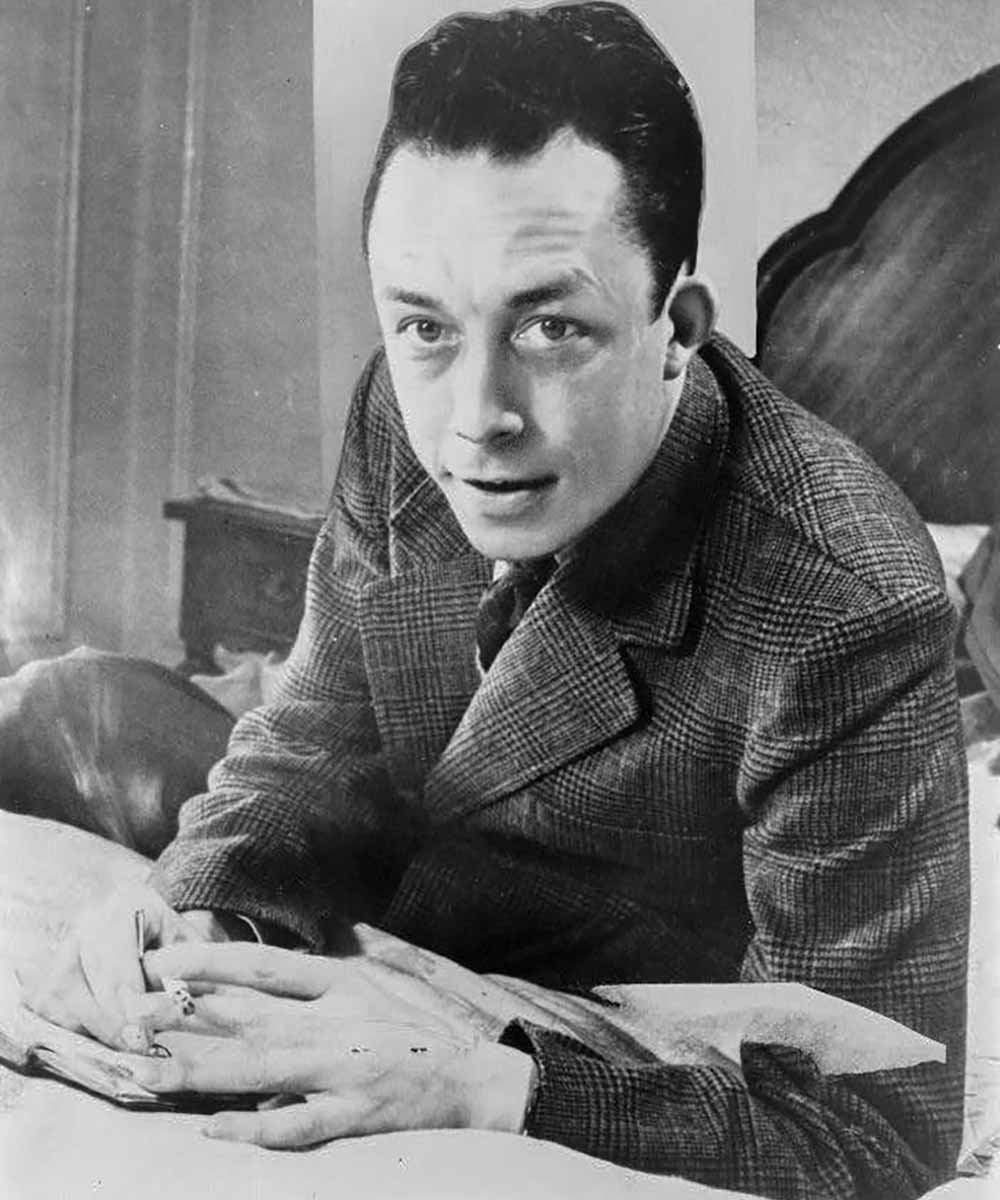
Albert Camus joined the Communist Party of Algeria in 1935, when he was twenty-one. He had friends who were already members of the party, but his decision to sign up was heavily influenced by his mentor, Jean Grenier.
Grenier was a French philosopher and writer who taught philosophy at the University of Algiers, where Camus was a student. Camus’ teacher believed that if his student was to pursue philosophy seriously, then he must also pursue politics. The Algerian Communist Party was seeking youth leaders, and Grenier believed this would be a good opportunity for Camus.
Camus became a Communist activist and leader, delivering several speeches to large audiences. Some of what he spoke about is known because undercover police agents took notes on the events.
Camus was not a Marxist; indeed, he’d read very little Marx (whose books were not easily found in Algiers). His speeches were mostly concerned with combating fascism and avoiding war.
Fascism was spreading throughout Europe in the 1930s and becoming a major threat to democracy and freedom. For the young Camus, the fascists were representative of the worst elements of capitalism and a byproduct of the bourgeois system. His position on war was that it should be avoided, as it only served the interests of the capitalists, pitting workers against workers.
A major concern of Camus as a young Communist was the unequal treatment of the Algerian Arab population. Much of the political activity carried out by Camus and his comrades sought equality for the Arabs.
Camus was never really convinced by Communism, which he saw as ultimately flawed, but for a while he considered the party the best way to get things done politically and secure freedom. He was soon to be disillusioned.
Camus Kicked Out of the Communist Party of Algeria
Camus was expelled by the Communist Party of Algeria in 1937. It was shortly before the publication of his first collection of essays, The Wrong Side and the Right Side, which he dedicated to Jean Grenier. The reason for his expulsion was Camus’ continued support for the Algerian People’s Party.
As we saw above, one of Camus’ major concerns was the struggle for equal rights for the Arab population in Algeria. This was, for a time, in accordance with the Communist Party view on the matter. However, things changed after Stalin decreed that a united front against fascism was more important.
The French government was opposed to Hitler’s Germany, and Stalin did not want anything to hinder the French. This meant that the pro-Arab activism in Algiers carried out by Camus and his comrades had to stop. To be pro-Arab in Algeria, then still a French colony, was seen to be anti-France. However, Camus refused to stop.
Because of this, he was branded a traitor and a Trotskyist by members of the Communist Party. Several of Camus’ friends quietly handed in their membership cards and left the party voluntarily. Camus waited to be thrown out. Afterward, he claimed not to feel bitter as he had done what he thought to be right. But the incident clearly sowed the seeds of dissent against the Communist Party in Camus’ mind.
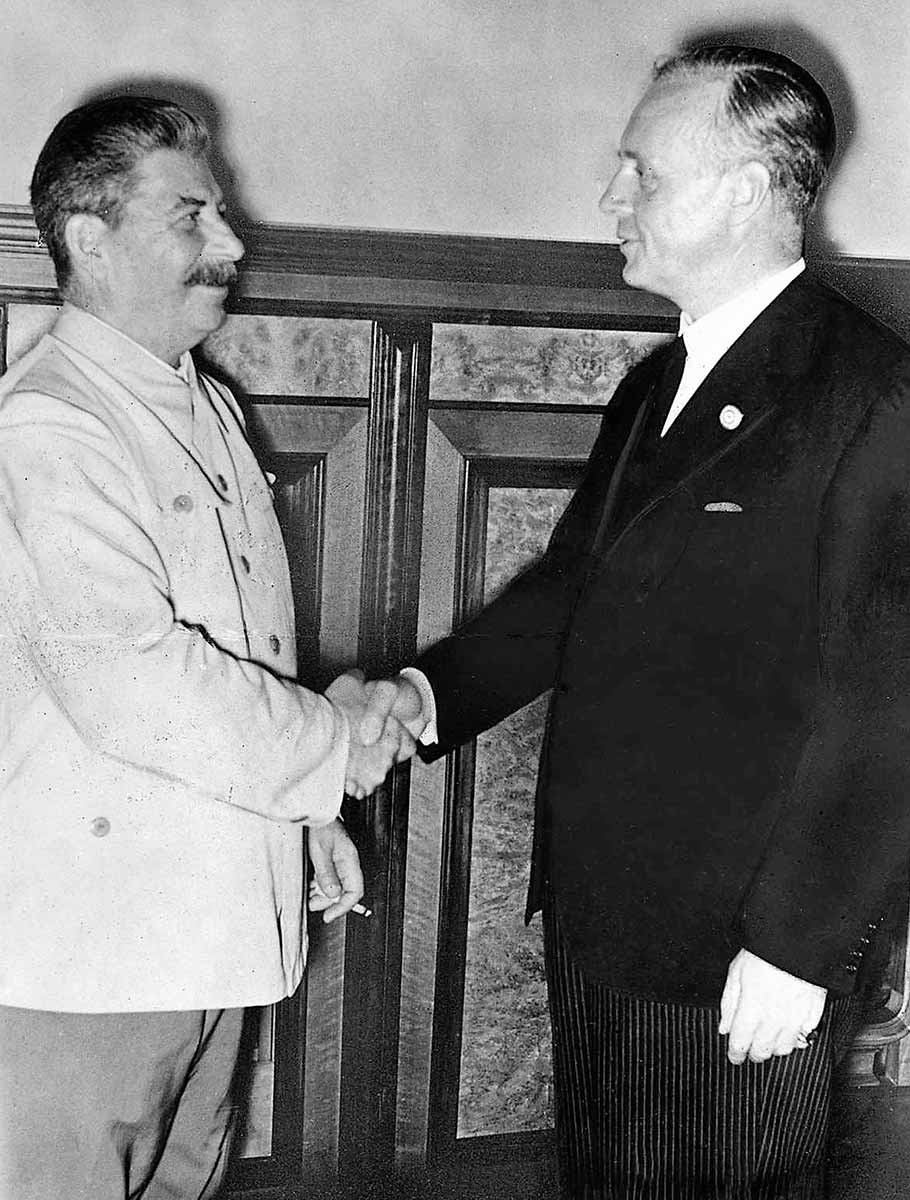
Later, in 1939, the Soviet Union signed a non-aggression pact with Nazi Germany. For Camus, this was a huge betrayal. Fighting fascism was for him one of the main reasons for becoming a communist.
Camus’ disillusionment would only grow as news of Communist oppression began to become a major concern for the Left.
Communism Versus Capitalism: Pick a Side
By 1940, the world was at war for a second time, and Camus was living in Paris, working as a layout editor for the Paris-Soir newspaper. He had left Algeria after the leftist newspaper he worked for, the Alger républicain, was shut down.
Following the German invasion, he left Paris for Lyon, where he married Francine Faure. The two of them moved back to Algeria and settled in Oran for a while. At this time, Camus was working on his “absurd cycle” that included his novel The Stranger and essay The Myth of Sisyphus.
In 1943, Camus, now known in Paris for his writing, relocated to the French capital and joined the Resistance. Here he would meet Jean-Paul Sartre, Simone de Beauvoir and other left-wing intellectuals and become part of their circle.
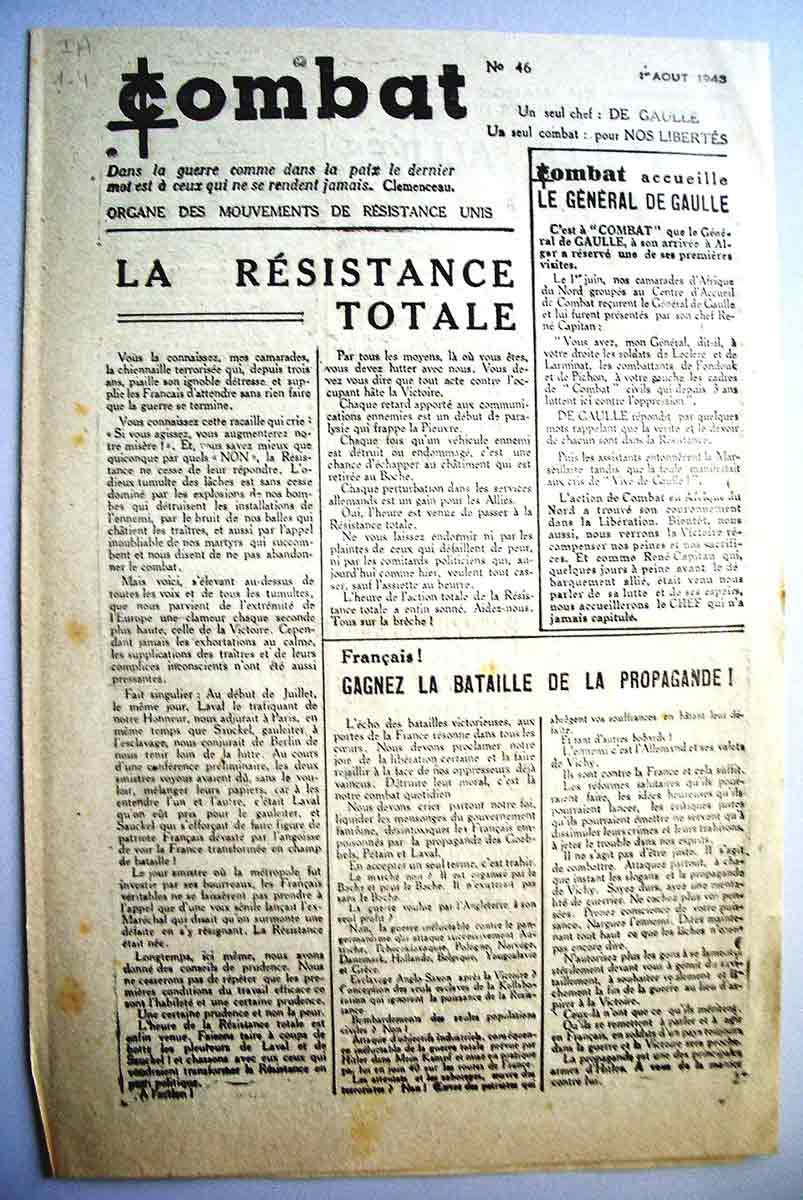
As part of his Resistance work, Camus was a journalist and editor for the underground newspaper Combat. After the war, the newspaper could be published openly, and Camus remained on as editor, writing most of the daily editorials.
At the time in France, the Left typically viewed the world as divided into two forces: capitalism, personified by the United States, and communism, personified by the Soviet Union and the Communist Party. For many, it seemed like a simple either-or situation, and one had to pick a side. And, for them, if you were left-wing, you had to choose the USSR.
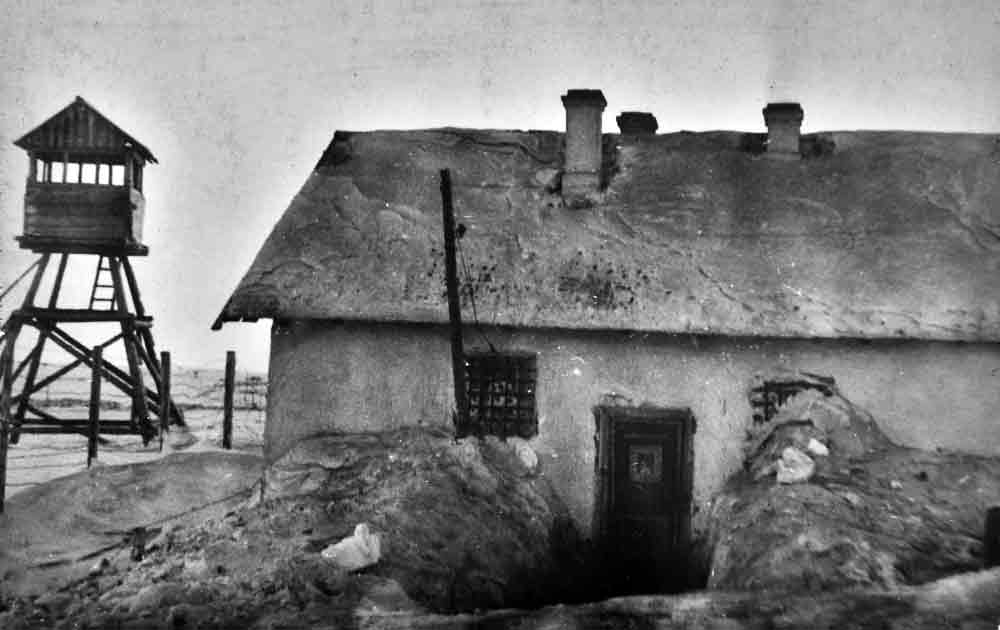
A big problem, however, came when news of Soviet oppression of intellectuals and the horrific gulag system of forced-labor camps became widely known. Was it possible to be on the Left but against the Communist Party?
A Possible Third Way?
The Second World War had taken a devastating toll on Europe, and France found herself in severe financial difficulties. Both the United States and the USSR seemed willing to assist in restoring order and security. The question was what this would look like.
The French people were divided about what they were actually looking for: a return to how things used to be before the devastation of the war, or something different?
A key idea during the Occupation had been liberation. There were many, particularly those on the Left, who saw liberation not just as freedom from fascism but as an ongoing process of securing freedom. For them, this was freedom from capitalist forces that they saw as having worked hand-in-glove with the fascists. Albert Camus was someone who definitely considered liberation as an ongoing project.
Lots of people on the Left, as well as others from different political backgrounds, were suspicious of American involvement in European and French affairs. They saw it as some kind of backdoor attempt to Americanize or even colonize post-war Europe. In the minds of the people, this was often reduced to a choice between the USSR and Communism, or the United States and capitalism.
However, some thinkers, including Camus – and, for a short while, Sartre – believed there could be a non-Communist Left. The problem with this position was that, for many on the Left, to be non-Communist was considered the same thing as being anti-Communist (another way of saying pro-capitalist, even fascist). Accordingly, proposals for a third-way alternative to Soviet Communism and American capitalism were most often met with suspicion.
Camus and Sartre
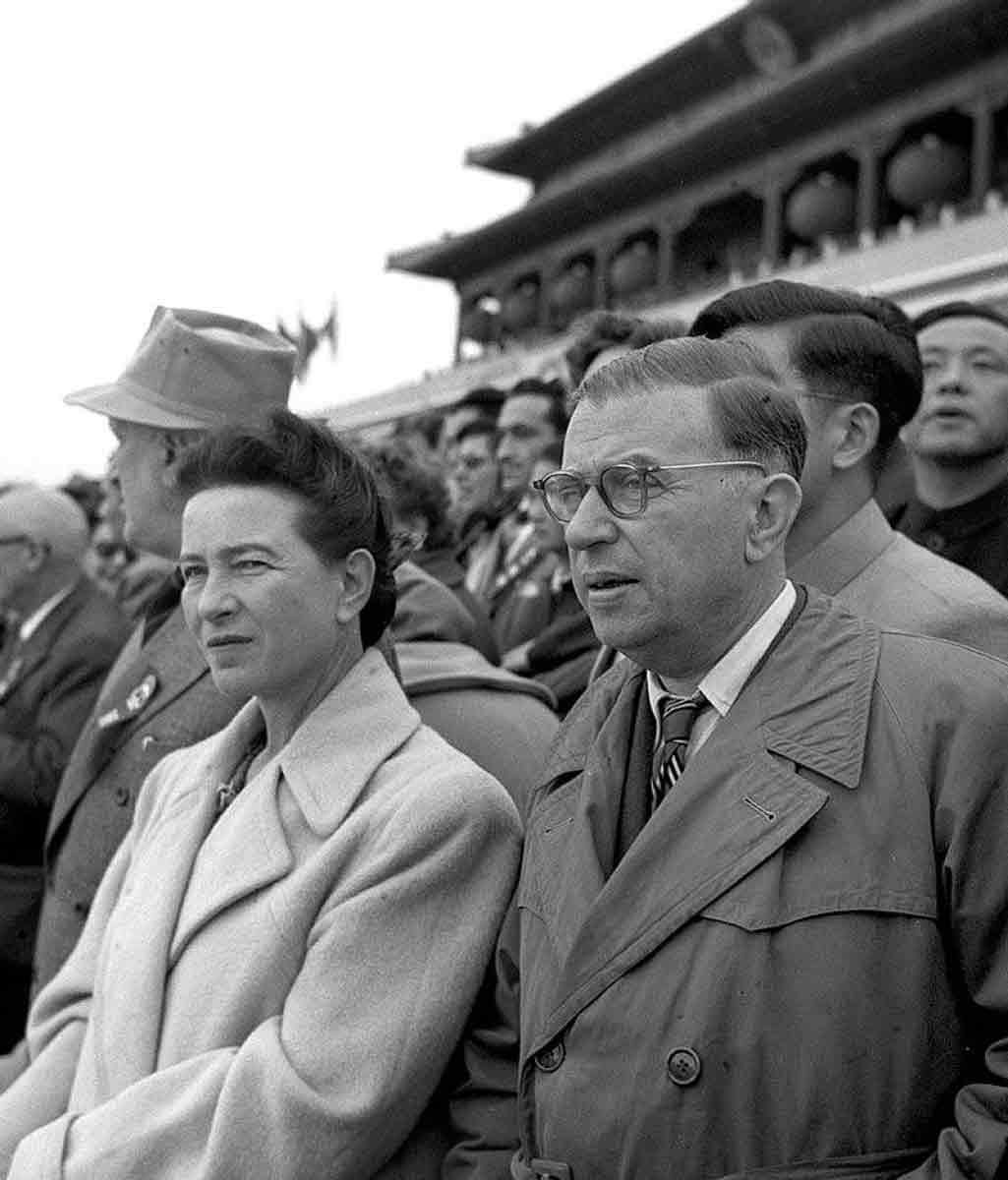
We have already mentioned Jean-Paul Sartre, a left-wing philosopher with whom Camus was once good friends. When people think about Camus’ falling out with the Left, it is often seen as part and parcel of his infamous falling out with Sartre.
There is plenty of common ground between Camus and Sartre, although a lot of it is superficial. Both men were part of the left-wing Parisian literary scene. However, neither of them was a member of the Communist Party. Both had an interest in politics and philosophy, as well as in the absurd and the potential meaninglessness of life. Both sought to express themselves not only through essays but also with plays and novels. Indeed, some of their works can be – and often are – taken as responses to one another.
For example, we can compare Camus’ novel of the absurd, The Stranger (1942), with Sartre’s absurdist novel, Nausea (1938). It is also philosophically interesting to compare the approach to political violence in Sartre’s play Dirty Hands (1948) and Camus’ play Just Assassins (1949).
However, there are major differences between the two philosophers once we scratch the surface.
It is true that at the time neither Camus nor Sartre was a member of the Communist Party. But whereas Camus once was, he deeply opposed the party when he knew Sartre. Sartre, on the other hand, was never a member but was publicly very supportive of the party (despite the Communist Party frequently being very critical of him).
How the Concept of the Absurd Relates to Communism
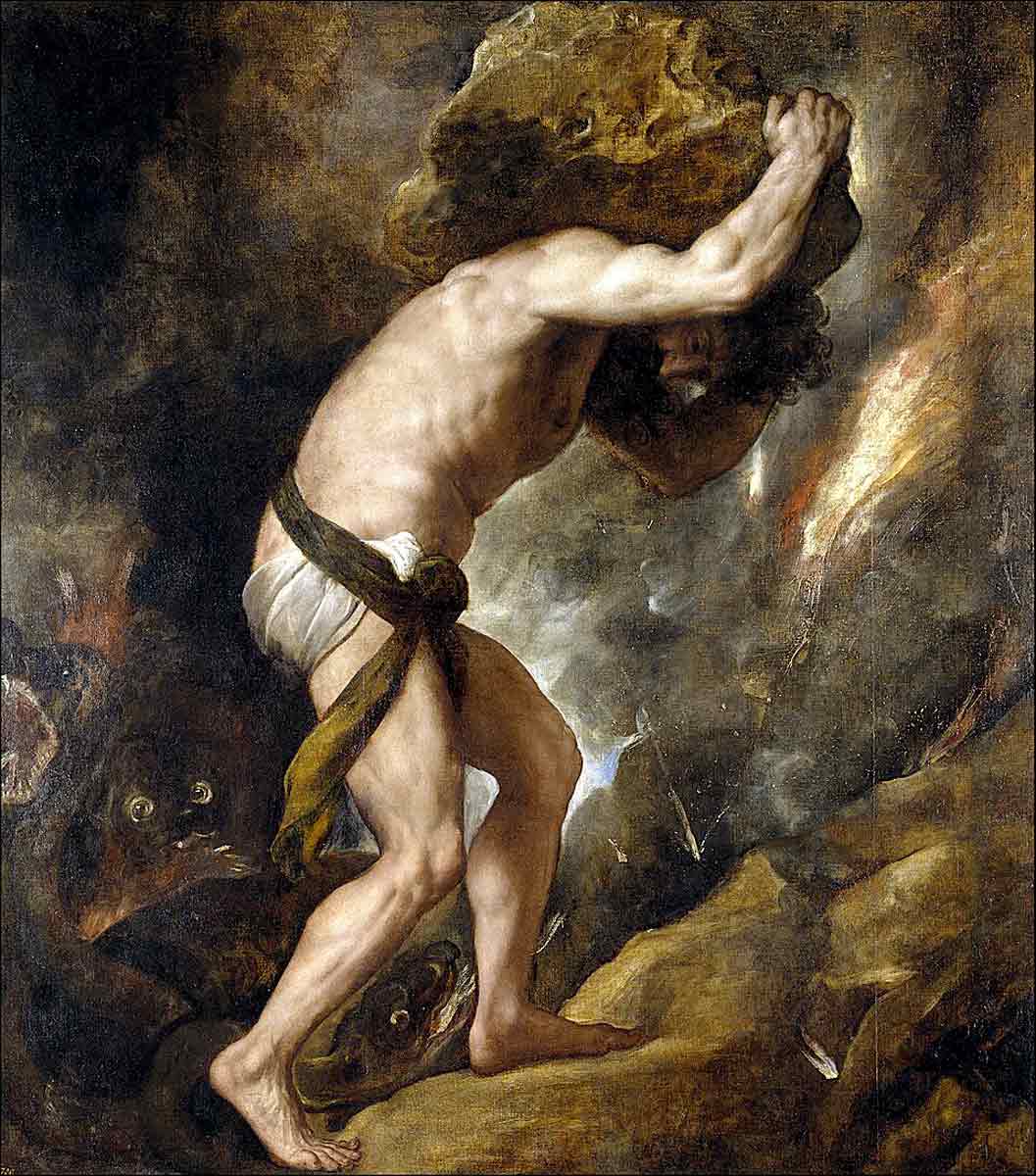
Both Camus and Sartre were interested in the idea of the absurd. However, they have different conceptions of what the absurd meant. To make a complicated philosophical problem simple for this article, we can understand their views on the subject in the following ways.
Camus believed that getting to the bottom of the absurd, truly understanding it and any truths it might reveal about the human condition, was of vital importance and perhaps the primary task of human beings.
Sartre, on the other hand, believed that while the absurd was part of life, it was something we ought to get over and live in spite of.
We can already see what we might consider a problem caused by the absurd in Camus’ and Sartre’s political positions. If everything is meaningless, then politics must be meaningless. If this is so, why advocate for any political position?
Capitalism, Communism, or even a third way – are they not all equally meaningless in an absurd world?
Sartre and the Search for Efficacy
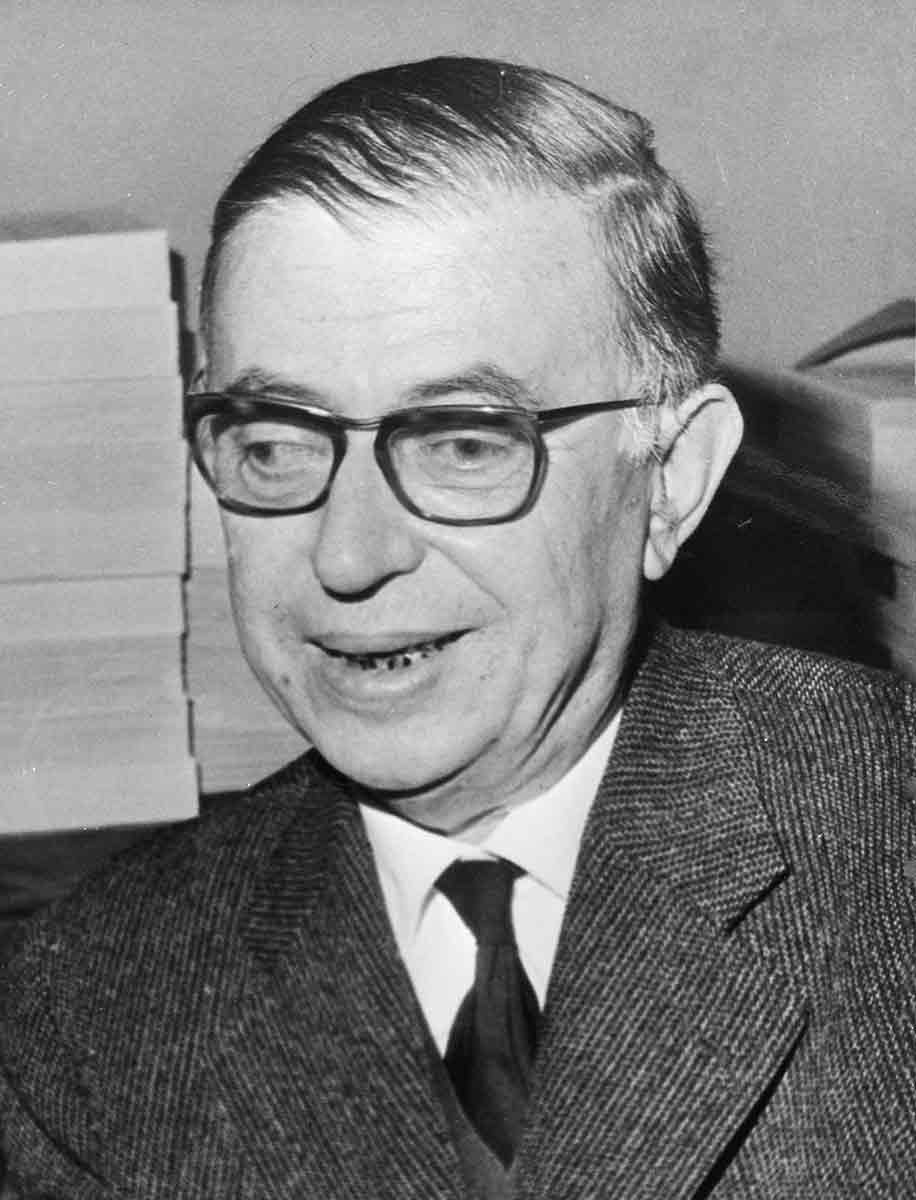
At the time of Camus and Sartre’s falling out, left-wing intellectuals were well aware of Soviet oppression. They knew about the suppression of free thought in the Soviet Union, as well as the gulags and political executions. None held any illusions about how they, as public thinkers, would be treated if the Communists came to power in France. However, they considered the Communist Party the only effective force on the Left.
Camus refused to accept that murder could ever be considered morally justified. Note that Camus is not objecting to taking a life no matter the reason. He would not condemn, for example, a soldier killing another soldier in battle or a Resistance sniper taking out a Gestapo officer.
What he vehemently rejected was any attempt to justify sending innocent people to be worked to death in labor camps or executing them to make a political point. The idea that Soviet repression ought to be tacitly accepted by the French Left, with no heed paid to it, was revolting to Camus (hence the title of his essay The Rebel, in French L’Homme révolté).
While Camus argued that treating people as means to an end was always wrong, thinkers like Sartre disagreed. Some argued that if oppression was necessary in the fight against capitalism, then it was justified if it led to victory.
Others, while deeply opposed to oppression, believed paying no heed to injustice in the short term was necessary to achieve long-term goals. Real politics, they all argued, involves real sacrifice, and to be effective activists they must be prepared to get their hands dirty (hence the title of Sartre’s play).
Camus’ Definitive Split With the Left
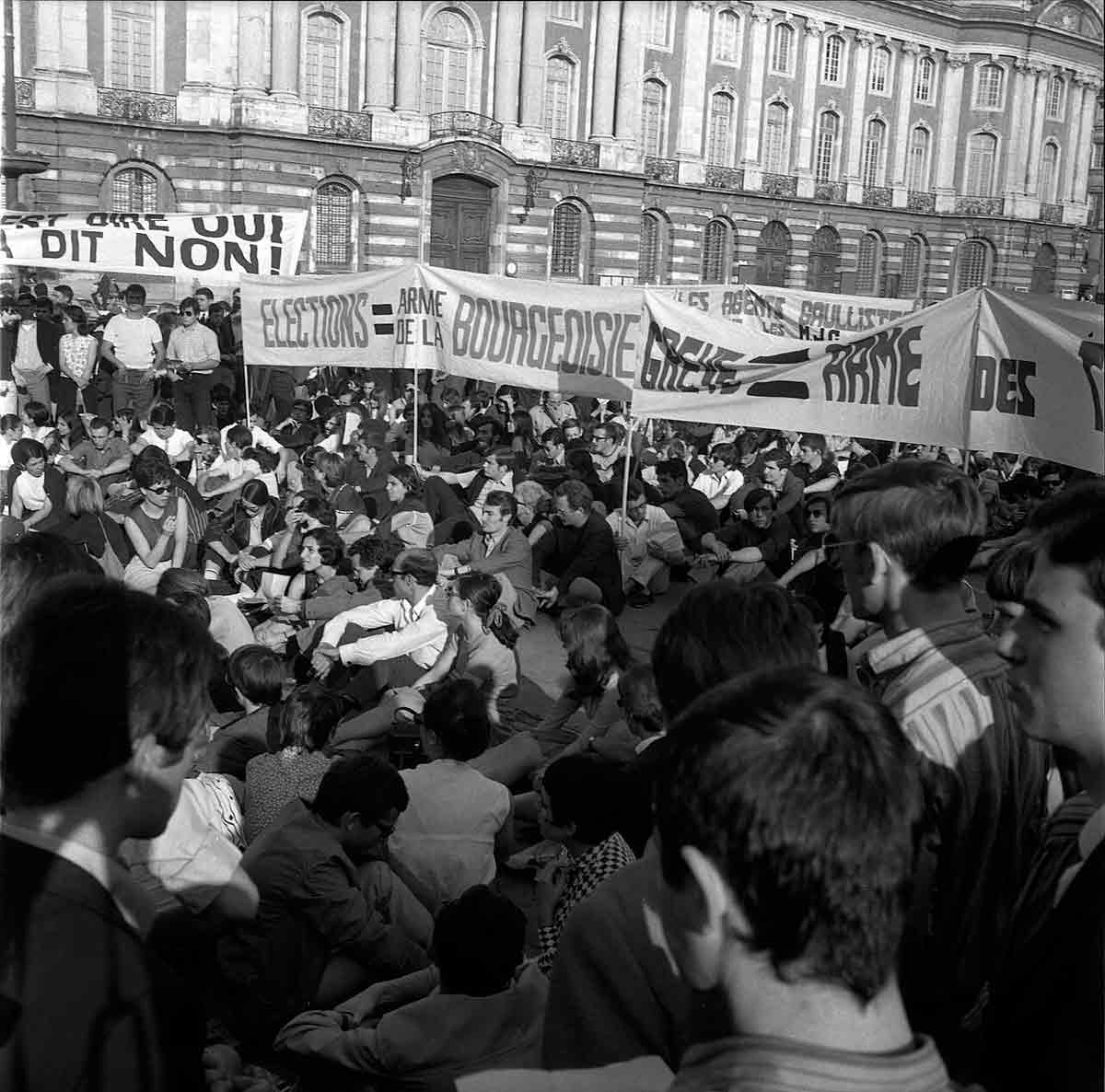
It was well known that Camus was not a Communist. But he was considered a fellow traveler on the Left. That he sought a third way that was neither capitalist nor Communist was never a secret. For those who read his philosophy, it was also clear that his conception of the absurd and the human condition differed markedly from that of Sartre.
Camus and Sartre had very different ideas of rebellion. For Sartre, rebellion was simply the activity of rebels. For him, a rebel practices revolutionary justice in which a future revolution can justify all actions.
For Camus, rebellion was constant lucid awareness of the absurd. A rebel, therefore, is a person who refuses to be tempted by any political discourse that denies or rejects the idea of universal human dignity revealed by the absurd.
In 1951, Camus published The Rebel, laying out his political position on rebellion. It was taken (unfairly) by almost everyone as an explicit rejection of the Left. Sartre tried to ignore it, but Camus insisted upon a review. He expected the book to ruffle some feathers but was unprepared for the outrage and fallout. Camus never got over it.
From his early twenties in the 1930s to the publication of The Rebel, he had grown further and further away from Communism but always considered himself left-wing.
This book and its reception revealed and made clear Camus’ definitive split with the Left.