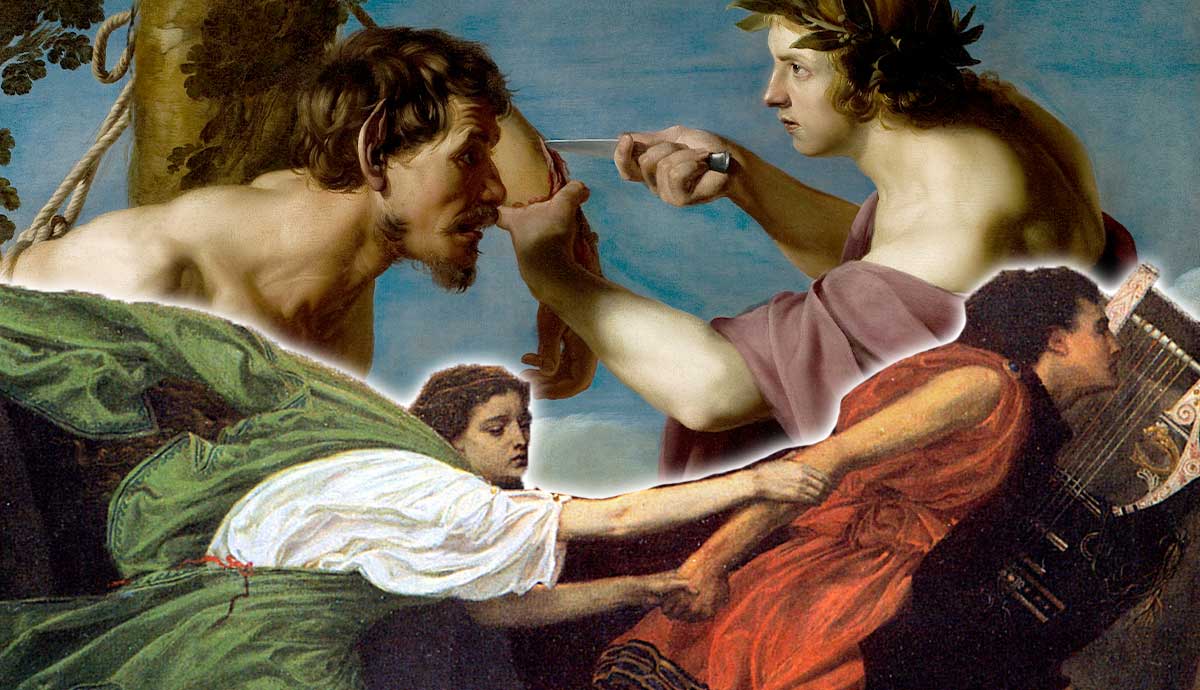

Albert Camus ends The Myth of Sisyphus with: “One must imagine Sisyphus happy.” This line confuses many readers of Camus’s text. Within the secondary literature we find scholars questioning how it is possible to imagine as happy this tragic figure, condemned to an eternal and meaningless punishment. The confusion arises from taking the final section of Camus’s essay as an allegory. In fact, Camus is offering a myth. When we treat myth as myth we can begin to imagine Sisyphus happy.
Camus’ The Myth of Sisyphus
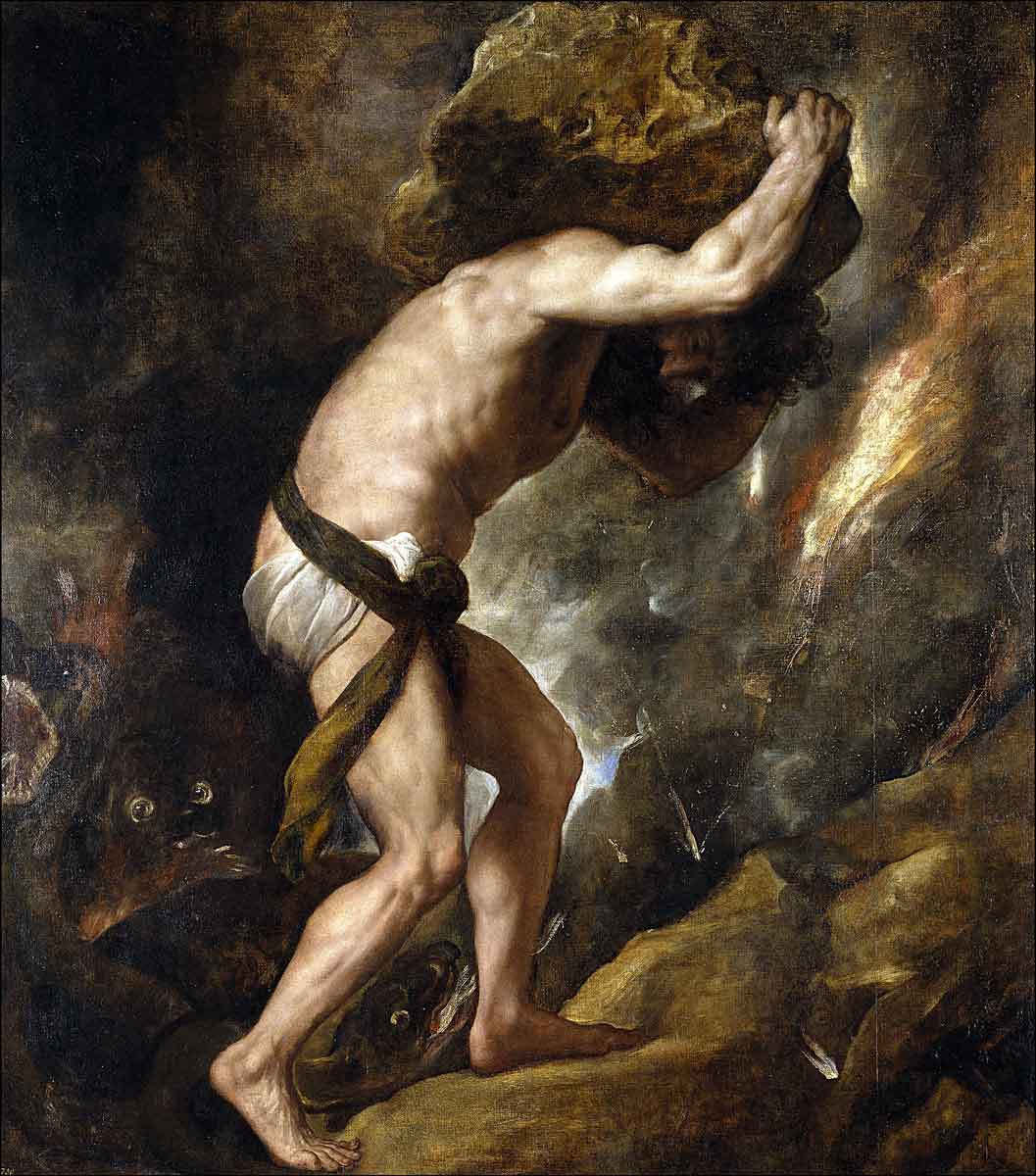
Camus titled his 1942 essay on the absurd The Myth of Sisyphus. He concludes the essay with a section on the Sisyphus myth. It is clear that Camus is interested in myths. The conclusion of his investigation into the absurd is not offered as a summary of his previous arguments. Instead we are given his own version of the Sisyphus myth. It is important to note that the Sisyphus myth in Camus’s text is his own. When he says we must imagine Sisyphus happy, it is his Sisyphus we must imagine. We will look in detail at why this is the case shortly. However, for now, it is important to bear in mind that if you read an account of Sisyphus in, say, Homer or Ovid, and try to imagine him happy then you will certainly miss what Camus is trying to say. Put simply, Camus omits and adds enough details to make his version of the myth his own.
Before we look at how Camus uses his Sisyphus myth, we need to understand how myth can be used. In everyday conversation we often use the word ‘myth’ to mean something like: “widely believed to be true but is in fact false.” For example, we can say that it is a myth that carrots are particularly good for eyesight. Although a lot of people believe this to be the case, carrots are no better at improving eyesight than any other vegetable. So, when we say this belief is a myth, this is just a useful shorthand for saying: “it is widely believed to be the case that carrots are particularly good for the eyesight but in fact they are not.”
As a shorthand, this use of the word is very useful. A quick Google search will reveal a myriad of books claiming to debunk ‘myths’ in almost every subject imaginable: dieting myths, successful job interview myths, food myths, health myths, and so on. In all these cases, the authors are not creating myths or using myths but rather revealing as false things many people believe to be true. Camus is using myth in a very different way.
Camus Uses Myth in the Older Sense of the Word
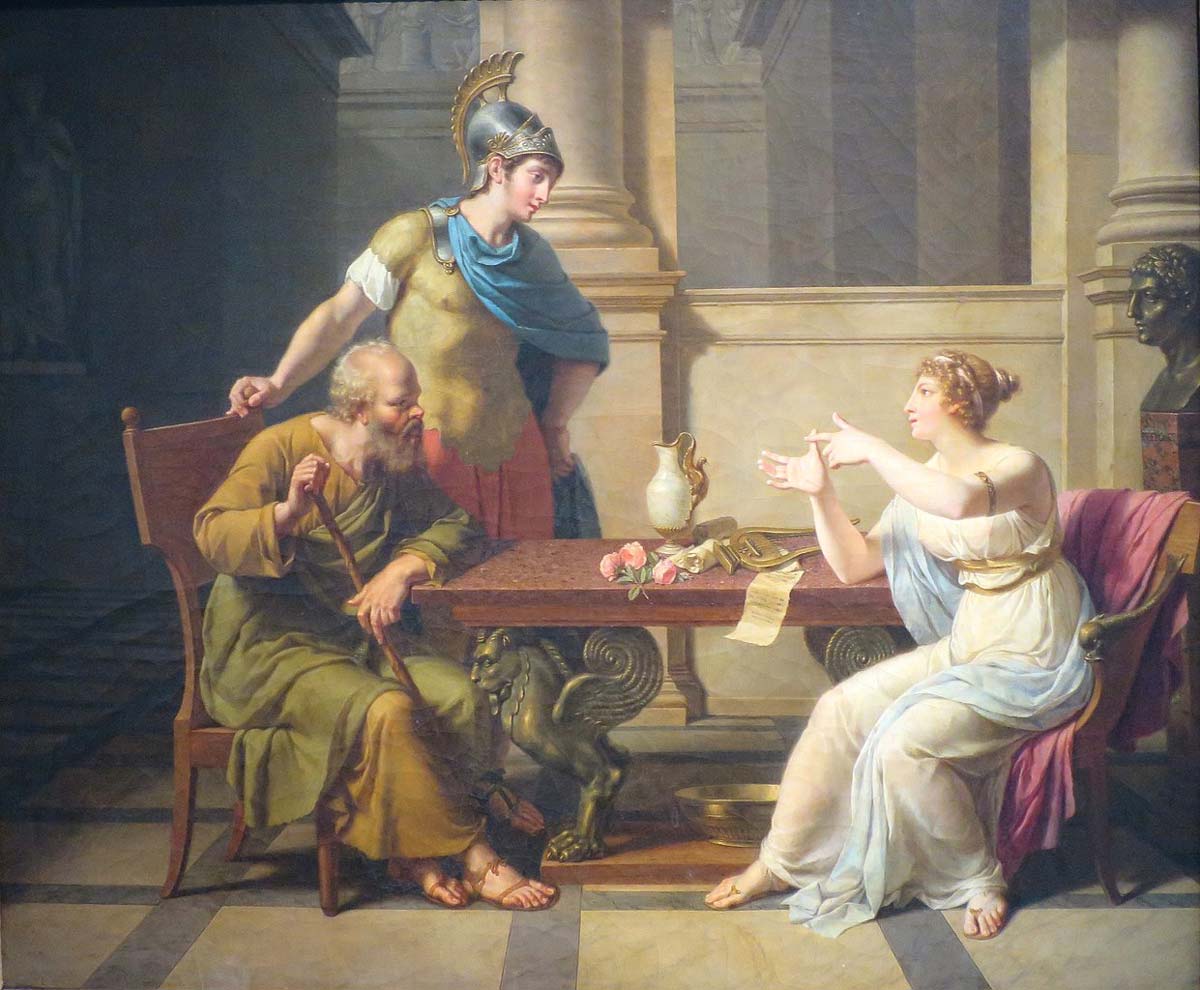
We have seen that the word ‘myth’ can be used to indicate that something is false. But there is an older sense of the word which refers simply to a way of talking about things in the world. Here, there is no automatic assumption that what is being talked about is deliberately misleading or a work of fiction. For example, when both Plato and Aristotle used the word mythos, they meant ‘stories’ or ‘narration.’
In the ancient Greek world there was no sharp distinction between mythos and logos. In Plato’s Protagoras, when the titular sophist offers to demonstrate that virtue can be taught, he lets his audience choose whether they prefer him to use mythos or logos. It is well known that Socrates, in Plato’s Republic, recommends censoring the myth-makers but not because he believes myths always express falsehoods. Rather, he says that myths can express both truths and falsehoods. The reason he wants the use of myth tightly controlled is because of the persuasive power of myths and the relative ease myths can be used to spread falsehoods by dishonest myth-makers. We can think of myths, in the sense we are using the term here, as dramatic stories intended to express something true or real.
There are, of course, such things as true stories. Consider the last time you told someone the story of how you and your partner met or how you came to learn a foreign language. Often, when we refer to an account as ‘the story of…’ what we are offering is a stylized version of events in which total accuracy is less important than getting across the meaning. Imagine someone was trying to make a point about the possibility of love at first sight. In order to get their meaning across, they may tell the story of how their parents fell in love. What they are attempting to do is express something true about love. The actual story they tell, however, might contain inaccuracies, omissions, fabrications and so on. But, even so, it is possible that this story still expresses a truth about love.
When Camus offers his Sisyphus myth at the end of The Myth of Sisyphus he is attempting to express something true about the human condition. As we shall see, this truth is that life itself is good because it can be meaningful.
Myth as a Complementary Tool
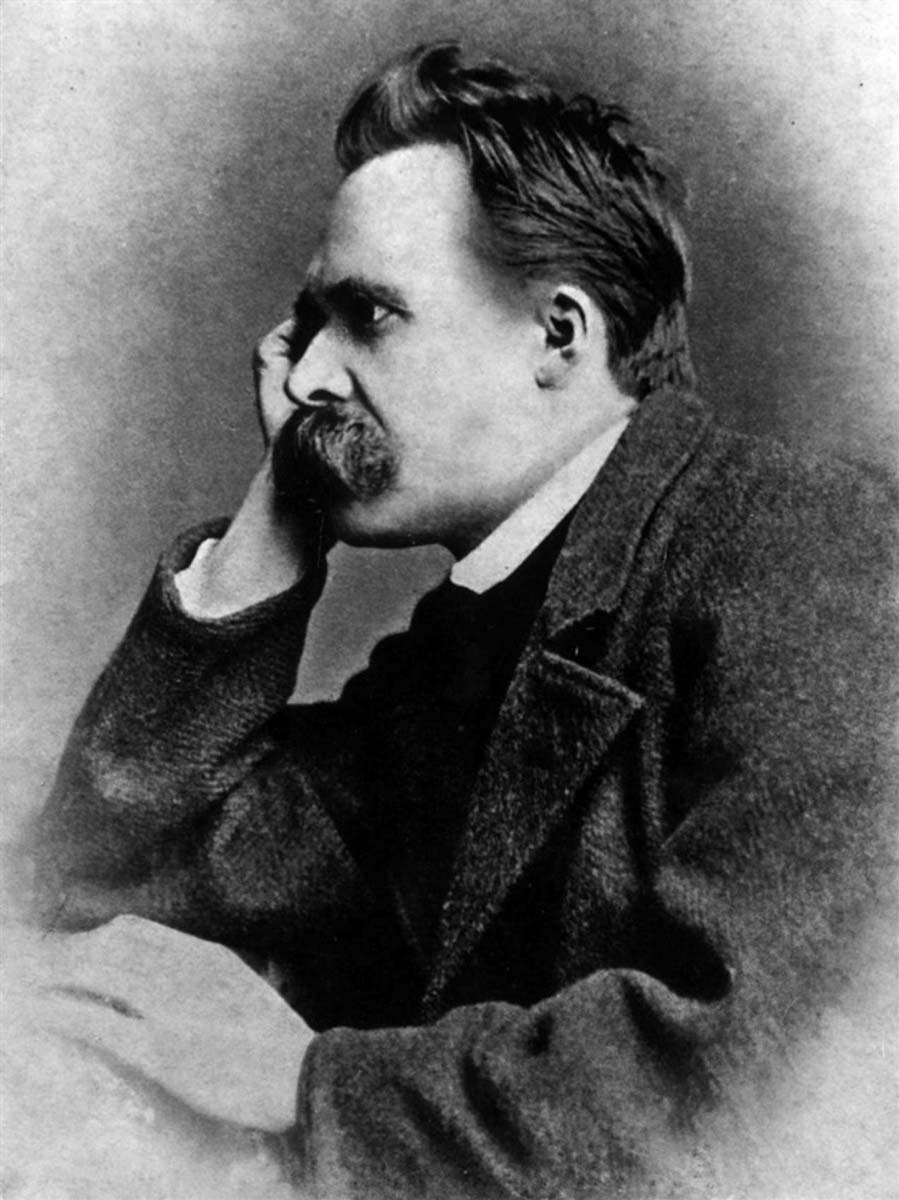
Unlike rational arguments that seek to convince people through a series of statements that are typically defended with logic and reliable evidence, myths attempt to capture a feeling or idea that can be passed on to the audience. Often, these are of a revelatory nature. Here, the author feels that something about the world has somehow been revealed to them and the myth they create is intended to induce this feeling in others. For example, Nietzsche, an enormous influence on Camus, had a revelation in Sils Maria that he spent the rest of his life trying to communicate. His Thus Spoke Zarathustra is a book-length myth that attempts to induce in its readers the same profound feeling Nietzsche experienced.
Camus, who is following Nietzsche’s lead, offers his version of the Sisyphus myth in order to share something previously revealed to him about the human condition. If the reader can imagine Sisyphus happy, it is a good indication that Camus has successfully communicated his idea. However, there is more to The Myth of Sisyphus than this.
Often when philosophers use myth, they do so to complement different kinds of philosophical discourse. Camus, for example, ends The Myth of Sisyphus with a myth but the sections preceding this offer something that more resembles reasoned arguments. However, readers should bear in mind when reading Camus’s essay that it is not a standard philosophical essay one might expect from the analytical tradition.
The Myth of Sisyphus is more of a philosophical exploration rather than a series of reasoned arguments that lead towards a conclusion. It is written from the perspective of ‘an absurd man’ who is searching for a myth that expresses something true about the human condition that makes life itself meaningful. The essay takes its lead from Nietzsche—Camus says at the end of the first section that Nietzsche shows the way of the absurd man—and the reader is let in on the author’s thought processes as he struggles with various ideas. In the essay, Camus uses various different thinking and communication tools that range from the kind of reasoning most of us expect from philosophical essays to the creation of myths. We could ask at this point, why bother complementing reasoning with myth; if myths are likely to cause confusion, why not just stick to more straightforward arguments?
Subjects Beyond the Limits of Our Intellectual Powers
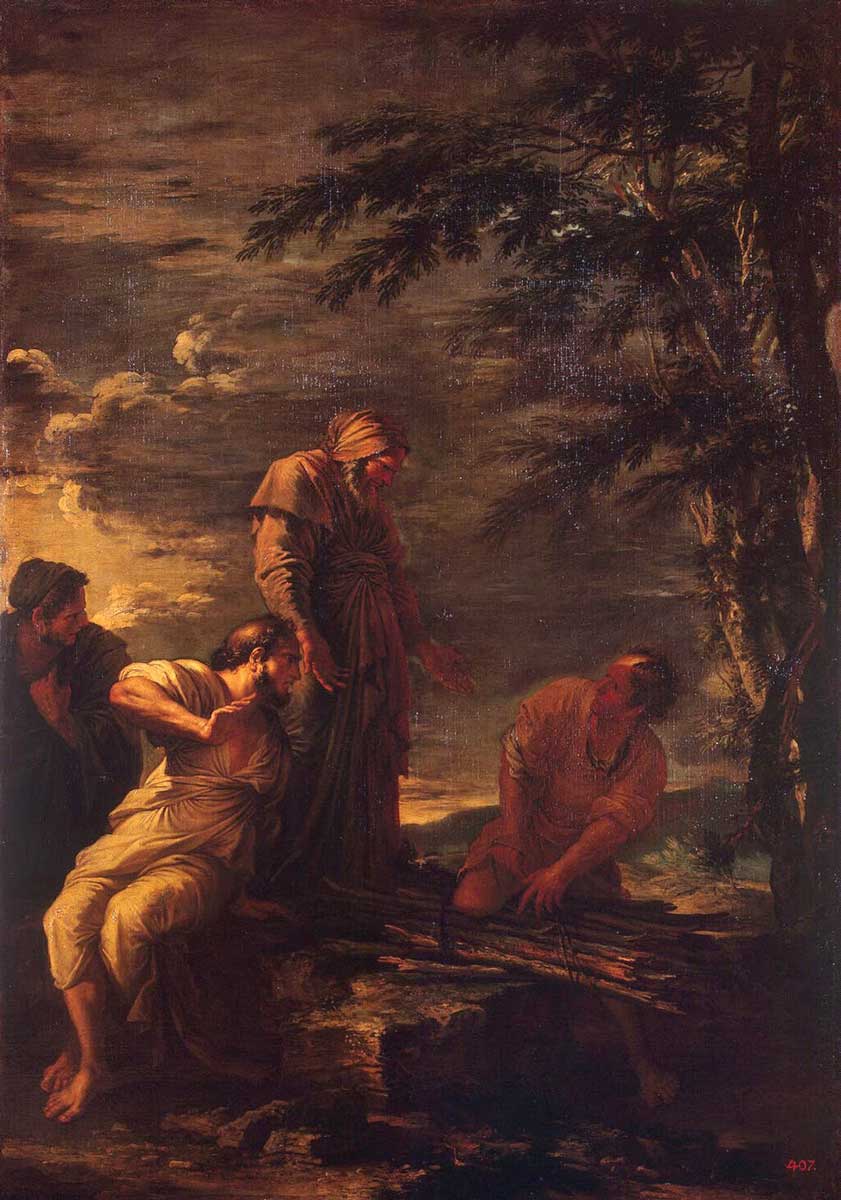
We saw that Protagoras offered to use mythos or logos to express his ideas about virtue; however, myths are more typically used to discuss matters that lie at the fringes or even beyond the scope of our intellectual powers. There are many ideas that are commonly used today that fall into this category. Indeed, some of these are so common that we often fail to notice how difficult they are to express. For example, consider the idea of human dignity.
Both the United Nations Universal Declaration of Human Rights and The Charter of Fundamental Human Rights of the European Union refer to ‘dignity,’ placing it first in their articles, but neither define what dignity is and consists of. It is one of those things, like art, where we feel we know it when we see it even though we cannot say what it is. Usually, instead of attempting to define human dignity its meaning is suggested by the idea of violations of human dignity: rape, murder, torture, slavery, etc. Because we feel these things are unquestionably wrong, not up for debate and that all right-thinking people simply know this to be the case, there must be something that is violated when these things occur. That thing, we call human dignity.
Because what is meant by dignity is ineffable, its meaning is captured and expressed through the idea of the violation of dignity. In other words, when we wish to reveal to others the existence of human dignity, that life is valuable, we do so by inducing something like ‘a revelation’ through the striking and dramatic imagery of the violation of human dignity. But this does not mean that all our discourse on dignity and the value of human life must be expressed through myth. Once the idea has been evoked and named, we can use this name in reasoned arguments.
In The Myth of Sisyphus, Camus is discussing amongst other things the value of human life. Sisyphus is happy because he values his life. He values his life because he is able to give it meaning and live a meaningful existence. In the essay, Camus argues in a previous section that because life does not come with a meaning, we have the opportunity to create meaning for ourselves and make our lives meaningful. It is because he cannot express what he wants to say about happiness and value of life non-mythological that Camus uses myth at the end of his essay.
A final question remains, how can a man sentenced to spend an eternity of meaningless frustration possibly be happy?
Imagining Sisyphus Happy
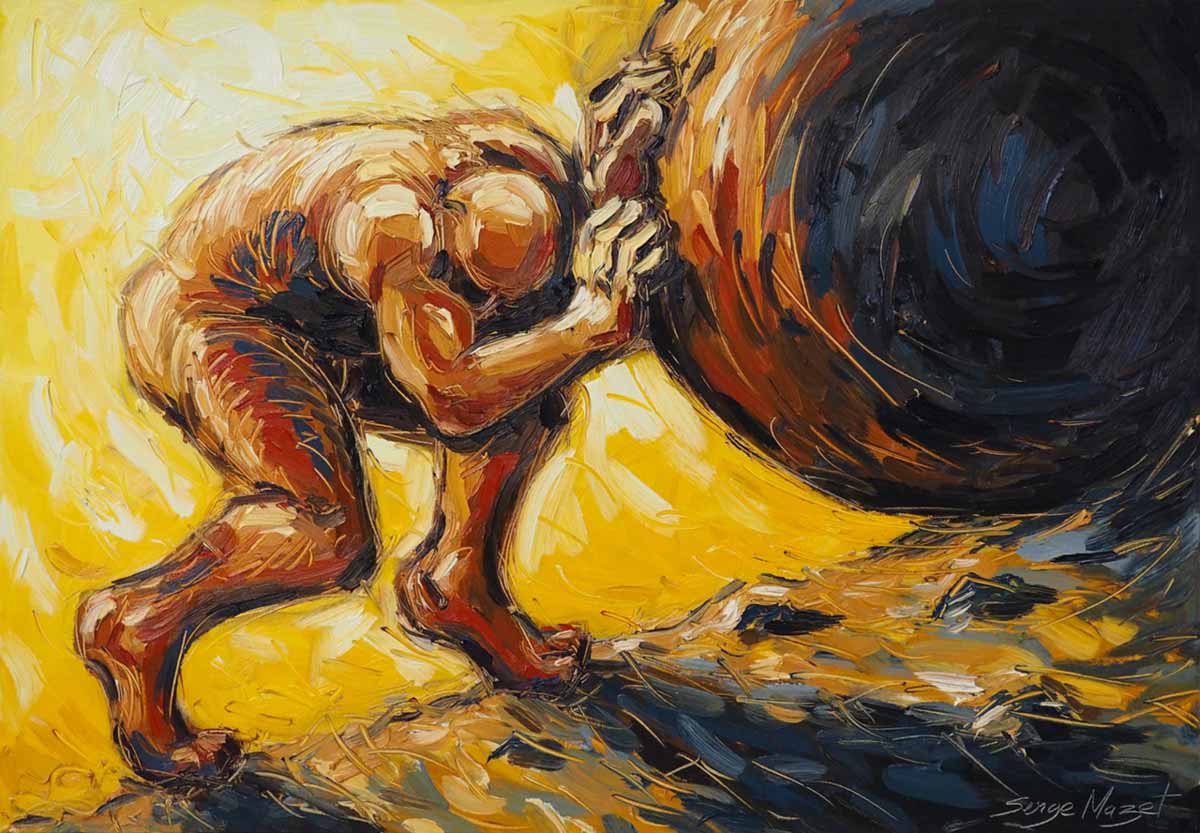
In The Myth of Sisyphus Camus creates his own Sisyphus myth. The story we are used to involves a Sisyphus being condemned by the gods to endlessly roll a rock up a mountain only to see it roll back down again just before he can reach the top. The focus is on his struggle to climb the mountain, his frustration at seeing the rock roll away from him and, most of all, the complete meaninglessness of his never-ending task. The Greeks had several stories like this: the Danaides attempted to fill endlessly leaking water vessels and Ocnus tried to weave a straw rope that was constantly eaten by a donkey at the other end. Not much is given about the psychological impact of these tasks or the day-to-day lives of the people involved.
Camus, in his version of the myth, switches the focus of the story to a part neglected in the original version. He is interested in Sisyphus’s walk back down the mountain to retrieve his rock and start again. The story is inverted; the point is no longer about Sisyphus’s pain and struggle as he ascends the mountain but on his time away from his rock and the opportunity for reflection this gives him as he strolls back down.
It is important to bear in mind that Camus is not offering an allegory or metaphor here. If we want to understand what he is attempting to communicate then we should not try to overlay this story onto reality. For example, it will not do to say something like: Sisyphus, the ‘proletarian of the gods,’ represents the working class and his rock represents the back-breaking and alienated struggle of selling one’s labor. And then go on to say, all this effort is meaningless but we should try to imagine the workers happy.
Instead, we should attempt to imagine Sisyphus happy as he strolls back down the mountain, his time his own. Yes, he lives a meaningless existence in that there is nothing meaningful about endlessly repeating a pointless task that is impossible to complete. However, this means no meaning or purpose has been imposed upon him. Sisyphus has the opportunity to create meaning and make his existence meaningful. This, Camus has been arguing for previously in the essay, is a good thing and should make Sisyphus happy.
At the end of the essay, if Camus is successful in achieving what he set out to do, readers should be left with the feeling that life itself is worthwhile and good because for human beings it is an opportunity to create something meaningful and that is the starting point for happiness.