

In his 1955 preface to The Stranger, Camus said his anti-hero Meursault refuses to lie. However, Meursault lies frequently. He often tells people what they want to hear to get out of boring conversations, he writes a letter on behalf of a friend knowing that its contents are designed to deceive, and he is willing to lie to the police on behalf of the same friend. This article explains how when Camus talks about Meursault refusing to lie, he is referring to a very particular kind of ‘lie.’
Does It Matter What Camus Said About Meursault?

There have been countless commentaries on Albert Camus’s most famous novel, The Stranger (L’Étranger). As one would expect, each commentator has their own view and interpretation of the book. One of the reasons that Camus’s novel remains a key philosophical text is that The Stranger is so open to interpretation. The protagonist and narrator, Meursault, remains one of the most enigmatic characters in the western literary-philosophical cannon.
For the most part, Camus avoided offering commentary and analysis of his own character. Rather, he preferred that his readers came to their own conclusions. This approach fits exactly with Camus’s belief that philosophy ought to be a constantly updated dialogue and not the reception of ‘wisdom’ cast down on the masses from an enlightened elite. Nevertheless, it is possible for us to get a good idea of what Camus intended his novel, along with its anti-hero Meursault, to say.
In order to discover this, there are three things we can do: look at what Camus had to say about his own work; look carefully at the text itself and how it fits alongside Camus’s other works; and, finally, apply some common sense. But before we do any of this, we might want to ask ourselves if it actually matters that we know what Camus intended with his novel. Can the readers not simply interpret the text for themselves?
Of course, the readers are free to get from the text whatever they can. No author is necessarily an expert interpreter of their own work. But this does not mean that what the author is attempting to say ought to be ignored. We can always compare our interpretation of a text with that of its author.
However, even if someone chooses to ignore the first of the three things to look at, listed above, and eschews reading anything an author has to say about a particular work of theirs, they are surely still required to base their interpretation of a text on the text itself. If we ignore the text itself, then we are not listening to what someone has to say but merely using what they have said in order to express our own ideas. In itself, there is nothing wrong with this but, here, right now, we are interested in what Camus has to say. In short, we cannot understand and critique Camus’s philosophy if we do not know what it is. When we read The Stranger philosophically, we are interested in Camus’s contribution to philosophy.
What Did Camus Say About Meursault?
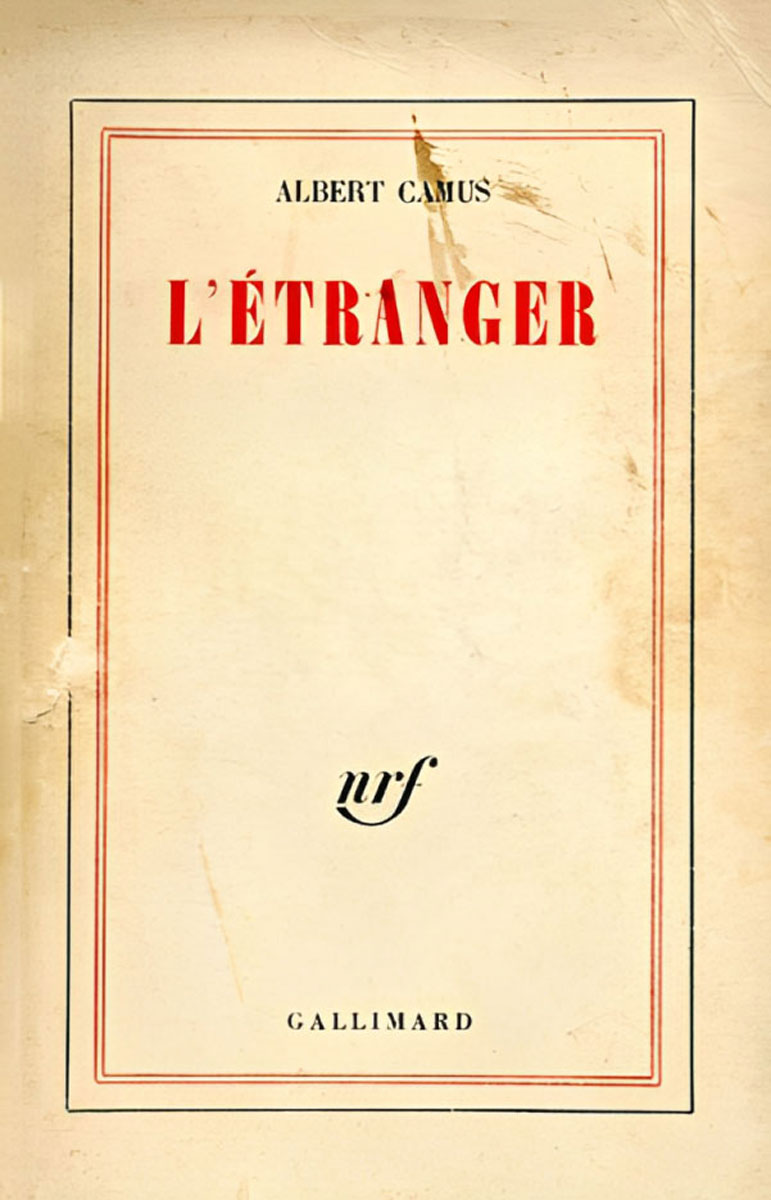
In a letter destined never to be sent, Camus revealed some of his thinking behind The Stranger. A draft of this letter is included in the notebooks that Camus permitted to be published. Because he chose to publish it, we can take his comments on Meursault in the letter to be a true reflection of how he envisioned the character.
Camus says that the narrator of The Stranger, Meursault, only entrusts some of his secrets with the reader in the last pages of the novel (1965, 20). He also says of Meursault that he restricts himself to only answering questions and never asserts anything as true (Ibid, 21). From this, we can tell that Meursault has secrets he withholds from the reader. That is, there is something he is attempting to do which is not revealed in the text. We also know that part of what he hides from us are facts and beliefs that he confidently believes are true: he never asserts anything. In other words, Meursault is up to something and has a method (to his madness?).
In an earlier notebook entry, written while Camus was still in the planning stages of The Stranger, we find the following:
“The first thing to do is to keep silent – to abolish audiences and learn to be your own judge. To keep a balance between an active concern for the body and an attentive awareness of being alive. To abandon all claims and devote yourself to achieving two kinds of freedom: freedom of memory, and freedom from your own vanity and cowardice. To have rules and stick to them. Two years is not too long a time to spend thinking about one single point. You must wipe out all earlier stages, and concentrate all your strength on forgetting nothing and then on learning patiently.” (1963, 85)
Camus wrote this as a reminder to himself but it matches with Meursault’s project. A key point is the idea of a person setting themselves rules to live by and of spending a good period of time living by these rules. The aim here is to dedicate a portion of one’s life to the exploration of a single idea. This is exactly what Meursault does in The Stranger.
We saw that, according to Camus, Meursault does not assert anything but merely responds to others. Let us see what else Camus has to say about his character. The most important statement, made by the author, on Meursault must be Camus’s 1955 preface to the American edition of The Stranger. Here he addresses various criticisms of Meursault that have appeared over the past decade or so and offers some insights of his own about the character.
“A much more accurate idea of the character, or, at least, one much closer to the author’s intentions, will emerge if one asks just how Meursault doesn’t play the game. The reply is a simple one: he refuses to lie: To lie is not only to say what isn’t true. It is also, and above all, to say what is more than is true, and as far as the human heart is concerned, to express more than one feels.” (1968, 336)
Camus goes on to say that Meursault is “not a piece of social wreckage” but someone with a stubborn passion for the truth. The protagonist and narrator of The Stranger certainly seems to be a man with a plan but is Camus correct in saying that he “refuses to lie”?
The Lies Told by Meursault in The Stranger

There are many different ways of lying. For example, there are bald-faced lies, lies of omission, white lies, and so on. We should not take from Camus’s preface that he intends to offer a thorough philosophical exploration of the phenomenon of lying. Indeed, Camus is only interested in one kind of lie, what colloquially is known as “playing the game.” He tells us that Meursault refuses to play the game—which we see in the text—but Meursault’s dedication to “the truth” in the text is not quite as total as Camus suggests in his 1955 preface.
We have already seen that Meursault has a secret: his pursuit of a single idea, his philosophical experiment. He does not reveal this to anyone. However, there are times when not letting others in on this secret causes so much confusion that it is deliberately misleading. Take Meursault’s interaction with his lawyer. The answers to his lawyer’s questions are phrased in such a way to be not only cryptic but omissions of the truth. It seems safe to say that there are times when Meursault’s commitment never to assert anything can appear deliberately misleading. And there does not appear to be any real reason, in terms of his project, why Meursault cannot tell others what he is attempting to do.
We also see instances of Meursault deliberately letting others get the wrong idea about what he is really thinking in order to make his life a bit easier. For example, when he is being harangued by the investigating magistrate, Meursault pretends to agree with him. In the text we read: “As always, whenever I want to get rid of people I’m barely listening to, I try to look as if I’m agreeing with them” (Camus, 2013). Later we see him join in the congratulations of his lawyer when his defense rests, even though he does not think the lawyer did a very good job. Meursault tells us, “the compliment wasn’t sincere because I was just too tired.”
The key event that sets everything in motion in the text is Meursault’s decision to write a letter on behalf of his neighbor, Raymond. This letter is designed solely to trick a woman of Raymond’s acquaintance, with whom he has fallen out, into believing he is seeking a reconciliation. In fact, Raymond wants to sexually humiliate this woman as revenge for a perceived slight. In the full knowledge of what he is doing and what Raymond wants, Meursault agrees to write the deceitful letter. After Raymond assaults the woman, Meursault agrees to act as a witness on Raymond’s behalf in the full knowledge that in doing so he is supplying false testimony.
In What Way Does Meursault Refuse to Lie?
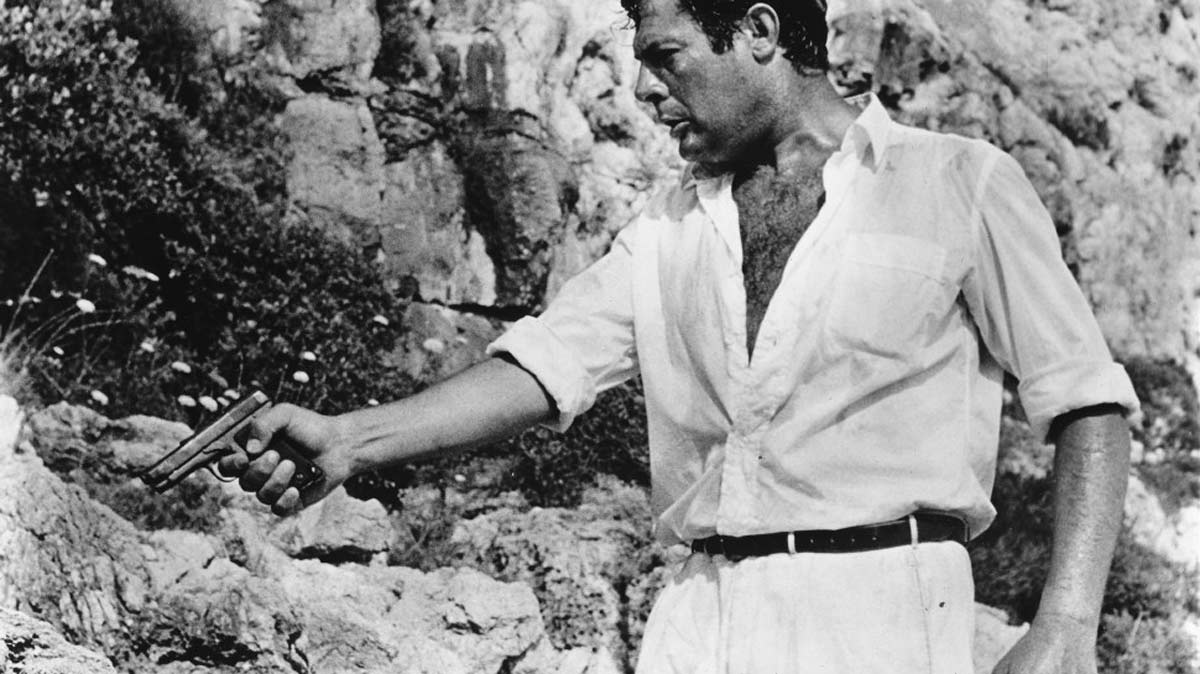
In his 1955 preface, Camus clarifies what he means by Meursault refusing to lie as a refusal to say more than is true or to express more than he feels. But, as we have just seen, Meursault seems to do both. For example, he adds details to the letter he writes for Raymond that express more than is true and he pretends to be pleased with his lawyer’s performance in court.
To understand what Camus is getting at, we need to pay close attention to his claim. He is not referring to all the different kinds of lies a person can tell but one kind in particular. The kind of lie that interests Camus is what is known as “playing the game.” We will look at what he might mean by this very shortly but before then it is important to remember that when Camus talks about not saying more than is true or not expressing more than one feels, he is talking only in terms of not playing the game. In other words, Meursault will not say more than is true if that is what is required to play the game. In situations where saying more than what is true has nothing to do with game playing, Meursault will allow himself to do so.
We have to take Camus’s claim that Meursault refuses to lie as an exaggeration on the author’s part. From the text we can see that Meursault only refuses to engage in one particular type of lying and that is “playing the game.” Let us now take a closer look at this idea.
Meursault Refuses to “Play the Game”

In the 1955 preface, Camus makes the curious statement: “In our society any man that does not weep at his mother’s funeral runs the risk of being sentenced to death.” In order to understand what Camus means, we need to look at the prosecutor’s case against Meursault in his trial for murder.
That Meursault shot a man to death on a beach is never in question. Meursault fired five shots at a man armed only with a knife. What is at stake in the trial is whether he was acting in self-defense. The victim is an Arab and Meursault a white settler of French descent. No-one at the time would believe that a white man would be harshly sentenced for this kind of crime in 1940s Algiers. The Arab man had a knife and had attacked and cut Raymond earlier that day, Camus makes it clear that if Meursault pleads self-defense and expresses remorse at having had to kill the man, then he will be treated leniently. Indeed, his lawyer is expecting only a few years with hard labor as the worst-case scenario. Camus was a court reporter and was appalled at the inequality in the legal system. This aspect of Meursault’s case is Camus’s commentary on this social injustice.
However, to play the game and act the remorseful criminal, sorry for this crime and begging for the forgiveness of the court, is something Meursault refuses to do. To him, this would be saying more than is true and expressing emotions he does not feel. The prosecutor, on the other hand, takes Meursault’s refusal to play the game as an opportunity to play a game of his own. He seeks the death penalty; not because Meursault shot and killed an Arab man but because Meursault “is a monster.” Let us take a closer look at this.
The Prosecutor’s Game
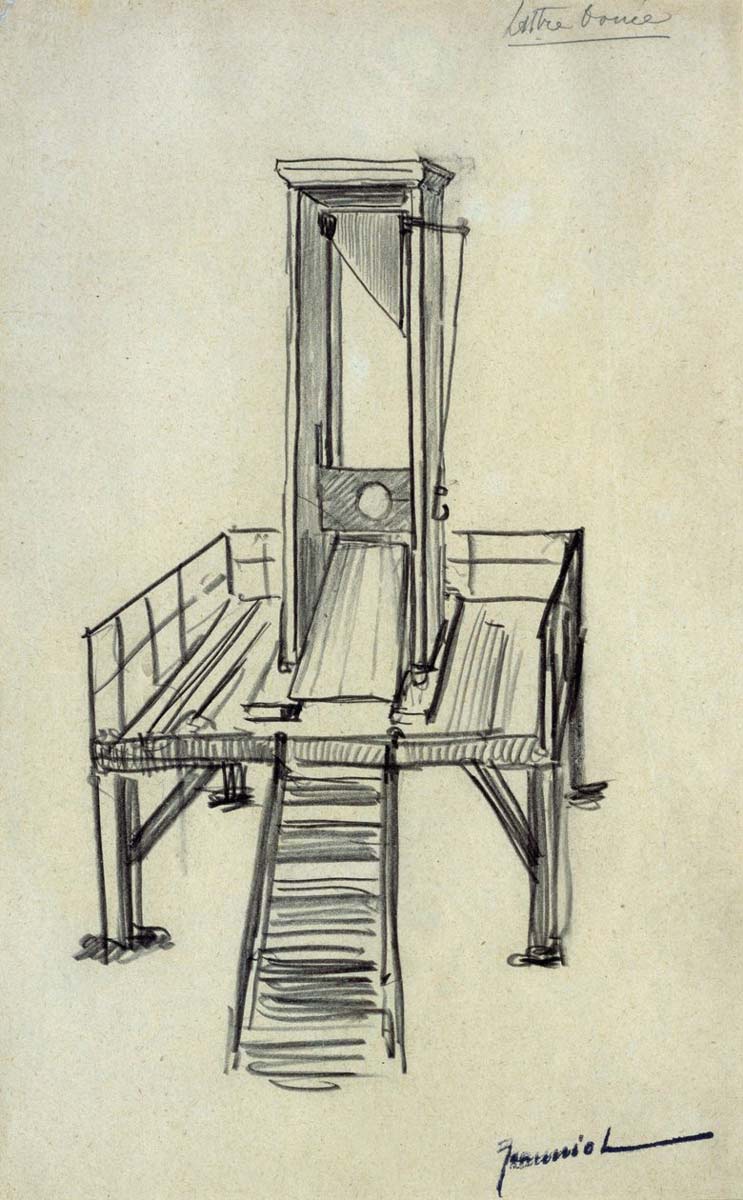
The prosecutor seizes upon the fact that Meursault did not cry at his mother’s funeral and uses this as his starting point for a twisted version of events that paints the defendant as such a moral monster that society, in order to cleanse itself, must condemn him to death. All the events we see in the first part of the novel are given fanciful interpretations in court as an attempt to show Meursault in the worst light possible. In a nutshell, the prosecutor’s case is that Meursault is a kind of gangland enforcer that callously killed a man and mutilated the corpse in order to send a message out to the criminal underworld that they ought not mess around with his boss, his neighbor Raymond.
This story is, of course, pure fabrication on the prosecutor’s part. But Camus is interested in more than a made-up story designed to manipulate a jury. What concerns him is the use of made-up stories to express supposed truths about the world. The prosecutor’s argument is that there is sometimes a moral requirement to chop off people’s heads. But he does not offer a rational argument for why this is the case. Instead, he relies on stirring up emotions and appealing to gut feelings.
The key image that the prosecutor uses is of a man failing to cry at his mother’s funeral. Fixing this image in the minds of the jury members, he introduces the idea of the sacred bond between mother and son. He asks the jury to think about what kind of son would desecrate that bond. He then provides the answer: a moral monster. And he points his finger at Meursault, the man in the dock. From here, he thinks about what kind of things such a monster would do: sleep with a woman he just met on the day of his mother’s funeral; set up another woman to be sexually humiliated and beaten; shoot dead a man on a beath and fire more bullets into his body to desecrate the corpse. If we allow, he says, such a man to exist in our society, we endorse these acts. To protect the sacred, we cannot tolerate those that would violate it. Finally, he calls for Meursault to be executed in the name of the French people.
The jury agrees and Meursault is sentenced to death. In the text, he tells a lot of lies but the one lie he refuses to tell is one that involves the kind of game-playing employed by the prosecutor. It is hard to say that Meursault dies for the truth; but he does die because of a refusal to play the game. And that is what Camus meant when he said that Meursault refuses to lie.
Bibliography
Camus, Albert. Notebooks 1935-1942. Trans. Philip Thody. New York: Alfred A. Knopf (1963)
Camus, Albert. Notebooks 1942-1951. Trans. Justin O’Brien. New York: Alfred A. Knopf (1965)
Camus, Albert. Lyrical and Critical Essays. New York: Vintage Books (1968)
Camus, Albert. The Outsider. Trans. Sandra Smith. Penguins Classics (2013)