
In his book, The Fold (1988), as well as the lectures on Leibniz, French philosopher Deleuze puts forward a radical reframing of Gottfried Wilhelm Leibniz’s philosophy. While traditional scholarship views the Leibnizian monad as a windowless, isolated, and strictly hierarchical substance ordered by divine decree, Deleuze introduces a more dynamic account. By viewing the monad through the mathematical and aesthetic concept of the fold, Deleuze transforms substance from a fixed essence into a continuous manner of becoming. This provocative reinterpretation reframes perception, subjectivity, and interiority, entirely shifting our understanding of substance.
The Standard Monad Is Windowless, Self-Sufficient, and Ranked by God

The monad, as it comes down through the standard reading and philosophical tradition, is already quite peculiar in its own way. Leibniz synthesizes this concept in the Monadology (1714). The monad is understood as a simple substance: it possesses no parts, no extension, nor any internal complexity of the classical divisible kind.
Each monad is without “windows by which anything could come in or go out.” Nothing enters the monad from outside; nothing escapes it. The world it perceives is not received from without but generated entirely from within.
The conventional interpretation of Leibniz’s philosophy holds that the monad’s windowless condition results from its metaphysical self-sufficiency. Every monad contains a complete concept of itself. It already includes every predicate that will ever belong to it, every event it will undergo across all of time.
The entire history of the monad is already, deterministically inscribed into its notion. There is no causal interaction between monads. Each monad only unfolds its internal states according to the pre-established harmony of the universe. Monads are coordinated, but they are not connected.
The standard picture offered by classical Leibnizian scholarship is also hierarchical.
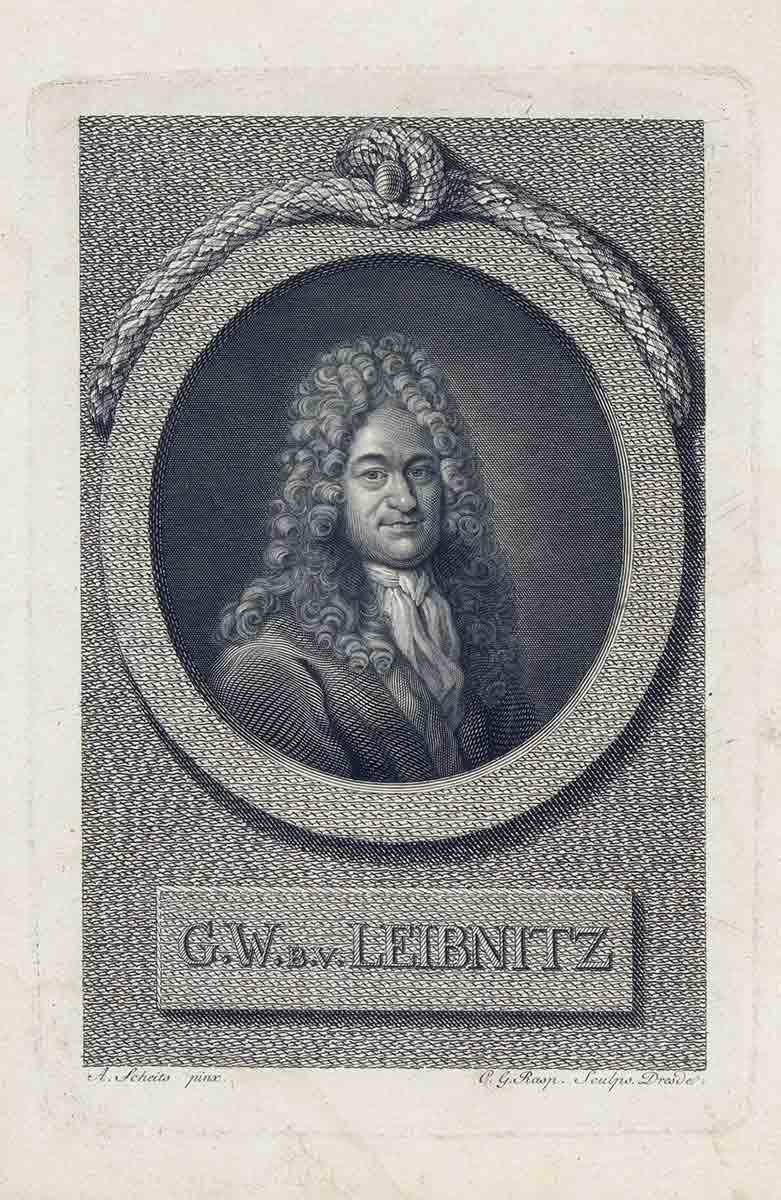
Leibniz distinguishes between monads that merely perceive without apperception (bare monads), those that have memory and feeling (souls), and those capable of reason (spirits). God is naturally at the top of the hierarchy, since Leibniz was still a theologian. God is the supreme monad, the one substance that grounds and shapes the rest. Monads are ranked by the level of clarity in perception: some express the world dimly, others brightly. The hierarchy is vertical and fixed. Substance is individuated, closed, and ordered from on high.
This is the Leibniz one finds in most textbooks; a thinker whose world is held together by divine decree. Deleuze’s task in The Fold is to show that this picture misses the most original Leibnizian interventions.
Deleuze Reframes the Monad as an Outside Folded Into an Interior

Deleuze does not reject the standard account of the monad. One might say he folds it in his own way: Deleuze demonstrates how the surface of the monad’s features (closure, windowlessness, individuation) are themselves derived outcomes of a more fundamental genetic process. The Fold.
Deleuze argues that the monad is not a metaphysical enclosure. It is rather an exterior that is folded into an interior: a region of space turned in upon itself, producing interiority as a product of mathematical inflection.
In the book, Deleuze begins by contemplating inflection. Deleuze explains that this is “the ideal genetic element of the variable curve or fold.” Strictly, inflection is, therefore, an event of pure variation, not any fixed point on the page, that Deleuze treats as genetic. Accordingly, the fold is the curve caught in the act of varying, before it is pinned to a coordinate.
Deleuze is offering an ontological foundation for Leibniz’s calculus: the world is a series of inflections, endlessly varying curves. The aesthetic tapestry of the Baroque, endless curves, folds, and bulges, it is all interrelated: Mathematics, Art, and Philosophy.
It is precisely from the process of inflection that we arrive at the notion of monadic interiority. What is folded is, in the movement of folding, enclosed: it passes from the virtual state of a pure curve to the actual state of something enveloped within a subject. The monad is an envelope. It is a universe folded inward. The enclosure is a result of a genetic movement. Not unlike subjectivity; “the soul is what has folds and is full of folds.”
For Deleuze, Perception Builds the Subject From Tiny Folds Called Petites Perceptions

Where the monad is interiority as a result of the folding process, perception is the operation by which the inside is constituted.
For Leibniz via Deleuze, perception is not representation. And it is not reducible to the Subject-Object dichotomy. It is, rather, the differential integration of infinitely small folds. Leibniz calls these petites perceptions, small or minute perceptions. Perception is a process of folding and unfolding. It is fundamentally interactive; the subject is constituted together with the object through perception.
The micro-perceptions that shape the monad are, in the first instance, entirely obscure. They are not representations of distinct objects but folds within folds: “a lapping of waves, a rumor, a fog, or a mass of dancing particles of dust.” Conscious perception emerges from the initial obscurity through differential relations among the minute perceptions.
Deleuze once again emphasizes the mathematical nature of these operations: when two heterogeneous micro-perceptions enter into a differential relation, they produce a singularity. Singularity is defined as a conscious perception that “excels” over other perceptions and rises to the threshold of clarity.
The example from The Fold is the perception of green, which is produced not by the addition of yellow and blue, but through differential relations between vanishing perceptions of yellow and blue.
A perspective, or point of view, is what organizes the perceptual process spatially. Every monad perceives the entire world from a particular point of view. It is a specific subdivision of the infinite series that together see the world in its entirety. This is not subjective limitation or a perspectival distortion. It is the condition of perception. The soul does not occupy a point of view as a pre-existing subject. Rather, it is constituted by the point of view it inhabits.
Deleuze’s Leibniz Redefines Substance as an Event, Not an Essence

The most philosophically consequential aspect of Deleuze’s rereading is its effect on how the nature of substance is understood.
In the standard tradition, from Aristotle through Descartes to Spinoza, substance was defined by essential attributes: thinking substance, extended substance; substance was normally identified with what it essentially and permanently is. Predication, on this model, is attribution. A quality or attribute is assigned to a subject based on that quality or attribute being the subject’s defining characteristic.
The Deleuzian reading of Leibniz’s philosophy breaks with the classical model in a drastic way. Deleuze identifies five criteria that Leibniz uses to define substance: metaphysical, logical, physical, psychological, and epistemological. And none of them amounts to the definition of substance by an essential attribute.
The logical criterion of inclusion (the predicate being contained in the subject) is key, but it is reinterpreted: inclusion does not mean that the subject possesses a quality. It means that the subject is the unity of an event. “The predicate is a verb,” says Deleuze, “and the verb is irreducible to the copula and to the attribute.”
Monads are not made up of attributes, they are made of events: Caesar crosses the Rubicon, Adam commits sin, these are events that comprise the interior and perceptual cross-spaces of monads. The event, as an incorporeal predicate, is what constitutes the inner unity of the substance. Substance is accordingly defined not by what it is but by what happens inside of it. Not essence but a manner of becoming.
Deleuze gestures at this as a kind of Mannerism. Mannerism is opposed to the essentialism of Descartes and Aristotle and presumes that substance is defined by manner rather than essence. It is important to note here, however, that in The Fold this term stays subordinate to the Baroque rather than standing as a finished concept of its own. Deleuze only later, in the final Vincennes course, wonders whether Mannerism can be given philosophical consistency.
If substance is constituted by events and not attributes, then substance becomes inherently temporal, dynamic; it becomes a unique, infinite series of events folded into the history of every monad. No two substances can share the same series because each monad expresses the same world from a different point of view, with a different zone of clarity.
The Fold Gives Us a Subject That Is Made, Not Given

Deleuze uses Leibniz’s work as an inspiration for his own philosophical creation: Deleuze extracts a concept, the fold, and adds it to his collection. The monad, reread through the notion of the fold, undergoes a kind of metaphysical opening. It becomes a dynamic interior produced by the operation of folding.
The new Deleuzian model of interiority makes this reading particularly philosophically potent and novel. The fold provides an account of how the inside is constituted and produced without reference to an original, fundamental splitting, as is the case for many substance dualists. The monad’s closure is itself an event. Thereby interiority becomes a relational concept, a product of a specific operation on material that exceeds it. The soul does not precede the world it envelops; it is produced in and through the act of envelopment.
All of this holds broader implications for subjectivity as such.
The Deleuzian monad serves as a model for a subject that is neither the Cartesian res cogitans (a thinking thing defined by a single essential attribute) nor the Kantian transcendental ego (a formal condition of possible experience). The subject becomes a dynamic zone of differential integration, expressing a world of interactive codependence.
Instead of the dark ground of the monad, the obscure, teeming infinity of micro-perceptions being defined as an obstacle to be overcome, it in truth is what the subject cannot escape: a fold in the world that opens, momentarily, into a point of view. The event of life.