
Language is how we communicate our experiences, thoughts, and ideas. Hence, it is natural that philosophers want to ask questions about how language works. For example, is it possible to know more about the structure of the mind by understanding the structure of ordinary, everyday language? Can language be studied scientifically to counteract the ambiguity of words and phrases? Could we use expressions of mathematical language to understand the structure of ordinary language better? These are all questions asked by a range of 20th-century philosophers, logicians, and mathematicians.
The Linguistic Turn
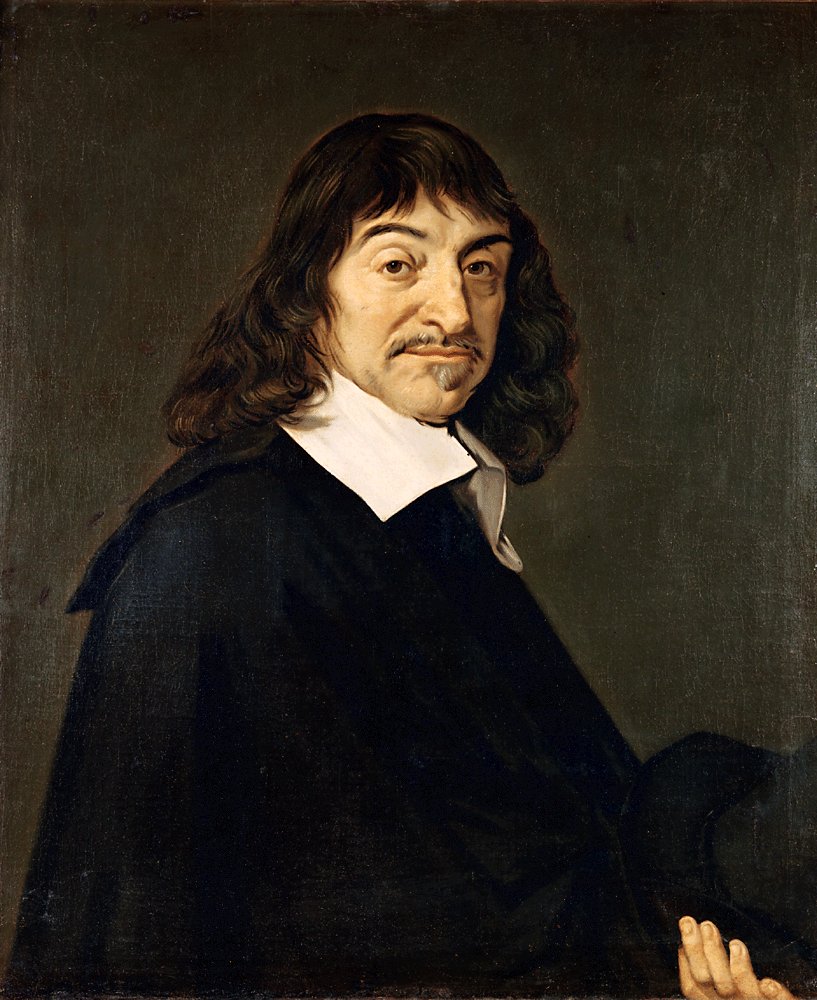
René Descartes was a 17th-century philosopher who became widely known for his radical approach to metaphysics—the study of reality—through a method of inquiry known as the method of doubt. This method consisted of refraining from asserting anything that was uncertain. The metaphysical tradition that began with Descartes influenced Western philosophical tradition until the 20th century.
The political instability and social movements that punctuated the 19th and 20th centuries around Europe led many philosophers to reject traditional metaphysics. A growing interest in hard sciences such as physics and mathematics, as well as a newly developed interest in language, made its way through academic and non-academic discourse. This particular movement, commonly associated with the Vienna Circle and philosophers such as Gottlob Frege, Bertrand Russel, Ludwig Wittgenstein, and Rudolf Carnap, became known as the Linguistic Turn.
Logical Positivism
The rejection of Cartesian metaphysics coincided with an interest in the language of logic, mathematics, and science. The lack of success of Descartes’ method of doubt was striking compared to the scientific method’s incredible epistemic productivity. Hence, a new branch of thought known as Analytic Philosophy arose out of this general discontentment with philosophical enquiry.
Analytic philosophers used scientific methods of inquiry to answer questions about our world. They believed that ordinary language—the language human beings use in everyday communication—was unfit due to its inherent ambiguity. Analytic philosophers thought that most of the philosophical problems metaphysicians had struggled to solve could easily be spelled out by clarifying the true meaning of the language used to convey such problems.
The Logical Positivism movement arose from these ideas. Its main proponents were members of the Vienna Circle, a group of philosophers interested in developing a philosophy of science. A key text associated with Logical Positivism is Language, Truth and Logic by Alfred Jules Ayer. According to logical positivists, translating philosophical problems from ordinary language into the language of logic could be a helpful solution. He argued that most philosophical problems arise from the ambiguity of the language in which they are presented.
On the other hand, logic—the language of mathematics and science—is incredibly precise and leaves little room for ambiguity. Hence, using it to disambiguate the potential meanings of sentences expressed in ordinary language could be the key to uncovering the nature of reality.
Using the Language of Logic
We have seen that Logical Positivism arose from the need to disambiguate language to unpack its real meaning and better understand the nature of philosophical problems. But what exactly do we mean by language being ambiguous? When talking to one another, we understand each other quite clearly, and—in the majority of cases—we don’t encounter many problems in exchanging thoughts and ideas in a comprehensible manner.
However, while language works well as a communicative tool, it is also true that if we stop and reflect on the sentences that we use in everyday conversation, we may find them quite puzzling. Philosophers—who must express their ideas through the medium of ordinary language—often reflect deeply on their choice of words and sentence structure. Hence, they are bound to be puzzled by certain ambiguities or—at times—to be deceived by such ambiguities.
Observe the following declarative statement:
- Dogs are faithful.
Philosophers would argue that the statement in (1) is made up of two parts. The first is the subject entity, denoted by a common noun; the second is the predicate, which is meant to say something about the noun. Hence, the statement in (1) could be unpacked as follows:
(1a) There exist entities such as dogs.
(1b) Such entities have the property of being faithful.
While statements in (1) and their unpacked versions in (1a) and (1b) are unlikely to trouble any philosophers, declarative statements of this kind have been the source of centuries-long philosophical inquiry.
Do Unicorns Exist? The Ambiguity of Ordinary Language

If the declarative statement in the earlier paragraph seemed unproblematic, observe the following.
- Unicorns are fictitious.
The statement in (2) presents the same syntactic structure as the statement in (1). However, the nature of the entities denoted by these words has sparked many debates about the concept of existence.
As in statement (1), the sentence could be analyzed as a subject entity described by a predicate that says something about its nature. However, the existence of an entity such as unicorns contradicts the meaning of the predicate meant to describe it, i.e. are fictitious. A fictitious entity cannot exist, as being fictitious denotes non-existence. Philosophers have attempted to solve the problem by claiming the existence of a non-empirical world in which an entity such as a unicorn could exist.
Naming and Existence
However, Alfred Jules Ayer claims that we cannot rely on the existence of a non-empirical world, as there is no way for us to verify such existence. Instead, Ayer argues that we are mistaken in assuming that naming, thinking of, or imagining a subject entity must entail its existence. There is no causal connection or entailment relation between statements such as the following and the existence of unicorns:
- Unicorns are thought of.
- I judge that unicorns exist.
- Unicorns exist.
Ayer argues that existence is not an attribute or a predicate denoting a characteristic of the subject entity. Instead, existence is a state that can be true or untrue independently of anyone asserting it, judging it, thinking about it, or imagining it. Potentially, entities could exist for eternity without anyone ever knowing. It follows that the state of existence is by no means bound to language, despite what may appear at first glance.
Because of these issues, logical positivists such as Ayer argue that ordinary language can easily deceive anyone who reflects upon it for too long. He believed that we need to disambiguate ordinary language using clear and systematic logical language.
Ordinary Language Philosophy
While the proposal of the logical positivists may seem appealing due to its systematicity and clarity, it is undeniable that ordinary language is much more powerful and expressive than logical language could ever be. Hence, a lot of the meaning that is communicated through ordinary language gets lost when a statement is translated into logical language. Furthermore, logical language is only an artificial tool that may be used for clarification. Real thoughts, ideas, and reflections are born and expressed in ordinary language. Hence, there must be something within ordinary language itself that allows us to naturally generate shared thoughts and ideas in an inherently unique way. It is for these reasons that a new philosophical current, known as Ordinary Language philosophy, arose in the 20th century in response to Logical Positivism.
Ordinary language philosophers are convinced that everyday language offers great insight into thought and the mind, and so they aim to use it within their philosophical practice. They are not convinced that the potential ambiguity of ordinary language constitutes a problem for philosophical inquiry and believe that a proper understanding of the complexity of language might help us to answer challenging philosophical questions. As with any translation process, reducing ordinary language down to the binary system of truth and falsehood that logical language relies on might result in an extreme oversimplification of the original thought. For this reason, they argue that people should explore the real nature of thought and the mind using ordinary language.
Ordinary Language or the Language of Logic?

Analytic philosophers, philosophers of language, and linguists have tried and are still trying to develop a scientific and systematic description of language. Using logic, the language of science and mathematics is a natural way to unpack and better comprehend the complex syntactic (related to structure) and semantic (related to meaning) features of language. The ambiguity of ordinary language—especially when sentences are analyzed in isolation from their context of use—is undoubtable, and such ambiguity constitutes an obstacle to understanding the meaning that is being expressed through the language. This can undeniably reduce the possibility of finding answers to the questions that philosophers want to answer.
However, while certain aspects of the analytic philosophical enquiry could be eased by unpacking the meaning of ordinary language through logic, others demand the complexity and the malleability of ordinary language. Not all matters that concern philosophers can be reduced to logical language without eliminating part of the contextual elements involved in the matter. This can be the case in ethics and moral philosophy, for example. It follows that there is merit to both sides and that distinct circumstances and philosophical arguments are likely to demand one or the other approach.