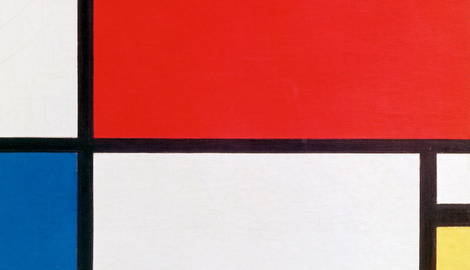

Of the one hundred essays Mondrian dedicated to the meaning behind his work, forty essays were dedicated to rhythm alone. As a philosopher and a painter, Mondrian had his own theories of art, painting, and rhythm, especially in its atemporal, visual dimensions. Without significant theoretical preparation, Mondrian’s paintings are nearly impossible to appreciate. The style offered by Mondrian is often called Neo-Plasticism. This particular form of visual representation employs fixed geometric forms and rigid visual minimalism to illustrate relations of equality between simple elements.
The Modernist Style of Mondrian
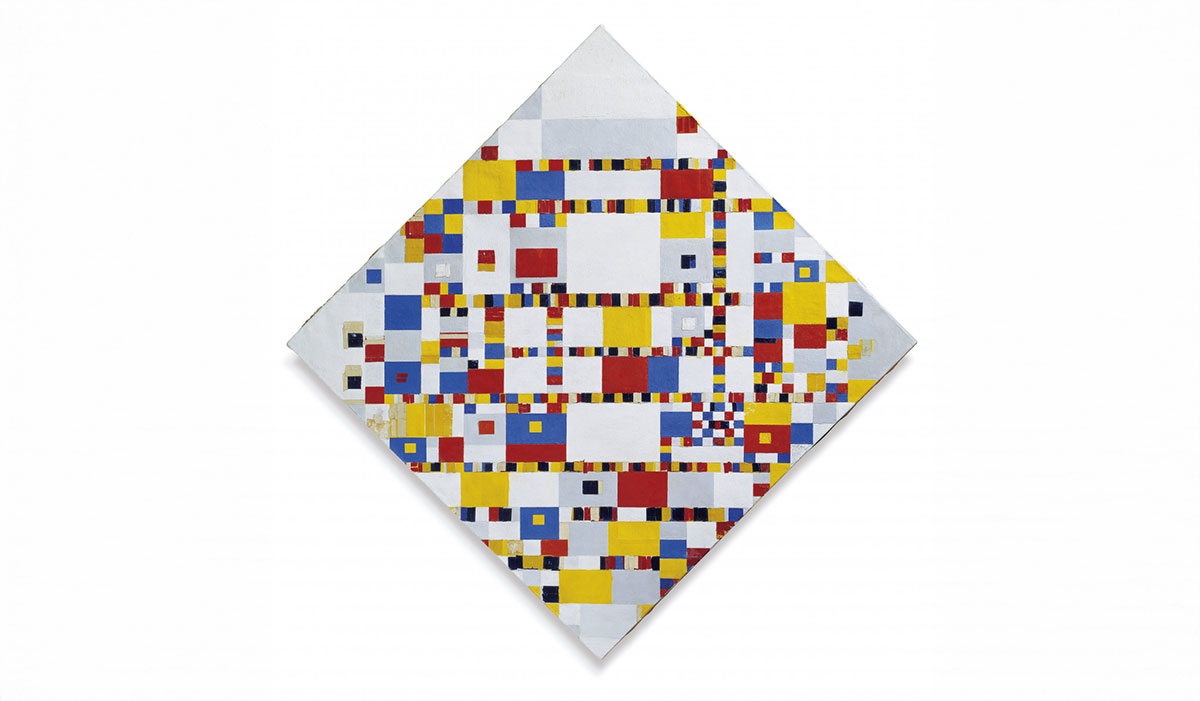
Following certain strict rules of composition, the style limits itself to the absolute fundamentals of visual representation in painting. The painter must, under all circumstances, use nothing but simple shapes—rectangles for the most part—while completely avoiding the use of complex and derived colors—primary colors only. Large segments of pure nothingness characterize Piet Mondrian’s canvases. These blank representations of absence play a crucial role in Mondrian’s attempts to capture the pure abstract component of nature.
Mondrian’s theory of representation holds that human perception and experience contain certain irreducible universal properties and characteristics that remain more or less the same across different cultures and historical epochs. Mondrian has a peculiar understanding of rhythm as it is represented visually as a series of patterns. Later in his career, he develops the concept of dynamic equilibrium to account for different elusive features of his work. Rhythm, in many ways, seems to be a hidden, implicit element in Mondrian’s art and aesthetic sensibility. This hidden element becomes braver, more apparent, and visible in his later compositions. The phenomenology of Mondrian’s art reflects the affective moment of human perception that goes far beyond mere realism and empirical representation. It refers to a kind of transcendental condition for perception as such.
Piet Mondrian was very popular within his milieu and an active participant in the underground art scene of his time. Unfortunately, his popularity and success reached their peak only after his death. He left behind him a vast and rich, complex philosophy of art and aesthetics with a meticulous collection of detailed, elaborate instructions, an entire oeuvre explaining how one is to interpret, observe, and evaluate his paintings.
The Writings and the Philosophy
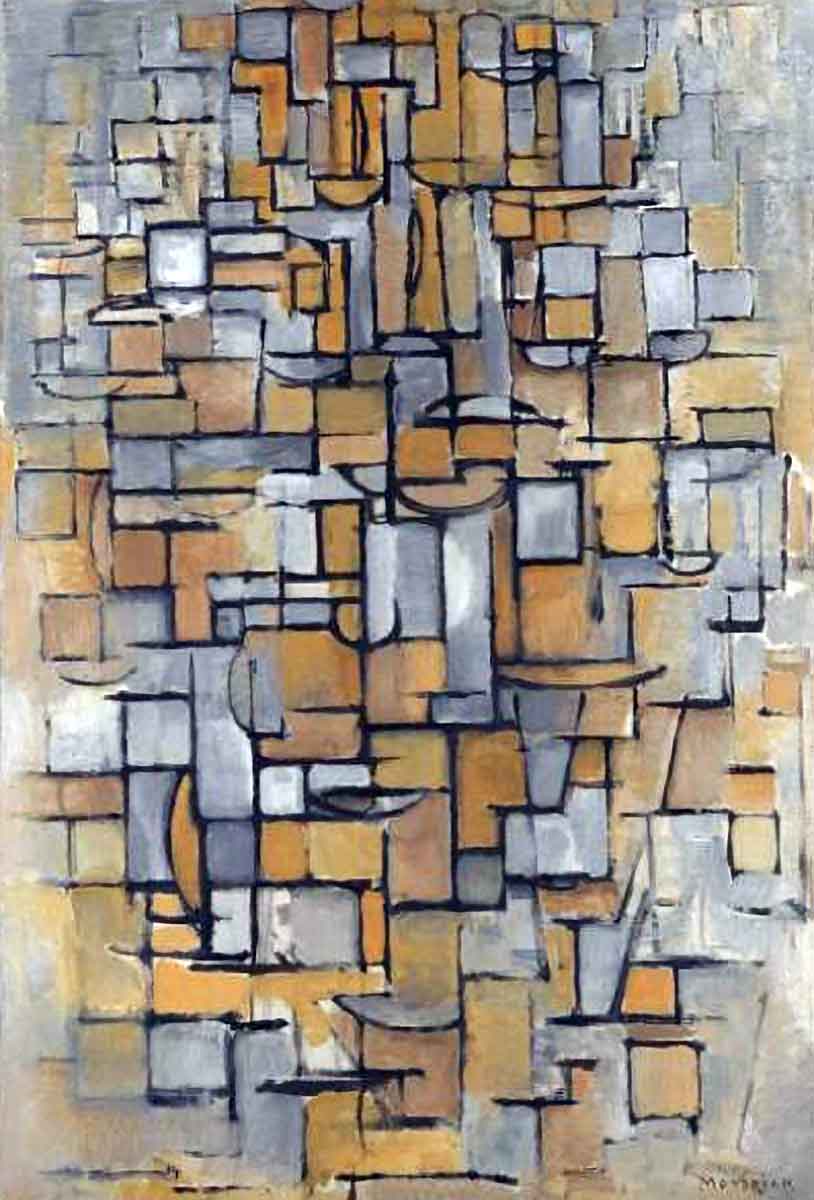
But the philosophy of Piet Mondrian has quite unfortunately, for the most part, been completely forgotten. One reason for this seems to be the esotericism that characterized his written texts, especially the highly idiosyncratic interpretation and description of rhythm or rhythmicity in general. Mondrian borrowed a significant part of his conceptual and philosophical weaponry from Georg Wilhelm Friedrich Hegel to defend his own highly specific and original understanding of rhythmic representations. Numerous scholars, art historians, and researchers specializing in Piet Mondrian’s work offer diverse, often conflicting yet eye-opening readings of Mondrian’s ideas as they pertain to artistic expression, color, pattern, shape, and painterly rhythm.
Mondrian always painted before he wrote. When he wrote, he reflected on what he was painting. Intuition, the initial spark of inspiration, always took precedence and first importance over the discursive part of his creative process. Because of this, his writings do not run exactly chronologically parallel to his art, but a certain continuity is noticeable. Scholars tend to divide Mondrian’s work into three distinct periods. The De Stijl period lasted from 1917 to 1924, the period right afterward from 1924 to 1938, and the final “New York” phase from 1938 to 1944.
Mondrian had a fascinating idea that he referred to as the cosmic rhythm. According to him, the cosmic rhythm signified a variety of vibrational frequencies that would be contained in everything from inorganic matter to living creatures, including human artifacts and technology—everything in the universe would exhibit some aspect or moment of the cosmic rhythm. There are numerous parallels between Mondrian’s notion of cosmic rhythm and Daoist philosophy. It is well documented that Chinese and Hindu philosophies heavily influenced Mondrian throughout his entire lifespan.
Other Influences and Strange Rhythm
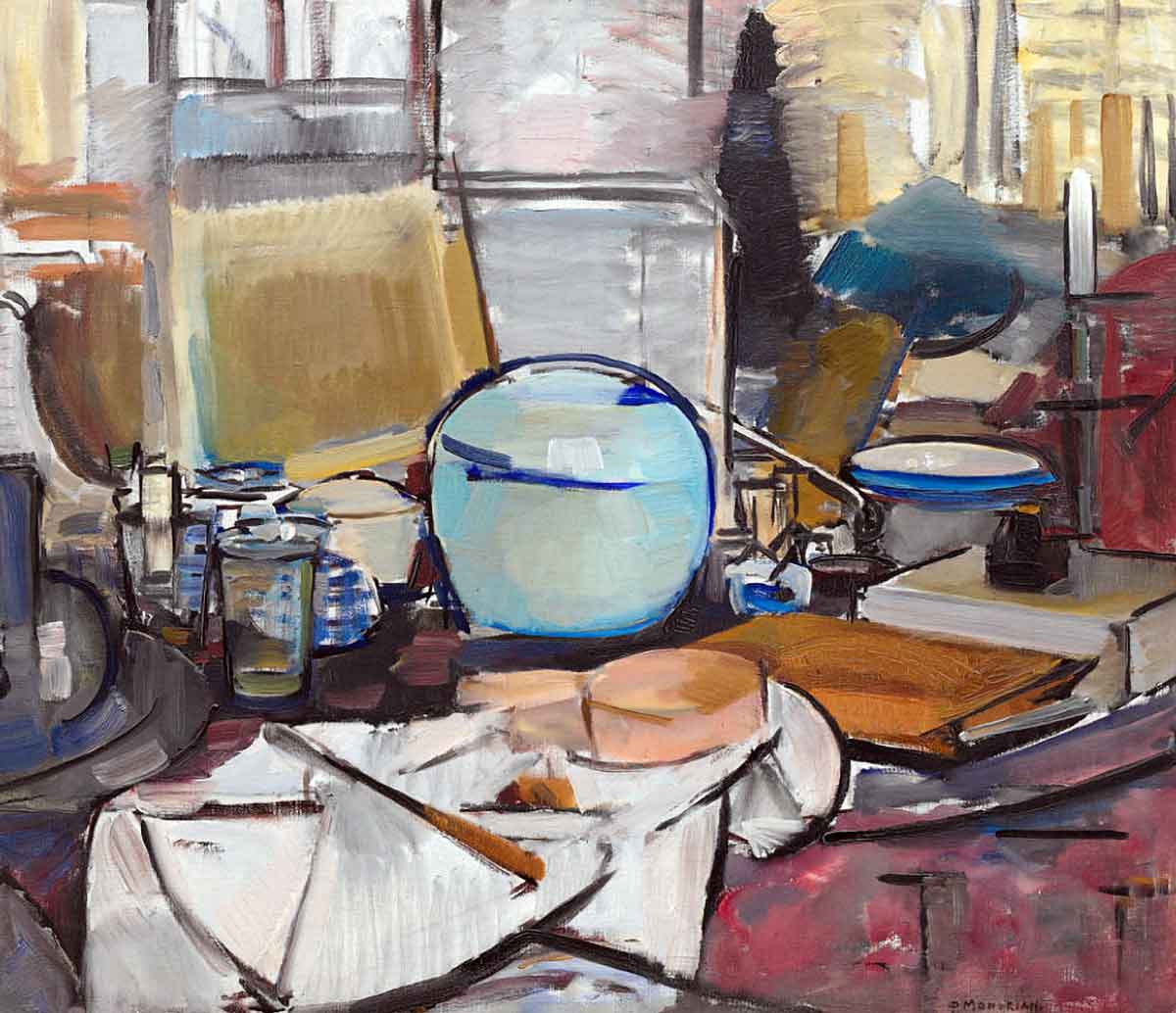
Mondrian’s definition of visual rhythm in painting is quite original, if not strange. Some philosophers of music define rhythm as an interval between absolute homogeneity and absolute heterogeneity of repetitive acoustic or visual elements. For example, the sound of a metronome, a drop of water falling at regular intervals, the ticking away of a mechanical clock, etc. These series of sounds are too plain and monotonous to be considered as rhythms. On the other hand, there are processes in the universe that are too diverse. They lack repetition and consistency. Therefore, rhythms cannot be considered either. Some examples of these are biological processes, irregular patterns of walking, or any activities that are simply too chaotic to be heard (or seen) as rhythmical.
Mondrian saw rhythm as something very similar to the Tao (or Dao) of the Tao Te Ching. A fundamental yet ethereal energy that flows through every single thing in the cosmos. As an elusive power that cannot be seen, heard, named, or otherwise identified in a simple, rational manner. Mondrian’s rhythm philosophy is unique in that it is not limited to particular regions of the world, and it requires neither repetition nor some specific level of difference to be appreciated.
For Mondrian, art is a field of forces. It is a paradoxical tension between chaos and order. It is fundamentally a clash of powers. Mondrian wanted to show life. He wanted to exhibit a painting (something that is fundamentally fixed or frozen) that depicts a process, almost like a living organism. The opposition of contrasting elements is one of the defining features in Mondrian’s paintings; it is a kind of visual conflict that seeks resolution through the detailed balancing out of elements through compensation.
Dynamic Equilibrium
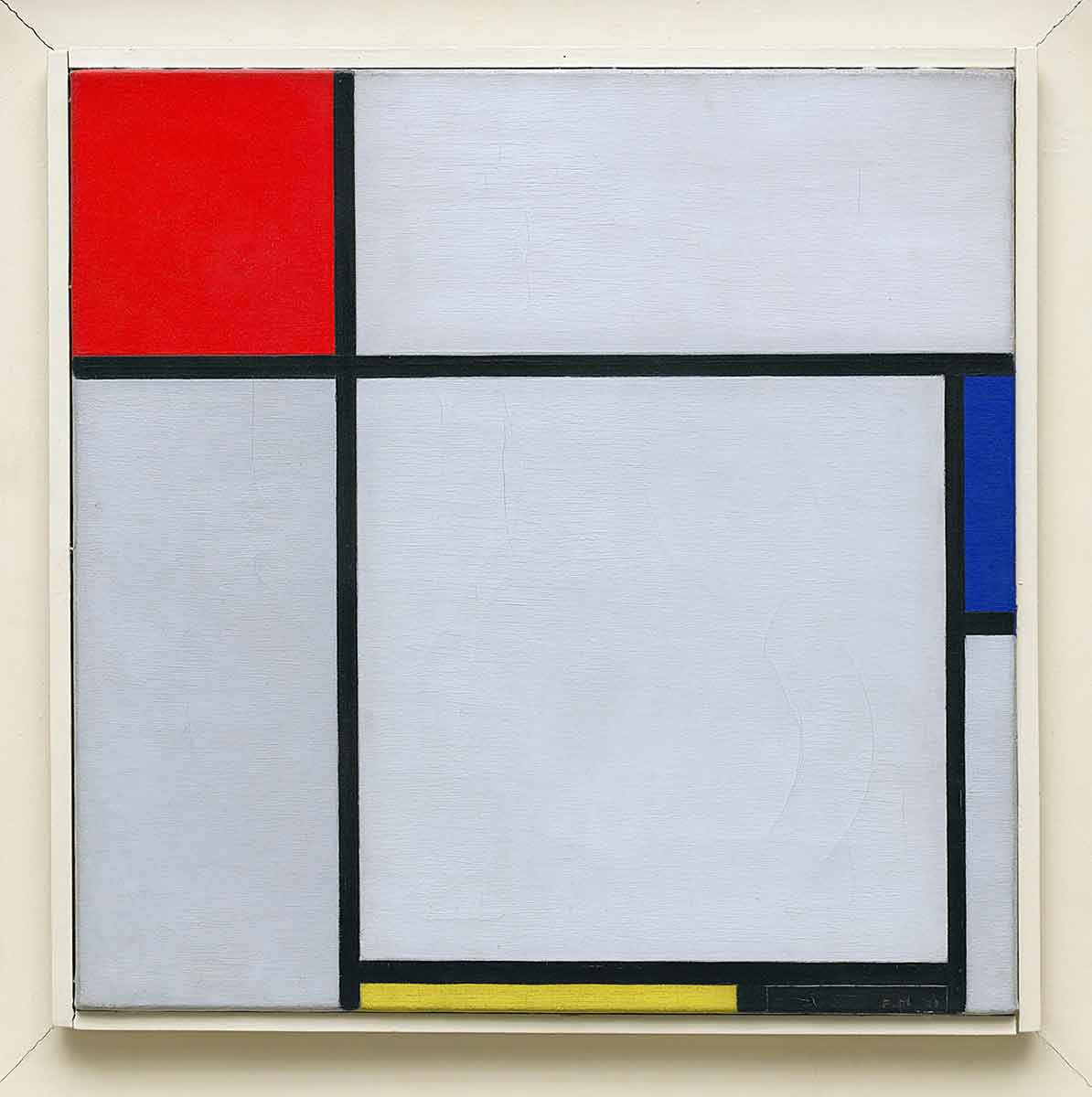
Mondrian’s earlier work and methodology are much more minimalist. The rhythmic chaos and fluctuations in color and shape are much more domesticated and compartmentalized behind simpler forms, elementary color schemes, and the overall stasis of the visual. Later on, they become much more lively and even intense, almost bulging outward from the canvas in some strange, unexplainable way. It is no easy task to understand the intentions behind the paintings.
However, teaching oneself how to look is much more difficult. Mondrian wants to activate a new variety of aesthetic sensibilities in the viewer as there are so many hidden potentialities of perception. In a dazzling dance, numerous static and dynamic contraries play out on the canvas in unseen ways. Mondrian’s philosophy, as exemplified in his work, challenges the viewer to re-calibrate their eyes, so to speak. Through Mondrian’s otherwise complex and confusing writing, we could perhaps observe some of the paintings being brought to life through the conflicting affectations of tension and balance.
Aesthetic theory is complicated, but Mondrian, as a philosopher-painter, introduces completely novel challenges that can catch one off-guard. Mondrian’s paintings are not to be seen as only a collection of things. They are not just colorful shapes on a canvas, even though it may seem like it at first glance. Neither are they realistic depictions of things either in the empirical world or the world of imagination. Rather, the Neo-Plastic works of Piet Mondrian should be interpreted as a series of relations. A colorful and diverse bundle of connections or a cluster of interrelated elements. The paintings operate as a field of functions.
Painting as a Field of Relations
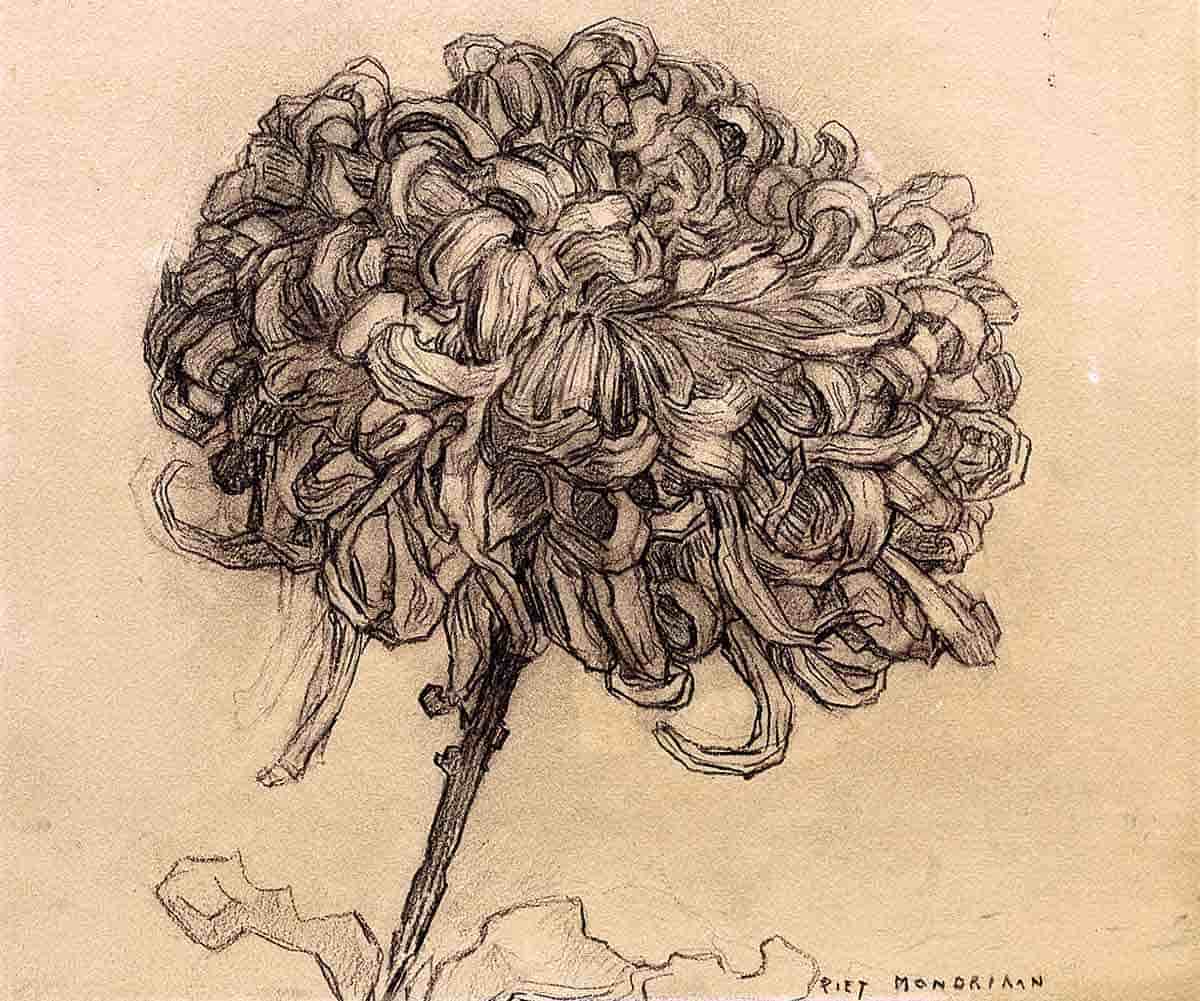
Mondrian’s work can be seen as involving many different moves or maneuvers in a highly dynamic game. The game of painting. Mondrian’s art cannot be readily defined since no single individual is meaning one could point to either in language or on the canvas. What defines the painter’s art is the specific way in which the object(s) (or lack thereof) is/are articulated. The thing depicted gives way to the style of depiction and the materials used.
Mondrian makes fools of us all, but he especially turns perception as such into a folly. We think we are looking at something fixed or static. But the moment the mind attempts to fix itself upon the objects of the painting, even when the subject matter is specific, it is immediately alienated from the canvas. Mondrian’s paintings are incredibly contextualized. Observation, exposing the implicit bias of the gaze, becomes an altogether political act. No more is there a clear line separating the medium from the subject matter of the painting. Things, language, and the world become intertwined in a way that is impossible to untangle. Form becomes content. Observation is thereby seen as a highly subjective, culturally mediated, and totally value-laden activity. What does this reveal about science? Something along the lines that is seeing always implies (however hidden) a method or a set of tacit agreements. Similar to any observable material surface, the surface of the canvas presents its own complex intertwinement between matter and concept. Perception is a spectrum. The materiality of the phenomenon predominates on the one end, while the conceptual-linguistic web predominates on the other. The observation-phenomenon, thereby, is becoming neither purely sensual nor purely discursive.