
Joke aside, metaphysics covers questions related to the fabric of reality: What is real? Why is there something rather than nothing? Does free will exist? Who are we? Ancient thinkers and commentators coined the term ta meta ta physika, literally “beyond physics,” to explore principles transcending the material realm. The five books discussed here revolutionized this field, showing that exploring existence is essential for understanding our place in the cosmos and using that knowledge for the greater good. From Aristotle’s first philosophy to Lewis’s modal realism, these five books remind us that metaphysics is humanity’s oldest rebellion against the mundane.
1. Aristotle’s Metaphysics (4th century BC)
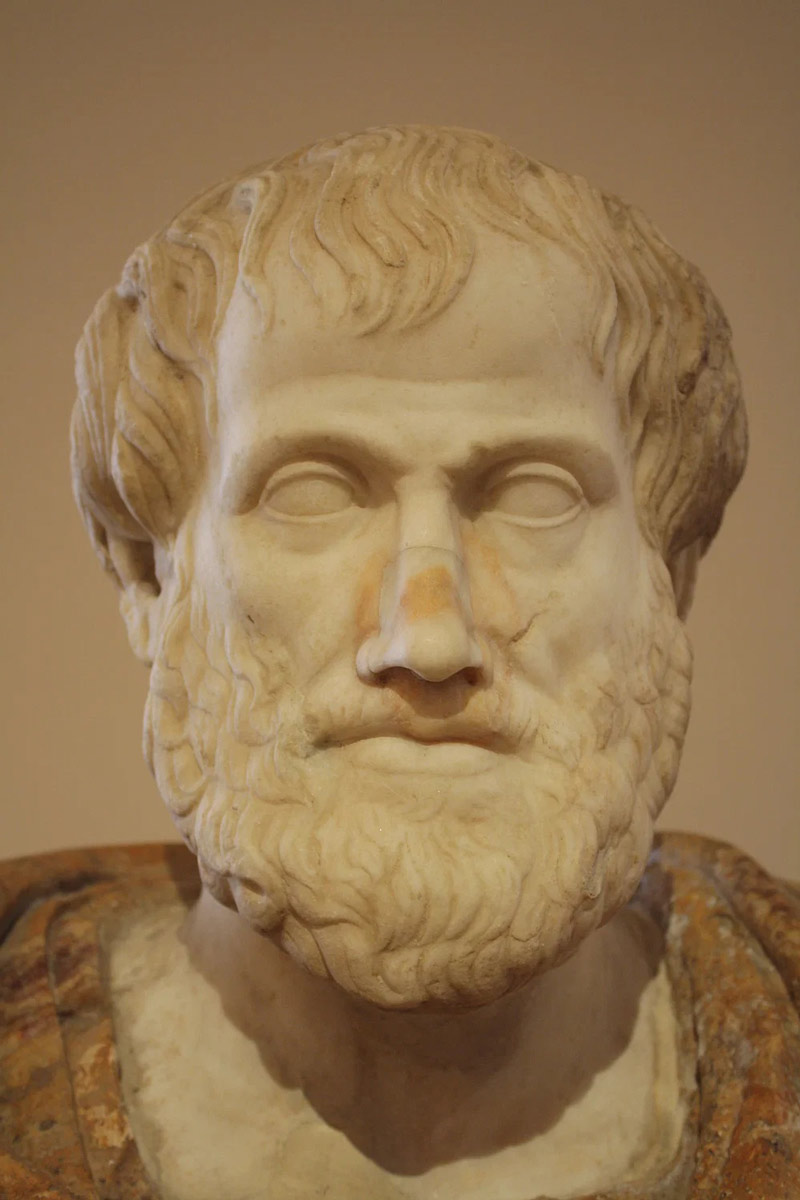
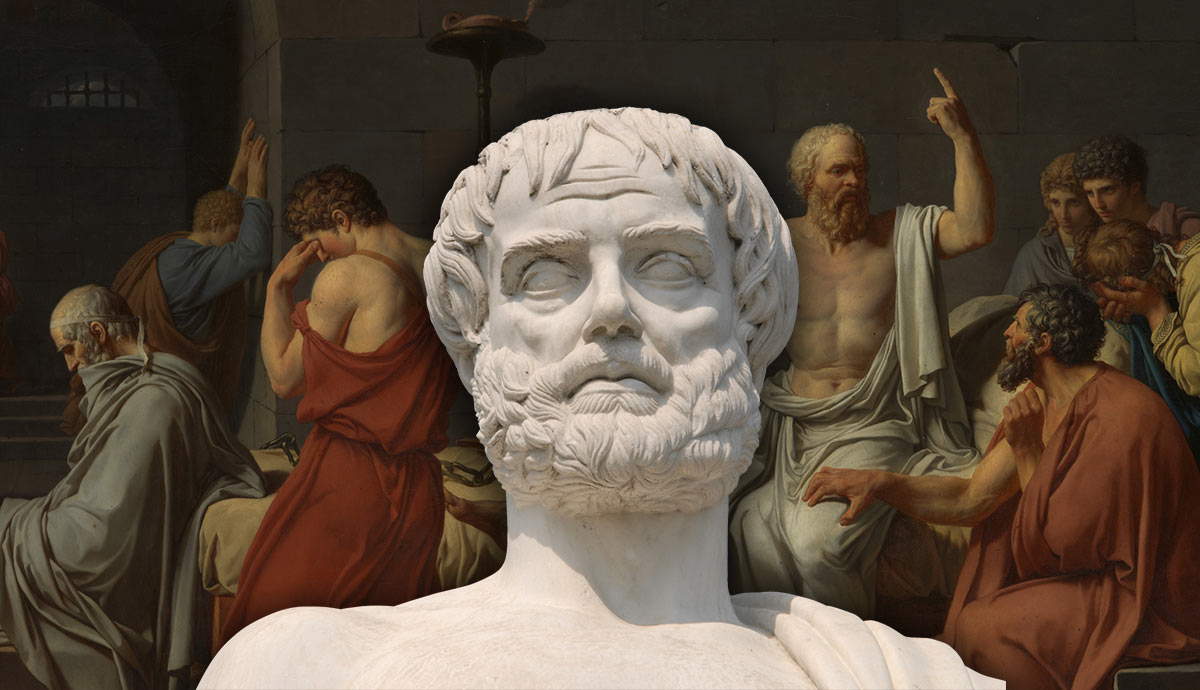
Aristotle’s Metaphysics is less a single treatise than a collection of labyrinthine inquiries into the nature of “being.” Scholars now agree that these were likely Aristotle’s lectures. Andronicus of Rhodes arranged Aristotle’s writings in the 1st century BC and labeled the treatise following Physics as Metaphysics. Although Andronicus’ reasons for baptism were rather practical, they struck a chord, given that Metaphysics dealt with subject matter that goes beyond what is observable.
Metaphysics is divided into several books, each referred to by a Greek letter. In them, Aristotle rejects Plato’s realm of abstract ideas, arguing instead that reality resides in individual substances (acorns, humans, even coffee mugs), each defined by its inherent purpose. Aristotle’s theoretical framework, the Four Causes, explains existence by analyzing the four “whys”: why is it something rather than nothing? His famous example involves the four “whys” of a statue: its material composition (marble), formal structure (shape), efficient origin (the sculptor), and final purpose (to inspire awe). All individual substances can be defined and explained in a similar vein.
Teleology, the idea that everything strives toward a telos (i.e., the end goal), became the backbone of Western thought: the purpose of acorns was to become oaks, humans strive to flourish in the community, and coffee mugs are here to be filled with liquid that warms our hearts and boosts our brains on a rainy morning.
This teleological worldview dominated medieval Scholasticism and also influenced Jewish philosophers and Islamic scholars, thereby uniting thinkers from different geographical, ethnic, and religious backgrounds. Charles Darwin’s theory of evolution by natural selection dismantled this Aristotelian teleology.
In On the Origin of Species, Darwin argued that species evolve not through predetermined ends, but through random variation and natural selection. A finch’s beak, for instance, adapts not to fulfill a cosmic plan but to survive the contingencies of its habitat. Darwin’s mechanistic explanation replaced Aristotle’s purposeful cosmos with a universe shaped by chance and necessity, marking one of history’s most profound philosophical shifts: from asking why things exist to explaining how they persist.
2. Thomas Aquinas’ Summa Theologica (1265–1274)

In the 13th century, Thomas Aquinas performed a theological and philosophical miracle: he reconciled Aristotle’s empiricism with Christian doctrine, crafting a metaphysical system where faith and reason manage to coexist. Furthermore, he avoided being called a heretic while doing so (instead, he was canonized in 1323). The Summa Theologica, his sprawling 4,000-page masterpiece, argues that God’s existence can be proven through reason and observation of the natural world. Aquinas’ Five Ways, that is, the arguments from motion, causality, contingency, gradation, and design, build on Aristotle’s conception of the Unmoved Mover, thereby positing a Necessary Being who grounds all existence.
The Necessary Being in question is, of course, the Christian God. How exactly does Thomas Aquinas perform this inferential leap? For example, the Argument from Motion asserts that every change in the universe traces back to a Prime Mover (God), while the Argument from Contingency claims that since all things depend on others for existence, there must be a non-contingent source (again, yes, you guessed right, God) to prevent an infinite regress.
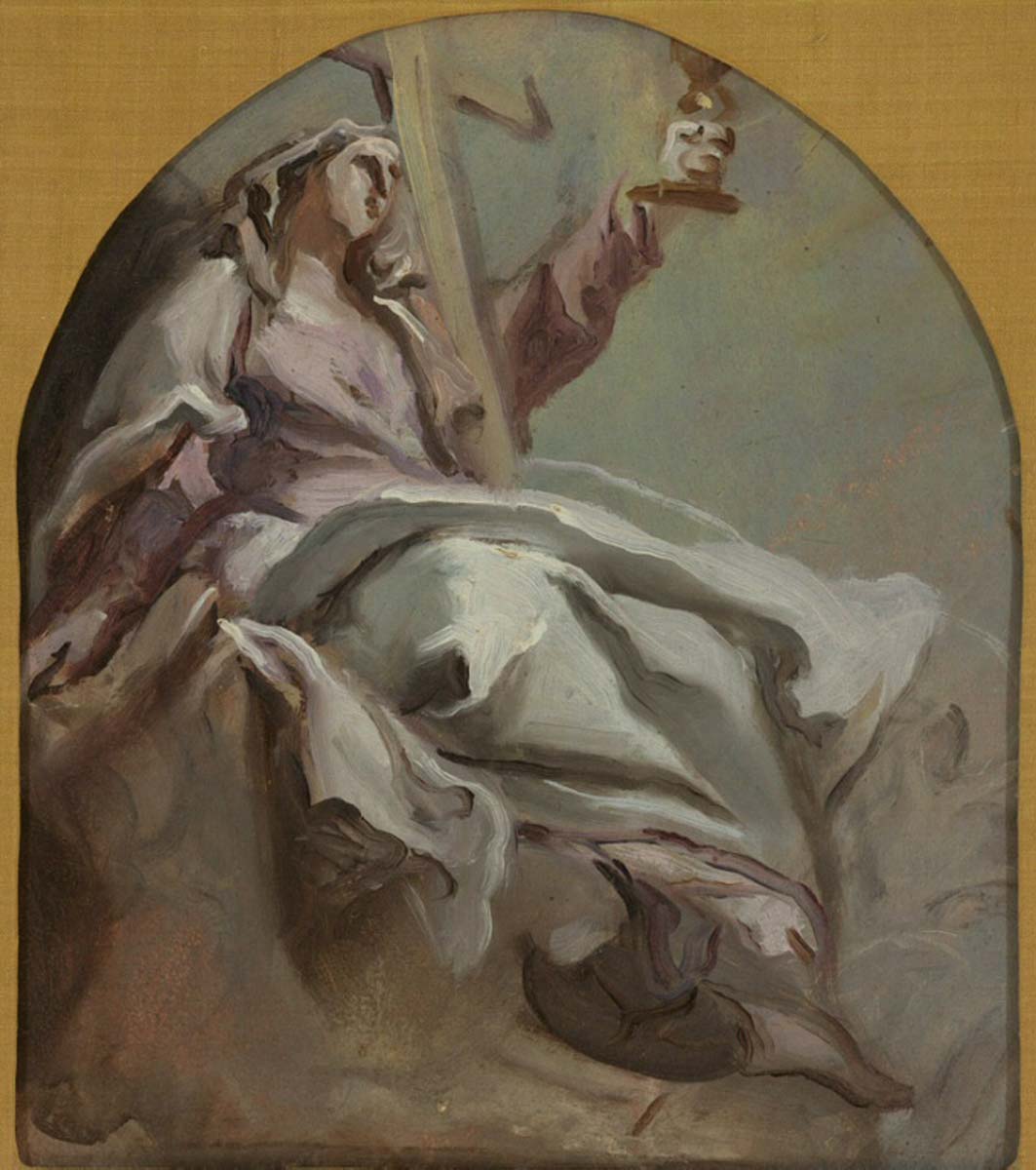
Aquinas’ distinction between essence (the fundamental nature of a thing) and existence (the fact of its being) revolutionized medieval thought, asserting that only in God, the Necessary Being, are these aspects inseparably unified. His bold synthesis of Aristotelian logic and Christian theology not only became the bedrock of Catholic intellectual tradition, inspiring Dante’s Divine Comedy (which mirrors Aquinas’ cosmic order in its structured vision of the afterlife), but also laid the groundwork for modern debates about faith and reason.
Today, Aquinas’ ideas reverberate in theistic arguments like Intelligent Design, which echoes his Fifth Way (Argument from Design) by citing biological complexity as evidence of a purposeful Creator, albeit divorced from Aquinas’ rich Scholastic context. Far from reducing metaphysics to theology’s servant, Aquinas elevated it to a dynamic heuristic, a tool for probing the divine through reason, challenging the myth of the Dark Ages as an era of intellectual stagnation.
3. Immanuel Kant’s Critique of Pure Reason (1781)
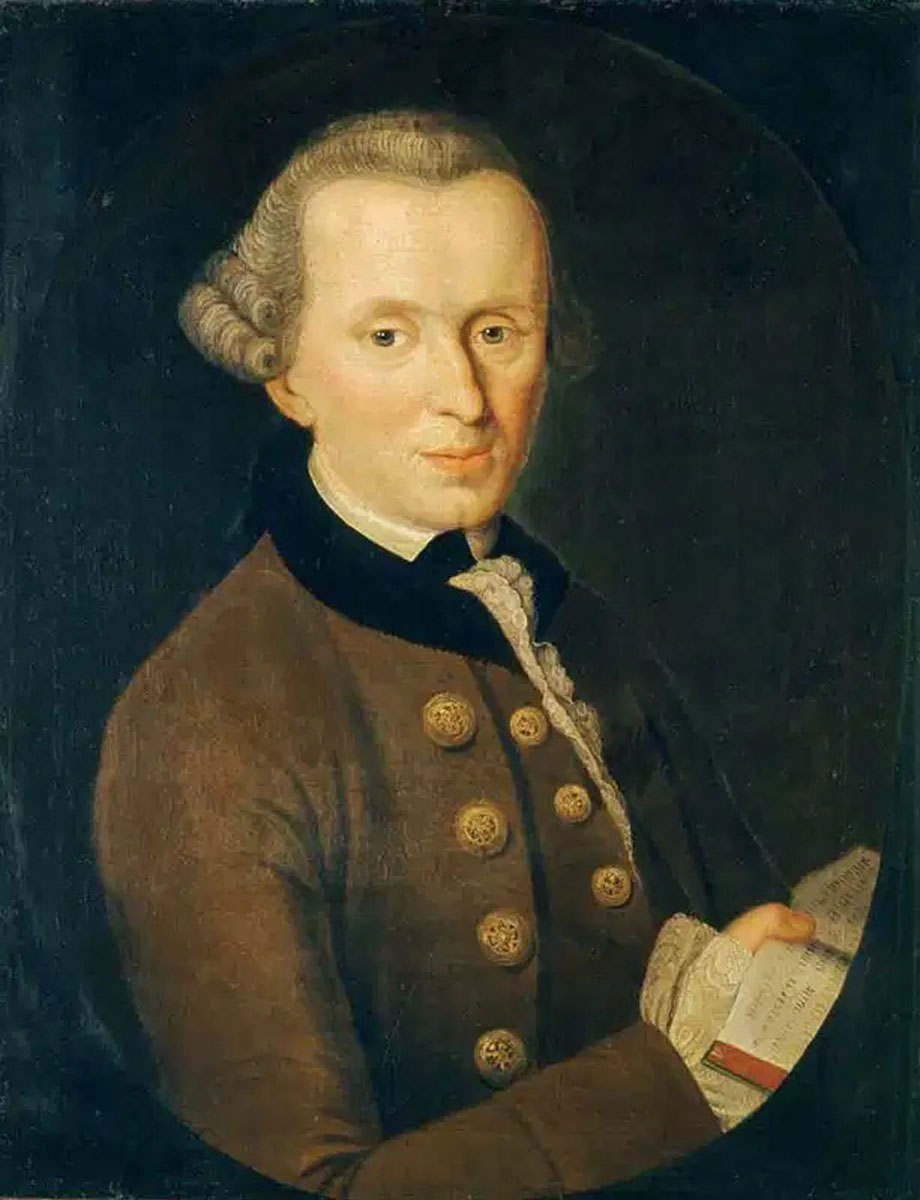
After awakening from the long dogmatic slumber due to David Hume’s empiricist philosophy, Immanuel Kant declared that metaphysics had been asking the wrong question all along. Prior to Kant, philosophers assumed reality existed “out there,” independent of us, and debated its nature. So, instead of pondering “What is real?”, he asked, “What can we know for real?” His answer was somehow both liberating and a bit claustrophobic; we are not passive observers of the reality that exists independent of us.
The term “Copernican Revolution” is used metaphorically to describe Kant’s shift in focus from constructing an abstract metaphysical system to the epistemic subject—the knower, or the cognizer. Just as Copernicus transformed astronomy by proposing that the Earth revolves around the Sun rather than the reverse, Kant redefined metaphysics by centering our cognition as the active architect of reality, but only insofar as our experience allows it.
Kant divided existence into phenomena (the world as we perceive it), structured by innate categories like time, space, and causality, and noumena (the things-in-themselves), forever beyond human grasp. These categories, he claimed, are not derived from experience but are prerequisites for experience because they are universal “rules” that let us organize sensory data into coherent knowledge.
Can we say anything about noumena, though? Kant’s answer is a polite but firm Nein. Our brains lack the metaphysical bandwidth to do so consistently and coherently. This means that ideas such as God or the soul’s immortality transcend empirical verification and, by the same token, go beyond our possible experience.
By anchoring knowledge to the mind’s architecture, Kant redefined metaphysics’ purpose: instead of chasing transcendent truths, it must map the boundaries of human understanding. The Critique of Pure Reason is a reminder that reality is rather a collaborative performance between the world and your brain’s backstage crew, which aligns with much of modern psychology.
4. Martin Heidegger’s Being and Time (1927)
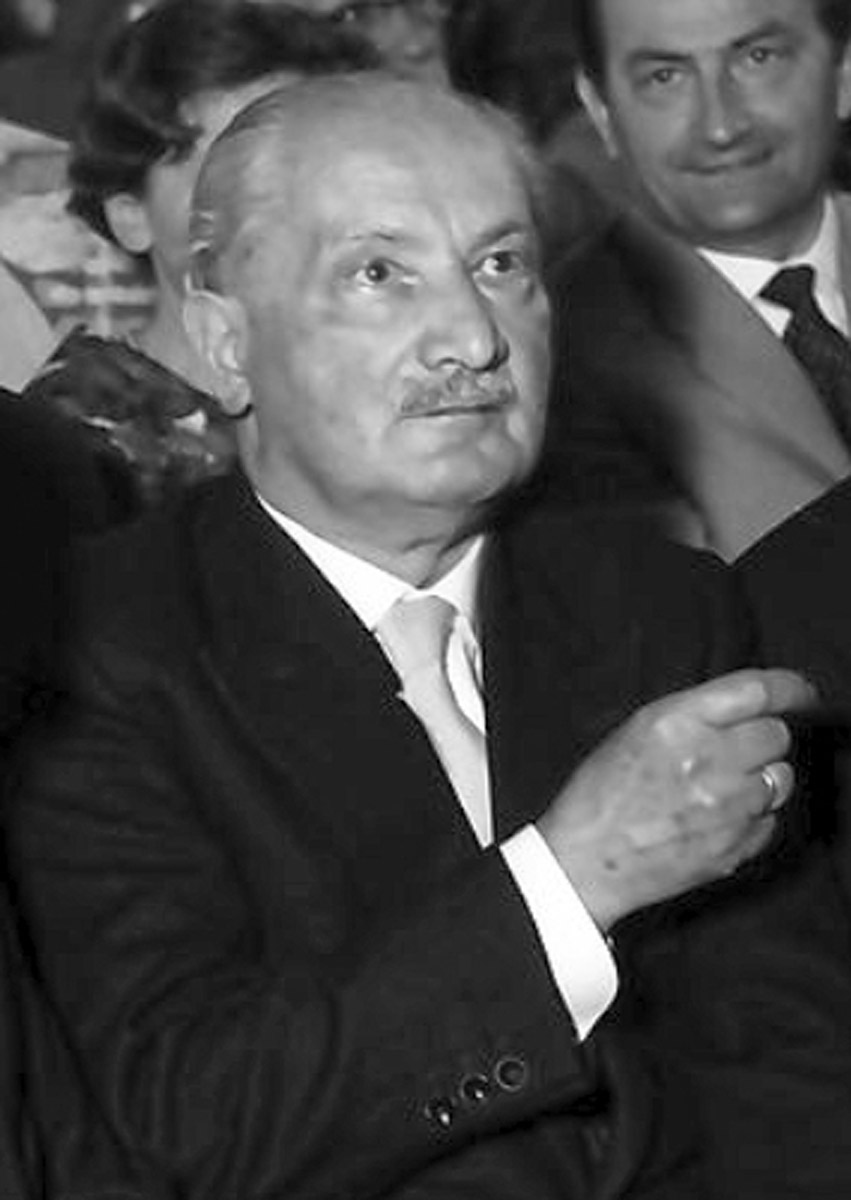
Martin Heidegger’s Being and Time upended metaphysics by shifting its gaze from abstract “Being” to the messy reality of human existence. However, Being and Time reads less like a philosophy text and more like a cryptic crossword where the clues are written in German compound nouns. Consider this your fair warning: patience (and a strong coffee) is non-negotiable. For Heidegger, traditional philosophy had overlooked the most pressing question: What does it mean for us to exist?
His answer, articulated through the concept of Dasein (“being-there”), is that humans are unique; we’re self-aware, haunted by mortality or Sein-zum-Tode (“being-toward-death”), and “thrown” into a world we didn’t choose. Our existence is defined by Sorge (care): we fret over our jobs, relationships, and whether we’ve left the oven on, all while grappling with the absurdity of being.
Heidegger’s focus on lived experience birthed existentialism and influenced fields from psychology (existential therapy) to literature (Albert Camus’ The Stranger). His critique of modernity’s obsession with technology and efficiency, in which humans become mere cogs in a machine, resonates in today’s debates about AI and the erosion of authentic connection by social media. Being and Time testifies that metaphysics isn’t just about cosmic truths but the anxiety-ridden, coffee-stained reality of being human.
5. David Lewis’ On the Plurality of Worlds (1986)

David Lewis’s On the Plurality of Worlds is a metaphysical fever dream, one where every possible universe exists. By advancing the view known as modal realism, Lewis argues that alternate realities (where you’re a pirate, cats rule Earth, or 2+2=5) aren’t hypothetical but concrete, spatiotemporally isolated worlds. If it’s logically possible, it’s real somewhere.
This isn’t sci-fi, as weird as it sounds, but a rigorous solution to questions about necessity and possibility that plagued much of analytic philosophy in the second half of the 20th century. For instance, when we say, “Water is H₂O in all possible worlds,” Lewis takes this literally: every world without H₂O “water” is a distinct universe.
Lewis injected new life into metaphysics by treating counterfactuals as ontological facts. These are statements about what could, would, or might have been. While philosophers traditionally dismissed claims like “If dinosaurs hadn’t gone extinct, humans might not exist” as fanciful thought experiments, Lewis argued they describe genuine facts and thus represent windows into concrete, alternate realities.
His legacy is a testament to philosophy’s power to stretch reality until it snaps, revealing new dimensions of thought. Critics dismiss modal realism as extravagant and reject it on the basis of Ockham’s razor (why multiply universes beyond necessity?), but Lewis’s ideas permeate pop culture (the Marvel multiverse) and theoretical physics (multiverse theory).