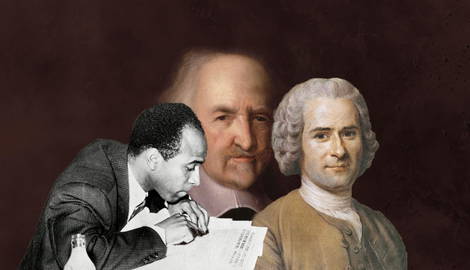

Political philosophy is the art of asking the question “How should we live together?”—a question as old as civilization itself. While philosophy may usually come across as dry theory, in this case, the ideas can topple empires, justify wars, and underpin constitutions. In other words, political philosophers can actually make a difference in our society. The five books below deal with democracy, tyranny, and everything in between. From ancient debates about ideal government to modern fights against isms of the day, they grapple with power’s key paradox: power almost always corrupts, yet we need it to survive.
1. Plato’s Republic (c. 375 BC)
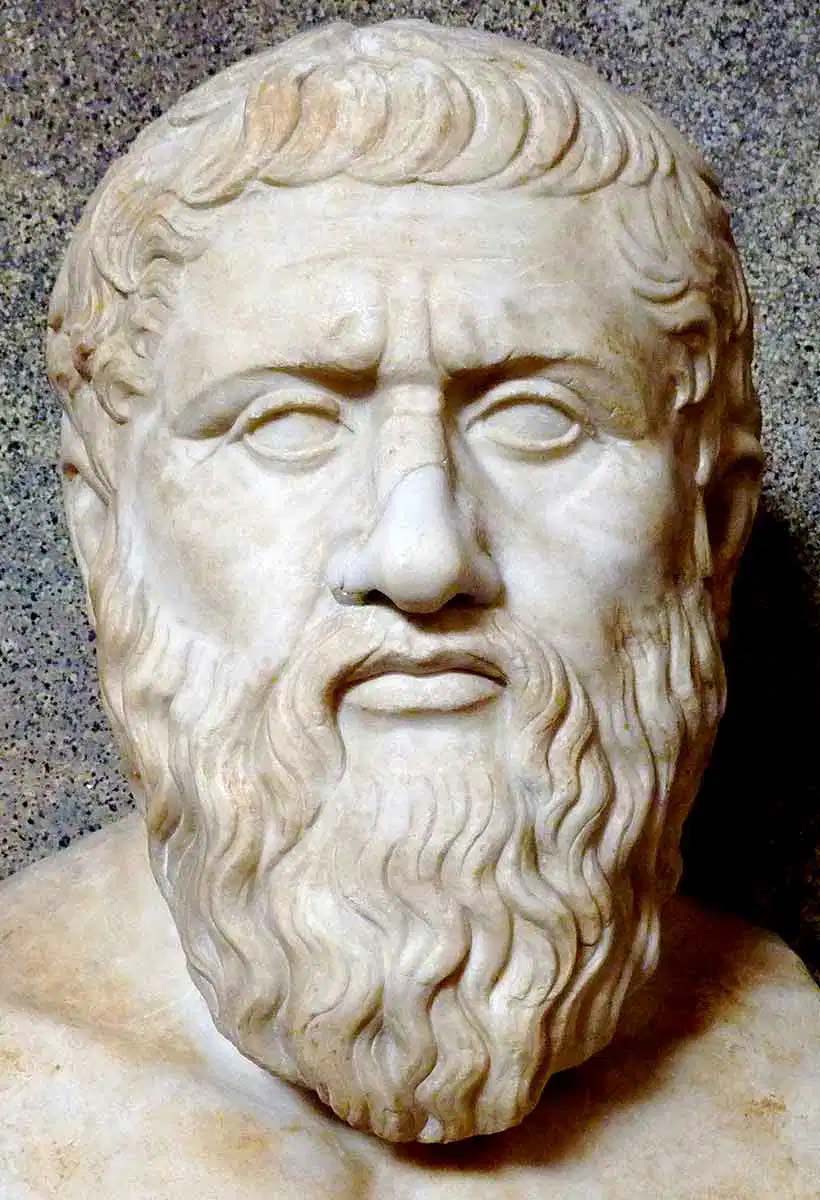
Plato’s Republic is philosophy’s original dystopia. Framed as a dialogue between Socrates and the members of Athenian crème de la crème, it envisions a society ruled by philosopher-kings (narcissistic much, huh, Plato, buddy?), where art is censored (cancel culture 2,400 years before Twitter), families are abolished, and lies are told for the “greater good.” Plato’s aim (except to shock generations to come)? To define justice, which he argues, isn’t mere fairness but harmony between the soul’s parts (reason, spirit, desire) and the state’s classes (rulers, soldiers, workers).
To sketch why philosophers should be rulers, Plato presents us with The Allegory of the Cave. In the cave, prisoners mistake shadows on the cave walls for reality. Like most people, they are deluded by appearances until one among them is brave enough to escape confinement and sees the world as it truly is. True philosophers escape the cave, see the Supreme Form of the Good, and return to govern (reluctantly).
Of course, Plato wasn’t so naïve as to think that an ideal aristocratic society ruled by philosophers and kings would last forever. He thus describes the cycle of political decay, tracing how his ideal society degenerates into less and less perfect regimes due to intellectual and moral corruption. Surprisingly for us, who regard democracy as the pinnacle of political development, Plato criticized democracy as no better than mob rule, which leads to tyranny in which a demagogue exploits the mob’s disillusionment to seize absolute power, thereby enslaving them. On closer reading, Plato here warns us about the dangers of populism and stabilitocracy, voicing concerns of many contemporary political philosophers.
An indirect and pragmatic way to secure the favorable conditions for building the society described in The Republic was to enlighten the tyrant and make him a philosopher. Or, at least, Plato thought so (erroneously). He visited Syracuse three times between 361 BC and 366 BC to talk some sense into Dionysius II, but to no avail.
2. Thomas Hobbes’ Leviathan (1651)
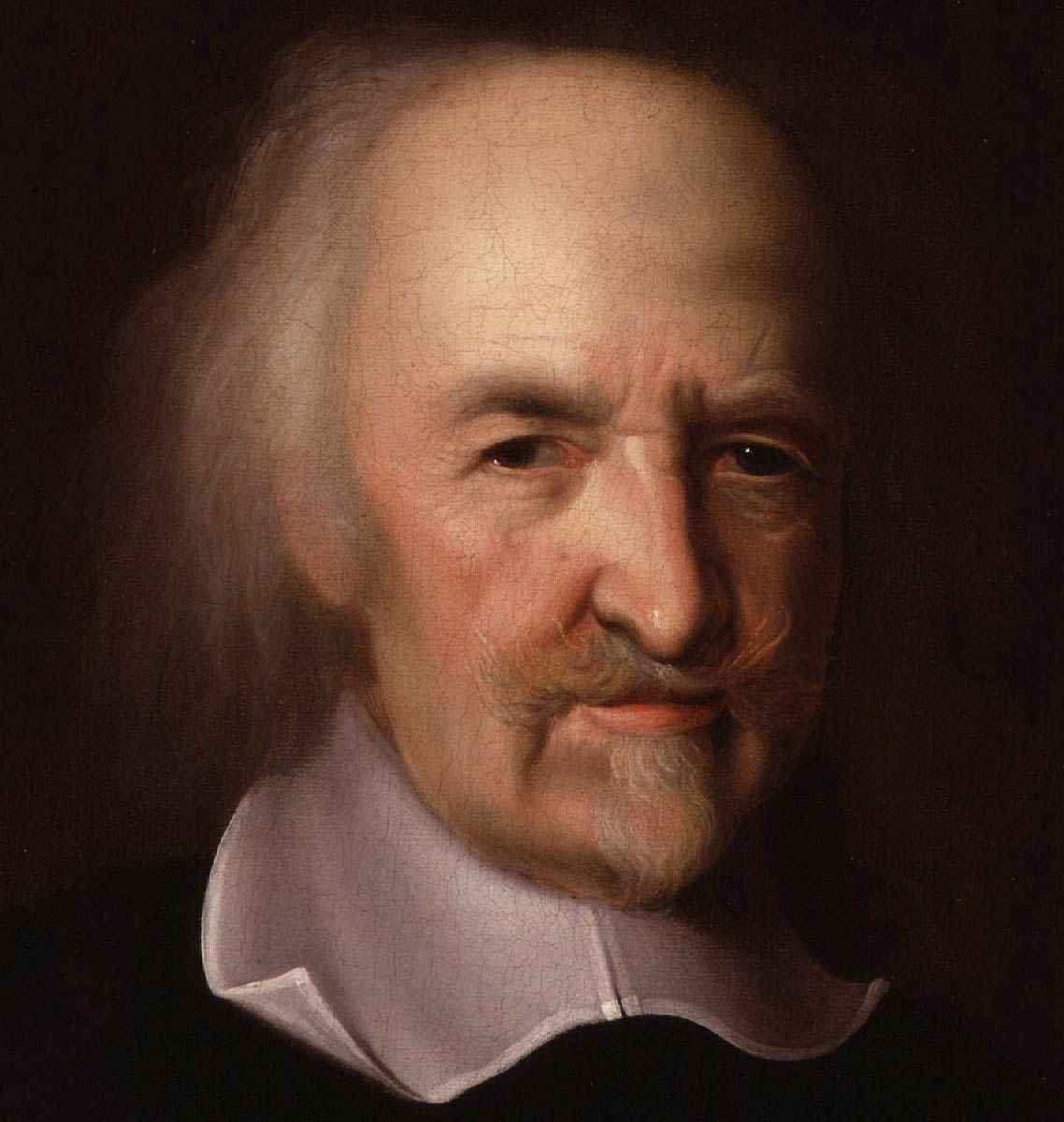
Hobbes wrote Leviathan in the shadow of the English Civil War, a time when “life was solitary, poor, nasty, brutish, and short.” This is why he probably described the state of nature in these terms. It is a grim, pre-society condition where life is a chaotic “war of all against all,” driven by humans’ innate self-interest, competition, and fear. Without a sovereign, society collapses into chaos. Hobbes’ solution? A social contract where individuals surrender freedom to an absolute sovereign (the “Leviathan”) in exchange for security.
Thus, Hobbes birthed modern political philosophy, grounding authority in consent rather than divine right. This sovereign, whether a monarch or assembly, wields unchallenged power to legislate, judge, and protect, preventing societal collapse. Hobbes argues that obedience to the Leviathan is imperative, as even tyranny is preferable to anarchic violence.
His materialist and rather bleak view of human nature, rooted in mechanistic desires and fears, anticipates Enlightenment thinkers like Locke and Rousseau, who similarly grappled with balancing liberty and order, albeit rejecting Hobbes’ absolutism. Civil liberties advocates also argue that unchecked security regimes risk normalizing authoritarianism. This tension is starkly visible in contemporary debates over state surveillance, pandemic lockdowns, counterterrorism measures, and immigration enforcement, which all channel Hobbes’ central dilemma: Does collective security always justify the erosion of individual freedoms?
3. Jean-Jacques Rousseau’s The Social Contract (1762)
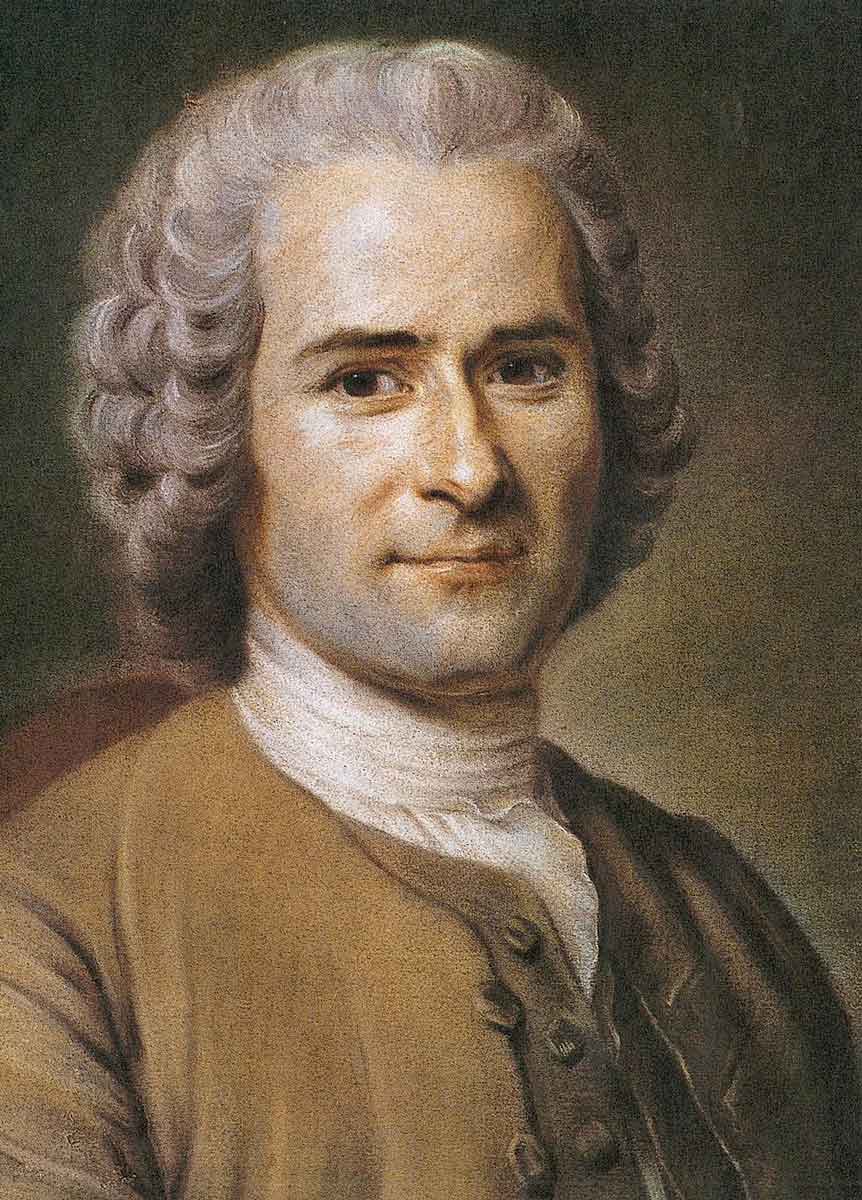
Jean-Jacques Rousseau’s declaration that “Man is born free, yet everywhere he is in chains” is the iconic opening salvo of The Social Contract. More than a poetic flourish, it distills Rousseau’s radical critique of civilization: humanity’s innate freedom, he argues, is shackled by the very societies meant to protect it. The “chains” he describes are not literal iron but the invisible constraints of hierarchical governance, unequal property rights, and oppressive social norms that alienate individuals from their natural liberty and dignity.
Rousseau contrasts the hypothetical freedom of the “state of nature” (where humans act on instinct without moral or political corruption) with the suffocating structures of civil society. Feudal serfdom, absolute monarchy, and even Enlightenment-era monarchs, he claims, pervert humanity’s natural equality by codifying power imbalances as “order.” His critique targets not just tyrants but the Enlightenment’s blind faith in progress: reason and technology, he warns, often entrench inequality rather than eradicate it (sounds familiar, right?).
How can we reclaim freedom within society? Rousseau’s answer is to respect the general will. General will is the only legitimate authority and represents collective sovereignty, prioritizing the common good over individual interests. He, therefore, clashes with Hobbes over where the sovereignty lies.
This idea inspired revolutionaries (see: the French Revolution’s Liberté, égalité, fraternité) and modern critiques of capitalism’s wage slavery. Yet his paradox endures: Can any social contract avoid replacing one set of chains with another?
4. Karl Marx & Friedrich Engels’ The Communist Manifesto (1848)
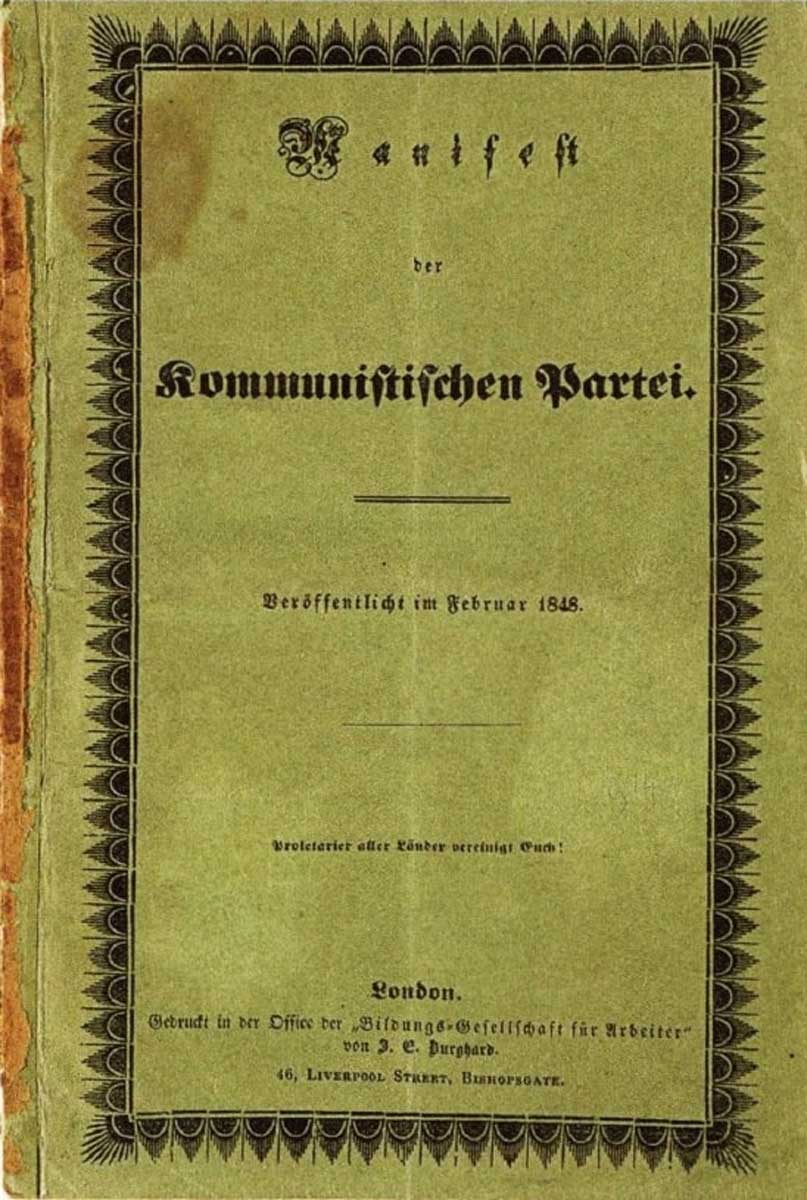
The Manifesto is less a book than a battle cry. Written amid Europe’s 1848 revolutions, it declares history a saga of class struggle: oppressors vs. the oppressed, feudal lords vs. serfs, billionaires vs. gig workers. For Marx and Engels, no social contract could be devised to divide goods among classes justly. Justice, they argue, can only be realized when the proletariat (workers) overthrow the bourgeoisie (capitalist class), abolish private ownership of production, and establish a classless society.
How did the class struggle come to be? The bourgeoisie, as Marx and Engels outline, revolutionized industry and global trade but reduced all social relations to naked self-interest, exploiting laborers who survived by selling their labor. Capitalism’s relentless drive for profit, they claim, creates systemic inequality, alienates workers from their labor, and cycles through crises of overproduction. The Manifesto predicts capitalism’s collapse under its own contradictions, as the proletariat, united by shared suffering, overthrows the bourgeoisie and, along the way, probably spills some blood.
The Manifesto is also an original piece regarding its philosophical foundations. Reshaping Hegelian idealism, Marx and Engels posit historical materialism. Historical materialism holds that material conditions (economics, labor, class relations) shape all social structures, not abstract ideas or morality. This inverted philosophy’s focus, arguing that “the ruling ideas of every age are the ideas of the ruling class,” was a critique later expanded by Gramsci’s cultural hegemony theory.
Despite its philosophical and historical relevance, critics highlight flaws in The Manifesto: 20th-century communist regimes often devolved into authoritarianism and ultimately crumbled, contradicting Marx’s vision of an eternal stateless utopia. Additionally, globalization and technology have altered class dynamics beyond his 19th-century lens. Still, the Manifesto endures not as a blueprint but a mirror held to capitalism’s excesses.
5. Frantz Fanon’s The Wretched of the Earth (1961)
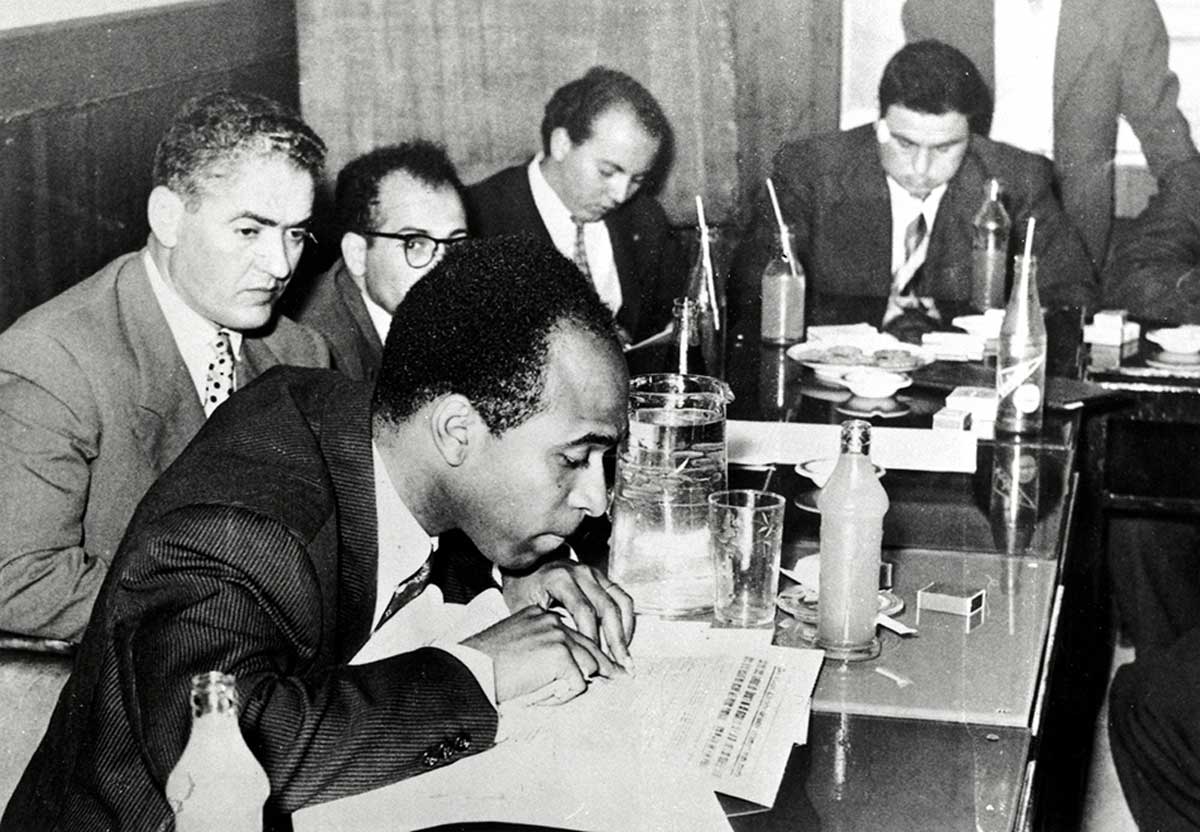
Frantz Fanon’s The Wretched of the Earth became the bible of 20th-century anti-colonial struggles, influencing figures like Malcolm X and Che Guevara. Written during Algeria’s brutal war for independence, Fanon, a psychiatrist and revolutionary, diagnoses colonialism as a system of dehumanization that infects both colonizer and colonized.
This is because Colonialism isn’t just the theft of land but the theft of identity. Fanon argues that colonized people internalize their oppressors’ racism, leading to self-loathing and fractured psyches. To break free, they must reject this “colonized mind” through revolutionary struggle, even if it demands violence.
His central thesis is thus that liberation mustn’t be conceived as just political; rather, it’s a psychological, cultural, and violently indispensable process. “Decolonization,” he writes, “is always a violent phenomenon.” He has often been criticized for emphasizing violence. However, this is not because he thinks that the oppressed are bloodthirsty, but because the system itself has already been built on brutality in the name of “civilizing” the oppressed.
For this reason, Fanon also warns postcolonial elites against mimicking their former oppressors. True liberation, he insists, requires a new humanism, a culture rooted in local indigenous traditions as opposed to Eurocentric mimicry. His call to “leave Europe behind” inspired liberation movements from Africa to Black Power activists in the U.S., urging them to forge identities unshackled from colonial logic and theories of knowledge.
In an age of hashtag activism and neocolonial capitalism, his warning that “the colonized are cured of colonialism only by rifle fire” chills, but so does his hope for a world where the “wretched” of the Middle East, Africa, and Asia finally breathe free and reclaim their humanism from the systemic oppression.