
Philosophy of mind didn’t emerge in a vacuum. It grew out of the natural progression: the turning of the philosophical lens onto the thinkers themselves. After centuries of pondering the nature of reality, knowledge, and ethics, philosophers began to ask: What about the mind that does the pondering? How does it fit into the world it seeks to understand? This shift marked the birth of one of philosophy’s most fascinating and enduring fields. In this article, we will cover the five most influential books in the philosophy of mind. The criteria for choosing the books were their historical role, the novelty they introduced into the philosophy of mind, and their relevance to those outside academic circles.
1. Aristotle, De Anima (c. 350 BC)

Aristotle’s De Anima (“On the Soul”) is one of the earliest and most influential works in the philosophy of mind. In this text, Aristotle explores the nature of the soul (dubbed psyche in Ancient Greek), which he understands as the principle of life in living beings. For Aristotle, the soul is not a separate, immaterial substance (as it would later be conceived by Descartes) but rather the form or organization of a living body. This view is called hylomorphism. Thus, for Aristotle, mind and body are not simply identical but represent two sides of the same coin, as the body is ensouled while the soul is embodied.
Aristotle also distinguishes between different kinds of souls: the nutritive soul (responsible for growth and reproduction), the sensitive soul (responsible for perception and movement), and the rational soul (unique to humans and responsible for thought and reasoning). In this way, all vital functions of living organisms are covered with respect to their structural complexity.
Interestingly, however, Aristotle does not seem to think that the mental realm of our thoughts is different from any other vital function that requires material realization. In other words, researching and understanding these vital functions of all living organisms will provide us with the means to understand the workings of our own mind. We don’t occupy a special place in nature despite having the uniquely human capacity to think.
Aristotle’s De Anima has had a profound impact on the philosophy of mind, particularly in its emphasis on the unity of the mental and physical. His ideas have influenced a wide range of thinkers, from medieval philosophers like Thomas Aquinas to contemporary proponents of functionalism and embodied cognition.
For anyone interested in the origins of philosophical thought about the mind, De Anima is an essential reading.
2. Gilbert Ryle, The Concept of Mind (1949)
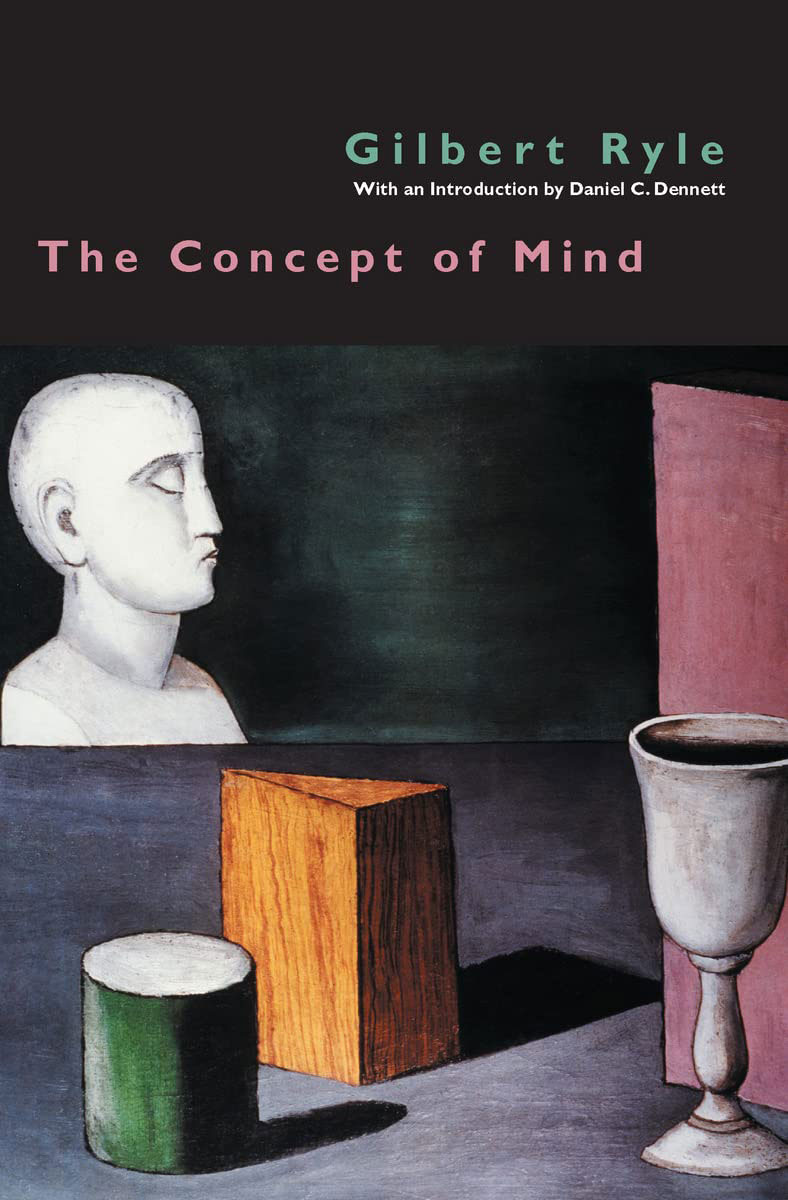
If Aristotle’s De Anima laid the groundwork for understanding the mind-body relationship, Gilbert Ryle’s The Concept of Mind, first published in 1949, marked a dramatic shift in the 20th century. Ryle, a leading figure in the analytic tradition, sought to dismantle what he called the “dogma of the ghost in the machine”: the Cartesian idea of the mind as a mysterious, immaterial entity distinct from the body.
Ryle’s approach to philosophy of mind is often dubbed logical behaviorism. Behaviorism in psychology began with the assumption that only the behavior of subjects can be tested, and, therefore, that it is the only objective phenomenon relevant to psychology, conceived as a rigorous science. Logical behaviorism follows the same trend, albeit in the conceptual sphere.
Ryle thus argues that mental states are not hidden, internal phenomena but are instead manifested in observable behavior, as witnessed by many expressions of our ordinary language. For example, to say someone is intelligent is not to posit some inner “intelligent substance” but to describe their ability to perform certain tasks effectively. Only by watching someone display mental quickness can we infer that someone is as smart as a whip.
One of Ryle’s key contributions in The Concept of Mind is his critique of category mistakes, errors that arise from conflating different kinds of concepts. He famously illustrates this with the example of a visitor who, after being shown all the buildings and facilities of a university, asks, “But where is the university?” The mistake lies in treating the university as a separate entity rather than understanding it as the organization of its parts. Ryle’s main point is that dualists make the same kind of mistake when treating the mind as a separate entity from behavioral patterns.
In summary, Ryle’s work has had a lasting impact on the philosophy of mind, particularly through its rejection of Cartesian dualism and its emphasis on ordinary language and conceptual analysis.
While his behaviorist approach has been challenged by later authors both in philosophy and psychology, The Concept of Mind remains a landmark text, with almost no footnotes whatsoever, that reshaped the field.
3. Thomas Nagel, The View from Nowhere (1986)
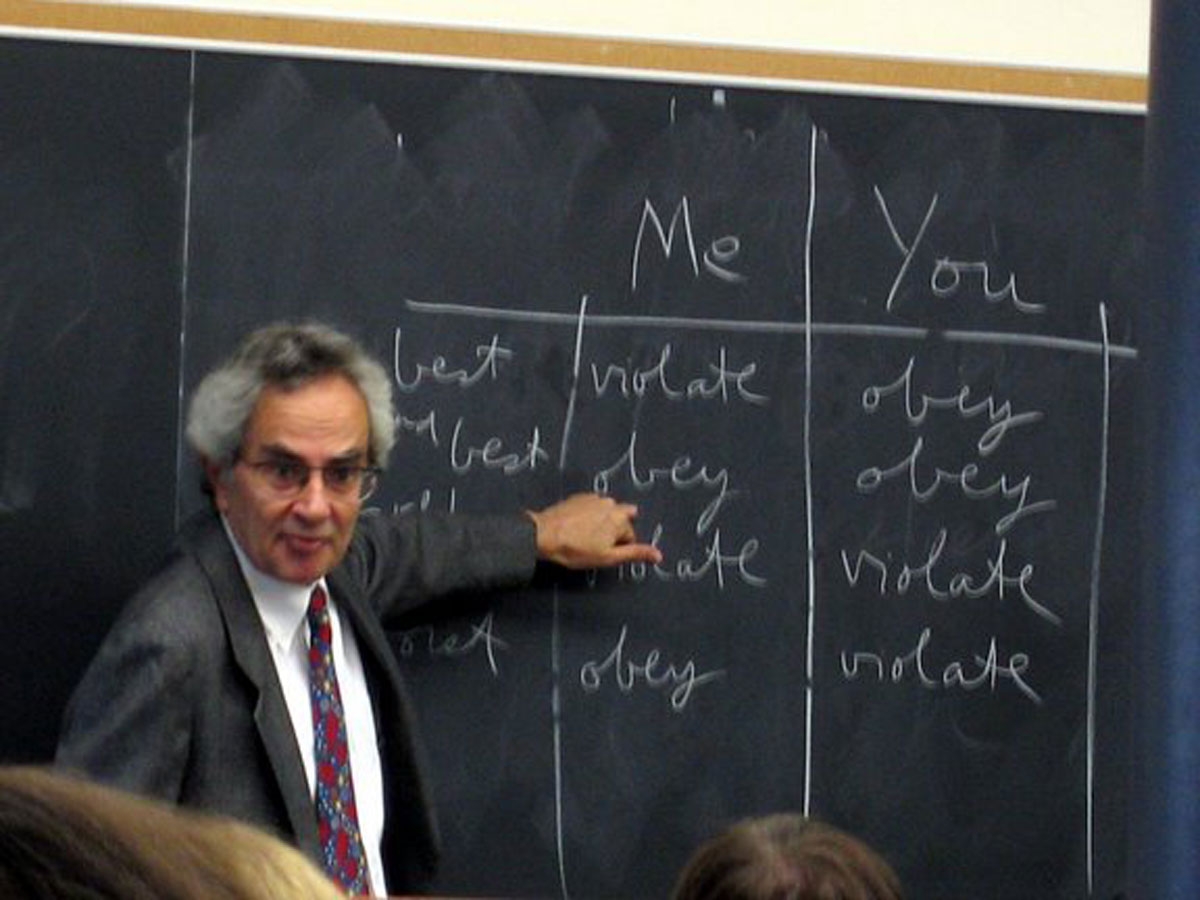
Thomas Nagel’s The View from Nowhere is a profound exploration of the tension between subjective and objective perspectives. In this collection of essays, Nagel argues that human beings are uniquely capable of adopting two distinct viewpoints: the subjective, rooted in personal experiences and perspectives, and the objective, which seeks to transcend these individual perspectives to achieve a more universal understanding.
This tension is particularly evident in the philosophy of mind. For example, consciousness is inherently subjective: it is something we experience from the “inside.” Yet, when we try to study the mind objectively, as scientists or philosophers infatuated with physicalism, we risk losing sight of this subjective dimension. Nagel famously captures this challenge in his essay “What Is It Like to Be a Bat?” that was originally published in 1974 but reprinted in The Views of Nowhere. In this essay, he argues that there is something it is like to be a bat that cannot be fully captured by scientific facts. We may gather all scientific evidence about the way bats’ sensory apparatus functions, but we still lack the what-it-is-like-ness of such sensory experience.
In The View from Nowhere, Nagel extends this insight to a wide range of philosophical issues, including knowledge, freedom, and ethics. His work has been highly influential in shaping contemporary debates about consciousness and the limits of scientific explanation. By emphasizing the irreducibility of subjective experience, Nagel challenges us to rethink our understanding of the mind and its place in the world, as well as the limits of scientific knowledge.
4. David Chalmers, The Conscious Mind: In Search of a Fundamental Theory (1996)

David Chalmers’ The Conscious Mind is one of the most important works in contemporary philosophy of mind. It is based to some extent on his PhD thesis, defended in 1993 and written under the supervision of renowned cognitive and computer scientist Douglas Hofstadter. In this book, Chalmers introduces the now-famous distinction between the “easy” and “hard” problems of consciousness. The easy problems involve explaining cognitive functions, such as perception, memory, and learning, in terms of neural mechanisms. The hard problem, by contrast, is the challenge of explaining why and how these processes give rise to subjective experience; why there is “something it is like” to be a conscious being.
Chalmers argues that the hard problem cannot be solved by reductive physicalism, the view that consciousness can be fully explained in terms of physical processes, that is, describable by science. Instead, he proposes a novel form of dualism, the naturalistic dualism, which posits that consciousness is a fundamental property of the universe, akin to space, time, and mass. In other words, consciousness is ontologically distinct and not reducible to physical systems; it is basically a fact of life.
To support this, Chalmers devises a thought experiment involving the possibility of philosophical zombies, that is, beings physically identical to humans but lacking consciousness. If you were to hit a philosophical zombie with Chalmers’ The Conscious Mind, the zombie would probably say “dammit,” but would not feel the pain like we do. In this way, Chalmers shows that what-if-is-it-likeness, or subjective experience, brings something new to the table and that the burden of proof is placed onto physicalists, eliminativists, and fellow scientists to convince us that they can solve the hard problem of consciousness by reducing it to the easy one. Alas, to this day, neither has the easy problem been undisputedly cracked.
Chalmers’ work has sparked intense debate and inspired a wealth of research in philosophy, cognitive science, and neuroscience. While some of his ideas remain controversial, they have fundamentally reshaped the way we think about consciousness and its place in nature.
For anyone interested in the cutting-edge philosophy of mind, The Conscious Mind is a must-read.
5. Daniel Dennett, Consciousness Explained (1991)
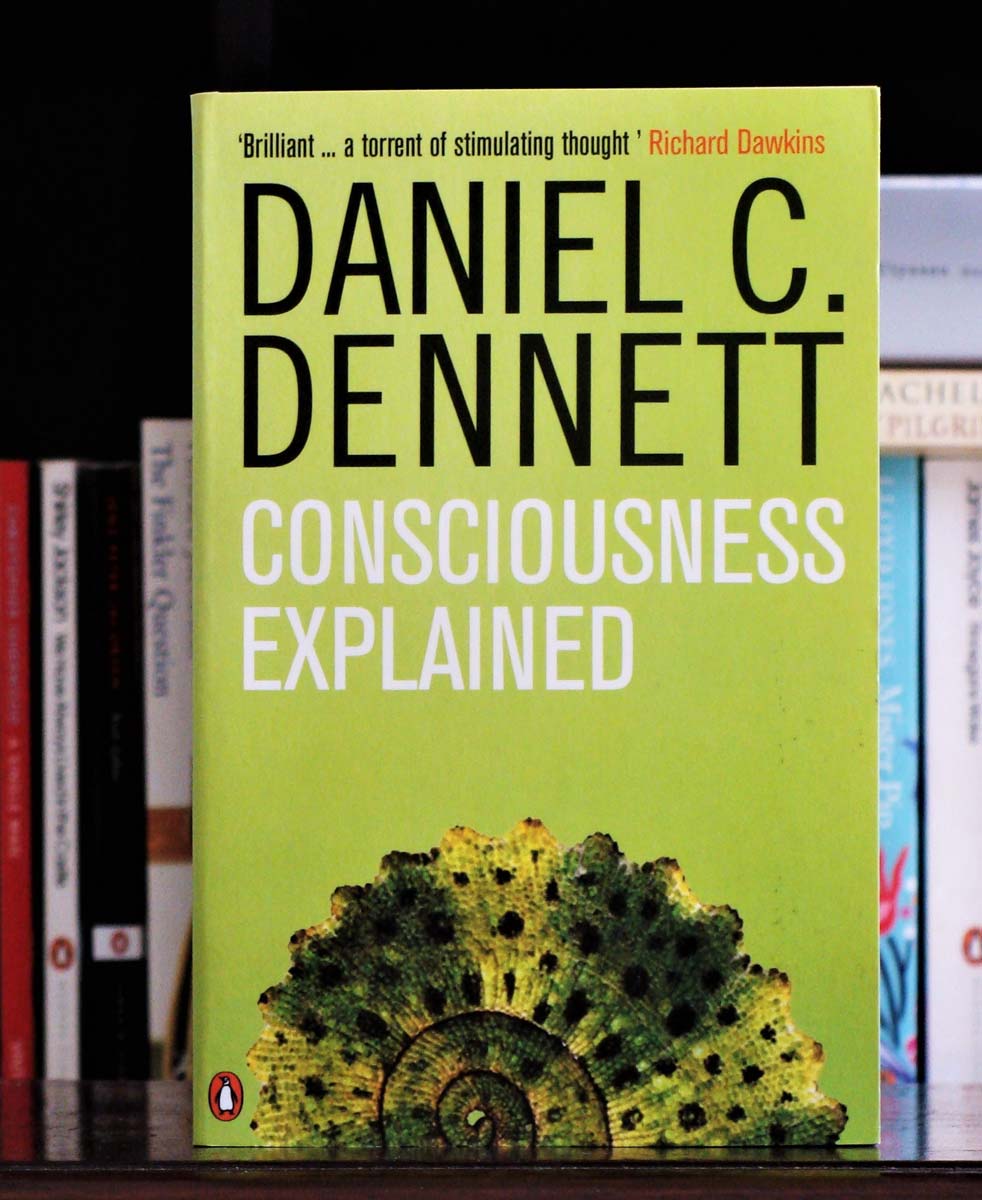
Daniel Dennett’s Consciousness Explained is a bold and provocative attempt to demystify consciousness. Dennett, a staunch materialist, argues that consciousness is not a single, unified phenomenon but a collection of processes that can be explained in terms of brain functions. Much like Ryle, he also rejects the idea of a “Cartesian theater,” a central place in the brain where conscious experience comes together, and instead proposes a model of consciousness as a “multiple drafts” process, in which various neural events compete for dominance.
Dennett’s approach is deeply interdisciplinary, drawing on insights from psychology, neuroscience, and research on artificial intelligence. He challenges many of the intuitive assumptions we have about consciousness, such as the idea that we have direct access to our own thoughts or that there is a clear boundary between the conscious and the unconscious.
While Dennett’s views have been criticized for downplaying the subjective aspects of consciousness, his work has been hugely influential in shaping contemporary debates. Consciousness Explained is a testament to the power of rigorous, scientific, and empirically informed philosophy that goes beyond conceptual analysis.