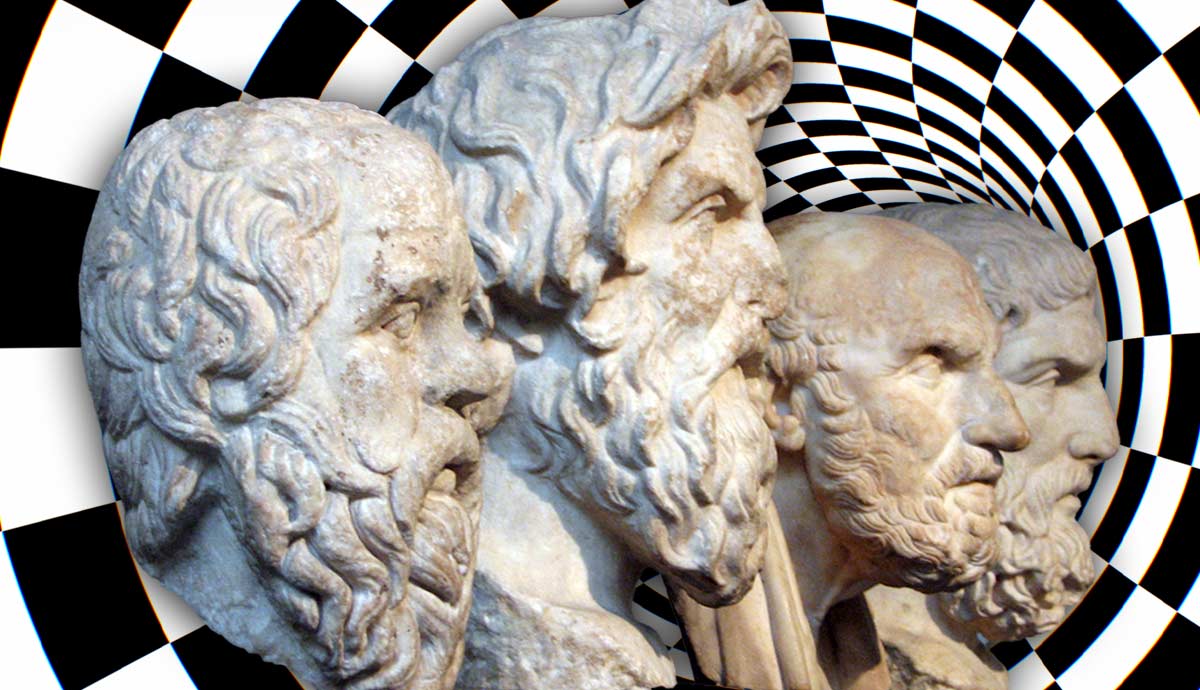

What does Athens have to do with Jerusalem? Theologian and Christian apologist Tertullian posed this question, asserting that the philosophers of the ancient Greeks had nothing to do with the Gospel of Jesus Christ. However, many of the early Church Fathers recognized some truth in the philosophies of the great Greek thinkers, noting similarities with the Christian faith in some respects, although they saw them as incomplete because they were not informed by God.
Yet even when they saw the flaws in the content of pagan philosophies, they appreciated the methodology that the philosophers used in presenting their beliefs and employed many of the same tactics in formulating their own arguments about Jesus Christ. They also borrowed the vocabulary from the field of philosophy and applied it to their theology.
Mars Hill: The Apostle Paul (c. AD 5 to 64/67)
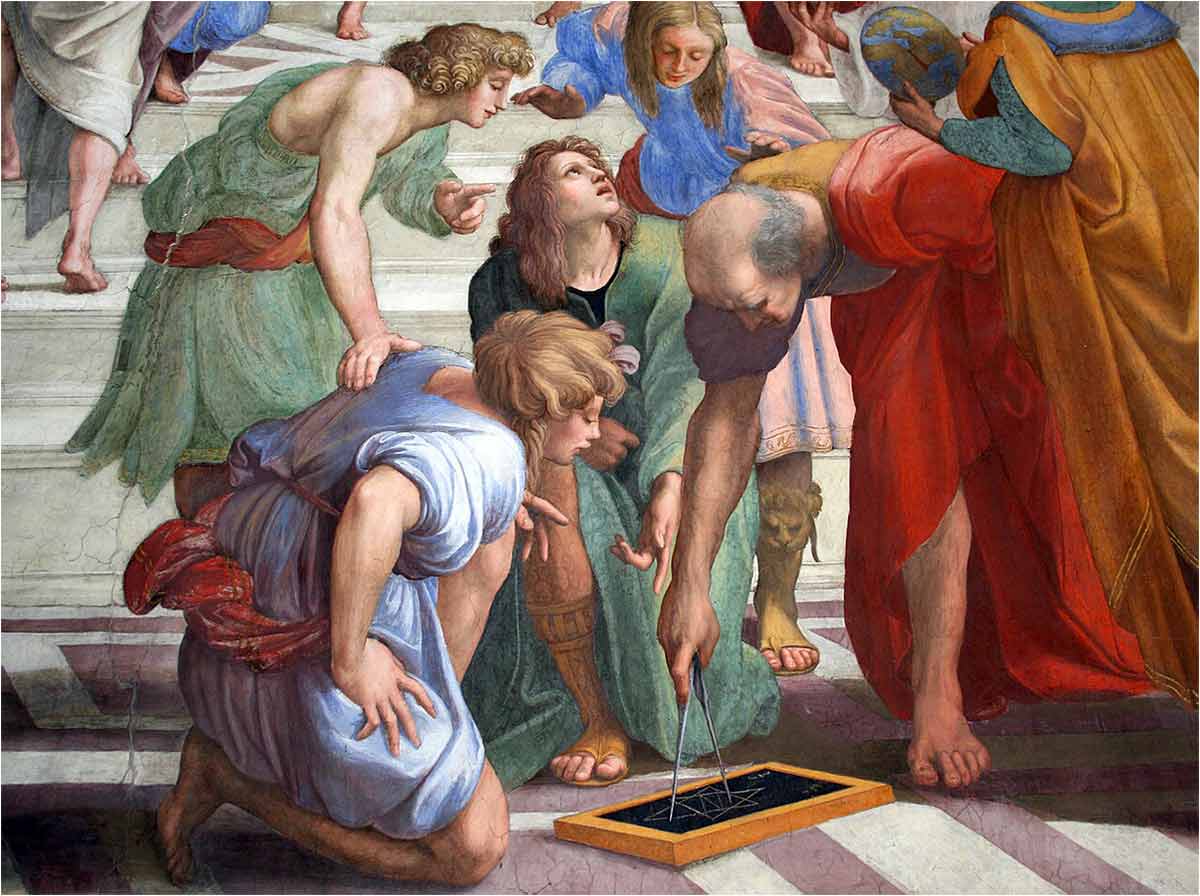
Socrates (c. 470 to 399 BC) taught his followers on a small hill in Athens that the Greeks called the Areopagus, named after Ares, the god of war. It stood just below the Temple of Athena, goddess of wisdom, war, and handicraft, who was the most popular deity in the city. This is also where Paul went to meet with the pagan philosophers of his day. The most prominent schools of philosophy in Paul’s day belonged to the Epicureans, named after their founder, Epicurus (341 to 270 BC), and the Stoics, followers of Zeno of Elea (c. 495 to c. 430 BC). Representatives of both were present in the crowd that the apostle addressed.
By the 1st century AD, some 10,000 people were living in Athens, but there were some 30,000 gods worshiped, and their idols were everywhere. Paul used this fact to begin his discussion (found in the Book of Acts, chapter 17) by remarking on the religiosity of the Athenians. He then followed the trend of Greek philosophers in two ways.
In his first step, he used the culture of the pagan philosophers to couch his argument by quoting both an Epicurean poet (Epimenides) and a Stoic one (Aratus) with regard to their beliefs about a divine being. He pointed to the altar of the unknown God that existed in the city and told them that he had come to reveal the God that they did not know.
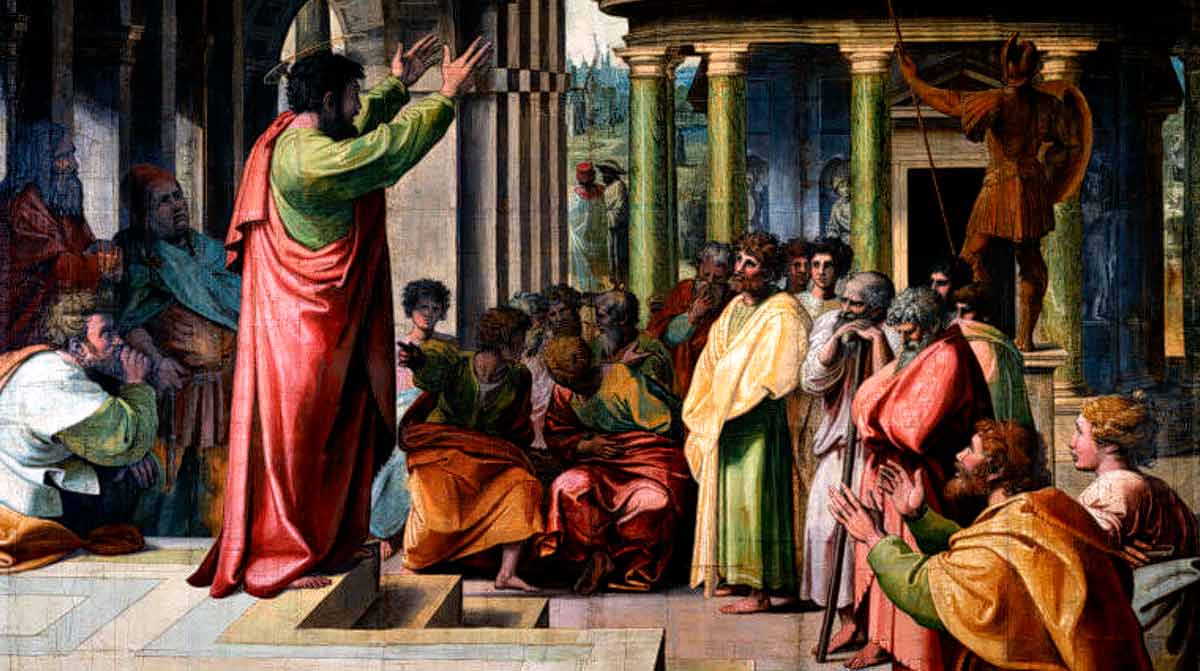
Paul then imitated his Greek precursors by building a logical case for Christianity with a Socratic dialogue, a form of discourse employed to great effect by Plato, in which there is a series of back-and-forth questions and answers to get at the truth. And the crowd was with Paul until he stated that Jesus rose from the dead, something the philosophers found untenable.
In forming his argument, Paul established what it is that the pagans believed, using their own words, remarking on aspects of their philosophies that rang true, pointing out their common ground with Christianity. Then he outlined what he saw as flaws in their belief systems and told them that one key element was missing, namely, Jesus Christ.
In this manner, Paul, using the tactics of the Greek philosophers, set the tone for the apologists who followed him right up to today, when you will find many defenders of the Christian faith employing the same methodology.
Logos: John the Evangelist (c. AD 6 to around AD 100)
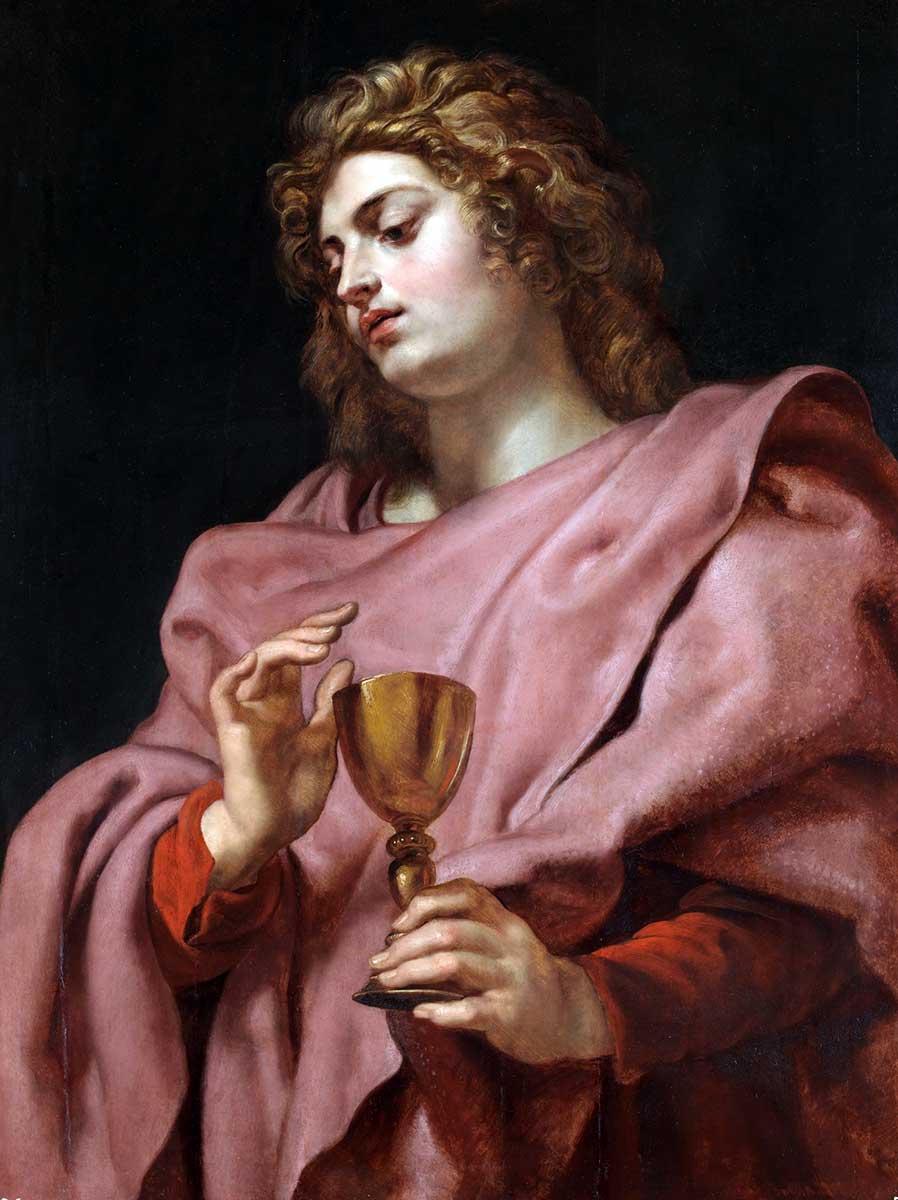
“In the beginning was the Word (Logos) and the Word (Logos) was with God and the Word (Logos) was God.” John opens his gospel with this statement. He was writing for an audience of both Jews and Gentiles. By starting with the phrase “in the beginning,” the apostle would have gotten the attention of the former as it would take them right back to the first verse of Genesis (“In the beginning, God created the heavens and the earth”).
His use of the word “Logos” would have made the pagans sit up and take notice because it was a word commonly employed by Greek philosophers to describe a divine intelligence that governed and gave order to the cosmos. The Greek philosopher, Heraclitus of Ephesus (c. 540 to 480 BC), was the first to use it as such. Later, Socrates, Plato, and Aristotle linked it to human reason, which they considered intrinsic to the soul.
John took the term and used it to describe Jesus as the second person of the Triune Godhead who had always existed and who took on flesh to enter the world and provide salvation for all, both Jew and Gentile. In applying it to Christ, John was attempting to create a bridge between the pagans and Christianity, using their own language and understanding to do so, taking them beyond their limited beliefs about the Logos, redefining the word for them.
Seeds of Truth: Justin Martyr (c. AD 100 to 165)
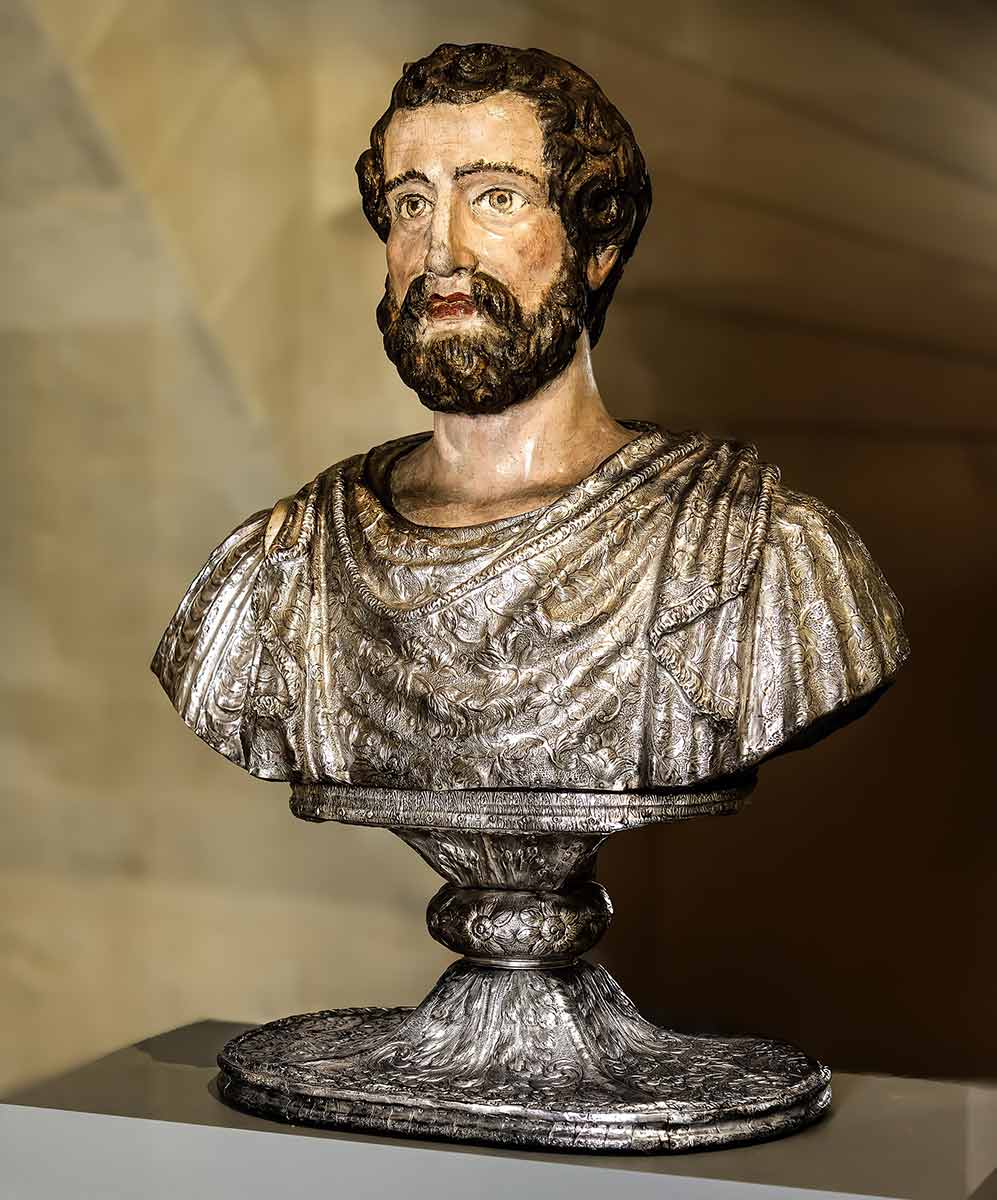
Justin Martyr was a Greek from Samaria. He studied the Stoic, Pythagorean, and Platonist philosophies of his day. He recounted his conversion to Christianity in his apologetic work entitled Dialogue with Trypho. He met an elderly Christian man who, he noted, “corrected” his Platonist beliefs and told him about the Hebrew prophets and Jesus. Justin wrote, “A flame was kindled in my soul . . . I found this (Christian) philosophy alone to be safe and profitable.”
Scholars have stated that Justin, out of all the early Christian apologists, had the greatest appreciation for Greek philosophy. In fact, he saw some philosophers as a type of Christian before Christ, like Abraham of the Old Testament, and he considered their work a precursor to Christianity. For example, he noted that Socrates wrote correctly about the need for humanity’s deliverance from the power of demons. Justin remarked, as well, that Plato was accurate in teaching that God is a transcendent, immutable, incorporeal being. And he commended Plato for recognizing that there was a creator who brought the cosmos into being and for his understanding of the existence of a Logos that governs all.
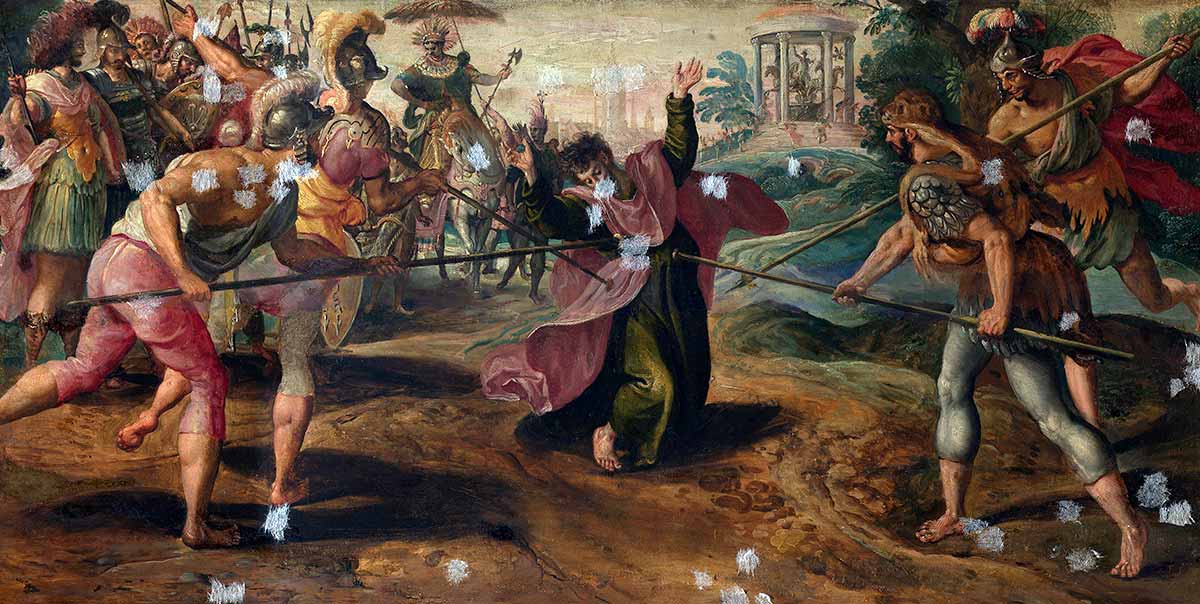
These ideas, Justin asserted, came from “seeds of truth” planted by God in all men. He believed that Plato had read the Jewish Scriptures and drew his ideas from them. Legend has it that Plato visited Egypt and was exposed to the Old Testament teachings there.
However, Justin noted, their philosophies were incomplete and contained errors. Only the coming of Christ brought clarity and understanding. Only the coming of Christ completed and corrected their imperfect views of God and the world.
Justin lived in a time of great persecution of Christians. He boldly defended the Christian faith from false accusations about it and used the philosophy of the Greeks to do it. He argued that, because God had not totally hidden his truth from unbelievers and that they had access to it, they had no excuse for persecuting Christ’s followers. In the end, Justin was executed because of his daring apologetics.
Philosophy as Handmaid to Theology: Clement of Alexandria (c. AD 150 to 215/220)
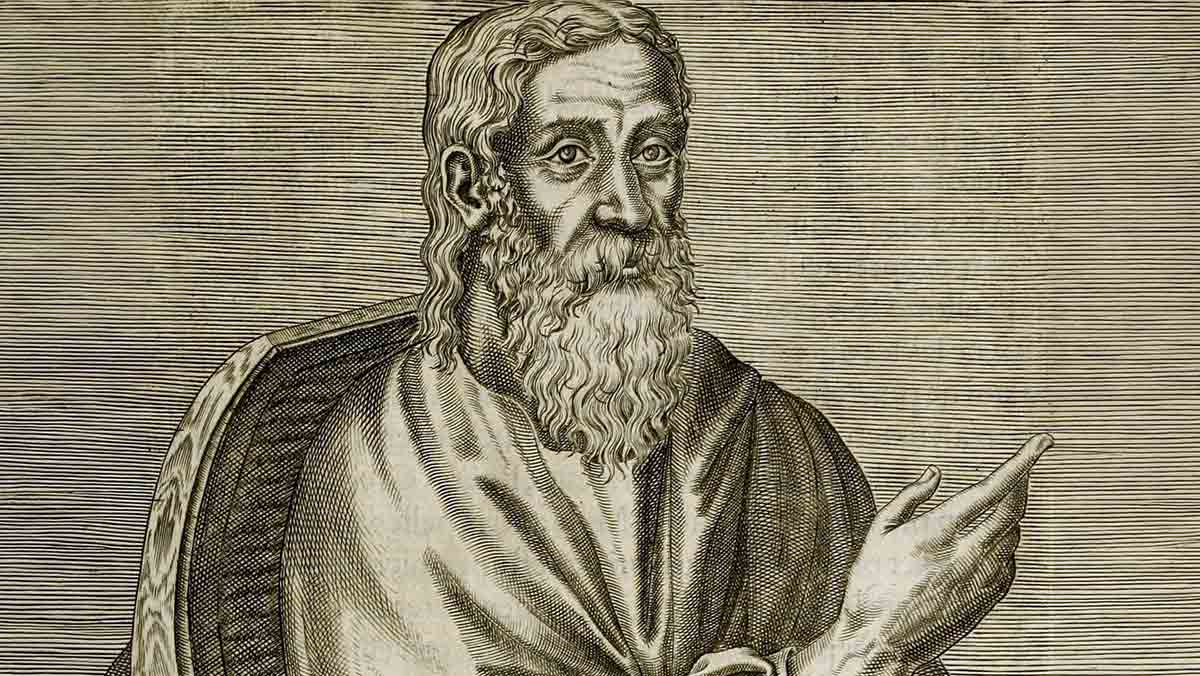
Philosopher/historian Clement of Alexandria agreed with Justin Martyr in the assertion that all truth is God’s truth and that philosophers such as Plato were correct in some aspects of their beliefs, although not all of them. He echoed Justin’s words in proclaiming that Greek philosophy was the precursor to Christianity. He wrote, “Philosophy was to the Greek world what the Law was to the Hebrews, a tutor escorting them to Christ. So philosophy is a preparatory process; it opens the road for the person whom Christ brings to his final goal” (Stromateis 1.28). As such, philosophy was viewed as “the handmaid of theology,” a phrase that is often attributed to philosopher and theologian Thomas Aquinas (c. AD 1225 to 1274), but was coined by Clement.
Christians actually borrowed the word “theology” from the Greek philosophers. Plato was the first to use it in The Republic (c. 380 BC) to describe myths and stories about the many Greek gods. Aristotle employed it later to represent the study of the divine and metaphysics in general. Clement was one of the first Christian writers to use it. He and his fellow early Church Fathers altered the word’s meaning to refer specifically to the study of the one true God as revealed through the Logos. Like Justin Martyr, Clement noted that the great Greek thinkers were missing Jesus and, therefore, their philosophies were incomplete.
Father of Allegorical Interpretation: Origen (AD 184 to 253)
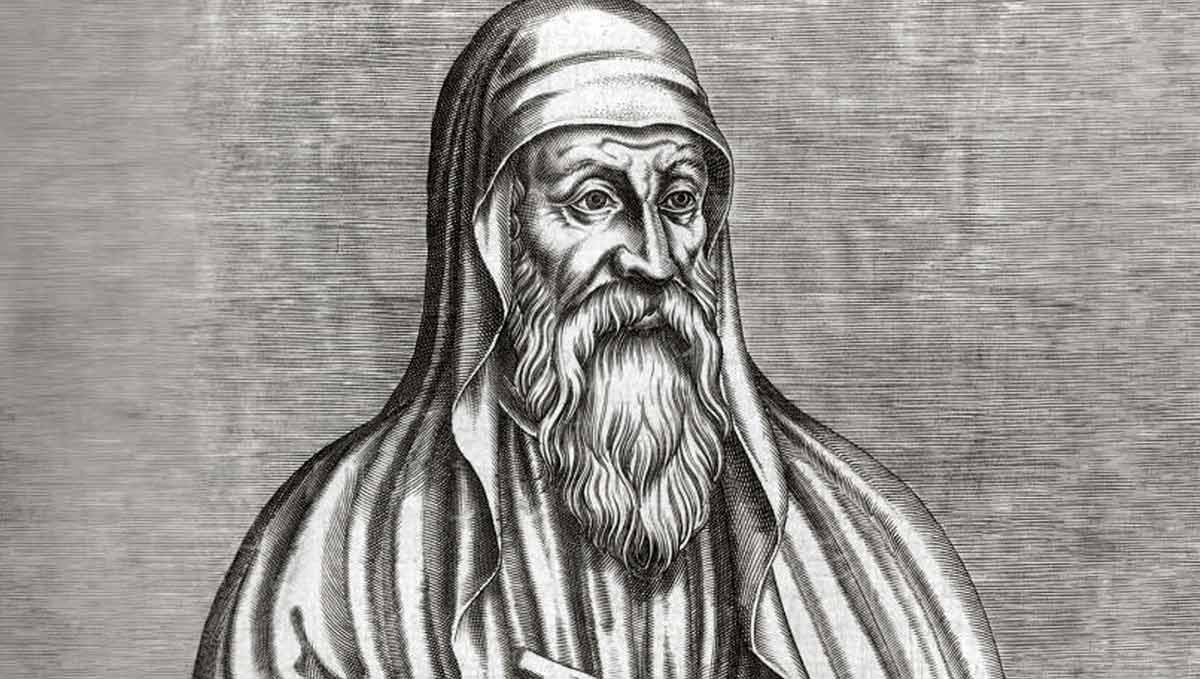
Origen has always been a bit troublesome for the Christian Church as he sometimes strayed from orthodoxy, especially in his allegorical interpretations of scripture, which opened the door to some misunderstandings and misapplications of God’s Word. He most certainly borrowed this approach to hermeneutics from Jewish scholars as they sought to delve more deeply into scripture. Philo of Alexandria, for example, was renowned for the practice.
However, the technique was also a major component of Greek philosophy. In fact, they were standard fare from Plato, who scholars have lauded for turning boring tenets into entertaining and memorable stories. Many people are familiar with Plato’s Cave in which men, chained to the wall, their backs to its entrance, see only shadows and think that is reality. They never turn to see the source of those shadows behind them. Metaphorically, the philosopher is describing the fact that we are all born in ignorance. Only by using critical thinking can we obtain the knowledge and wisdom necessary to break us free and allow us to move out of the darkness of the cave.
Origen admired the Greek philosophers and this approach so much that he employed it regularly and, as a result, was dubbed the father of allegorical interpretation as he popularized the hermeneutical tool. His goal in using it was to go beyond the letter (literal meaning) to the spirit (spiritual meaning) of any given Biblical text.
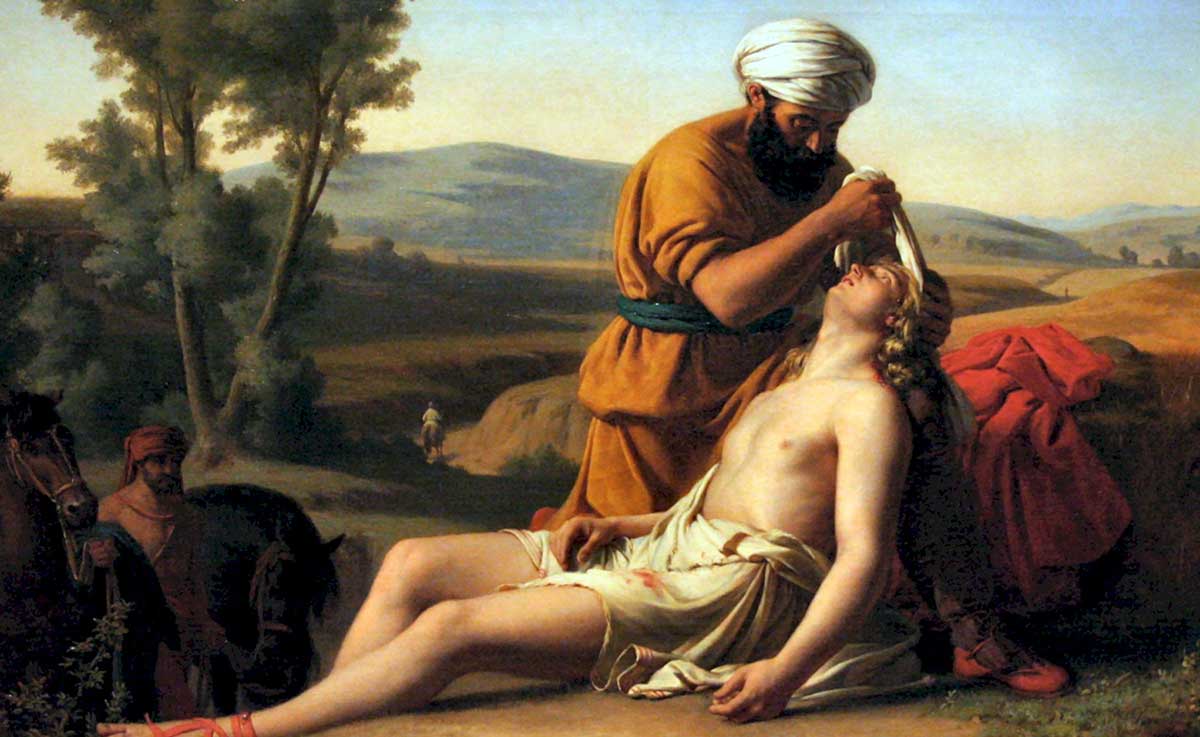
One of his most well-known interpretations is that of the Parable of the Good Samaritan (Luke 10:25-37). He makes the man who is robbed, Adam. The priest who passes him by is supposedly the Law of Moses. The Levite who also goes by without offering help represents the Prophets. The Samaritan who comes to the aid of the man is Jesus. He suggests that the donkey that bore the man to safety was Christ’s physical body, which bears the man’s wounds (sins), and the inn where he is housed represents the Church. The Samaritan’s promise to return refers to Christ’s Second Coming.
It is noteworthy that Greek philosophers, in general, used allegories to interpret myths. The tales of their many gods revealed them to be immoral, but only if one took their deeds literally. Allegorizing them removed their offensiveness and made their follies instructive rather than shameful. So the impetus for using the hermeneutical tool differed considerably between Origen and such philosophers.
Trias, Trinitas, Trinity: Athanasius (c. AD 296 to 373)
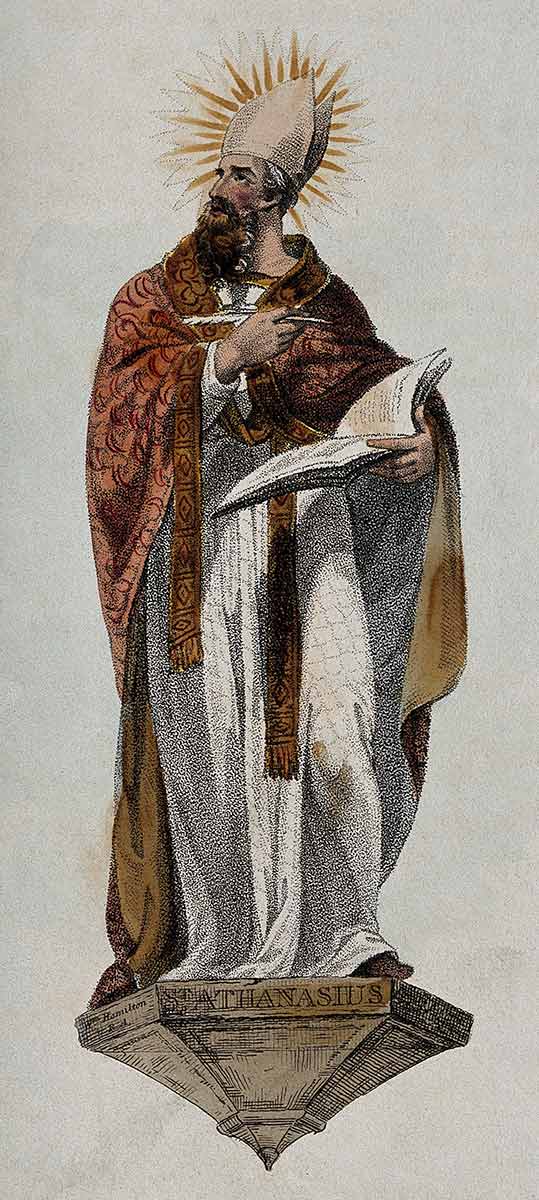
Athanasius is most noteworthy for his defense of the Trinity in the face of Arianism, a heretical belief that Jesus was not God Incarnate, but a created being. The word “trinity” is not in the Bible. In fact, it is not originally a Christian term. It originates from Plato, who believed there was a divine triad consisting of God, ideas, and the World-Spirit. He did not fully explain how that worked, but his philosophical successors took his idea and developed it, asserting that there were three “substances” which they defined as the supreme God or “the One,” from which came “mind” or “thought” and a “spirit” or “soul.” They saw these three elements as part and parcel of the same God.

This Platonic God was referred to as a trias, which means three in Greek. Theophilus (Patriarch of Antioch from AD 169 to 183) gives us the first use of it to describe the Biblical God. Tertullian (c. 160 to 225) used the Latin version (trinitas) in his writing, which is translated as trinity in English. The early Church Fathers appropriated the term and gave it a whole new meaning, the meaning that Athanasius upheld of one God who existed in three persons, namely, Father, Son, and Holy Spirit.
Athanasius made the statement that “the Word (Jesus) became man so that we might become God.” This reflects a concept from Plato wherein man’s goal was to become god-like through his exercise of virtue. Athanasius, however, found that approach morally lacking. He explained that, from the Christian perspective, we cannot make ourselves good no matter how hard we try, which is why Christ came to die for our sins. Believers become like Jesus in a lifelong process of sanctification upon conversion and the infilling of the Holy Spirit, as noted in such scripture passages as Romans 8:9 and 2 Corinthians 3:18, which speak of followers being transformed and conformed to the image of Christ. Athanasius asserted that people could only be “divinized” if they “partook of the divine image” of the Trinitarian God of the Bible.
Platonism as a Stepping Stone to Christianity: Augustine (AD 354 to 430)
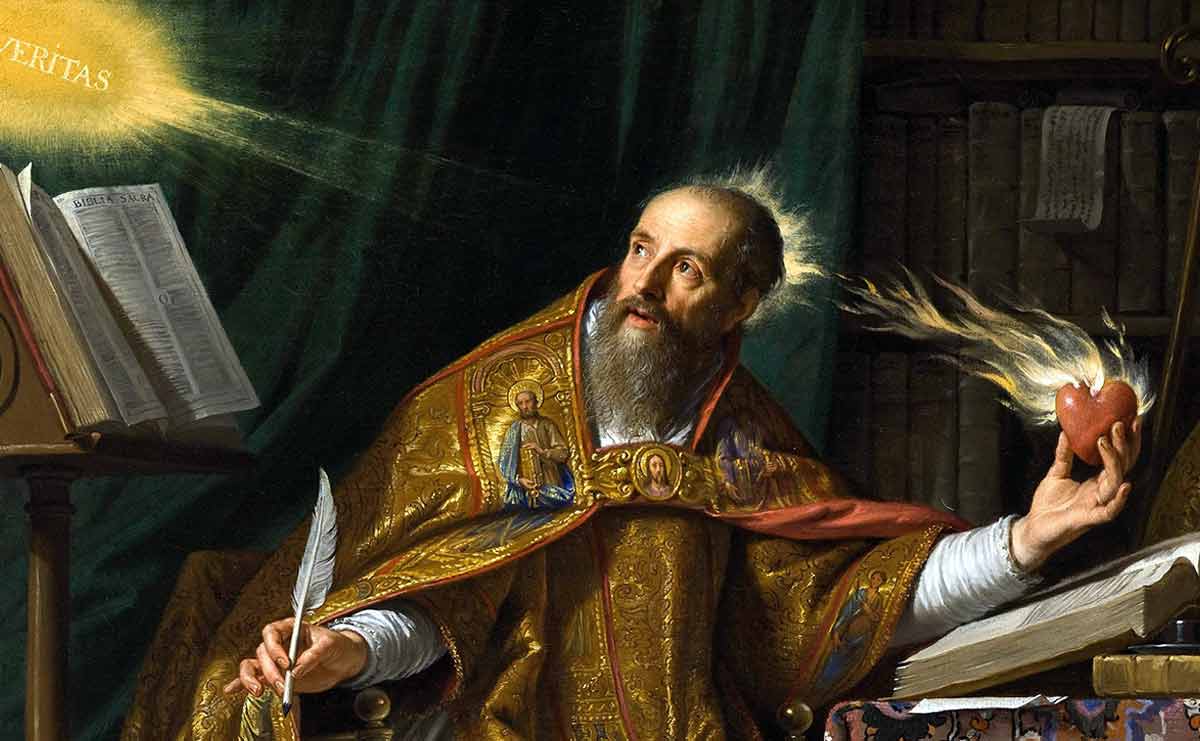
Some scholars have suggested that, if not for Plato, Augustine, the great Church Father from Roman North Africa, might never have become a Christian. He was caught up in Manichaeism, a sect that taught that the material world was evil while the spiritual world was good. One ascended to God through knowledge and virtuous living. However, Augustine found such an idea unsatisfactory.
Then he came upon Neoplatonism, a school based on Plato’s work, founded by the Roman Egyptian philosopher Plotinus (c. AD 204/5 to 270). Augustine saw that Plato suggested an immaterial cause behind the material world, namely, the Logos. He connected this with the opening statement of John’s Gospel. He realized that the Incarnate Christ was the Logos and, suddenly, it all made sense to him.
He dismissed the dualist idea of good and evil as individual equal forces and saw that evil was actually the lack or privation of good. He concluded that life was not about trying to be noble and obtain knowledge about a distant god in an attempt to get close to him. Rather, life was about connecting with God personally through Jesus. Thus, Greek philosophy became a stepping stone to Christianity for Augustine. As with other Church Fathers before him, he realized that the philosophers had provided only partial answers and that it took Christ to complete them.
Conclusion
Ultimately, both philosophy and theology have one goal: to find the truth. While both use reason to do so, Christians assert the need for divine revelation to find it fully and conclusively. The Early Church Fathers recognized that philosophy does not teach people what to think as much as it teaches us how to think, and employed the methodology and vocabulary of the Greek philosophers in their defense of Christianity.