
The most influential ideas in the philosophy of science tackle how knowledge actually gets made and what makes science scientific. Is it ruthless testing, like Karl Popper demanded? Paradigm-smashing revolutions, as Thomas Kuhn claimed? Or something messier: a battleground of competing research programs, socially negotiated truths, or patchwork laws that bend to reality? In fact, these ideas challenge science’s image as a purely objective enterprise, as it was advocated during its birth in the early modern period. In this article, we will cover the five most influential books in the philosophy of science, covering all aspects of science, from defining what counts as the adequate scientific method to exposing its human fingerprints.
1. Karl Popper, The Logic of Scientific Discovery (1934)
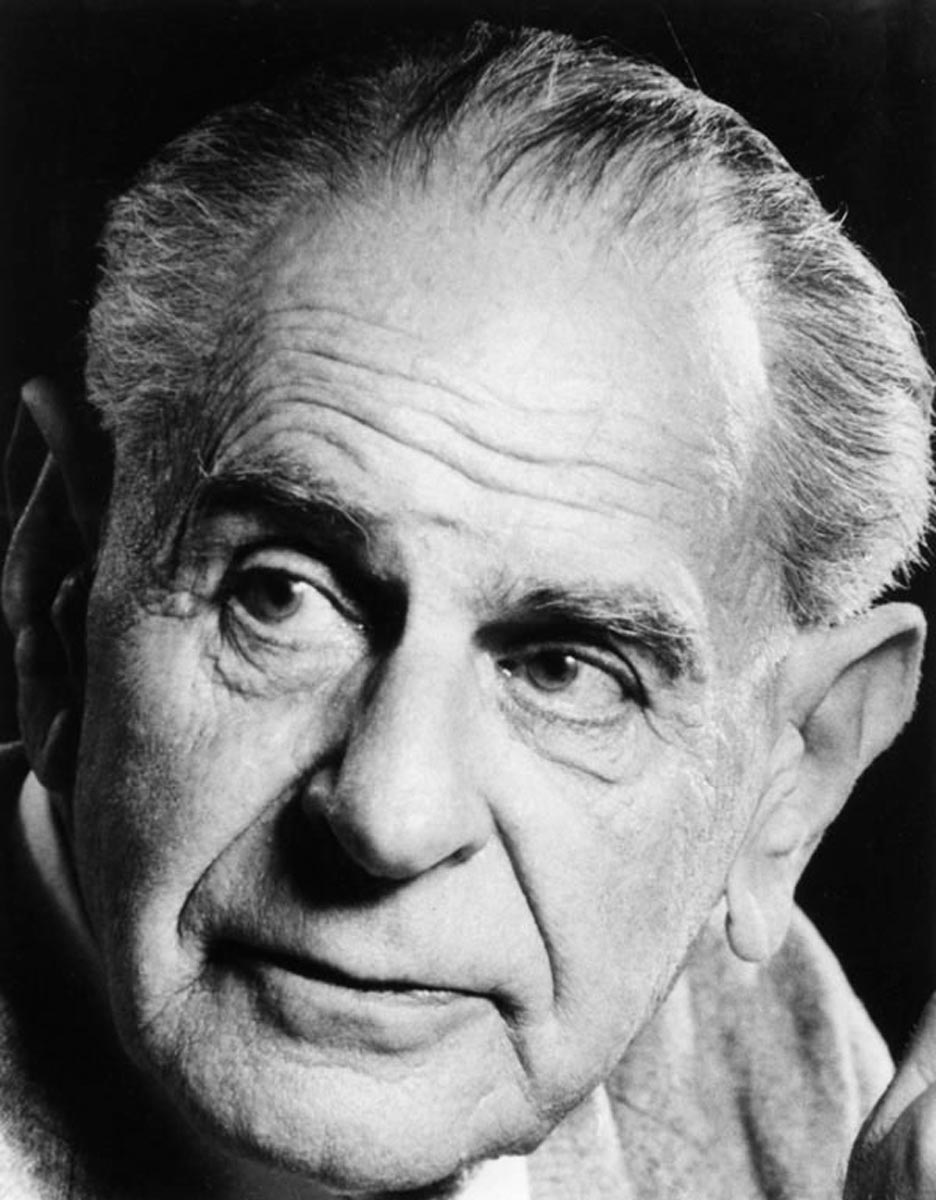
Karl Popper’s The Logic of Scientific Discovery is one of the most influential works in the philosophy of science, laying the groundwork for much of 20th-century thought on the nature of scientific inquiry. Written on the eve of the Austrian Anschluss, Popper’s central contribution is his concept of falsifiability, which he proposes as the criterion for distinguishing science from non-science and pseudo-science.
According to Popper, a theory is scientific if it can be falsified; that is, if it makes predictions that can be empirically tested and potentially disproven. Pseudoscientific theories are notorious for their lack of potential falsifiers because their proponents can always find theoretical means to bypass sticking their necks out. For instance, Popper believed that psychoanalysis is pseudoscientific because its theoretical framework (e.g., repression, the Oedipus complex) was structured in a way that could explain all possible observations, even contradictory ones. Thus, a patient’s aggression toward their father could be interpreted as “Oedipal resentment” (if the patient exhibits hostility) or “reaction formation against latent Oedipal love” (if the patient is affectionate).
Popper’s falsificationism was a direct response to the logical positivist view that scientific theories are verified through observation. He argued that verification is impossible because no amount of evidence can conclusively prove a theory true. Instead, science progresses through conjecture and refutation: scientists propose bold hypotheses, subject them to rigorous testing, and discard those that fail.
Being primarily trained as a scientist and known for his admiration for physics, Popper was regarded as too strict and unrealistic in his prescriptions for scientific inquiry. Paul Feyerabend, another big name in the philosophy of science, claimed that falsificationism is too rigid and fails to recognize that big breakthroughs usually occur through the violation of rules, rather than by following them, because science works under the “anything goes” motto.
Nonetheless, The Logic of Scientific Discovery remains a foundational text that continues to shape our understanding of scientific methodology and is part of virtually any philosophy of science curriculum.
2. Thomas Kuhn, The Structure of Scientific Revolutions (1962)

Thomas Kuhn’s The Structure of Scientific Revolutions is arguably the most widely read book in the philosophy of science and the broader academic milieu of the 20th century, concentrating on the description of scientific practice. Kuhn challenged the traditional view of scientific progress as a linear accumulation of knowledge, proposing instead that science advances through a series of paradigm shifts. The novelty Kuhn introduced to the philosophy of science was a focus on the history of science: he uncovered structures beneath the surface of current science by excavating the long-forgotten and disproven theories.
A paradigm, according to Kuhn, is a set of assumptions, concepts, and practices that define a scientific discipline during a particular period. Normal science operates within a paradigm, solving puzzles and refining theories. It is worth noting that, unlike Popper, Kuhn did not think that one anomaly would suffice to discard the theory altogether. One falsifier may always be set aside by making slight changes to the theory. However, over time, anomalies accumulate that the paradigm cannot explain, leading to a crisis and eventually a scientific revolution. During a revolution, a new paradigm emerges, fundamentally transforming the discipline.
One of the key criticisms Kuhn faced was how scientists working in old and new paradigms understood each other. They cannot disagree, since the scientific terminology they use is fundamentally different. This was dubbed the problem of the incommensurability of scientific terms.
Kuhn’s work has had a profound impact on our understanding of scientific change, challenging the notion of science as a purely rational and objective enterprise. His ideas have influenced not only philosophy but also history, sociology, and the natural sciences.
While some critics argue that Kuhn’s view undermines the objectivity of science, The Structure of Scientific Revolutions remains a landmark text that continues to inspire debate about the nature of scientific progress.
3. Imre Lakatos, The Methodology of Scientific Research Programmes (1978)
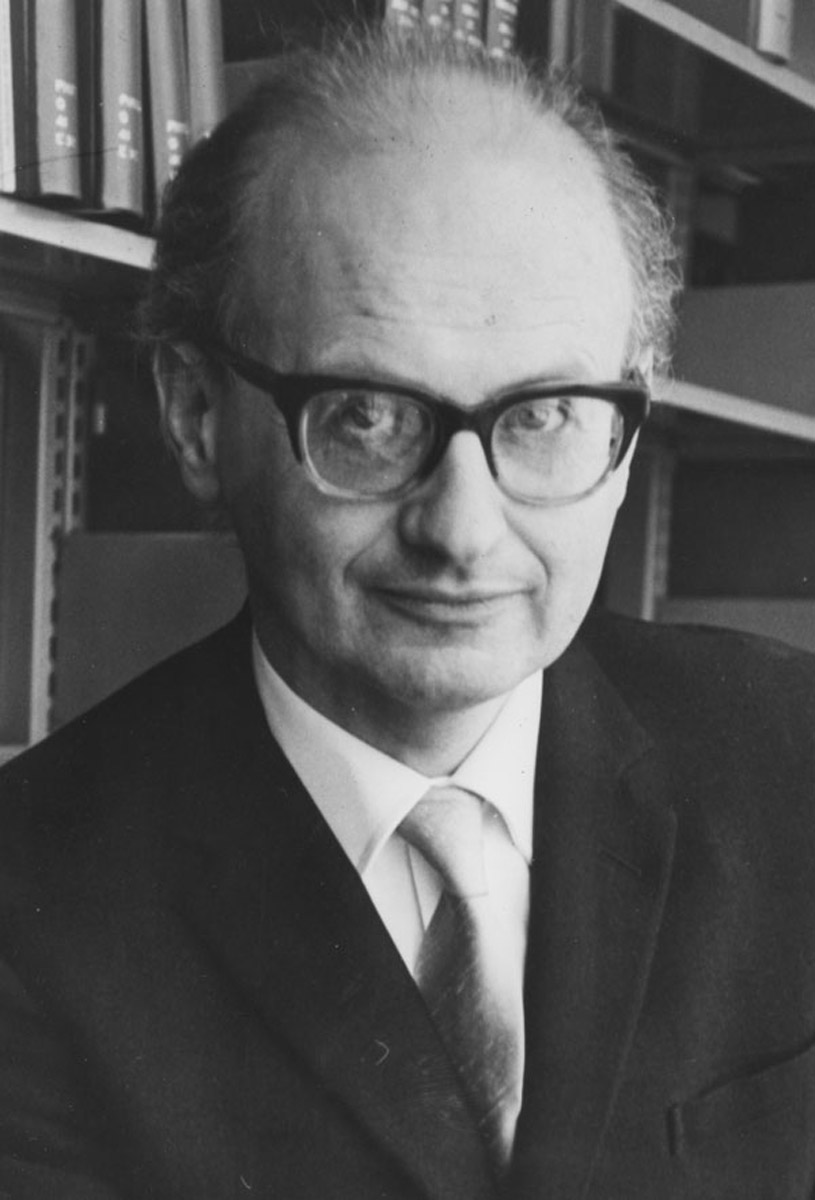
Imre Lakatos’ The Methodology of Scientific Research Programmes is a significant contribution to the philosophy of science, offering a nuanced alternative to both Popper’s falsificationism and Kuhn’s paradigm shifts. A Hungarian émigré, Lakatos, proposed the concept of scientific research programs, which are a series of theories connected by a common core of assumptions.
A research program consists of a hard core of fundamental principles that are protected from falsification and a protective belt of auxiliary hypotheses that can be modified to account for new evidence. For example, when astronomers observed irregularities in Uranus’s orbit in the 19th century, which seemed to falsify Newton’s laws, they didn’t abandon the theory but instead modified the auxiliary hypothesis, proposing (correctly) that an unseen planet (Neptune) was perturbing Uranus’s path.
In this way, and within Lakatos’ framework, they preserved Newtonian mechanics as the core of the research program while making a novel prediction that led to the discovery of Neptune. According to Lakatos, a research program is progressive if it leads to novel predictions and explanations; it is degenerative if it merely accommodates anomalies without generating new insights.
Lakatos’ work provides a framework for understanding scientific progress that avoids the extremes of Popper’s strict falsificationism and Kuhn’s relativism. His ideas have influenced debates about the rationality of scientific change and the criteria for evaluating competing theories.
For anyone interested in the dynamics of scientific inquiry, The Methodology of Scientific Research Programmes is worth the effort.
4. Helen Longino, Science as Social Knowledge: Values and Objectivity in Scientific Inquiry (1990)

Helen Longino’s Science as Social Knowledge is a groundbreaking work that challenges traditional views of science as a purely objective and value-free enterprise. In it, Longino argued that scientific inquiry is inherently social and that values play a crucial role in shaping scientific knowledge. She introduced the concept of contextual empiricism, which holds that scientific knowledge is produced through a process of critical dialogue within a community of inquirers.
Longino emphasized the importance of diversity and inclusiveness in scientific communities, arguing that a plurality of perspectives is essential for identifying and correcting biases, which science should be all about. She also assessed the ideal of value neutrality, showing how values influence the choice of research questions, the interpretation of data, and the acceptance of theories.
This represented a dramatic shift from the prescriptive ambitions of Karl Popper and the descriptive endeavor of Thomas Kuhn. Longino strived to understand the hidden social forces behind science rather than to prescribe how science should be done, and to offer a synchronic perspective rather than a historical or diachronic one.
Longino’s work has had a profound impact on the philosophy of science, particularly in its focus on the social dimensions of scientific inquiry. Her ideas have inspired debates about the role of values in science, the importance of diversity, and the nature of scientific objectivity.
For anyone interested in the intersection of social studies of science and the philosophy of scientific inquiry, reading Science as Social Knowledge should be at the top of the list.
5. Nancy Cartwright, How the Laws of Physics Lie (1983)

Nancy Cartwright’s How the Laws of Physics Lie is a provocative work that challenges the traditional view of scientific laws as universal and exceptionless truths. This book carved out a place for her among the greatest female philosophers in philosophy of science. Cartwright argued that many scientific laws, particularly in physics, are idealized models that do not accurately describe the messy and complex reality of the world. Instead, they are tools for prediction and explanation, useful within specific contexts but not universally applicable. In her words, science’s success comes from strategic lying resulting in deliberate distortions that yield actionable results.
Cartwright introduced the concept of nomological machines, which are idealized systems that produce regularities described by scientific laws. She argued that these machines are rare in nature and that most phenomena are governed by a plurality of causes that cannot be captured by a single law. This idea didn’t receive a warm welcome in the physics community, where dreams of the grand unifying theory still loom large.
Cartwright’s work has had a significant impact on the philosophy of science, particularly in its critique of the traditional view of scientific laws and its emphasis on the role of models and idealizations. Her ideas have inspired debates about the nature of scientific explanation, the limits of reductionism (or why you can’t derive the trajectory and aerodynamics of a Ryanair airplane from quantum fields), and the relationship between theory and practice.
For anyone interested in the complexities of scientific knowledge and a deeper look into the foundations of physics, How the Laws of Physics Lie is an essential text.