
Greek philosophers stand out in history because they were the first to seek knowledge not through myth or tradition, but through reason, observation, and dialogue. Unlike earlier cultures that explained the world mainly through gods and legends, the Greeks looked for rational principles behind nature, human life, and society. This shift marked the birth of philosophy, where questions about existence, morality, and knowledge became central.
The Birth of Greek Philosophers
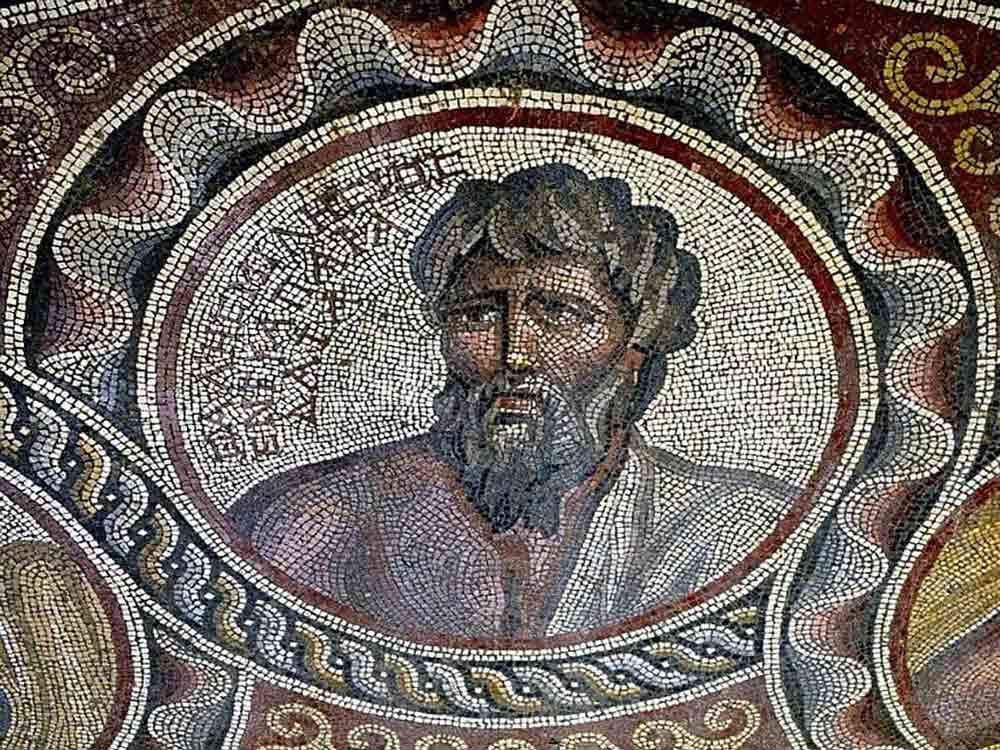
The birth of philosophy in Ancient Greece marks one of the most important turning points in human thought, because it was the moment when people began to explain the world not only through myths and religious stories, but through reasoned arguments and systematic observation of nature. This intellectual shift is often traced back to the city of Miletus in Ionia during the 6th century BC, where Thales began to question the origins of nature and existence in a revolutionary way.
Thales of Miletus is widely regarded as the first philosopher because he proposed that water was the fundamental substance, or archê, underlying all of reality. While this might seem simplistic today, it represented a revolutionary departure from mythological explanations. Instead of attributing natural phenomena to the will of the gods, Thales sought a single natural principle that could account for the diversity of the world. His method of inquiry laid the groundwork for the rational and critical approach to knowledge that is synonymous with philosophy.
The Milesian tradition continued with figures like Anaximander, who suggested that the universe came from the boundless, or apeiron, and Anaximenes, who claimed that air was the primary substance. These thinkers, known as the Pre-Socratics, were not concerned with personal gods or heroic tales as the majority of their contemporary authors, but with finding universal laws that governed both nature and human existence. Their curiosity extended to astronomy, mathematics, and even ethics, opening the door to an entirely new way of thinking.
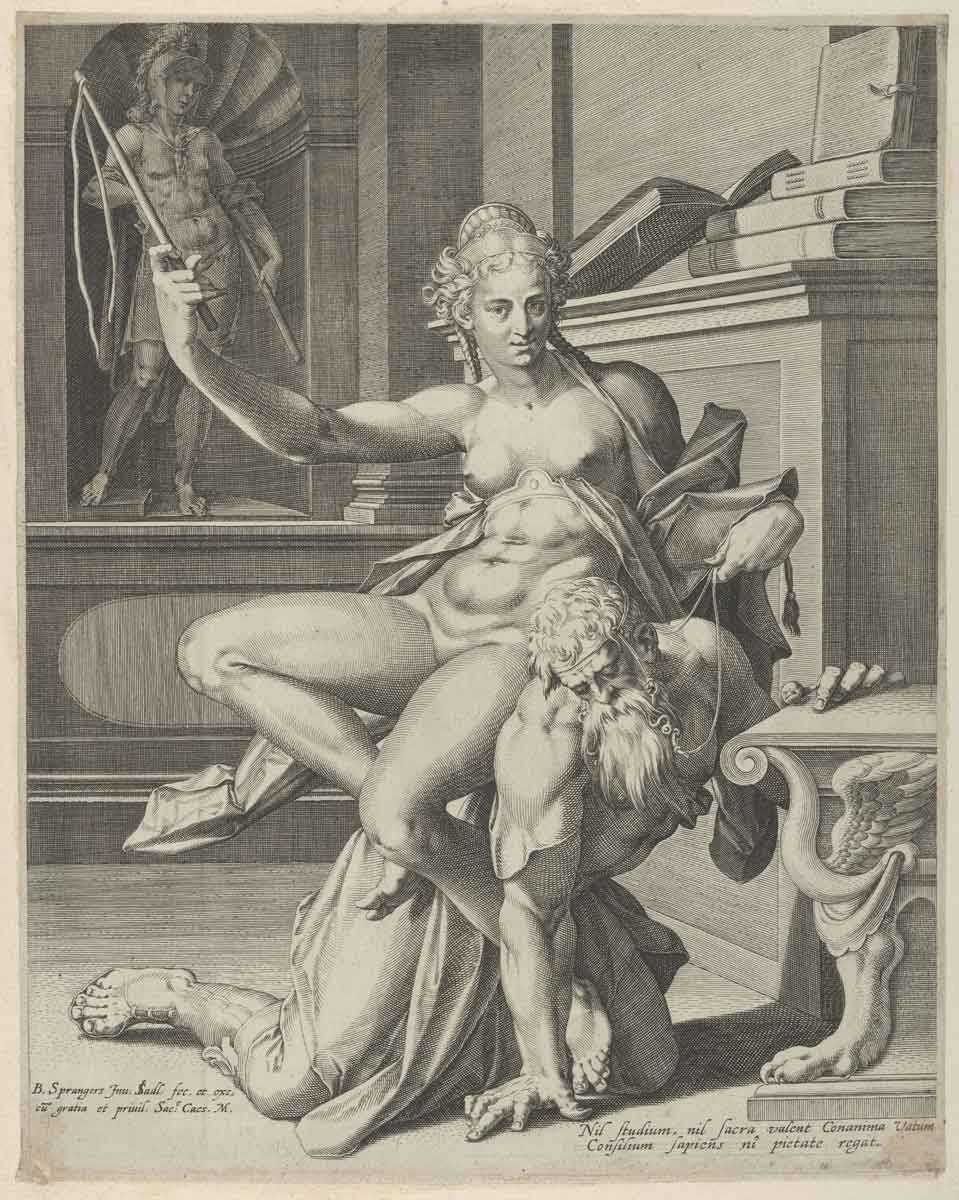
Importantly, philosophy did not emerge in isolation. It was influenced by earlier contacts with Egyptian, Mesopotamian, and Eastern knowledge. Yet what made the Greeks distinctive was their move to rationalize and theorize these insights, stripping them from religious frameworks and treating them as problems of reason, often meeting in public spaces to exchange ideas. This communal search for truth encouraged the development of logic, reason, and systematic argumentation.
The birth of philosophy, therefore, was not a sudden event but a gradual process, starting with Thales and the Milesians, and expanding as other thinkers across Greece engaged in the same pursuit of wisdom. This early stage established the foundation for later philosophers like Socrates, Plato, and Aristotle, who would take these inquiries further into ethics, politics, and metaphysics.
Pre-Socratic Natural Philosophy
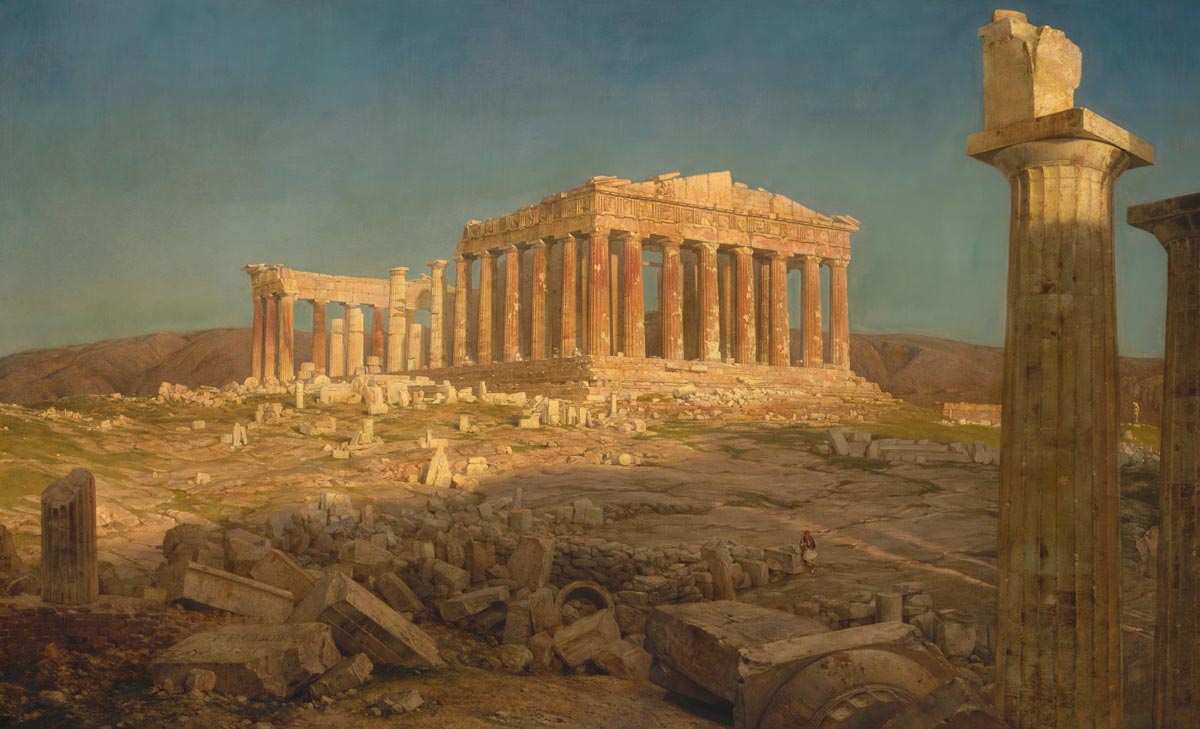
After Thales and the Milesian thinkers, many other Pre-Socratic philosophers continued the search for the archê, or the fundamental principle of the universe. Each proposed different answers, reflecting the diversity of thought that made early Greek philosophy so unique.
Heraclitus of Ephesus argued that the world was in constant change, and he identified fire as the underlying substance. To Heraclitus, fire symbolized transformation, as everything was in flux and nothing remained the same. He is remembered for the famous idea that one cannot step into the same river twice, because both the river and the person are constantly changing. His emphasis on motion and conflict as central to reality marked an important departure from the static views of earlier thinkers.
In contrast, Parmenides of Elea rejected the notion of change altogether. He claimed that reality was unchanging, eternal, and indivisible. For him, “what is, is,” and “what is not, is not,” meaning that nothing truly comes into being or passes away. This radical conflict of ideas challenged other thinkers to reconcile the tension between change and permanence, which would be ultimately solved in Sophist, written by Plato, and become one of the main foundations for his Theory of Forms.
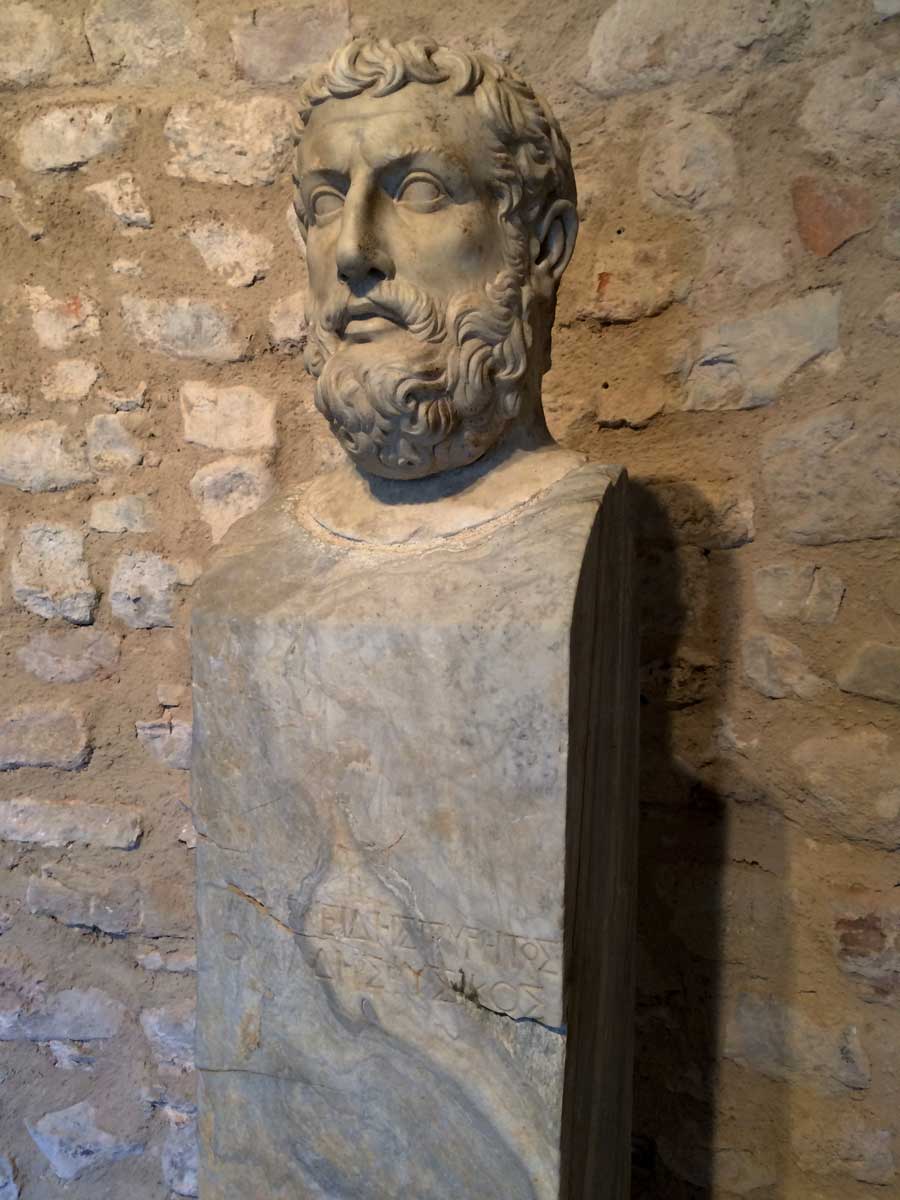
Another significant figure was Empedocles, who attempted to resolve the dispute between those who saw reality as one element and those who saw it as multiple. He proposed that all things are composed of four roots: earth, air, fire, and water. According to him, these elements combined and separated under the influence of two cosmic forces, Love and Strife, which explained both harmony and conflict in the universe. This theory was influential because it offered a way to account for the diversity of the natural world while maintaining a systematic framework.
Similarly, Anaxagoras suggested that the cosmos was made up of infinitely divisible particles, or “seeds,” which contained portions of everything. He introduced the concept of Nous, or Mind, as the organizing force that set the universe in motion. This was an early attempt to bring intelligence and order into cosmology, anticipating later philosophical ideas about reason and design. Finally, Democritus and Leucippus proposed the theory of atomism, claiming that all matter was made of tiny, indivisible particles moving in the void. Their mechanistic explanation of nature was far ahead of its time and influenced scientific thought centuries later. Together, these Pre-Socratic philosophers laid the groundwork for metaphysics and natural philosophy by daring to search for the ultimate principle of reality.
Socrates and the Revolution in Dialectics
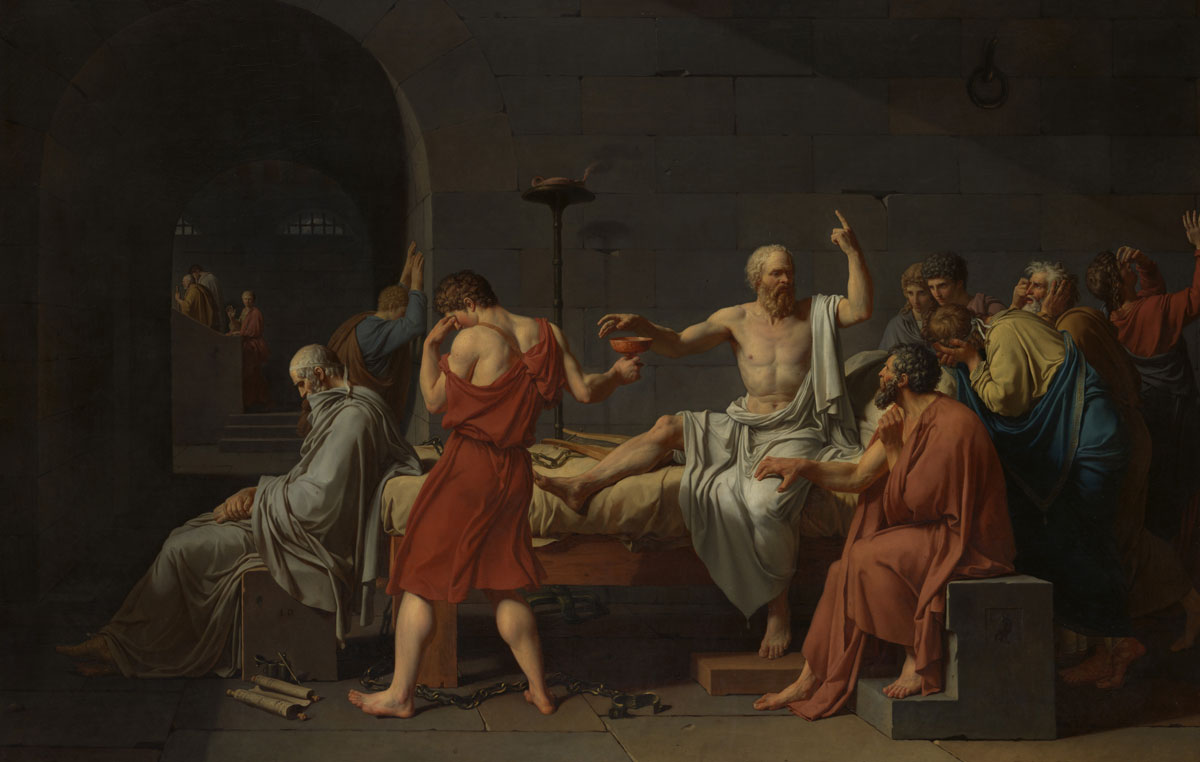
Socrates marked a profound shift in the history of philosophy by turning its focus away from the natural world and toward human life, ethics, and the pursuit of wisdom. Unlike the Pre-Socratic philosophers, who sought to identify the fundamental element of the universe (whether water, air, fire, or atoms), Socrates was less interested in cosmology and more concerned with how people should live. He believed that understanding the principles of justice, virtue, and knowledge was far more important than speculating about the origins of the cosmos. This redirection of philosophical inquiry from nature to human conduct was revolutionary, as it placed moral reflection and self-examination at the very heart of philosophy.
What truly distinguished Socrates was his method of inquiry, known as dialectics, or more specifically, the Socratic Method. Rather than delivering lectures or written arguments, Socrates engaged people in dialogue, asking probing questions that challenged their assumptions. His approach often began with a simple question, such as “What is justice?” or “What is courage?” As his interlocutors offered answers, Socrates would point out contradictions, leading them to realize the limits of their own knowledge. This process, sometimes uncomfortable for his audience, was not meant to humiliate but to encourage deeper thinking and intellectual humility. By exposing ignorance, Socrates hoped to guide people closer to genuine understanding. His famous statement, “I know that I know nothing,” captured his belief that wisdom begins with recognizing one’s own lack of certainty.
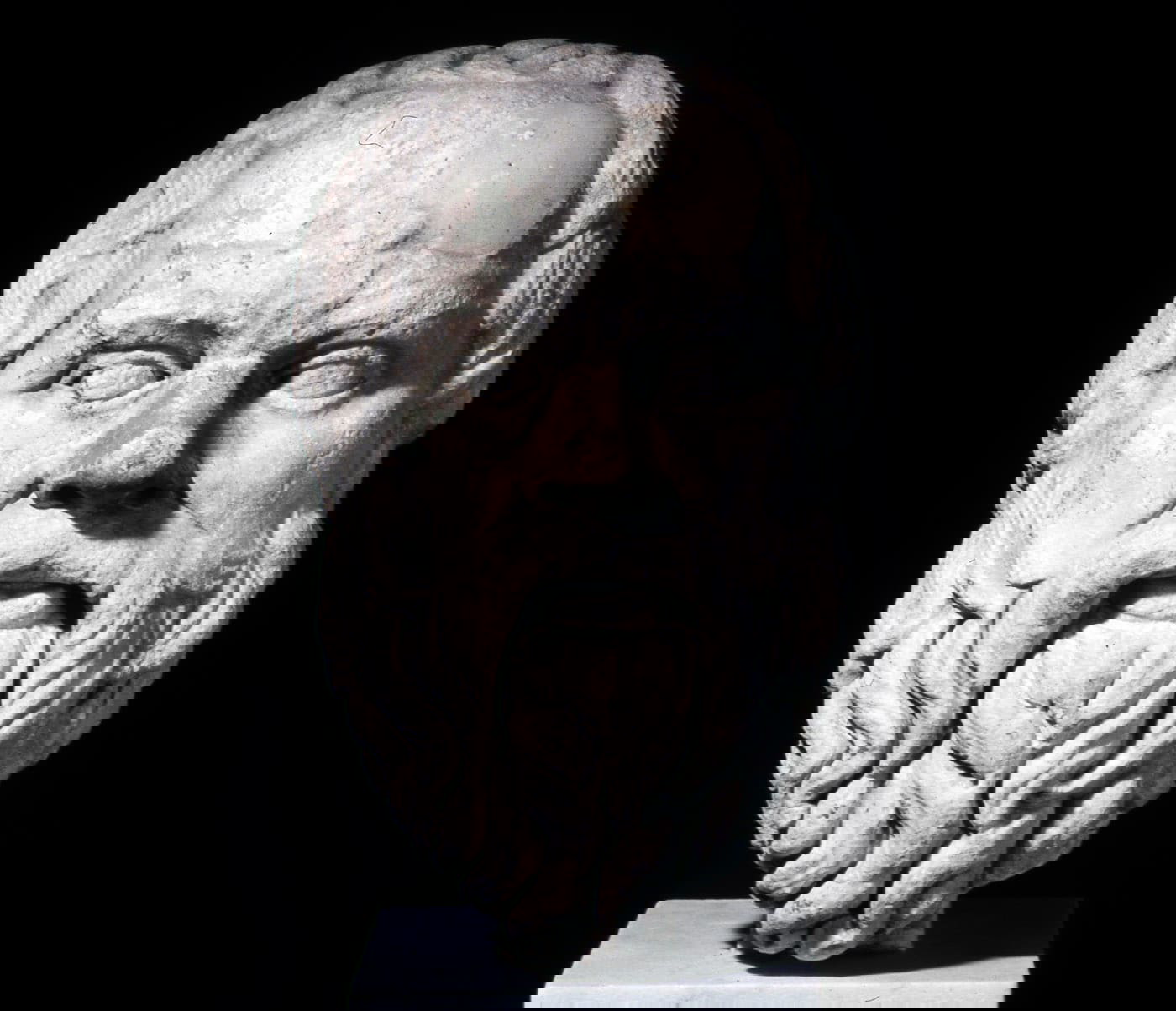
Through this method, Socrates laid the foundations for critical reasoning and systematic ethics. Dialectics introduced a new way of approaching truth: not as something revealed by myth or asserted by authority, but as something uncovered through rational discussion. This emphasis on dialogue created philosophy as a shared pursuit rather than a solitary speculation. Socrates’ focus on ethics also transformed philosophy into a guide for life, stressing that the unexamined life was not worth living.
Socrates did not leave any writings, but his unique influence endured through the works of his students, most famously Plato, who recorded many of his dialogues. By prioritizing moral inquiry and perfecting the dialectical method, Socrates established a model of philosophy as both a search for truth and a practice of self-improvement.
Greek Philosophers Plato and Aristotle: The School of Athens
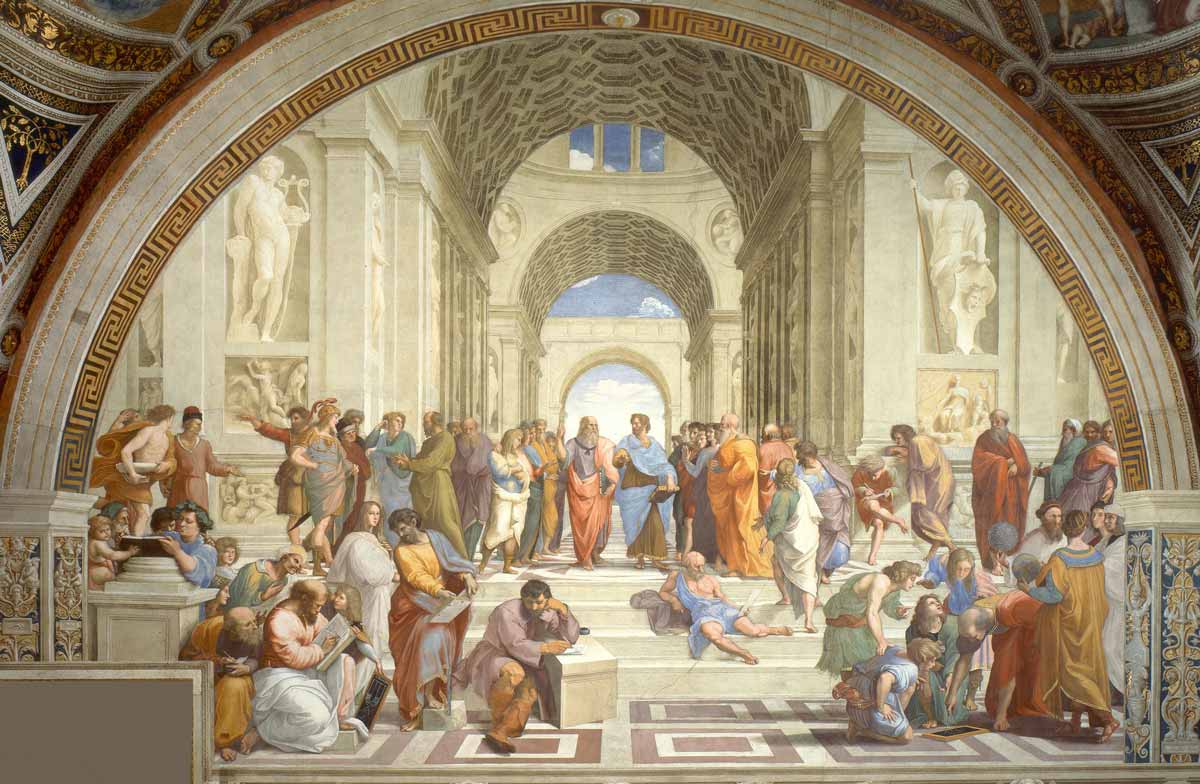
Plato, the most famous student of Socrates, carried his teacher’s ideas forward but gave them a new systematic form. While Socrates focused mainly on ethics and questioning, Plato sought to construct a comprehensive philosophical vision that explained reality, knowledge, and politics. His most influential idea was the Theory of Forms, which claimed that the material world is only a shadow of a higher, eternal realm of perfect forms or ideas. For Plato, true knowledge could not be gained through the senses, which only perceive changeable appearances, but through reason, which grasps the eternal truths beyond them. This dual view of reality deeply shaped Western philosophy, linking the search for wisdom to the pursuit of universal principles.
Plato also founded the Academy in Athens, considered the first institution of higher learning in the Western world. The Academy was unique because it was not only a place for instruction but a community dedicated to the pursuit of truth. Students engaged in mathematics, philosophy, and science, learning through dialogue in the same spirit as Socrates, but within a structured environment. This was a radical innovation, as it institutionalized philosophy as a discipline and provided a model for future universities.

One of the Academy’s greatest students was Aristotle, who both admired and challenged his teacher. While Plato emphasized the world of forms and the superiority of reason over sensory experience, Aristotle took a more empirical approach. He argued that knowledge begins with observation of the natural world and that forms exist not separately but within physical things. Aristotle systematized philosophy into distinct fields, that being logic, ethics, politics, metaphysics, biology, and rhetoric, making him one of the most versatile thinkers in history. His logical works, particularly the syllogism, laid the groundwork for formal reasoning, while his ethical writings emphasized the cultivation of virtue through habit and balance, known as the “golden mean.”
Together, Plato and Aristotle represent two complementary paths in philosophy: the search for transcendent truths and the careful study of the natural world. This is very beautifully represented in the famous painting of Plato pointing upwards while Aristotle has his hand turned to the ground. Their work not only carried forward Socrates’ emphasis on reason and ethics but also expanded philosophy into a comprehensive system that addressed every aspect of human existence. The Academy in Athens became a symbol of this intellectual flowering, a place where abstract thought and empirical study could coexist. This legacy of inquiry, debate, and systematic knowledge made Plato’s Academy and Aristotle’s contributions so unique and enduring that they remain shaping the very foundations of Western education and thought.