
Ethics isn’t just about rules of conduct; it’s the messy, urgent project of deciding how to live and what kind of person you want to be. Should we chase happiness at all costs? Obey duty? Question authority? Many philosophers believe that seeking answers to these questions will bring you closer to understanding your role in all your relationships, and, ultimately, make you a more conscientious human being. The five books we will cover below transformed how we understood such questions, informed lawmakers and war commanders, and inspired keyboard warriors’ rants. Whether you’re a CEO, a barista, or a sentient AI reading this in 3023, your ideas define what it means to be human.
1. Aristotle’s Nicomachean Ethics (4th century BC)
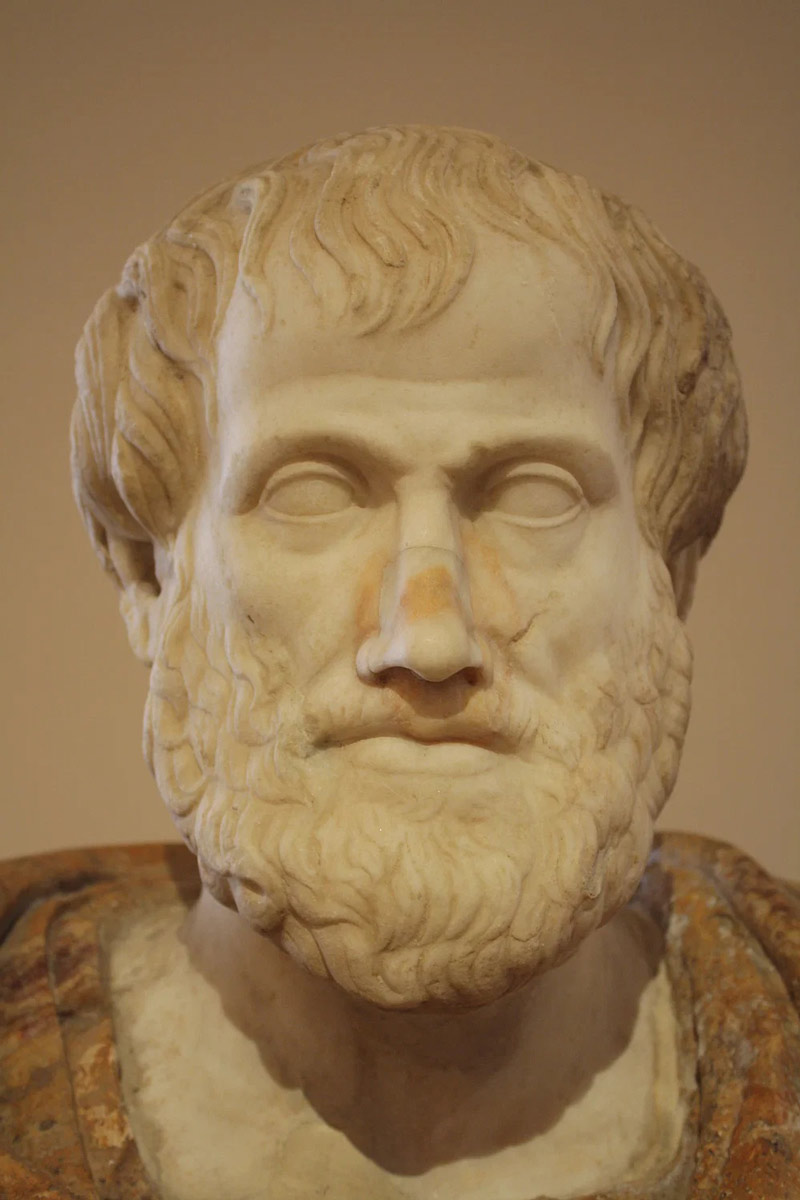
If ethics had a starter pack, it would be Aristotle’s Nicomachean Ethics. Written as lecture notes for his students (and future millennia of overthinkers), this book asks: “What does it mean to live a good life?” Spoiler: It’s not about rules, social roles, or avoiding pain and maximizing pleasure. It’s about habits. Simple as that.
Aristotle introduced eudaimonia, often translated as “flourishing,” as the ultimate goal for all humans, emphasizing the importance of caring for their moral well-being. To achieve it, you need virtues, like courage, temperance, and wit, cultivated through practice until they become your second nature. Think of it as moral CrossFit: you’re not born brave, you become brave by doing brave things. However, to be brave, you must learn to recognize situations where it makes sense to be brave, rather than reckless. Aristotle does not ask us to be everyday heroes, nor makes excuses for bystanders who were just doing their job. His Golden Mean doctrine, strikingly similar to Confucius’ moral philosophy, warns against extremes. Courage is the midpoint between recklessness and cowardice.
In an age obsessed with quick fixes, such as self-help hacks and TikToks of life coaches, Aristotle’s slow-cooker approach to morality may seem radical. However, he reminds us that being good isn’t about grand gestures but daily choices that pile up. He also warns us that we are always bound to other people since we are “neither gods nor animals,” so our quest for flourishing has wider social implications. A healthy community is one in which all can freely seek eudaimonia, regardless of their idiosyncrasies.
2. Immanuel Kant’s Groundwork for the Metaphysics of Morals (1785)

Kant’s Groundwork is the ultimate manifesto for all rule-followers. Forget consequences or virtues, this German philosopher argues morality is about duty, period. For this reason, his ethical theory, introduced in the Groundwork and later developed in more detail in the Critique of Practical Reason, is better known as deontology (from the Greek word deon, which translates as “obligation,” or “duty”). There’s an inside joke among philosophy students: you don’t simply become a deontologist—you’re born one. His central question: “What makes an action morally good?” Answer: Only if you do it because it’s right, not because it feels good or gets you likes. This means you act out of respect for moral duty.
Another central notion in the Groundwork is the categorical imperative. This is Kant’s litmus test for ethics, with three formulations. The most general and famous formulation is in the form of the maxim of universalization: “Act only according to that maxim whereby you can at the same time will that it should become a universal law.” Simply put, when you’re in a dilemma about how to act, imagine: “What if everyone acted this way?” For instance, Kant claims that your duty is to always avoid lying. If everyone lied, trust would collapse. Thus, lying is wrong, even when a frenzied serial killer asks you where your friend is hiding. (Yes, you read that right, Kant isn’t joking.)
Kant’s Groundwork is not for everyone. In an era of moral relativism (“Your truth, my truth!”), his rigid deontology is either a beacon of clarity or a buzzkill. Nonetheless, Kant placed trust in humanity like no philosopher before him: he believed we possess a capacity for moral reasoning precisely because we are rational beings. Therefore, he argued, we must respect one another as ends in ourselves; no person has lesser inherent worth than another. Pity his compatriots did not think like that in the 20th century.
3. John Stuart Mill’s Utilitarianism (1863)
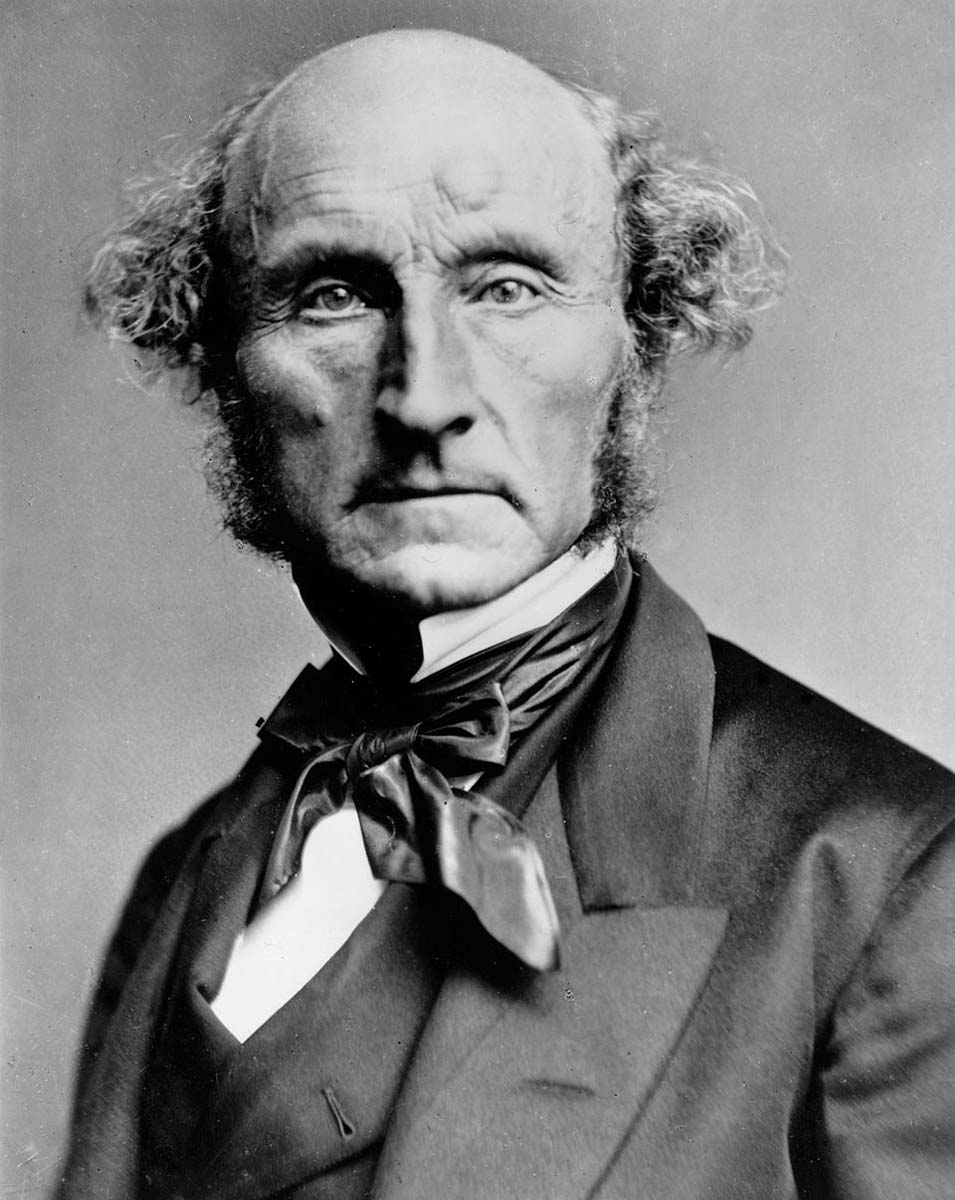
If Kant is the strict parent preaching duty, Mill is the cool uncle who says, “Do what brings the most happiness!” And then hands you a calculator and adds, “Don’t skip the math.” Mill argues in Utilitarianism that an action is moral if it maximizes happiness (or minimizes suffering) for the greatest number of people. Simple, right? Not quite. Utilitarianism often gets mixed up with consequentialism.
While the two are closely related, they differ in scope: utilitarianism is built on hedonism, whereas consequentialism broadly argues that moral evaluations hinge entirely on the consequences of our actions. Think of it this way: all utilitarians are consequentialists, but not all consequentialists are utilitarians.
Although his predecessor, Jeremy Bentham, thought that one could do a kind of moral math to decide upon the right course of action, Mill turned to the quality of happiness. This means he is not arguing for cheap thrills (Netflix and Ben & Jerry’s bourbon vanilla ice cream), but for higher pleasures, like art, learning, and meaningful relationships. Higher pleasures should be your priority when deciding upon an action rather than following your primeval instincts. His famous line: “It is better to be a human dissatisfied than a pig satisfied.”
Utilitarianism has profoundly shaped Western policy frameworks, serving as the Swiss Army knife of democratic governance. Its calculus, weighing collective well-being against individual costs, underpins everything from pandemic-era lockdowns to climate change mitigation. Beware, though: What if maximizing happiness means silencing minorities? Mill grappled with this, too. His harm principle (“Your freedom ends where mine begins”) tries to hedge against the tyranny of the majority.
4. Friedrich Nietzsche’s Beyond Good and Evil (1886)
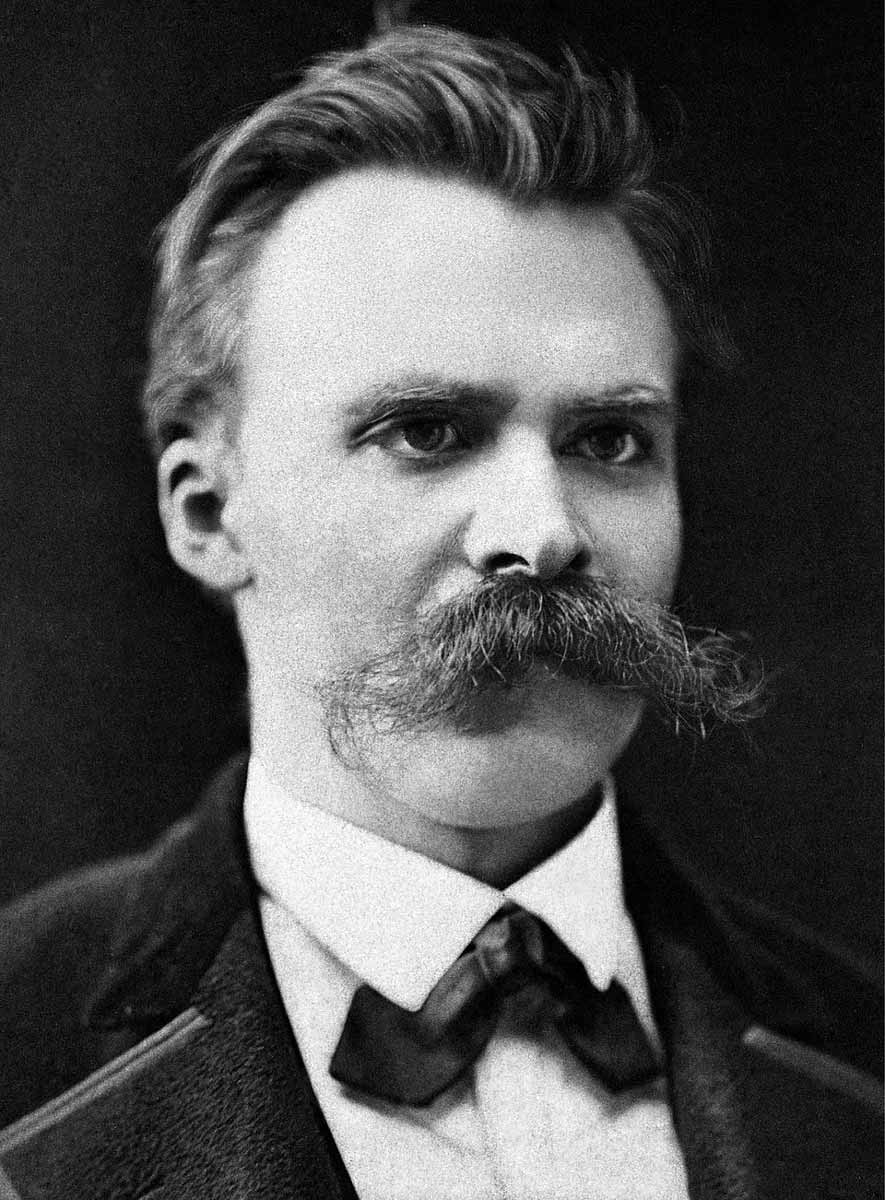
Nietzsche crashing into philosophy was like the Sex Pistols detonating onto the 1970s UK music scene. He doesn’t ask “What is good?”, but “Who gets to decide what is good?!” For him, morality is a power play where the weak shame the strong into playing nice. In The Genealogy of Morals, which is usually cited as his key contribution to ethics, Nietzsche contrasts master morality (ancient warriors valuing strength, pride, and nobility) with slave morality (Judeo-Christian values like humility, charity, and equality). Slave morality, he argues, was cooked up by the powerless to paint their oppressors as villains, rebranding their weakness as “goodness” while slapping the “evil” sticker on society’s alpha dogs.
However, if On the Genealogy of Morals is Nietzsche’s takedown of Judeo-Christian ethics, Beyond Good and Evil is his manifesto for what comes next, and, therefore, reserves the spot on our list. Written in his signature aphoristic style (equal parts poetry and philosophical shrapnel), the book dismantles the “herd morality” of good vs. evil while sketching a radical alternative: a life-affirming morality for the free spirits who dare to live “beyond.”
This kind of morality is rooted in the will to power: the drive to overcome, create, and assert one’s individuality. Nietzsche also demands we reject moral absolutes and embrace perspectivism: the idea that all truths are shaped by power and desire. In his words, which aged… interestingly: “Supposing truth is a woman—what then?” Before dismissing Nietzsche as a misogynist, consider his near-reverence for Lou Salomé, his Über-Woman, the fiercely independent philosopher and writer whose intellect left him utterly smitten.
In today’s age of virtue signaling, Nietzsche’s philosophy is often dismissed as bigoted, and his work was infamously misappropriated by the Third Reich. Yet, in a striking twist, Nietzsche himself held starkly different views from his sister, an ardent antisemite, and even severed ties with his publisher over their antisemitic agenda, opting to self-publish Beyond Good and Evil at his own expense.
5. G. E. Moore’s Principia Ethica (1903)
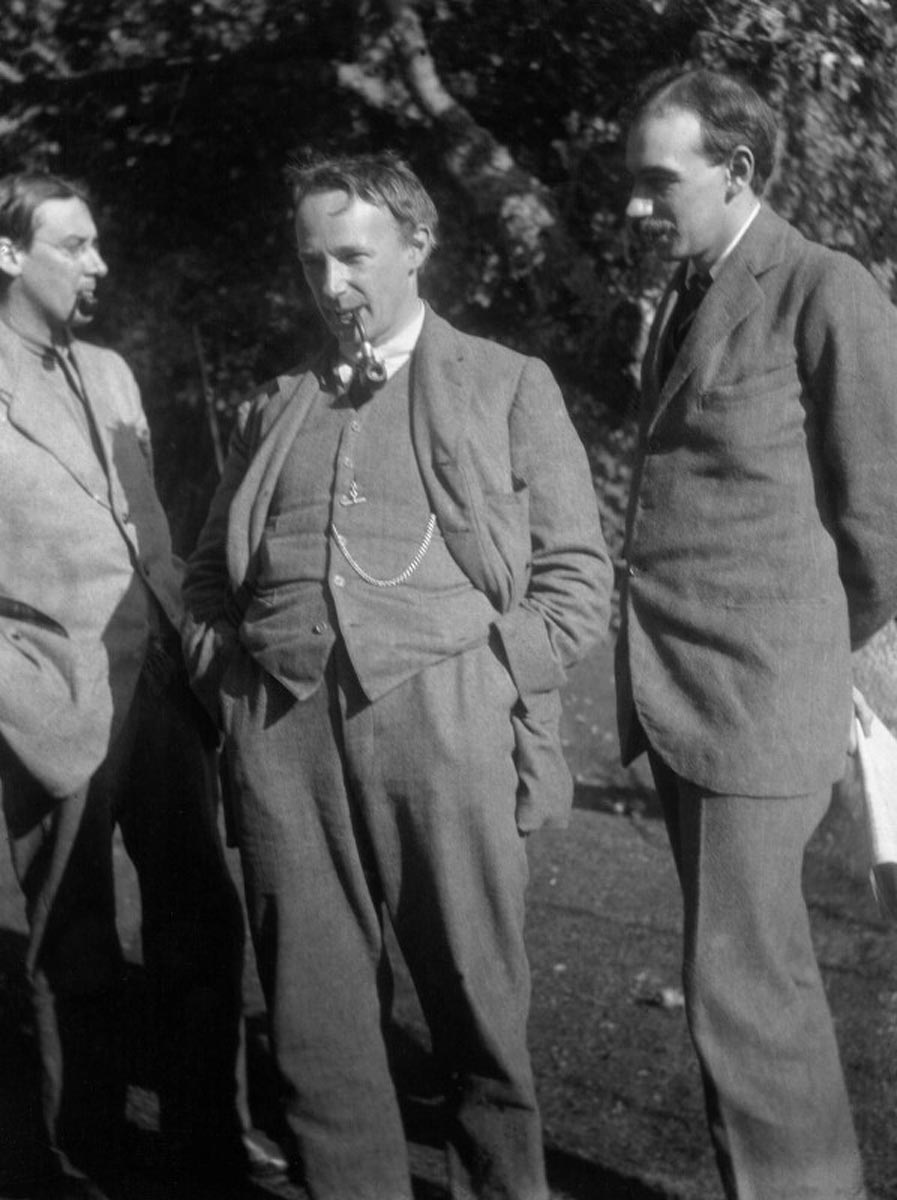
Having quite a long stage, it seemed hardly conceivable that ethics could be reinvented from scratch in the 20th century. G. E. Moore’s Principia Ethica did that and paved the way for metaethics, the philosophical subdiscipline that analyzes the foundations, meaning, and logic of moral language. Moore’s target in this book is the naturalistic fallacy, that is, the idea that “good” can be reduced to natural properties like pleasure (à la utilitarians) or evolutionary fitness. His famous open question argument exposes the flaw: even if we define “good” as “happiness,” we can still ask, “But is happiness good?”, thereby proving the term is indefinable.
Moore further argues that “good” is a simple, non-natural property, grasped intuitively like the color yellow. Ethics, then, isn’t about rules or consequences but discerning intrinsic value through moral intuition. His flowery prose inspired the Bloomsbury Group of British intellectuals to treat art and friendship as sacred.
While critics dismiss his intuitionism as vague, Principia Ethica shifted our focus from what we should do to what we mean by “good.” In an age of moral relativism, Moore’s plea to stop conflating facts with values remains a masterclass in philosophical clarity. If ethics is reduced to cultural practices (facts about cultural beliefs), we lose the ability to critique them (e.g., female genital mutilation). Moore insists that “good” isn’t a social fact but a value that demands reasoned scrutiny, which places him on the cognitivist side of metaethics.