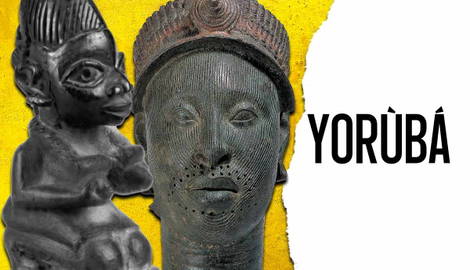

Yorùbá philosophy is a record of traditional beliefs and, as such, serves as an intellectual prism for interpreting various social and political issues. It is grounded in the historical and cultural experience of the Yorùbá people, a major West African ethnic group. Yorùbá philosophy illuminated questions about justice and shared responsibility. Scholars increasingly draw on these philosophical insights to make sense of the challenges facing postcolonial Nigeria. Political instability, civil war trauma, moral crisis, and social fragmentation are among them.
Situating Yorùbá Philosophy

Every philosophy has an origin, a milieu, and a genealogy of its own creation. Those refer to the concrete conditions that allowed for its emergence. Philosophy is thereby to a certain extent determined through particular cultural and historical forces. These forces shape the questions posed, the concepts invented, and the methods applied within a given intellectual tradition.
Understanding African philosophy from such a situated perspective is crucial. Since the twentieth century, one of the field’s central disputes has concerned whether ideas preserved in oral traditions, religious practices, proverbs, and folklore can count as philosophy in the strict sense. Critics of ethnophilosophy argued that such materials were too collective, uncritical, or tradition-bound to qualify as philosophy proper, insisting instead on explicit argumentation and individual critical reflection.
Yorùbá philosophy is especially important within this debate because it shows how inherited conceptual resources can be reconstructed rather than merely repeated. Modern scholars of Yorùbá thought have drawn on Ifá literature, moral concepts, and ordinary language to develop arguments about knowledge, personhood, destiny, and ethical character. These reflections grew out of the long history of Yorùbá-speaking societies in what is now southwestern Nigeria and nearby regions, where urban centers such as Ilé-Ifẹ̀ acquired deep religious significance, and Oyo became, by the seventeenth century, the largest of the Yorùbá kingdoms.
The Formation of Character
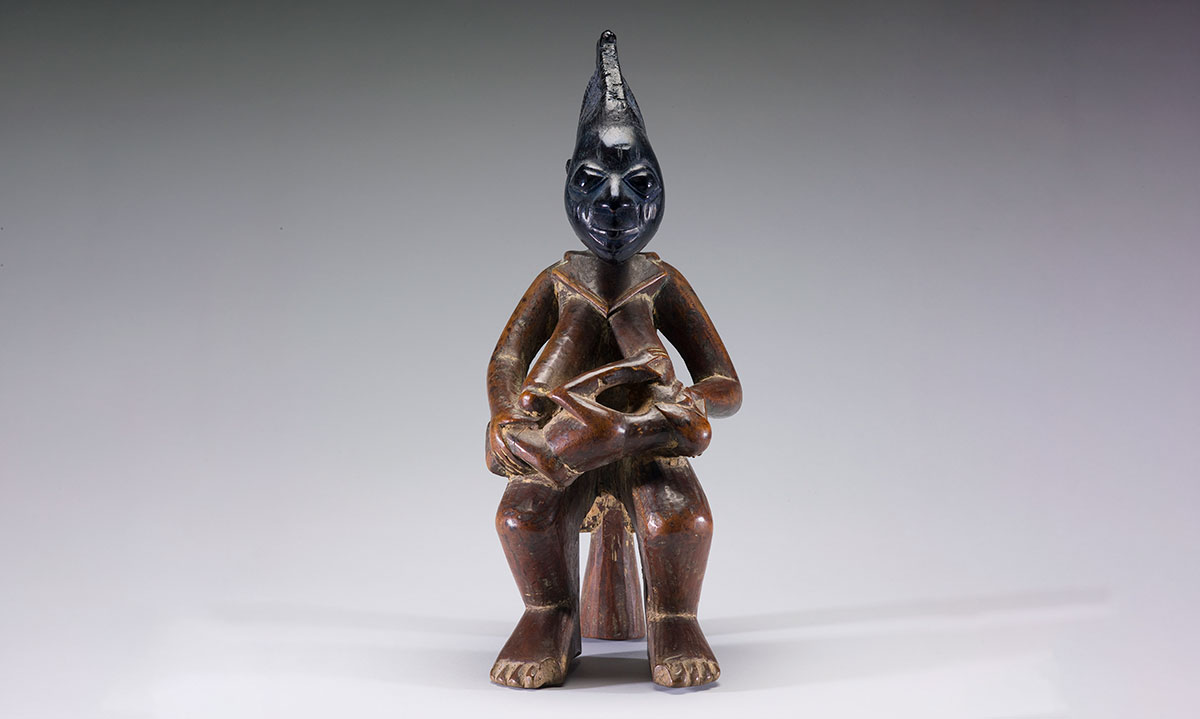
Seen from this perspective, Yorùbá philosophy is articulated not only in formal argument but also in condensed forms of moral and social reflection such as proverbs. Proverbs occupy an important place in Yorùbá thought because they preserve practical judgment in memorable linguistic form. One widely cited expression is ‘ọmọ tí a kò kọ́ ni yóò gbé ilé tí a kọ́ tà’: “the child that is not taught will sell the house that is built.” Modern interpreters have read this proverb as expressing a philosophy of upbringing, social responsibility, and cultural continuity rather than as a merely didactic maxim. The survival of the community depends on the younger generation’s ability to inherit and sustain the work done by previous generations.
In this context, scholars such as Michael Afolayan note the layered semantic field associated with kọ́, linking teaching, learning, training, and building in ways that make education appear as a constructive process of self-formation. Yorùbá philosophy, thus, goes well beyond schooling; it encompasses a wide spectrum of activities that shape the individual. Education is then understood within this broader view of knowledge as a life form.
On this view, education involves both the transmission of values and the acquisition of practical capacities. Social participation begins early, and responsibility for a child’s formation is distributed across family and community networks rather than confined to parents alone. It is not relegated to the kind of nuclear family structure that is predominant in the West. The proverb’s warning is therefore not only personal but collective. If the young are not properly formed, the material and moral inheritance of one generation may be dissipated by the next.
Rapid modernization has weakened traditional systems of mentorship and cultural education in contemporary Nigeria. Yorùbá philosophy recalls a longstanding conviction that durable social development depends not only on material infrastructure but also on the cultivation of character.
The Wisdom of Ifá

One of the central pillars of Yorùbá thought is Ifá divination or literary corpus. Ifá is part of religious practice, but it is not reducible to ritual alone. It is also a highly developed system for preserving and transmitting knowledge, ethical reflection, and practical wisdom. The Ifá corpus is organized around 256 odù (signs or chapters), each associated with a body of verses (ẹ̀sẹ̀ Ifá) through which narratives, proverbs, and reflections on human conduct are interpreted in particular situations.
Babaláwo are the custodians and interpreters of this tradition. The title is commonly glossed as ‘father of secrets’ or ‘father of esoteric knowledge,’ though in practice it refers to a diviner trained in the interpretation of the Ifá corpus. Their formation is rigorous and depends on long apprenticeship, memorization, and interpretive judgment. For that reason, the babaláwo is not simply a ritual specialist, but also a mediator of inherited knowledge who applies the resources of the corpus to concrete questions of conduct, conflict, and decision-making.
In Yorùbá intellectual and religious history, Òrúnmìlà stands at the center of this tradition as the figure associated with wisdom and the transmission of Ifá. It is more precise to say that Òrúnmìlà is regarded within the tradition as the source or revealer of Ifá, rather than to say straightforwardly that he ‘shaped’ its structure in a historical sense. The corpus was transmitted orally for centuries, yet it is far from unsystematic: its verses preserve recurring arguments, analogies, classifications, and forms of moral reasoning about destiny, character, obligation, and the uncertainty of human life.
Ifá, therefore, complicates the assumption that philosophy requires writing to become reflective or systematic. Like the Socratic tradition, which survived through transmission and interpretation rather than through texts written by Socrates himself, Ifá shows how sustained reflection can be preserved in oral form. The comparison should not be pressed too far, but it is useful insofar as it highlights a simple point: the absence of writing does not imply the absence of philosophical structure.
The Teacher Orunmila
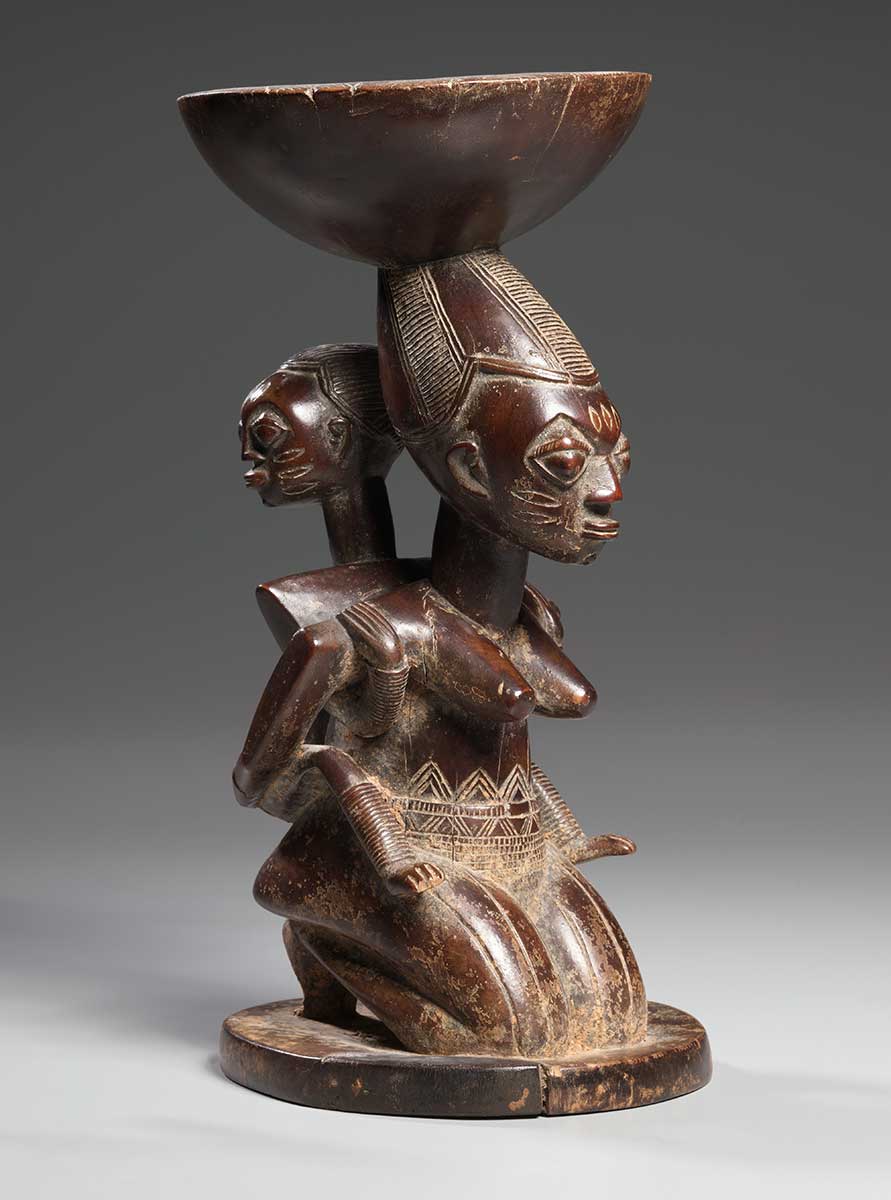
Orunmila is the founding teacher associated with the development of the Ifá system. He occupies a central place in Yorùbá tradition. Oral traditions describe Orunmila in several ways. Yorùbá historical memory is quite layered and complex. In some accounts, he appears as a primordial sage sent by the supreme deity Olódùmarè. His purpose is to guide human society through wisdom. In others, he is remembered as a teacher whose intellectual authority shaped the development of Ifá as a system of knowledge.
A second interpretation treats Orunmila less as an exceptional individual and more as a symbolic vessel for the Yorùbá intellectual worldview. Orunmila’s name represents a philosophical principle: absolute knowledge belongs only to the heavens, and human wisdom must remain humble when interpreting the world. Ifá is thereby the institutional form through which the Yorùbá worldview is preserved, allowing successive generations of practitioners to interpret ethical insights embedded in its vast corpus of verses.
Other traditions portray Orunmila as a prominent figure who established a school of learning in Ile-Ife, the spiritual center of Yorùbá civilization. According to these accounts, Orunmila chose sixteen disciples whose names correspond to the sixteen major Odu Ifá, the foundational divisions of the Ifá corpus. The disciples preserved and transmitted the teachings of Orunmila, and later generations expanded the body of knowledge through commentary and interpretation.
Non-European Conceptual Frameworks
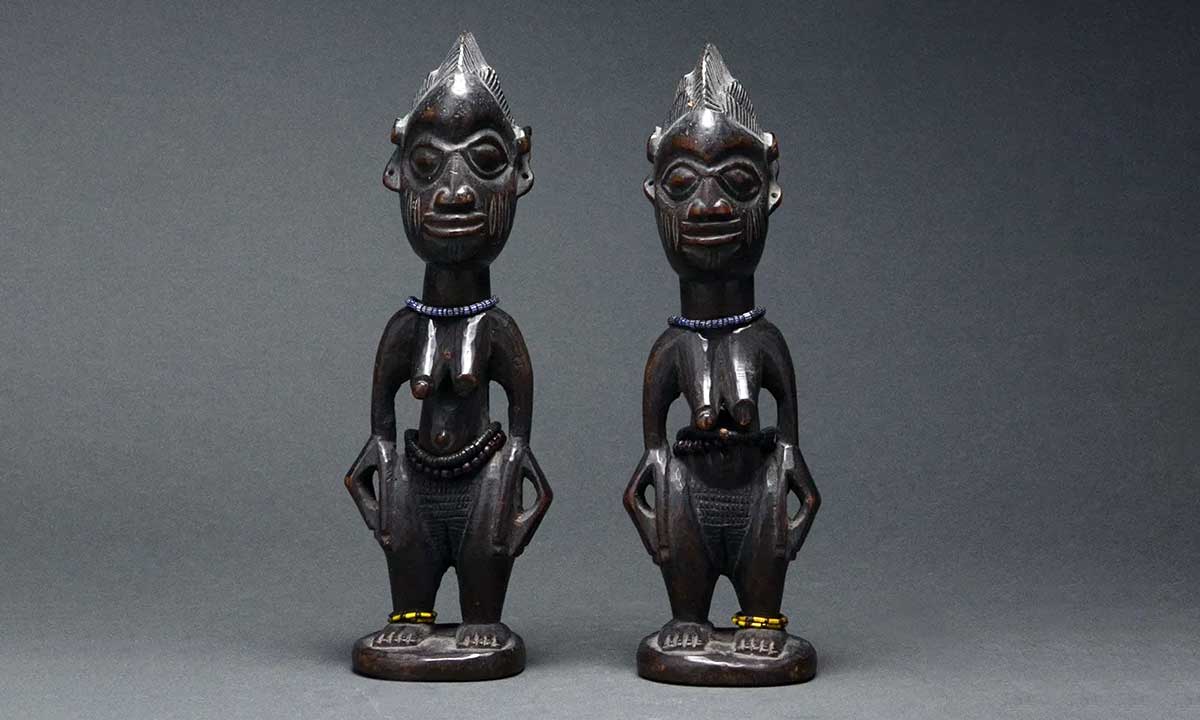
The question of interpretation occurs when one confronts the differences between any non-Western philosophy and its Western counterpart. According to some scholars, the difficulty the Western mind encounters in comprehending African philosophy stems from the conflation of conceptual categories. It is precisely the conflation and not the absence of philosophical concepts that needs to be emphasized. The categories of Yorùbá thought do not follow the familiar intellectual paths traced by European thinkers. It would be a gross error to assume that all thinking everywhere should follow the same universal patterns.
According to the French missionary, philosopher, and theologian Henri Maurier, philosophical systems cannot be understood in terms of singular ideas or isolated clusters of propositions. There is a deeper framework that organizes thought, hidden behind its apparent form. The hidden architecture and the basic intuition often remain implicit, requiring different methods of analysis and interpretation. What Maurier referred to as a “conceptual framework” is a structure of unconscious cultural assumptions that give rise to a particular philosophy. This allows for a situated, local method for analyzing philosophy that can prove much more useful than classical philosophy for understanding African philosophy.
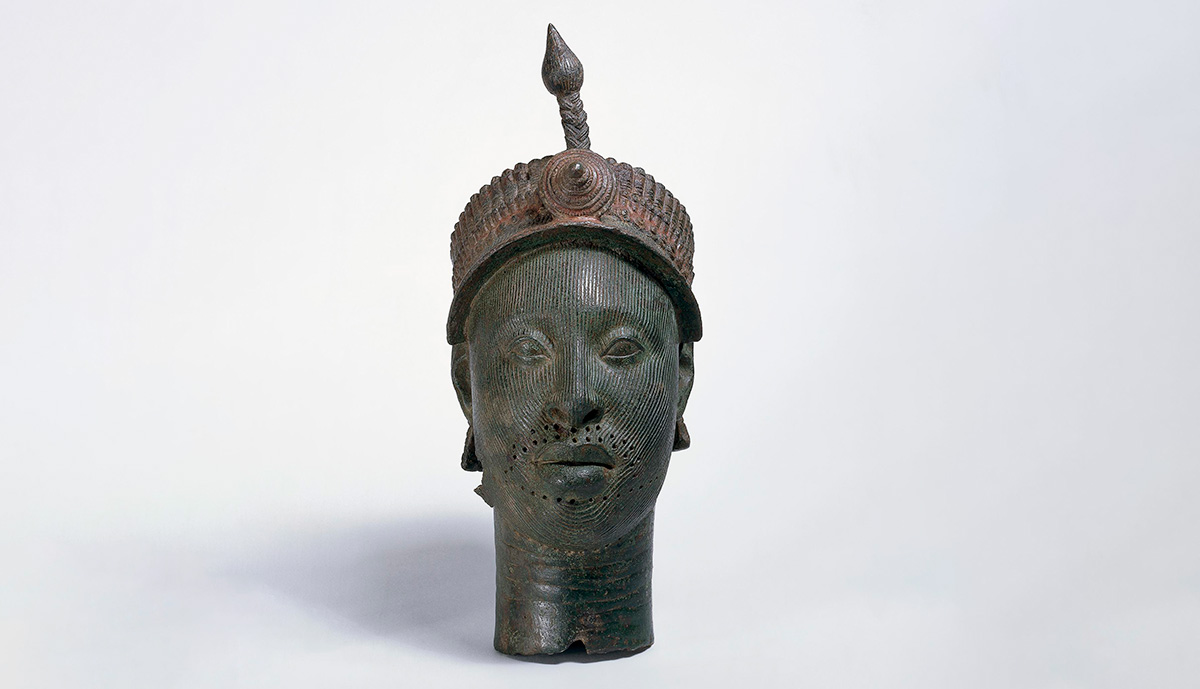
From this perspective, Yorùbá philosophy in fact demonstrates a coherent intellectual legacy grounded in unique and very real conceptual categories. Yorùbá reflections on education and communal life are founded on a worldview that calls for the cultivation of practical wisdom through engaged practice and social responsibility. The traditions of Ifá and the teachings of Orunmila, their common emphasis on ethical formation, demonstrate how Yorùbá thought constitutes a systematic philosophical framework rather than a collection of folk wisdom fit only for “ethnophilosophy.”