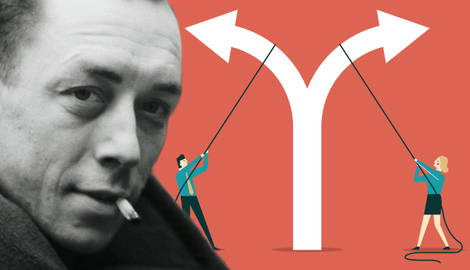

In Camus’s philosophy and literature, we often witness characters embark upon intellectual quests. Existing ideas about how life ought to be lived are put on hold for testing. However, these quests take place in solitude, and the discoveries made are personal. This contrasts with Camus’s political life, where all of his pursuits were carried out in the name of solidarity. There is a tension here to explore between Camus’s desire for solitude and solidarity.
Solitary or Solidarity? Albert Camus and the Artist’s Ultimate Dilemma
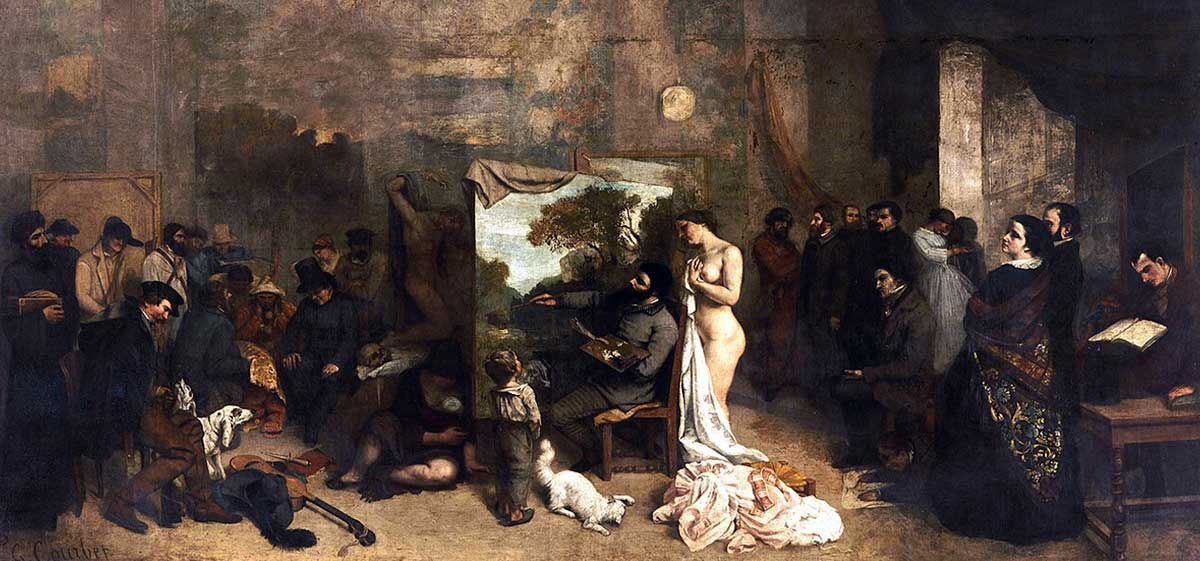
In 1953, Albert Camus wrote a story that was later published as “Jonas or The Artist at Work” in the collection Exile and the Kingdom (1957). It concerns an artist, Jonas, who becomes suffocated by the fame he achieves as a painter. We read about the pressure of fame and how others’ expectations impinge on the artist’s life and work. Quite clearly, although a satire, it is based upon Camus’s own experiences as a famous writer.
Driven almost mad by the demands and expectations of others, many of whom crowd his home studio, making it almost impossible to work, Jonas constructs a kind of indoor treehouse where he retreats to paint. At the end of the story (after Jonas falls out of his treehouse), his friend Rateau looks at the painting being worked on. The canvas is almost entirely white except for something written in black paint in the center. Rateau tries to make out what Jonas has written, but cannot. The word is either “solitary” or “solidarity.”
In the story, the artist is pleased with the painting. But he alone knows what the writing on the canvas says. That is, Jonas has discovered what he was looking for. But was it solitary or solidarity? Does he need and want to be alone, responsible only for himself, or is he seeking the mutual support and shared responsibility of living within a group of others? We will never know the answer. And importantly, neither will Camus.
The conflicting desires for self-sufficiency and isolation—to be solely responsible for one’s own life—and the desire to be part of a group and responsible for others were something Camus never managed to resolve in his life. We can trace his struggle with these competing desires throughout all his work, both personal, literary, and philosophical.
How Camus’s Childhood Shaped His Solitude

Camus was brought up in Belcourt, a poor district of Algiers. Camus’s father had been killed in the First World War, and his mother lived on his war pension and the few francs she earned as a cleaner. The household consisted of Camus, his brother, and his domineering grandmother. Money was extremely scarce.
In his unfinished semi-autobiographical novel The First Man, Camus recounts a childhood incident in which he stole a two-franc coin from his grandmother. Returning home from shopping, he claimed the coin had fallen from his pocket and gone down the communal toilet in the housing block where they lived. To his horror, his grandmother pulled up her sleeve and went to the toilet (little more than a hole in the ground) to try and retrieve the coin. It was at this moment that the young Camus realized the value of money when one has very little.
The plan for the young Camus was to leave school as soon as possible and go to work to provide for the family. However, a teacher recognized the boy’s precocious talent and persuaded Camus’s family to allow him to accept a scholarship to attend a good high school. This was a huge financial risk for the family. The gamble they were taking was to forgo Camus’s wages now so he could become a teacher later and earn much more money.
At school, Camus was a confident and good soccer player. He was respected and well-liked by the other boys, but he always felt like an outsider because of his impoverished background. Going to school brought home the differences between Camus and his classmates, but also between Camus and the other children in his district who were not educated and went to work as soon as possible.
The Outsider’s Dilemma: Camus’s Early Struggle to Belong
Being different from the other children gave Camus a strong sense of his own identity. As a teenager, he would dress in a particular way, in white pants and a bow tie, and speak with his friends using the formal “vous” form of address. For those that did not know Camus well, he could seem aloof or even pretentious, but to his close friends, they saw a fiercely funny and loyal friend with—even at this age—literary pursuits in mind.
Something that fascinated the young Camus was the relationship between human beings and the world. Or to be precise, the human longing to fit in and be a part of the world. He would spend long hours hiking in the countryside and swimming in the sea. Sunbathing, Camus would attempt to align the beating of his heart with the pulsation of the North African sun bearing down upon him.
In his early essays, published when he was twenty-three years old under the title The Wrong Side and the Right Side (1937), we read of Camus longing for some kind of union with the world. A friend of his, Jean Maisonseul (who would go on to become a renowned architect and artist), noted that Camus used the first-person singular in his work. Camus, in fact, agreed with his friend, but each of them reveals the personal quest the author was on to discover something about his relationship with the world for himself. It is a solitary quest.
In Camus’s first attempted novel, A Happy Death (written 1936-1938), we see the protagonist, Mersault, undergo a quest to harmonize his body and mind with the world. “Other people’s feelings,” he says ominously, “have no hold over me.” This novel was shelved so that Camus could concentrate on The Stranger (1942).
A Happy Death
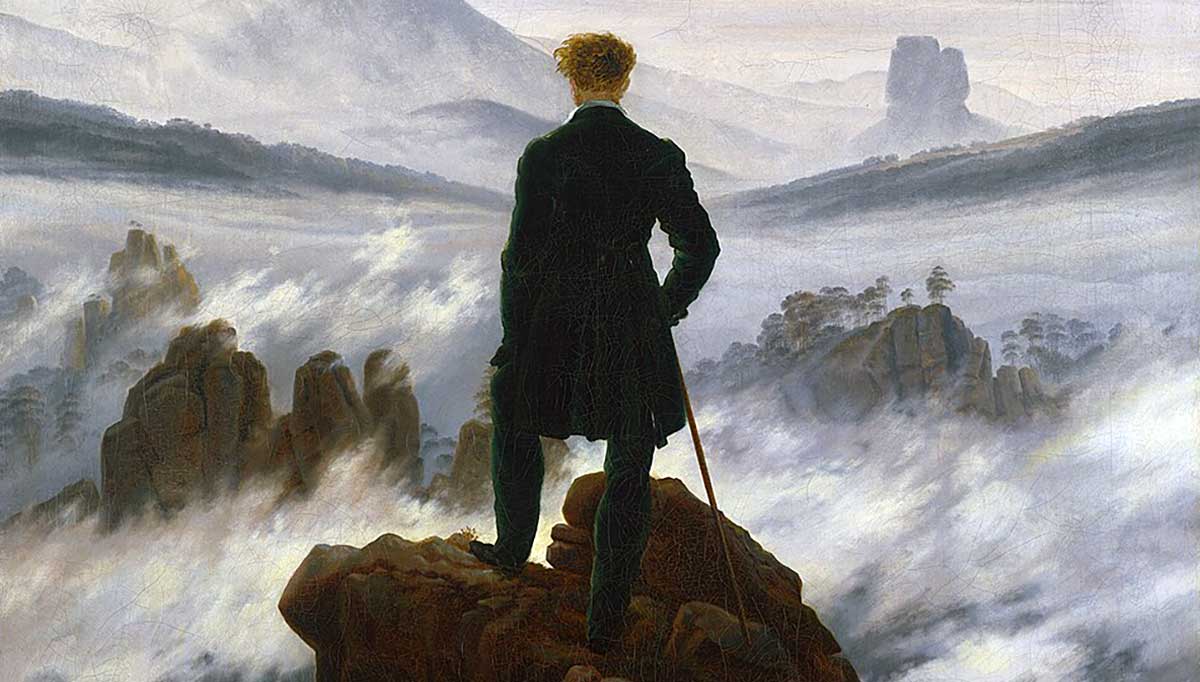
A Happy Death clearly was not working for Camus. The central character, Patrice Mersault, is so self-centered that he shows almost no care or concern for others. Other people are just means to an end on his quest for happiness. This happiness he sought turns out to be an attempt to lose all desire except to match his body to the rhythms of the Earth.
His ultimate aim is to fall asleep at night when he is tired and wake in the morning, repeating the same each day, without thinking, without attempting to understand the world intellectually, and without caring about what others think of him (or what he thinks of them).
In the end, the reader is left feeling that Mersault’s “happiness” is simply a kind of sterile nothingness. His lack of caring for others does not come across as independence or self-sufficiency but rather as some kind of psychopathy. After all, to get to the position where he can even attempt to live this life, Mersault murders a disabled man and steals all his money. Of this murder, Mersault surprisingly manages to convince himself that he killed the man “in the innocence of his heart.”
Meursault, the narrator of The Stranger, who shares many biographical details with Mersault, is a far more agreeable and likable character. Yet he, too, is on a solitary quest. When we compare what these characters are attempting to do with their lives, we can see what Camus is working through in these novels: how he outright failed with A Happy Death and came closer with The Stranger.
Unpacking The Stranger’s Real Purpose
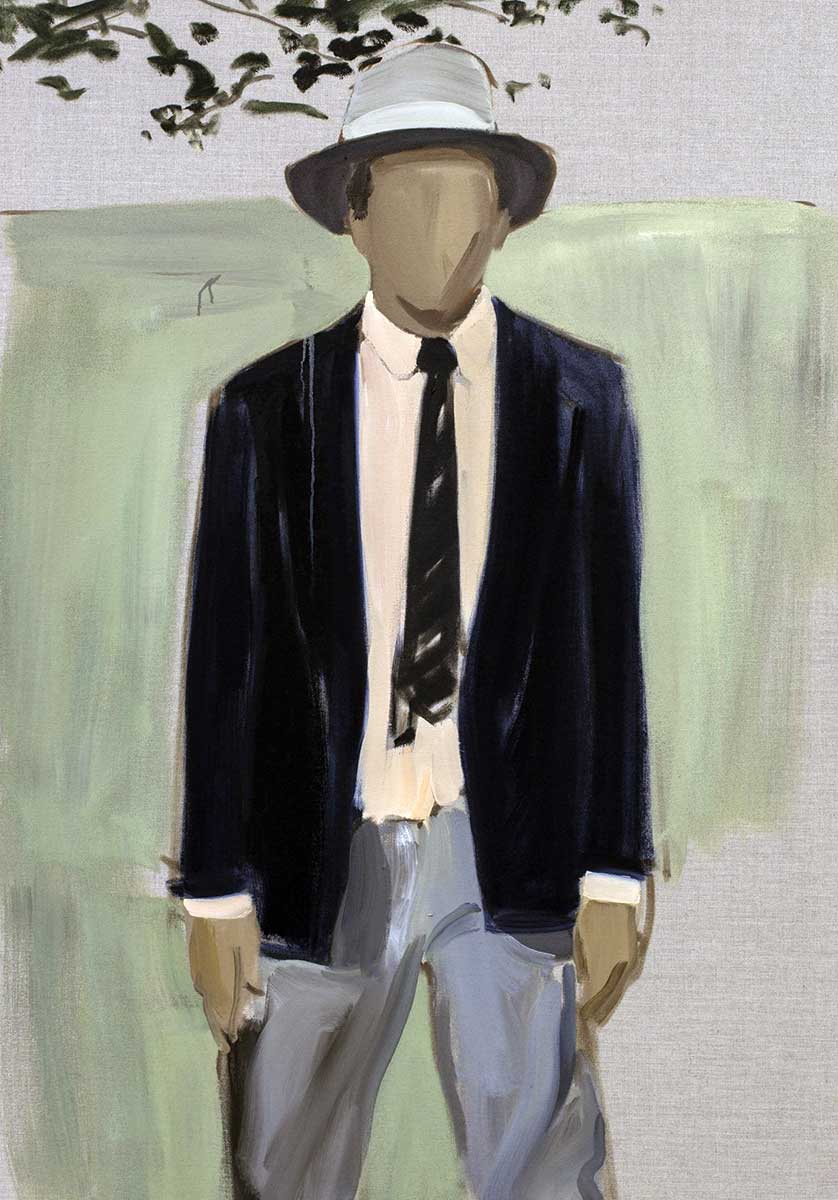
There has been a lot written about Meursault, the narrator of The Stranger, and his supposed “strangeness.” However, many commentaries that seek to characterize him as an oddball (or even a psychopath) fail to account for the Meursault we encounter in the text.
In some of the more extreme accounts, Meursault is so weird that he can barely think about his own life, let alone others. What views such as this miss is that Meursault is not only extremely well-liked by those around him but also considered intelligent and worldly-wise.
To list just a few examples: his boss offers him a promotion to a coveted position in Paris; both his neighbors, Salamano and Raymond, come to him for help and advice; the owner of the café he regularly frequents thinks he is a man of the world; and his girlfriend Marie is keen to marry him after knowing him for less than a fortnight.
Unlike his precursor from A Happy Death, Meursault does not treat others as a means to an end. He spends time thinking about their problems and helps them when he can. Yet there is, of course, still something strange about Meursault. After all, he seems to have absolutely no ambition and zero philosophical interest in the world. Not least, he shows entirely no remorse for accidentally killing a man.
Solidarity vs. Isolation: The Conflict Camus Could Never Resolve
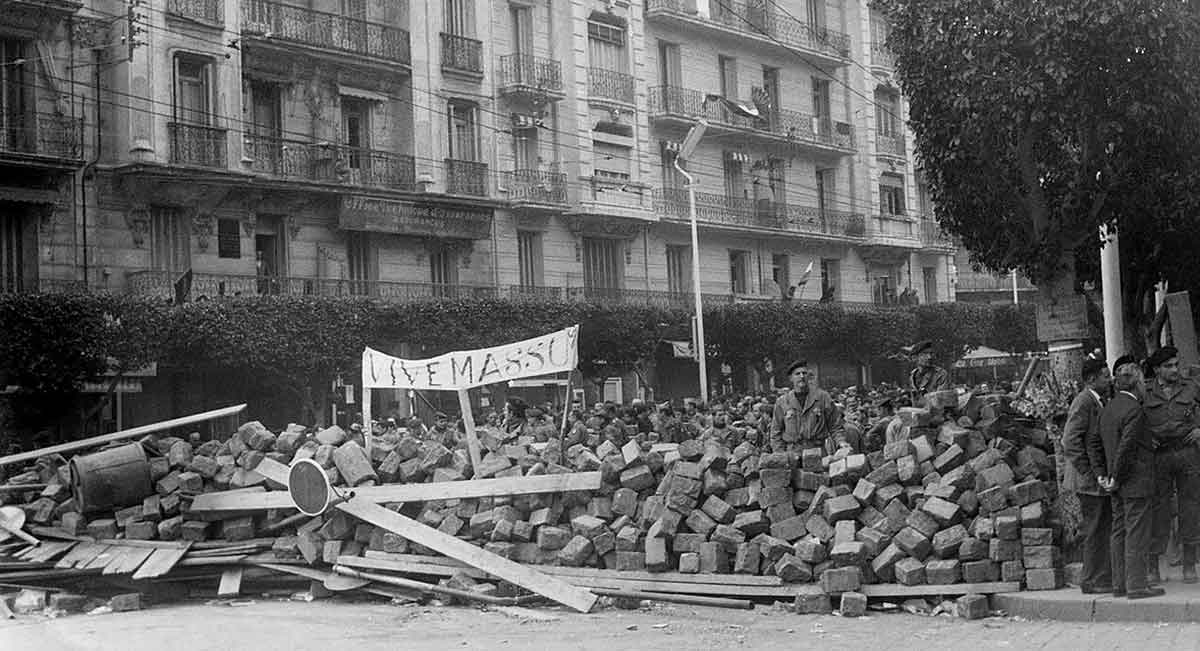
Camus tried to link his work on the absurd to his genealogy of revolt and rebellion in his 1951 book-length essay The Rebel. In a short chapter, he argues that, because we all experience the absurd, we share a goal and a duty to refrain from acts that jeopardize it. Most commentators agree that his argument is not very convincing and seems “tacked on” to the essay.
The fact that Camus had difficulty using his ideas on the absurd to promote solidarity is probably due to the intensely personal way he discovered and explored the concept. As we saw, Camus was always something of an outsider, despite often being well-liked and respected, and had a strong disposition toward independent thought.
In his literature and philosophy, we most often see individuals pursuing their own quests to find personal meaning in the world. In the cases of Patrice in A Happy Death and Meursault in The Stranger, their quests lead to decidedly anti-social behavior.
It is curious to compare Camus’s philosophy, which tends toward the solitary, to his political life. As a young journalist, he focuses on social justice. He joined the Communist Party and was expelled from it to fight for Arab rights in Algiers. During the war, he was in the Resistance. Later, he campaigned against atrocities (on both sides) during the Algerian war. Camus pursued all of these in the name of solidarity with others.
When we think of the two sides of Camus, the philosophical and the political, we see an interesting tension between the desires for solitude and solidarity. And just like with Jonas’s painting, when we look at Camus’s life, we cannot see which of the two he most desired.