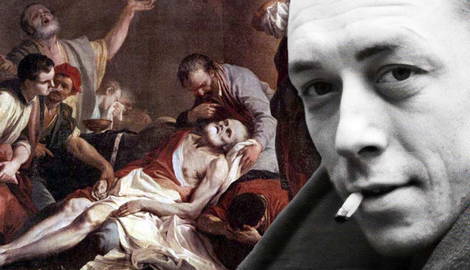

In this article, we examine Camus’s first novel, its shocking content, and possible reasons he came to abandon it. A Happy Death shares a lot of similarities with Camus’s masterpiece The Stranger. Their central characters, Patrice Meursault in the first novel and Mersault in the second, are almost identical, with “u” in the surname making only difference. However, there are also crucial differences in what motivates these two characters. Here, we look at the two most shocking differences between the works: the killing and the way others are treated.
Situating the Text
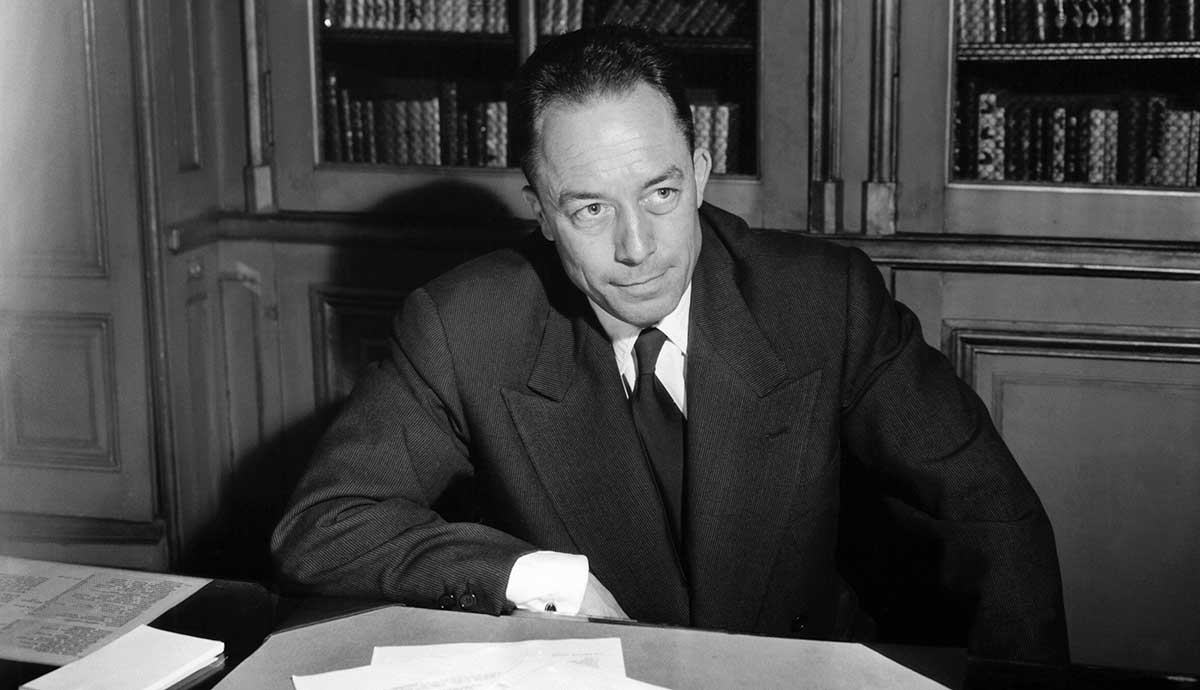
Albert Camus’s first published novel was his 1942 masterpiece The Stranger (L’Étranger). It was published alongside his essay The Myth of Sisyphus, and both works introduced Camus as a serious player on the French literary and philosophical scene. However, prior to writing The Stranger, Camus worked on a novel that dealt with similar themes, shared a central character, and even included whole scenes. This novel, not published in Camus’s lifetime, was A Happy Death (La mort heureuse).
Camus was killed in a car accident in 1960, and A Happy Death was published in 1971. What was published was a complete draft, but we must bear in mind that Camus chose to abandon the text to concentrate on The Stranger.
It is worth making clear at the outset that the version we have available is not Camus’s final version; indeed, because the novel was abandoned, there is no ‘final version’. This means we must be very careful when drawing any conclusions about Camus’s views and broader philosophy from this text.
Why then study A Happy Death at all? The text is useful to scholars in the same way that Camus’s notebooks and other writings are. As long as we keep in mind his decision not to publish and to abandon certain ideas that appear within the pages of this book, we can quite profitably use what we find. The fact that the text was abandoned reveals something in itself about the ideas it contains.
Nietzsche’s Influence on Camus
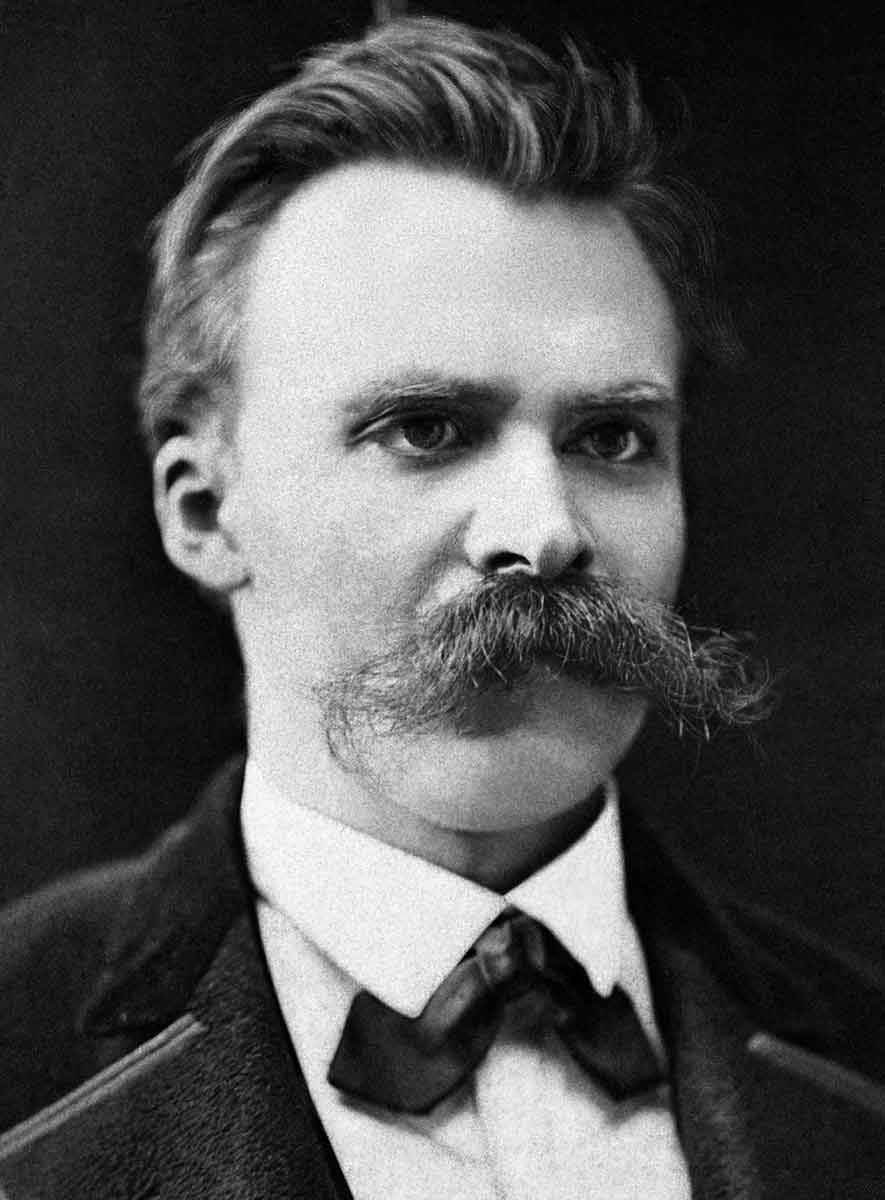
Camus was profoundly influenced by his reading of the German philosopher Friedrich Nietzsche (1844-1900). In The Myth of Sisyphus, Camus explicitly writes that it is Nietzsche’s lead that he is following.
In A Happy Death, which was written around the same time as his Sisyphus essay, Camus’s protagonist Patrice Mersault explicitly quotes Nietzsche when explaining how he knows he is on the right track in his life. As it happens, Mersault is not on the right track, which is one of the reasons why Camus abandoned the work. But more on this later.
A Happy Death can be read as a novelisation of one of Nietzsche’s aphorisms. The one we have in mind comes from his 1889 text Twilight of the Idols (Götzen-Dämmerung). This text was written by Nietzsche as a kind of summary of his key ideas. In Aphorism thirty-six titled ‘Morality for doctors’ (‘Moral für Ärzte’), Nietzsche seems to suggest that doctors are duty-bound to help end the lives of people sick of life, whether such people want their help or not!
Natural Death and Conscious Death
A Happy Death is written in two parts, and Camus gave each part a title. Part one is ‘Natural Death’ and part two is ‘Conscious Death’. In order to see how much Camus’s novel is influenced by his reading of Nietzsche, it will be useful to take a brief overview of the plot.
The novel begins with the murder-robbery of a double-amputee by a young man called Patrice Mersault.
For readers today, the first chapter in which we see the murder-robbery is strangely reminiscent of the opening of an episode of the American television series Columbo. However, strange as this connection may seem, there is an explanation. Both Camus’s novel and the television series were heavily influenced by Fyodor Dostoevsky’s 1866 novel Crime and Punishment.
A Happy Death, however, attempts to invert Dostoevsky’s story. His murderer, Raskolnikov, ends up racked with guilt and welcoming punishment; Camus’s Patrice frees himself of all guilt and dies ‘happy’.
The ‘natural death’ in part one of A Happy Death is that of the double-amputee Roland Zagreus. However, Zagreus does not die of what we would normally call ‘natural causes’. He is shot in the head by Patrice. What is happening here?
Zagreus’s Death, Assisted Suicide or Murder?
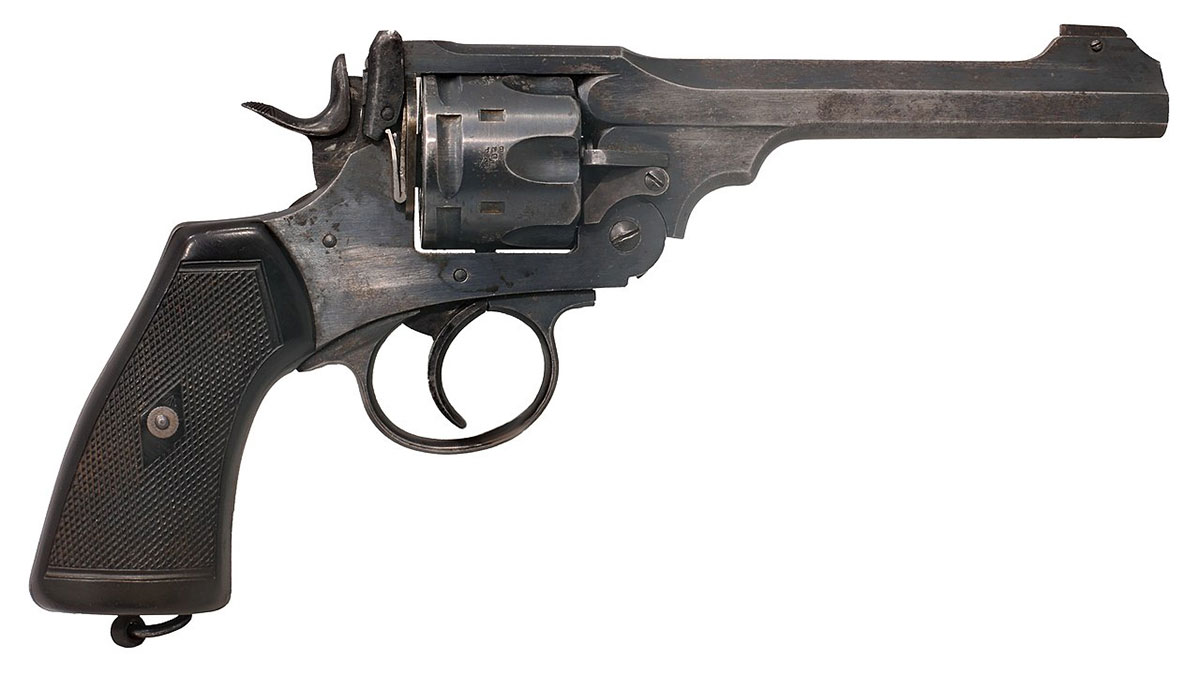
Before he lost his legs, Roland Zagreus was a gangster. During his criminal career, he managed to make a lot of money, much of which is stashed in bundles of cash in a chest at his home. Also inside this chest is a loaded revolver and a suicide note, written in Zagreus’s own hand.
Patrice knows about the chest and its contents because Zagreus told him about it himself. The murder, a single shot to the temple with Zagreus’s own gun, will almost certainly be filed as a suicide. Not only would many people consider the old man’s circumstances sufficient motivation for taking his own life, but there is also the suicide note and no apparent motive for murder.
Only Zagreus and Patrice know about the large sum of money in the chest. The note mentions leaving some money behind, but there is no indication of how much. Patrice is careful to leave one of the many bundles of cash behind. By telling him about the chest and its contents, Zagreus has gifted Patrice the perfect opportunity to get away with murder and enrich himself in the process.
The question is, why would Zagreus do this? One answer is that he wants Patrice to take his life. That is, afraid to do the deed himself, he gives the younger man the means, motive, and opportunity to do it for him. If this is the case, the killing is more like an assisted suicide than a murder.
Zagreus not only tells Patrice about the money, gun, and suicide note, but he also tells the young man, trapped in a poorly paid nine-to-five job, that the only way to be happy is to have money. And, that only exceptional people who are prepared to do whatever it takes deserve happiness. Zagreus seems to be goading Patrice.
Killing in the Innocence of His Heart
Whether Zagreus wanted Patrice to end his life or not, it is important to note that at no point is there a discussion on the matter. Patrice takes it upon himself to kill Zagreus, and he is purely motivated by money. He wants to be free to live his life like an experiment in finding happiness.
Immediately after the murder, Patrice struggles with a mixture of guilt and choice paralysis. However, unlike Raskolnikov, who is destroyed by guilt, Patrice gets over his and even convinces himself that he killed Zagreus in “the innocence of his heart”.
His biggest problem now that he has money is how to live his life. That is, what to do with himself now that he can do anything. After some attempts to find a way of life involving travel and living with friends, Patrice eventually moves into a big house in the country.
Along the way, he marries a woman named Lucienne. She is not permitted to live with Patrice in the new house but must be available to visit whenever he feels like having sex. Lucienne is nothing more than a means to an end in Patrice’s quest for happiness. And this brings us on to the second shocking aspect of Camus’s novel: the treatment of others.
Are Other People’s Feelings Important?
In a conversation with Zagreus prior to the murder, Patrice tells the old man, “Other people’s feelings have no hold over me.” In the novel, we see that love and affection, especially for women, are for Patrice simply an obstacle to be overcome in his quest for happiness.
After stealing the money, when he has the funds to live however he pleases, Patrice spends some time living with women in a shared house. This house and the women are heavily based on an actual place and real friends of Camus.
Although he likes these women, especially one called Catherine, Patrice makes himself leave the house. Why? Because he finds himself increasingly drawn to Catherine. The danger, as he sees it, is that he might fall in love with her and have to abandon his quest.
It is of interest to note that when Catherine asks Patrice how he will know when he finds happiness, he paraphrases Nietzsche’s ideas of the eternal return and amor fati: ‘Am I happy? Catherine! You know the famous formula – “If I had my life to live over again” – well, I would live it just the way it has been.’
Patrice eschews love, as we have seen; he also marries Lucienne. She, too, questions Patrice about his quest for happiness, and his response is surprisingly violent. Lucienne tells Patrice that she does not think he is happy and hits a nerve. As we read the following, bear in mind that Patrice’s hand is gripping her neck:
‘I will be [happy],’ Mersault said violently. ‘I have to be. With this night, this sea, and this flesh under my fingers.’ He had turned back towards the window and was tightening his hand on Lucienne’s neck. She said nothing.’
Did Patrice Find Happiness in the End?
Patrice eventually finds the happiness he was seeking. But it is a strange kind of happiness that not many of us would want for ourselves.
Very early on in the novel, Patrice tells Zagreus what happiness looks like for him:
‘Even now, if I had the time… I would only have to let myself go. Everything that would happen to me would be like rain on a stone. The stone cools off, and that’s fine. Another day, the sun bakes it. I’ve always thought that’s exactly what happiness would be.’
He gets this time by killing Zagreus and stealing the money, which means he does not have to spend most of his time working for a living. What we could call ‘the life of a stone’ is what he finally achieves. He trains himself to live a life without reflection, without care for others, and to let the sun heat his body, and the sea cool it down.
Is such a life happy? Almost entirely solitary, no care for the welfare of others, and no intellectual stimulus or inquiry. Patrice’s existence is little different from a solitary reptile basking motionless on a rock. Interestingly, it is a life that stands as the antithesis of Camus’s own.
Differences to The Stranger
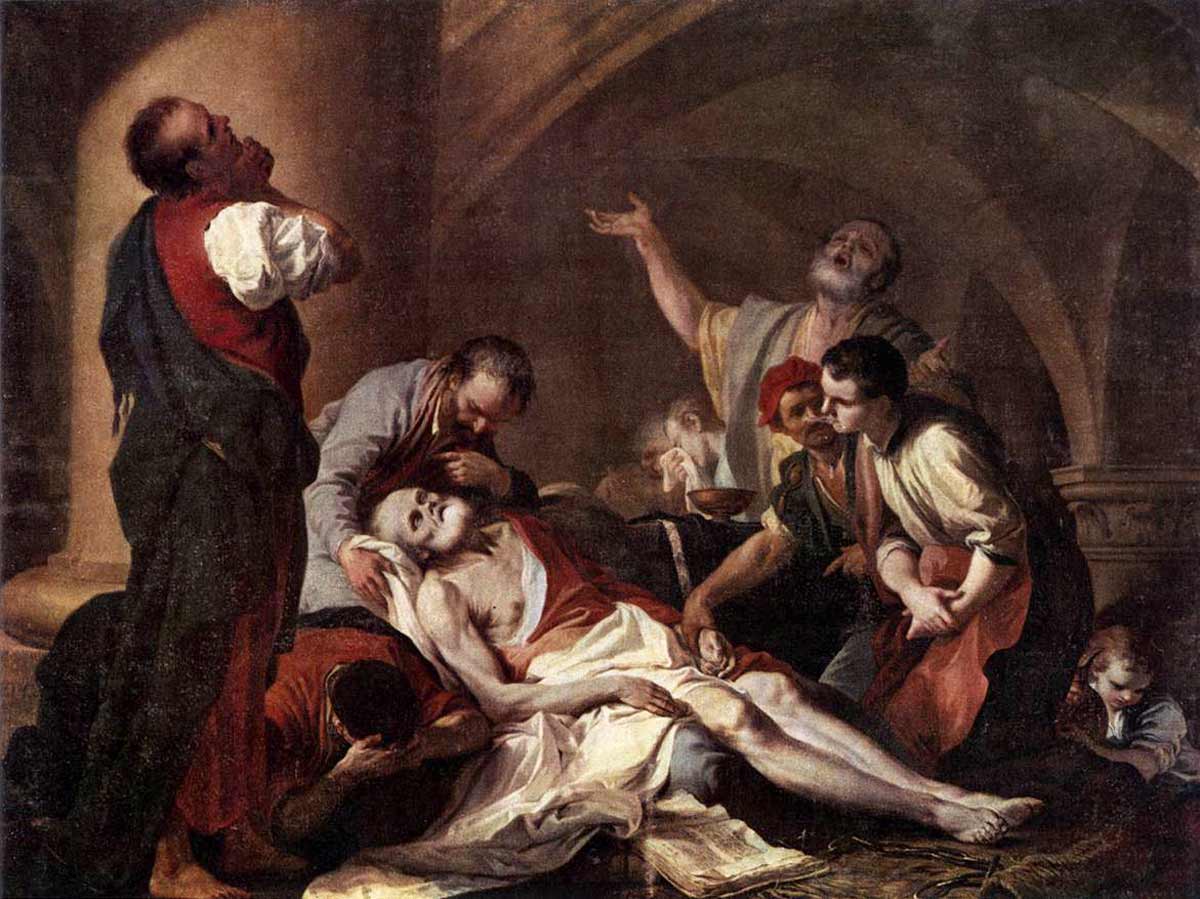
In order for us to have the happy death promised by Camus’s title, there must be a death. After a few years of happiness, Patrice gets ill and eventually succumbs to his illness. He dies, fully awake and conscious; his death is witnessed by Lucienne and the village doctor. We can note that this is how Nietzsche imagines ‘conscious death’ in his aphorism ‘Morality for Doctors’.
It will be useful to compare his life and death to that of his later incarnation, Meursault from The Stranger.
Unlike Patrice, Meursault is well-liked by all and, on the surface at least, is a good-natured character. It is worth noting that at this trial, all his friends and colleagues speak up for him. However, he is on trial for murder.
But the difference between the killing carried out by Meursault and that by Patrice is that the former was an accident and the latter premeditated. In addition, Patrice has the aggravating factor of being motivated by financial gain. Meursault goes to his death after discovering a great insight into the human condition, whereas Patrice has no insights at all.
The absurdist philosophy at work in The Stranger is far more nuanced and complex than in The Happy Death. To give just one example, both Patrice and Meursault see no reason to help others, but the crucial difference is that Meursault nevertheless helps others. He recognises that he also has no reason not to help and that in these situations, you are better off erring on the side of mutual aid.