
Marsilius of Padua was one of the most innovative political thinkers of the Middle Ages. His thinking is seen by many today as a precursor to modern democracy. Marsilius’ views of human nature, the rule of law, and the separation of the Church and State are commonplace today but revolutionary in his time. In his great work Defender of the Peace, Marsilius argues that not only should the Church not have political power, but that its claim of authority over earthly matters was actually harmful to peace and tranquility.
Who Was Marsilius of Padua?
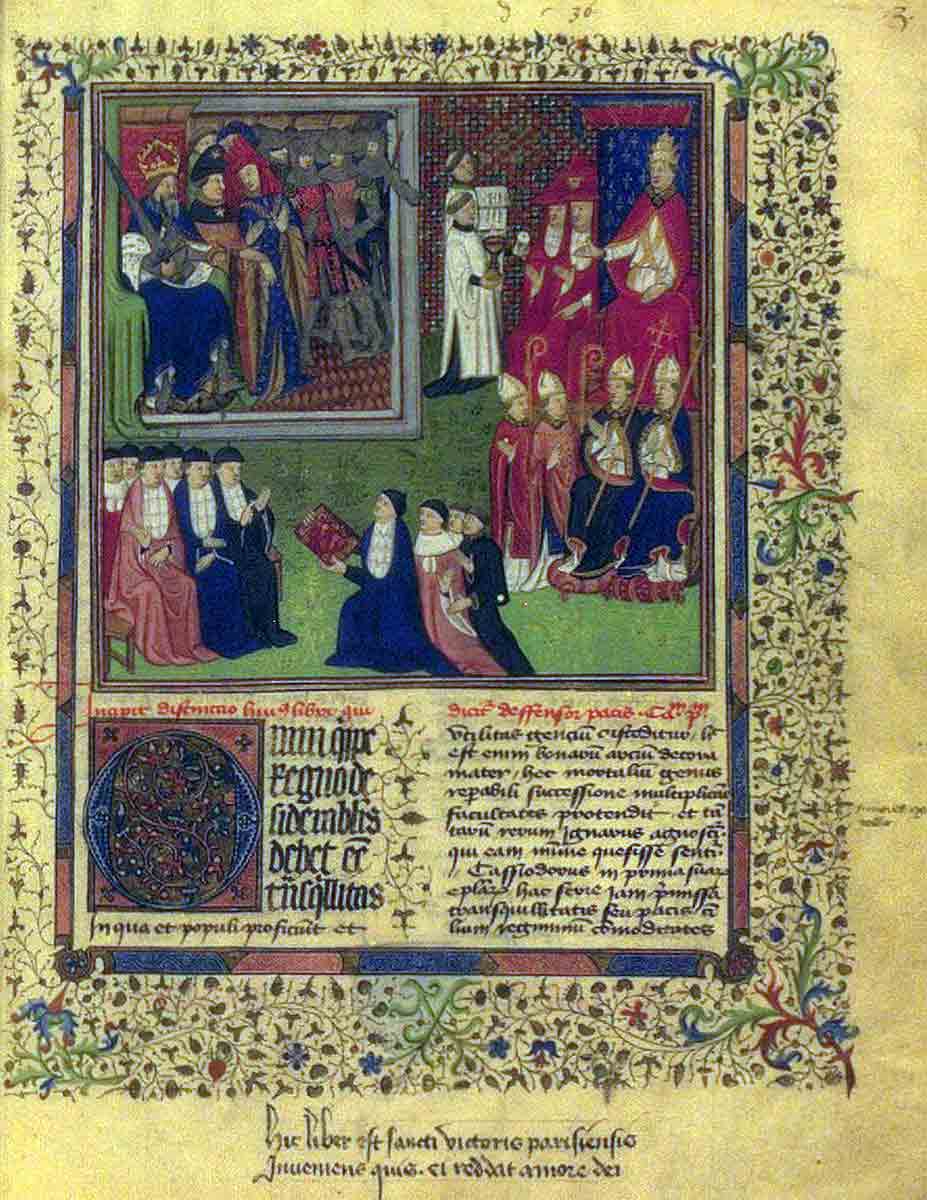
Marsilius of Padua was a political philosopher born around 1280 in Padua, a city in northern Italy. He is known for his Defender of the Peace (Defensor pacis). Written between 1320 and 1324, this text is today considered by many to be one of the most original works of political philosophy produced in the Middle Ages, and its author has been hailed as a precursor to Machiavelli and of modern democracy.
On publication, Defender of the Peace was hugely controversial. Marsilius’ main argument is that the Catholic Church, its priests, and the Pope himself ought to have no earthly power. In other words, he is saying that the Church should have no special influence in how a state is run and governed. Priests, according to Marsilius, should not be making laws and certainly not be enforcing them.
Today, this view is widely held. However, in the Middle Ages, the idea that the Church should have no earthly power would be, for most people, almost unthinkable. There had been disputes concerning the limits of papal power; indeed, these were very much ongoing at the time Marsilius was writing. But the idea that the Church should have no power at all was revolutionary.
Before writing Defender of the Peace, Marsilius served briefly as rector of the University of Paris and later worked with anti-papal groups in Italy. After his authorship of the text became known and his condemnation as a heretic, Marsilius fled to Munich and the court of Louis IV, who was himself embroiled in a conflict with Pope John XXII. Here he remained until he died in c. 1343.
Defending the Peace
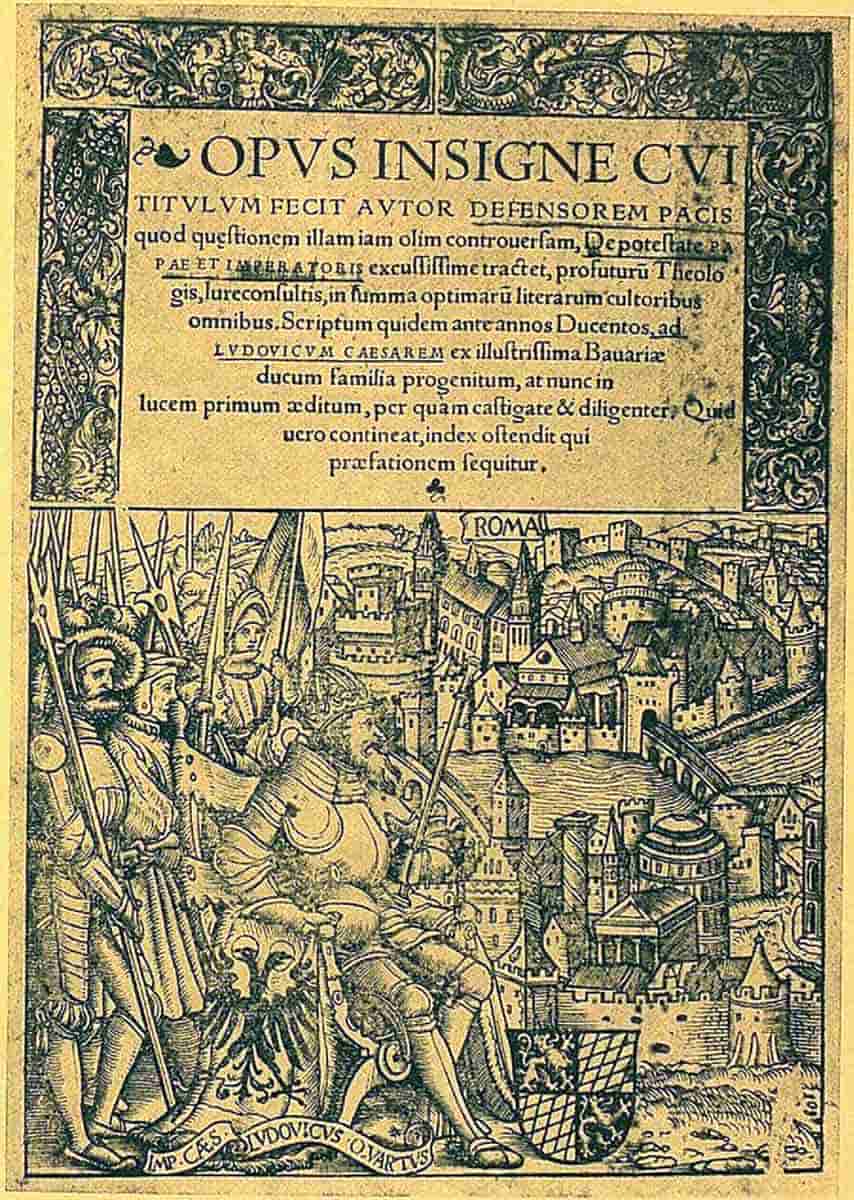
The number one thing a state is responsible for, according to Marsilius, is maintaining peace and tranquility. Indeed, he argues that only from a stable foundation of peace can human beings flourish. Here, his position anticipates that of the English political philosopher Thomas Hobbes (1588-1679). Hobbes, writing three centuries after Marsilius, famously claimed that life outside of the state was “solitary, poor, nasty, brutish, and short.” For Hobbes, it is only by leaving the so-called “state of nature” and entering civilized society that humankind can work together and achieve its greatest good.
Something else Marsilius and Hobbes have in common is their thoroughly realistic view of human nature. For both of them, human beings are imperfect creatures prone to conflict. When discussing human goals, Marsilius is concerned with “earthly” endeavors. A peaceful society is essential for the accomplishment of these goals.
We have already seen that Defender of the Peace is a deeply anticlerical work; we might now wonder where the Catholic Church fits into Marsilius’ political philosophy. As we shall see, he believes that not only is the Church incapable of defending the peace but that it actually hinders the peace and causes conflict in society. However, his argument is not based on a lack of faith but rather a belief in the proper role of the Church.
The Catholic Church
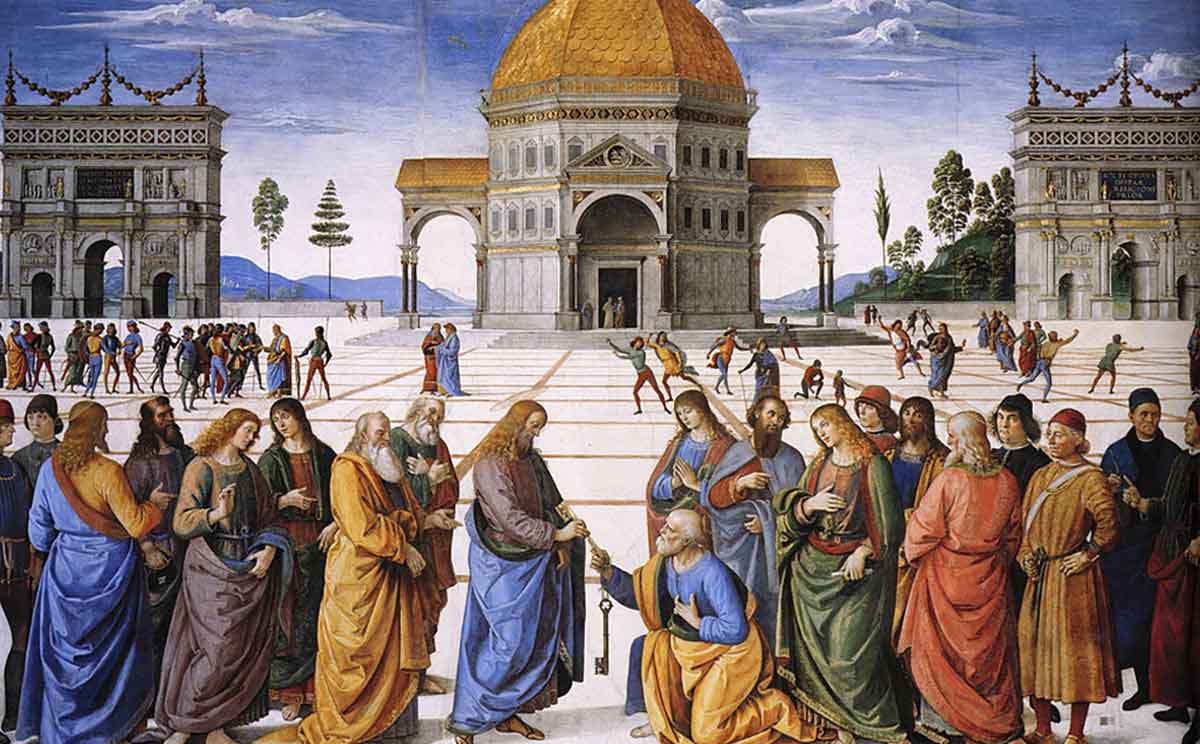
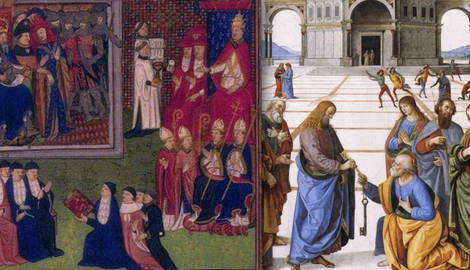
The current pope can trace his lineage back through an unbroken succession of popes all the way to St. Peter. In the Catholic tradition, Peter was the first pope, and all subsequent popes carry his authority. This claim to authority is said to derive from Jesus’ instructions to his disciples to continue his work. In Matthew 16:18-19, we read:
18. And I say also unto thee, That thou art Peter, and upon this rock I will build my church; and the gates of hell shall not prevail against it.
19. And I will give unto thee the keys of the kingdom of heaven: and whatsoever thou shalt bind on earth shall be bound in heaven: and whatsoever thou shalt loose on earth shall be loosed in heaven.
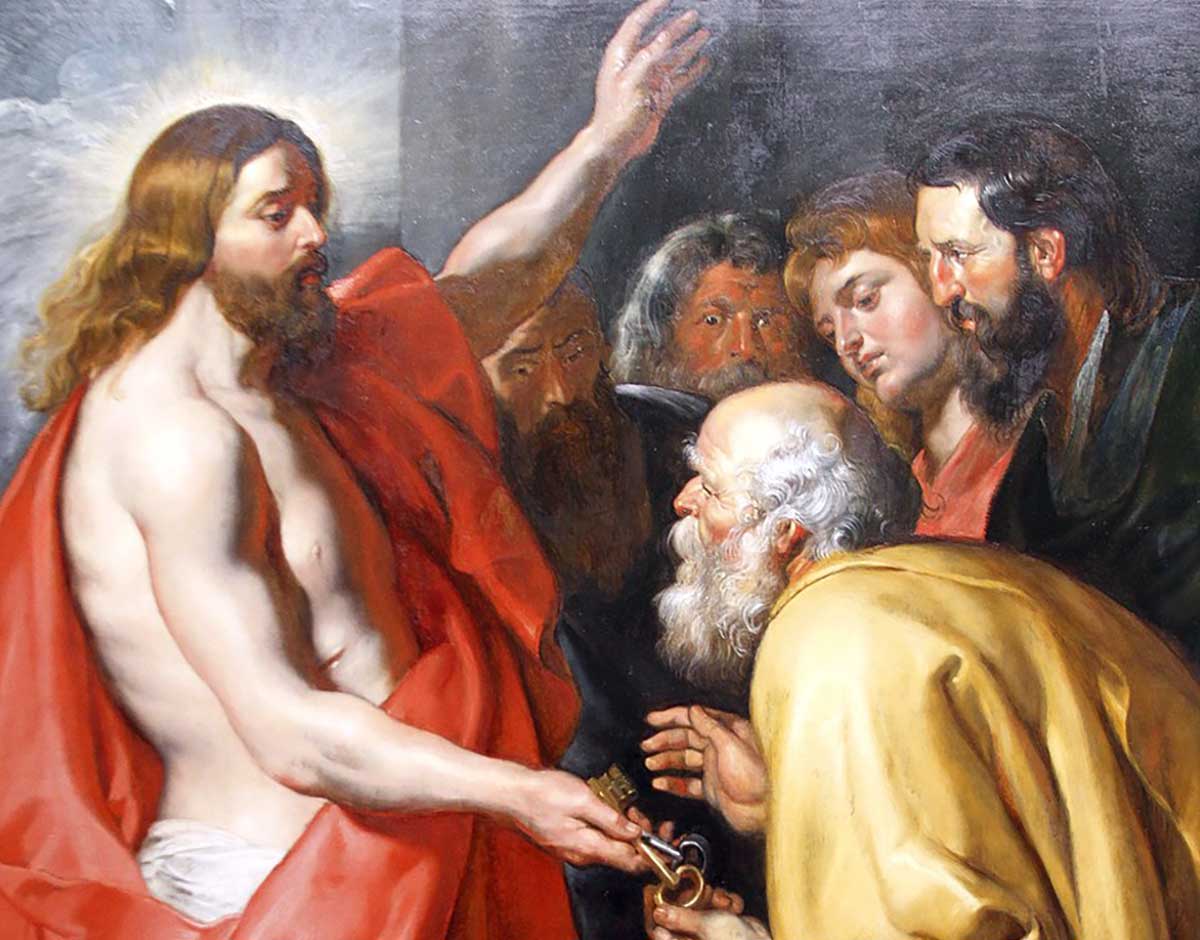
We see in the text that Peter is the rock upon which Jesus’ church will be built and that he is given the keys of the kingdom of heaven. These keys symbolize his power to bind and loose. “Binding and loosing” here means forbidding and permitting. In this context, if Peter binds something, he is forbidding it, and if he loosens it, then that thing is permitted. What is of particular interest is that Peter has the power and authority to bind and loose in both heaven and earth. Matthew 16:19 seems to suggest that Peter (and the pope) has the authority to make laws in both the heavenly and earthly realms.
The symbol of the keys is an important piece of iconography. They feature prominently in the emblem of the Holy See, the governing body of the Catholic Church and the Vatican City State. It is a visual reminder of the Church’s claim to both earthly and heavenly authority.
The Catholic Church’s Claim to Power
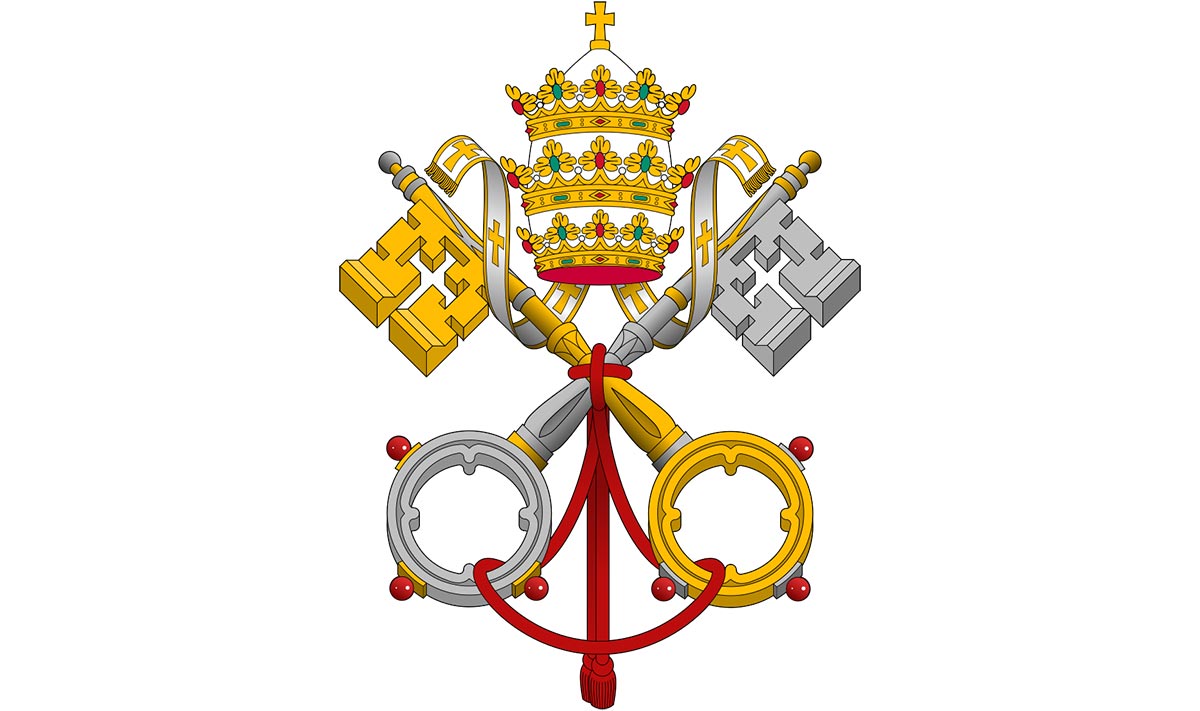
In Marsilius’ time, the Catholic Church claimed the authority to create and enforce laws concerning both heavenly and earthly life. As we just saw, the basis of this authority was said to derive from Jesus’ instruction to St. Peter and the metaphorical handing over of the keys to heaven. This is something the Church was keen for everyone to know.
Looking at the Emblem of the Holy See (pictured above), we can see prominently placed an image of the Keys of Heaven and the Papal Tiara. This image also appears on the flag of Vatican City. On the tiara three layers of crowns can be seen, each one representing a different power of the Church.
Interpretations vary, but traditionally, the crowns represent the following powers: father of kings, governor of the world, and vicar of Christ. The Church believe they have the authority to govern earthly life as well as heavenly life.
Marsilius disagrees. We will look at his reasons shortly; however, for now, it is worth noting the strength of the Church’s belief in its right (and duty) to govern. If challengers to earthly authority were to come along, we can see that the Church would not greet them kindly. And this is the route of the issue for Marsilius. There is, of course, another claim to authority over worldly issues: the state.
If maintaining peace and tranquility is the goal, it stands to reason that having two competing powers vying for authority is harmful to this goal. According to Marsilius, the solution is to properly divide power between the Church and the State. And for him, the proper way to do this is to divide responsibility between earthly and spiritual life. The State should have total authority over the former, and the Church total responsibility over the latter.
The Need for Coercion
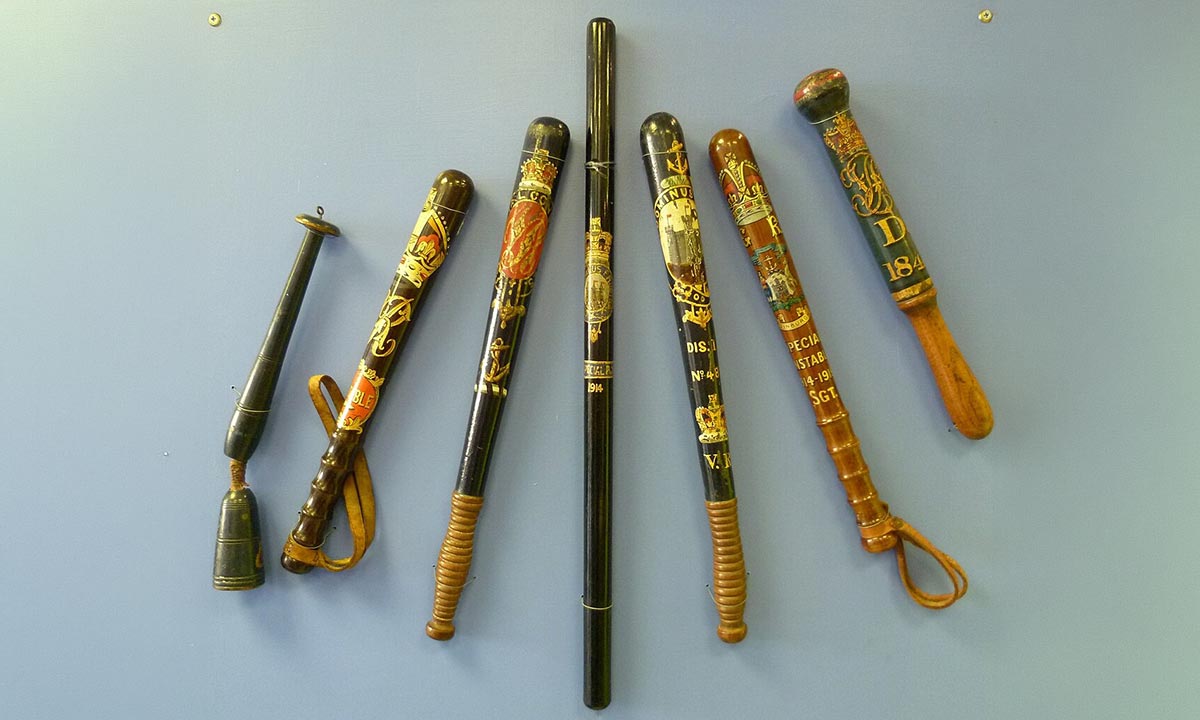
Recall that Marsilius takes a strongly biological view of human beings. For him, we are naturally belligerent creatures prone to conflict. Accordingly, laws are required to ensure that human beings work together and coexist in harmony. And these laws must be enforced in order to make sure people obey them. A degree of coercion will have to be employed in order to make sure people stay in line. Marsilius argues that this ought never to be the responsibility of the Church because coercion is not an appropriate activity for priests.
He wants to say that, essentially, coercion is neither necessary nor desirable in heavenly matters. Forcing someone to have faith in something does not make a lot of sense. But the idea that the State is more capable of handling heavenly matters than the Church makes as little sense as the Church enforcing civil laws. Following Marsilius’ line, it seems clear that God would not want one institution governing both realms but the Church to focus on heaven and the State to focus on earth.
In Defender of the Peace, Marsilius talks about doctors treating leprosy. It is proper that doctors treat the condition and look after those who suffer from the affliction. However, if it comes to deciding whether or not lepers should be sent into exile for the greater good, this should not be something doctors ought to be deciding. Doctors have the authority to deal with medical matters only; that is, the proper treatment of the sick. Measures to protect the city from the sick, Marsilius argues, ought to be the responsibility of those working on behalf of the state.
Using a similar argument, he claims that caring for people’s souls and spiritual well-being is the proper responsibility of Priests and the Church, but making laws governing what people can and cannot do is the responsibility of the State. For example, hearing a person’s confession is the responsibility of a priest, but deciding how much tax they ought to pay is the responsibility of civil government.
We might wonder why the Church could not do both. That is, why not let them legislate over heavenly and earthly life? Marsilius’ answer, as we saw, is that laws need to be enforced and this is not something priests ought to be concerned with.
The Novelty of Marsilius’ View
Something novel in Marsilius’ approach to law is that he allows for the possibility of good and bad laws. This is because he does not want the Church to play any role in coming up with the law. What does this have to do with the idea that laws can be bad?
If we believe, as many did in Marsilius’ time, that the laws we have derive from God, then there cannot be any bad laws. This is because God would never want us to do anything bad and so would not impose bad laws. If we believe that the laws we have that govern our earthly life derive from God, then it seems reasonable that the Church, as God’s representatives, should be responsible for promoting and enforcing them.
However, Marsilius does not want to allow the Church any role whatsoever in governing earthly life. To keep out any claims to earthly power and authority from the Church, Marsilius must draw a sharp line between heavenly and earthly laws. There is an important consequence to this move. Humans are fallible and so the earthly laws they create can also be fallible. It follows from this that they can be bad laws. The idea that laws can be bad is a serious challenge to any lawmaker’s power and authority.
This line of thought will not make Marsilius popular with anyone in power who claims their right to power to be derived from God. Marsilius’ argument allows for the possibility that the laws of the land might be bad. This limits claims to absolute power and authority, but the greatest impact will be on the Church. While a king might lose a small amount of authority, the Church could potentially lose all political power.