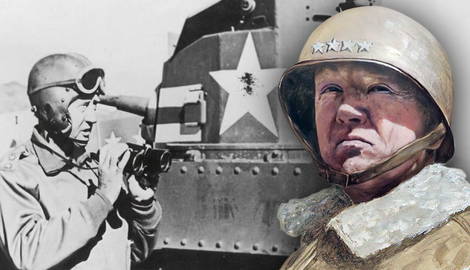

From the onset of World War II, Allied leaders were keen to drive the German war machine back within its frontiers. By 1941, Nazi-occupied Europe expanded to over 1.3 million square miles, swallowing numerous previously independent countries. At its peak, over half of Europe’s population was controlled by Adolf Hitler and his Axis allies. Following the D-Day landings and invasion of Normandy, the Allies finally forced Germany back to its well-defended Western Front in 1944, known as the Siegfried Line. This formidable barrier was breached by General George S. Patton and his tanks.
Allied Advances Towards Germany
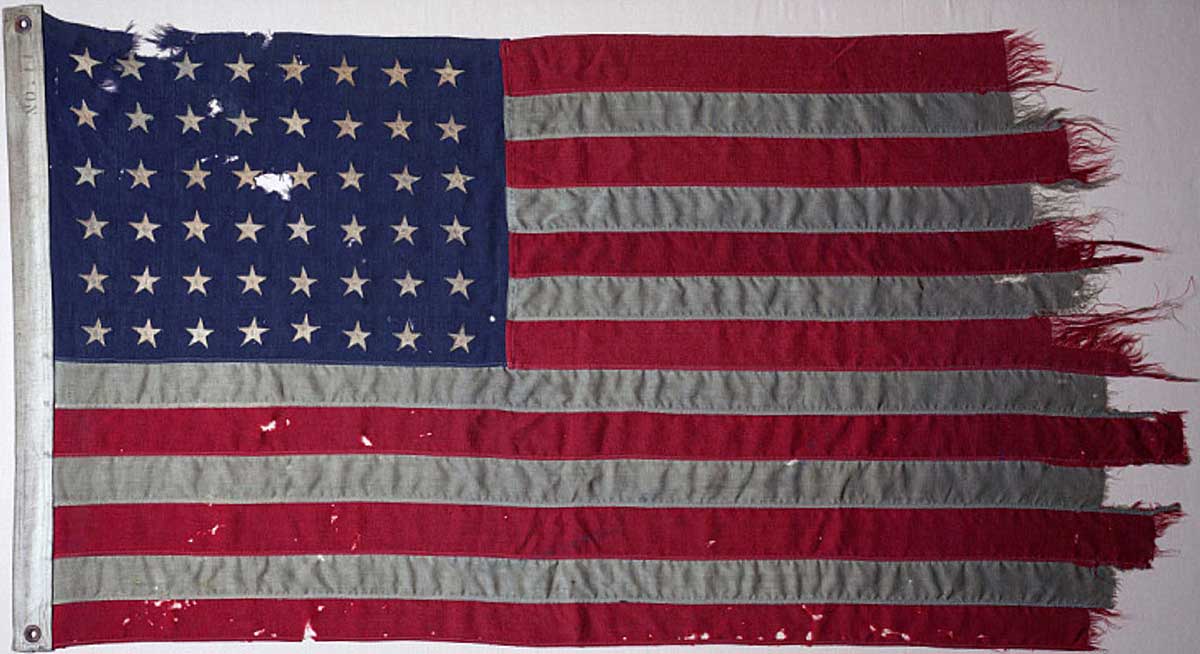
Immediately following the United States’ entry into World War II after the attacks on Pearl Harbor, much of America’s fighting took place in North Africa and at sea in the Atlantic Ocean. Allied advances into Germany could not have occurred without first liberating key territories in surrounding Europe.
From the south, the Allies launched the invasion of Sicily via Operation Husky in July 1943. Led by ambitious amphibious and airborne assaults, the United States spearheaded the Italian Campaign and moved onto the mainland in September 1943. During the offensive, Patton commanded America’s Seventh Army, first landing at Gala and rapidly moving to capture Axis-controlled airfields. While a success, the offensive proved to be one of the costliest of the war.
As Allied formations moved along the Italian peninsula in southern Europe, Allied leaders were busy planning the largest land invasion in history from the north. Codenamed Operation Overlord, the amphibious assault landed soldiers from over a dozen Allied countries onto the beaches of Normandy, France. D-Day not only helped liberate France, but the risky mission provided the Allies with a second avenue of approach towards Germany.
While Patton was not initially involved in the invasion of Normandy, his leadership was instrumental in the campaign following the landings. Patton’s Third Army launched an offensive less than two months after the Normandy landings and liberated Paris by the end of August. Soon, the Allies pushed the bulk of the enemy forces back into Germany, behind the Siegfried Line.
The Siegfried Line
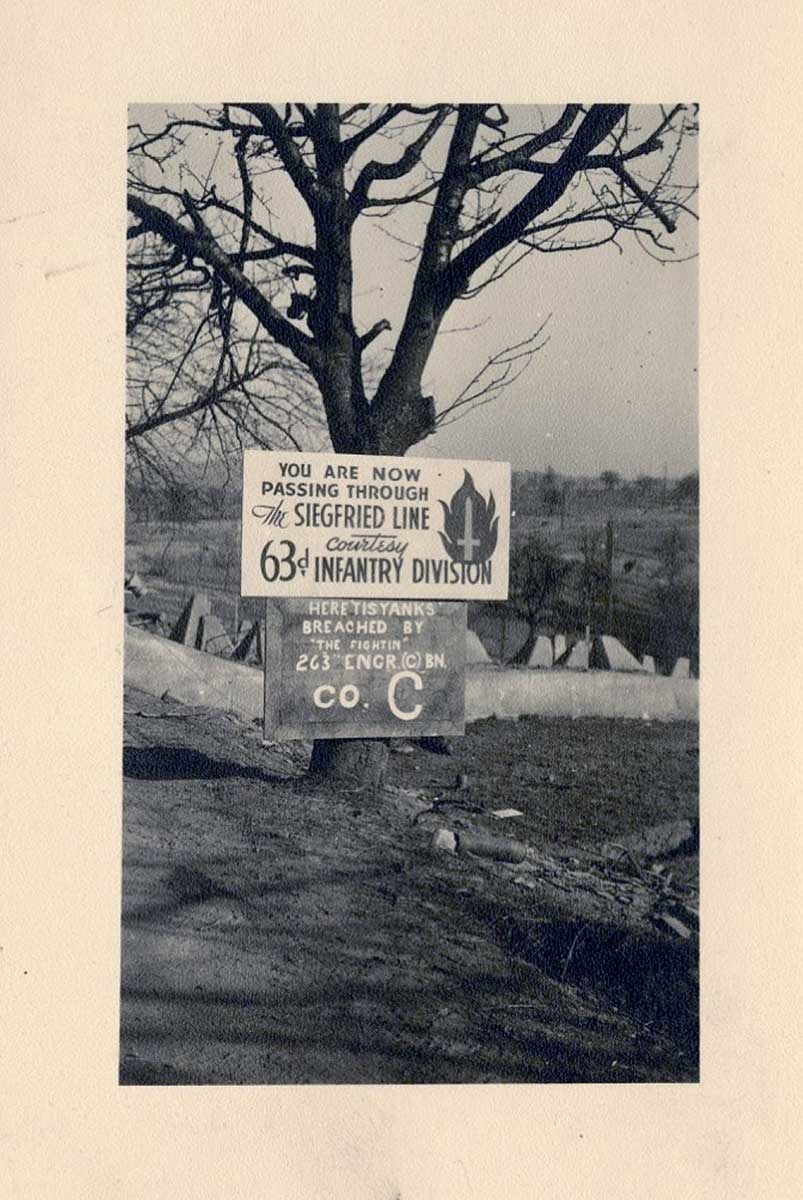
Although the Allies pushed German forces back into Germany, the Nazi regime would not go down without a tenacious fight. Prior to the outbreak of World War II, Adolf Hitler anticipated the need for an extensive defensive network on Germany’s future western front, indicating how the Nazi leader expected war long before the invasion of Poland in 1939. To accomplish his defensive vision, Hitler tasked Fritz Todt, the civil engineer responsible for building Nazi party military installations, with the project.
Built for three years beginning in 1936 and strengthened in the years leading up to 1944, the Siegfried Line served as a defensive barrier for Germany’s final stand. Tens of thousands of workers from the Reich’s Labor Service, mostly adolescent boys, constructed the line to be 30 kilometers deep and 630 kilometers long, stretching from Switzerland to the Netherlands.
The Siegfried Line, also known as the West Wall, featured a plethora of obstacles designed to slow Allied advances including over 20,000 bunkers and pillboxes, tunnel networks, tank traps, reinforced steel, and tank-blocking columns of concrete called dragon’s teeth. Due to these elusive and capable defenses, the Allied Powers relied on masterful strategists like Patton to synchronize rapid movement, complex logistical requirements, and flexible decision making to circumvent the Siegfried Line.
Without a creative plan, German artillery and aerial bombardments could overwhelm the Allied troops navigating the line. While the Germans had installed anti-tank fortifications, American tanks proved vital in the battles that broke the Siegfried Line and led the Allies into Berlin.
Patton’s Tanks
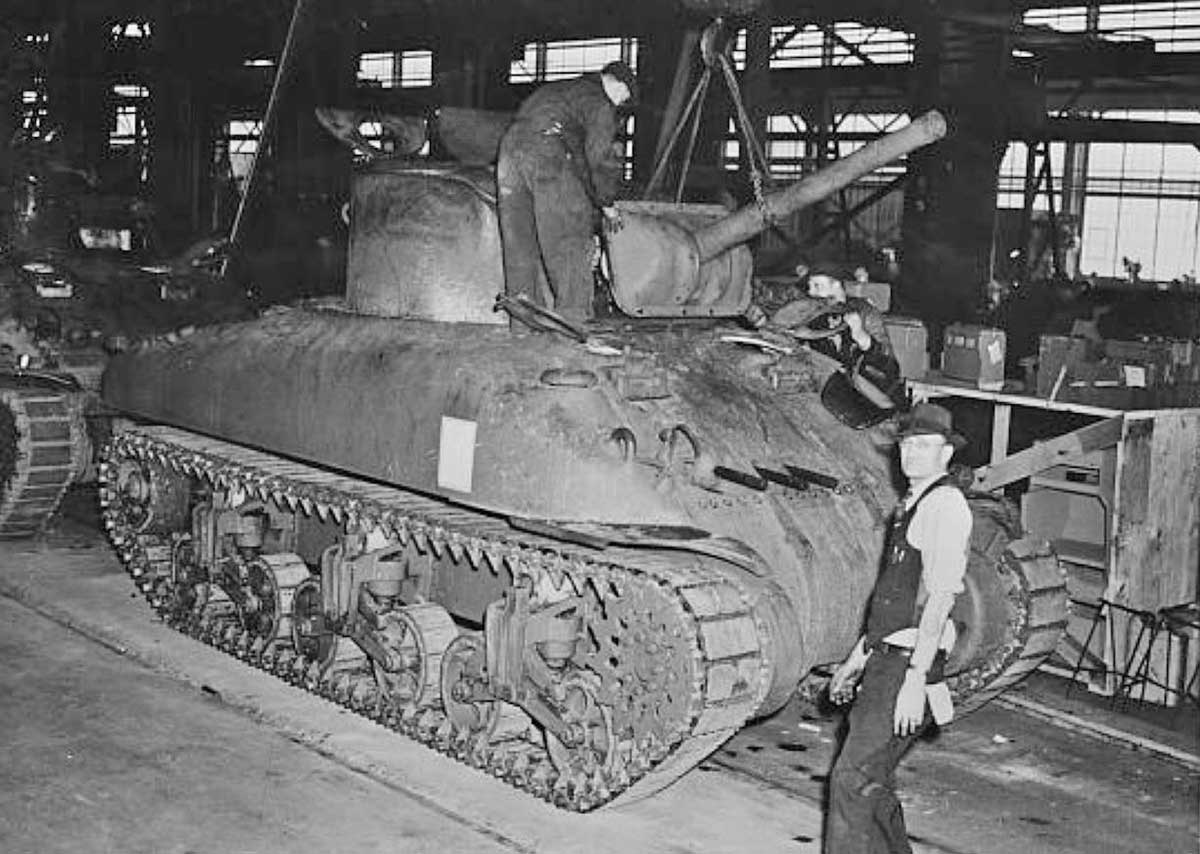
Tank warfare first saw widespread utilization during World War I, but significant advancements were made in the two decades leading up to the Second World War. Three models of American tanks were primarily responsible for breaking the Siegfried Line: the M4 Sherman, the M4A3 Sherman, and the M26 Pershing.
The M4 Sherman is the most widely used and recognized American tank of World War II. With increased armor and a new 75mm gun, the M4 Sherman proved to be a more formidable opponent to theoretically superior German tanks such as the Panther and Tiger. Its reliability, ease of manufacture, and heavy weaponry outperformed the M3 Lee/Grant, which saw extensive use in the North African and Pacific theaters. Compared to its predecessor, the M4A3 Sherman employed a Ford V8 engine, fully welded hull, horizontal volute spring suspension, and improvements to its armor.
Named after the World War I commander of American Expeditionary Forces in Europe, the M26 Pershing was manufactured in lower numbers compared to the Sherman and its variants. While more limited at the Siegfried Line, the heftier M26 Pershing was wisely leveraged to counter heavyweight German tanks like the Panther. Both the Sherman and Pershing required thorough logistical support during advancements into Germany, highlighting how Patton’s employment of armor required more than just operational wit to succeed. The resulting Battle of the Siegfried Line culminated in many months of violent action between Patton and the German resistance on the Western Front.
The Siegfried Line Campaign
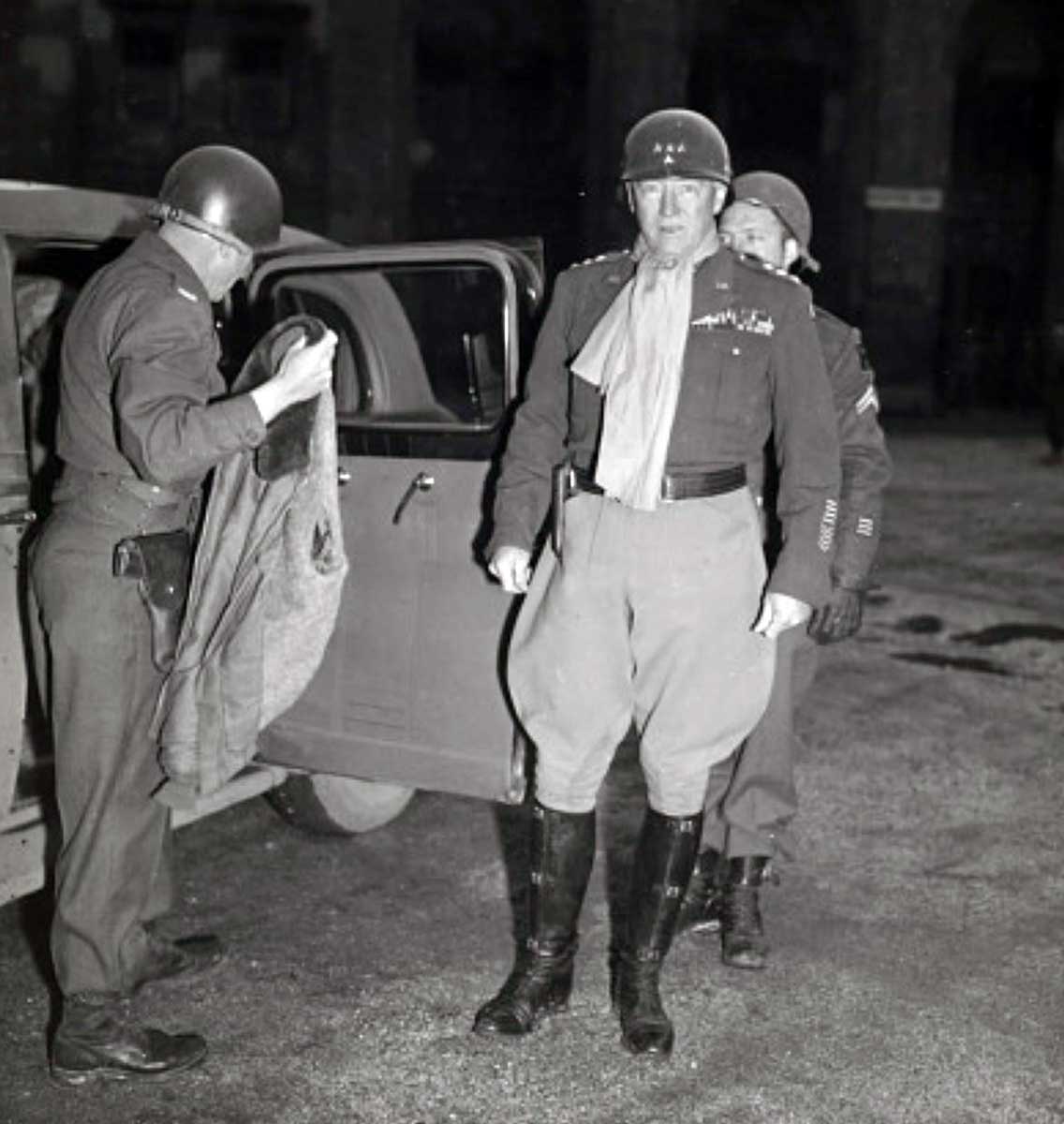
Patton’s involvement during the Siegfried Line Campaign revolved around leading the Third Army during the Battle of Lorraine and related actions. Part of the wider strategy to break the Siegfried Line, Patton’s tanks engaged fortified German defenses and the 5th Panzer Army at Arracourt, where American forces destroyed approximately 200 enemy tanks while only losing 48 tanks and 7 anti-tank vehicles.
Thanks to Patton’s superior use of terrain, effective reconnaissance and intelligence, and a combined arms approach involving infantry, artillery, and aerial assets, Patton delivered an overwhelming victory at Arracourt that was repeated in the Battle of Metz.
The Battle of Metz was a tense exchange for Patton and the American Third Army. Largely confined to the limitations of urban warfare, Allied tanks had to navigate the challenges of narrow avenues of approach, enemy obstacles, anti-tank weapons, improvised explosive devices, and disrupted communication with infantry. After almost 80 days of intense fighting, Patton and his troops captured Metz in December 1944, weakening a key sector of the Siegfried Line.
While the protracted fighting allowed Germany to strategically reposition some of its defensive assets, Patton’s victory at Arracourt and Metz proved the Allies’ ability to deliver effective tank-based warfare regardless of the operational environment, enemy disposition, or obstacles. Many of these lessons learned by Patton’s Army during the Lorraine Campaign were leveraged at other penetration points along the Siegfried Line, namely in urban warfare at the Battle of Aachen, which was fought simultaneously by the 2nd and 3rd Armored Divisions.
German Surrender
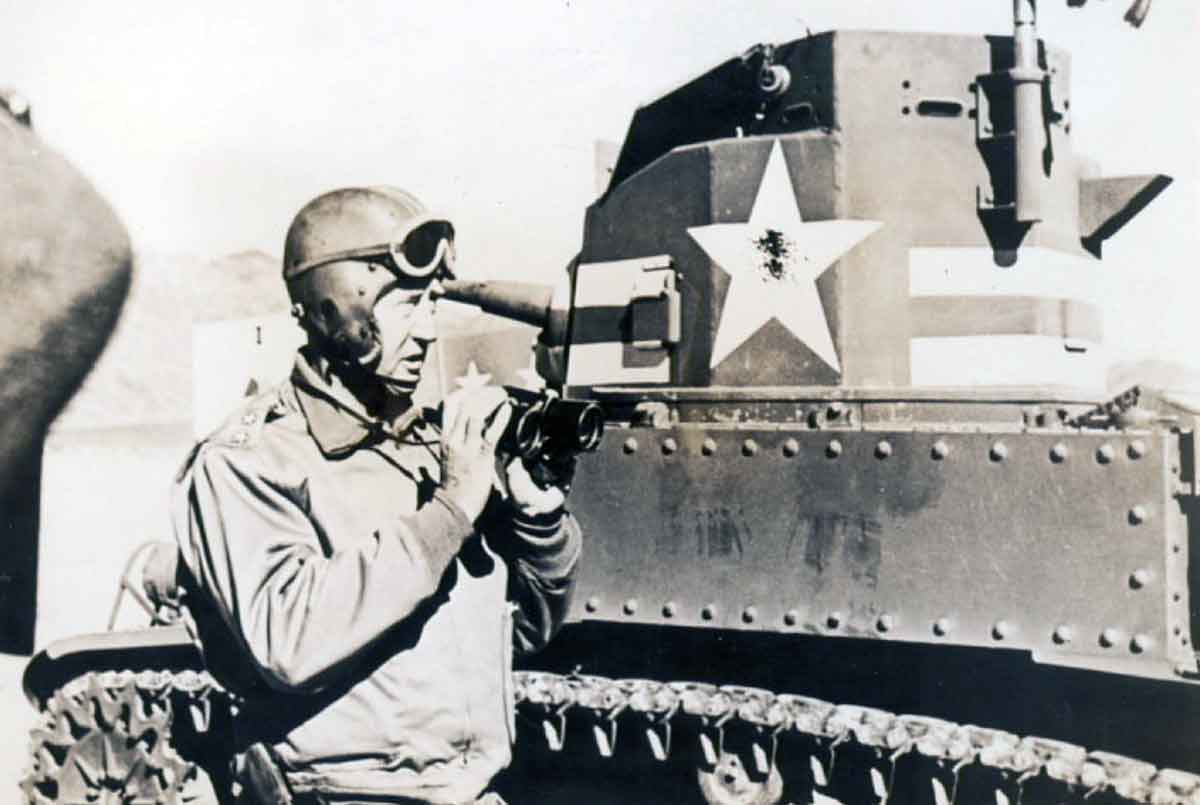
After the fall of German defenses at the Siegfried Line, World War II was all but lost for the Axis Powers. With the collapse of the German Western Front, Allied troops drove deeper into Germany. Shortly after the Siegfried Line Campaign, the Third Army relieved the Belgian city of Bastogne at the Battle of the Bulge from the 101st Airborne Division amid a fierce German counteroffensive.
By March 1945, Patton, the Third Army, and specialized Sherman tanks crossed the Rhine River, a momentous milestone in the campaign to defeat Germany. During the offensive, Patton’s Army, spearheaded by its armor, captured over 10,000 square miles of enemy territory. Prior to the long-awaited arrival of VE Day, the Third Army continued its operations into southern Germany and Austria. Along the way, Patton oversaw the liberation of several major concentration camps including those at Buchenwald and Ohrdruf, exposing Nazi crimes against humanity to the world.
Without the wise employment of Allied tanks, Patton could not have pushed through the Siegfried Line. Despite taking years to build, fortify, and defend, Patton circumvented the thorough defensive position in just a few months. Patton, however, was not alone in this endeavor. Credit for penetrating into the heart of Germany during World War II must be attributed to not just Patton, but to the brave tank crews, factory workers, and timely suppliers who equipped the Third Army.
Death and Legacy
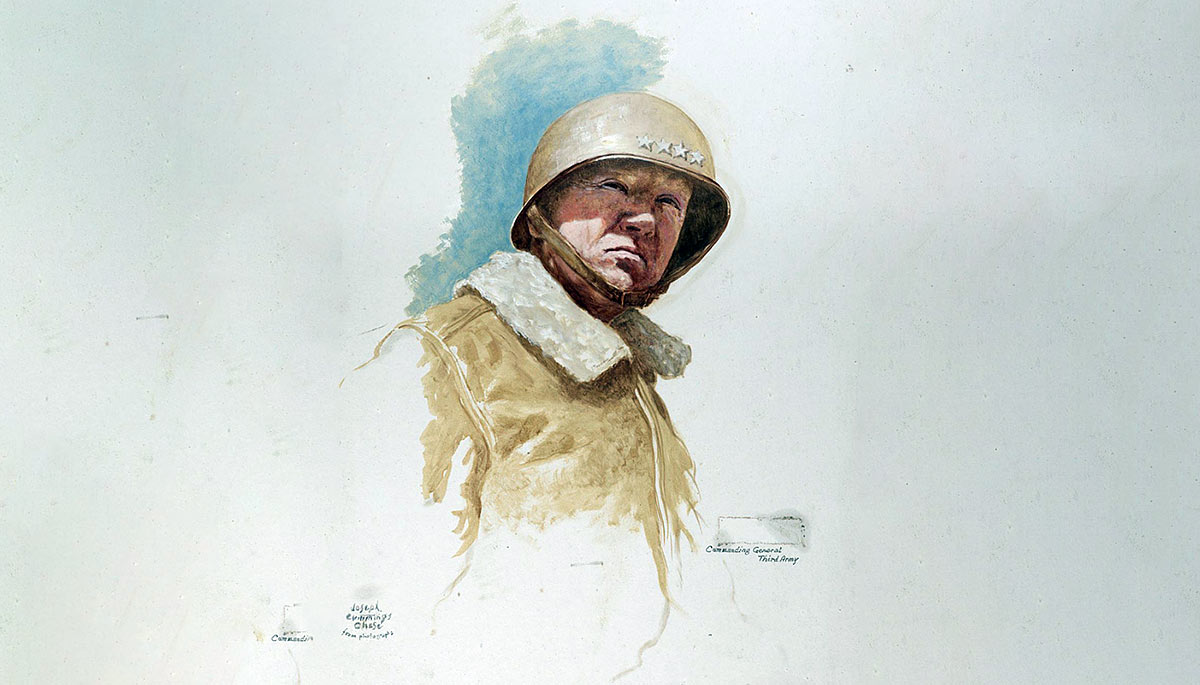
After the war, General Patton was transferred from the Third Army to the Fifteenth Army in Germany. His role was primarily administrative as his formation was tasked with limited postwar reconstruction and historical information collection assignments.
Despite leading the Allies to some of their most important victories of World War II including the invasion of Sicily, the invasion of Normandy, the liberation of Paris, the Siegfried Line Campaign, the Battle of the Bulge, and the crossing of the Rhine, Patton’s death was anticlimactic and occurred quickly after the war.
On December 21, 1945, the 60-year-old Army legend passed away in his sleep following a car accident that left him paralyzed just twelve days prior. Patton’s wife, Beatrice, and his deputy commander in North Africa, Major General Geoffrey Keyes, agreed to bury Patton alongside his fallen Third Army soldiers of the Battle of the Bulge in the American Cemetery in Hamm, Luxembourg.
Today, Luxembourg continues to honor the fallen General with a chained-off plot in the cemetery where he was buried in 1945 along with a memorial museum in nearby Ettelbruck. His contributions to American tanks are forever remembered in the Patton Museum of Cavalry and Armor at Fort Knox, Kentucky. Certainly, Patton changed the course of modern history, and his combat leadership, especially during battle at the Siegfried Line, cannot be forgotten.