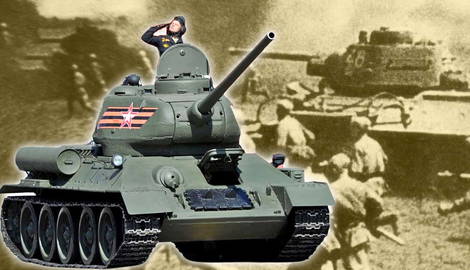
Just as the Spitfire is the icon of the British victory in World War II, the T-34 symbolizes the victory of the Soviet Union over Germany. It is often claimed to be the best tank of the war or the most influential tank in history. Produced in time to counter Operation Barbarossa, the German invasion of the USSR in June 1941, it served in the Red Army throughout the war. This is the story of the tank that drove the Wehrmacht back from Stalingrad to Berlin.
Origins of the T-34
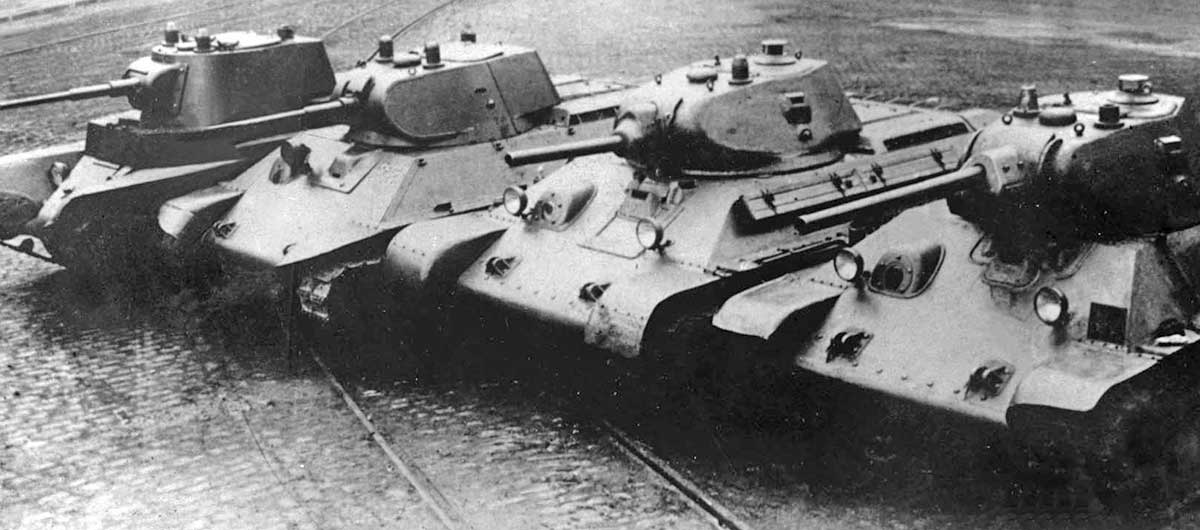
By 1937 the Red Army began to look for a successor to the BT-7 cavalry tank. This task was given to an engineer at the Komintern Locomotive Plant, Mikhail Koshkin. He produced two prototypes, the A-20 and A-32. The A-20 had a bigger and simpler hull than the BT series but retained the large road wheels and Christie suspension. It carried the same 45mm gun as the BT-7 and was essentially a better cavalry tank than its predecessor, although it did now have the look of the T-34.
In late 1939 the Russo-Japanese war in Manchuria ended with the battle of Khalkhin Gol and Koshkin and his team wanted to absorb the lessons from this and the earlier Spanish Civil War. As a result, they produced the A-32 which had an extra road wheel, thicker armor, and a relatively large 76mm gun. The A-32 became the T-32 production model, a few of which saw action at the start of Barbarossa before being superseded by the improved T-34.
The T-34 Analyzed
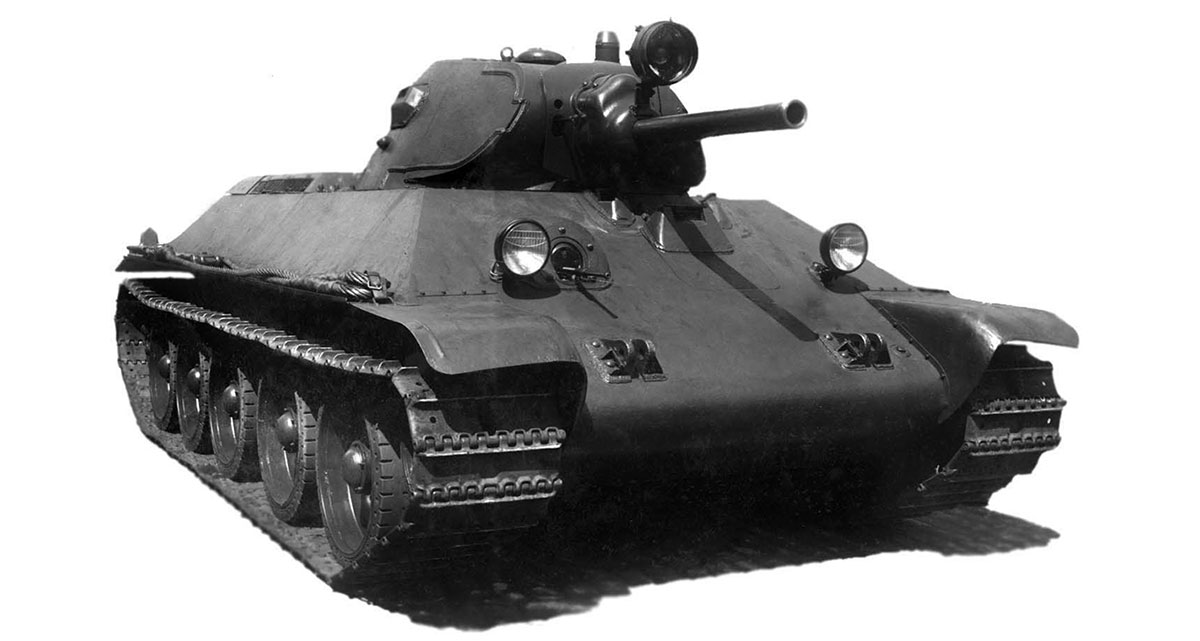
Production of the T-34 began in June 1940, although output was slow due to the desire to keep it secret. In the three basics of tank design—armament, armor, and mobility—the T-34 was superior to any existing tank in 1941. The look and characteristics of the T-34 can still be seen in today’s tanks.
The 76mm gun was more powerful than any other tank armament of the time, effective in both the anti-tank and infantry support roles. Armor protection was also better than most tanks of the day, except for the British infantry tanks. The armor of exceptionally hardened steel was 45mm on the turret and hull front and sides. It was well-sloped to reduce the effectiveness of armor-piercing rounds, something not seen on other tanks of the time. Mobility was good for a vehicle of 28 tons, with the robust 490 hp diesel engine giving a road speed of 32 mph. Cross-country ability was also impressive with wide tracks giving a low track loading, very useful in snow and mud.
There were faults, however, and these included unreliable transmission, no turret cupola for the commander, and a large and cumbersome turret hatch. Only the platoon commander’s tank had a radio while communication with other tanks was supposed to take place by flag signals! The main design flaw however was the two-man turret which meant that the tank commander also had to aim and fire the 76mm gun. All these faults were rectified in later models.
The Shock of the New
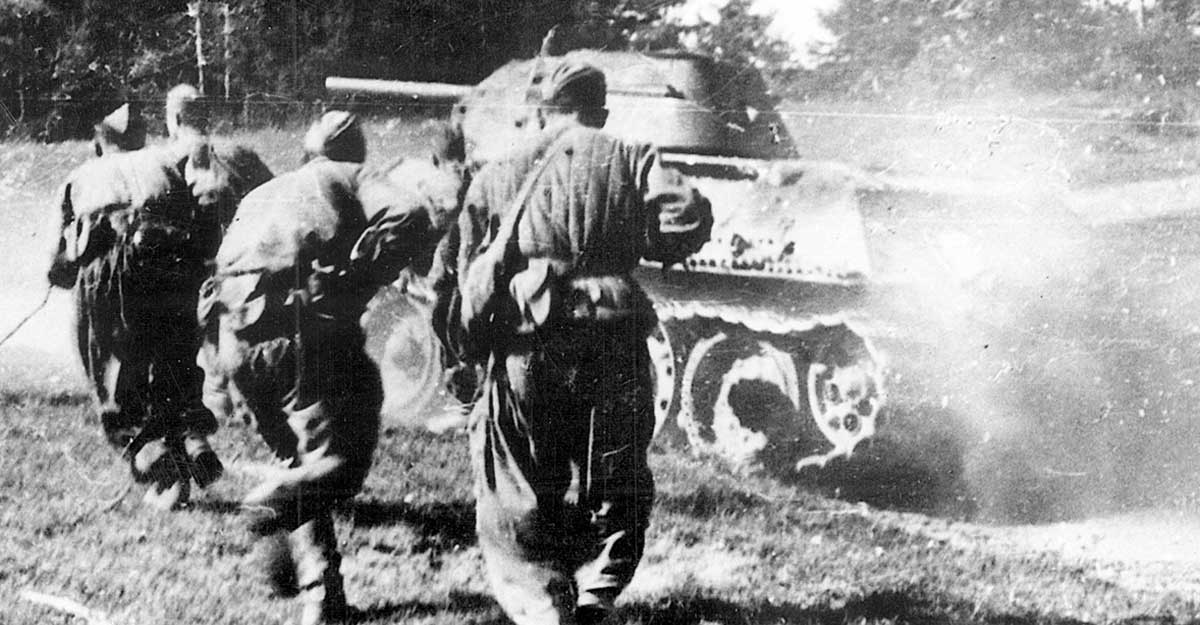
“Up to this time we had enjoyed tank superiority… now… the situation was reversed.” This blunt appraisal from Guderian, father of the Panzertruppen, was made in October 1941 after his troops encountered the T-34. Other German generals, such as Von Mellenthin, came to the same conclusion. Analysis of the T-34 compared to the German Mark III and IV, carried out many times since the war, may reveal the Soviet tank to be less of a wonder weapon than first thought. However, this was not how it felt to the German troops, suddenly facing this tank that was faster, tougher, and with more firepower than their own. All German tanks at the time were rendered obsolete by the T-34.
There were instances of T-34s driving over German 3.7cm anti-tank guns despite taking direct hits. Reports of shells bouncing off its armor were common. Most existing German tank armament was not much use except at extremely close range. Some T-34s went right through the German front line and into the rear of the German positions, and it was only a lack of tactical knowledge and poor crew training that prevented the new tank from having an even greater impact. As it was, the impact of the T-34 was felt all the way to the top of the German high command. There were demands for a new tank (initially, a copy of the T-34 was mooted), along with the need for an improved anti-tank gun.
Production of the T-34
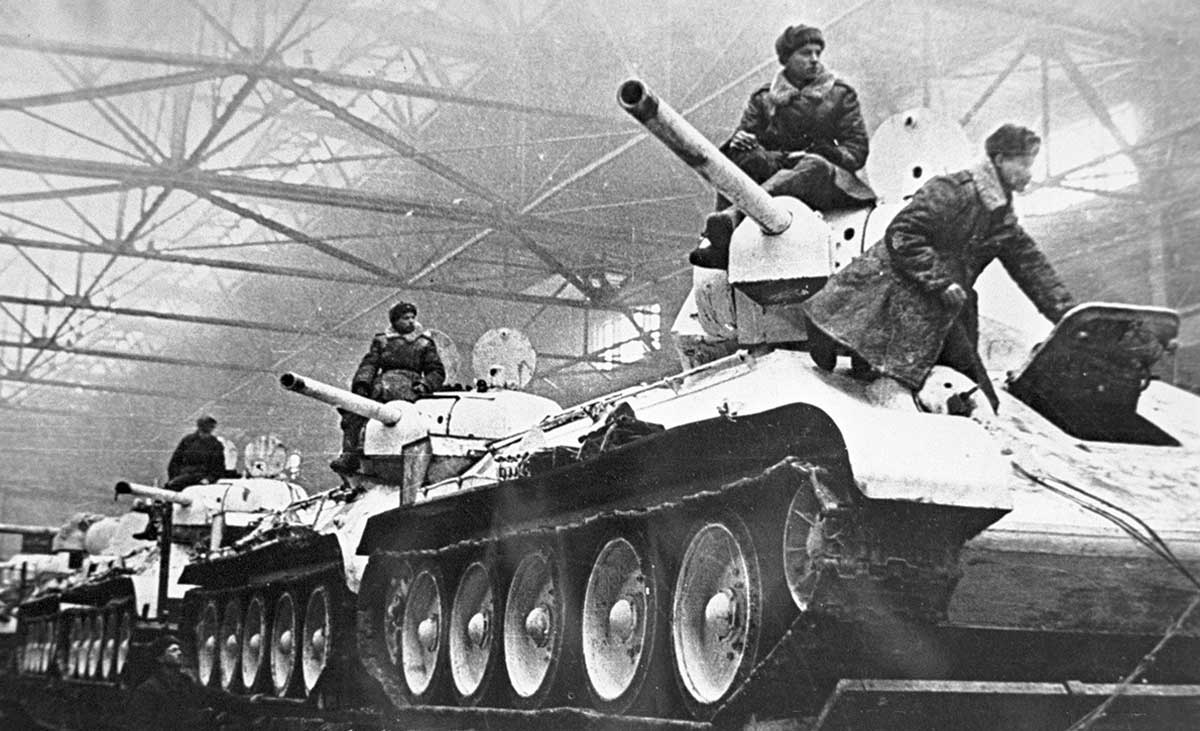
Along with the tank itself, the production of the T-34 is equally important. It was designed to be simple to make, basic, durable, and easy to maintain by the crews themselves. This enabled Soviet industry to produce it on a massive scale, despite having to relocate much of its manufacturing in the face of the German invasion.
Without the vast numbers available, this tank would not have become one of the vital weapons in the Soviet triumph over the German Wehrmacht. Production numbers vary depending on which source is consulted, but a good estimate is 58,000, of which over 23,000 were T-34/85s. To put these figures into context, around 49,000 M4 Shermans were produced, and 8,800 Panzer IVs. It was also relatively simple to produce. A 1943 T-34 required 3,700 man hours to manufacture, (down from 8,000 in 1941) compared to 15,000 for a late model Panzer IV.
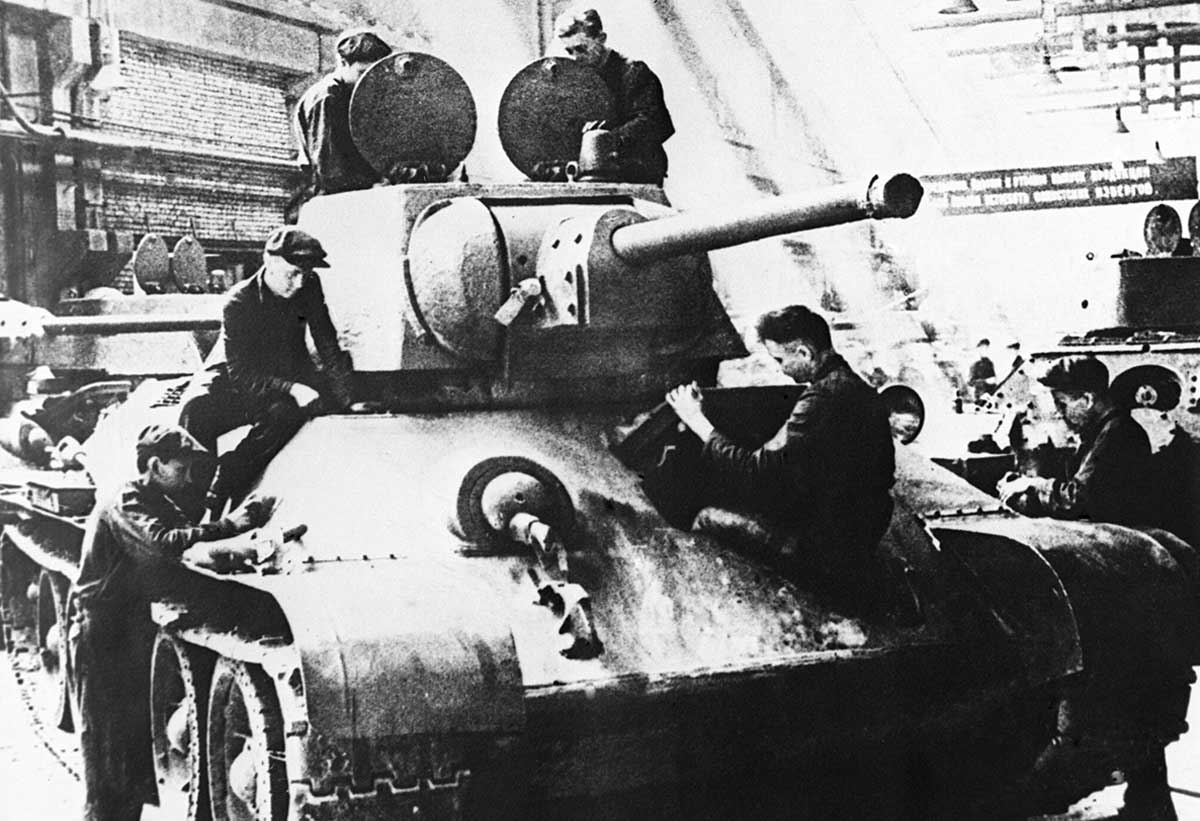
Many T-34s were manufactured in factories that were moved hundreds of miles east, out of range of German bombers, after the start of Barbarossa. This vast relocation of Soviet manufacturing, often east of the Ural Mountains, is part of the heroic story of the Soviet victory. An example of this was the relocation of Kirov Factory No. 185, from Leningrad to Chelyabinsk (nicknamed Tankograd), a distance of over 1,500 miles. Production in the relocated plants often commenced under appalling living and working conditions but this was a secondary concern for the Soviet leadership. It was this mass production which transformed the T-34 from a good tank into a strategic, war winning weapon.
The T-34 Versus the Panzers
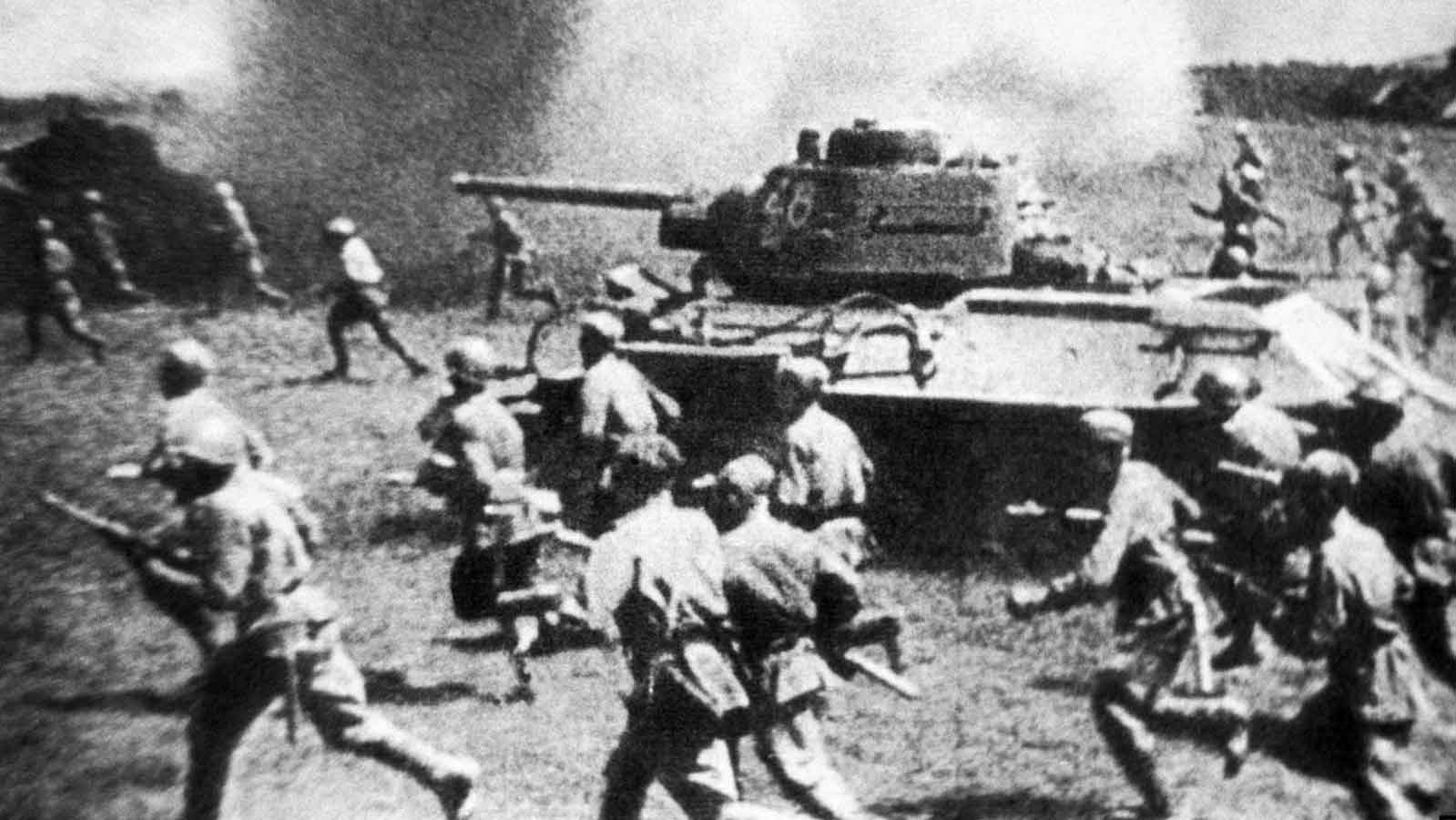
As mentioned above, it was only the better training and tactics of the German army that prevented the T-34 from causing even more damage in 1941. The Soviet tank arm had taken enormous losses during the German invasion, and many of the new recruits suffered from inadequate instruction. Over time, their training and methods improved, as did German equipment to combat the new Soviet tanks.
The T-34/76 1941 model was superior to all German tanks until the introduction of the up-gunned Panzer IV in early 1942, which had a slight edge over the T-34. In this year the Germans began production of the Tiger 1 and in 1943 the excellent Panther came into service. Both were better than the T-34/76 except in terms of mobility. German training and handling of their armored formations was still superior until Kursk, by which time the Soviets had worked out the best way to utilize the T-34, using their own form of Blitzkrieg.
If individual German tanks still had a tactical edge over the T-34, it was the sheer numbers of the T-34, as well as the knowledge of how best to utilize them, which gave it battlefield superiority. An example of this was during the Battle of Kursk in July 1943, where the pride of the Panzer arm was deployed. At the climax of the battle, 850 Red Army tanks and self-propelled guns charged an SS Panzer Corps, with the T-34s closing to point-blank range. At this distance, the 76mm gun nullified the armor on the heavier German tanks, and the use of greater numbers combined with incredible bravery turned the tide. By the end of the day, over 300 German tanks had been destroyed.
The T-34/85: A Match for the Big Cats?
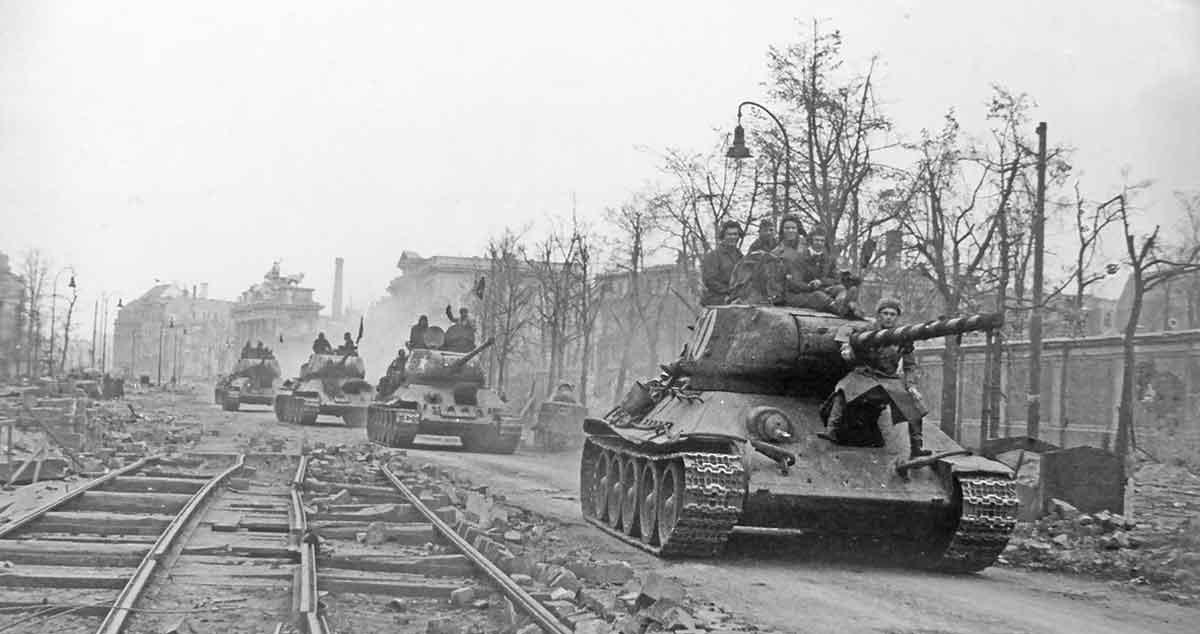
As mentioned above, the late model T-34/76 was inferior to the Tiger and Panther, and a replacement had been under development for some time. However, the emphasis had been on more armor, but, as Kursk had shown by the necessity of the Russians having to attack at point-blank range, what was needed was more firepower. This requirement was addressed, and the T-34/85 mounted an 85mm gun in a larger turret with heavier turret armor than the T34/76. It weighed 32 tons, four more than the earlier model, but it was still almost as maneuverable and as fast as its predecessor.
In early February 1944, the T-34/85 arrived on the battlefield. It was superior to the Panzer IV but still slightly inferior to the Panther or Tiger 1 in terms of firepower or armor. Better armor-piercing ammunition for the 85mm gun appeared later in 1944, which enabled the Soviet tanks to take on the heavy German tanks frontally. In 1944, 63% of all T-34 production was the new model, and by 1945, it was 100%.
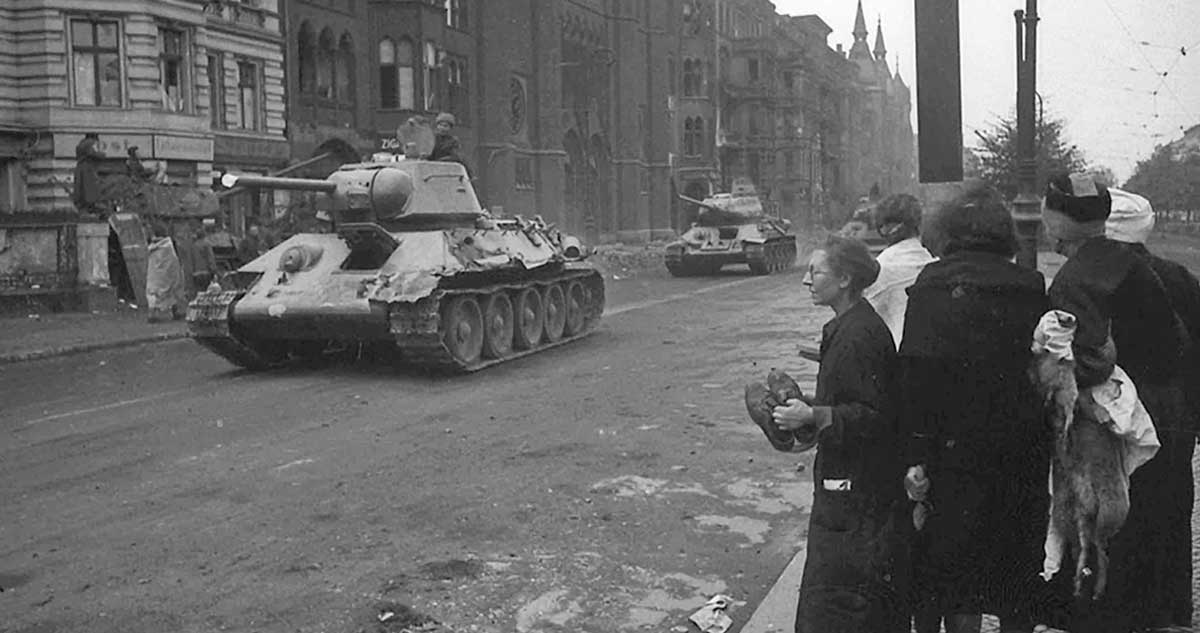
The T-34 was the right tank at a critical period of the USSR’s struggle with Germany. It was what the Russian troops needed at that time—an excellent fighting vehicle, rugged, easy to maintain, and simple enough to be produced in vast numbers. In addition, it lent itself to upgrades, first to the “1941 model” and later to the T-34/85. The Soviet authorities adhered to the maxim “if it ain’t broke, don’t fix it” by adopting a good basic design, concentrating on mass production, and making changes only when necessary.
It may not have been the finest tank in an individual duel with a Panther or Tiger, and the Soviet authorities understood this. However, the sheer number of T-34s available, as well as a tank force that was rapidly absorbing the lessons of armored warfare, ensured success on the battlefield from July 1943 onward. After this point, any German success on the Eastern Front was tactical, and one of the prime reasons was the recognition of the T-34 as a weapon of strategic importance that could defeat the German armor.
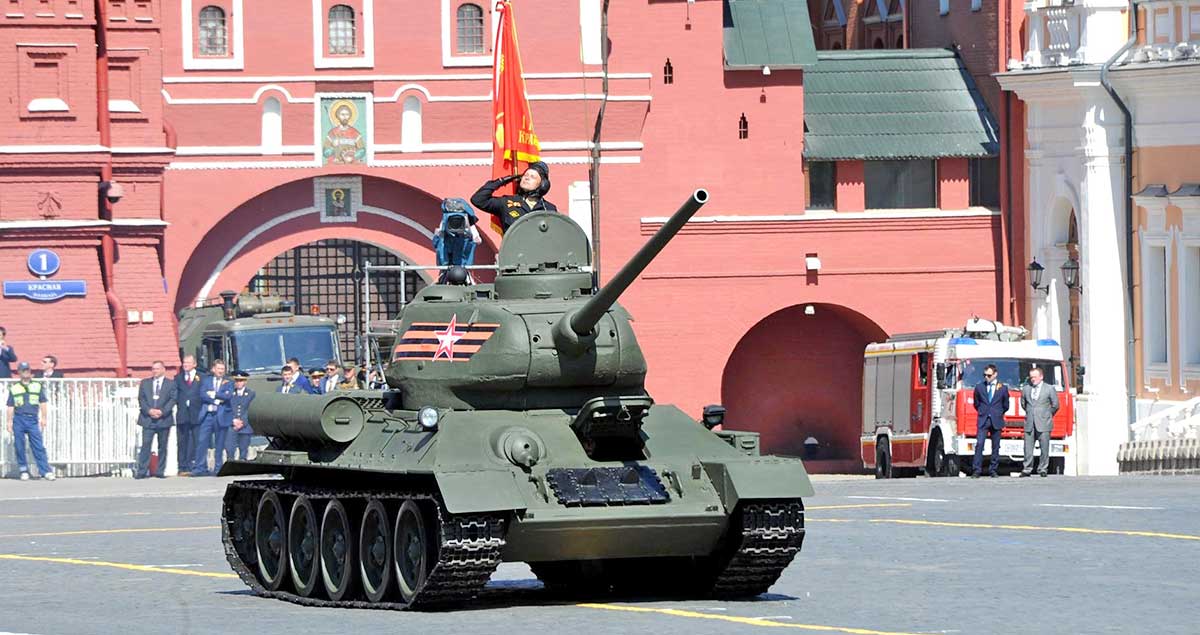
As well as the contribution it made to the Soviet war effort the T-34 hugely influenced German tank design. In addition it continued in production after the war for both the USSR and its allies. Tanks now still show aspects of the T-34, with the balance of sloped armor, firepower and mobility being the forerunner of today’s main battle tanks. Without a doubt, it was the most influential tank of World War II.