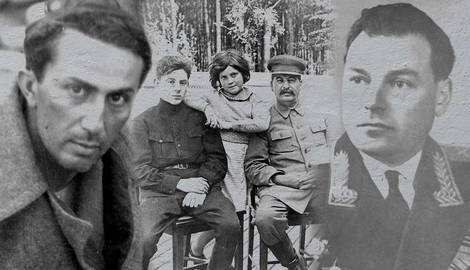

Joseph Stalin’s place in history is widely controversial because of his policies and purges. Though there are some who see him with reverence, in the Western world, his legacy is looked upon with disdain.
Universally, however, he is considered to have ruled the Soviet Union with an iron fist.
Seldom is Stalin considered a family man. Nevertheless, he had a family. During his lifetime, Stalin married twice and had numerous children, though how many is a subject of academic debate.
The fate of his children was very closely linked to their father’s actions. So, what happened to them all?
1. Yakov Dzhugashvili
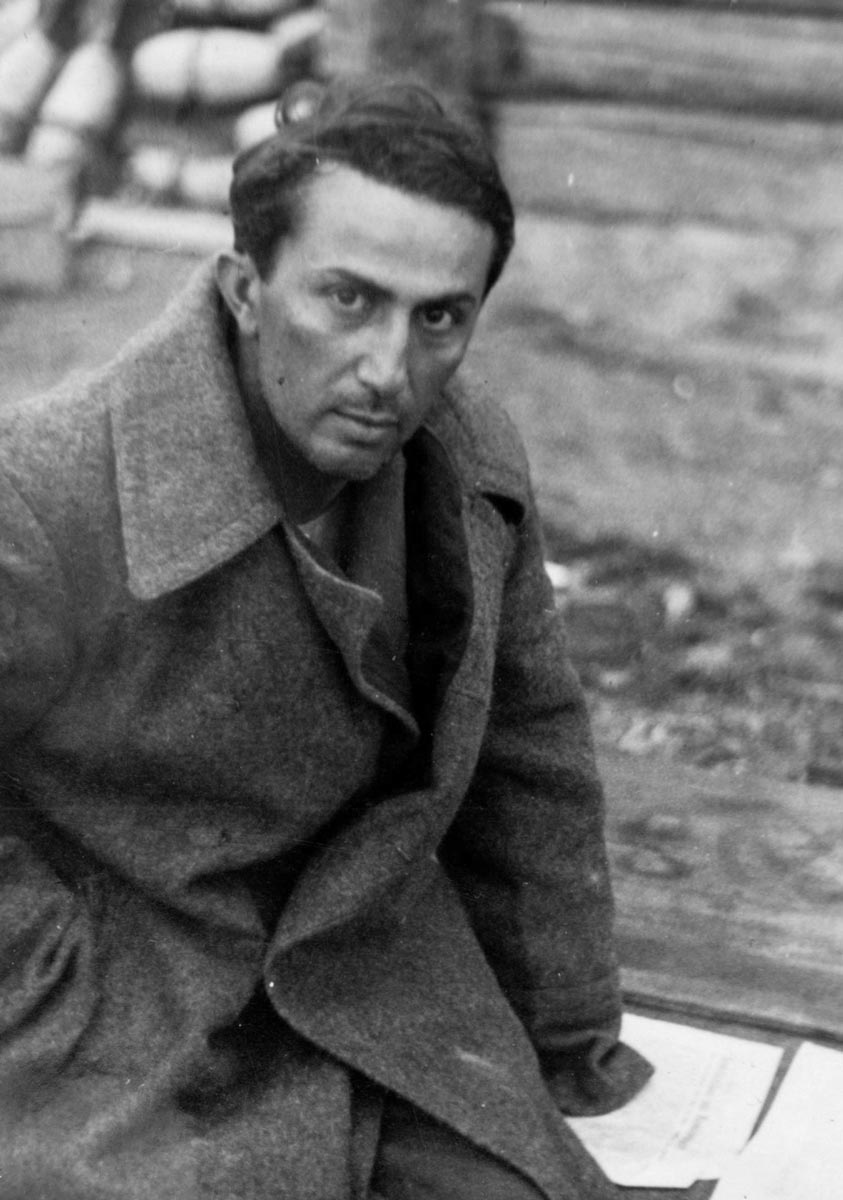
A quiet and shy boy, Yakov Dzhugashvili was the eldest child of Joseph Stalin and his first wife, Ekaterine “Kato” Svanidze. He was born on March 31, 1907, and was raised by his mother’s family. His mother died just nine months after Yakov was born, likely from typhus or tuberculosis.
Yakov’s contact with his father was intermittent until 1921, when he was taken to Moscow to live with his father and his new family. Yakov faced several challenges, one of which was the fact that he did not speak Russian. Like his father, Yakov was of Georgian origin and raised in a Georgian-speaking household.
His father was unkind and treated him harshly. Despite this, Yakov formed close bonds with his stepbrothers and Nadezhda Alliluyeva, Joseph Stalin’s second wife.
In 1928, Yakov announced that he wished to marry Zoya Gunina. He was around the age of 21 while she was just 16. Stalin forbade the marriage and sent Yakov spiraling into depression. He attempted to commit suicide by shooting himself in the chest, but he missed his heart and survived the attempt.
He and Zoya did eventually marry and had a child who died of pneumonia after just eight months. The couple split up but did not officially divorce.
Stalin initially did not allow his eldest son to study at university but relented when Yakov was 23. In 1935, Yakov graduated from the Institute of Transport and thereafter worked as a chimney sweep for a few years.
In 1936, Yakov’s relationship with his girlfriend, Olga Golysheva, resulted in the birth of a son, Yevgeny. Stalin never recognized Yevgeny as his grandson.
In 1937, he joined the Artillery Academy and graduated in May 1941, just a month before the German invasion of the Soviet Union. Yakov also married Yulia Meltzer, a Jewish Ukrainian ballerina. The couple bore a daughter, Galina.
Ordered by his father to “Go and fight!” Yakov spent a short time at the front and was captured after only a few weeks. A few discreet rescue attempts were made but to no avail. Yakov remained a prisoner of the Germans, and when the Germans offered to exchange him for Field Marshal Friedrich Paulus, who had been captured at Stalingrad, Stalin refused.
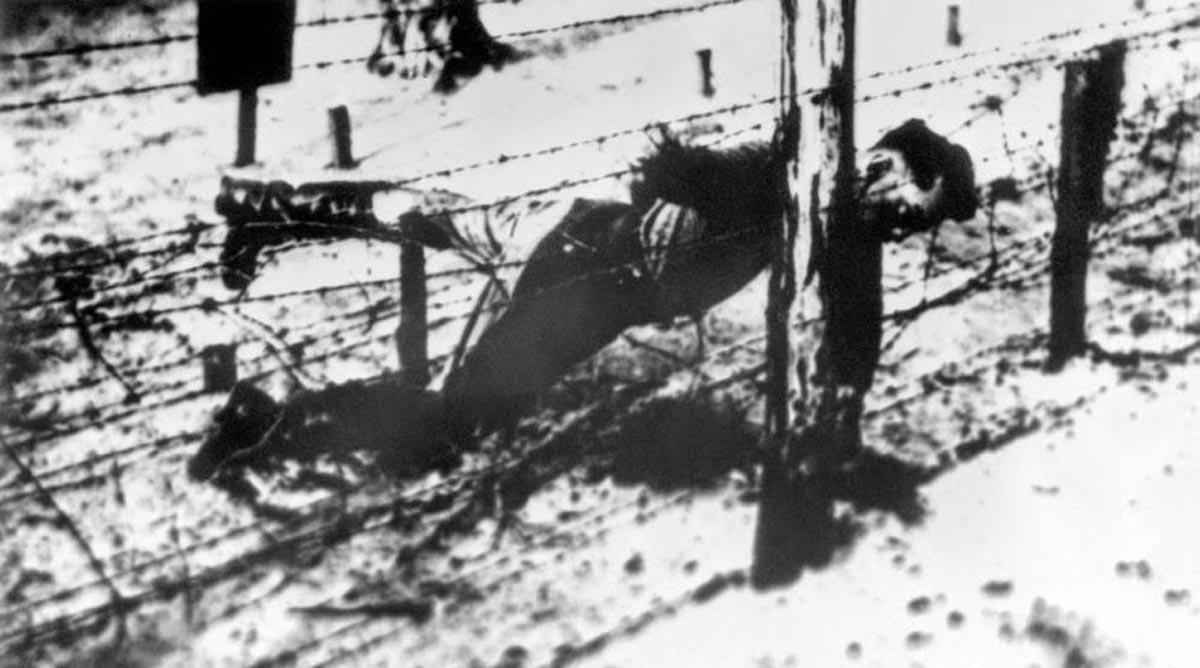
On April 14, 1943, Yakov died in Sachsenhausen concentration camp. At first, it was suggested that he was attempting to escape, but later interpretations of the events suggest that he knew the consequences of his attempt would lead to his death, and he was, in fact, trying to commit suicide. His body was cremated.
In 1977, Yakov was posthumously awarded the Order of the Patriotic War First Class.
2. Artyom Sergeyev
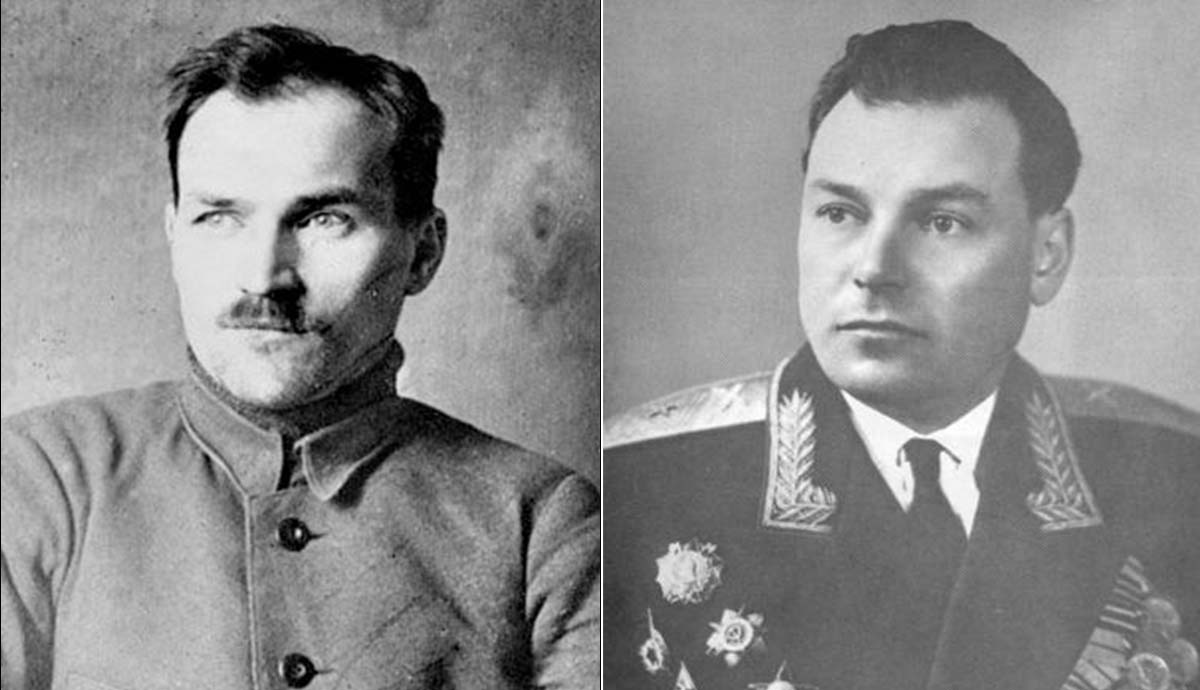
Born March 5, 1921, Artyom Fyodorovich Sergeyev was the adopted son of Joseph Stalin. Artyom’s biological father, Fyodor Sergeyev, died in an aerowagon train accident in July 1921. It was suspected that Fyodor’s death had been premeditated, and Trotskyists were blamed for putting stones on the track that caused the derailment, but nothing was proven.
Lenin charged Stalin with looking after Fyodor’s widow and son, and thus, Artyom officially became Stalin’s son by adoption.
In 1938, at the age of 17, Artyom began his military career and fought against the Germans in the Second World War. He was made a lieutenant colonel at the age of 23 and continued to serve in the military after the war.
Artyom died in 2008 at the age of 86 and was buried in Kuntsevo Cemetery in Moscow.
3. Vasily Stalin
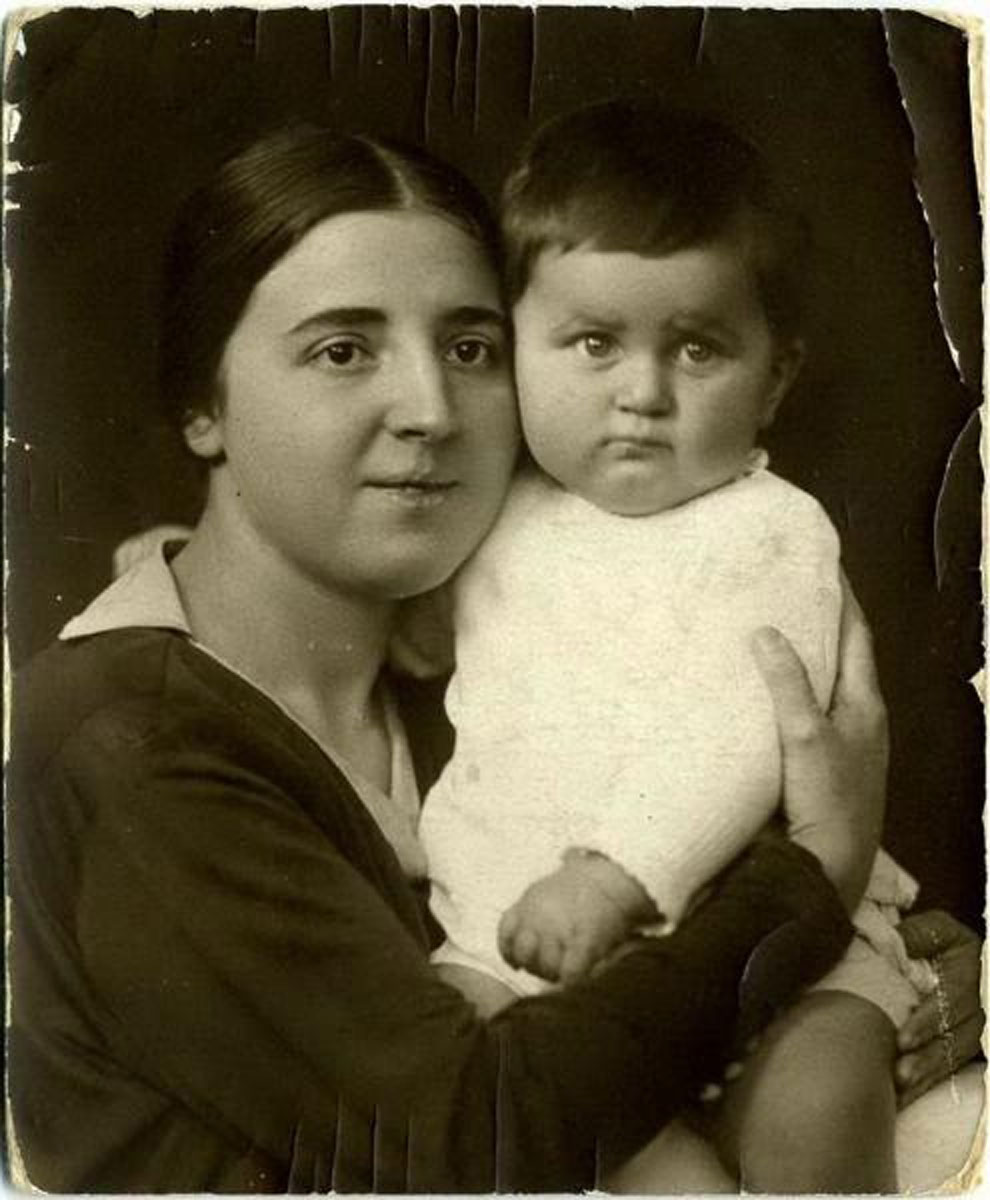
Vasily was born on March 21, 1921, the eldest of two children born to Joseph and his second wife, Nadezhda.
Vasily was mostly raised by a nanny since his mother spent much of her time pursuing a professional career. On November 9, 1932, Nadezhda committed suicide after a heated argument with Joseph. The marriage was an unhappy one, and Nadezhda suspected her husband of infidelity. She shot herself out of anger and despair.
Vasily and his younger sister, Svetlana, were not told the truth about their mother until ten years after the event. They were told that their mother had died of peritonitis, a complication related to appendicitis.
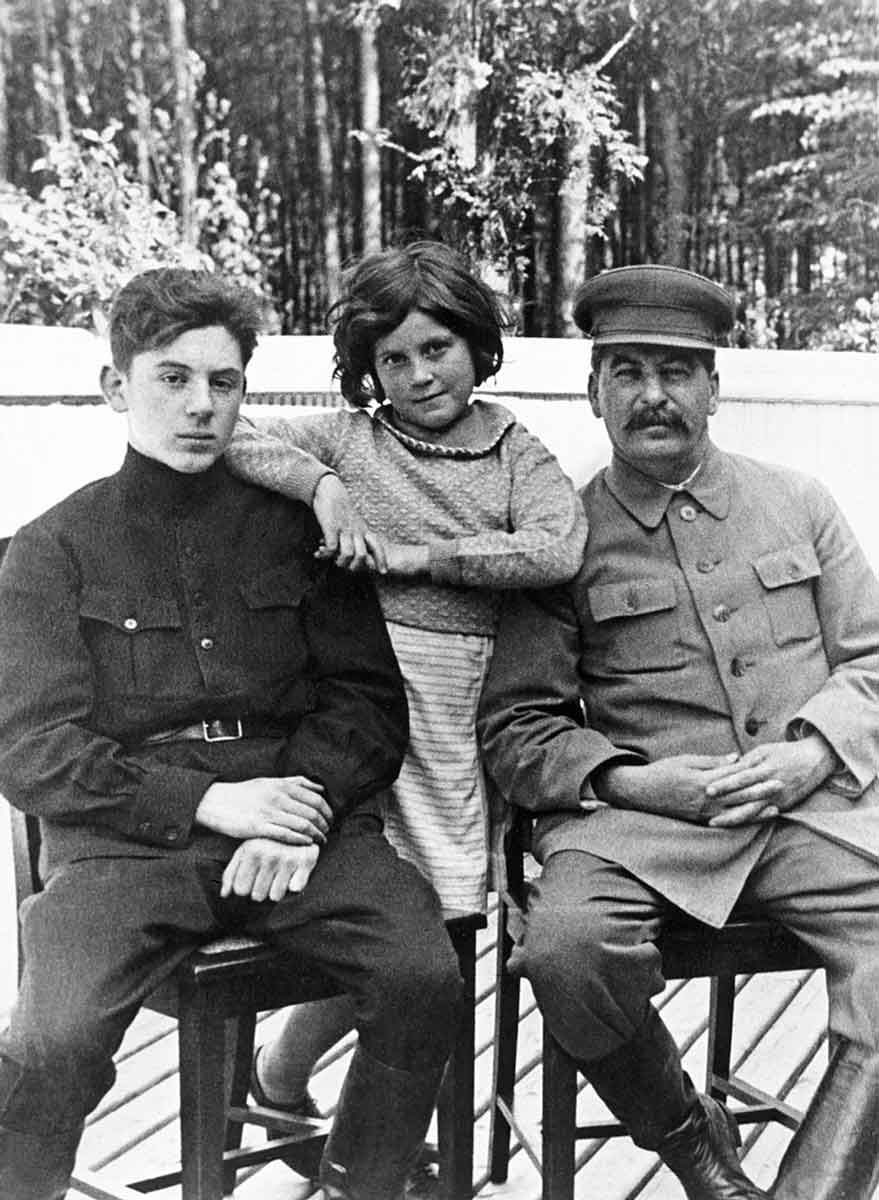
Vasily took the death of his mother hard, and at the age of just 13, he was developing alcoholism. His battle with alcohol plagued him his entire life and eventually led to his death. Vasily’s alcoholism also resulted in bouts of violence, and he did not treat his younger sister very well. This was exacerbated by the fact that his father ceased paying his children any attention after Nadezhda’s death. Stalin ignored the letters that Vasily sent him.
Vasily was a poor student at Moscow Model School No. 25, and in 1937, he was transferred to Special School No. 2, but his behavior did not improve. At the age of 18, he enrolled in the Kachinsk Military Aviation School. At this school, Vasily improved as a student, and he graduated in 1940 with the rank of lieutenant in the air force. Later that year, he married Galina Burdonskaya, who was studying at the Moscow State University of Printing Arts.
The following year, the Soviet Union was thrown into turmoil when Germany launched Operation Barbarossa and invaded the Soviet Union on June 22. Vasily was sent to the front, but due to being the son of Joseph Stalin, he was given relatively few combat missions. He did, however, shoot down two enemy aircraft.
Vasily was not well-liked by his peers. They thought him an informant for his father and reckoned that he received softer treatment in the military. After the Red Army had mitigated the German threat to Moscow, Vasily was posted to the capital, where he was plagued with boredom. To relieve this state of affairs, he dropped explosives into the Moskva River, injuring himself and killing another.
Vasily was demoted but quickly rose through the ranks again to become a general—the youngest general in the Red Air Force.
After the war, he was transferred to Germany as part of the occupation force.
After his father’s death in 1953, Vasily lost much of his prestige. The USSR’s process of de-Stalinization included dealing with Stalin’s son. Vasily was charged with denigration of Soviet leaders and anti-Soviet propaganda and sentenced to prison.
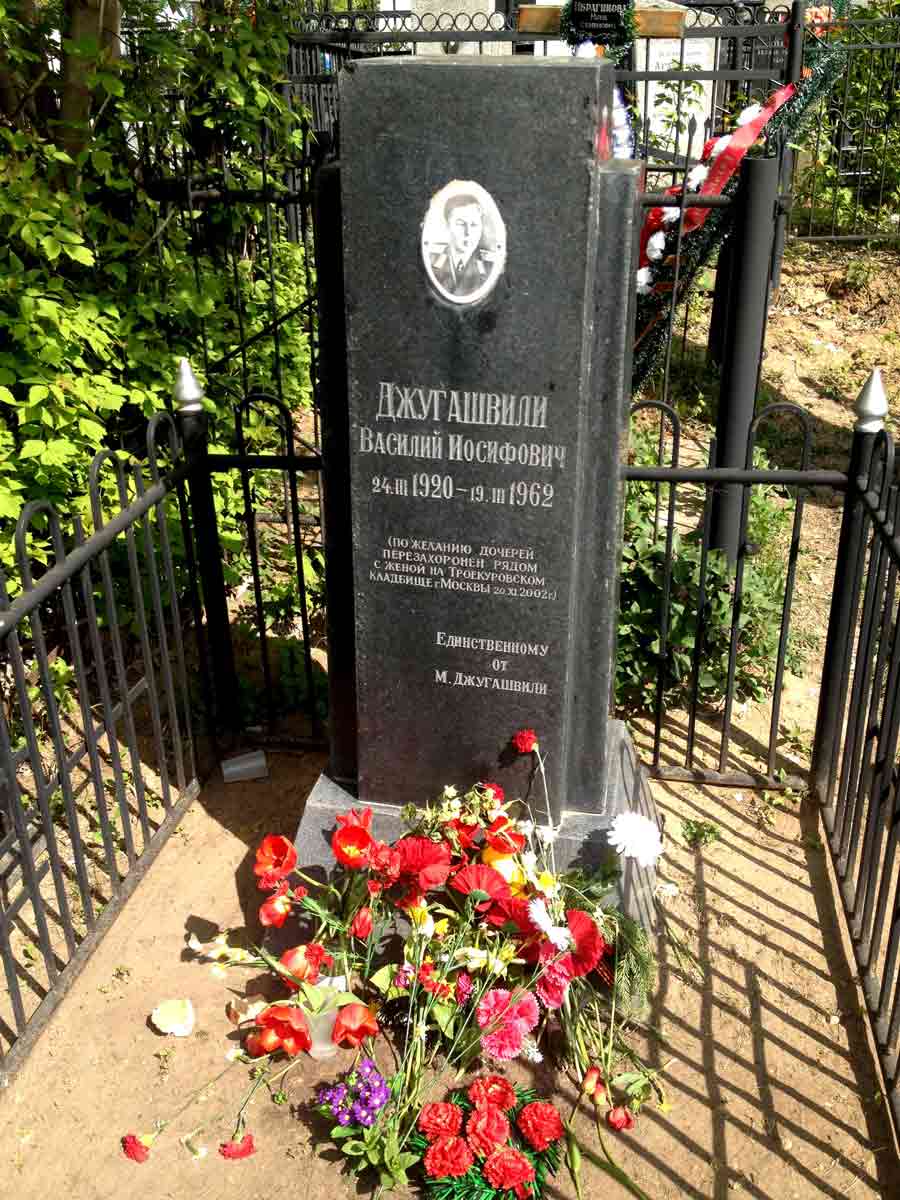
He was released in 1960, but his life had been completely ruined. He was a chronic alcoholic, and his addiction caused his death in 1962.
During his lifetime, Vasily married four times and fathered a son. In 2002, he was exhumed from his grave in Kazan and reburied next to his fourth wife, Mariya Nusberg, in Moscow.
4. Svetlana Alliluyeva
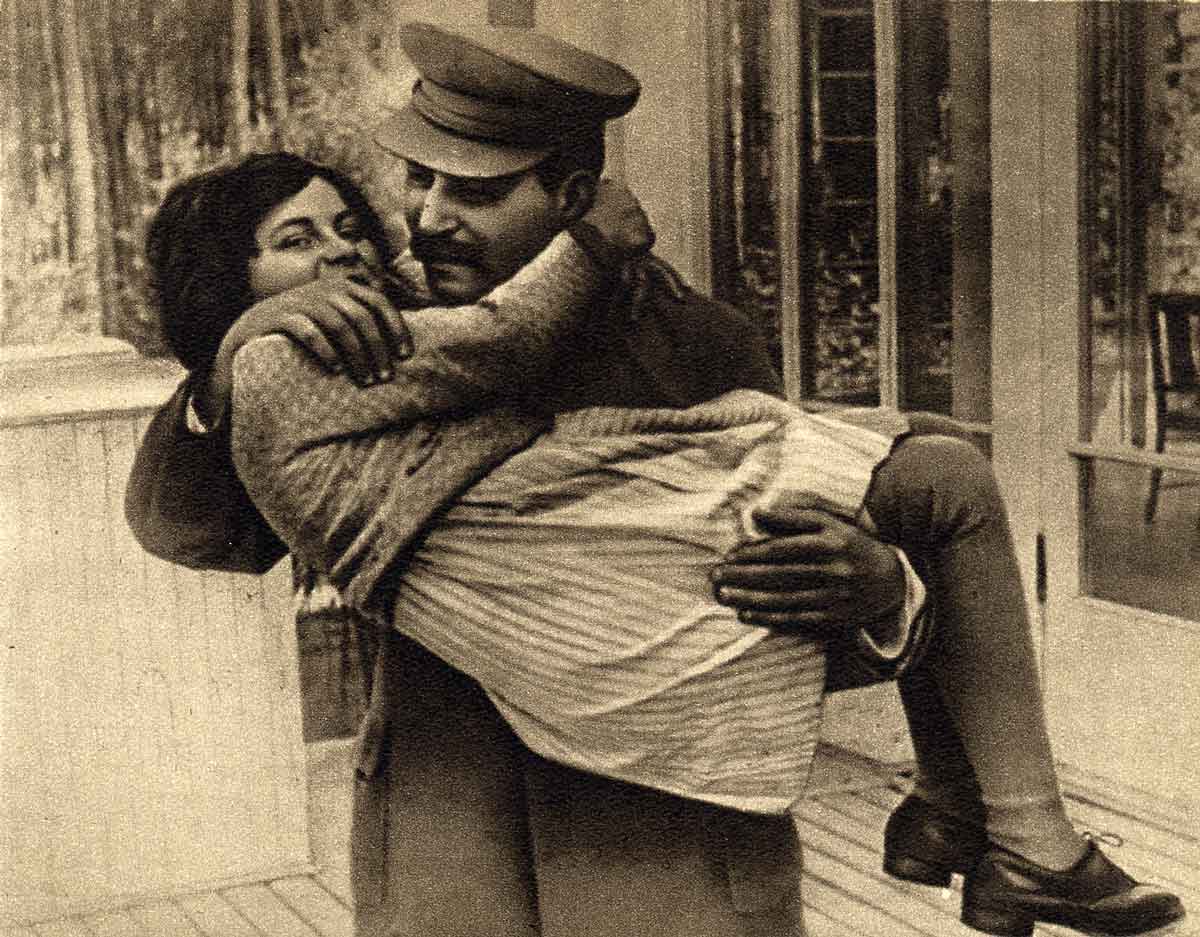
Stalin’s youngest child and only daughter, Svetlana, was born on February 28, 1926. Her mother was Stalin’s second wife, Nadezhda Alliluyeva. Svetlana was just six years old when her mother shot herself.
In 1933, Svetlana and her older brother, Vasily, began their schooling at Moscow Model School No. 25. Their heritage did not afford them special treatment; they were treated the same as all the other students.
Ten years later, Svetlana finished her schooling in 1943 after completing her 10th grade. At the age of 16, she fell in love with Aleksei Kapler, a Jewish-Soviet filmmaker who was 22 years older than her. Stalin disapproved of the relationship and exiled Aleksei to the coal-mining town of Vorkuta for five years, after which he was sentenced to another five years in labor camps.
Svetlana married Grigory Morozov, a student at Moscow University’s Institute of International Affairs. Although Stalin never met the man, he disapproved of the relationship, possibly because Morozov was Jewish. The couple had a son, Iosif, born in 1945 before the two divorced in 1947. Despite the divorce, they remained good friends.
Stalin took a direct hand in Svetlana’s next marriage and arranged for her to marry Yuri Zhdanov, the son of Andrei Zhdanov, a close political ally of Stalin. The two had a daughter, Yekaterina, but Andrei had little time for his wife, and the marriage was dissolved in 1950.
Svetlana graduated from Moscow University in 1949. After her father’s death, she returned to become a lecturer from 1953 to 1965. Although her father had forced her to study history and political thought, Svetlana’s true passion was literature and writing.
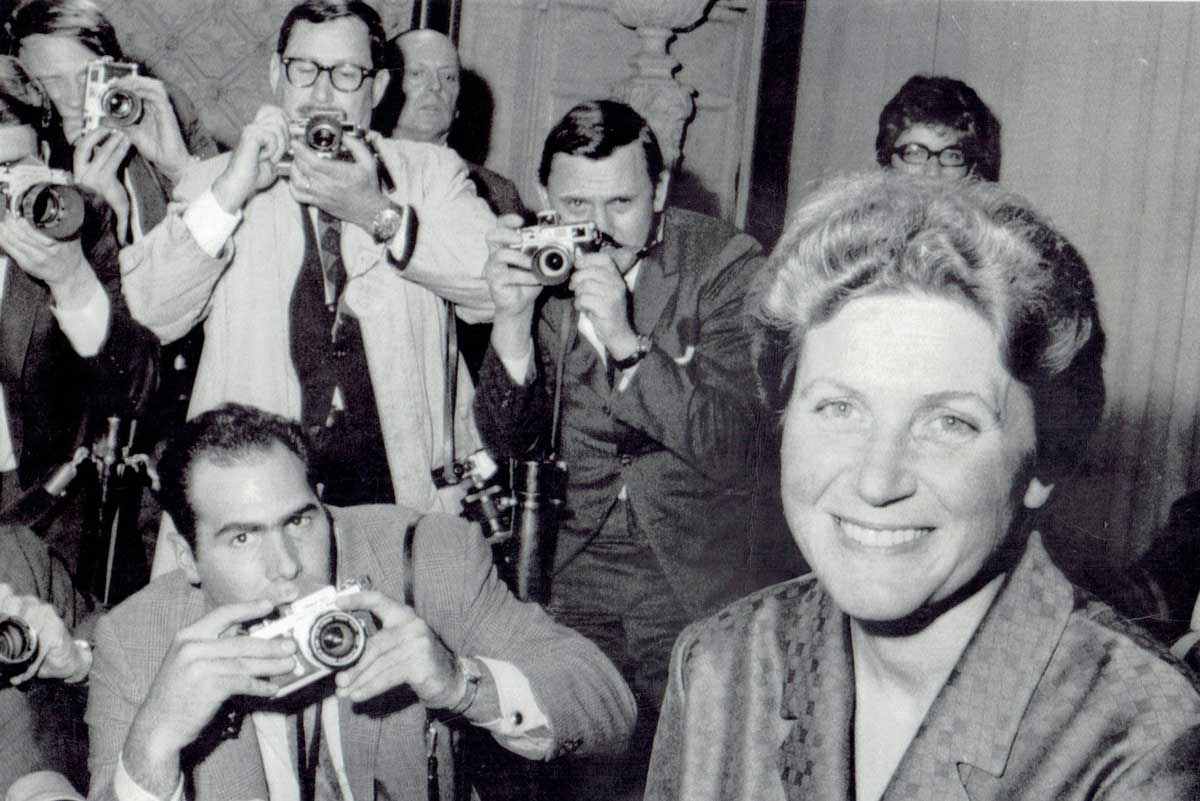
In an interview, Svetlana stated that her father’s refusal to let her study her passion and his treatment of Kapler were the two times that her father “broke my life.” She loved her father but stated that he was a simple man who could be very cruel and rude.
In 1962, she married Ivan Svanidze, the nephew of Stalin’s first wife. The marriage did not last, possibly due in part to his poor health, and it was dissolved within a year.
In 1963, she met Kunwar Brajesh Singh, an Indian communist visiting Moscow. The two fell in love, but when Svetlana applied to the government for a marriage license, she was denied.
Singh became gravely ill in 1966, and after being misdiagnosed with tuberculosis, he died in a hospital in October. Svetlana was permitted to leave the Soviet Union to scatter Singh’s ashes, and while in India, she went to the US embassy and defected.
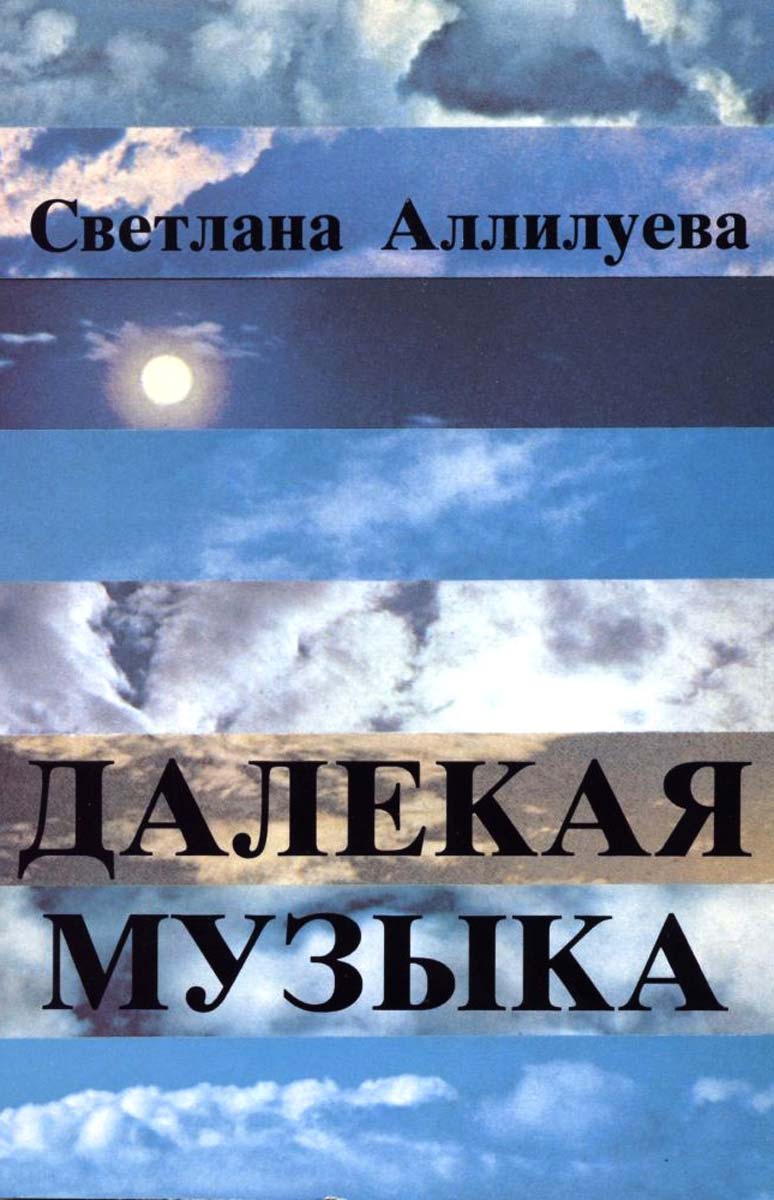
After arriving in the United States, Svetlana wrote her memoirs in the form of two books. She lived in New Jersey before moving to Wisconsin.
While in the US, Svetlana married an architect, William Wesley Peters, in 1970. The two had a daughter, Olga. Svetlana and William divorced in 1973.
Svetlana received her US citizenship in 1978, and in 1982, she moved with her daughter to live in Cambridge, England. Two years later, with the relaxing of policies in the Soviet Union, Svetlana was able to return to her native land and her Soviet citizenship was reinstated.
She published a third book, The Faraway Music (1984), in which she detailed her disenchantment with the West. Nevertheless, life was not any easier for her in the Soviet Union. After clashing with Soviet authorities, Svetlana renounced her Soviet citizenship and left the country.
She spent the rest of her life in the United States and Britain. She lived the last two years of her life in Wisconsin and died on November 22, 2011, from complications linked to colon cancer. She was 85 at the time.
5. & 6. Illegitimate Children: Alexander Davydov & Konstantin Kuzakov
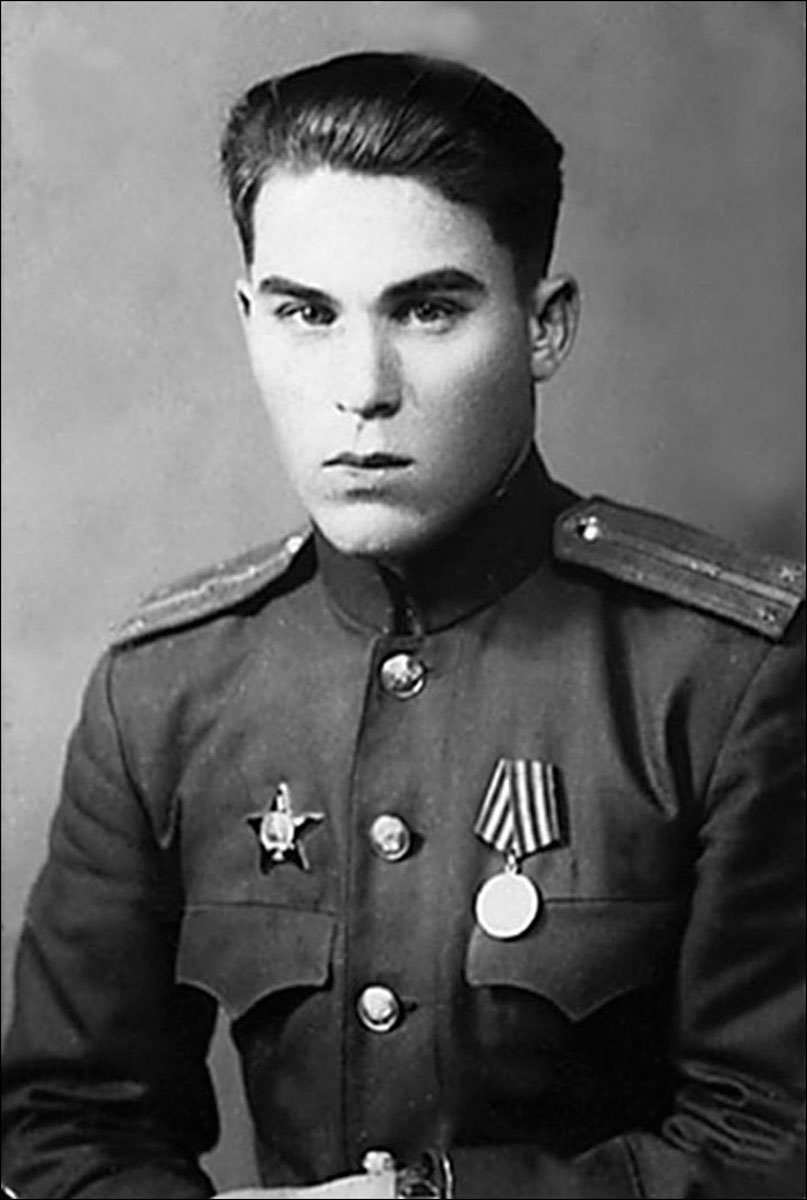
Stalin had spent four years in exile in a remote part of Siberia from 1913 to 1917. During his time there, he met a young girl, Lidia Pereprygina. Joseph Stalin was 35 at the time, and Lidia was just 14 when she bore him a child. The child died soon after birth and was not named. In 1916, the two had another son, Alexander. Stalin, however, showed no interest in being a father.
Lidia married Yakov Davydov, who adopted Alexander, and Alexander took his adoptive father’s last name.
This episode of Stalin’s life is contested, however, and it has been suggested that it is nothing more than propaganda promulgated by Stalin’s enemies.
Another claim of illegitimacy was made by Konstantin Kuzakov, who, in 1995, said that he was the illegitimate child of the former Soviet leader. Konstantin claimed that his mother, Maria, was Stalin’s landlady and mistress during his exile in Siberia. According to historian Simon Sebag Montefiore, Stalin had already departed before Konstantin was born on September 11, 1911.
It is suggested that Stalin knew about Konstantin. He allegedly helped his son enter Leningrad University, and Konstantin was ordered never to reveal the source of his parentage.
During World War II, Konstantin served as a colonel in the Red Army, and in 1948, he was accused of being an American spy and dismissed from the Communist Party. Sebag Montefiore claims that Stalin prevented the arrest of his son.
After Stalin’s death and the arrest of Lavrentiy Beria, Konstantin was restored to the Communist Party and served in various high-ranking positions, eventually dying in 1996 at the age of 85.
Joseph Stalin is not immediately thought of as a family man. Yet his legacy is incomplete without mentioning the family he had. Their father’s actions, however, would result in his children leading difficult lives as they tried to escape his influence and his political legacy.