
Immortalized by Abraham Lincoln’s Gettysburg Address, the Battle of Gettysburg was the bloodiest battle in American history. Union commander George Meade’s Army of the Potomac’s successful defense prevented Confederate General Robert E. Lee from marching on Washington. Alongside the contemporaneous Siege of Vicksburg, Gettysburg is considered the major turning point in the course of the American Civil War. Lee was forced on the defensive while Union armies brought the war into the heart of the South.
The High Water Mark of the Confederacy
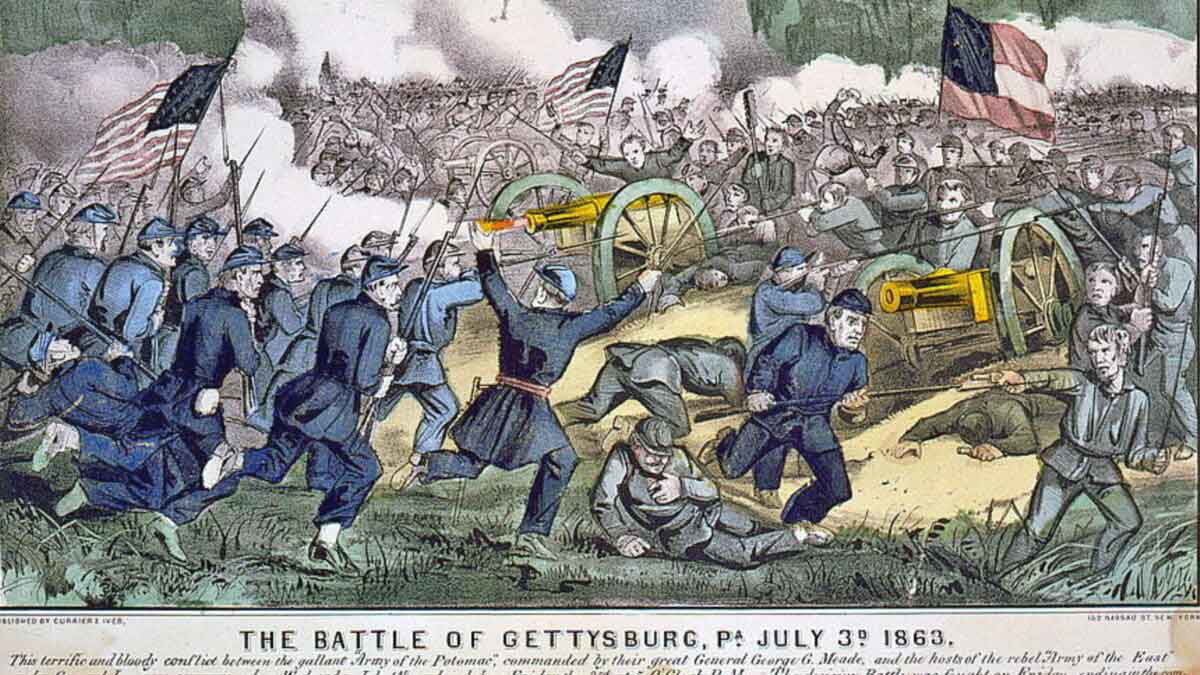
At around 3 p.m. on the afternoon of July 3, 1863, after an artillery exchange of some two hours, Confederate Major-General George Pickett led some 15,000 men across the shallow valley towards the Union center on Cemetery Ridge.
The two sides had been engaged in heavy fighting at Gettysburg for over two days. Union general George Meade, who had only been appointed to lead the Army of the Potomac days earlier, ordered his command to concentrate in southern Pennsylvania to draw General Robert E. Lee’s Army of Northern Virginia into battle.
The battle began on July 1 as the Confederates attacked Union forces at Gettysburg while the bulk of the Army of the Potomac was still on the march. Meade was forced to take up position on Cemetery Ridge to the south of the town. The following day, Lee launched sustained assaults on the Union’s left flank but failed to break through as corpses piled ever higher.
It became clear to both sides that Lee intended to attack the Union center on the third day of battle. Although the Confederates were outnumbered on the field, and despite attempts to dissuade him by his senior subordinate General James Longstreet, Lee believed that the key to victory lay with Pickett’s fresh infantry division. Victory at Gettysburg would enable Lee to march on Washington unopposed, forcing President Abraham Lincoln to come to terms and recognize the independence of the Confederate States of America.
As the gray-coated Confederate soldiers traversed almost a mile of open ground towards the Union line, canister fire from Union artillery tore holes into the ranks of the advancing men. The Union infantry raised their muskets and waited until the enemy were at close range before unleashing a volley of murderous fire. As the Confederates reeled back, General Winfield Scott Hancock ordered his men to counterattack, initiating an intense fight at close range.
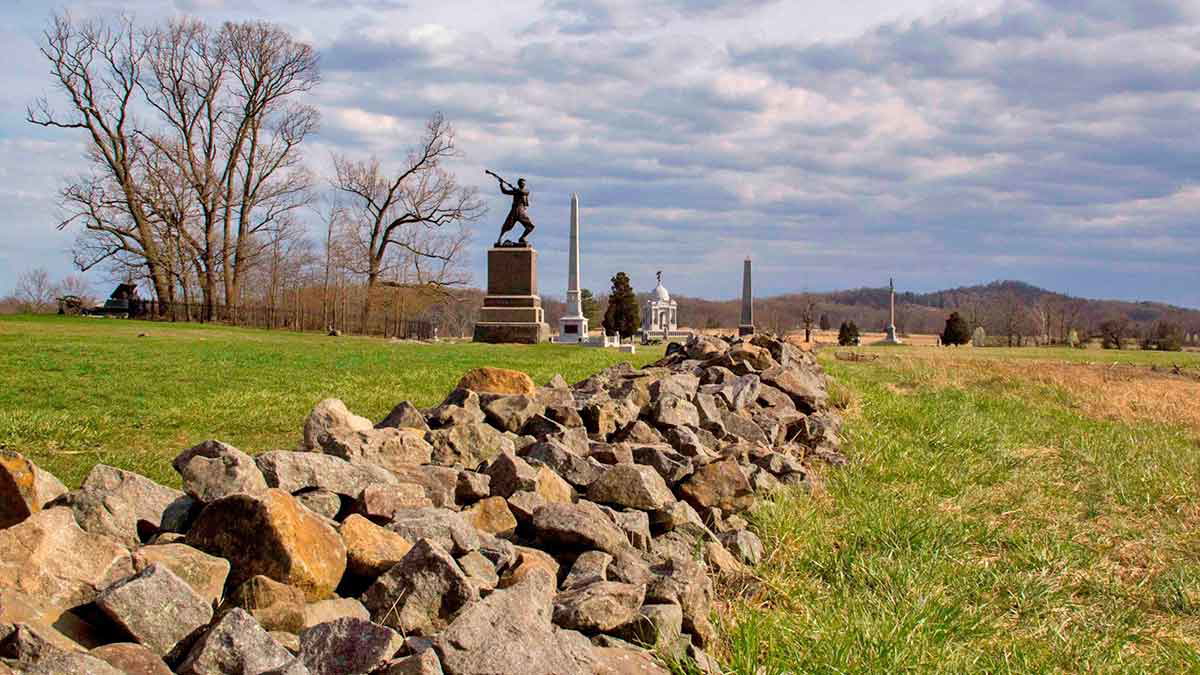
The Confederates suffered heavy losses, and almost all of Pickett’s officers were casualties. A few hundred men in gray from Lewis Armistead’s brigade reached Cemetery Ridge. They would go no further. Armistead was mortally wounded, while his men were cut down by withering Union fire. The extent of their advance was later recognized as the “high water mark of the Confederacy.” As the survivors of Pickett’s charge returned to the Confederate lines, it was clear that the Union had won the Battle of Gettysburg.
Lee’s Northern Campaigns
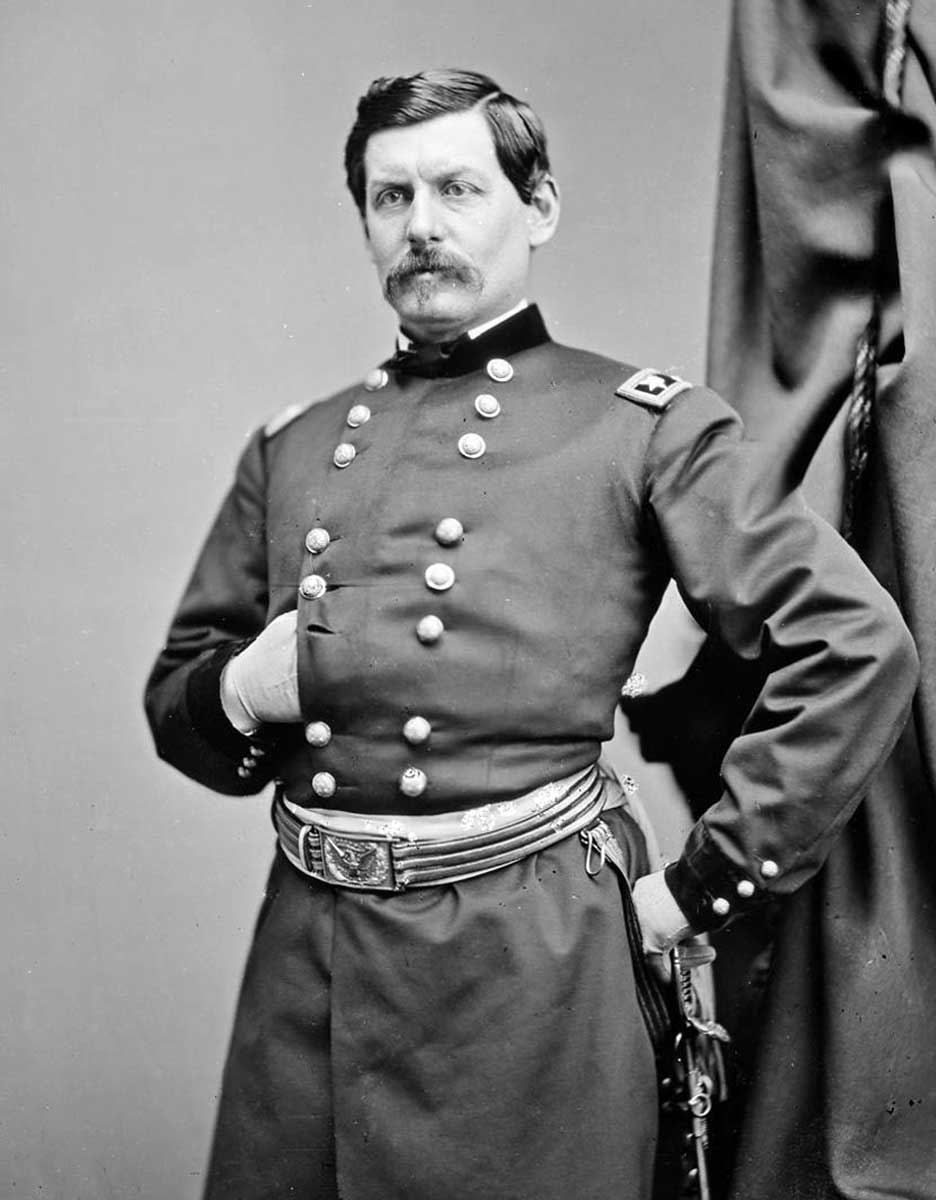
The American Civil War had already been raging for over two years by the time Lee and Meade clashed at Gettysburg. In the months after the Battle of Fort Sumter in April 1861, the Union camp was optimistic that the southern rebellion would be easily suppressed. Such optimism came to a crashing end with the Confederate victory at the First Battle of Bull Run in July 1861.
Although Union commander-in-chief George B. McClellan organized a large army in early 1862, he was reluctant to lead it into battle and was stripped of supreme command in March. Although he eventually went on the offensive with the Army of the Potomac in the summer, McClellan’s half-hearted advance was stopped by Lee in the Seven Days Battles.
Having repulsed McClellan’s advance, Lee gained control of northern Virginia after victory at the Second Battle of Bull Run in late August. The Confederate commander pushed into Maryland, dividing his force into three columns. Union troops discovered a copy of Lee’s orders by chance, giving McClellan a golden opportunity to strike with an army that outnumbered Lee two-to-one. While Lee was forced to retreat after the Battle of Antietam, McClellan was criticized for failing to capitalize on his strategic advantage and completely destroy Lee’s army.
Lee lived to fight another day and the Army of Northern Virginia remained a serious threat to the Union. In January 1863, Lincoln appointed Major General Joseph Hooker as commander of the Army of the Potomac. Hooker’s reputation for aggressiveness evaporated after he was defeated by Lee at Chancellorsville in May 1863. After Lee invaded Pennsylvania in June, Lincoln lost faith in Hooker and replaced him with Meade. The latter’s victory at Gettysburg put an end to Lee’s second invasion of the North.
Vicksburg
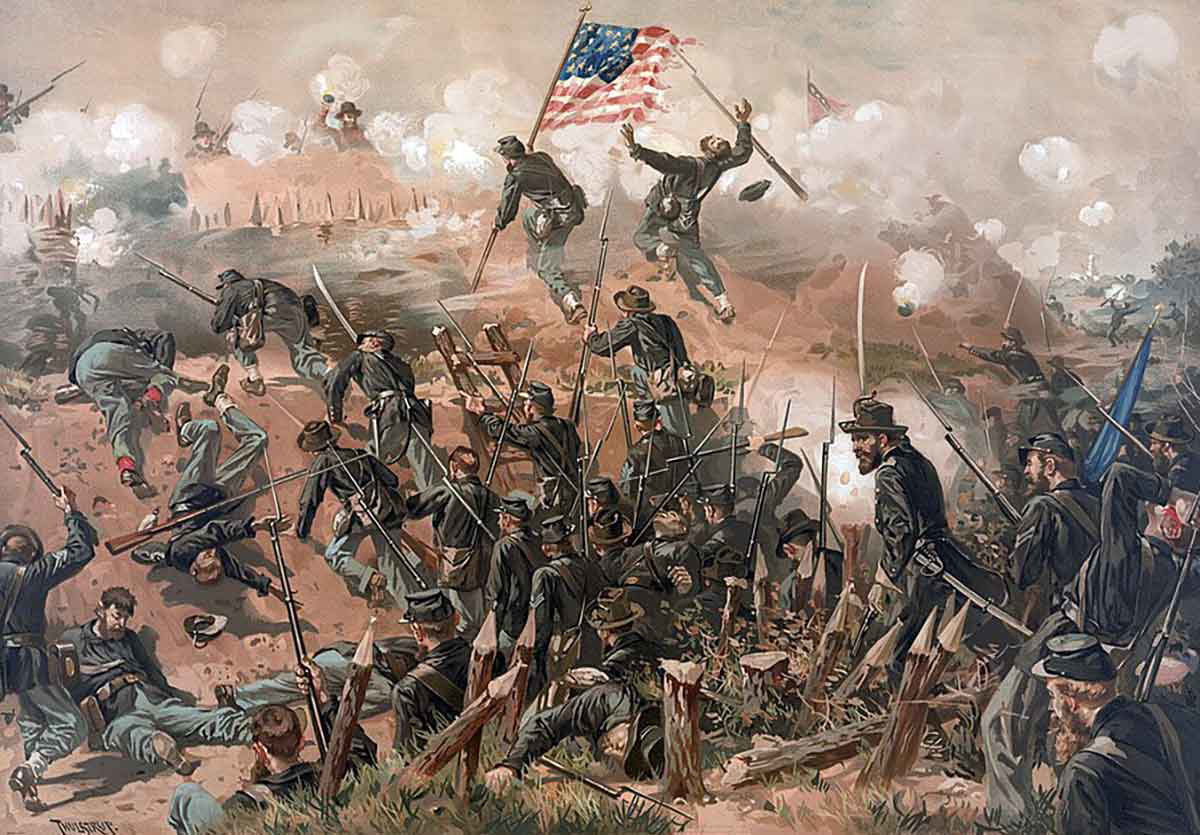
Gettysburg was not the only victory gained by Union soldiers in early July 1863. Hundreds of miles to the west, General Ulysses S. Grant had been besieging the Confederate garrison at Vicksburg on the Mississippi for several weeks. Grant ordered his men to dig mines to blow up the formidable defenses, and by the beginning of July the emaciated Confederates could no longer continue the fight. On July 4, 1863, the 87th anniversary of American independence, Grant received the surrender of the Vicksburg garrison.
Gettysburg can only be considered the turning point of the Civil War when viewed in conjunction with the Union success at Vicksburg. While Meade’s victory in Pennsylvania relieved anxieties in Washington DC, Grant’s victory in Mississippi allowed him to take control of the great river and divide the Confederacy into two. Western states such as Texas had been a large source of men and provisions for the Confederacy and their isolation fatally undermined the Confederate war effort.
Grant’s success brought him to Lincoln’s attention, paving the way for his appointment as Union commander-in-chief in 1864. Grant’s success as the general who forced Lee to surrender at Appomattox Court House led him to the presidency, serving two terms between 1869 and 1877.
Lee on the Defensive
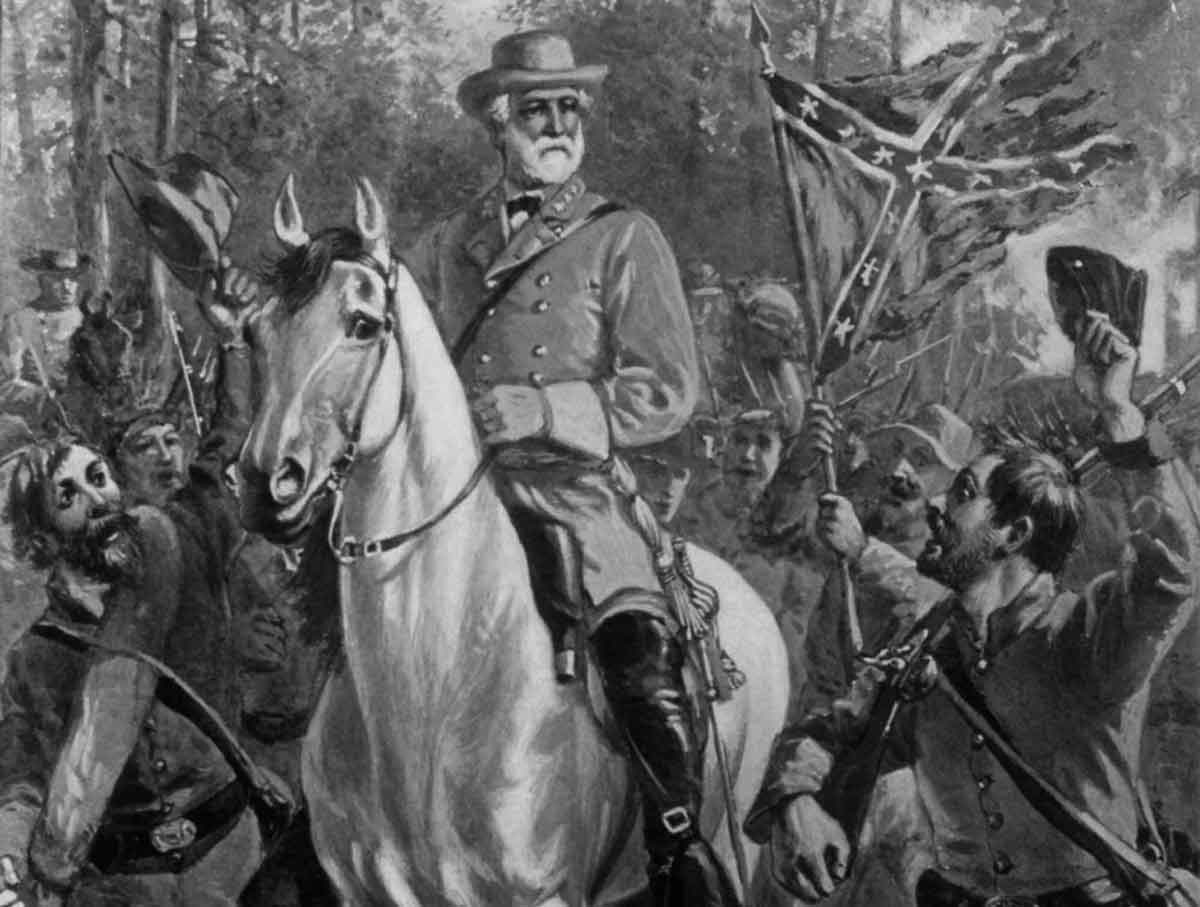
The Battle of Gettysburg was the bloodiest battle in the history of the United States. According to figures from the American Battlefield Trust, over 50,000 men were casualties, almost one-third of total forces engaged on both sides.
While Union casualties amounted to 23,000 men, Confederate losses were higher at 28,000. Since some 70,000 Confederates had been engaged at Gettysburg, this left Lee with little over 40,000 men. There was no question of continuing his Pennsylvania campaign, and Lee had no choice but to retreat into northern Virginia on the night of July 4-5. Seven thousand Confederate wounded were left on the battlefield to be tended by Union medical staff.
Lee was demoralized after Gettysburg and submitted his resignation to Confederate President Jefferson Davis, who refused it. As news of Gettysburg and Vicksburg filtered through to the South, it became increasingly clear that the Confederacy would eventually succumb to defeat. While the Army of Northern Virginia demonstrated formidable tenacity, Lee’s efforts failed to compensate for the relentless advance of Union armies on several strategic fronts.
Although Meade and Lee saw little action over the rest of 1863, Grant’s victory in November at Chattanooga in southern Tennessee enabled Union armies to march into Georgia. Following Grant’s promotion as commander-in-chief in March 1864, he joined Meade at the headquarters of the Army of the Potomac and left his friend William Tecumseh Sherman in command of the Western Theater.
While Grant sustained heavy casualties and struggled to break through Lee’s defenses in Virginia, Sherman took Atlanta in September 1864 before embarking on his March to the Sea that devastated the southern economy and made Confederate defeat all but inevitable.
A Missed Opportunity?
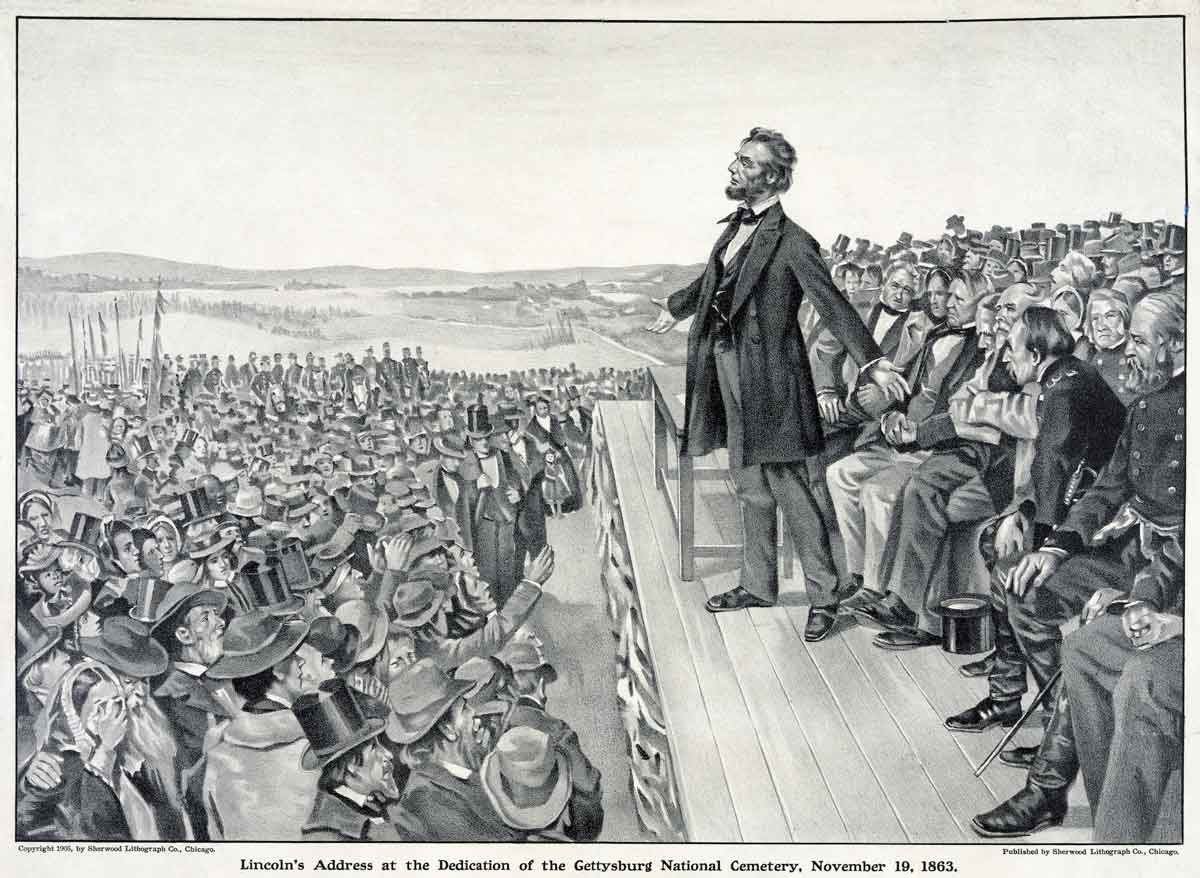
The Battle of Gettysburg was immortalized in Lincoln’s Gettysburg Address, delivered at the dedication of the Gettysburg National Cemetery in November 1863. In a two-minute speech containing fewer than three hundred words, Lincoln characterized the Union cause in the civil war as a continuation of the fight for liberty that had led the United States to independence four score and seven years earlier.
Despite the Union successes at Gettysburg and Vicksburg, it took two more years and considerable bloodshed for the Union to achieve its final victory in the Civil War. In the aftermath of the battle, President Lincoln was furious that Meade had failed to avail himself of the opportunity to destroy the Army of Northern Virginia by ordering a counterattack against Lee’s retreating forces.
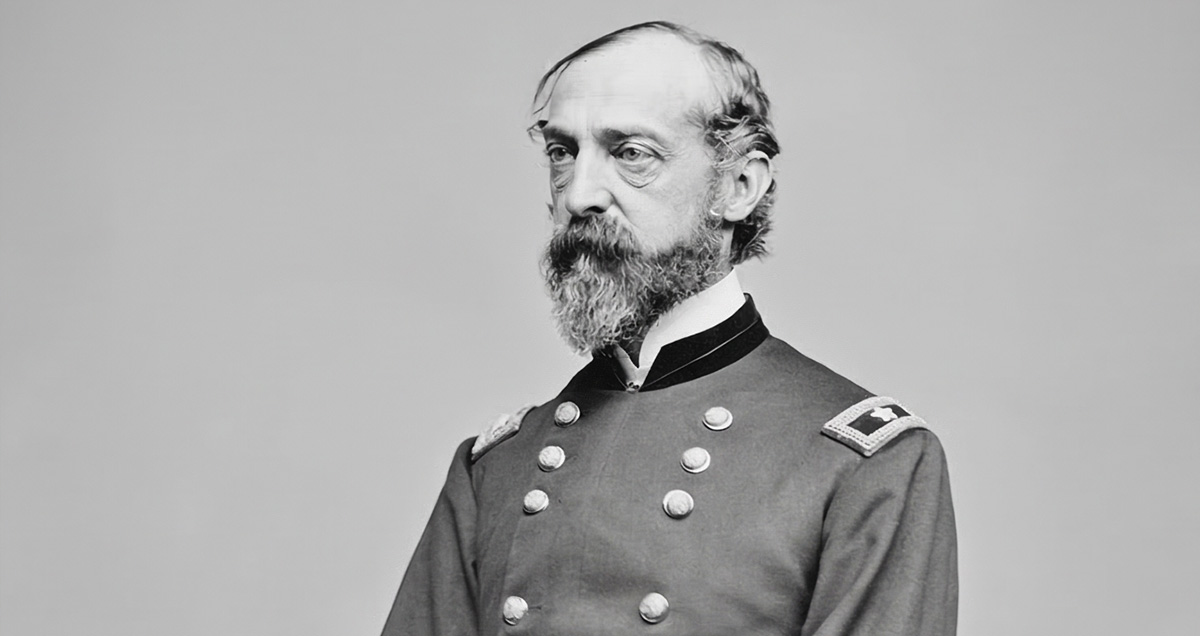
Upon closer inspection, Meade’s decision not to press home his advantage was an understandable one. He had only just inherited command of the Army of the Potomac and had spent three days fighting a battle for the survival of the Union, sustaining heavy casualties in the process. He had no reliable intelligence on how many men Lee still had at his disposal. Meade’s primary objective was to protect Washington and force Lee to retreat, and he had successfully done so.
Even had Meade counterattacked and destroyed the Army of Northern Virginia, there were several other Confederate armies on the field capable of offering sustained resistance. Only two months after Gettysburg, the Confederate Army of Tennessee defeated the Union Army of the Cumberland at Chickamauga in northern Georgia. Having rebelled against the United States, the Confederates expected little quarter and would have continued to fight until the bitter end.
Victory at Gettysburg may not have won the Civil War on its own, but it was a genuine turning point in the conflict as it enabled the Union to seize the initiative away from the Confederates. Grant and Sherman ensured that the Union would never let it go until final victory was achieved.