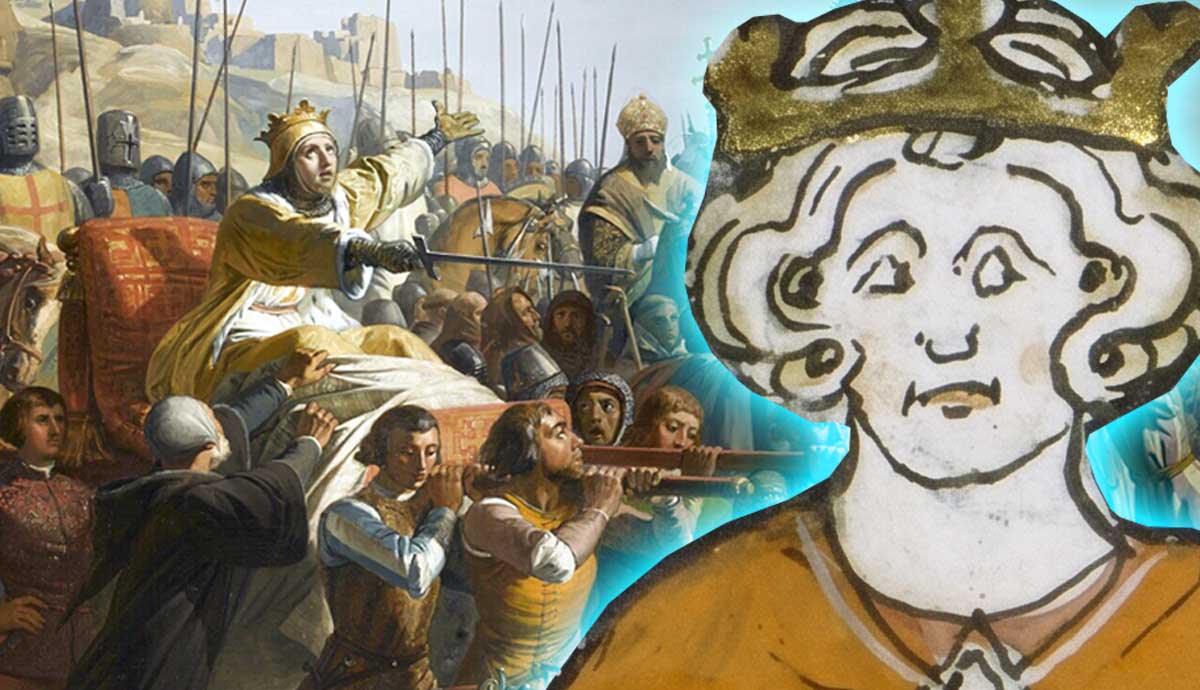

The culmination of the success of the First Crusade was the capture of the city of Jerusalem on July 15, 1099. After the conflict ended, the leaders of the First Crusade selected one among themselves to govern. Godfrey of Bouillon was chosen as Jerusalem’s first ruler but famously declined the title of king and refused to wear a crown in the city where Christ was king. Godfrey’s reputation for piety was matched by his heroic deeds, and his legendary strength became an important part of the history of the Crusades.
Godfrey of Bouillon Joins the First Crusade
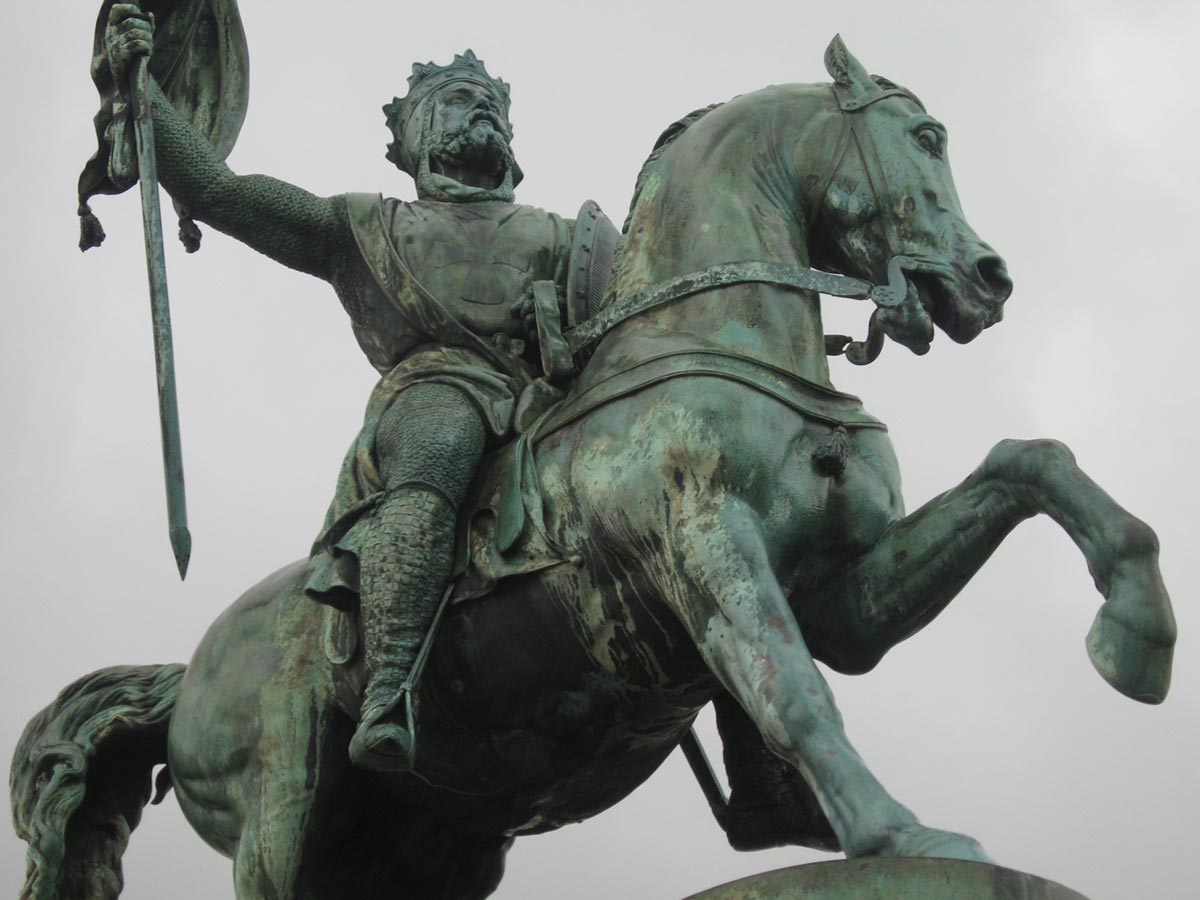
Godfrey was born around 1060 in Boulogne, in modern-day northern France, to Eustace II, Count of Boulogne, and Ida, sister of Duke Godfrey the Hunchback of Lower Lorraine. As the second eldest son, he was not destined to inherit his father’s estates but instead received a generous inheritance comprising the Duchy of Lorraine from his childless maternal uncle and namesake. This inheritance was contested by multiple parties, and this grueling and violent struggle to acquire the duchy may have prompted Godfrey to seek salvation for his soul.
The opportunity for redemption appeared in November 1095 when Pope Urban II preached the First Crusade. The Pope offered anyone who participated in this sacred military venture remission of their sins. The purpose of the expedition was to liberate Jerusalem from Muslim rule and to protect Christians in the East. It was a unique opportunity for Godfrey to employ his military skills in the service of God.
Godfrey set out for the Holy Land in August 1096 after raising funds by mortgaging portions of the Duchy of Lorraine. He was accompanied by his elder brother, Eustace III of Boulogne and his younger brother, Baldwin of Boulogne. Their combined retinue numbered into the tens of thousands, and Godfrey’s reputation for military skill and his tactical brilliance soon earned him the distinction of being one of the foremost leaders of the First Crusade.
The Superhuman Feats of Godfrey
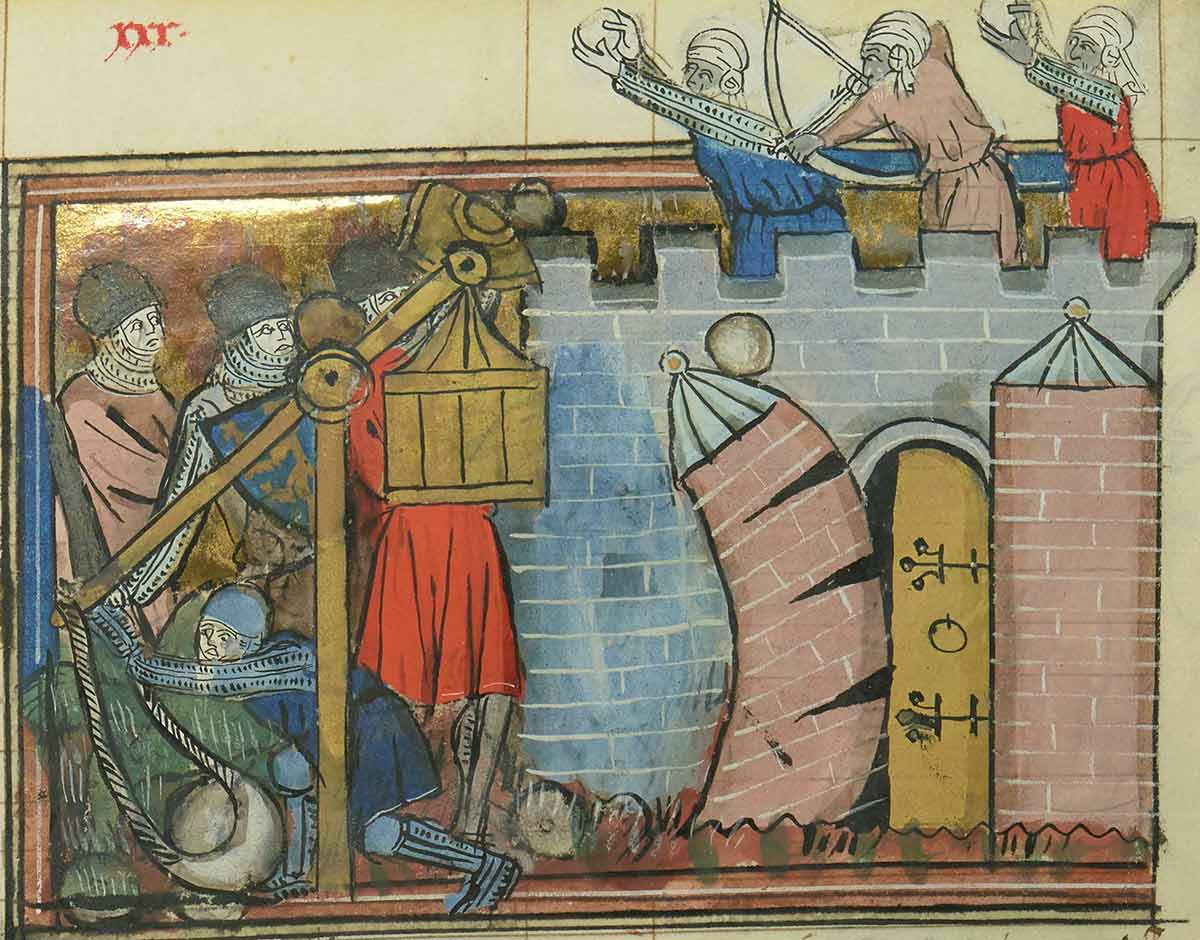
It was as a leader of the First Crusade that Godfrey earned a reputation for exceptional strength and bravery, although his contributions to early engagements such as the Siege of Nicaea were relatively modest. Several contemporary chroniclers, including Albert of Aachen, Guibert of Nogent and later writers such as William of Tyre, record Godfrey’s encounter with a bear following the Battle of Dorylaeum (July 1, 1097).
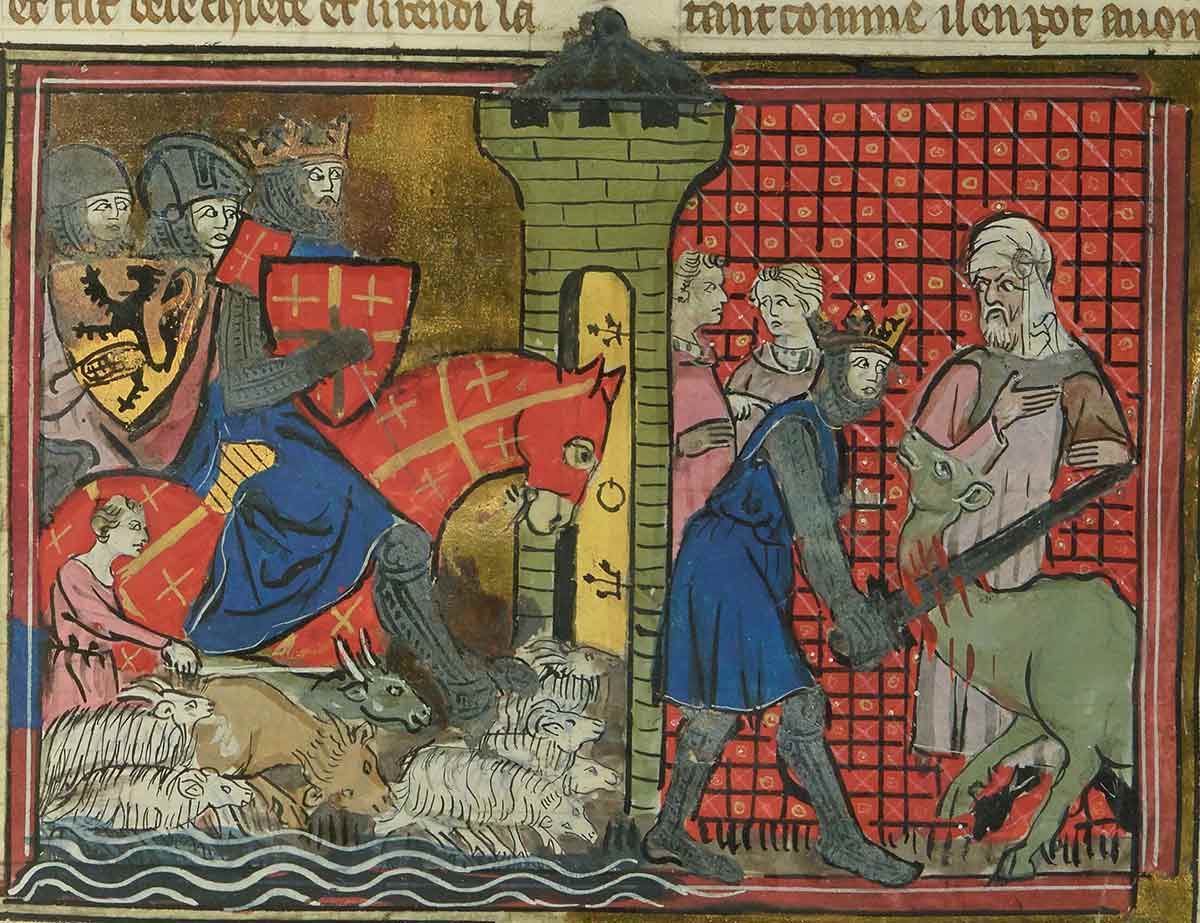
Godfrey was hunting in a nearby forest, he suddenly heard the cries of a poor crusader and witnessed the poor man being pursued by a bear. Thinking nothing of his own safety and ill-prepared for such an encounter, Godfrey came to the man’s rescue. The bear turned its attention to Godfrey and seriously injured his horse. Forced to fight on foot, Godfrey grappled with the creature before plunging his sword into the beast and slaying it. Godfrey’s absence from military engagements for several months following this alleged incident lends some veracity to the account.
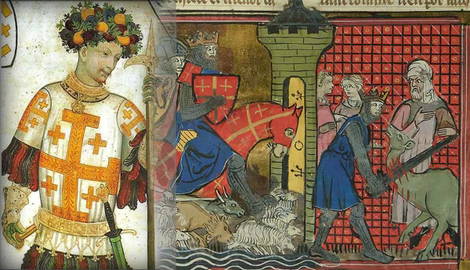
Stories of Godfrey’s prowess and bravery spread far and wide, and a reputation for exceptional strength and valor later caught the attention of several Muslim noblemen. Upon meeting Godfrey, they wished to testify to Godfrey’s strength with their own eyes. One of these men had brought with him several camels and asked Godfrey to demonstrate his strength by decapitating one of the animals. When Godfrey had accomplished this with ease, his audience believed his strength lay in his sword rather than in Godfrey himself. To prove their assumptions to be false, Godfrey took a sword from one of the Muslim men and performed the same feat on a different camel.
Regardless of the authenticity of this tale, this became central to Godfrey’s narrative and contributed to his reputation as a legendary warrior.
The Sword That Sliced an Enemy in Two
One particular incident which describes Godfrey’s exploits at the Siege of Antioch (October 1097–June 1098) is well attested by several chroniclers, including a contemporary chronicler, Robert the Monk. This early account suggests this story became part of the legend of Godfrey in the immediate aftermath of the success of the First Crusade.
The Siege of Antioch was long and grueling and saw the Crusaders demoralized by the lack of progress. Starvation was rampant, and once the animals had been eaten, Crusaders picked seeds they found in manure for sustenance. The situation was dire, but Godfrey renewed their courage with his legendary strength.
William of Tyre, writing in the later 12th century and using several earlier accounts including that of Robert the Monk, records that on one particular day, Godfrey had fought “valiantly through the entire engagement in his customary style.” Towards the end of the engagement, the enemy fled towards a bridge. Godfrey was in hot pursuit and decapitated many mailed knights with single blows. Godfrey pursued another knight and, as William of Tyre recounts (William of Tyre, Vol. I, p. 234):
“Although dressed in a coat of mail, he [Godfrey] divided him through the middle, so that the upper part of him from the navel upwards fell away to the ground, the remaining part was on the horse where he had been sitting.”
As told by William, the sight of the man whose lower body remained seated on the horse struck fear into the enemy as the horse galloped into the city. This deed “rendered him extraordinary to the whole army.”
Such illustrious feats of arms made Godfrey one of the most popular of the First Crusade leaders and suggested he would make an exceptional ruler in a kingdom that would be plagued by continual warfare.
Godfrey’s Piety and His Refusal to Wear a Crown
The capture of Jerusalem in July 1099 was bloody and brutal. Blood filled the streets as thousands were massacred. Following this tragic event, the Crusaders turned their attention to the administration of their newly acquired kingdom. It required strong military leadership and this new ruler must have the support and confidence of the other crusade leaders. As the election process began on July 22, 1099, several names were put forward among those who had distinguished themselves on the Crusade. The most popular candidates were Raymond of Toulouse and Godfrey of Bouillon.
Raymond was the wealthiest of the Crusade leaders but also the oldest. He was offered the crown but refused, citing piety as a reason for his refusal. The position was then offered to Godfrey, who accepted the role reluctantly, indicative of his humility. Perhaps in consideration of Raymond’s refusal, or out of his own piety, Godfrey refused to wear a crown. As William of Tyre tells us: “For he was content with, and showed reverence toward that crown of thorns which, in that same city, the Saviour of the human race, for our salvation, wore even to the passion of the cross.” Refusing to wear a crown where Christ had worn the Crown of Thorns earned Godfrey a reputation for exceptional piety. But Godfrey went further.
Godfrey refused to take the title of king, again in reverence to Christ, the true king of the Holy City. Instead, Godfrey took the title Advocatus Sancti Sepulchri, usually rendered Advocate or Defender of the Holy Sepulcher. This title indicated that Godfrey perceived himself as a protector rather than ruler of Jerusalem.
Establishing the Dynasty During Godfrey’s Brief and Brutal Reign
After many of the Crusaders returned home, Godfrey immediately set about securing his kingdom and his borders. He was precariously located, surrounded on all sides by hostile Muslim enemies who wanted nothing more than to see Jerusalem restored to Muslim control.
But some of the most significant threats Godfrey faced came from within. Not all the clergy agreed to a secular ruler governing Jerusalem. They would have preferred the kingdom to have been handed over to the Church and ruled by an ecclesiastic. Godfrey’s reign was most fiercely contested by Daimbert, the Archbishop of Pisa. Daimbert arrived in Jerusalem in December 1099 and served as papal legate. Following his election to the position of Patriarch of Jerusalem, he demanded that Godfrey relinquish the kingdom to him. Godfrey refused.
Godfrey would rule the kingdom for only 12 months, but in that short amount of time, he faced many challenges. He had been in office for only a month when he faced his first invasion threat from the Fatimids of Egypt. If the Fatimids had been successful, the victories acquired by the First Crusaders would have been completely lost. The Fatimids gathered at Ascalon, and Godfrey marched out of Jerusalem to meet them. He was joined by Raymond of Toulouse, who had hesitated in offering his support, perhaps still annoyed that Godfrey accepted the position he had refused.
On August 12, 1099, the True Cross was raised before the Christians as they engaged the Fatimids in battle and were victorious at the Battle of Ascalon. Disagreements between Godfrey and Raymond prevented a greater victory, which would have been the taking of the city of Ascalon itself. Raymond hindered the occupation of the port of Arsuf. Initially besieging the city, he withdrew his troops when he learned of Godfrey’s approach. Godfrey’s numbers were insufficient, and Arsuf remained in Muslim hands.
The Death of a Hero
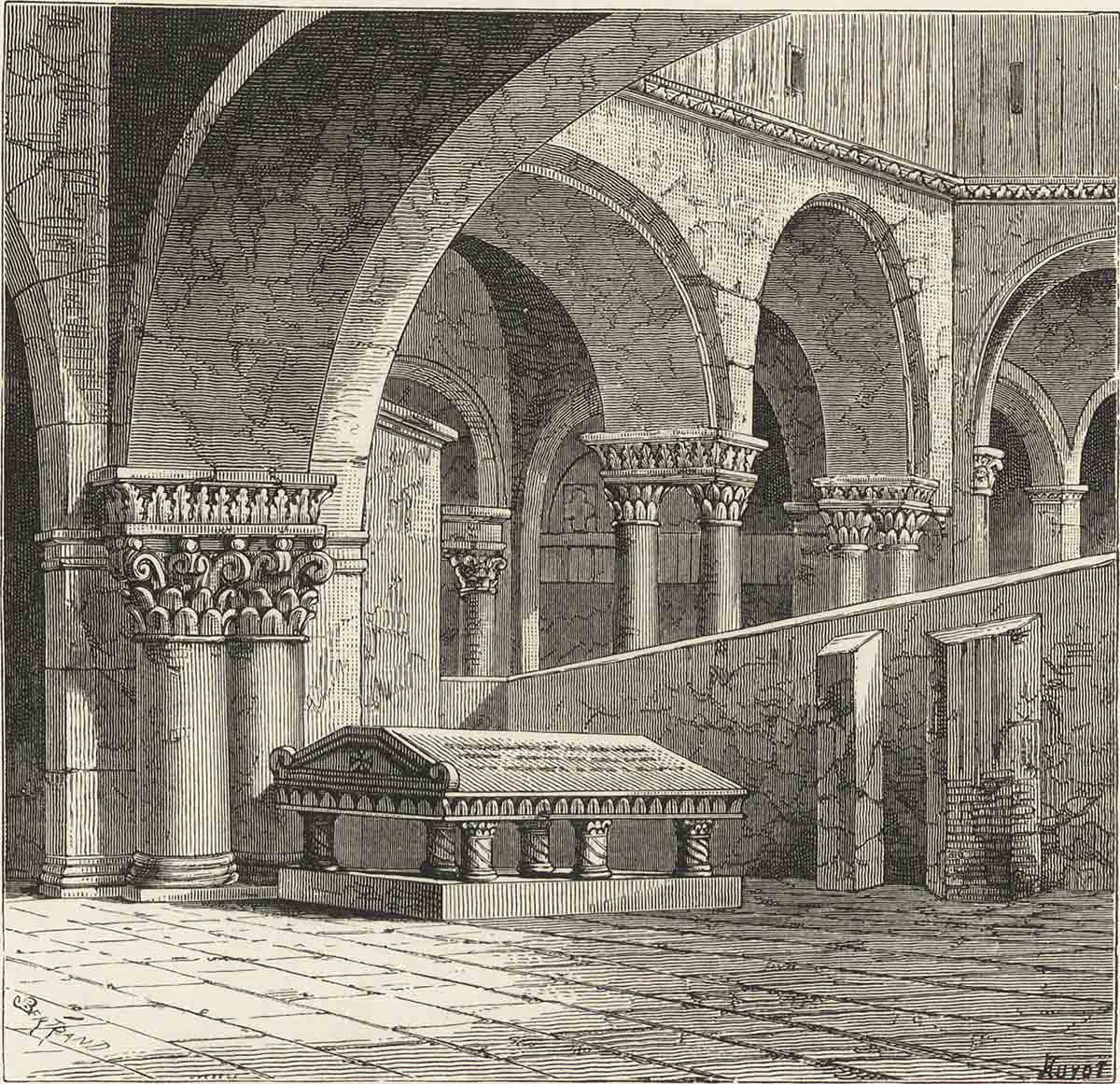
Godfrey of Bouillon had little time to consolidate his position as ruler of Jerusalem. He died suddenly and unexpectedly on July 18th 1100, almost 12 months to the day of his assuming the role of Advocatus. Godfrey was laid to rest in the Church of the Holy Sepulcher. The original tomb was destroyed in the 19th century.
Godfrey left the world a bachelor and had no children. Consequently, his position passed to his younger brother, Baldwin of Boulogne, ruler of the nearby city of Edessa. Baldwin evidently did not share Godfrey’s convictions and had no problem in taking the title of king of Jerusalem.
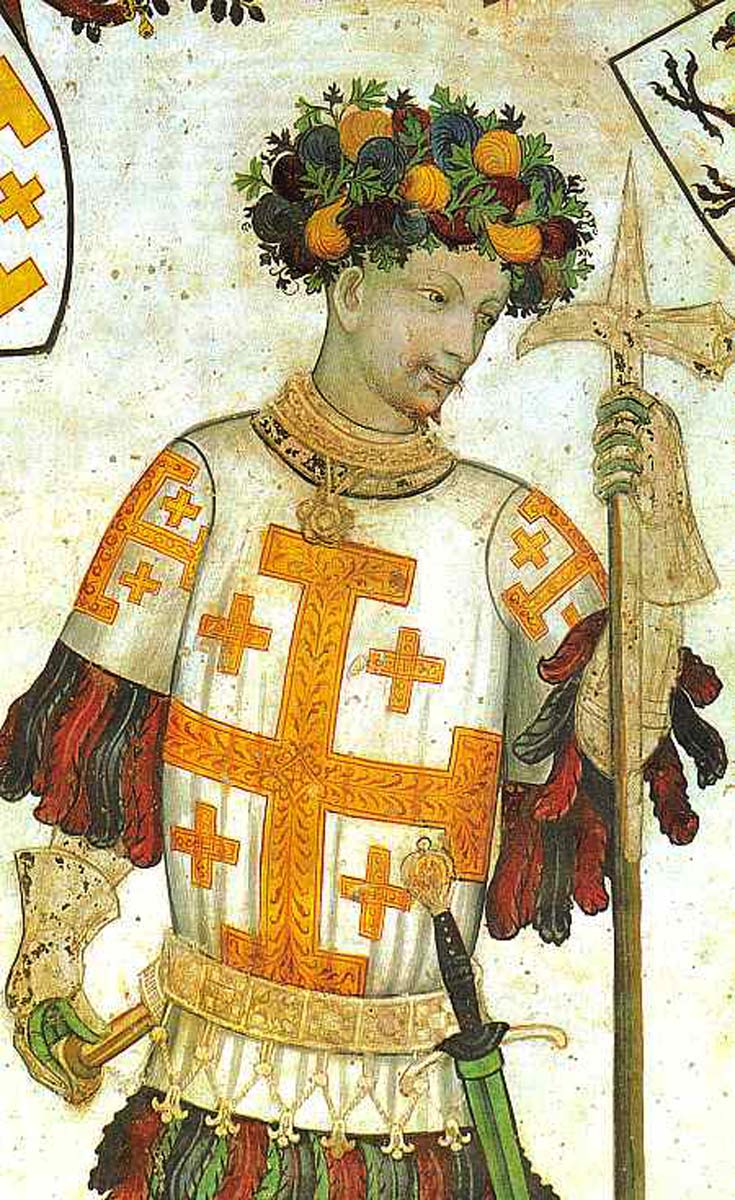
Godfrey’s exceptional valor and strength were recognized in the centuries that followed. His name became synonymous with the Chanson de Geste, the Crusade Cycle, which incorporated stories of valiant First Crusaders. In this cycle, Godfrey was the ultimate hero. He embodied all the attributes of chivalry, a principle that was developing in the years following his death. In the 14th century, he was included as one of the Nine Worthies, a canonical group of warriors who epitomized the ideals of chivalry.
Though his rule was brief, Godfrey’s reputation proved enduring. He left a shining example for his successors to follow. In the centuries that followed, memories of the historical Godfrey faded, but the legend of the crusader hero only grew stronger.
Source
- William of Tyre. (1943). A history of deeds done beyond the sea (E. A. Babcock & A. C. Krey, Eds. & Trans., Vols. 1–2). New York, NY: Columbia University Press.