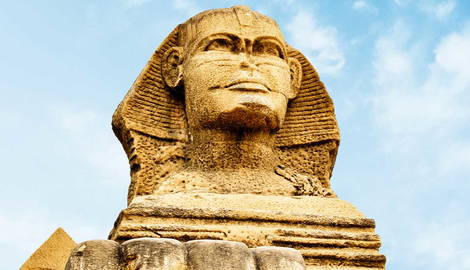
The Great Sphinx of Giza appears to depict a human head atop a lion’s body. This statue may represent important symbols of the power and strength of the Egyptian pharaohs, perhaps also depicting the Pharaoh Khafre (c. 2558-2532 BC). The Sphinx is positioned to guard the famous Giza pyramids. Although it is one of the largest ancient monuments created, the origins and purpose of the Sphinx remain a mystery to archaeologists and Egyptologists alike. Read on to learn more about one of the world’s oldest statues.
How Old Is the Great Sphinx of Giza?
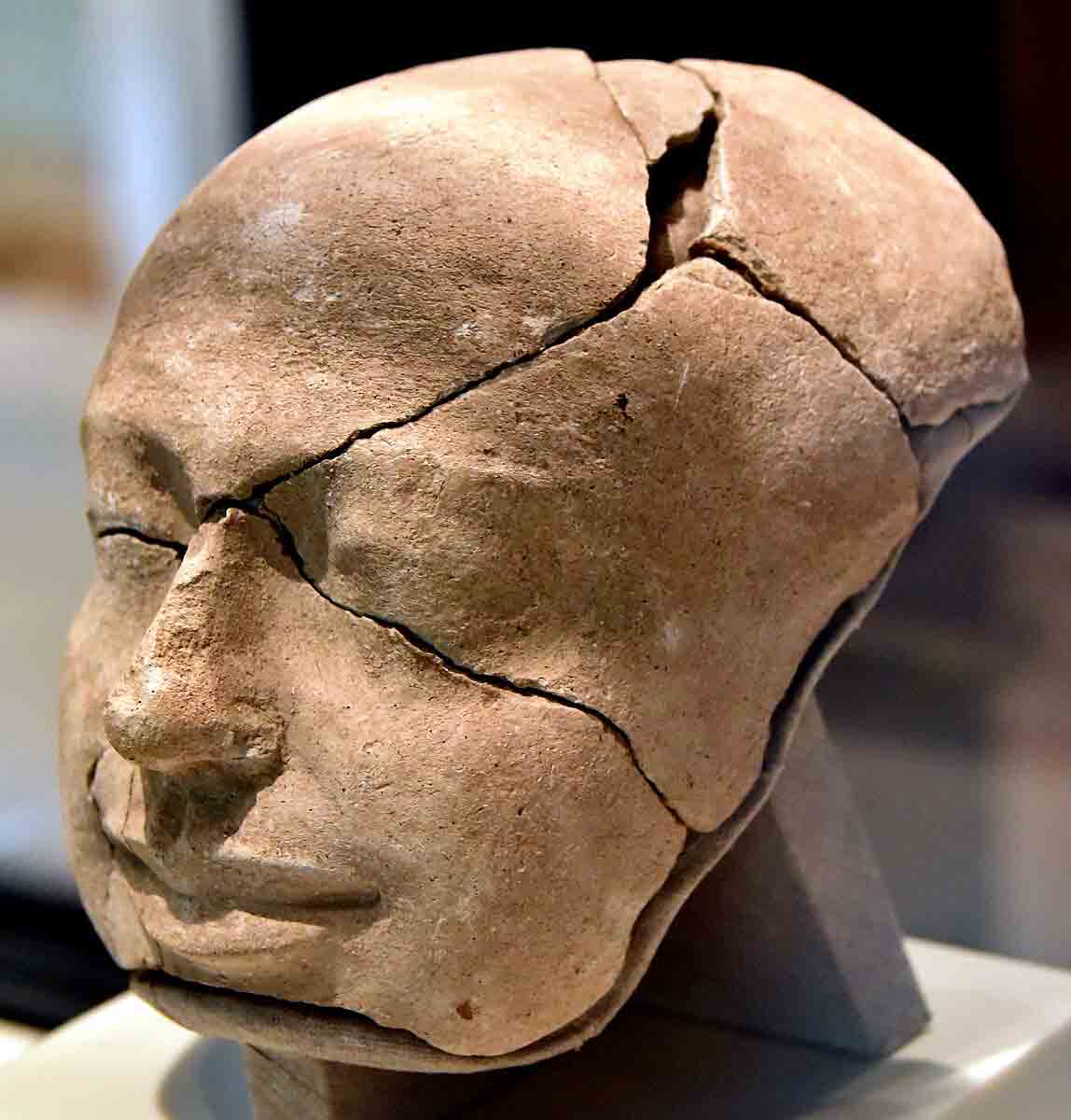
The Old Kingdom period spanned the third and sixth dynasties, roughly 2686-2181 BC. Historians consider it a golden period for ancient Egypt. The era witnessed intense creativity, including the construction of some of the great stone monuments still standing today.
The first Egyptian pyramid was built during the reign of Pharaoh Djoser of the third dynasty, around 2600 BC. After securing Egypt’s borders through military campaigns, Djoser ordered the construction of what became known as the Step Pyramid, which served as the model for future pyramids.
Under the relative stability of the fourth dynasty, pyramid building became widespread, beginning under its first king, Sneferu. These newer structures were built with smooth triangular sides. Sneferu’s son, Khufu, built the famous Great Pyramid at Giza, the largest building in Ancient History. Historians generally view the fourth dynasty as the height of Egyptian power in the Old Kingdom.
Following Khufu came the reign of Khafre. Under Khafre’s rule, another grand pyramid was built, almost as tall as the Great Pyramid. It is generally believed that the Great Sphinx was also erected during Pharaoh Khafre’s reign, making it around 4,500 years old. Kahfre’s son, Menkaure, continued a reign of building projects.
Who Built the Great Sphinx of Giza?
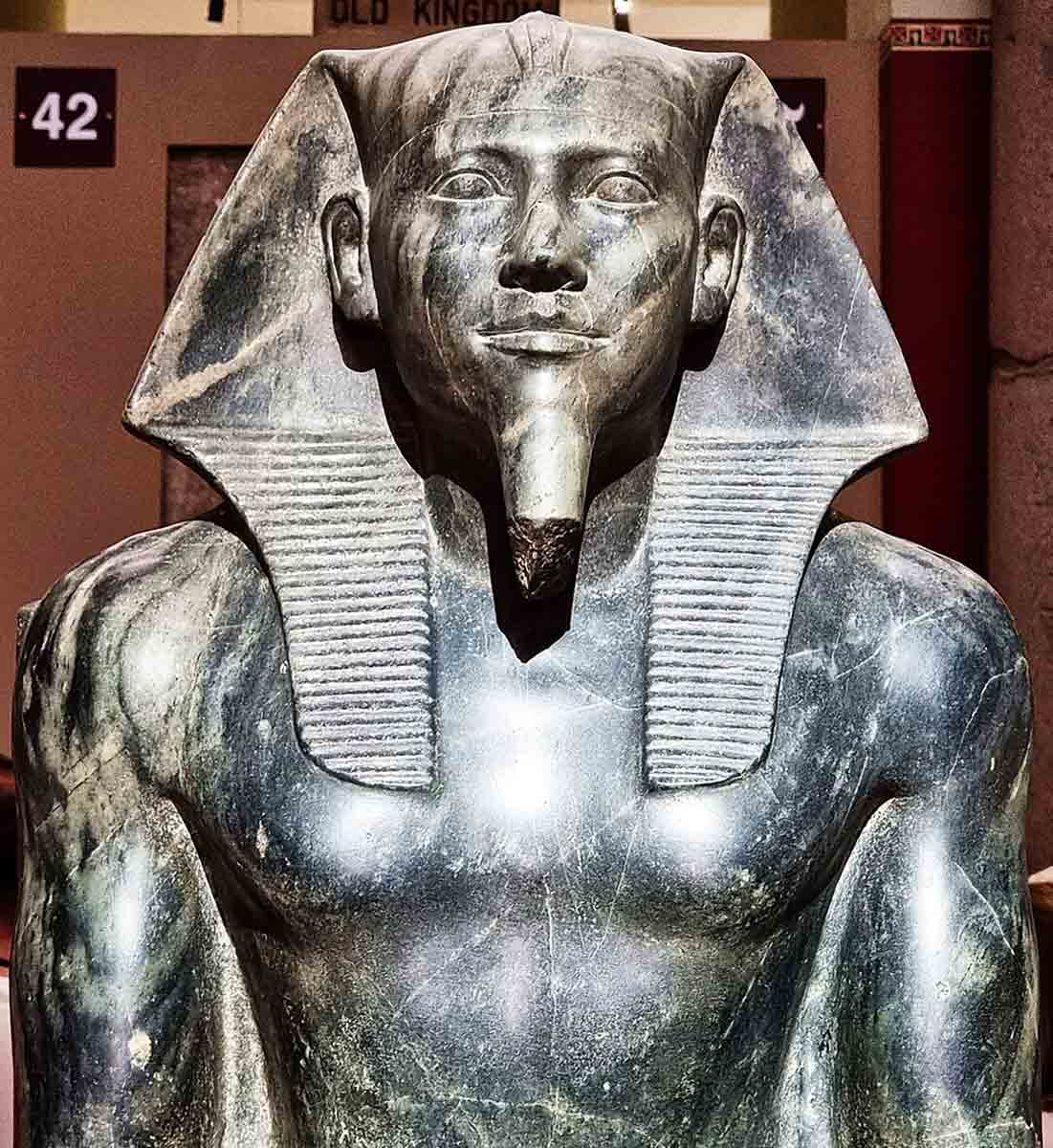
Khafre ruled Egypt from around 2558-2532 BC. He took power following the death of his brother, Djedefre. Although the circumstances of Djedefre’s death are unclear, some scholars speculate that Khafre violently killed his older sibling.
The name Khafre means “appearing like Ra,” the sun god of Egypt. Like many pharaohs, Khafre had several wives and many children, including Menkaure, who succeeded him to the throne.
The tombs of nobles reveal evidence that Egypt prospered during Khafre’s reign. Indeed, Egyptian artifacts found in Northern Africa and Western Asia suggest that Egypt under Khafre was active in trade and diplomacy. There were no known military campaigns at the time, and Egypt appears to have enjoyed relative peace, allowing large-scale building projects to take place.
Although Khafre’s reign is known for political stability, ancient Greek historians portrayed the Old Kingdom pharaoh as ruthless. There are few contemporary sources, but later writings by Manetho, Herodotus, and Diodorus claim Khafre was a cruel tyrant. However, these later accounts may be somewhat inaccurate. Whatever the case, Khafre’s reign was full of grand architectural achievements.
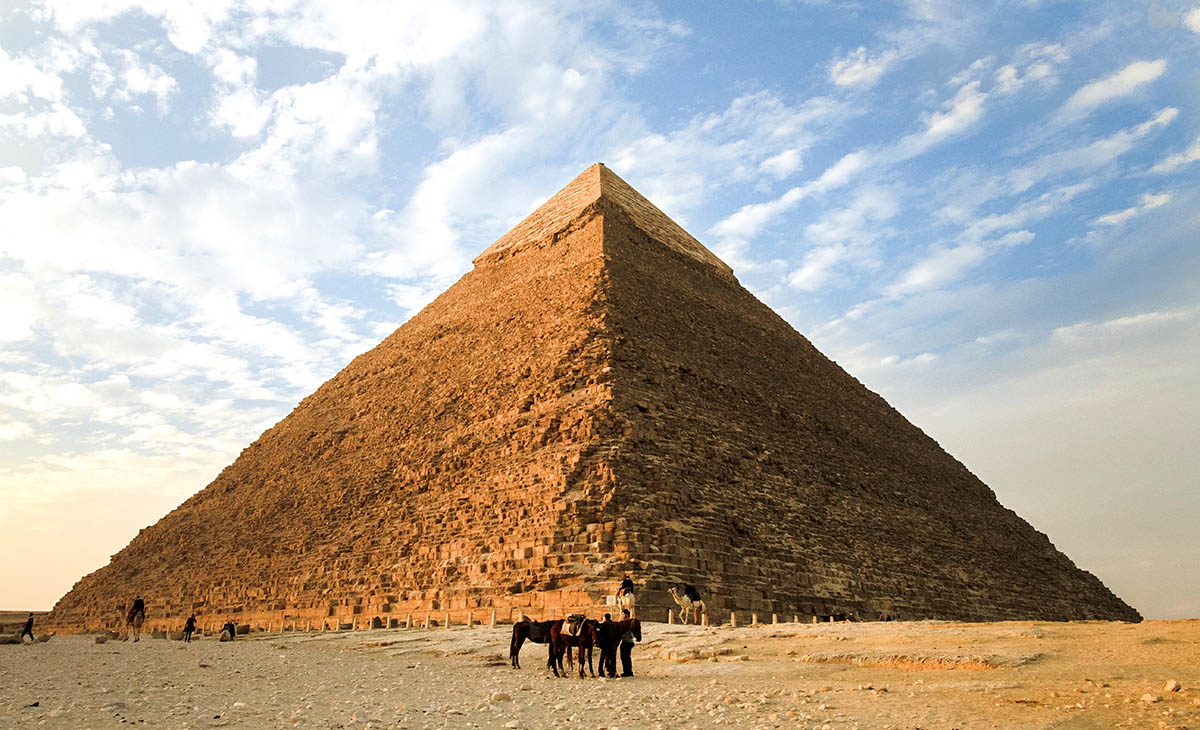
Besides the Great Sphinx, Khafre’s pyramid is his most notable achievement. This construction was unusual in that the pyramid was also linked to a causeway, a mortuary temple, and the Sphinx. Besides Khafre’s tomb in the pyramid, these other structures glorified Khafre’s power and divinity.
One feature that makes Khafre’s pyramid even more unique is that part of the original limestone casing still covers its top. During the Old Kingdom, Khafre’s whole pyramid was covered in bright limestone. This gave the object a smooth, polished appearance.
What Is the Great Sphinx of Giza?
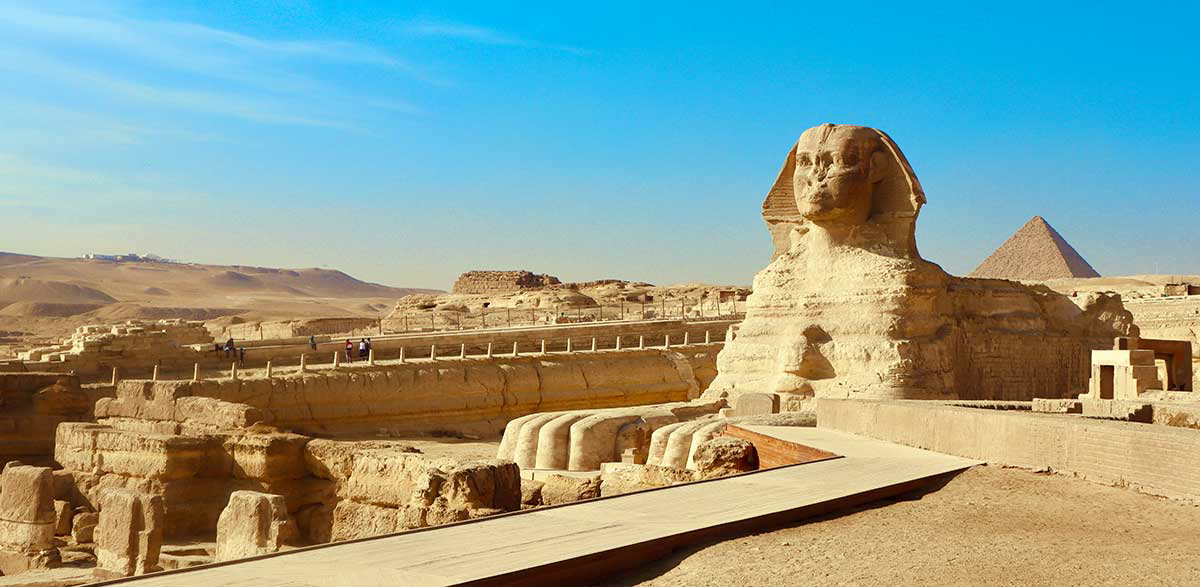
Despite the Sphinx’s popularity, the limestone structure remains an enigma. Most mainstream Egyptologists believe its face was modeled on that of Pharaoh Khafre.
The problem is that no direct historical text or other concrete artifacts exist from the time of construction. The only documentation about the Great Sphinx of Giza came at a much later period. In fact, the Sphinx was likely still under development at the time of Khafre’s death.
More direct evidence dates back to the New Kingdom. Pharaoh Thutmose IV built the Dream Stele by the Sphinx’s paws around 1401 BC. The Stele describes a dream Thutmose had about seizing the throne of Egypt. Most importantly, the inscription on the Stele links the Sphinx to Pharaoh Khafre.
The direct connection between the Sphinx and the Khafre pyramid is another indication of the Old Kingdom pharaoh’s involvement. Additionally, archaeologists discovered that the limestone used for the bedrock was the same for both the Sphinx and the Khafre pyramid.
Unfortunately, as with many ancient buildings, robbers looted Khafre’s tomb of most artifacts. However, archaeologists believe there were once openings in the pyramid walls that would have housed sphinx-like statues of the king. There is no indication that any earlier pharaohs constructed the Great Sphinx.
Despite major erosion, the Sphinx still depicts a pharaoh’s face. A famous statue of Khafre has features similar to those of the Sphinx. Furthermore, a lion’s body with a pharaoh’s head facing the powerful sun represented a divine solar connection. Khafre’s reign emphasized a solar relation, making him a logical candidate to erect the statue.
Where Is the Great Sphinx of Giza Located & What Is Its Size?
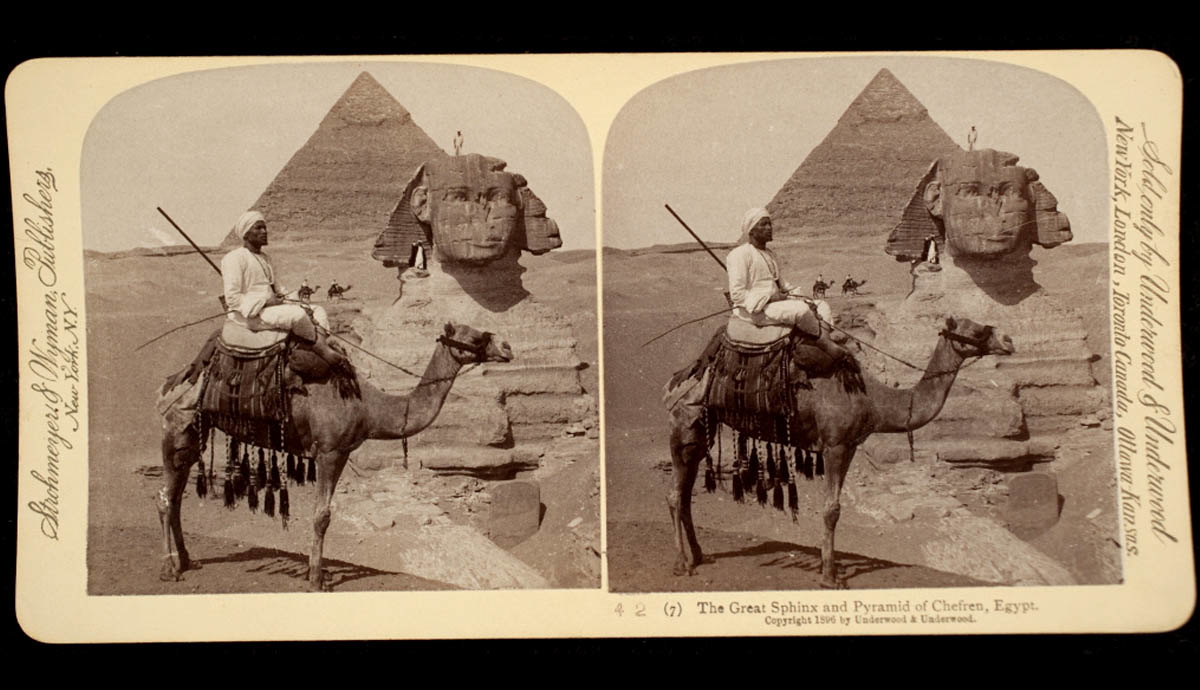
Unlike the ancient pyramids, contemporary research claims the Great Sphinx of Giza’s foundation was formed by natural elements. In other words, the ancient Egyptians carved out the figure of a lion with a pharaoh’s head on an already established bedrock ridge, sculpted over time by wind.
The Great Sphinx of Giza is located on the west bank of the Nile, close to central modern Cairo. The structure itself was carved out of limestone. The Sphinx measures 240 feet long and 66 feet high, making it the largest sculpture in the world.
Researchers believe the Sphinx originally resonated with vibrant painted colors. As late as the Roman period, Pliny the Elder described the statue as painted a bright red. This contrasted with the white-painted stones of the nearby Great Pyramids.
Thousands of workers built the Great Sphinx. Earlier theories suggested that slaves provided most of the labor for construction. However, it is now estimated that much of the workforce comprised professional skilled craftsmen.
The workers’ families also relocated to the construction site, just as they did for the pyramids. They lived in a 17-acre temporary city that supplied food and materials.
The Sphinx has outlasted many empires and civilizations. Most of the decay over the centuries was due to natural forces, such as wind and rain, which removed parts of the sculpture and rock.
However, humans removed the statue’s nose. There are numerous legends about what caused the Sphinx to lose its nose. One theory claims that French soldiers under Napoleon Bonaparte shot off the nose with artillery in the late 1700s. According to another story, Muslim factions defaced the face in the late 1300s to prevent local farmers from worshiping the Great Sphinx.
Why Was the Great Sphinx of Giza Made?
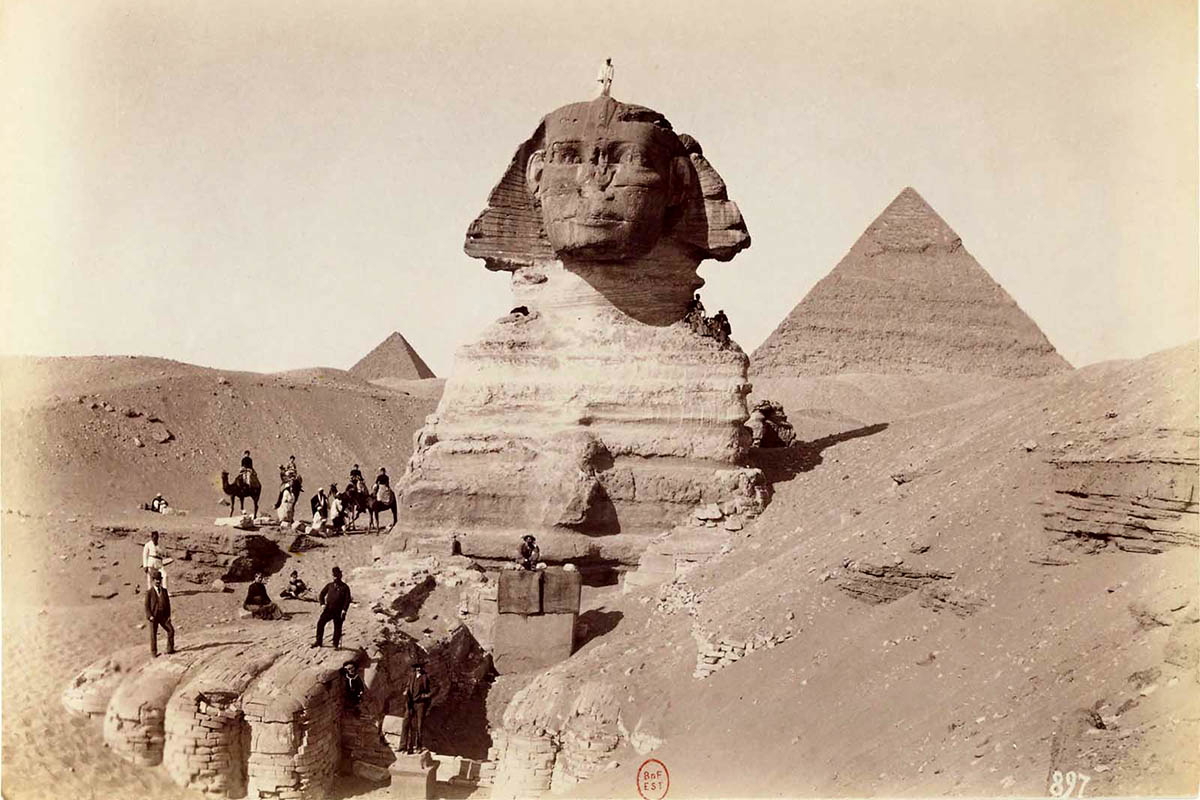
The exact reason Pharaoh Khafre built the Sphinx may never be known. For the ancient Egyptians, it likely symbolized a royal protector. Sphinx-style objects were often found near temple entrances and royal burial sites.
Another reason may relate to the summer equinox. The Great Sphinx lines up with the Great Pyramid of Khufu and Khafre’s pyramid. This position highlights when the sun is at the highest point in the sky. It is an indication of a connection with the Egyptian supreme sun god Ra.
Carved in the likeness of Khafre’s image, the Great Sphinx was built to portray the immense power and strength of the king. However, at the time, there is no evidence of a cult of priests or priestesses worshiping the statue. On the other hand, during the New Kingdom, about 1,000 years later, the Great Sphinx did attain greater spiritual importance.
A different Egyptian god dedicated to the rising sun also came to be linked with the Great Sphinx and the power of the pharaohs. The deity was referred to as Horemakhet (Horus of the Horizon). Again, evidence for these connections came later, during the New Kingdom period.
Built out of rock, workers constructed the Great Sphinx to last. Although many monuments have crumbled, the Sphinx remains intact after thousands of years. The hot, arid climate helps to preserve the structure. Still, the Sphinx survived earthquakes, windstorms, and flash floods in the past. Today, new challenges include pollution, climate change, and issues with underground sewage.
The Great Sphinx of Giza has remained a subject of myth and mystery for thousands of years. Long after it was built, the ancient Greeks adopted it into their own mythology. In the Greek story, the Sphinx guarded the entrance to the city of Thebes. Anyone unable to solve the mystery of the Sphinx could not pass through and lost their life. Today, the Sphinx remains an object of great historical importance and wonder for both visitors and historians.