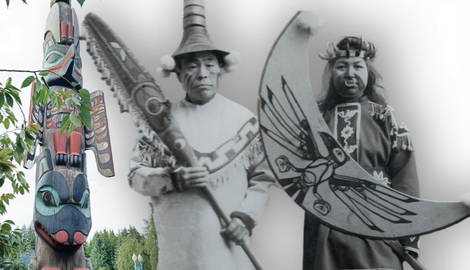

Over the course of its history, Alaska has been Russian and American. It has seen empires come and go, languages and cultures evolve. But one constant has always remained. At their height, the indigenous Tlingit people occupied territory from Yakutat in Southeast Alaska, through coastal British Columbia and the Yukon. Having created one of the most developed hunter-gatherer societies in history, today, more than 22,000 Tlingit people still call Alaska home.
Lingit Aani: Where the Land Meets the Sea

Translating, quite literally, as “Tlingit land,” the territory occupied by the Tlingit people for millennia is known, in their native language, as “Lingit Aani.” Historically, this term has been used to cover all Tlingit land throughout the Pacific Northwest, coastal British Columbia, and Southeast Alaska. Today, the vast majority of Tlingit people reside in Alaska, along a coastal strip from Yakutat, around 175 miles north of Juneau, to the southern tip of the Alaska Panhandle around Ketchikan. Outside of Alaska, the remaining Tlingit people live in the Canadian provinces of British Columbia and the Yukon territory.
How the Pacific Ocean Provided a Reliable Food Source
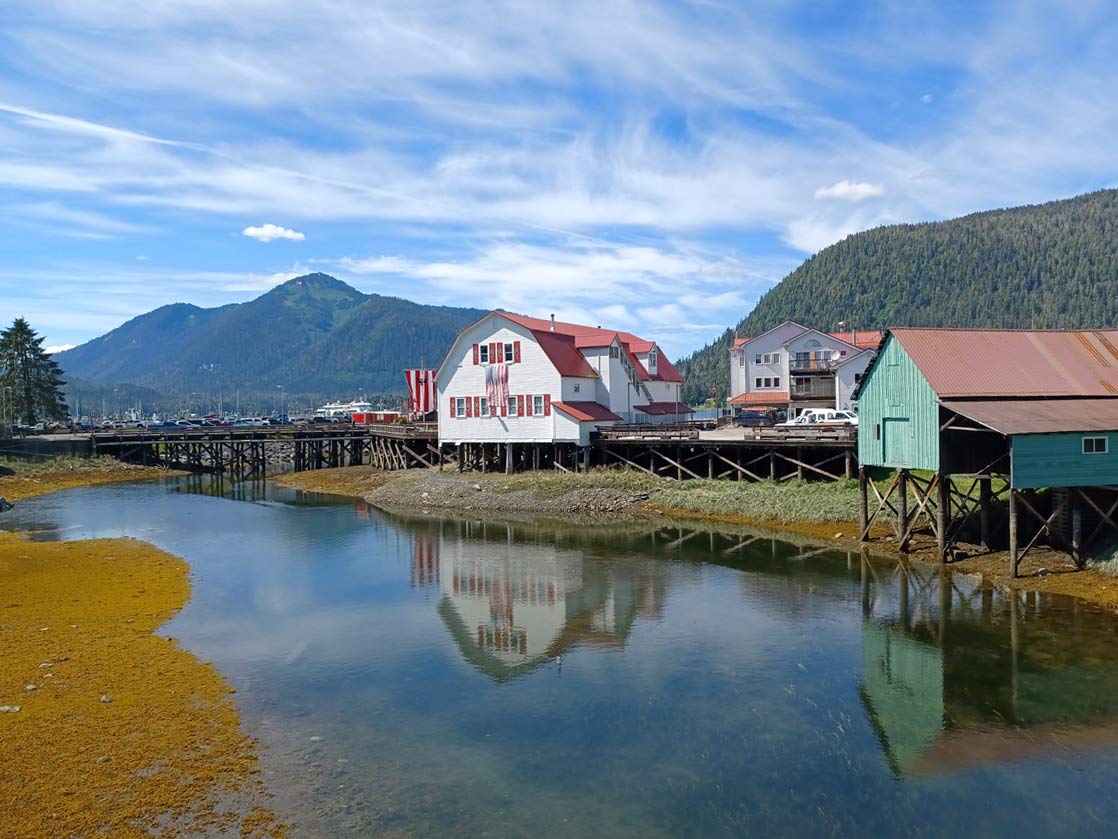
Lingit, in the Tlingit language, simply means “people of the tides.” Those tides are precisely what the Tlingit people relied upon for a constant source of sustenance. Modern Alaska is renowned for its salmon industry, but long before the concept of canning and exporting fish was invented, Southeast Alaska’s indigenous people were harvesting the fish in abundance. When salmon numbers dwindled through winter, the Pacific Ocean remained the Tlingit’s main provider, delivering a constant supply of halibut and shellfish.
The ocean didn’t provide food alone. Lingit Aani is home to otters, seals, and sea lions, and the Tlingit people made good use of all that was available to them. The skin of sea mammals provided a natural material for making clothes, while fish oil was put to use for medicinal purposes.
It follows that, throughout Tlingit history, the majority of their largest settlements were built along the shores of the Pacific. Food and resources aside, harsh geography made traversing the Alaskan interior extremely difficult. Coastal settlements, however, were easily reached by canoes, built from the cedar and spruce wood forests along the Pacific shore. To this day, the vast majority of settlements in the Alaskan Panhandle aren’t connected by road; the only links are provided by sea, and more recently, air.
The Impact of Glacial Retreat on Tlingit Migration Paths
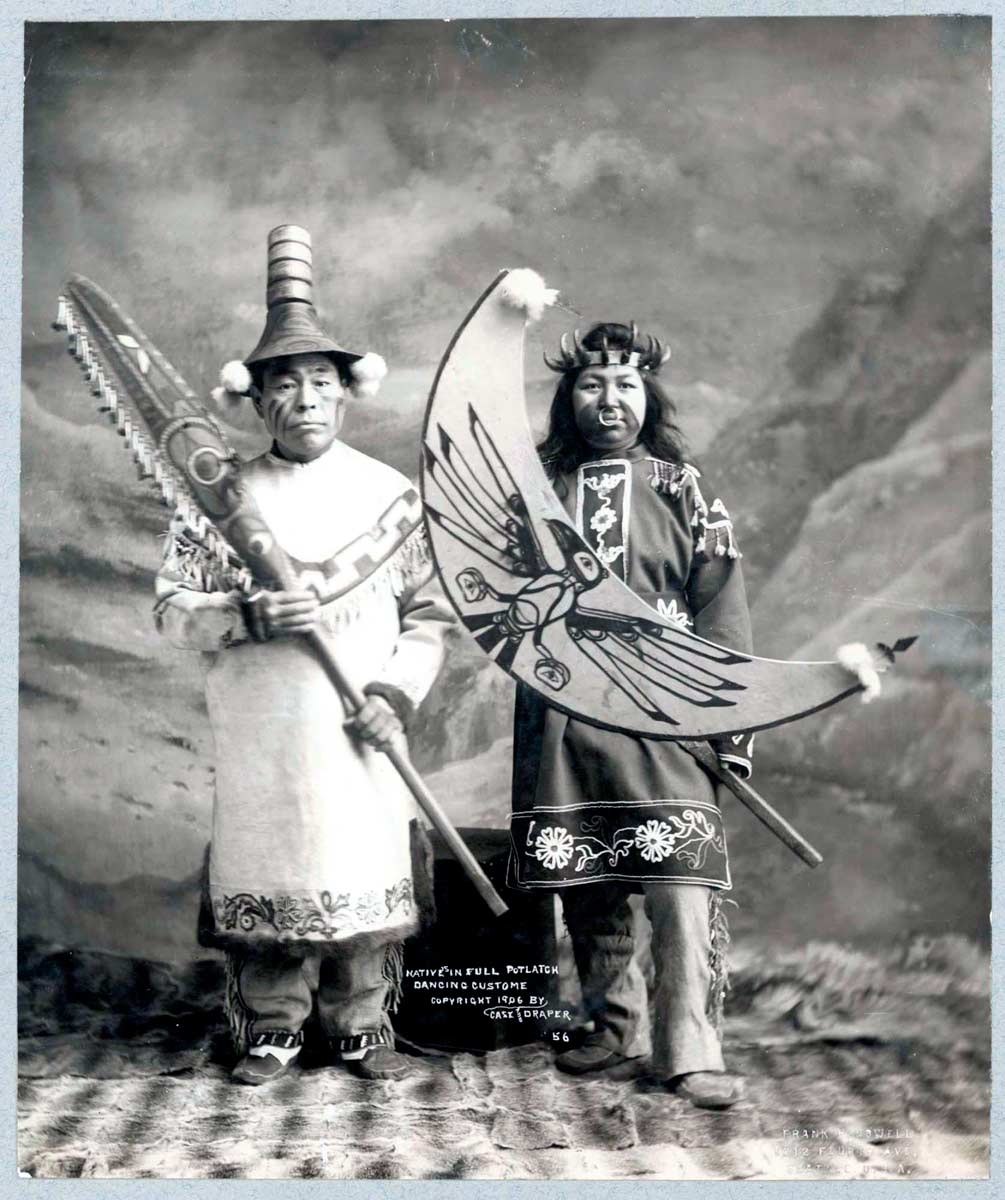
In a world where climate change and the shrinking of polar ice caps make global headlines and dominate political debate, it is unusual to consider there being a positive side to global warming.
For the Tlingit people, though, Alaska’s retreating glaciers have provided new opportunities. As glaciers have retreated inland, new habitable land along the Pacific coast has emerged. In addition, the creation of glacial freshwater lakes provides an additional food source.
The impact of glacial retreat on the Tlingit people of Southeast Alaska is, however, multifaceted. For millennia, runoff from glaciers has provided freshwater for drinking and, while less of a problem in the modern age, the decline of this water source once posed a significant challenge for Southeast Alaska’s indigenous population.
The most pressing issue posed by glacial retreat, though, is rising sea levels. As early as 1750, in the aftermath of the Little Ice Age, Tlingit people resident around Glacier Bay were forced to move and rebuild their entire settlement. Today, flood risk poses an undeniable threat, particularly in the north of the Panhandle.
Understanding the Raven and Eagle Moieties
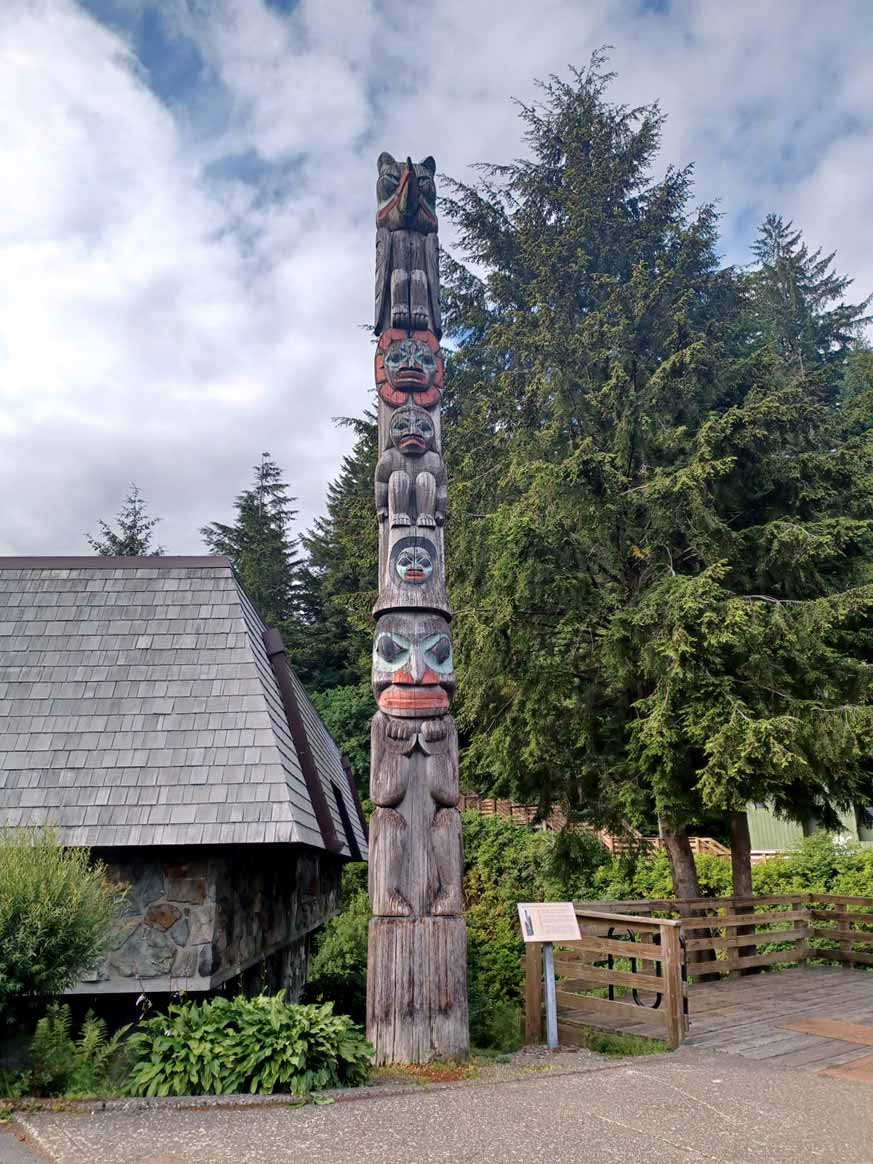
Tlingit clan structure is formed by a subdivision into two moieties. All Tlingit people fall into one of two groups: the Raven and the Eagle. Known as naa in Tlingit, the Raven and the Eagle are two houses that, in Tlingit culture, rely upon each other for their existence.
Whereas family lineages more commonly flow through male succession, the Raven and the Eagle are matriarchal. A child born to a Raven mother is themselves a Raven; likewise, a child born to an Eagle mother is born an Eagle.
In their simplest forms, the Raven symbolises creation. Tales of the Raven passed down through generations depict the Raven as an intelligent, cunning spirit who stole the sun, moon, and stars from a chief to bring light to the world.
The Eagle, on the other hand, is a more grounded figure. Depicted as a symbol of strength and unity, the Eagle is deeply rooted in traditional Tlingit ways and serves to keep order and maintain stability.
Central to the Tlingit clan system is the unity of these two naa. Unlike in Western culture, where marrying within one’s social group has long underpinned societal norms, in Tlingit culture, an Eagle must marry a Raven and vice versa. But it is not only in marriage that the Raven and the Eagle come together. In all aspects of Tlingit culture, the two are intertwined. All significant events within each moiety are marked by a Potlatch ceremony to which the other moiety is not only invited, but an integral part of. At Potlatches hosted by Eagles, it is the Ravens who serve the guests, perform acts and dances, and have gifts bestowed upon them.
Why Tlingit Totem Poles Are More Than Just Art
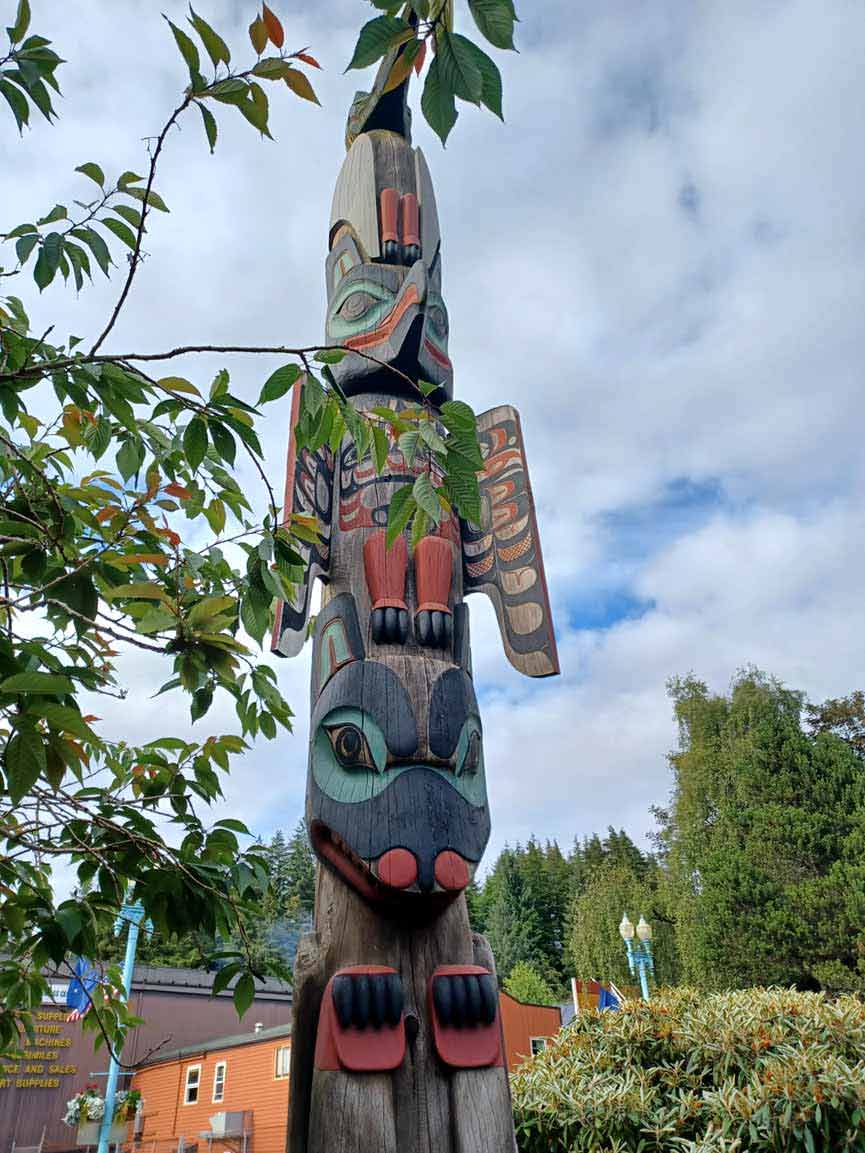
Totem poles are a central aspect of indigenous culture across the Northwest United States and Western Canada. While not exclusively found in Tlingit culture (the term “totem” has been derived from the language of the Anishinaabe tribe, who resided in the Great Lakes region), they play a key role in Tlingit history.
When European settlers first arrived in Lingit Aani, they believed that Totems were objects of worship; the reality is much more complex. Traditionally, Tlingit Totems were erected to maintain clan records. Although occasionally, Totems served as memorials to clan leaders, their main purpose was to show a clan’s rights and achievements, and more importantly, to identify their kinship. In other words, to denote whether the clan was of the Raven or the Eagle.
Totems were originally constructed of cedar, with the Western red cedar being widespread throughout Southeast Alaska. Cedar, as a softwood, is not particularly long-lasting, particularly in the harsh Alaskan climate, meaning few early Totems survive to this day. Engravings were historically carved with items provided by the land, such as stones and beaver teeth, which proved a laborious process, although modern Totems are carved with metal tools.
The Impact of Russian and American Settlers on the Tlingit
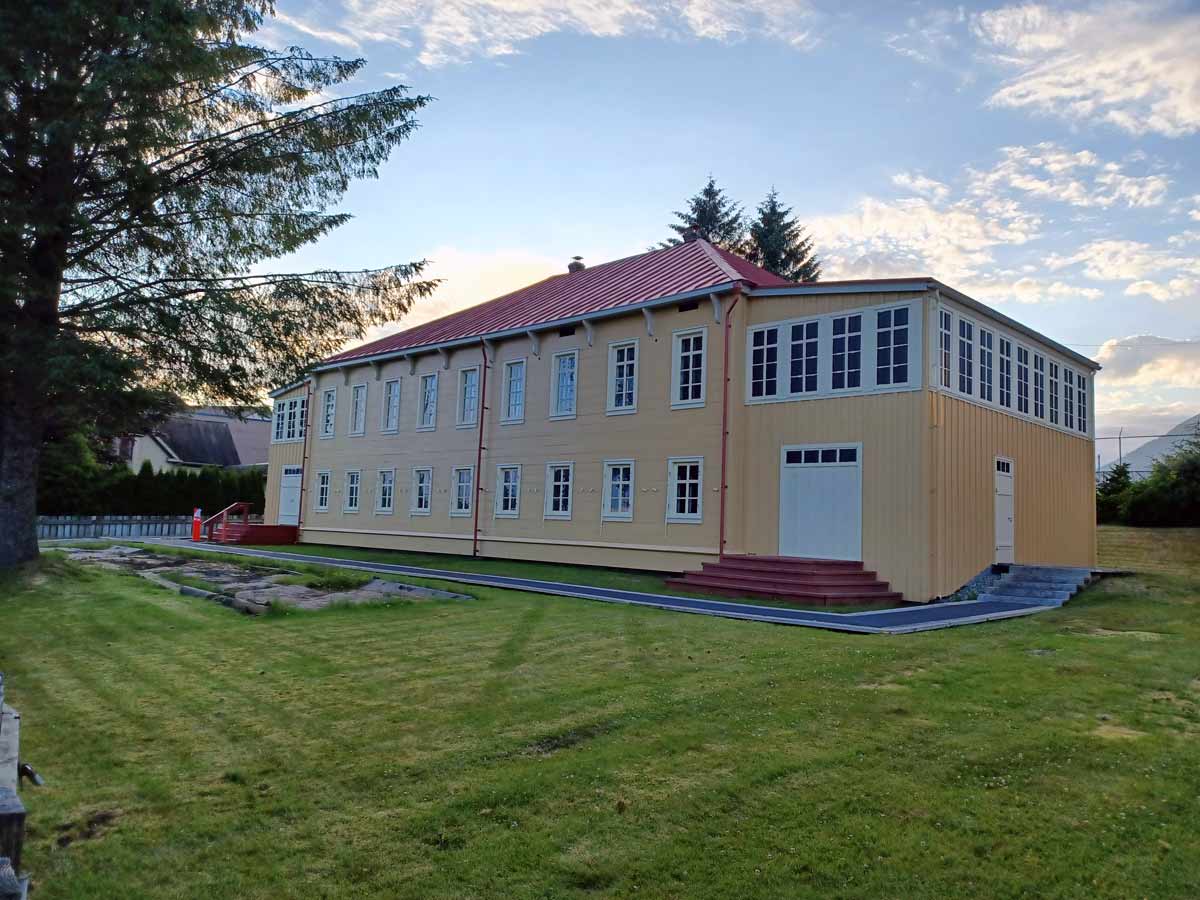
For the Tlingit people of Southeast Alaska, the first contact with outsiders, referred to simply as the “white man,” came with the arrival of early European explorers. Unsurprisingly, their initial reactions were hostile, but by the time of the arrival of Russian fur traders in the late 18th century, Southeast Alaska’s indigenous population had become more used to visitors and initially welcomed the arrival of visitors from across the Bering Strait.
However, on July 7, 1799, a task force of 100 Russians under the command of Alexander Baranov, then in charge of the Russian-American Company, landed in Sitka with a view to setting up a trading post and expanding their American colony. The native Tlingit were quick to react, attacking the Russian post on several occasions, albeit unsuccessfully. But, with Baranov having been called away to the capital (at that time, Kodiak), a further Tlingit attack in June 1802 proved far more fruitful. The Russians fled, but the attack marked the beginning of the Russo-Tlingit War.
Matters came to a head on October 1, 1804, when the Russians returned to Sitka. This time, Baranov’s force was 550-strong, complete with arms. While they outnumbered the Russians by 200 men, the natives couldn’t keep the invaders at bay. The ensuing Battle of Sitka lasted four days before the Tlingit retreated, leaving Sitka to become New Archangel, and the capital of Russian America, which it would remain until the US purchase of Alaska in 1867.
This sale marked the start of an even worse period for the native Tlingit people. Alaska was placed under the control of the US Army, which treated the indigenous population with contempt. Settlements at Kake, Wrangell, and Angoon were destroyed by American bombardment, acts which the US government didn’t formally apologize for until 2024.
The Enduring Legacy of Tlingit Sovereignty in the 21st Century
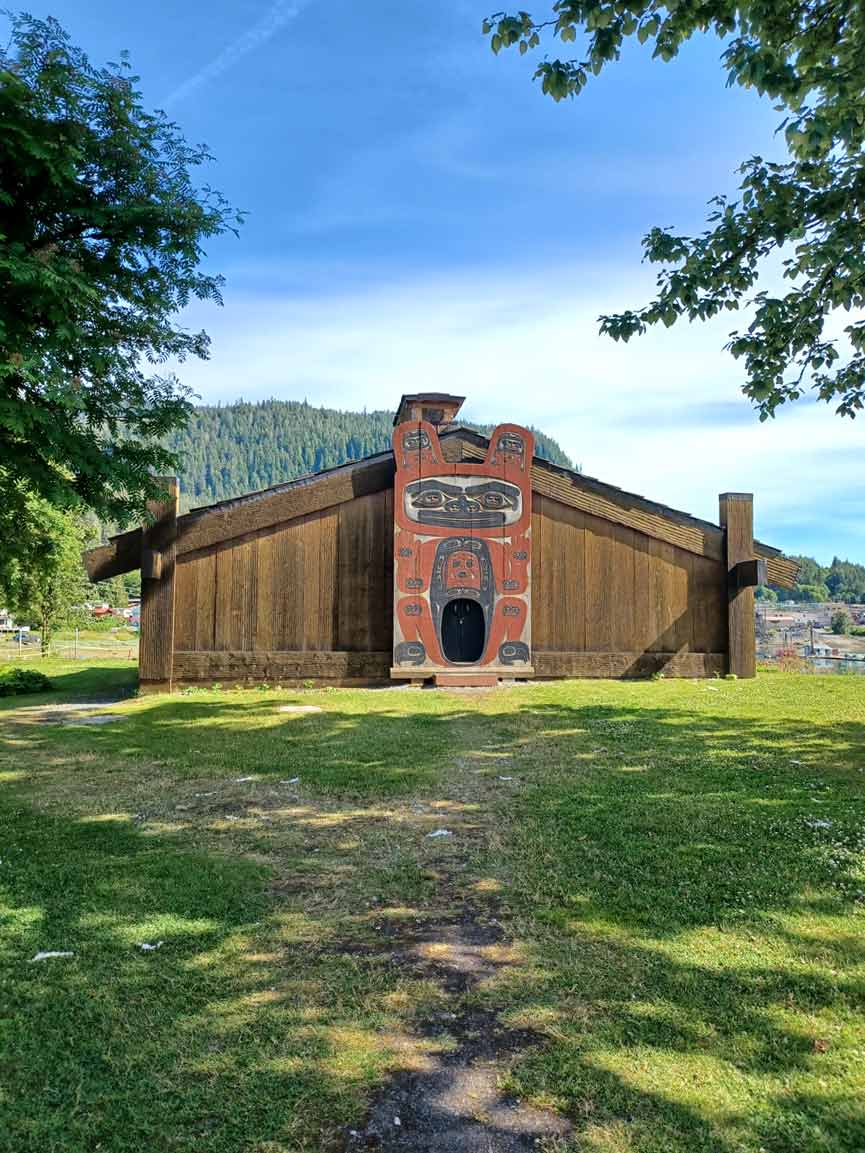
Throughout the early 20th century, Tlingit people fought prominently for their rights. The formation of the Alaska Native Brotherhood in 1912, followed shortly by the Alaska Native Sisterhood in 1915, paved the way to establishing rights not only for Tlingit tribes, but for indigenous groups across the US. By 1935, Washington had recognized the Tlingit, and ten years later, the Alaska Equal Rights Act was passed, prohibiting discrimination against natives.
Today, Tlingit culture is celebrated rather than oppressed. Historic sites, including Chief Shakes Longhouse in Wrangell, the Totem Heritage Center in Ketchikan, and Sealaska Heritage Institute in Juneau, preserve the history of native Alaskans. For the Tlingit people who remain in Alaska, their ancient traditions are as relevant today as they have been for the past 10,000 years.