





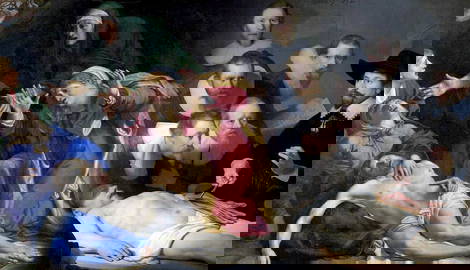
Baroque painting remains one of the most recognizable styles of early modern art. Emerging around 1600 after the decline of Renaissance balance and Mannerist artifice, it favors movement, diagonals, and strong contrasts of light and shadow. Across Italy, Spain, the Dutch Republic, and France, artists used unusual angles and complex compositions to elicit a direct emotional response.
The seven works below introduce the style through influential examples. For each painting, a brief note explains why it matters and what to look for, so the defining features of Baroque art are easy to spot at a glance.
1. The Death of the Virgin by Caravaggio
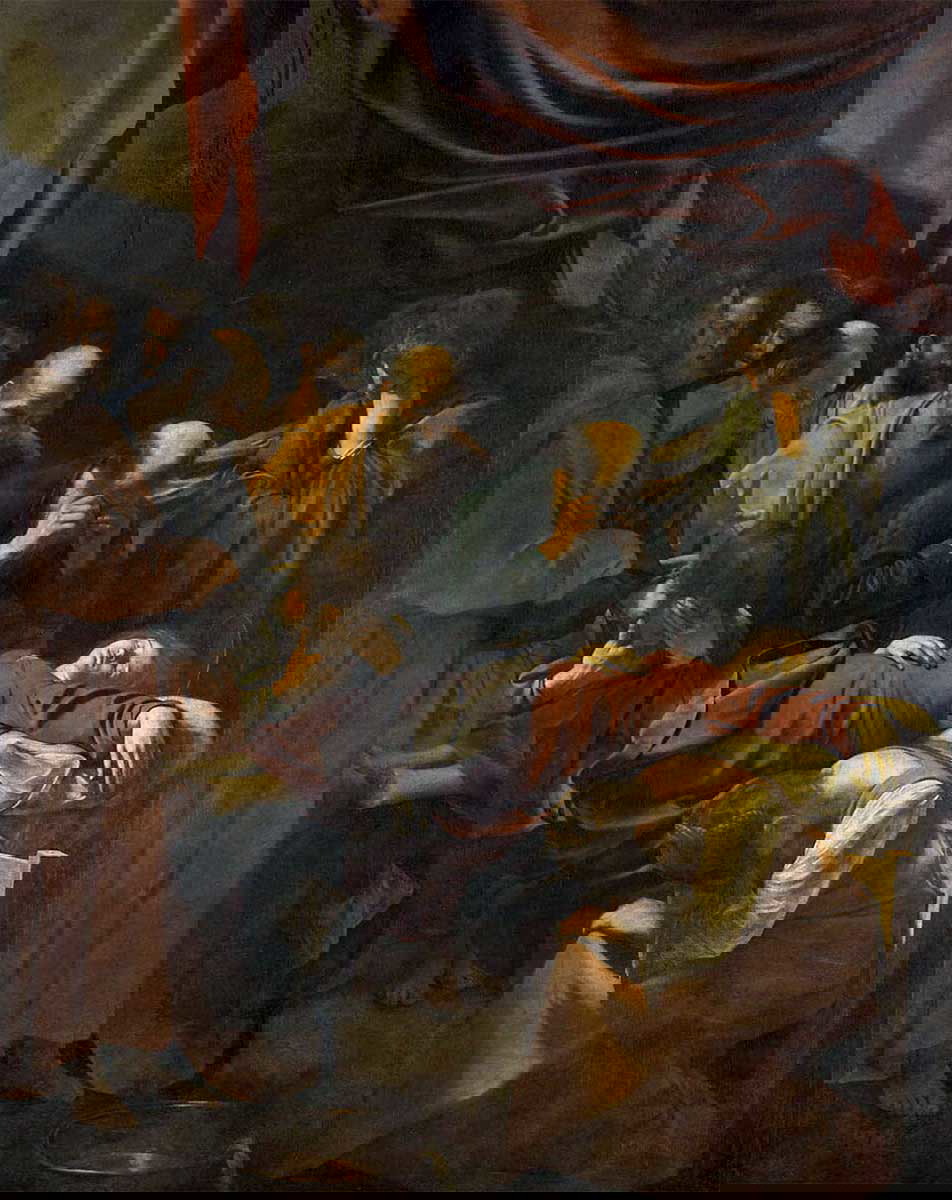
Why it matters: Unidealized naturalism and deep shadow imbue a sacred subject with human grief, challenging doctrinal and aesthetic conventions.
What to look for:
- Dramatic low viewpoint, and the heavy weight of Mary’s body
- Red drapery guides the eye through the scene
- A thin halo is the only sacred marker in an otherwise naturalistic scene
Caravaggio’s dark and emotional work provoked a heated and intense debate at the time of its creation. A lawyer, Laerzio Cherubini, commissioned the work for a Carmelite church in Rome, but he had a last-minute change of heart. Although the painting is now seen as an indisputable treasure, the commissioner refused to pay for it, finding the depiction of the Virgin Mary scandalous and obscene. Many believed that Caravaggio paid a sex worker to sit for the painting, while others complained about the Virgin’s ankles looking like those of a drowned corpse.
The rejection of Caravaggio’s naturalism also had a theological basis. The Catholic church believes that the Assumption of the Virgin Mary happened without her dying, which means that she ascended to Heaven alive. Caravaggio went against this belief, painting Mary dead, surrounded by the grieving apostles. Moreover, Caravaggio deliberately stripped the scene of all markers of sacredness. The only element indicating Mary’s status was a thin halo around her head. Naturalism, grief, and sorrow worked in accordance with the Baroque idea of evoking compassion and emotional response from the viewer. However, the church officials considered it excessive.
2. Girl with a Pearl Earring by Johannes Vermeer
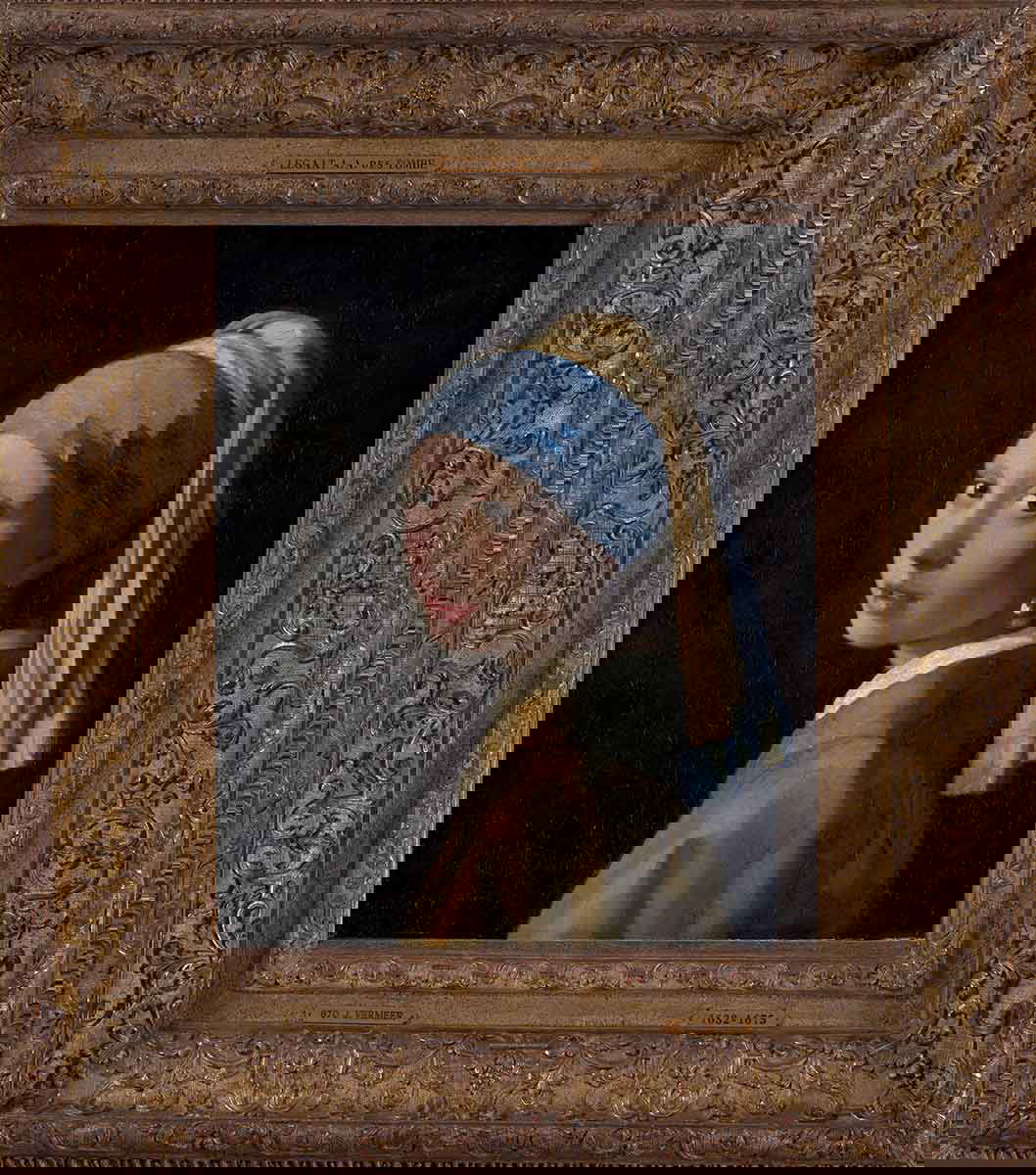
Why it matters: An intimate Dutch Baroque tronie that turns light, color, and a glance into immediate presence.
What to look for:
- Detail of bright catchlight on the pearl earring, and the soft modeling of the face
- The half-turn, parting lips, and forward gaze engage the viewer
- Contrasting drapery colors against a neutral background
One of the principal masterpieces of the Dutch Baroque, Johannes Vermeer’s Girl with a Pearl Earring was ignored for almost two centuries. It was nearly destroyed due to poor storage conditions. Vermeer died in poverty in 1675 and was rediscovered by art collectors and connoisseurs only in the 1880s. Although fascinating and mesmerizing, The Girl with a Pearl Earring raised a lot of suspicion since it was so compositionally different from the rest of Vermeer’s oeuvre. Several art forgers produced fake Vermeers based on this image, which were soon identified by art experts. One of the most famous examples is The Smiling Girl, a painting by a friend of the legendary art forger Han van Meegeren.
Typically, Vermeer painted domestic scenes, whereas Girl with a Pearl Earring is a cropped, close-up portrait in half-profile, with the model gazing directly at the viewer. Some Vermeer experts believe the model was Vermeer’s daughter, Maria, while others go even further, suggesting she was the one behind the canvas. Although the evidence about Vermeer’s family is limited, we know for sure that he taught Maria to paint. One version suggests that the most experimental paintings of Johannes Vermeer were actually painted by his daughter.
3. Las Meninas by Diego Velázquez
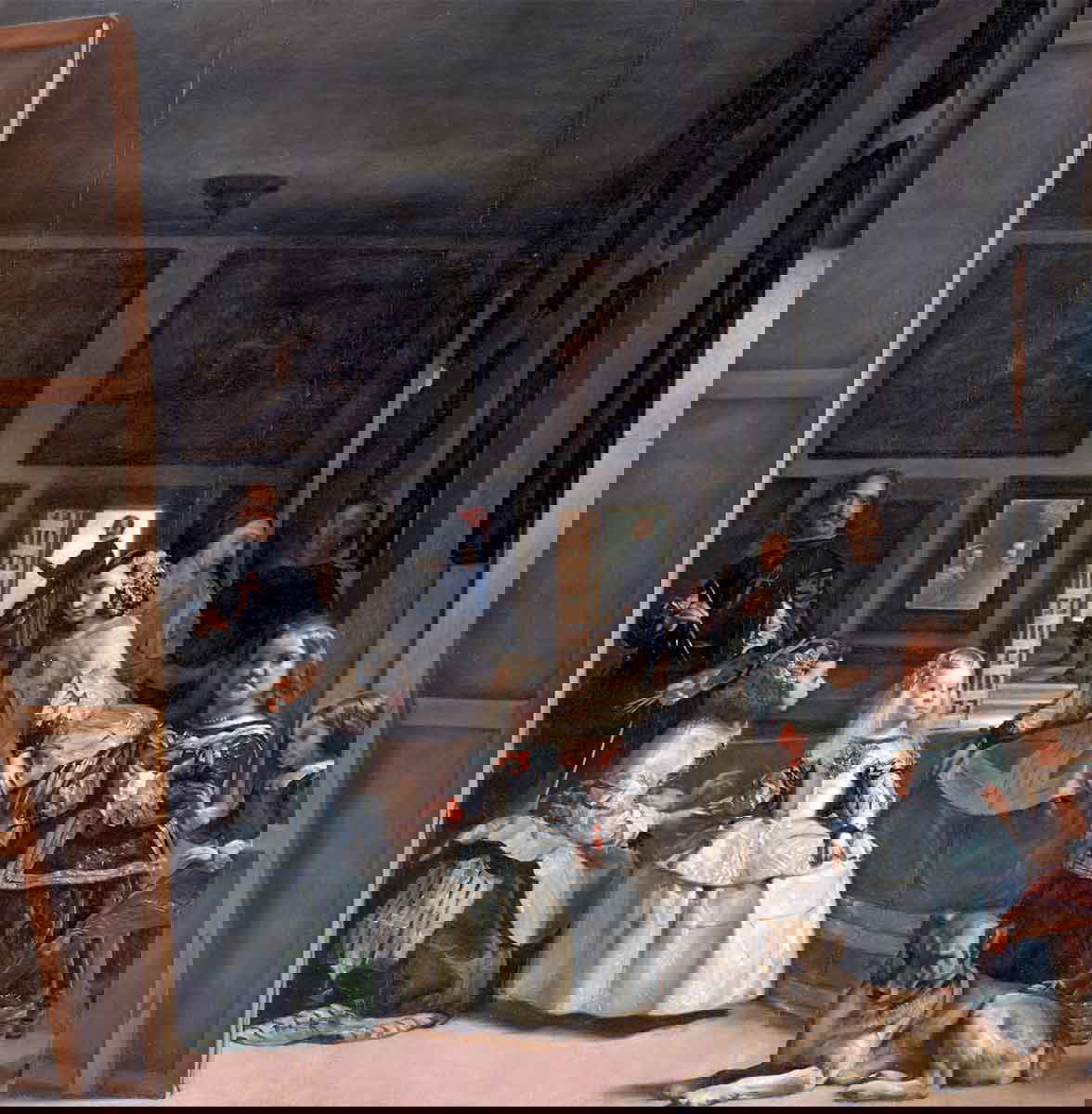
Why it matters: A court portrait that doubles as a study of perception and power, placing the viewer inside the royal space.
What to look for:
- The Infanta is at the center of a complex grouping of attendants
- A mirror reflects the king and queen, who look onto the scene
- Dynamic sightlines and the open doorway guide focus and add depth
The Spanish Baroque artist Diego Velázquez became the leading painter of the Spanish Royal Court. His world-famous painting, Las Meninas, was commissioned by the royal Habsburg family and quickly became famous throughout Europe for its complex and intricate composition.
The Spanish branch of the Habsburg family was so damaged by centuries of inbreeding that raising a healthy child who was able to live long enough to inherit their parents’ wealth and power seemed almost impossible. The blond girl painted by Velázquez was the Infanta Margaret Theresa, the fifth and only surviving child of the Spanish Queen Mariana of Austria and her uncle, King Philip IV. Despite sharing the deformed Habsburg facial features, Margaret Theresa was of rather good health and represented her family’s hopes and dreams.
The Infanta’s parents are also present in the painting, yet they are not immediately visible. The King and Queen, standing side by side, are reflected in the mirror behind them. Thus, the viewers find themselves standing in the place of royalty, which was part of the Habsburgs’ attempt to democratize their image. Velázquez also portrayed himself painting their portrait.
4. Judith Beheading Holofernes by Artemisia Gentileschi
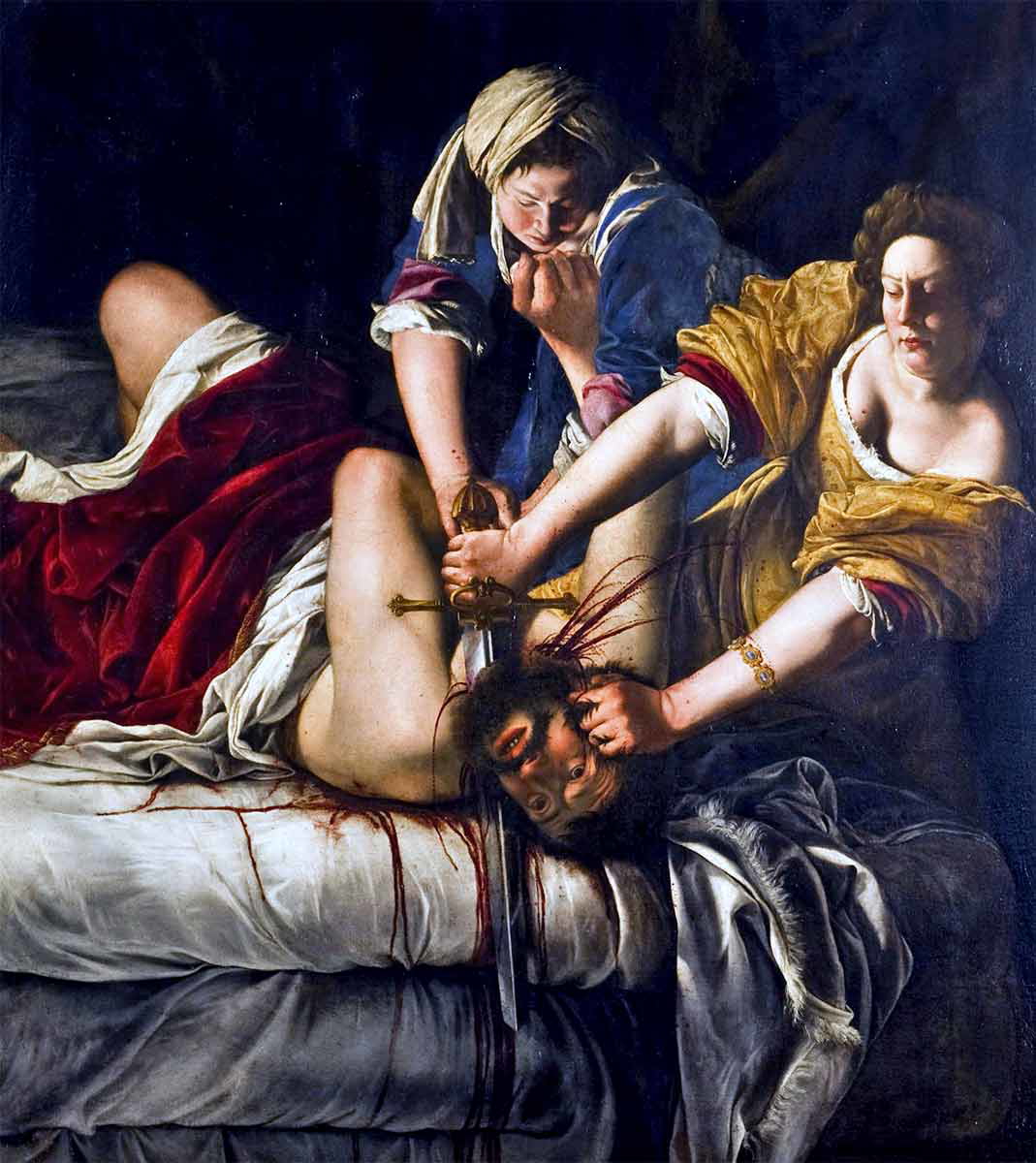
Why it matters: Baroque intensity and female agency converge in a forceful reading of biblical heroism.
What to look for:
- The dramatic line of the sword, and the convincing physical strength of Judith and her maid
- The arc of spurting blood draws the eye into the action
- Compressed space heightens the subject’s struggle and resolve
Artemisia Gentileschi was a rare example of an established woman artist of her time. While wealthy and privileged women played a significant role in commissioning artworks since the Renaissance, very few had the opportunity to paint themselves. Gentileschi’s oeuvre is centered on women and their experiences, often exploring aspects of violence, rage, and vengeance. Gentileschi was a survivor of rape who had to go through a long and dehumanizing trial, and even torture, to finally convict her aggressor. The rapist, also an artist named Agostino Tassi, was found guilty, but soon released from custody without any explanation.
Judith was a popular patriotic heroine at the time of Gentileschi, representing heroism and willingness to sacrifice oneself for the safety of others. According to the Old Testament story, she was a Jewish widow who seduced an Assyrian general, Holofernes, and murdered him to save Jerusalem from invasion. However, as the years passed, the character’s representation changed. In the late nineteenth century, the image of Judith featured an unexpected twist: instead of a symbol of feminine patriotism, she became another femme fatale, an emblem of cunning female nature and bloodthirst. Such a dramatic switch possibly had its roots in the superficial likeness of Judith and Salome, another Old Testament character who ordered the decapitation of John the Baptist.
5. The Penitent Magdalene by Georges de La Tour
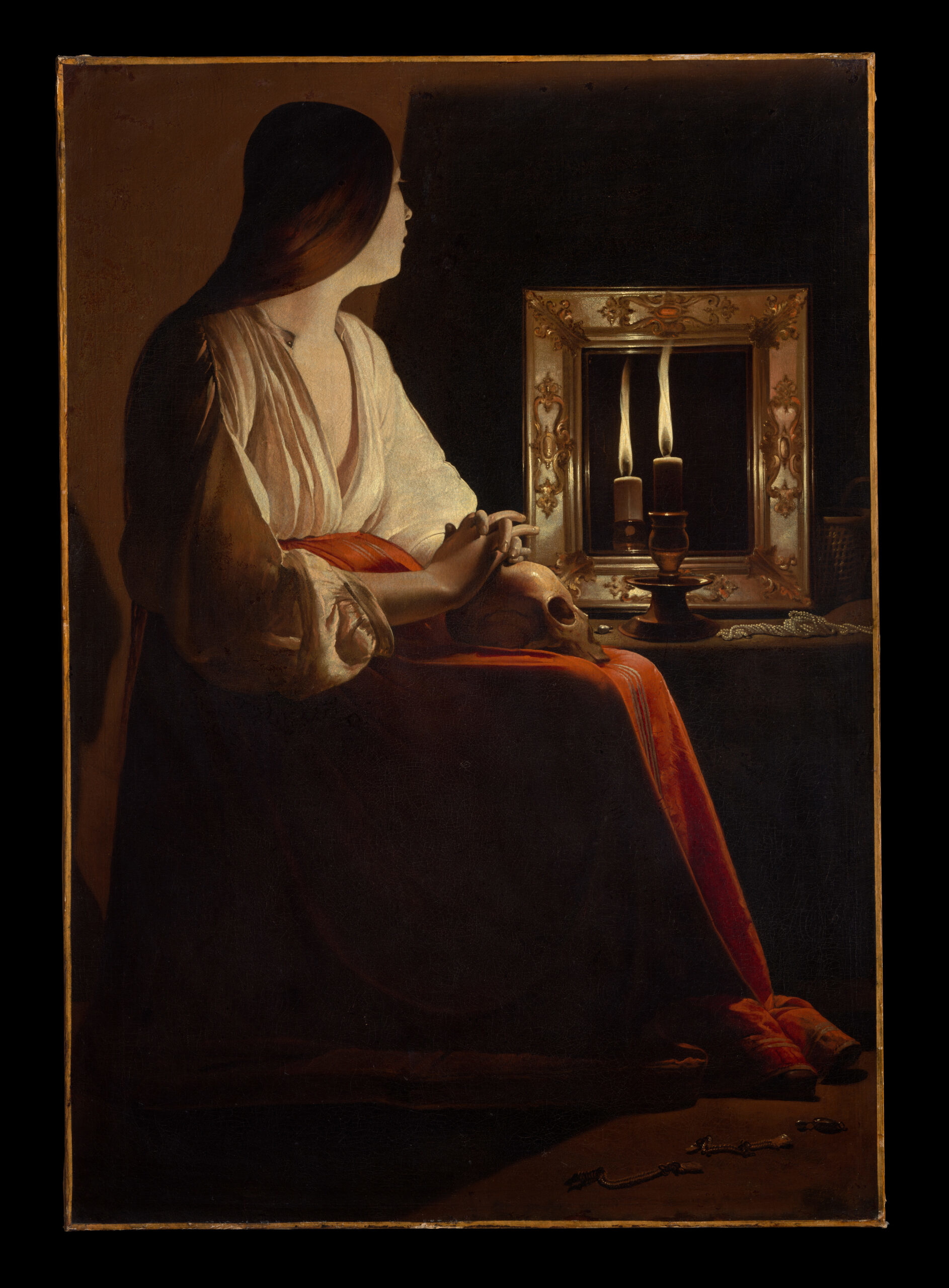
Why it matters: Baroque drama turned inward, with a single candle shaping quiet repentance.
What to look for:
- A single small light source models the face, hands, and skull in evocative shadows
- Subtle vanitas symbols—the flickering candle and skull—are reflected in the mirror
- Stillness and simplicity invoke deep devotion
The French Baroque master Georges de La Tour was a follower of Carravagio’s, employing his signature contrast of light and shadow. Unlike Caravaggio, he preferred simple forms and often repeated the same subject several times until his work achieved the perfect, almost minimalist state.
Mary Magdalene was the disciple of Christ who renounced her sinful lifestyle and devoted her life to faith. Contrary to popular belief, the Bible never described her as a prostitute. This interpretation emerged only in the sixth century, most likely due to a mistake made by Pope Gregory I. In her penitence, La Tour’s Magdalene does not demonstrate any excessive and overdramatic emotions. Her penitence is a personal, inner act of someone deeply regretting their actions. In her faith, she does not need to loudly condemn her past sins; instead, she trusts in God’s forgiveness. Objects surrounding her may be interpreted as references to vanitas paintings, a popular genre of the time. The skull on Mary’s lap represents mortality, while the mirror reflecting candlelight reminds us of the earthly vanity she is leaving behind.
6. The Dead Christ Mourned by Annibale Carracci
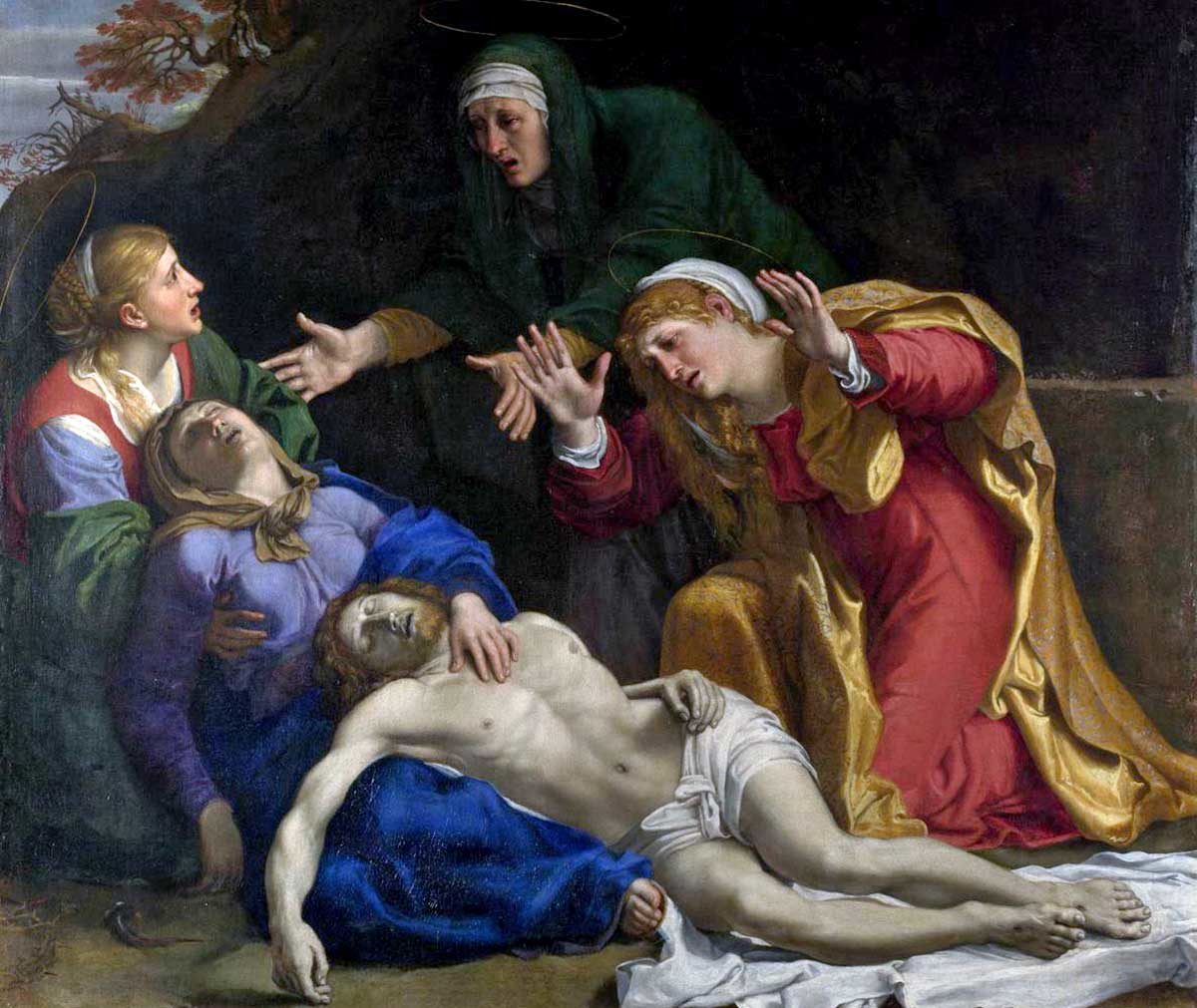
Why it matters: Early Baroque emotion joined to classical order, making grief immediate and legible.
What to look for:
- A classical pyramidal composition draws the eye to Christ and Mary
- Cool flesh set against warm drapery and urgent gestures heightens drama
- The convincing weight of Christ’s lifeless body and Mary’s grief-filled collapse
Baroque art was not a sudden and revolutionary artistic invention, but a tool of propaganda, approved and designed by the Catholic church. While the Protestant Reformation movement ruthlessly opposed religious art, Catholic officials sought to draw closer to their followers. The art had to be relatable and visually appealing, evoking an emotional response. According to Catholic teachings of the time, true faith had nothing to do with reason and logic, relying solely on emotion and feeling. Baroque art provided this emotional fuel.
Annibale Carracci was one of the pioneers of Italian Baroque, who explored the emotional range of the style to its fullest extent. His painting The Dead Christ Mourned is not a stoic and quiet Pieta, but a loud, painful, and heart-wrenching scene of loss and grief. The Virgin Mary collapsed unconscious while holding her son’s body in her arms, while Mary Magdalene, Mary Cleophas, and Mary Salome wailed and cried around them. According to the gospels, Mary Cleophas and Mary Salome were the women disciples of Jesus present at his crucifixion. They later discovered his empty tomb.
7. The Secular Baroque Painting: Rembrandt’s The Anatomy Lesson
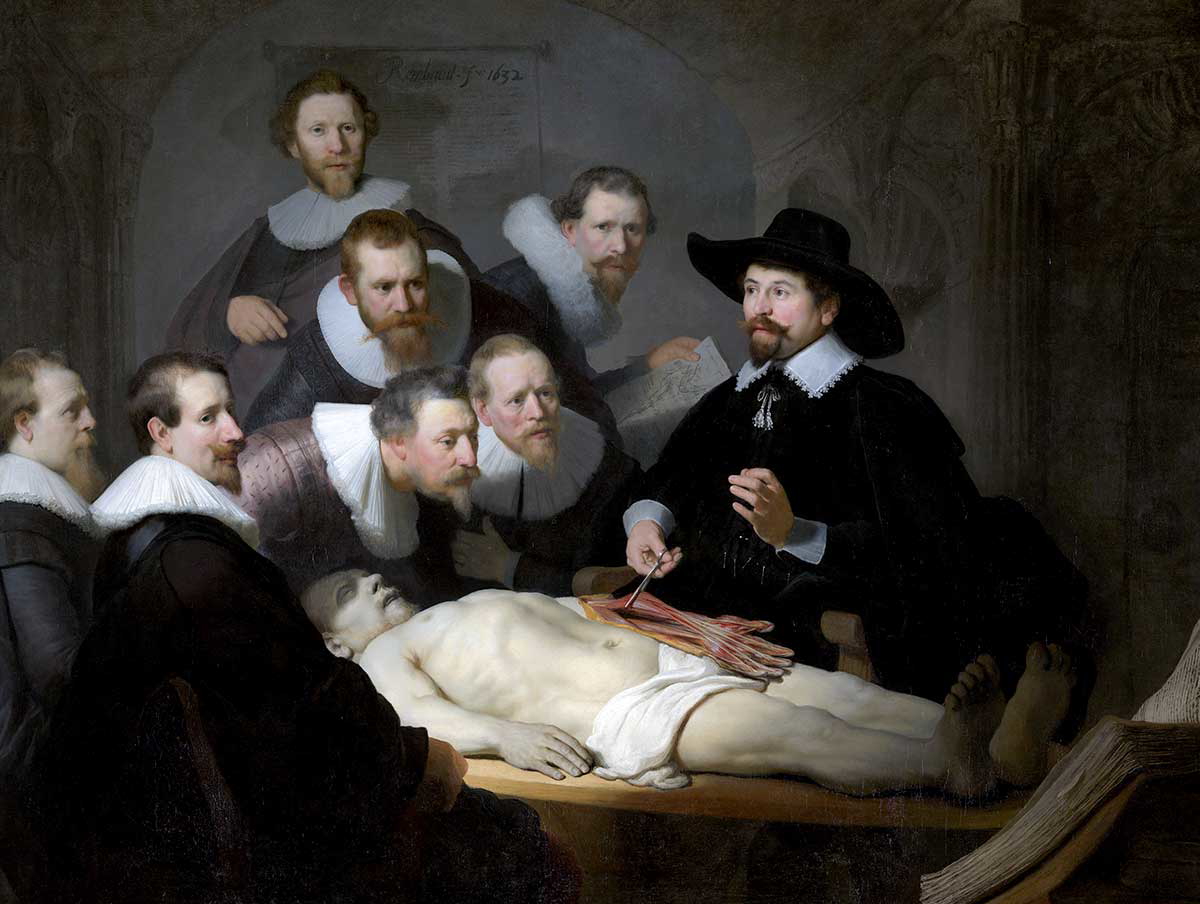
Why it matters: A civic commission animated into a narrative of learning and light, advancing group portraiture.
What to look for:
- The foreshortened cadaver is brightly lit as the focal subject
- Dr. Tulp’s demonstrative hand guides the students’ individual gazes
- Staggered diagonal lines and shadows move the eye through the complex composition
While Italian and Spanish Baroque artists primarily focused on religious and mythological scenes, German and Dutch artists concentrated on secular subjects, including portraiture and scenes from daily life. The reason for that lay mostly in Protestantism, which was a dominant religion in these areas. Since the Church prohibited the veneration of painted images, artists had to search for new topics, iconography, and patrons.
Rembrandt van Rijn, one of the most celebrated artists of the Dutch Golden Age, is remembered for his unique treatment of light and shadow. His commissioners often represented guilds or organizations with multiple members, who asked to be depicted in a group painting. Rembrandt’s remarkable sense of composition allowed him to arrange multiple figures without compromising someone’s visibility.
The gruesome painting, The Anatomy Lesson of Dr. Nicolaes Tulp, was commissioned by the Amsterdam Guild of Surgeons. The archives preserved the names of every person in the painting, even that of a dead man being dissected by Doctor Tulp. The man named Aris Kindt was a criminal sentenced to death for an armed robbery. The practice of handing the bodies of deceased criminals to medical students was popular, and it mostly took place in the fall and winter to avoid rapid decay.


