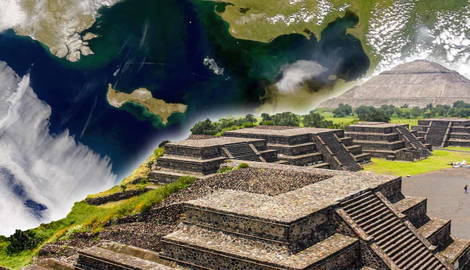

While the myth of Christopher Columbus’s “discovery” of America in 1492 has largely been disproven, there remains a strong belief that “The New World” existed in near-complete isolation before contact with the Spanish. Yet three great seafaring civilizations connected the Americas, and long established networks of indigenous trade created chains of local links leading to Eurasia.
Longboats and Longhouses: Viking Settlements in North America
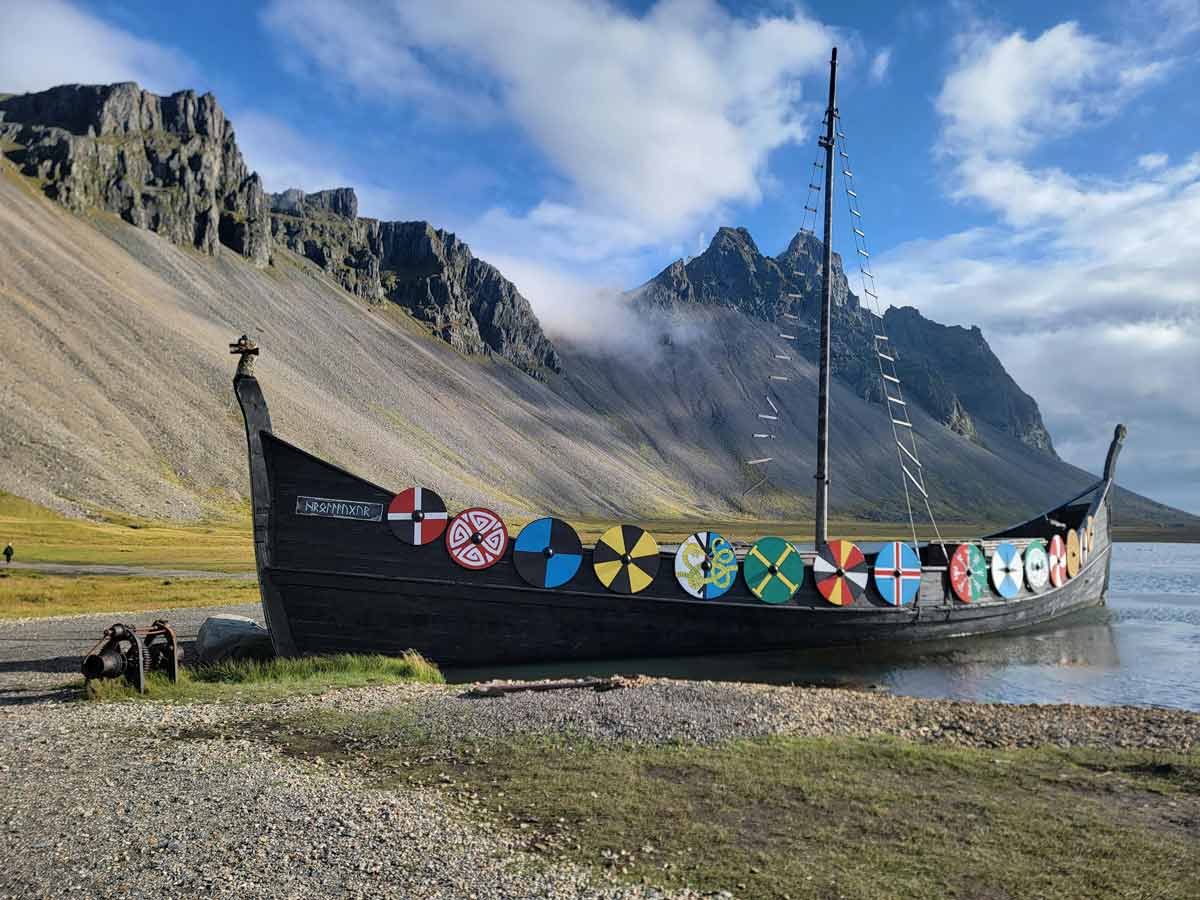
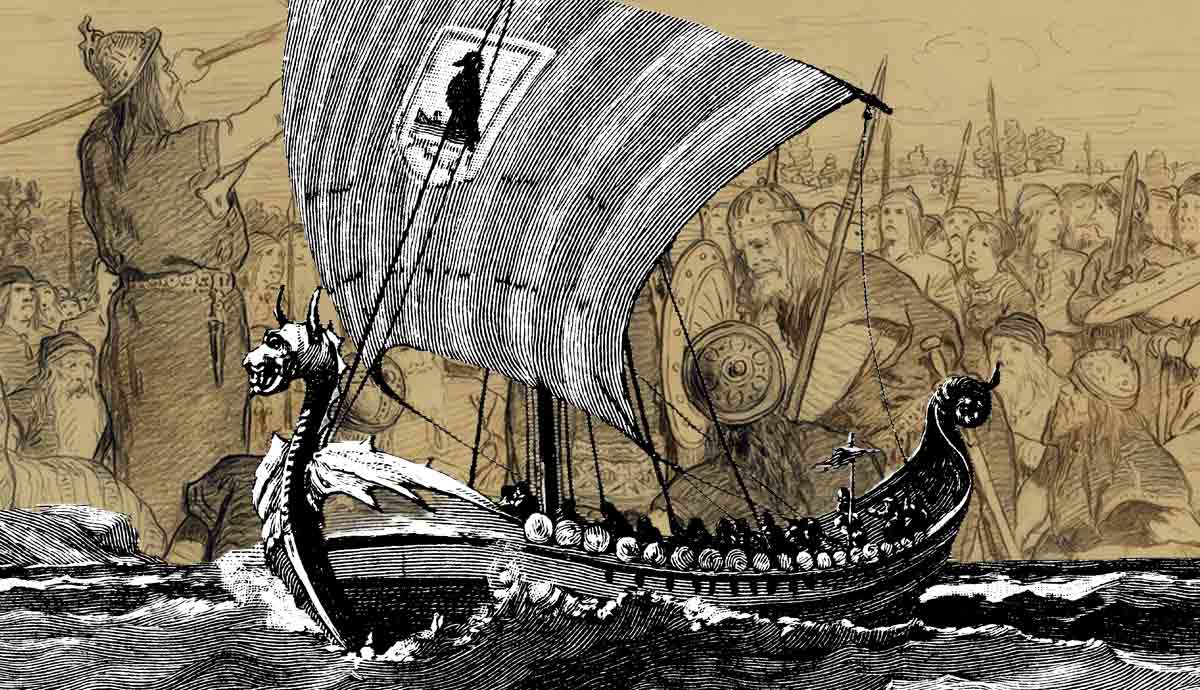
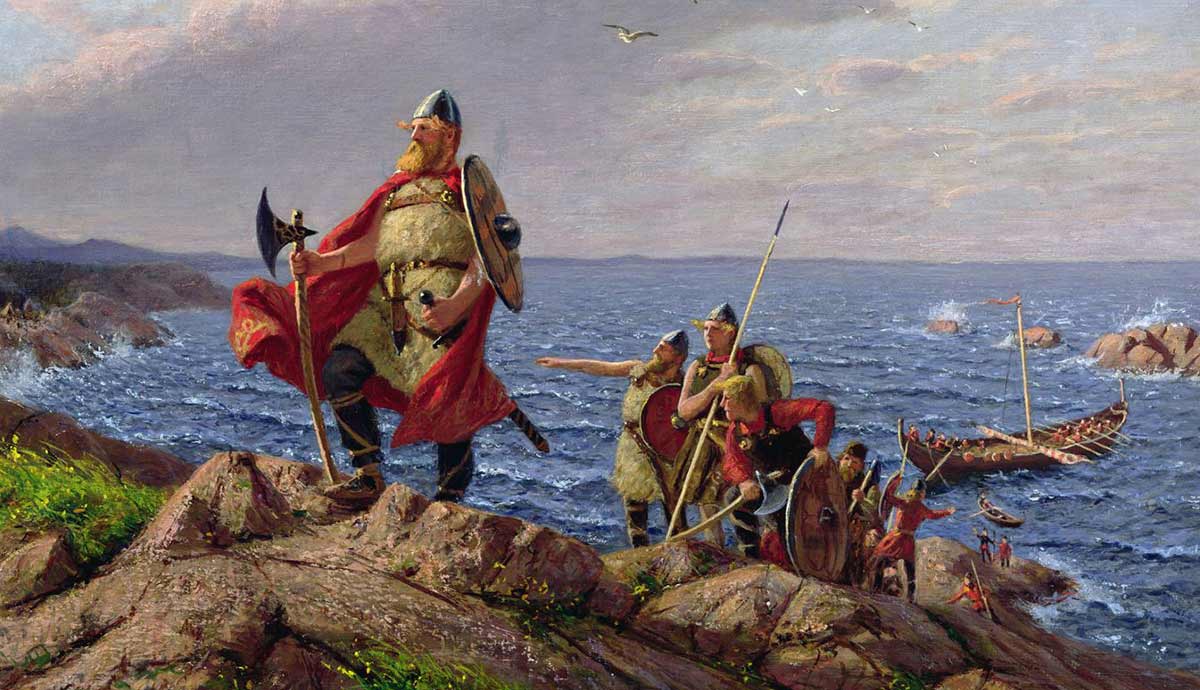
It is now commonly known that Norse seafarers reached the American landmass from Greenland. The details of Norse expansion to Iceland, Greenland and the Americas are highly debated, yet there is consensus on key facts. A likely uninhabited Iceland was settled around 870 AD, and around one hundred years later Norwegian and Icelandic crews led by Leif Erikson migrated to Greenland, which was uninhabited at the time of their arrival, though later generations of Norse would encounter the expanding Thule culture in the 13th century. For centuries, this was believed to be the extent of their westward movement until a settlement was uncovered in Newfoundland at L’Anse Aux Meadows by Helge and Anne Stine Ingstad.
This development in 1960 changed the narrative of American-European contacts forever, as it was dated five centuries before the voyages of Columbus. It was established as a seasonal basecamp, and does not appear to have been occupied for a long time. This archaeological find also aligned with the stories told in the Vinland Sagas of the 13th century, which detailed an exploration of the land of “vineyards” or “meadows” by Erik the Red and the Greenlanders. These accounts describe conflict with the Indigenous population and a return eastwards, aligning with the short-term occupation of L’Anse Aux Meadows.
The Vinland Sagas’ description of “flat stones” and “forests” has prompted much speculation. Attempts to reconcile the sagas with the archaeological record encouraged theories that Baffin Island and Labrador also witnessed Norse contacts. There is however, a long record of pseudohistorical claims and hoaxes about Norse artifacts and villages deep inland in North America, so any study of this subject requires careful selection and judgment.
The existence of long-term settlement and contacts with Thule peoples on Greenland, alongside the discovery of Nordic inhabitation in Newfoundland shows that Europeans had limited but real ties to the continent at the margins of the northern world.
Across the Bering Sea: Contacts in the West?
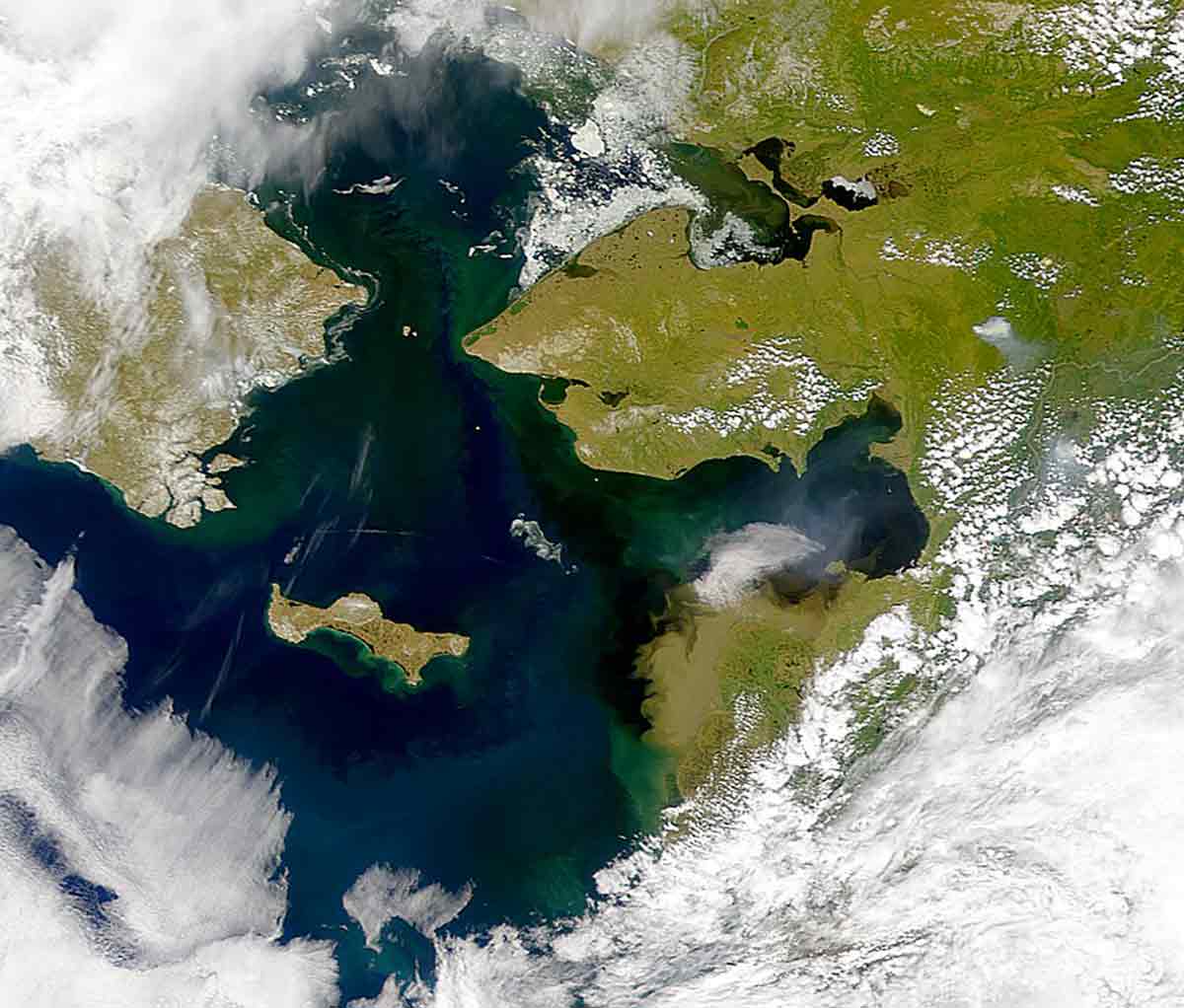
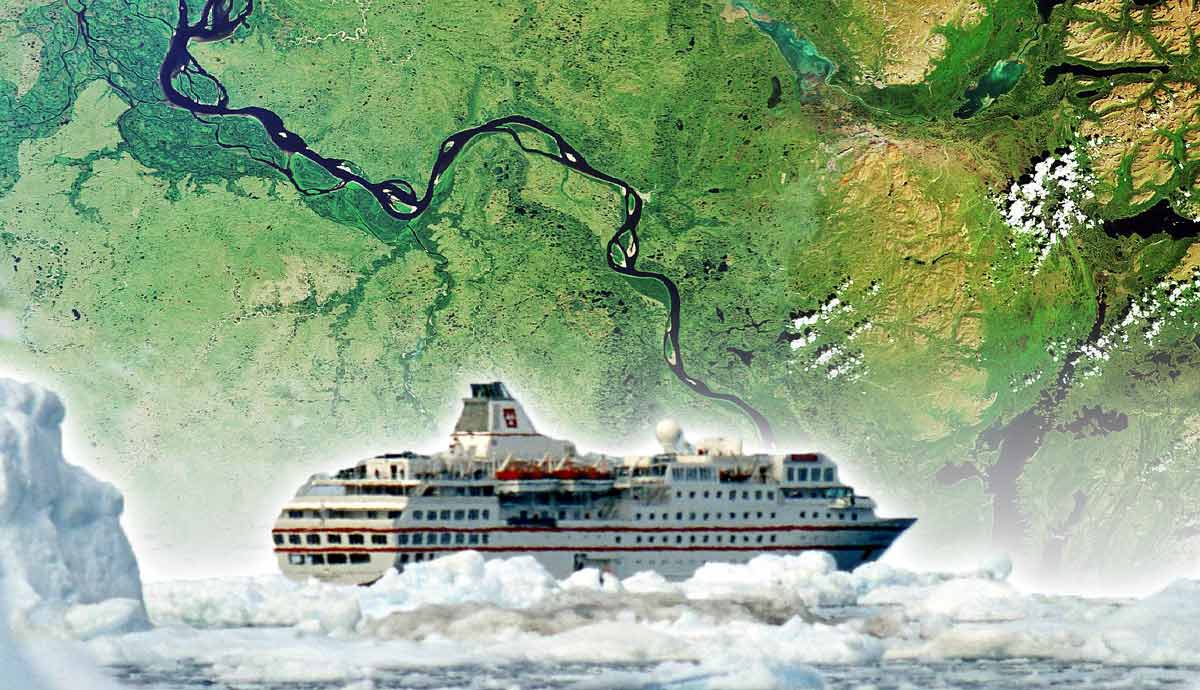
At the other end of the Arctic Circle, we can point to more networks of travel and trade. The prevailing theory on the population of the Americas is that Siberians migrated across a land bridge connecting Eastern Russia and Alaska some 14,000-20,000 years ago. As this landmass gave way to the Bering straits connecting the Pacific to the Arctic Ocean, movement would have become more difficult.
Recent scholarship has pointed to connections between Eurasia and North America across the Bering Strait, and potentially the Aleutian Islands extending westwards from Alaska. These contacts were between Chukchi peoples from Siberia, and the Thule who originated in coastal Alaska, then pushed across the northwest passage to Greenland and Newfoundland.
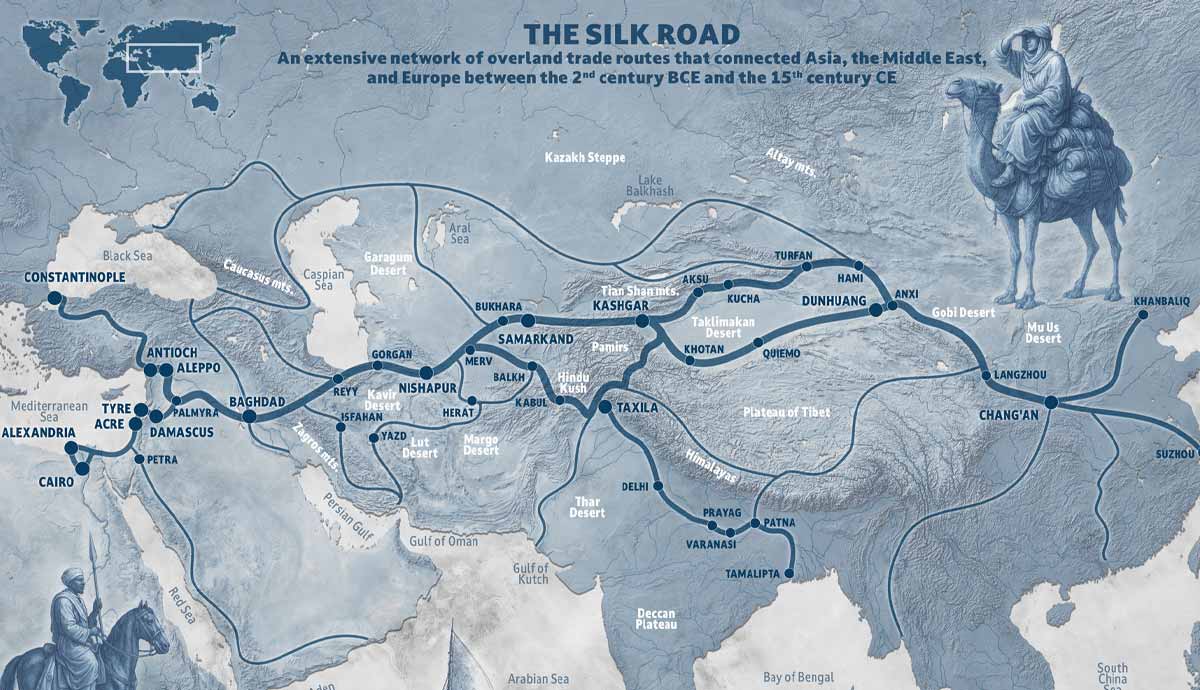
Strikingly, a recent study has claimed that glass beads all the way from Venice were found deep inland on the Alaskan landmass, dated to 1397-1488 AD. Though the subject is still debated, the proposed existence of strung beads from Italy radiocarbon dated before “Columbian” contact is a significant development. European goods have long made it to the Far East across the silk roads, and trade from China to Siberia could have feasibly reached across the Bering Strait. There are claims of bow and armor technology coming from East Asia, with scaled armor making its way all the way down to the Haida and Tlingit peoples of the North Pacific coastlines, and an archaeological dig at Rising Whale with 1000 year old bronze artifacts with likely Asian origins.
Various other anthropologists, linguists and biologists have pointed to longstanding networks across the Bering Straits and Aleutian islands. While there has not been much of a comprehensive history, or agreed upon date of contact, evidence shows that Chukchis from Siberia interacted with Thule peoples along the western coast of Alaska.
Catamarans and the Great Polynesian Triangle
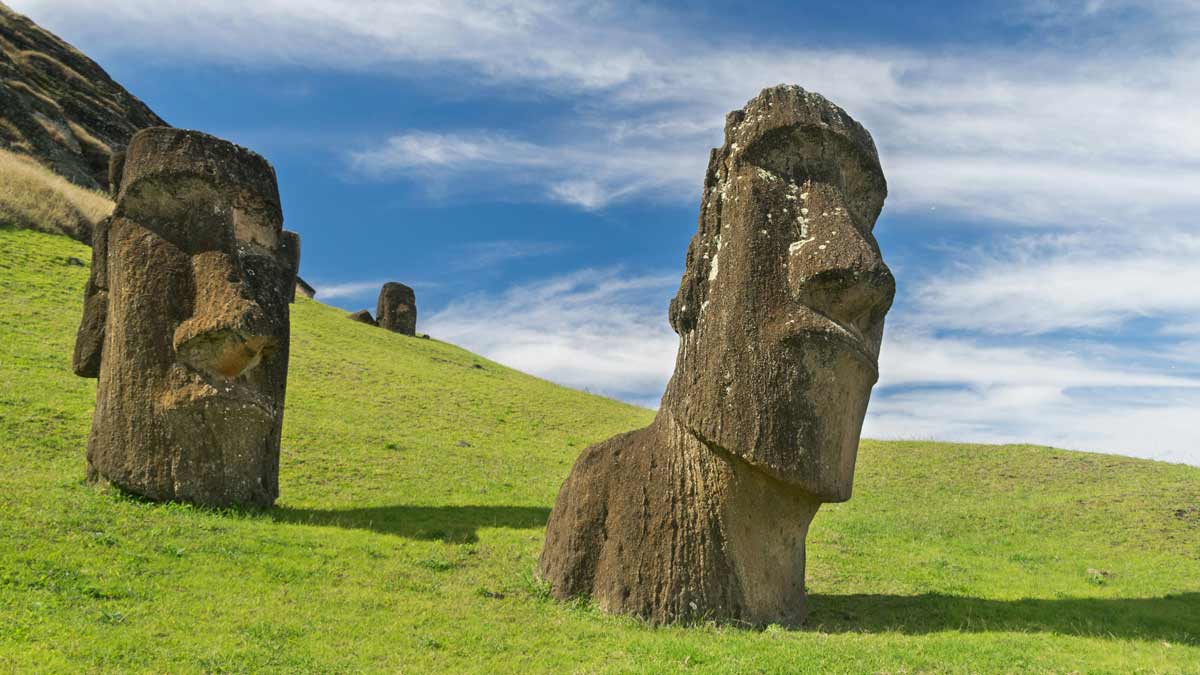
While the Thule peoples engaged with Eurasia in both the east and west, another great seafaring civilization was making forays across the South Pacific. The “Polynesian Triangle” covers a vast area from Aotearoa/New Zealand in the southwest, up to Hawaii and down to Rapa Nui, or Easter Island in the east. Their fabled navigation skills and catamaran boats allowed them to traverse huge distances across the Pacific, and modern archaeologists and geneticists are constantly finding new traces of Polynesian influence beyond the triangle from the sub-Antarctic circle, up into the South China Sea and out to the shores of South America.
The most common argument pointing to Polynesian interactions with America is the prevalence of the South American sweet potato around the Pacific before European contact. These range from Aotearoa up to Hawaii, pointing to widespread adoption of American food sources across the Polynesian world. Human DNA traces appear to move both ways from these points of contact, and though it remains to be seen if Polynesians first reached the shores of America, or if Native Americans met them by sailing west, these ties suggest longstanding contacts before European colonization.
Trade Networks From North to South
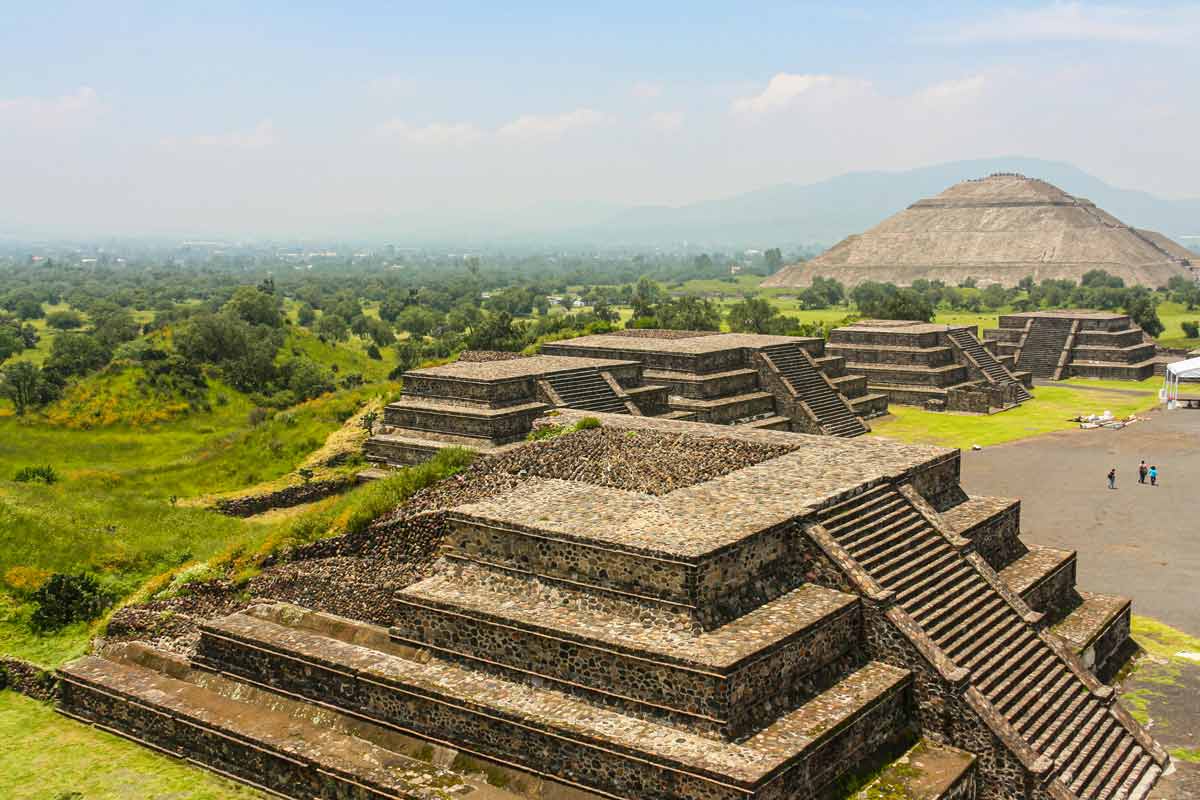
With contacts from Asians and Europeans to the north and Polynesians to the south, we also need to examine how much interaction Native Americans had across their own continent. In 1491: New Revelations of the Americas before Columbus, Charles C. Mann explores just how much Native Americans traded, moved, lived and competed with each other, stating:
“By 1000 AD, trade relationships had covered the continent for more than a thousand years; mother-of-pearl from the Gulf of Mexico has been found in Manitoba, and Lake Superior copper in Louisiana” (Mann, p. 39).
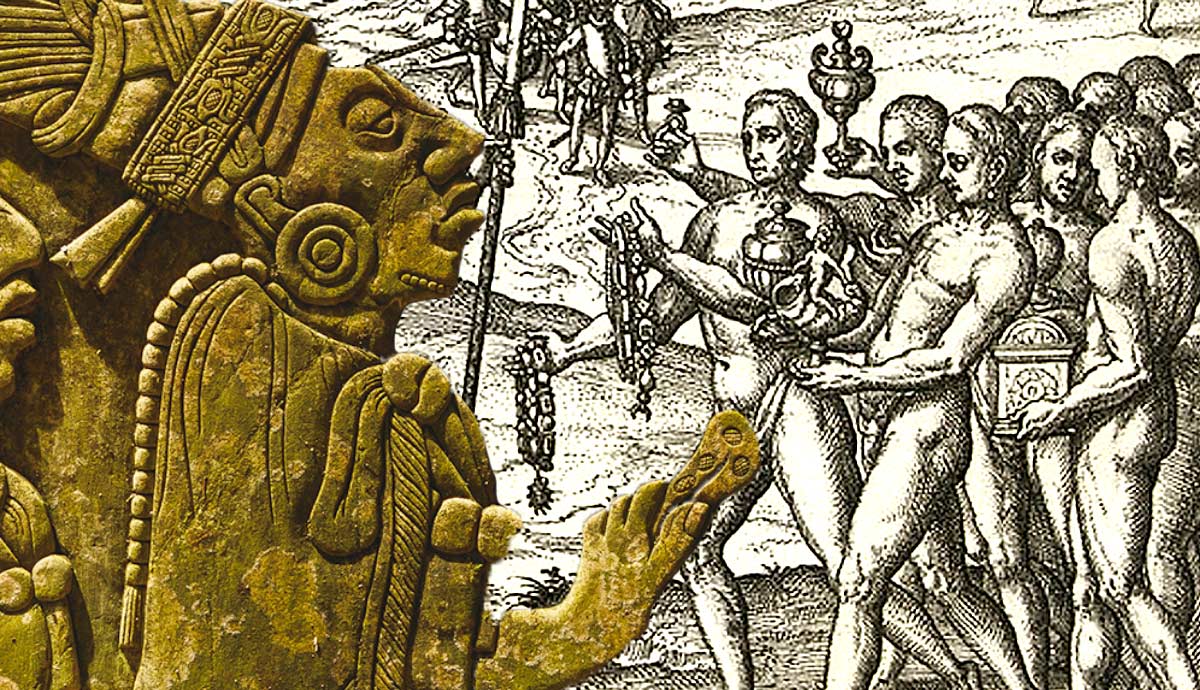
A recent study of Ancestral Puebloan pottery suggests cacao use as far north as Colorado, which would link the American Southwest to Mesoamerican trade networks (such as the Toltecs), and later, Aztec culture. The Aztecs had a flourishing class of traveling merchants known as pochteca, and while the exact limits of their reach is not well known, they did have the infrastructure to carry out long distance trade. The Inca Empire had a highly centralized state with highways and messenger services, and the Cambridge History of the Pacific Ocean suggests sailing routes up the west coast from Peru to Mexico. More study is needed on how far they reached east into the Amazon, or north towards Mesoamerica.
Connection vs Integration
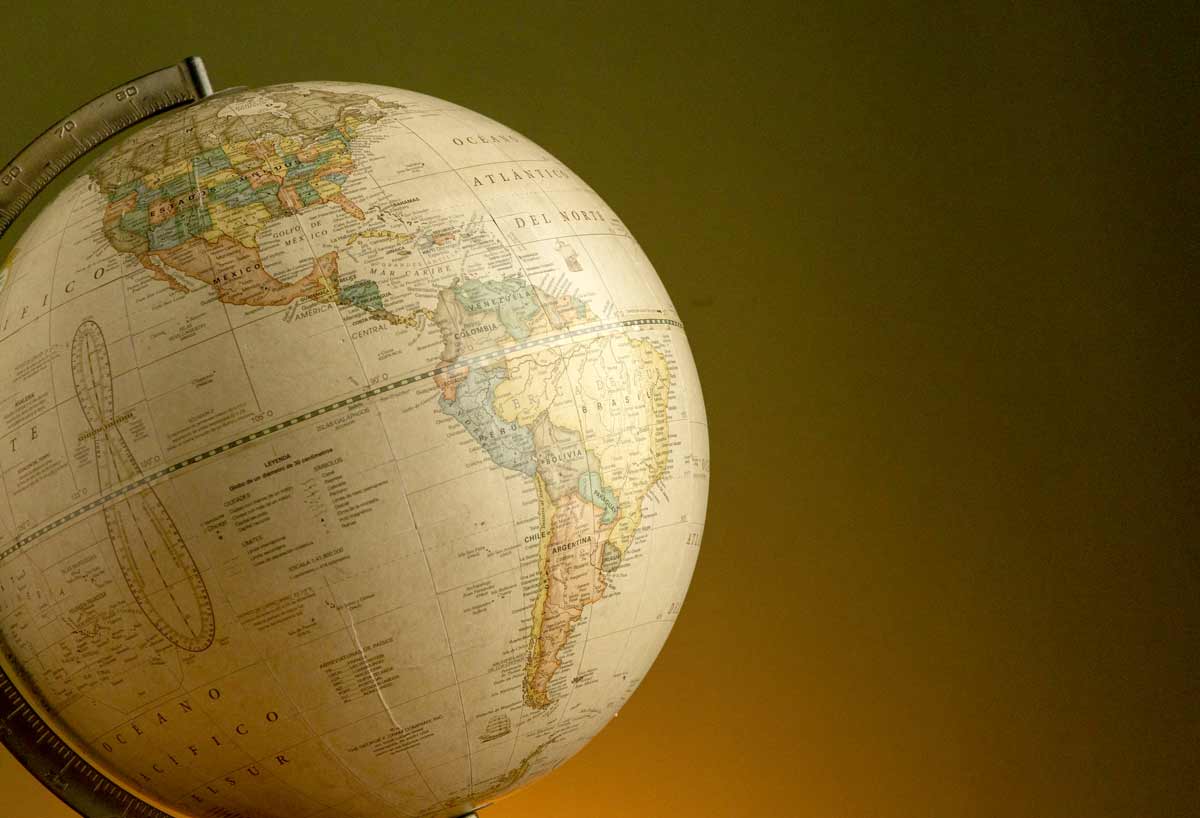
Columbus and the “discovery” of America, the existence of these indigenous networks paints a new picture. Local and regional trade created chains of connection into, and across the Americas before Iberian colonization. The picture of Precolumbian America remains incomplete and continues to be a fruitful area of research for scholars.
As the Thule networks reached Siberians and Vikings via the Arctic Circle, as Polynesians moved across the South Pacific and traders moved up and down the continent, the Americas were perhaps not so isolated as previously believed. The very idea of “Columbian” contact puts emphasis on European explorers finding peoples that were quietly awaiting Europeans in isolated prehistoric societies. As the study of earlier movements progresses, it seems that the real impact of Columbus was the integration of the Americas into western European empires and their centralized global networks, not the discovery of a “New World” that had been completely cut off from humanity before 1492.
This is a field that warrants careful study as there are certainly pseudohistorical claims, and sensationalist writers eager to overstate connections. This leads us to the question of connection versus integration. While Native American societies show that they were connected to the wider world and to each other, the scale to which this trade was integrated into their daily lives and economies remains to be seen. There may not have been massive flows of trade goods we’ve come to know in the modern age, but these traces show the Americas as a rich and active part of the world before European colonization.
With special thanks to Graham Perkins from the UCD School of Archaeology