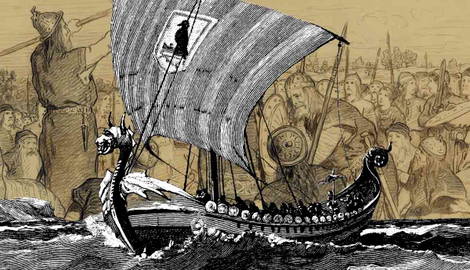

From their position on the Scandinavian peninsula, Norse raiders moved north to south, east to west beginning in the 8th century. While longships moved around this vast sphere, did their world constitute the first truly global empire? Our answer lies in whether Viking power was centralized as an empire, or more loosely spread across these regions. This follows a key debate in the field of global history of connection versus integration, tracking how people connected as well as how much and how frequently they did so.
The European Core
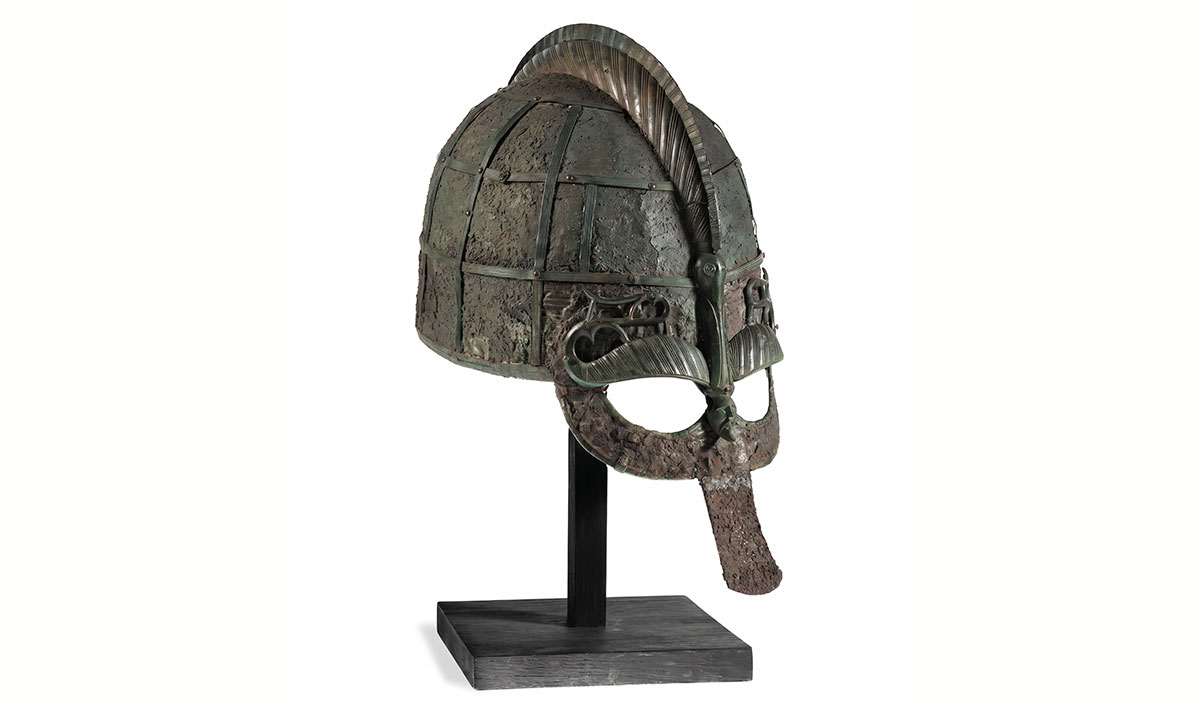
While they sailed, fought and lived far from home across the wider world, the Vikings’ main base of power was always Northern Europe. As we explore their larger movements around the globe, it is important to remember the concept of the core versus the periphery, and to what extent these far-reaching expeditions, trade networks and settlements were driven by the Scandinavian core.
There has been much debate over what motivated Norsemen to launch raids further abroad, but the material attraction of gold, silver, commodities and slaves is obvious. Viking ships had the advantage of being able to traverse both open seas and river networks, offering them extreme flexibility to move around the map as raiders, traders and settlers. From the 8th century through the 10th century, Viking raids from Sweden, Norway and Denmark spread outwards in all directions, beginning with neighboring European countries. Their influence reached the British Isles, West and Central Europe as the Normans, and Eastern Europe as the Rus’.
The well documented invasions of England, Scotland and Ireland cemented bastions of Norse power in the British Isles as Vikings settled down, often exacting tributes from neighboring rulers. As they moved into mainland Europe, the Norsemen raided and intermingled with Franks, forming a distinctive Norman culture on the coast of the Carolingian Empire. It was from these interactions that the Norsemen adopted Christianity. They also established settlements into Finland and the Baltic region, while pushing into eastern Europe as princes of the Swedish Rurikid dynasty established their rule in Kievan Rus’ in present-day Russia, Belarus, and Ukraine. The principalities of Kievan Rus’ at their height represented a huge expanse stretching from modern-day Hungary to Finland in the north and beyond modern-day Moscow in the east. This broad sphere across the early medieval period shows the deep extent to which Swedes, Norwegians and Danes lived, raided and moved around Europe.
Inside and Outside the Walls of Constantinople
While the centers of Viking power were spread across mainland Europe, longships roved all the way southwards to the Byzantine Empire’s capital in Constantinople. After initial hostilities between Norse warriors and the empire, Byzantine emperors began recruiting Vikings to serve in the Varangian Guard. The varied relationships between these peoples shows just how complicated Viking influence could be. Here, as they did elsewhere, the Norse engaged as raiders, traders and settlers. While some leaders continued to wage war with the Byzantines, many traded slaves and goods with them through Black Sea networks, and others still made Constantinople their home.
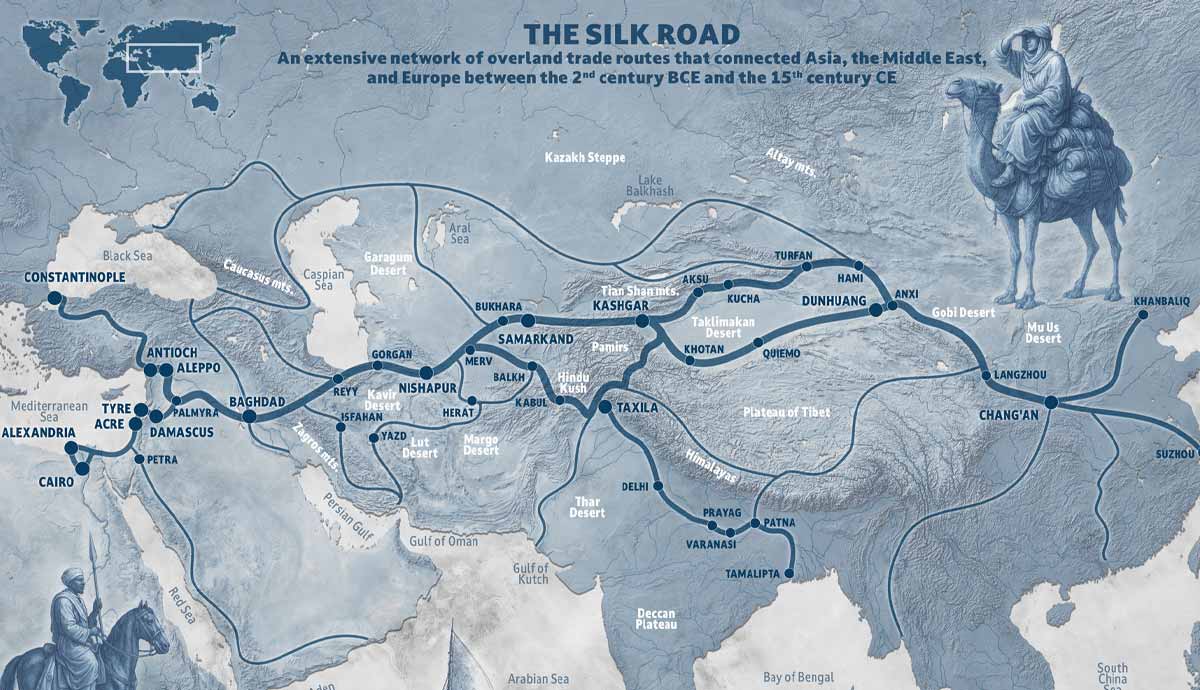
In this period, the Byzantines represented the continuation of Roman power in the east, and their trade networks connected Europe to Asia via the Silk Roads. While the eastern empire in Constantinople outlasted the Western Roman Empire by nearly a millennium, they were no strangers to political upheavals and infighting, and the presence of skilled foreign fighters without local political loyalties was a benefit to the emperors.
The Varangian Guard stood in contrast to the Praetorians of ancient Rome, who were notorious for deposing the emperors whom they were supposed to protect. Yet while the Viking interactions here show the extent of their reach, we can also see how their world contrasted with a true empire. The Byzantine Empire was generally centralized under the rule of the emperor and his court in Constantinople, while Vikings came from various Nordic kingdoms, moving and settling on independent initiative. The Vikings represented more of a diaspora than an empire.
Voyagers Abroad
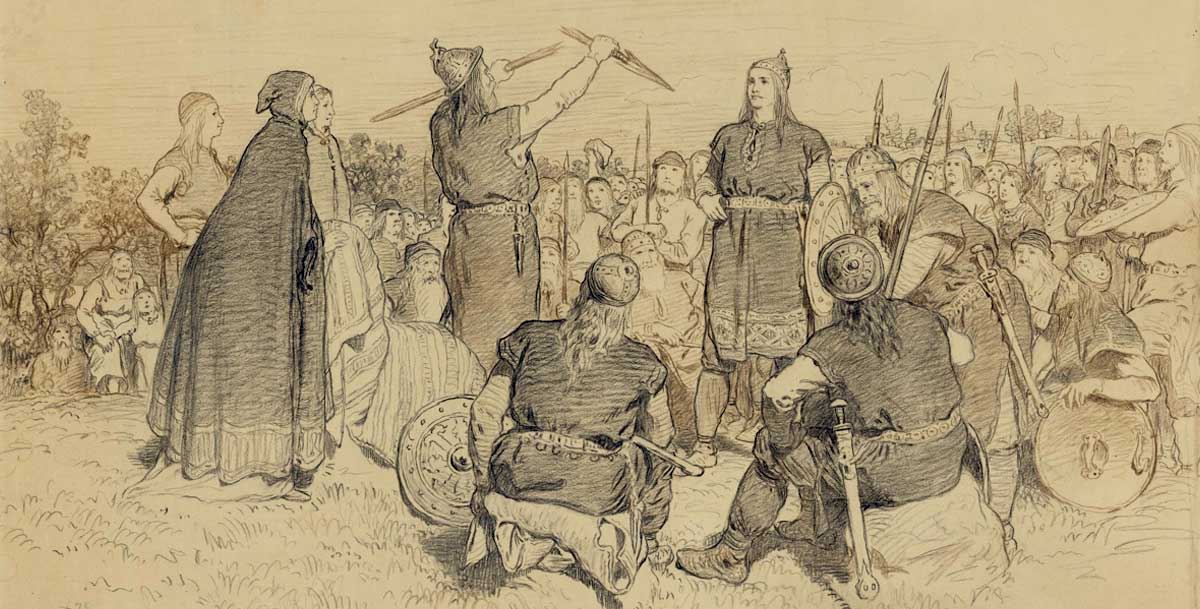
A perfect example of these independent ventures is the expedition of Bjorn Ironside, a prominent story in Norse tradition. Said to be the son of Ragnar Lothbrok, he joined a fleet that sailed from western France, raiding along the coast of the Iberian Peninsula before passing through the Straits of Gibraltar into the Mediterranean itself. From there, according to Swedish archaeologist Neil Price, they raided Morocco, the Balearic Isles, Italy, then possibly even as far as Greece, Constantinople and in Egypt at Alexandria.
A journey of such scale showed how a single fleet could circumnavigate Europe and potentially reach all the corners of the ancient Mediterranean world. Though they were defeated in battle by a Muslim fleet on their way homeward, the survivors returned to France and Ireland with spoils from across Africa, Southern Europe and even the Middle East. The Viking world was certainly plugged into Mediterranean trade networks through Europe, but their colonies never reached so far south.
Ingvar the Far-Traveled undertook a voyage of his own in the 11th century, beginning in Sweden and sailing all the way to the Caspian Sea in Central Asia. His crew travled down the Volga river to the Caspian Sea, where many of them perished in a place referred to as “Serkland” (i.e. the land of the Saracens) on commemorative runestones around Sweden. Though there is much speculation as to just where they died, this expedition to Central Asia tells us just how far a single crew could range in their careers.
North Atlantic Networks
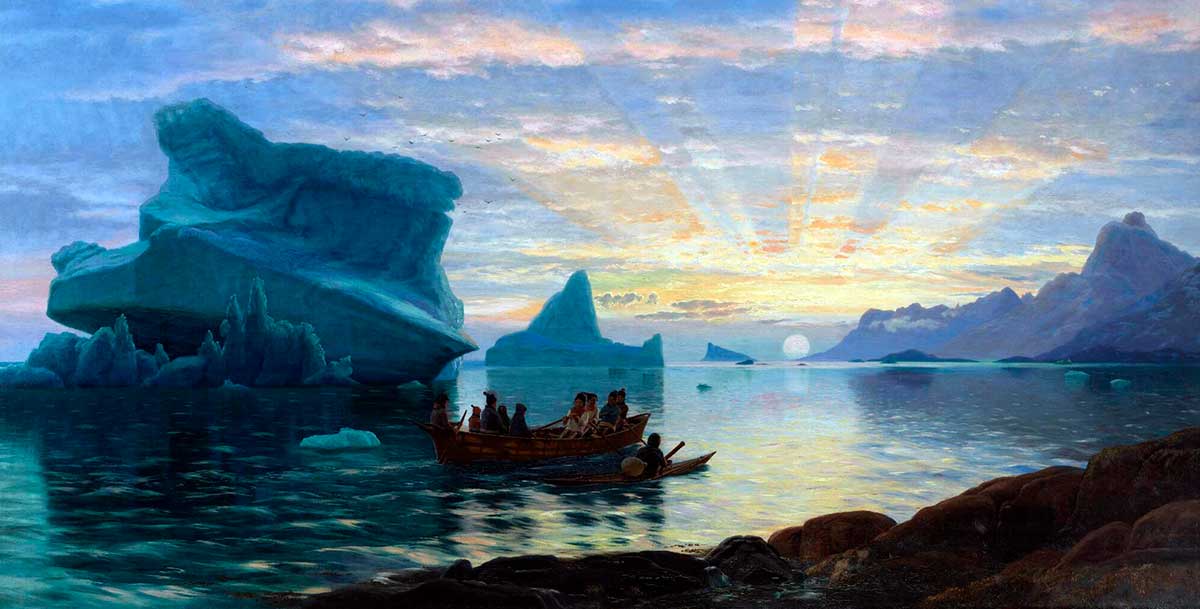
Perhaps the most significant development of Viking expansion was the settlement of the North Atlantic. Longships reached the uninhabited Faroe Islands and Iceland, then moved further west to Inuit-inhabited Greenland, with long-term settlements established on each. The Vinland Saga speaks of exploration even further west of Greenland, and while once regarded as myth, the discovery of a European settlement in Newfoundland in 1960 proved just how far they could sail. The site, known as L’Anse aux Meadows, consists of three houses, and appears to be set up for long term inhabitation. There are traces that suggest Norse culture reached further into Canada at Baffin Island and Labrador, and possibly even as far south as the Azores Islands, but the Newfoundland site is the furthest confirmed reach across the Atlantic.
While the Newfoundland settlement may not have been occupied for more than a few years, the communities who lived in Greenland and Iceland lasted generations. Greenland existed at the far margins of the European world, as it was inhabited by exiles from Norway. It was later incorporated into the Kingdom of Norway in the 13th century before settlements vanished centuries later. Iceland’s rulers also swore fealty to Norway during that period.
It is this expansion westward that makes the Norse explorers unique. Since antiquity, seafarers had ranged far and wide across the old world. Celtic culture moved across western Europe up to the British Isles, while Phoenicians, Carthaginians and Greeks spanned the Mediterranean and beyond. The Greek explorer Pytheas is said to have reached a land named “Thule” six days north of the British isles in the 4th century BC. Yet it was the Vikings who traversed the Atlantic and made contact with the Americas and their peoples, the first to do so from Europe. Beyond just traveling the North Atlantic, Viking explorers established long-standing settlements in the region and began to expand Europe’s knowledge of the west.
Diaspora Versus Empire
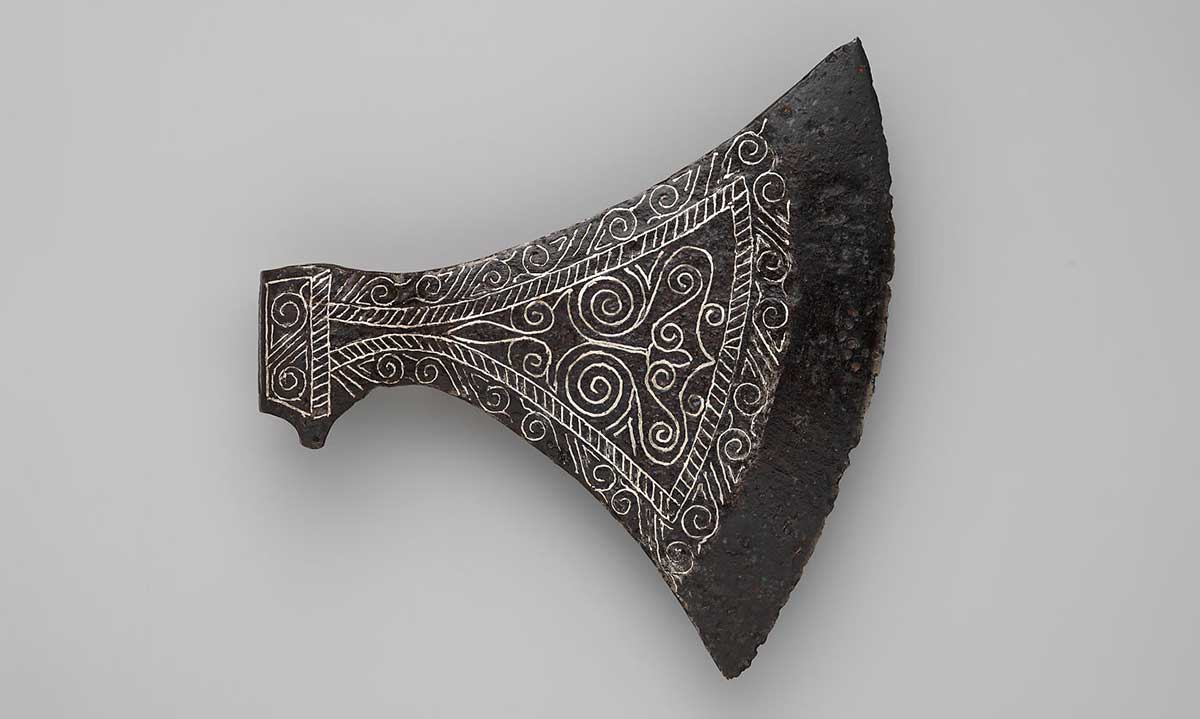
The broad reach of Viking influence is remarkable, with settlements spanning from the North Atlantic to the Eurasian steppe. Their widespread voyages brought them in contact and conflict with four continents, and represented an increasingly interconnected world. Historians are documenting what is now being called the global Middle Ages, where people across the world came into increasing contact with one another over the centuries.
While this would be accelerated by later explorers like Ibn Battuta, Zheng He and Marco Polo, the Vikings represent an early globalizing world that was expanding at the margins. During the “Viking Age” from the 8th-10th centuries, this network was made up of a few central kingdoms in Scandinavia, with independent settlements and communities around the world. From these holdings the Norse peoples ranged even further out, giving this diaspora a long reach.
The longships that set out from Norway, Sweden, Denmark may not have brought about a global empire centered under the rule of a single king or emperor, but they did establish a broad network across the world. The key difference here is that settlements, individuals and movements outside of Scandinavia were independent of northern European political control.
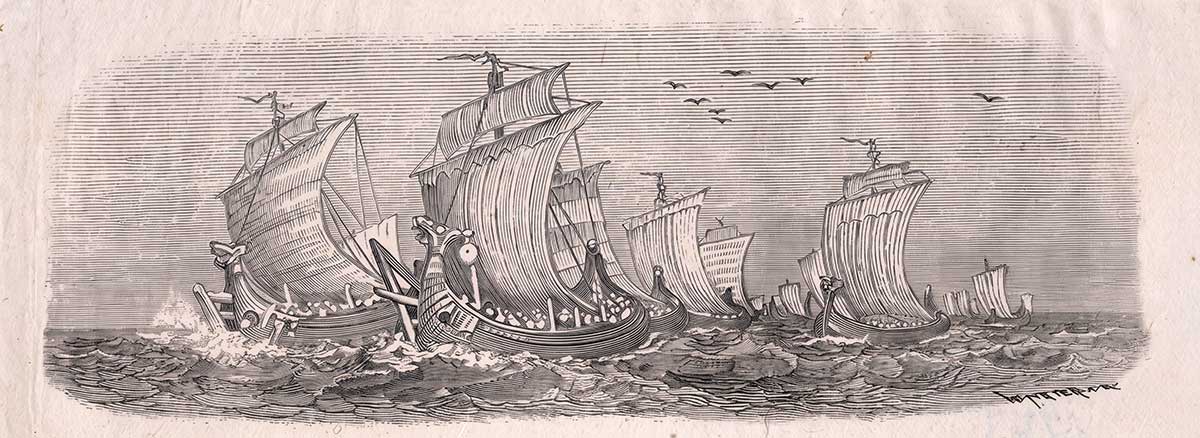
The extent of this network did, however, pave the way for later colonial enterprises. The aforementioned Normans gained their own reputation as invaders and explorers, especially from the 11th century onwards. In addition to their invasions of England and Ireland, they took part in campaigns across the known world. They founded the Kingdom of Sicily and established a presence in southern Italy and north Africa.
Norman knights were also involved in the Reconquista of the Iberian Peninsula, the Crusades, and the Castilian invasion of the Canary Islands. The invasion of the Canaries lasted almost the entirety of the 15th century and marked a transition from the wars of the Reconquista to unified Spain’s ambitions for global empire. As the Spanish, Portuguese, French and English rushed out to establish colonies and spheres of influence across the globe, the Scandinavian kingdoms came back into play.
Both Sweden and the kingdom of Denmark-Norway launched colonial enterprises of their own from the 17th century onward. Sweden founded colonies along the Delaware River and in the Caribbean, South America and West Africa, and even attempted to make inroads to India. Denmark-Norway maintained colonies in Iceland and Greenland, and reached as far as India, the Caribbean and the Gold Coast in Africa. Though smaller players compared to other colonial powers, they still pursued similar goals of empire, sailing the same routes pioneered by their Viking ancestors.