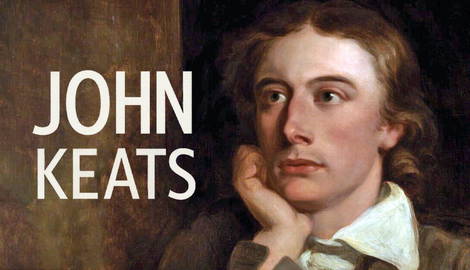
Before his death in 1821 aged only 25, John Keats wrote some of the most celebrated poetry in the English language. Most of that poetry, in fact, came in the space of just a few years, centering on the six odes of 1819. The poems Keats wrote that year cemented his status as one of the foremost Romantic poets, along with his admirer Percy Bysshe Shelley and his detractor Lord Byron. His poetry is distinctive for its sensuousness, dreaminess, and mythical magic.
“Season of mists and mellow fruitfulness,” John Keats, To Autumn
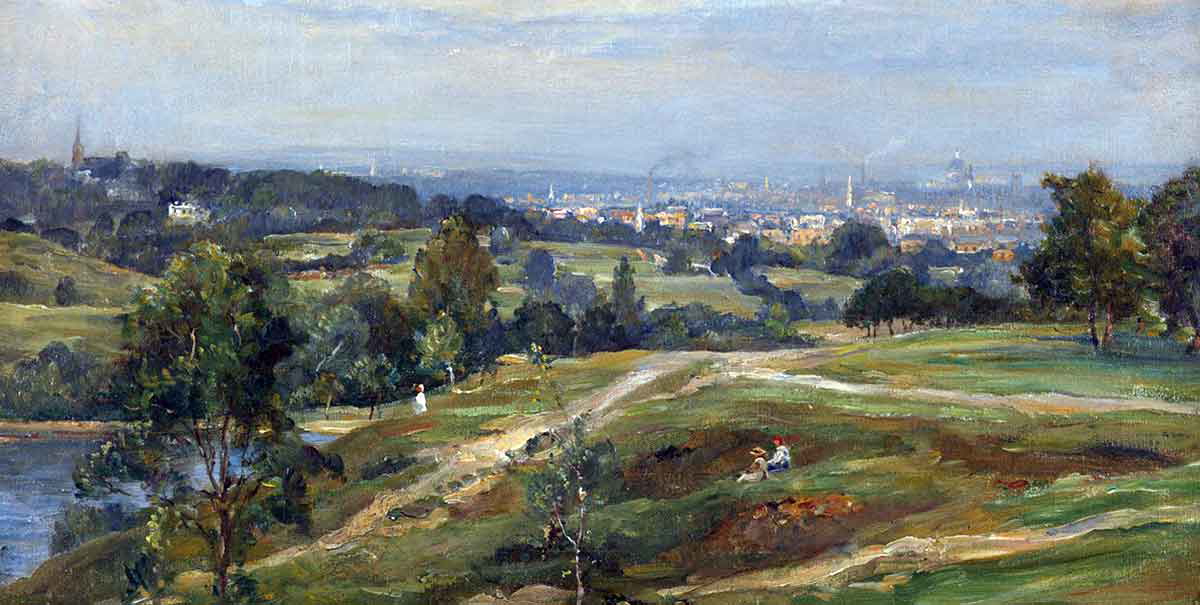
John Keats was born in the autumn (fall), a season he would later celebrate in one of his famous odes, at the end of October 1795. His father worked as an ostler, or stable hand, at an inn called the Swan and Hoop in Moorgate in London, where the family lived for the first eight years of Keats’s life.
Although he came from a fairly humble background and was apparently given to getting into fights with other local boys, Keats did go off to boarding school, where he first studied classics, history, and literature—all formative intellectual influences.
The young Keats was well acquainted with hardship. He was only eight when his father died after falling off his horse and only 14 when his mother died of tuberculosis. He and his three younger siblings (two brothers and one sister) were not only orphaned but were left struggling for money.
At this stage, although he was an avid reader of poetry, Keats was not in a position to seriously contemplate writing as a career. The other Romantic poets of his generation with whom he is often bracketed, Lord Byron and Percy Bysshe Shelley, had private means (although Shelley rebelled against his baronet father and cut himself off from his fortune). In contrast, Keats had to make his own way in the world.
“A poet is a sage / A humanist, physician to all men,” John Keats, The Fall of Hyperion
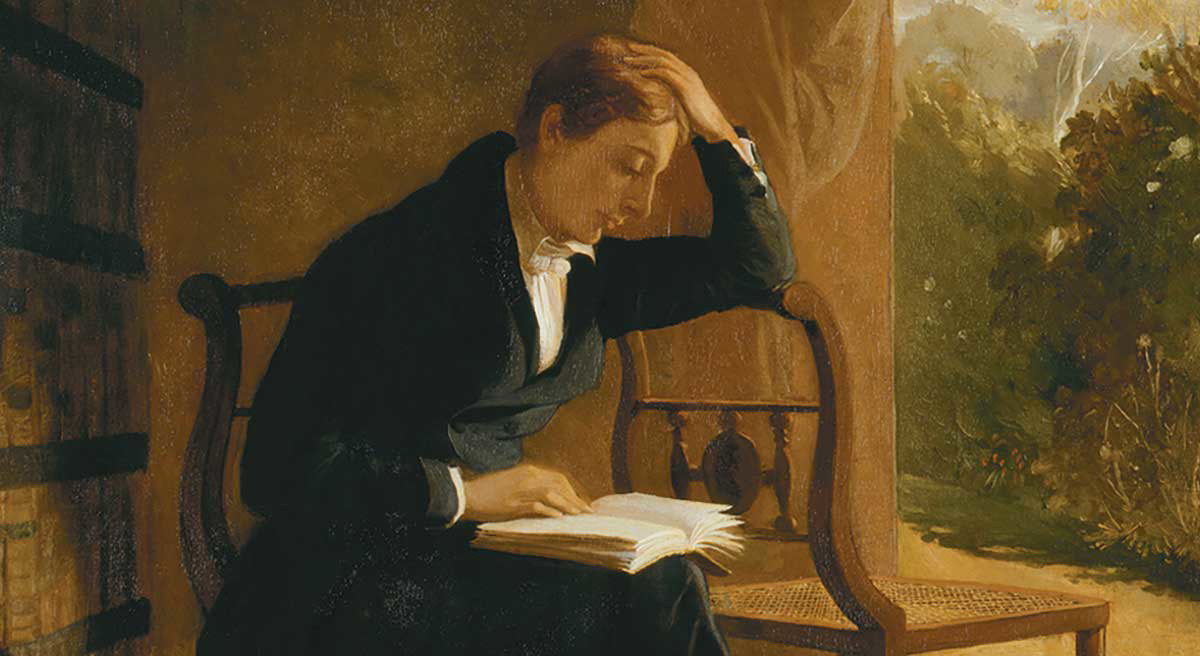
In 1810, aged 14, Keats began an apprenticeship with an apothecary called Thomas Hammond. This seems to have been partly out of convenience since Hammond was a neighbor of Keats’s grandmother, with whom he was now living. On the other hand, Keats also had a genuine interest in medicine, and spent the next five years studying with Hammond before enrolling as a medical student at Guy’s Hospital in London aged 19.
It is possible that Keats’s medical training influenced his poetry. His early professional experiences with medicine, especially with the notions of pain, healing, and inducing altered states of consciousness, may have found their way into the odes on Psyche, Melancholy, and Indolence—all of which explore intense states of mind. Ode to a Nightingale opens by referencing a heartache that is not merely metaphorical but physically redolent of the sensation of having consumed “hemlock” or an “opiate.”
Back in 1815, though, the dizzying heights of the odes were unimaginable. Keats qualified as an apothecary and surgeon in 1816. However, he was more and more drawn to poetry, modeling himself on the rising star Lord Byron, whose Childe Harold’s Pilgrimage had caused a huge stir in 1812 (Keats apparently wore his shirt without a tie and unbuttoned at the top in imitation of his fellow Romantic). Increasingly, Keats felt that he would live a life of agonizing regret if he did not at least try his hand at poetry.
“Fluttering among the faint Olympians,” John Keats, Ode to Psyche
Fortunately for Keats, he had connections in flourishing artistic circles. His friend Leigh Hunt had co-founded the radical newspaper The Examiner in 1808, and this was where Keats’s first published poem, a sonnet called O Solitude, appeared in 1816. This was an important year for Keats, as the two diverging paths that lay before him—medicine and poetry—became clearer than ever. Through Hunt, Keats met William Hazlitt, best remembered for his essays and criticism, which encapsulate the Romantic era’s perspective on the history of English literature and document encounters with key figures of the age.
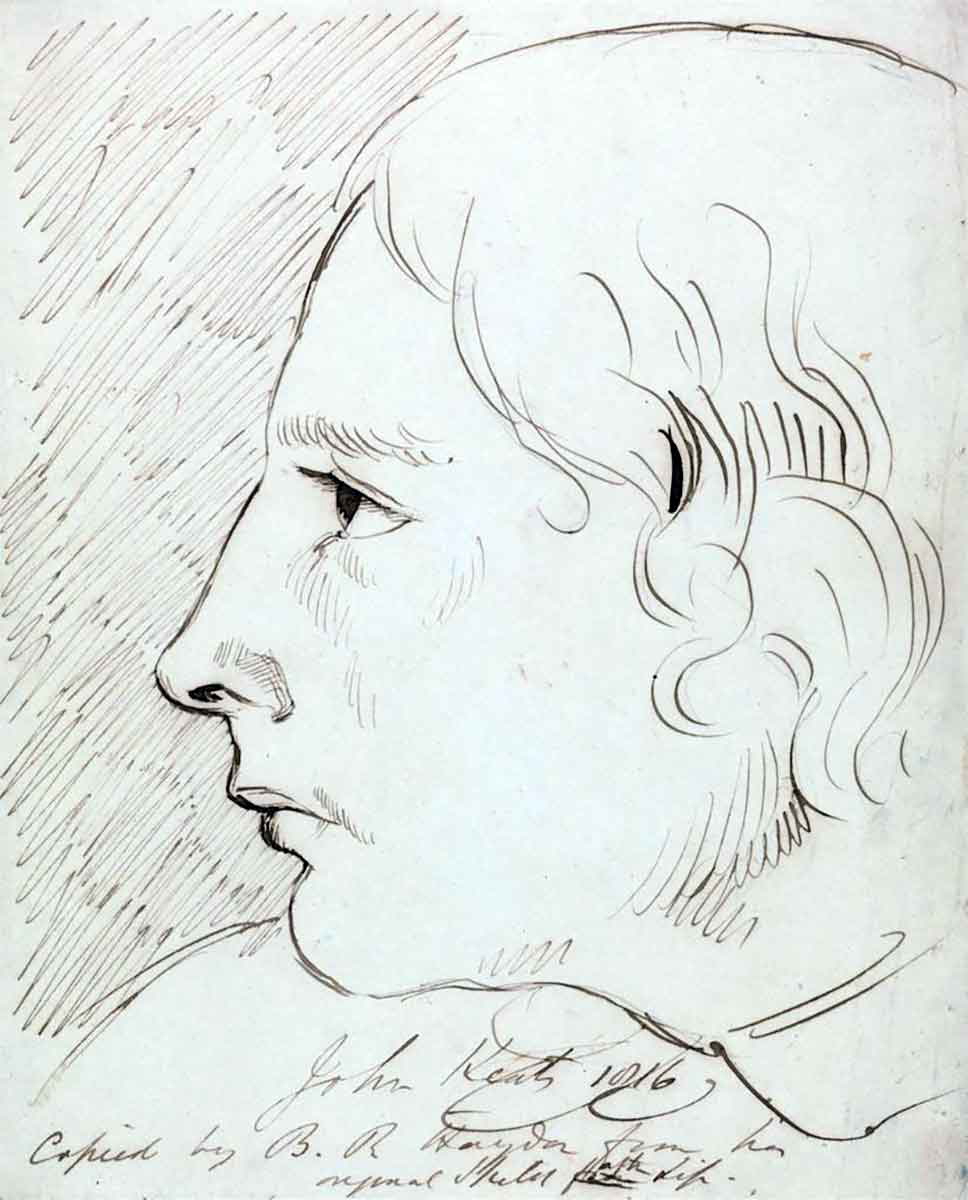
Hunt also introduced Keats to the painter Benjamin Robert Haydon, who shared Hunt’s and Hazlitt’s radical sensibilities in both politics and art. Bearing out his devotion to historical painting, Haydon produced pictures of some of the period’s most important players: Napoleon, the Duke of Wellington, George IV, William Wordsworth, Leigh Hunt, and Keats himself (Haydon made a few sketches of Keats and, as was popular at the time, sculpted a life mask of his face).
Another painter Keats met in 1816 was Joseph Severn, who was a similar age and also just starting out in his artistic career. The two became close friends, and Severn would eventually accompany Keats to Rome in 1820, providing written and visual accounts of the dying poet’s final months.
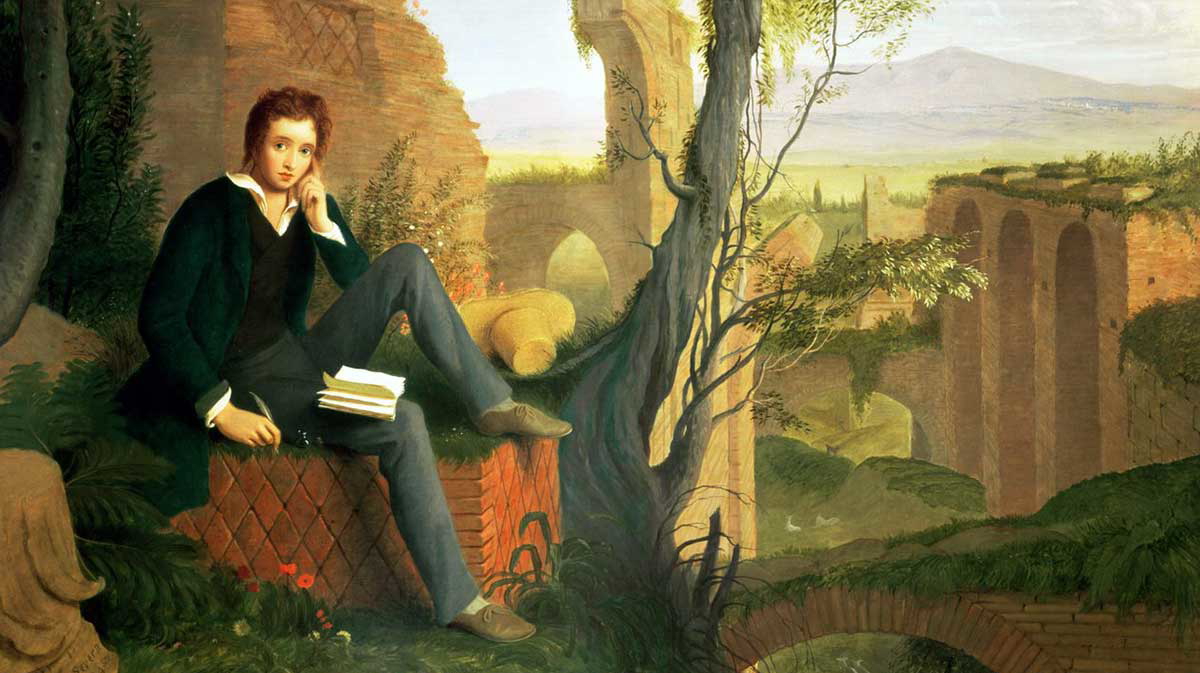
In the eyes of posterity, the most important acquaintance Keats made in 1816 was with Percy Bysshe Shelley at Hunt’s cottage in Hampstead. The two were similar in age, recently promoted together as “Young Poets” to look out for in an Examiner article by Hunt, both radical and idealistic about poetry and the world around them. As it was, the meeting was fairly inauspicious. Hunt suggested Shelley warmed to Keats more than vice versa, but neither could have known that, just six years later, they would be forever linked through their tragic, untimely deaths in Italy.
“In some melodious plot / Of beechen green,” John Keats, Ode to a Nightingale
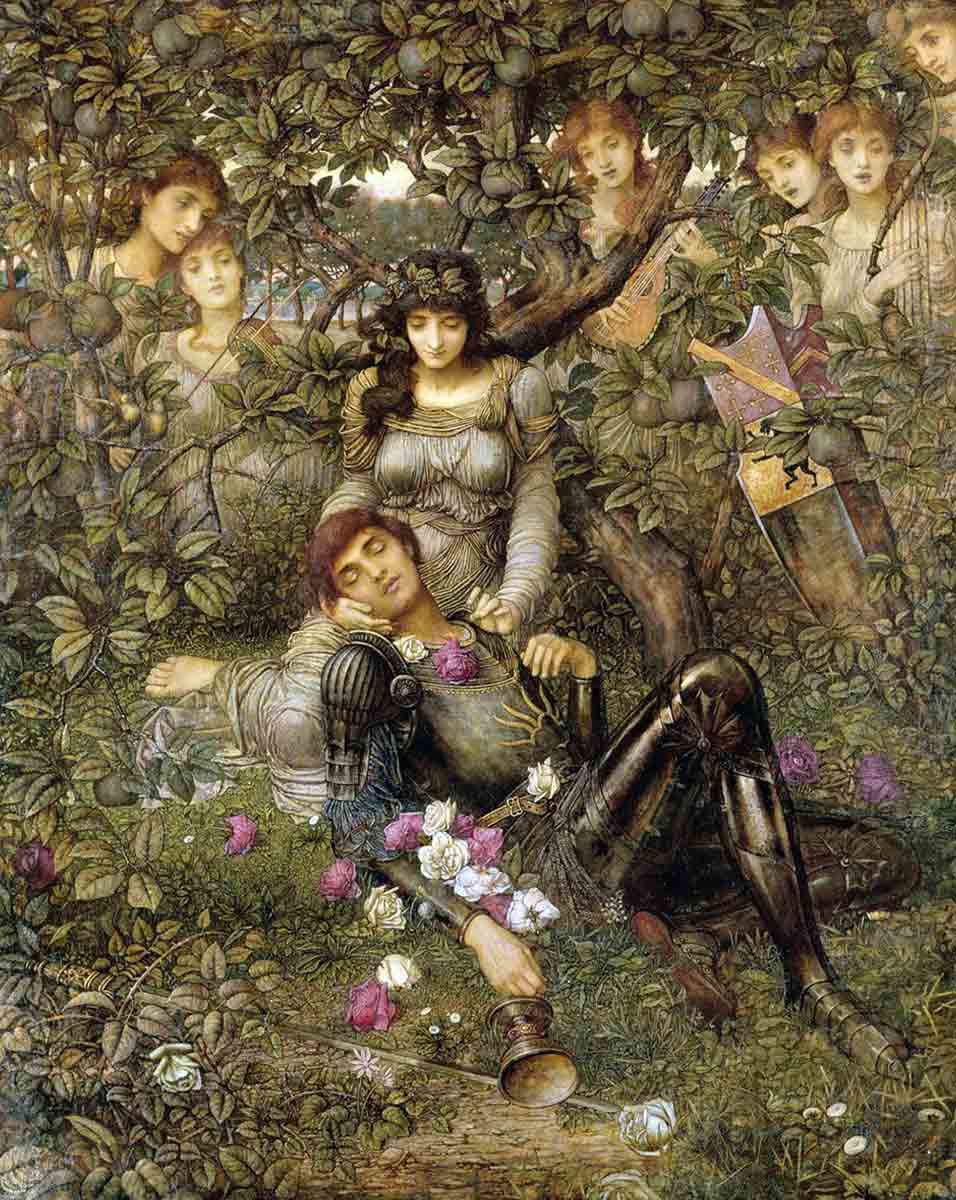
Keats’s early poetry revealed a mixture of influences: the poets he had been immersed in since his school days and the newer influences of the artistic circles he had encountered via Hunt. His first poem, which we have evidence for, is titled Imitation of Spenser (1814), a tribute to the 16th-century poet best known for The Faerie Queene.
Imitating Spenser involved replicating his verse form, the Spenserian stanza: each stanza was made up of nine lines, which comprised eight lines of iambic pentameter followed by one alexandrine line (iambic hexameter). The Spenserian stanza was experiencing something of a vogue at this time, Lord Byron having used it in Childe Harold’s Pilgrimage. Keats also paid tribute to Byron in 1814 with a sonnet called To Lord Byron.
Several of Keats’s early poems were sonnets (usually in the Petrarchan form, with eight lines—or an octave—on one theme, then a volta or turn for the final six lines, or sestet). He used the sonnet form for On First Looking Into Chapman’s Homer, which describes the elation of encountering the Classical poet’s works for the first time, and On Seeing the Elgin Marbles, about his almost overwhelming astonishment at seeing the ancient Greek sculptures, then relatively new to English eyes, having only been taken from the Parthenon in 1806.
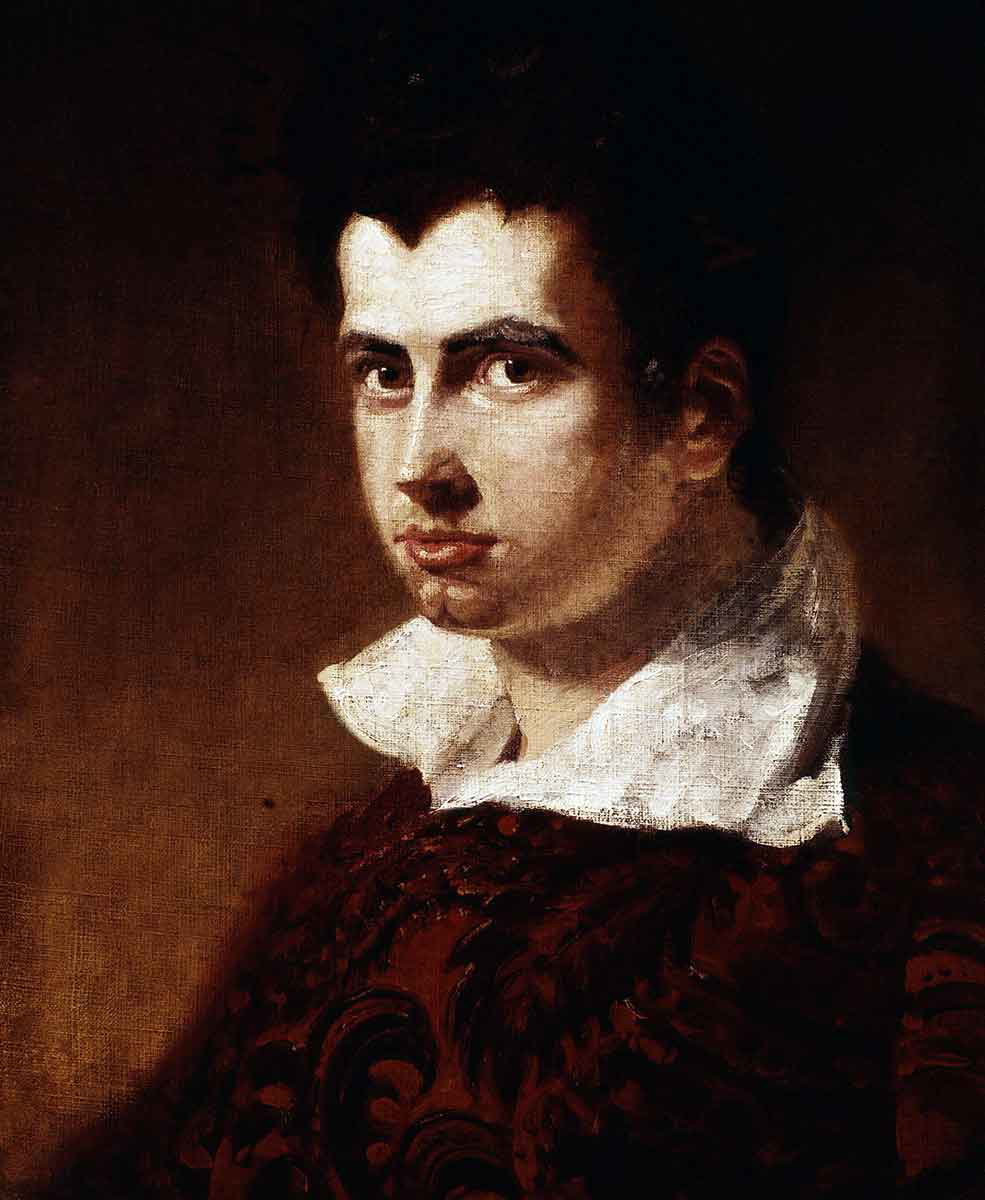
Another sonnet, On the Grasshopper and Cricket, Keats wrote during one of several poetry contests with Hunt (whose own sonnet, To the Grasshopper and the Cricket, he published along with Keats’s in the Examiner). This contest, held to see who could write the best sonnet on the same subject in just 15 minutes, typifies the context of Keats’s early writing: impulsive, spontaneous, sparked by fleeting experiences among friends.
Although Keats took more time and care over his first book-length poem, Endymion, it was still received very much in the context of his association with Hunt and what reviewers were now, derogatorily, calling the Cockney School. In 1817, the conservative Blackwood’s Magazine had attacked Hunt, ostensibly for his use of so-called vulgar language and ignorance of Greek or Latin—implying that poets ought to be classically educated—but also taking issue with his morals and politics (Hunt had been imprisoned for two years for libeling the Prince Regent).
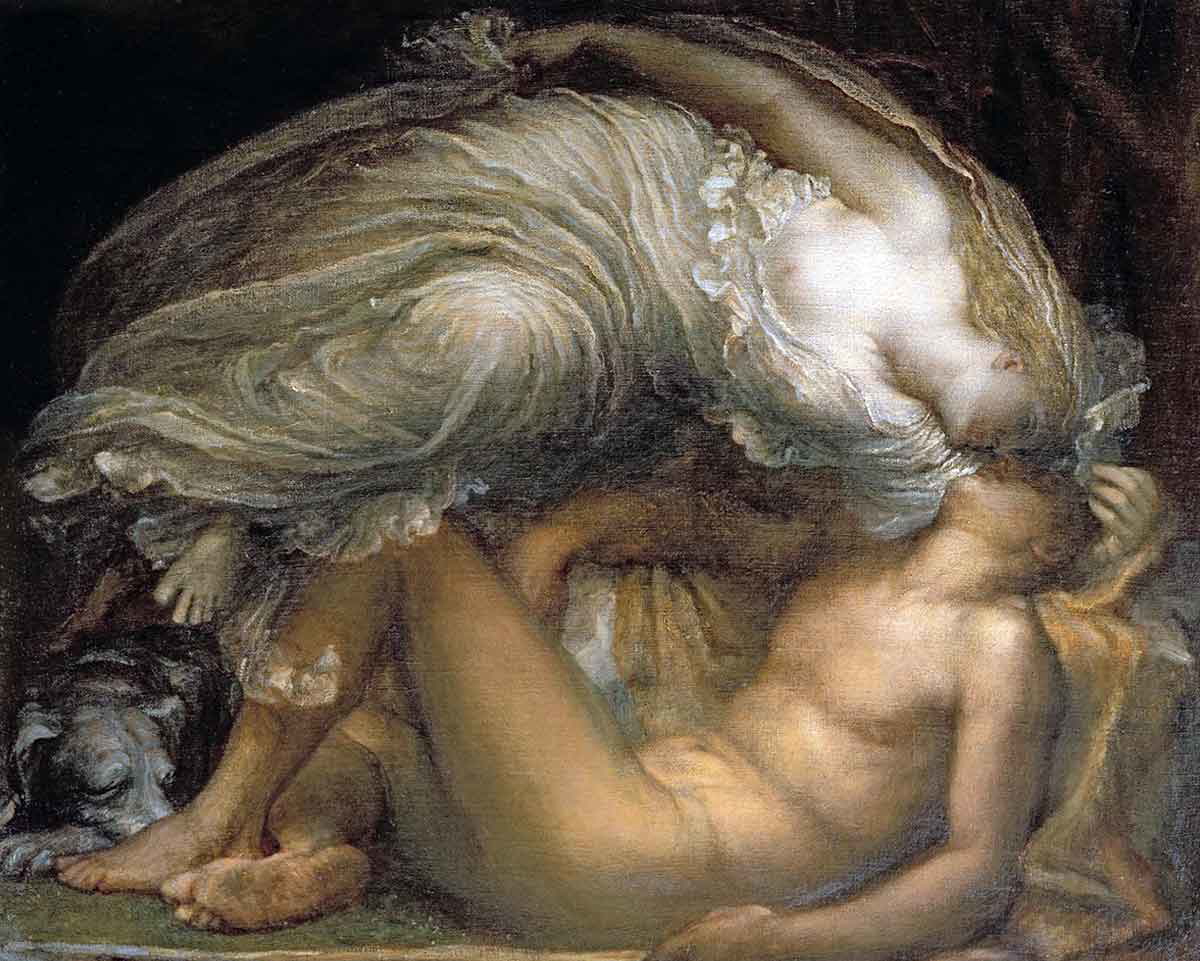
When Keats published Endymion, a retelling of the Greek myth of a shepherd boy loved by the moon goddess Selene, in 1818, he anticipated that it would be tarred with the same brush as Hunt’s poetry. He even included a preface apologizing for the poem’s immaturity. This did not stop Blackwood’s publishing a disparaging review that riffed on Keats’s medical background, deeming his versifying a kind of illness, “Metromanie,” and recommending he cure himself of this sickness by going back to being a doctor. Although Keats went on to do greater things just a year later, this review continued to damage his reputation. After he died, Byron condescendingly joked about the incident in his Don Juan (1823): “’Tis strange the mind, that very fiery particle, / Should let itself be snuffed out by an Article.”
“Pale-mouthed prophet dreaming,” John Keats, Ode to Psyche
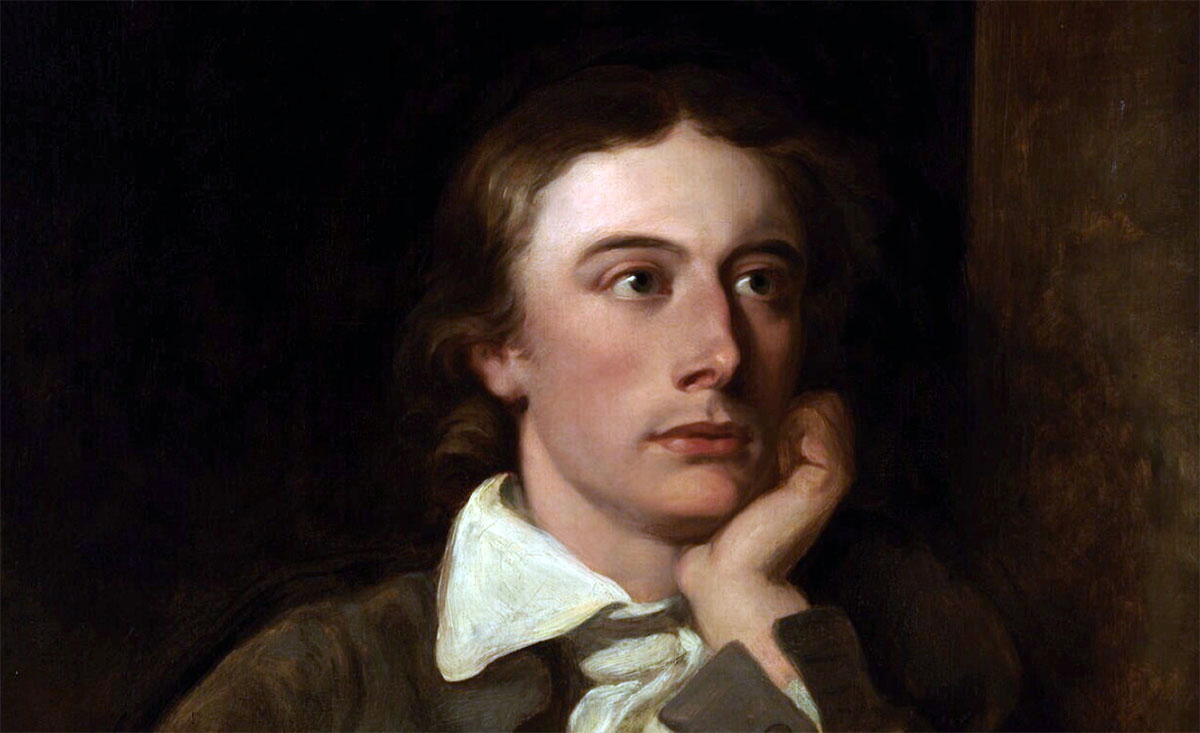
In 1818, a series of personal issues befell Keats. For several months, he and his brother George had been nursing their brother Tom, who, like their mother, had tuberculosis. It is likely that both George and John Keats caught the disease while nursing Tom, who died at the end of 1818. Keats also continued to experience money troubles, with poetry bringing neither the fame nor the prosperity he might have hoped to secure.
Keats went into 1819 in low spirits, telling friends he was struggling to write. His planned epic poem, Hyperion, intended as an advance on what Endymion had begun, was not quite taking shape, and Keats ultimately judged it too “Miltonic”—that is, its versification resembled the Latinate construction of John Milton’s Paradise Lost. Like many Romantic poems, Hyperion was eventually published in fragmentary form as a testament to the artist’s striving after an impossible ideal.
By April, Keats had moved away from Milton’s example and from his earlier attachment to the sonnet and Spenserian stanza and had begun to compose odes—a type of poem that proclaims the glory of a particular person, object, or idea. As a form, the ode was lyrical and expressive, with certain metrical rules like the forms Keats had used previously, but with the scope to explore the subjective realm of the poet’s imagination, which so interested him. His odes did not celebrate heroes or abstract but exalted themes such as love and friendship: he wrote Odes on Melancholy and Indolence, musing on the strange, sudden onset of these moods.
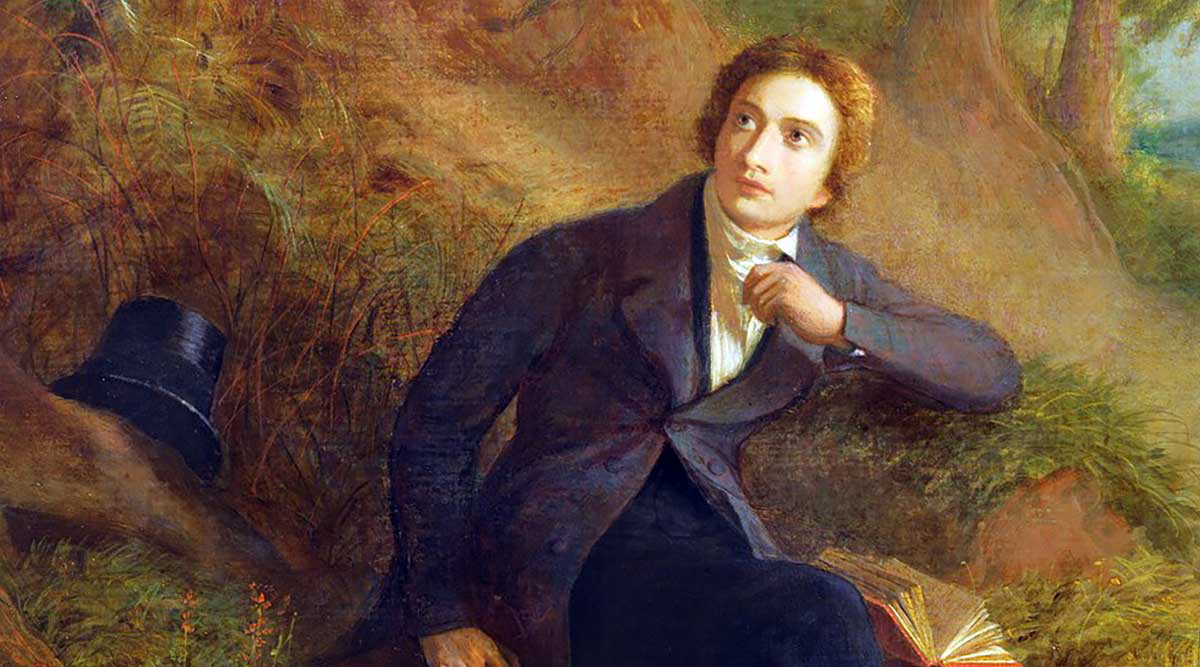
Ode to a Nightingale similarly deals with a transient but deeply affecting mood. Apparently written while Keats sat under a plum tree in his Hampstead garden on a summer morning, the poem takes up the nightingale’s song as an allegory for the brief but intense pleasures of life. Addressing the nightingale, Keats remarks that its song grants it a kind of immortality for which the poet can only yearn.
The poem is a prime example of themes that occur throughout Keats’s poetry: the idea that sleeping and dreaming provide a peaceful, sensuous simulation of death, a state that is alluring because it represents freedom from pain and strife. “For many a time,” he writes, “I have been half in love with easeful Death” (Keats 1819, p. 1057).
In the ekphrastic poem (a poem describing another work of art) Ode on a Grecian Urn, Keats continued his interest in the idea that art—like the nightingale’s song—lives on after our lives are over and thus might perpetuate the identity of the artist for future generations. The maker of the Grecian urn that the poet addresses, for instance, had certain ideals about beauty that last for posterity because viewers of the urn throughout the generations find their imaginations captured by it. The ode culminates with the famous lines, “’Beauty is Truth, Truth Beauty.’ – that is all / Ye know on earth, and all ye need to know” (Keats 1819, p. 1057), which represent the enlightenment the urn bestows on the viewer.
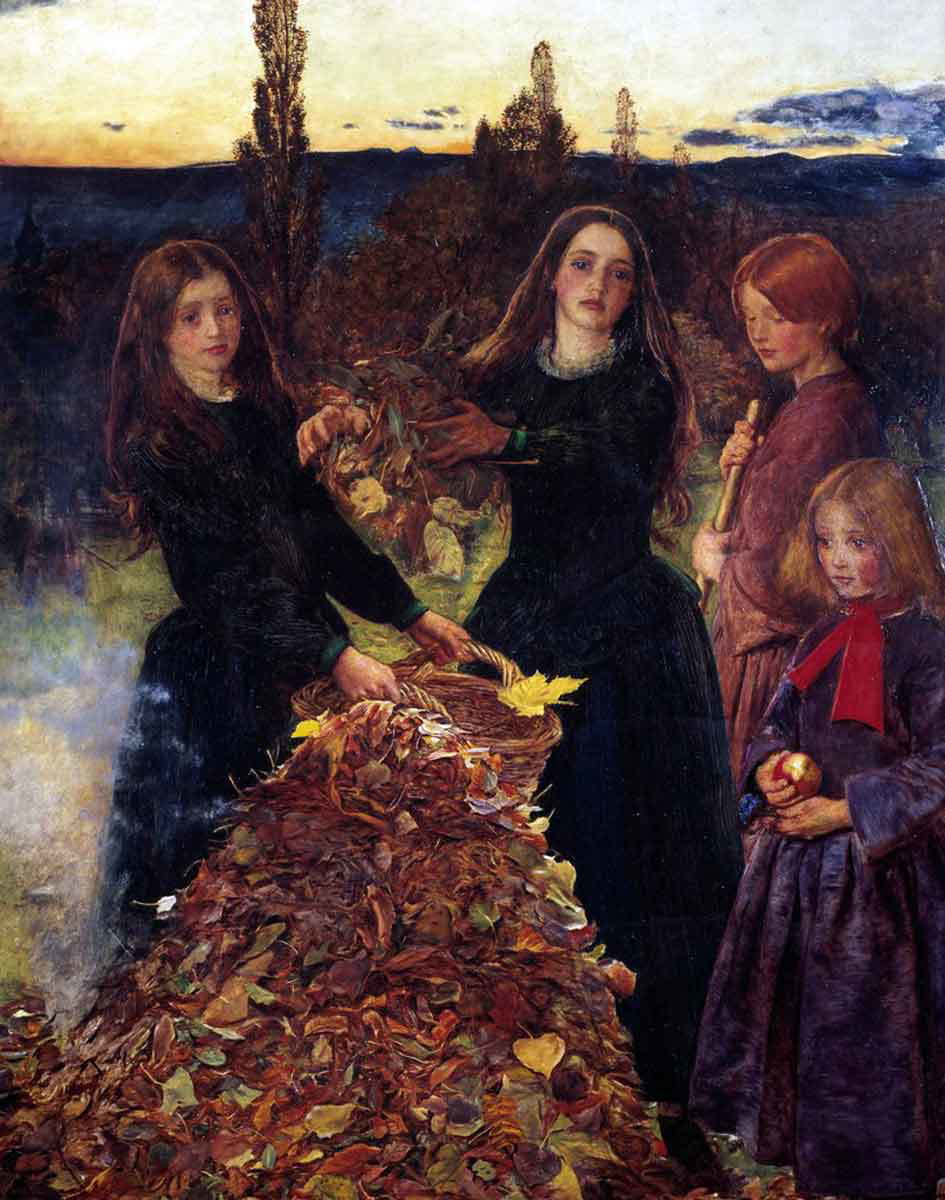
In September 1819, Keats wrote his last ode, To Autumn. This work departed from the other odes by omitting references to classical and biblical figures and adopting a far more bucolic tone to muse on the passage of time. Its seasonal reflections on accumulation and gathering, juxtaposed with impending deprivation and decline, are apt: this was Keats’s last poem, the culmination of a remarkable “season of…fruitfulness” (as he puts it in the first line), but which pointed towards his own illness and decline.
“Pillowed upon my fair love’s ripening breast,” John Keats, Bright Star
Throughout 1820, Keats’s health worsened: he began to experience shortness of breath and a tight chest and started coughing up blood. Although one doctor told him his nervous condition was a result of over-indulgence in poetry, it was increasingly clear that Keats had contracted tuberculosis like his mother and brother, and by fall, he was certain he would not survive another winter in England.
He resolved to leave for the warmer Mediterranean climate, but not without a pang at the prospect of separation from a woman a few years his junior, Fanny Brawne, whom he called in one poem his “Bright Star.”
Actually, Brawne may not have been the original “Bright Star” of this sonnet, written some time in 1818 or 1819, perhaps when Keats was still in love with Isabella Jones, whom he had met a few years earlier. Jones is the first woman Keats wrote poetry for: not just Bright Star, Would I Were Steadfast as Thou Art, but also The Eve of St Agnes and The Eve of St. Mark. The latter was unfinished and took up the idea that, on the night before the feast of St. Mark, anyone watching from a church porch might see the ghosts of those destined to die in the coming year passing into the church.
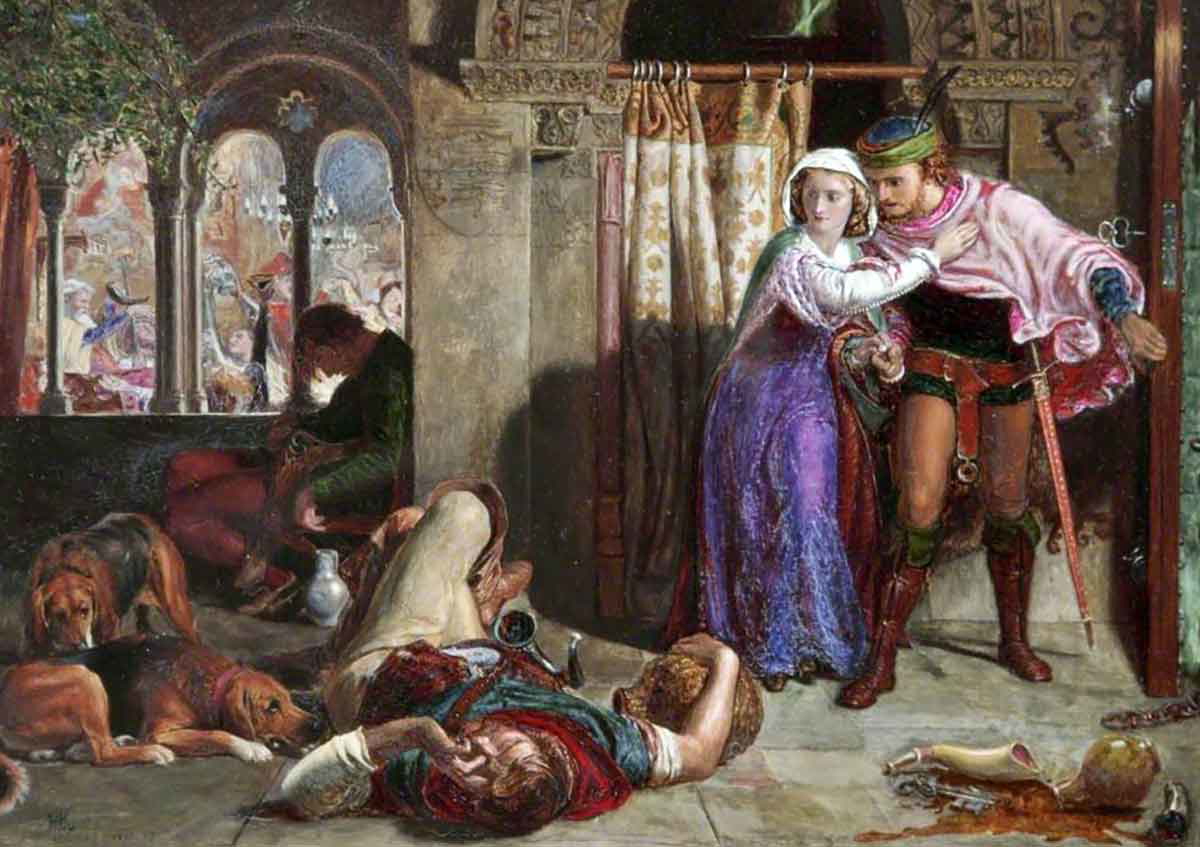
The Eve of St. Agnes deals with a similar tradition: the night before the feast of St. Agnes, young women are supposed to be able to summon dreams of their future husbands. Perhaps inspired by his relationship with Jones, Keats’s poem conjures up the strength of desire felt by the protagonist, Madeline, as she waits in her bed-chamber, and the intimacy of her tryst with Porphyro, who appears not as a dream but in person, before they flee together into the night.
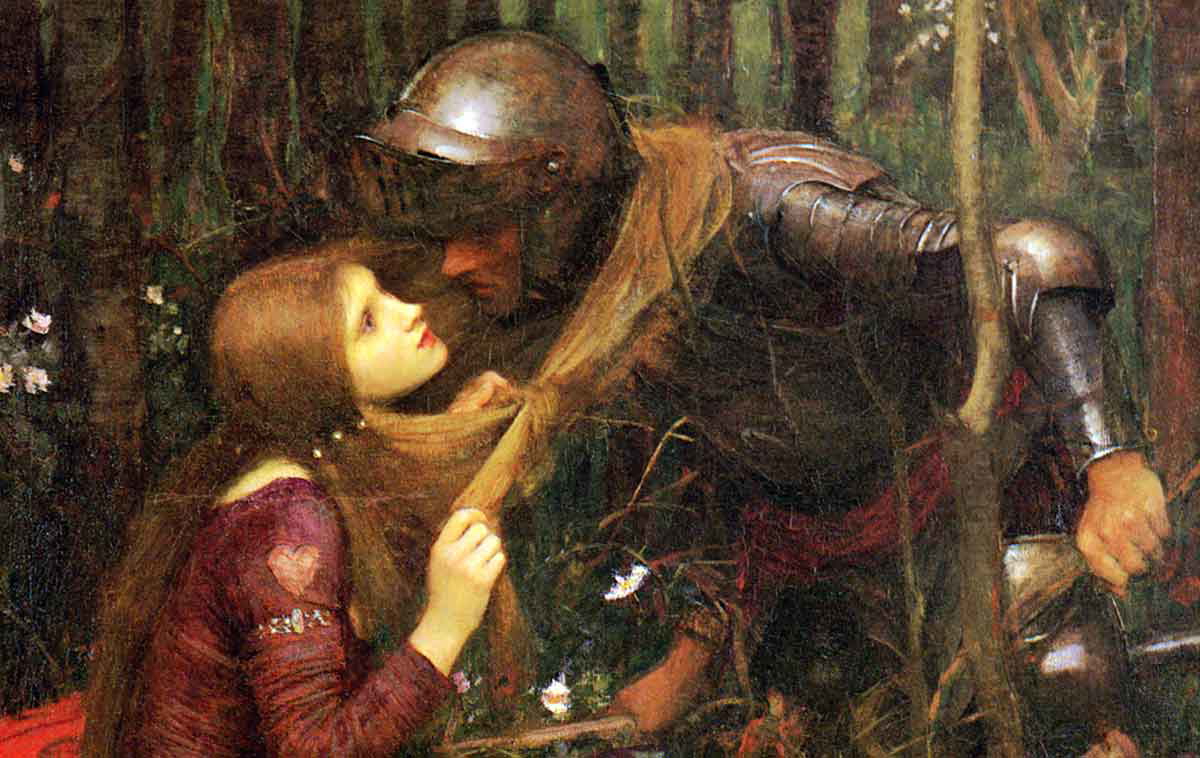
This was not Keats’s only poem about seduction. In 1819, after he had met Fanny Brawne (although it is uncertain whether she inspired the poem), he wrote La Belle Dame sans Merci, in which a lovesick knight tells of a fairy-like woman whose beautiful looks and voice have so bewitched him that he (along with the other knights and princes she has enraptured) lies languishing. A longer poem, Lamia, written shortly after La Belle Dame sans Merci, took a similar interest in dangerous beauty: Lamia is, according to myth, a half-human, half-snake seductress.
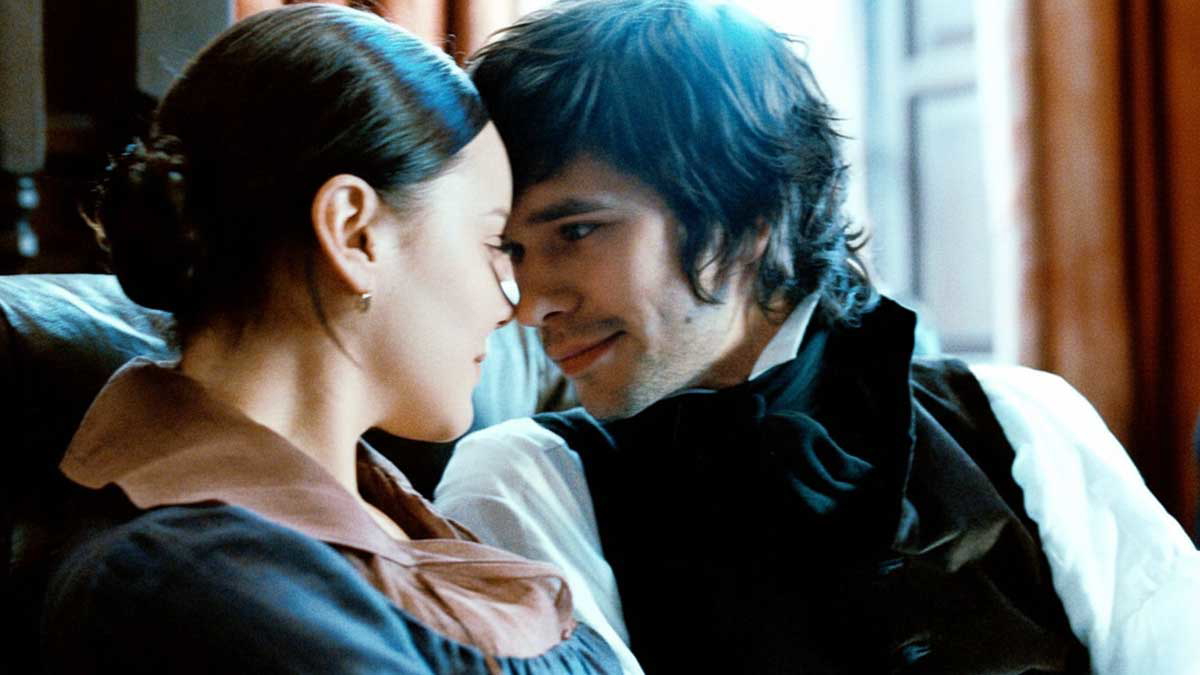
By the middle of 1819, Keats only had eyes for Brawne, whose family occupied the other half of the building in Hampstead where Keats lived. Although they saw each other daily and read together, his illness and precarious financial position meant that they could not be engaged. His letters to her throughout 1819 and 1820 are full of longing and frustration that he could not be with her.
Bright Star, which he possibly revised from its original draft to give it to Brawne, takes up the image of the star—much like the nightingale in his ode—as an ideal of constancy, something that outlasts the vagaries of ordinary life. Keats wishes he could offer a similar constancy to Brawne, an “unchangeable” love whose only disturbance is the “swell and fall” of her breast as she sleeps. As always in Keats, though, sleep brings thoughts of death, and the sonnet’s final couplet resolves that if he cannot live in this “sweet unrest” with Brawne, he must “swoon to death” (Keats 1819, p. 1076).
“Youth grows pale, and spectre-thin, and dies,” John Keats, Ode to a Nightingale
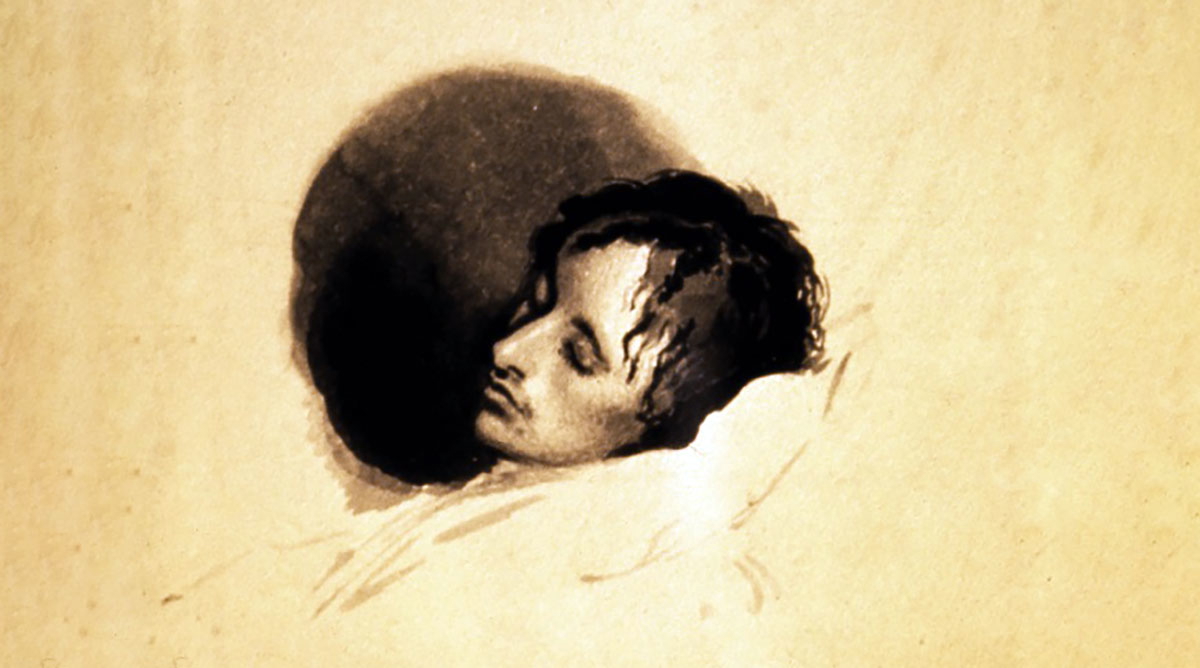
In September 1820, Keats left England with his painter friend Joseph Severn, intending to recuperate in Italy. Shelley, who was now living in Pisa after fleeing England with his new wife, Mary Godwin, in 1818, invited Keats to stay with him.
Keats and Shelley were now exchanging friendly letters, Shelley expressing concern for the younger poet’s health, Keats confiding that he wished he had not been so quick to publish Endymion back in 1818. However, in 1820, Keats declined Shelley’s offer and went to Rome instead. The villa he stayed in, next to the Spanish Steps, now houses the Keats-Shelley Memorial House museum.
Keats’s stay in Rome was not long. He and Severn arrived in November 1820 to a climate not much better than that of England, and his health rapidly declined. He was bed-bound, coughing up blood, and nursed by Severn, who kept an account of the things Keats said about his impending death—feeling that his real life had already ended, and he was now “leading a posthumous existence.”
On February 23, 1821, Keats died, aged 25, and was buried in Rome’s Protestant Cemetery. At his request, his gravestone did not include his name, dates of birth, or death, only referring to him as a “young English poet.” Beneath this, it read: “Here lies One whose Name was writ in Water,” capturing the tension between the transient and the eternal, which is often featured in his poetry.
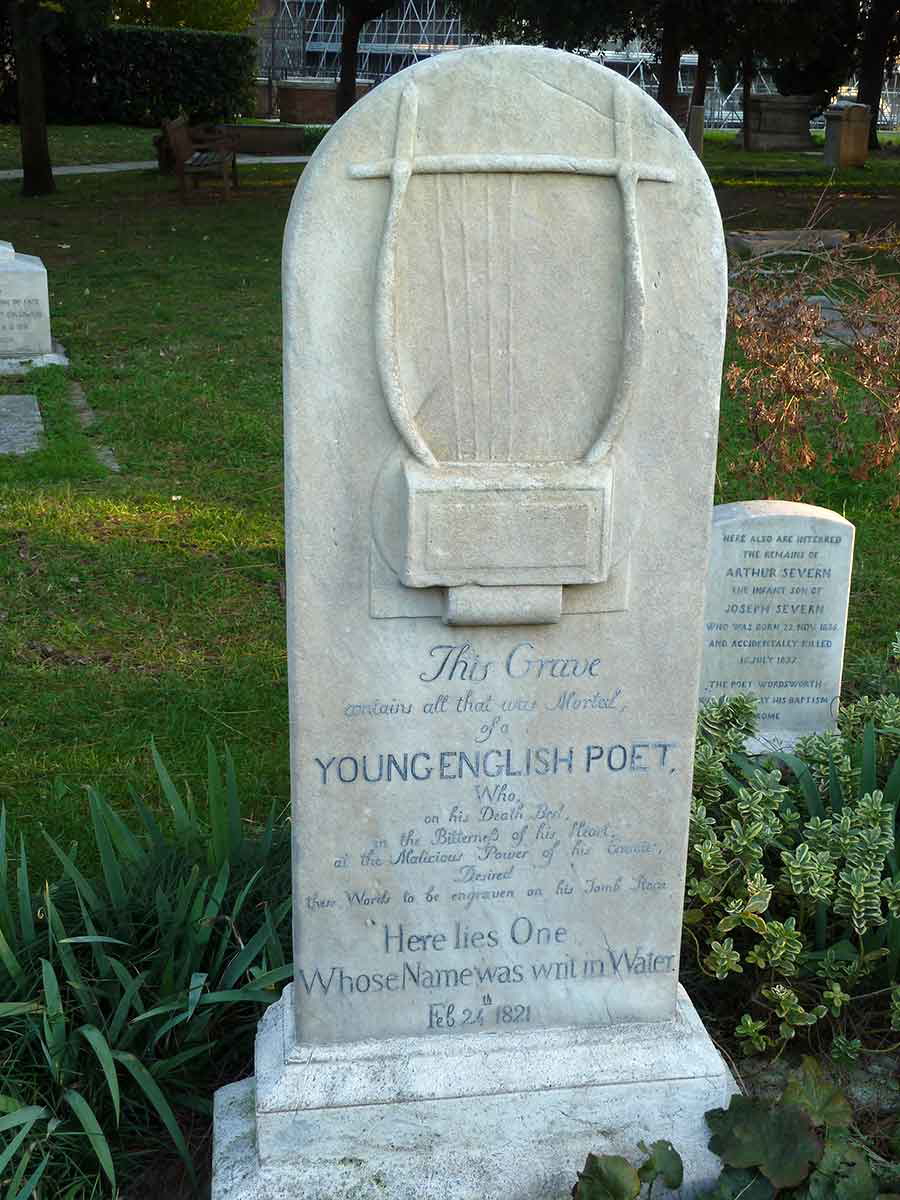
Just over a year later, Keats was joined in the Protestant Cemetery by Shelley, whose ashes were buried nearby after the poet had drowned off the coast of Livorno. Keats had found few readers in his lifetime, but one of them was Shelley, who owned a copy of the 1820 collection, which included Lamia and The Eve of St Agnes. When Shelley’s body was washed ashore, this copy was found in his jacket pocket, and so Keats was bound up with the legend of the fellow Romantic poet.
This was not all: immediately after Keats’s death in February 1821, Shelley had written the elegy Adonais, casting the tragic young poet as a classical deity gone before his time. Shelley’s poem played a pivotal part in shaping the lasting perception of Keats as a vulnerable, sensitive figure destroyed by English critics—a damnation of his disowned country that Shelley was eager to put forward. Yet Adonais also presented Keats in a light he would surely have welcomed, given his own musings on art and immortality in the odes. In death, Shelley proclaims, Keats has entered a blissful afterlife:
“Peace, peace! He is not dead, he doth not sleep –
He hath awakened from the dream of life –
‘Tis we who, lost in stormy visions, keep
With phantoms an unprofitable strife,
And in mad trance, strike with our spirit’s knife
Invulnerable nothings.” (Shelley 1821, p. 982)
This afterlife, as Keats himself might have predicted, was his art. The poet’s untimely death, not to mention his connection with Shelley, shot him to fame, and he finally gained the readers he had longed for in life—celebrated as an ‘immortal’ by the Pre-Raphaelite Brotherhood and beloved by generations ever since.
Bibliography:
All Keats quotations and the quotation from Shelley’s Adonais, taken from Wu, Duncan, ed. (1996), Romanticism: An Anthology. Oxford: Blackwell.