
Leonardo da Vinci, one of the most extraordinary figures of the Renaissance, left behind a body of work that continues to captivate scholars and art lovers alike. Renowned for his mastery of anatomy and invention, Leonardo often left works unfinished, indicative of his relentless pursuit of perfection. His surviving paintings and sketches are scattered across museums and collections worldwide, offering insight into his creative process and evolving techniques. This global distribution of works allows for countless people to enjoy and admire the skill of this great artist.
Leonardo da Vinci and His Unfinished Works
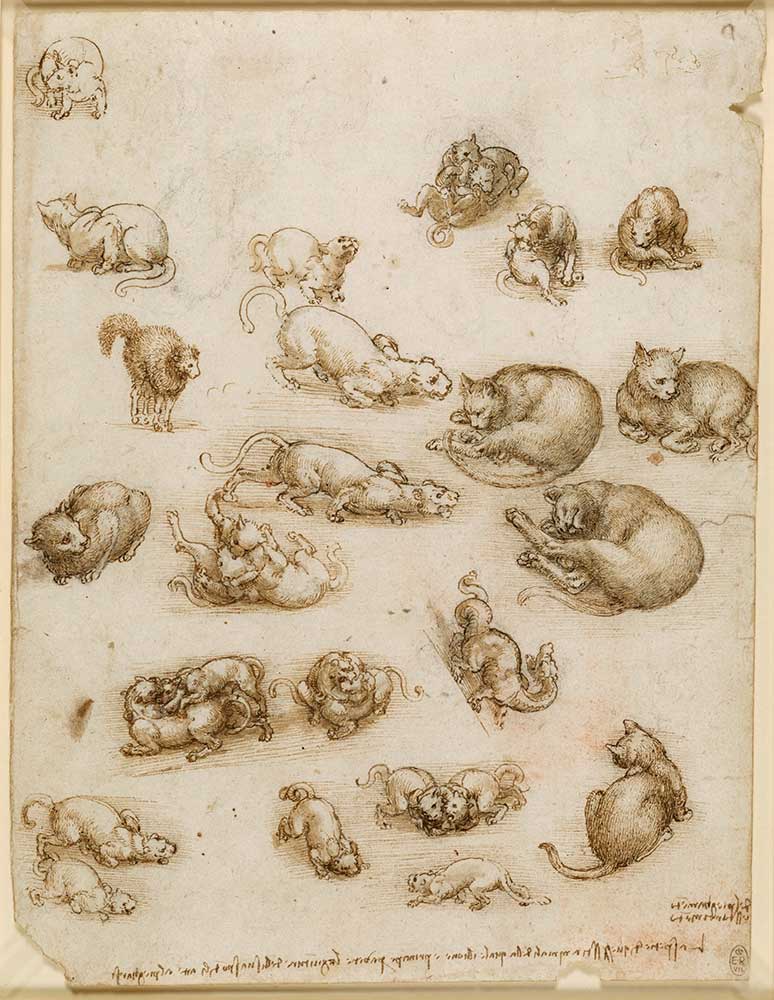
Leonardo da Vinci (1452-1519), the renowned Florentine artist, was born in a small village in Tuscany and trained in one of Florence’s most important workshops, that of Andrea del Verrocchio (1453-1488). It was there that he undoubtedly cultivated his creativity across multiple fields and disciplines. We have evidence of the breadth and ingenuity of his mind from his preserved manuscripts, drawings, and notes; thousands of pages.
It is a well-established fact that most of his works are incomplete, and that he was frequently inconsistent in fulfilling the commissions assigned to him. Leonardo recognized himself alone as having the authority to judge whether a painting was complete, and for this reason he often refused to hand it over. As he famously asserted, “art is never finished, only abandoned.”

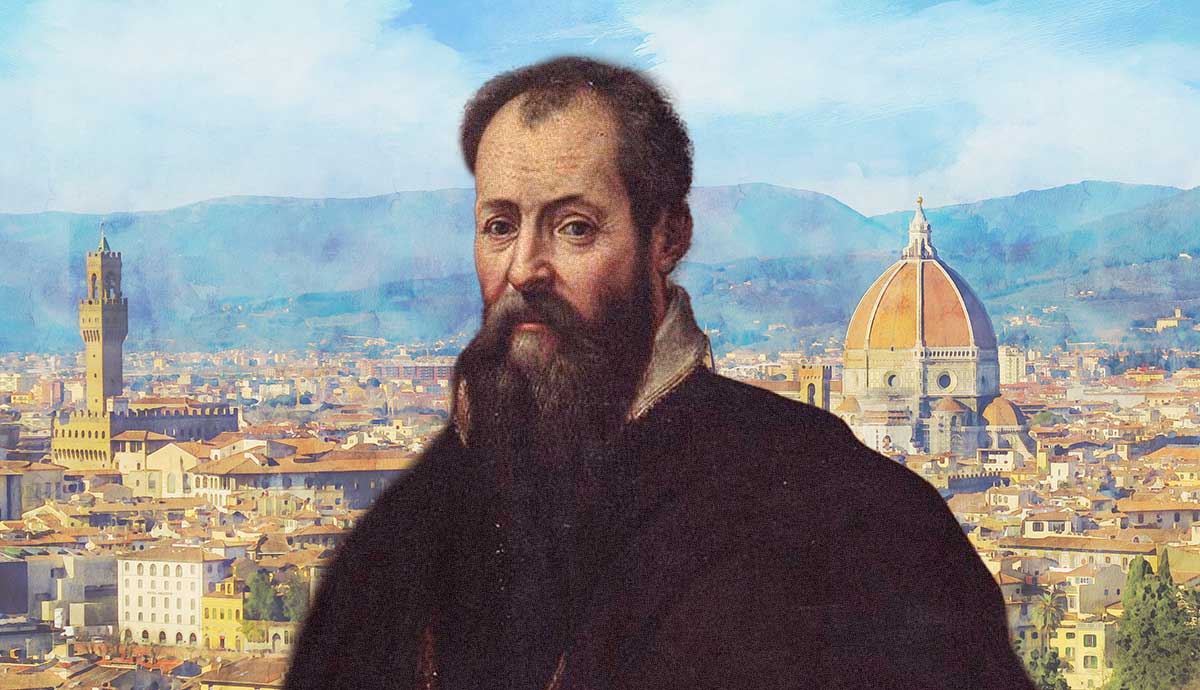
Giorgio Vasari, referring to Leonardo’s tendency to leave works unfinished, characteristically noted:
“Undoubtedly, because of his profound knowledge of painting, Leonardo began so many things without completing them; for he was convinced that his hands, with all their skill, could never express the subtle, intangible, and marvelous ideas of his imagination…. The truth is that Leonardo’s unquestionably deep and lofty spirit was so ambitious that it became, in itself, an obstacle to the completion of his works; for he strove ceaselessly to add beauty to beauty, excellence to excellence, and perfection to perfection…”
It is therefore unsurprising that only a small number of Leonardo’s works were completed and are there for us to admire today. It is worth noting, however, that there are thousands of his surviving preparatory drawings. These are housed in public and private collections and galleries worldwide. Leonardo’s completed works can be found not only in Italy but also in museums in the Vatican, France, Germany, the United States, Great Britain, Poland, Russia, and the Netherlands.
The Uffizi Gallery, Florence
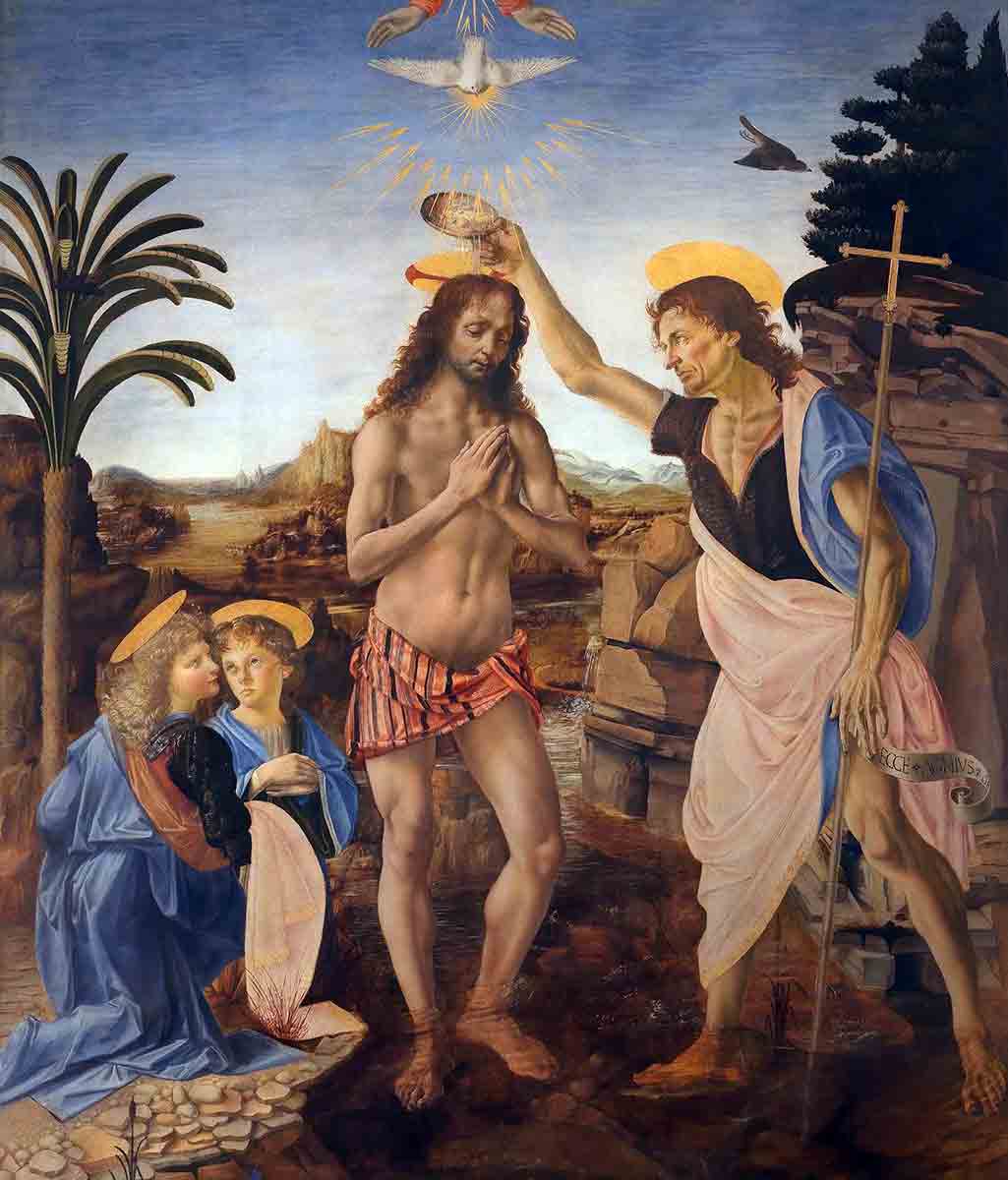
A collaboration in Verrocchio’s workshop, The Baptism of Christ juxtaposes Verrocchio’s firm contours with Leonardo’s softer modeling and atmospheric landscape. The left angel and riverbank reveal Leonardo’s emerging sensibility for natural light and emotional nuance. In the mid-16th century, Giorgio Vasari stated that for the execution of the painting, Andrea del Verrocchio was helped by a young pupil, Leonardo, who painted the figure of the angel on the left with such skill that he outshone the older Verrocchio. Current studies tend to consider Leonardo’s interventions to be more extensive: including the charming riparian landscape, golden light, and the figure of Christ.
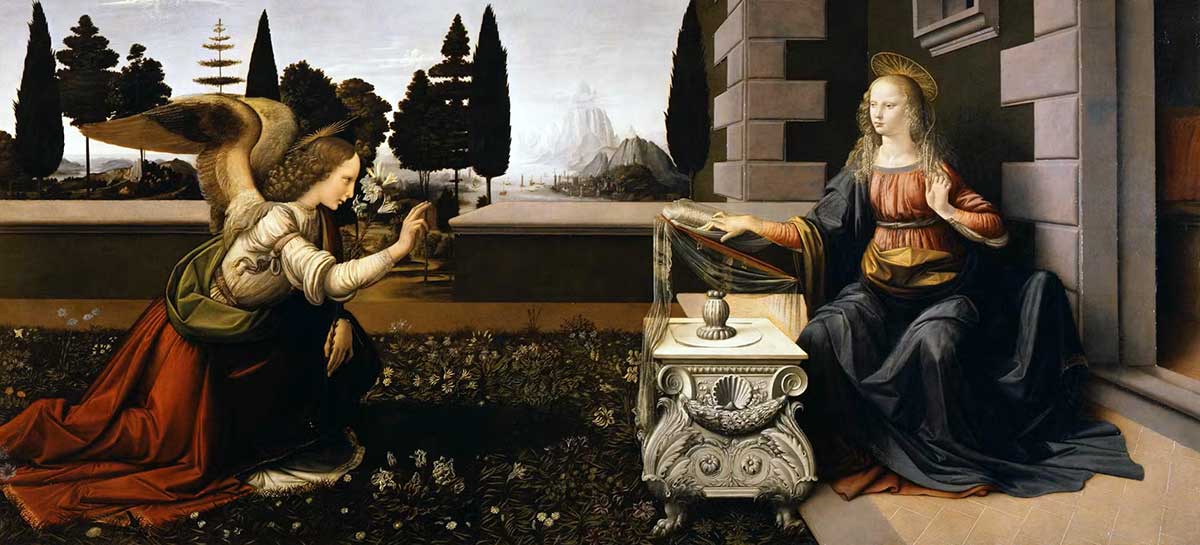
The Annunciation reflects Leonardo’s fascination with perspective, detailed vegetation, and the integration of sacred narrative within a believable natural setting. The carefully constructed garden and distant horizon express his belief that divine revelation harmonizes with the structures of the natural world. The angel’s poised gesture and Mary’s calm reception reveal Leonardo’s growing attention to psychological restraint. It was formerly attributed to Domenico Ghirlandaio and acquired in 1867 from the monastery of San Bartolomeo of Monteoliveto.
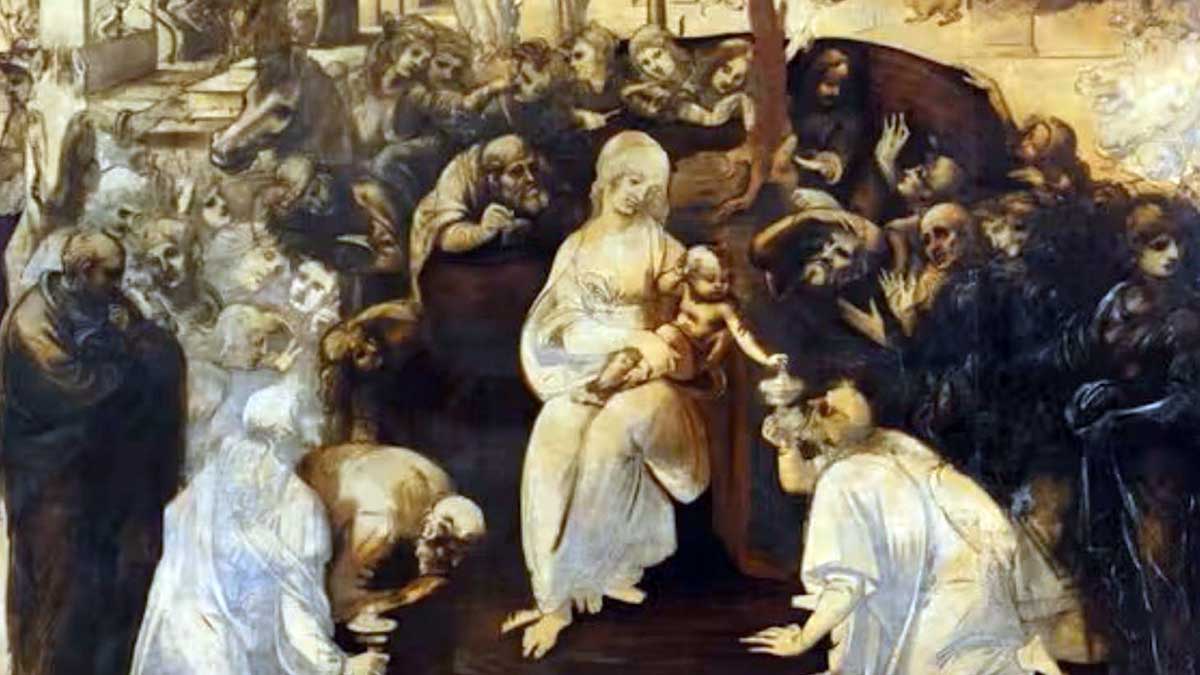
Unfinished yet extraordinarily ambitious, The Adoration of the Magi gathers a variety of figures around the Virgin and Child. The expressive gestures and architectural ruins reveal Leonardo’s intention to convey sacred meaning through human interaction and symbolic landscape.
Pinacoteca Ambrosiana, Milan
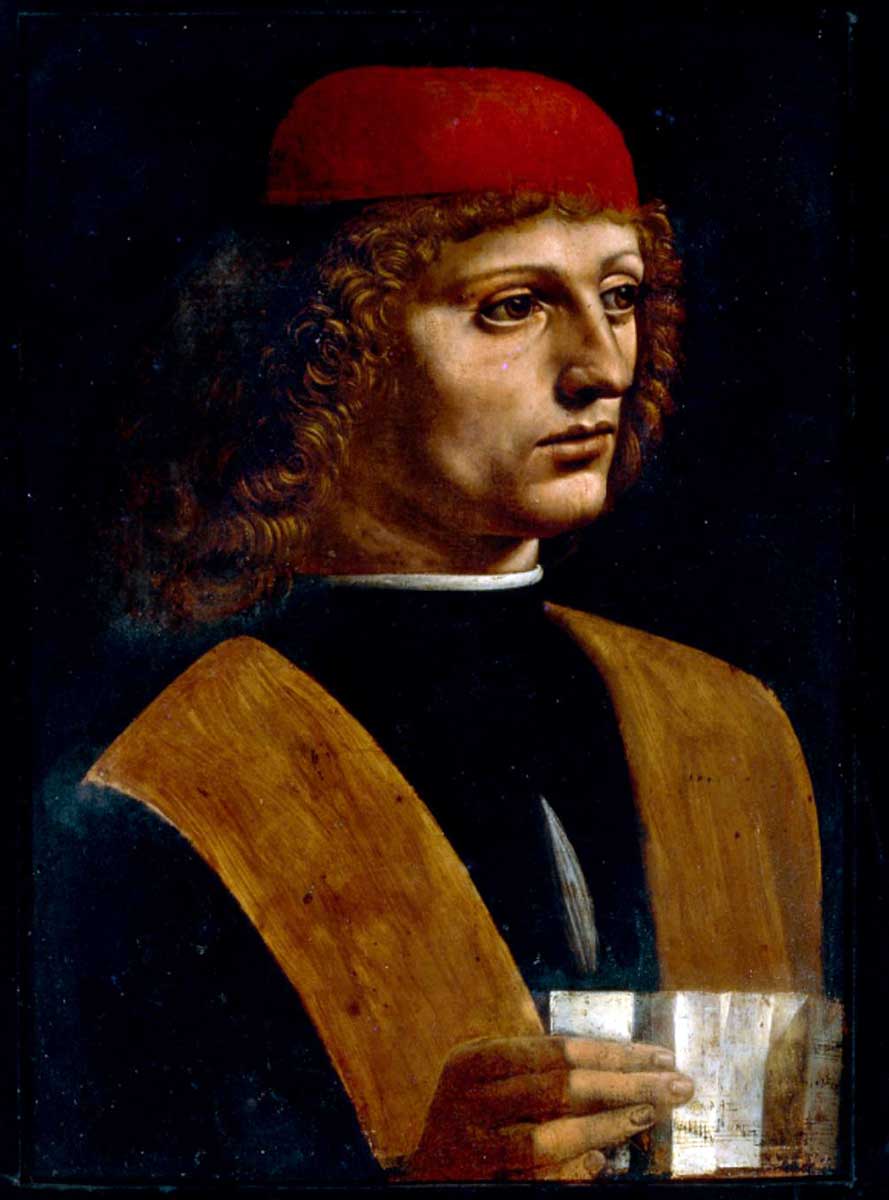
The only surviving Milanese panel by Leonardo, Portrait of a Musician captures the intense concentration of this figure. The musician’s sharp gaze contained within a softly modeled face contrast with clothing likely painted by assistants. The psychological element of this work points towards Leonardo’s mature approach to portraiture, in which inner life becomes central. The painting was restored extensively, and Leonardo probably left the portrait unfinished but close to completion.
Santa Maria delle Grazie, Milan
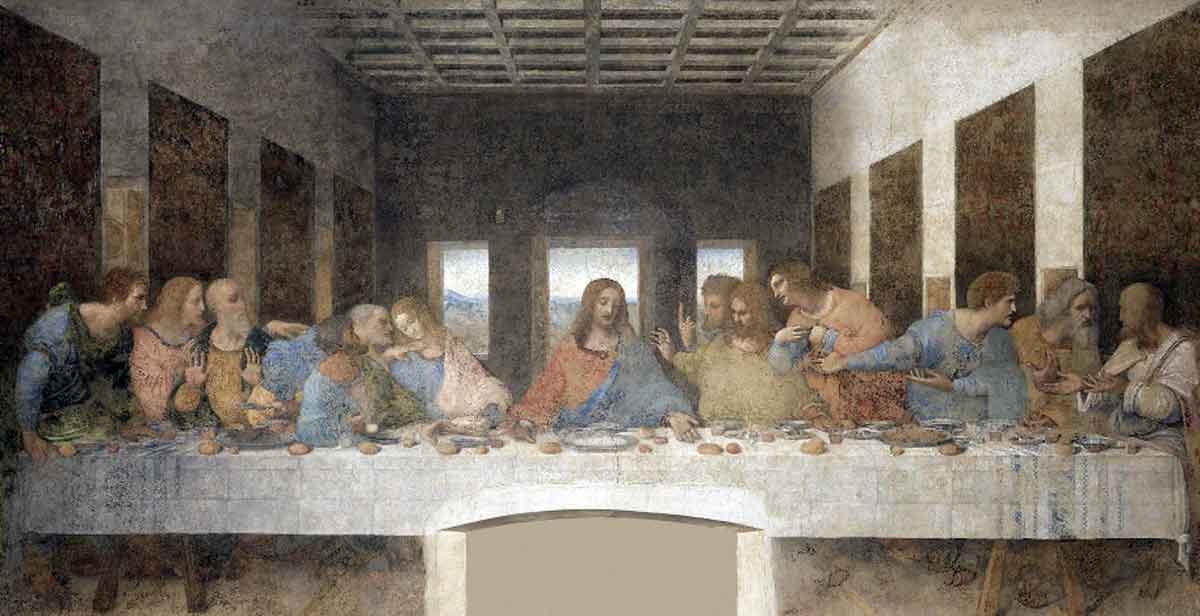
Commissioned by Ludovico Sforza, Duke of Milan, The Last Supper transforms a traditional devotional meal into a dramatic theological moment. Leonardo organizes the apostles into expressive clusters, each reacting uniquely to Christ’s announcement of betrayal. The strict linear perspective converging behind Christ emphasizes his spiritual centrality through a combination of geometrical and narrative elements. Despite deterioration over time, the composition remains a cornerstone of Renaissance visual storytelling.
Castello Sforzesco, Milan
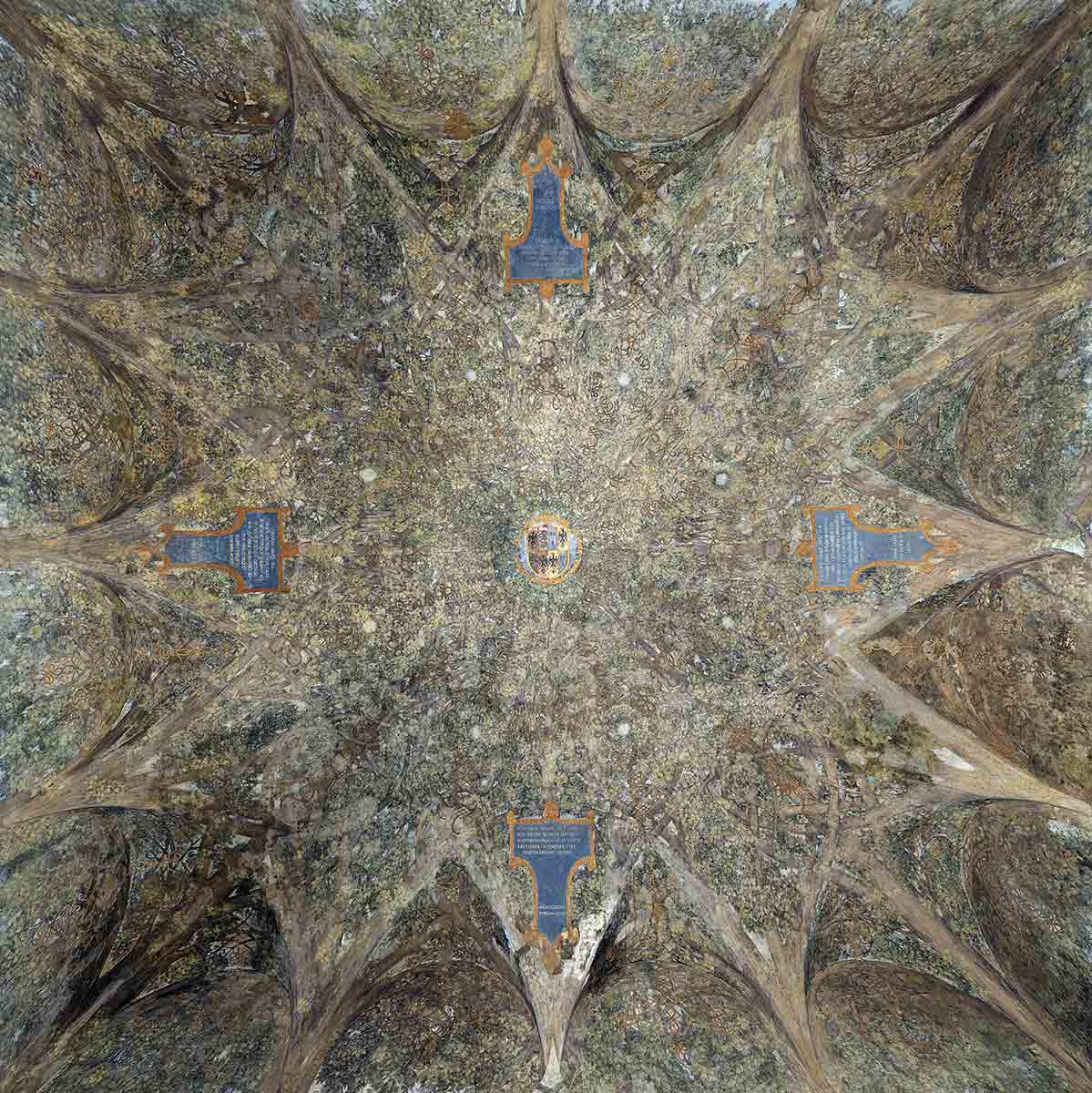
Decorated with an elaborate network of mulberry branches, Salla delle Asse merges nature with courtly symbolism. The pergola-like canopy creates an immersive environment, suggesting nature as a living form of architecture. Restorations have revealed preparatory drawings that show Leonardo’s method of building illusion through careful study of botanical structure and geometrical spaces.
Galleria Nazionale, Parma
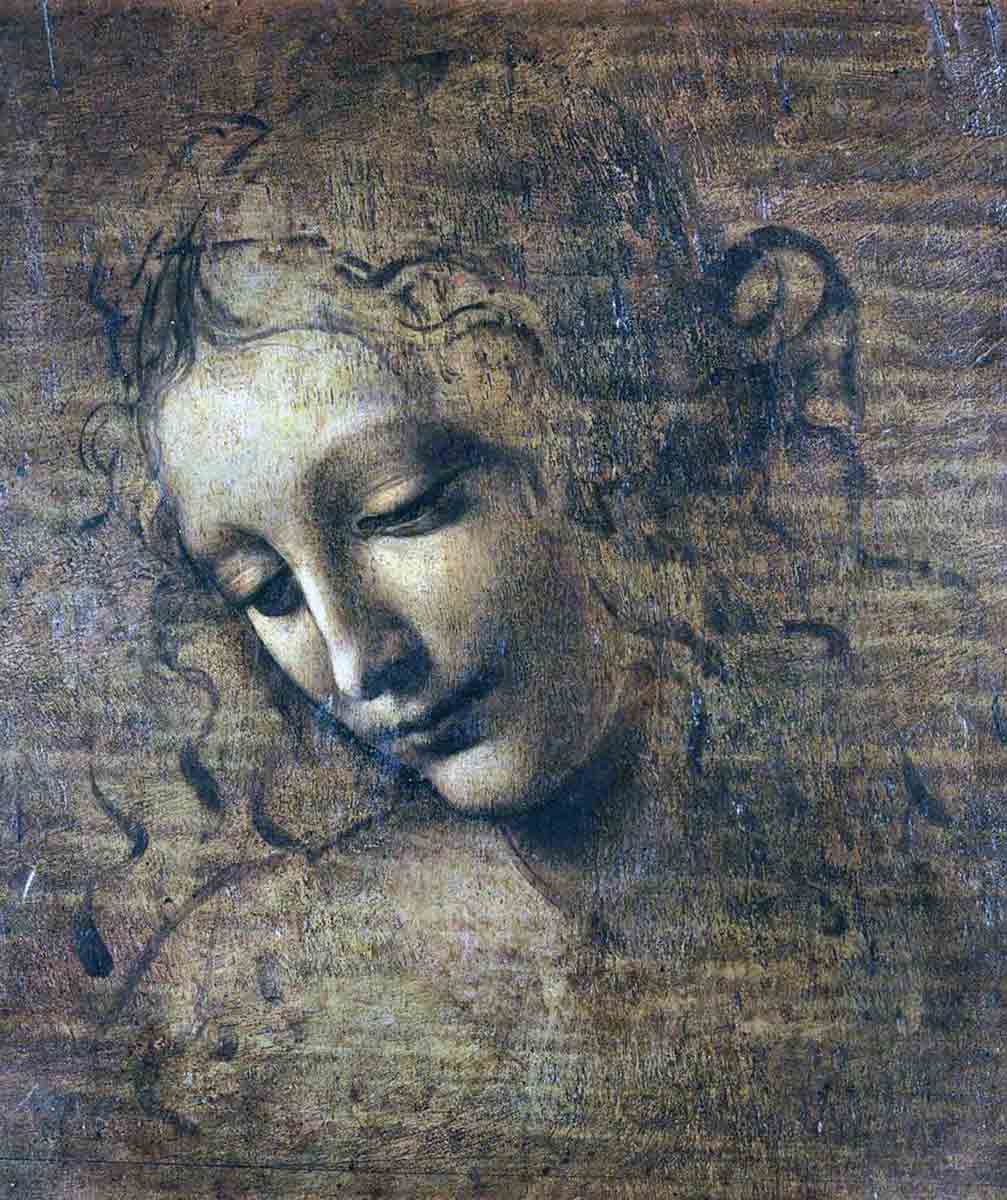
La Scapigliata, an intimate study of a woman with flowing hair, is a unique work that contains a vague boundary between form and a dissolving contour. The unfinished head emphasizes the figure’s introspective mood, reminding the viewer again of Leonardo’s belief that emotional truth often emerges through subtlety rather than clear definition. The painting has no formal name but is best known by the nickname La Scapigliata, meaning “The Lady with Dishevelled Hair.”
Gallerie dell’Accademia, Venice
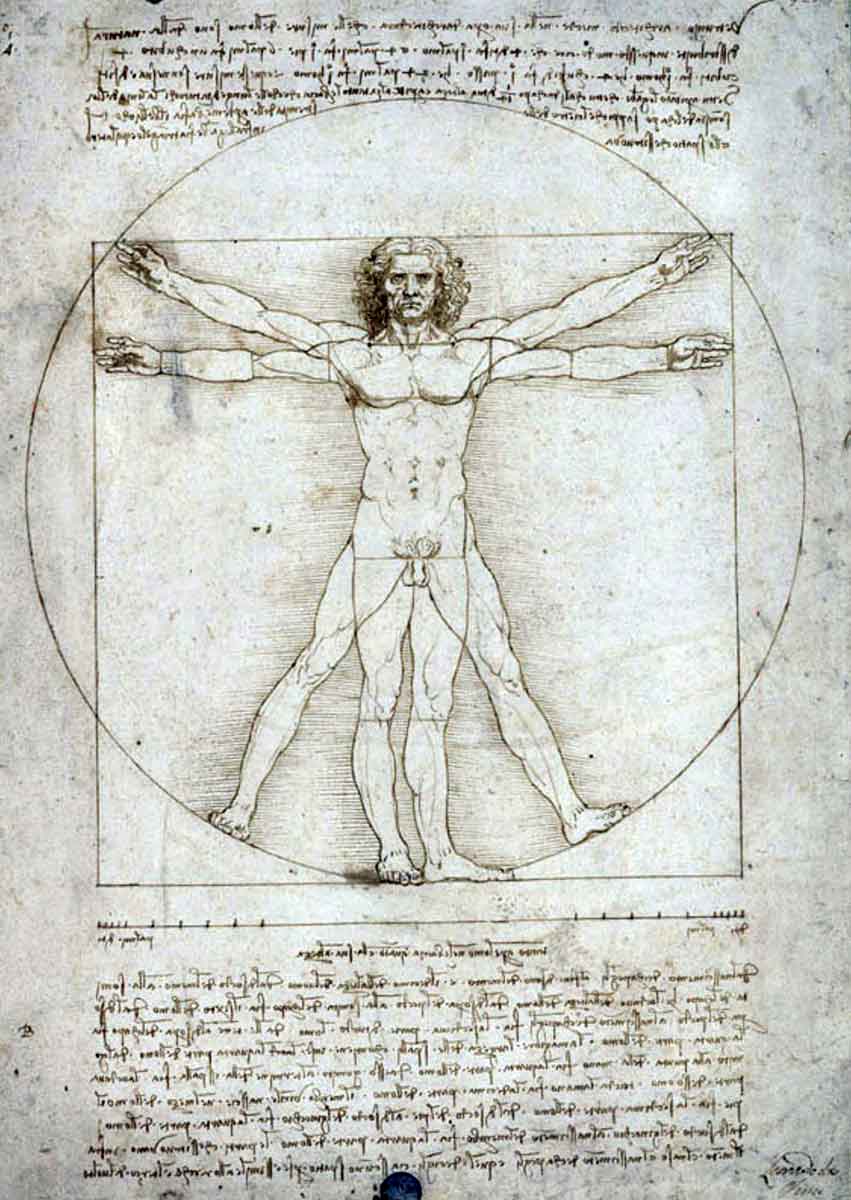
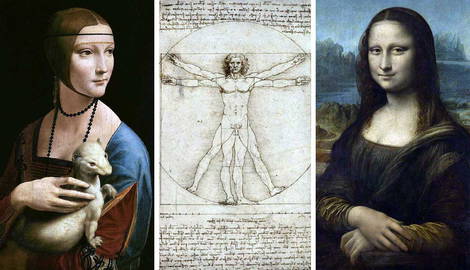
The Vitruvian Man is both Leonardo’s most famous sketch and a top contender for the most famous drawing in the world. Uniting anatomical observation with geometric proportion, this drawing highlights the Renaissance ideal of humanity as a bridge between an individual unit and the larger patterns at play in reality. Leonardo interprets Vitruvius both as a technical guideline and a philosophical statement on the harmony governing both the body and the universe.
The Louvre, France
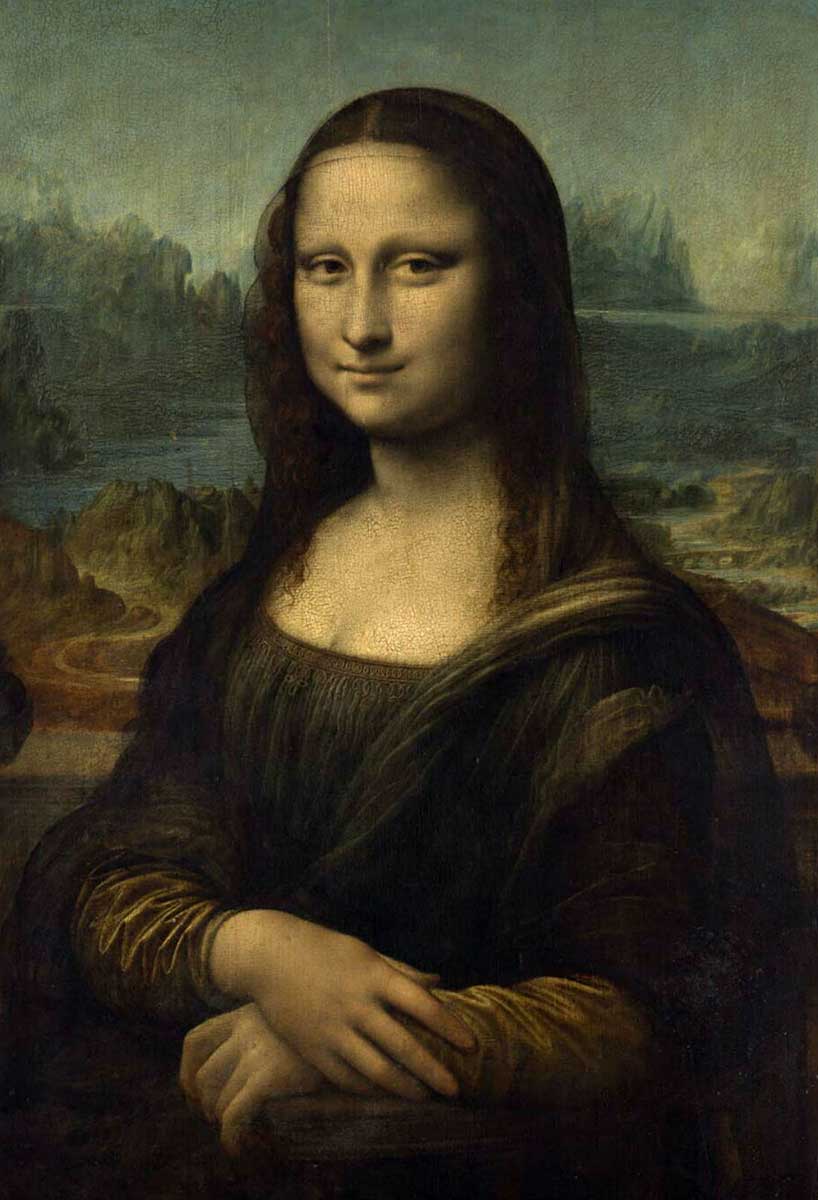
One of the most famous artworks in human history, the Mona Lisa demonstrates Leonardo’s mastery of sfumato, making the subject’s face appear alive and shift with the viewer’s gaze. The expansive, primordial landscape reinforces the portrait’s contemplative depth, situating the subject within a broader meditation on nature and human perception.
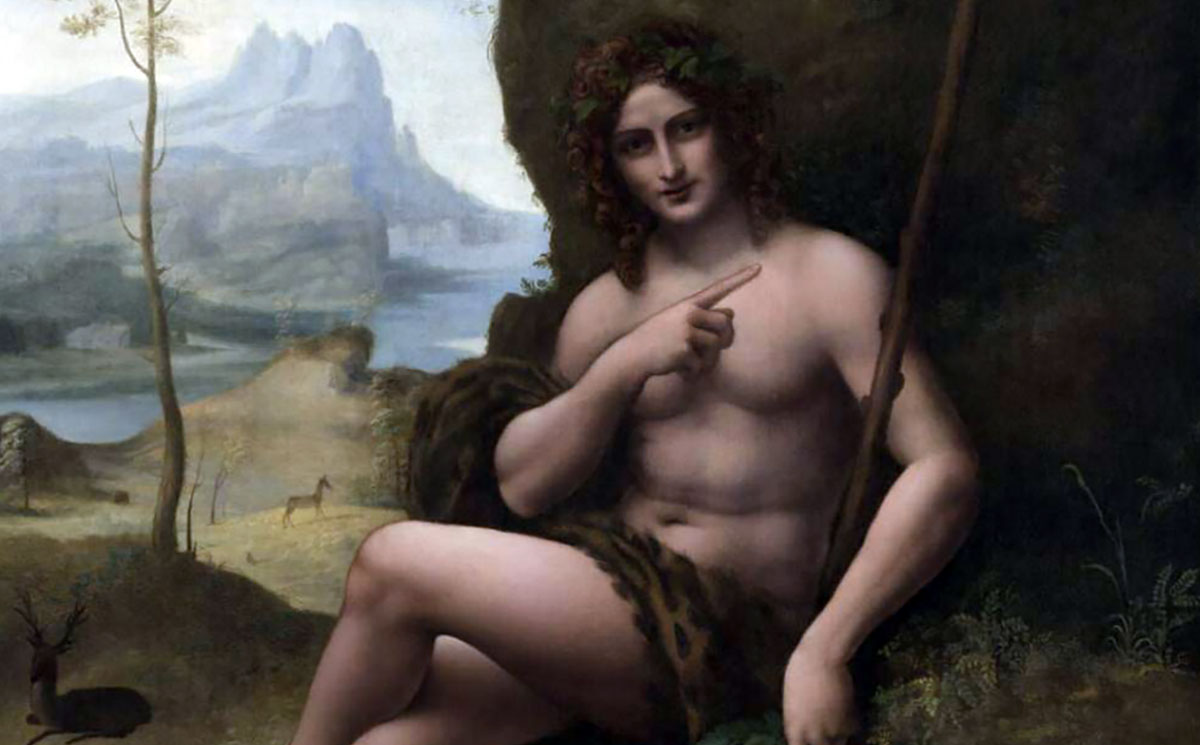
Originally depicting John the Baptist, this painting was later altered to represent Bacchus. The dark, twisting pose and ambiguous smile reflect Leonardo’s late interest in the intersection of spiritual and sensual qualities, challenging traditional iconography.
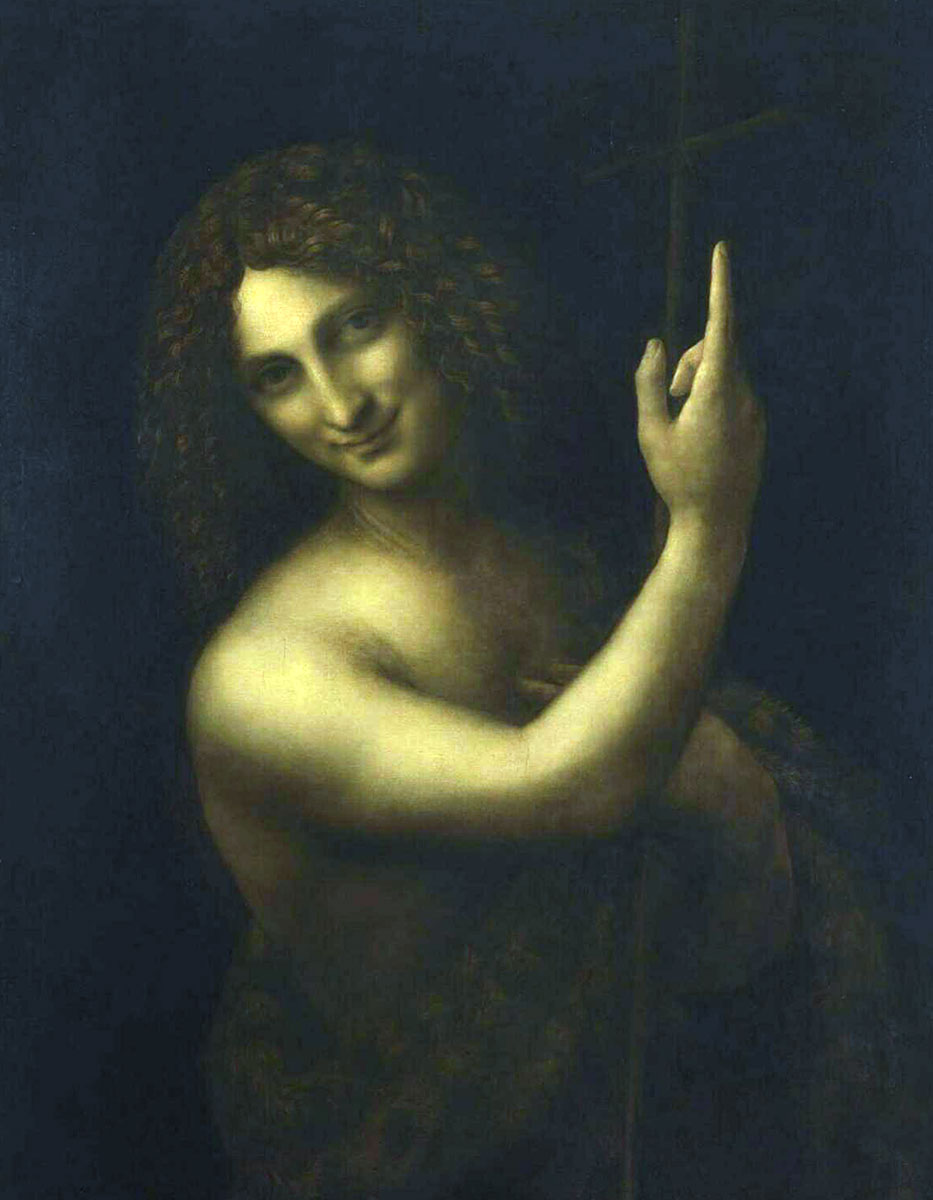
Possibly Leonardo’s final completed work, Saint John the Baptist uses shadow and soft light to create a work that challenges the viewer to look within. The saint’s gesture and mysterious smile evoke a spiritual invitation; fitting considering Leonardo’s preference for subtle persuasion.
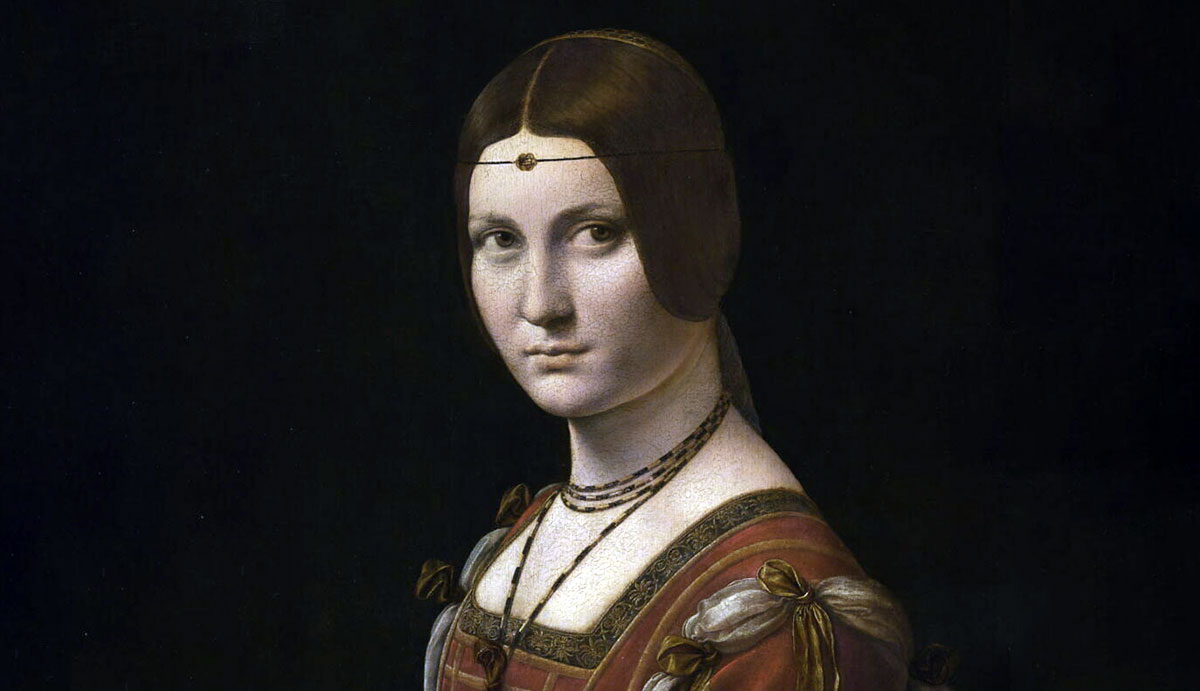
La belle ferronnière, or “Portrait of an Unknown Woman,” portrays the wife or daughter of an ironmonger (a ferronnier). The work is rumored to discreetly allude to a reputed mistress of Francis I of France, married to a certain Le Ferron. The precise lighting of the painting again highlight Leonardo’s perfection of psychological portraiture and the balance between individuality and idealization.
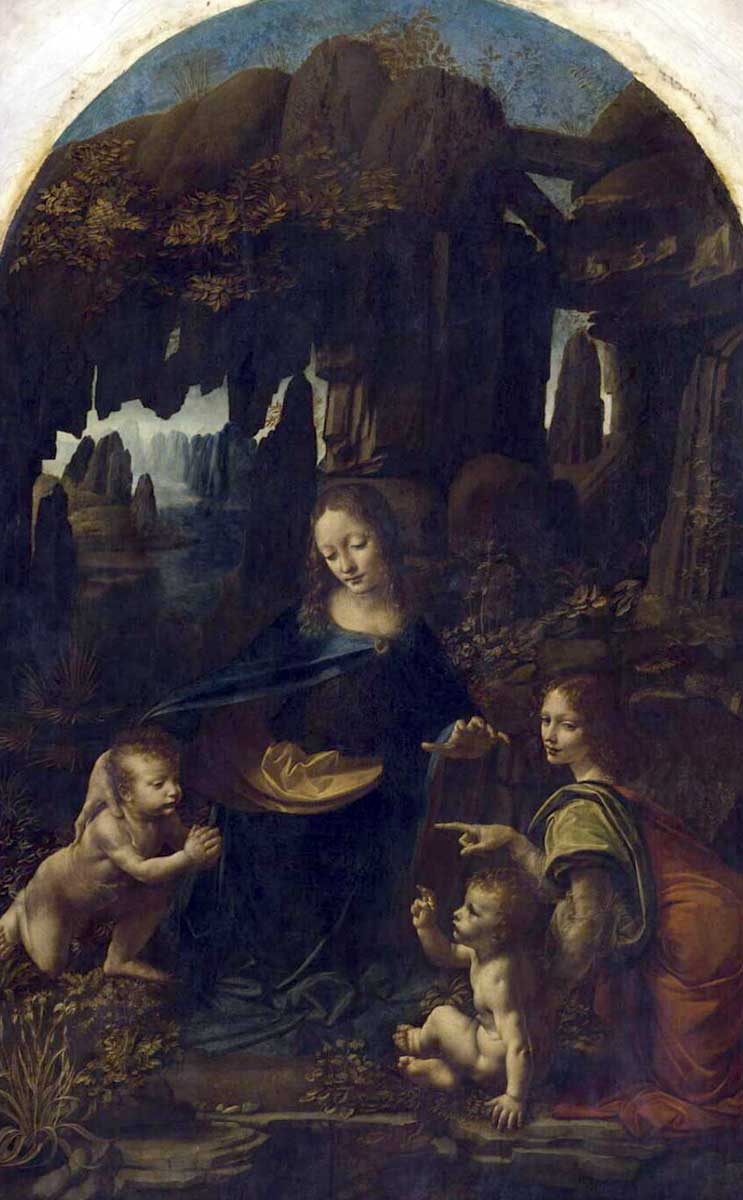
The grotto setting of Virgin of the Rocks, is dense with botanical detail and illuminated by a mysterious, sacred light. A second version of this painting exists in London, containing a few changes. It’s not clear whether Leonardo made this copy so he could privately sell the first version, or whether the commissioners wanted it repainted and changed. There are many theories to explain why there are two versions of this work. It was once thought that Leonardo oversaw only the painting of the second version and assisted a little, but more recent studies suggest he may have painted much more of it himself.
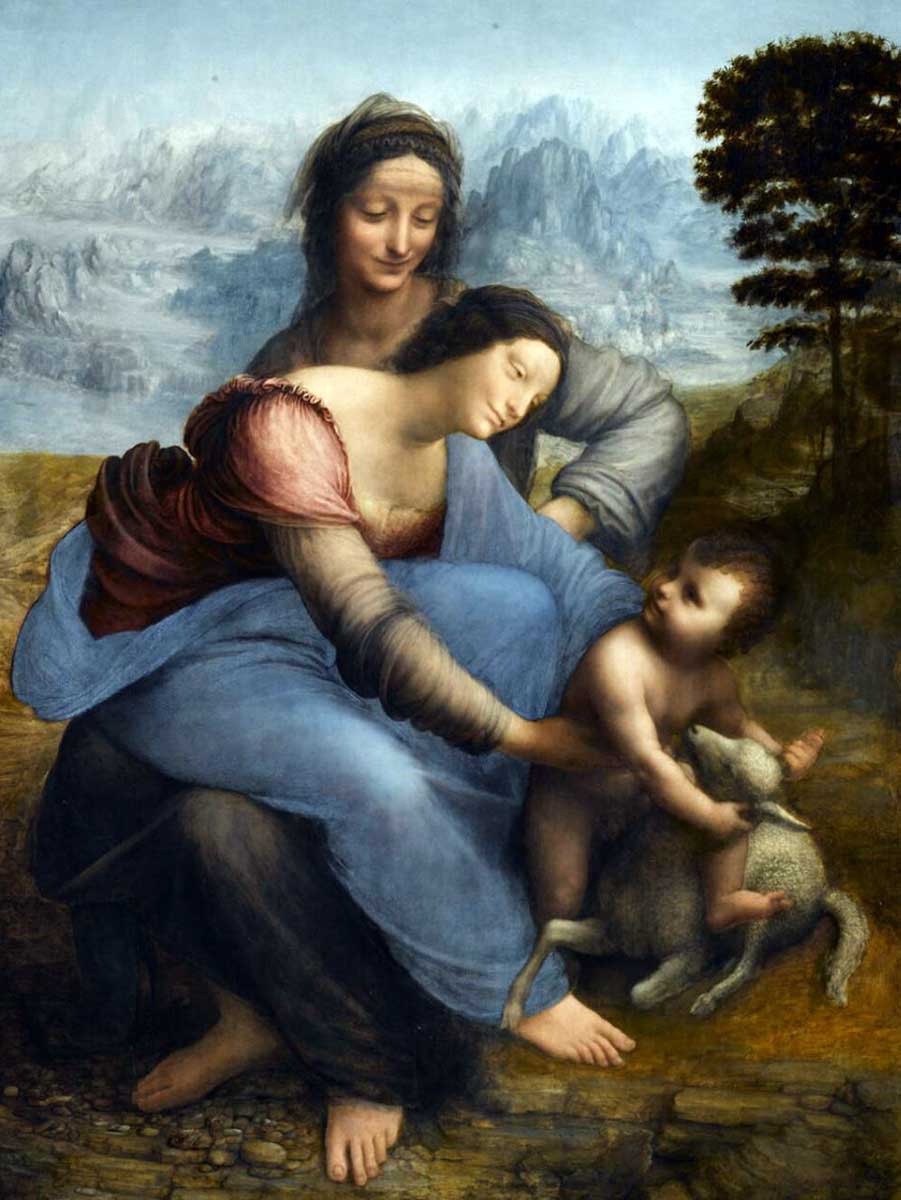
Antoni de Beatis, writer of the famous 16th-century travel diary, saw The Virgin and Child with Saint Anne in Cloux during his visit there in 1517. After changing several owners, it was given in 1636 to King Louis XIII of France, and it has been in the Louvre since 1810. The group of figures portrayed forms a perfectly balanced pyramidal composition, set upon a surreal landscape. The doubts about its authenticity in the past were due to its poor conservation and extensive color deterioration.
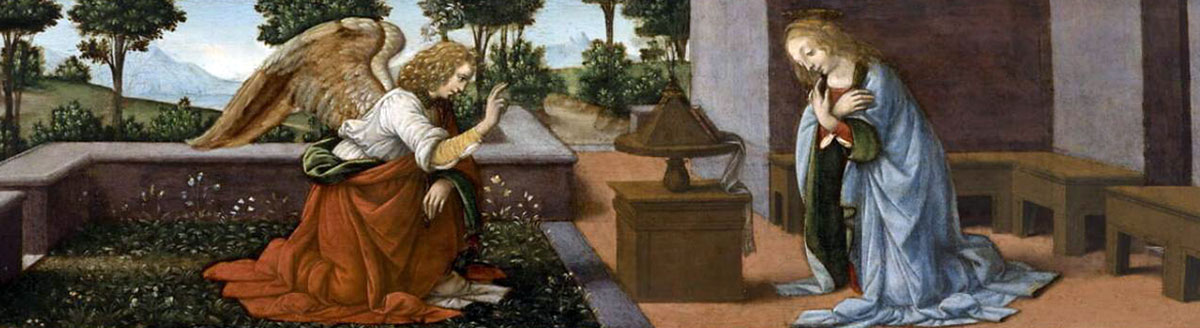
Attributed to Lorenzo di Credi, Leonardo, or both, The Annunciation contains a balance between structured form and atmospheric softness. While the figures reflect the work of Lorenzo, the subtle treatment of light hints at Leonardo’s influence. According to art historian Vincent Delieuvin, this particular work appears to share more similarities with Lorenzo’s works than with those of the young Leonardo, as evidenced by the morphology of the figures with their somewhat disproportionate eyes and subtle expressions.
The Vatican
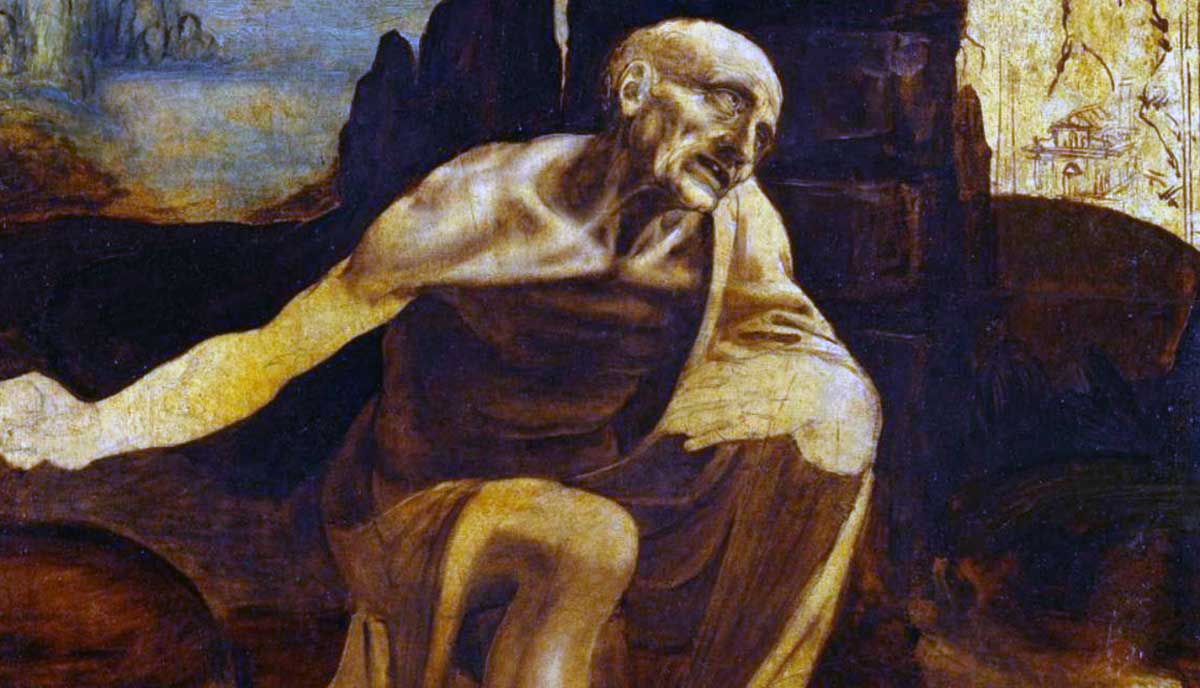
Unfinished yet powerful, Saint Jerome in the Wilderness conveys spiritual struggle through anatomical tension and rugged landscape in a work that again shows Leonardo’s complex understanding of human physiology. The painting, among the most enigmatic of the works of da Vinci, offers an original depiction of the hermit saint and Doctor of the Church, in line with iconographic tradition, and provides valuable insights into the artist’s creative process. Due to the obvious similarities with the Adoration of the Magi from the Uffizi Gallery, it is believed to have been executed between 1481 and 1482.
Alte Pinakothek, Munich
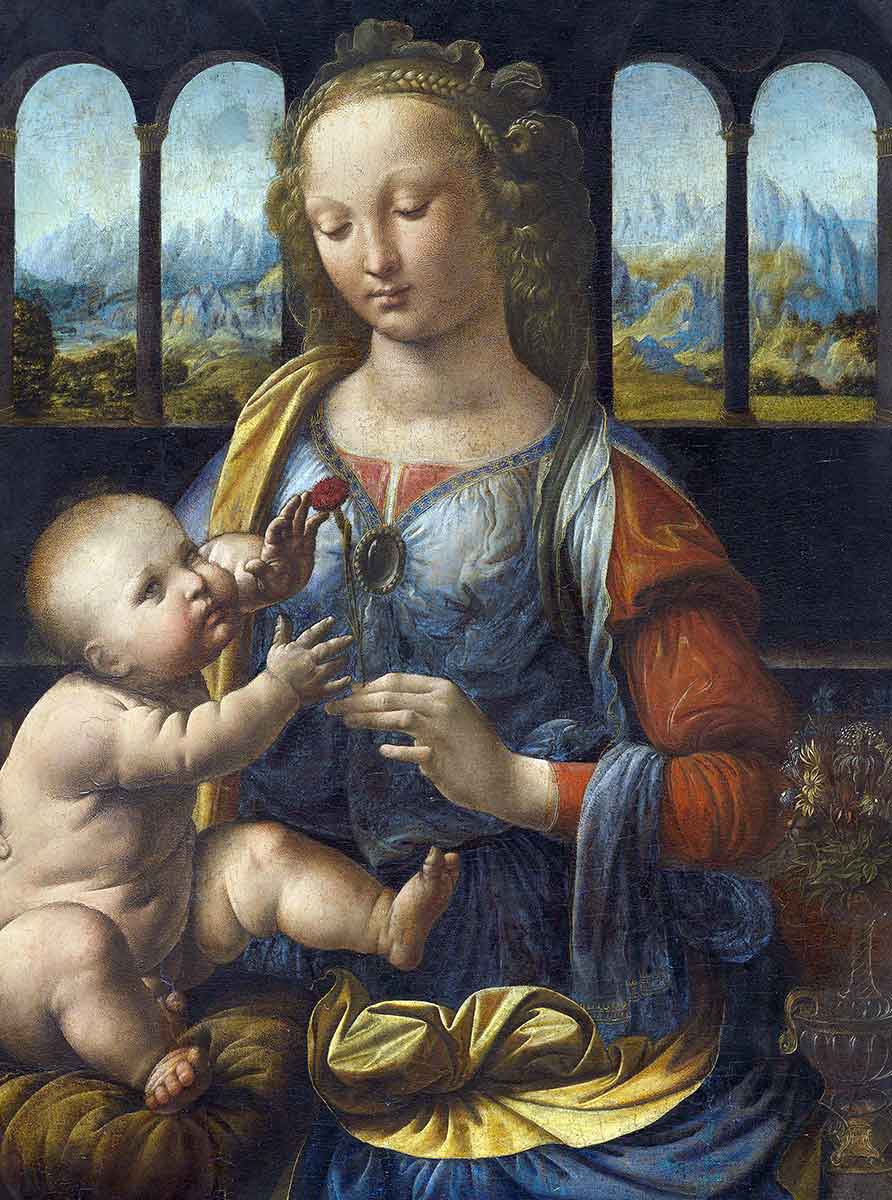
Madonna of the Carnation, formerly owned by Giulio de’ Medici (Pope Clement VII), is one of the earliest panel paintings by da Vinci, dating from when he was still a student in a workshop. The tender interaction between mother and child signals his future development toward more nuanced sacred imagery. This work in oil is also an experiment in painting technique.
National Gallery of Art, Washington DC
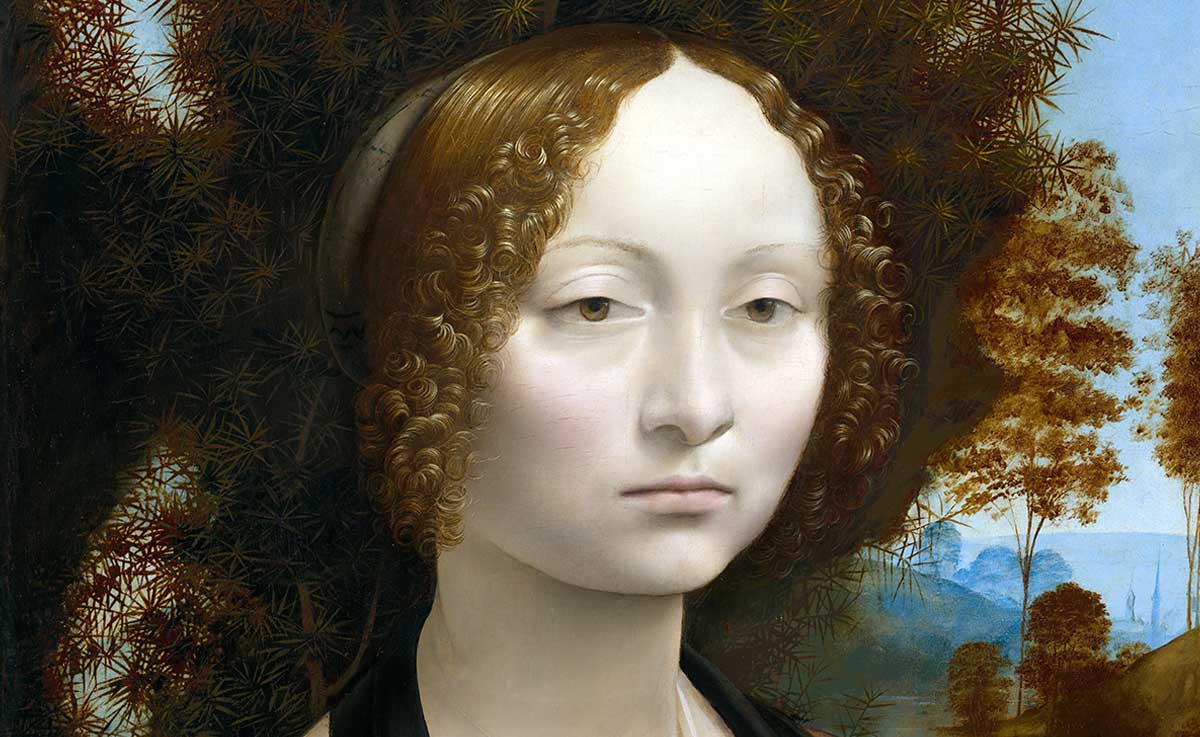
This is a portrait of Ginevra de’ Benci (born 1458), said to have been painted to celebrate her marriage to Luigi di Bernardo Niccolini when she was 16. The design featuring a ginepro plant on the reverse side of the painting is a pun of her name, Ginevra. The portrait’s distant, introspective gaze and blue landscape exemplify Leonardo’s commitment to portraying psychological depth.
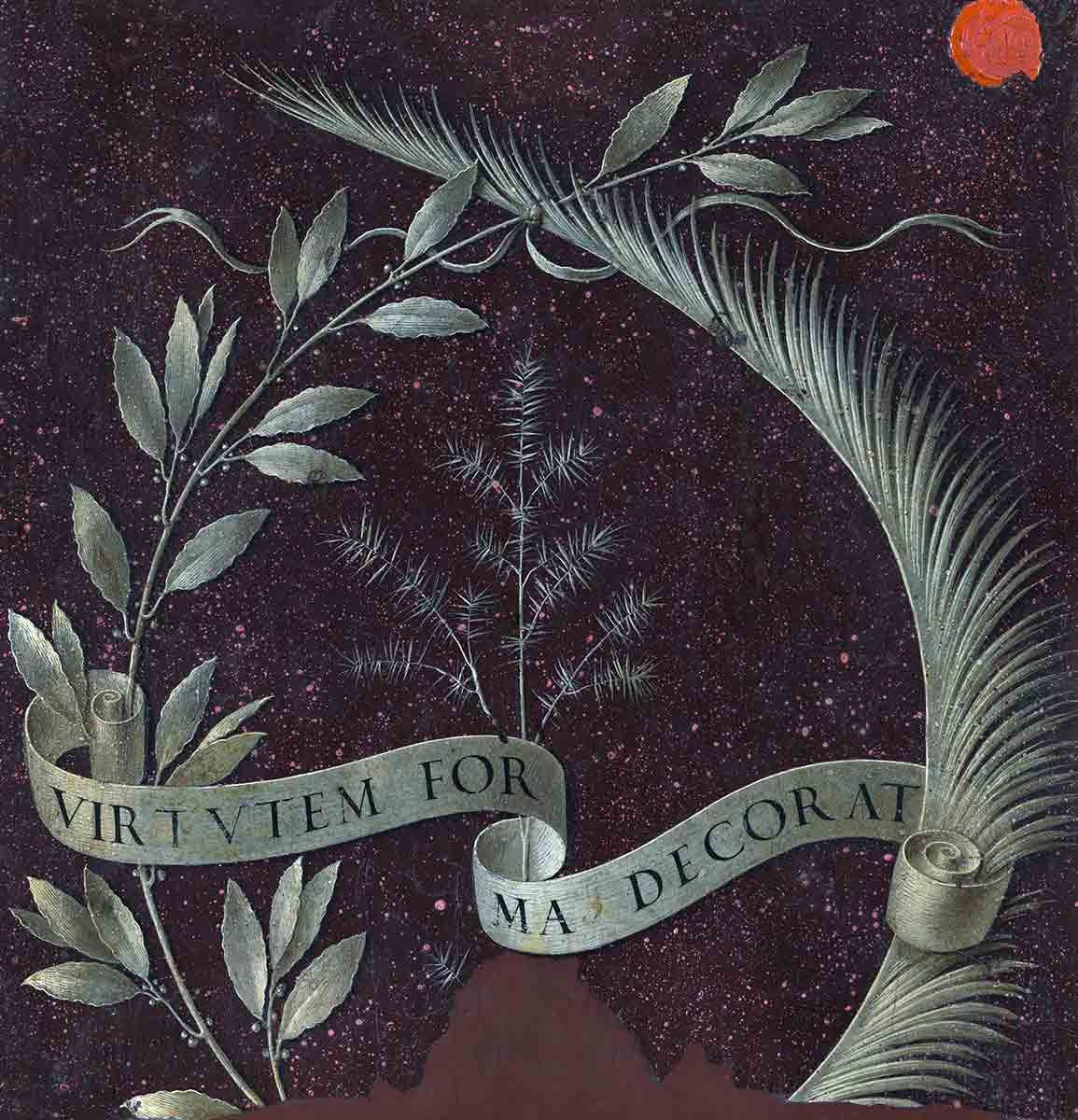
The reverse side of Ginerva de’ Benci, symbolizing virtue, highlights Renaissance ideals connecting moral character with visual beauty. A scroll bears her Latin motto, VIRTVTEM FOR/MA DECORAT, meaning “Beauty Adorns Virtue.” In the emblem’s center, a sprig of juniper (in Italian, ginepro) suggests Ginevra’s name, while the surrounding laurel and palm symbolize her intellectual and moral virtue.
The National Gallery, London
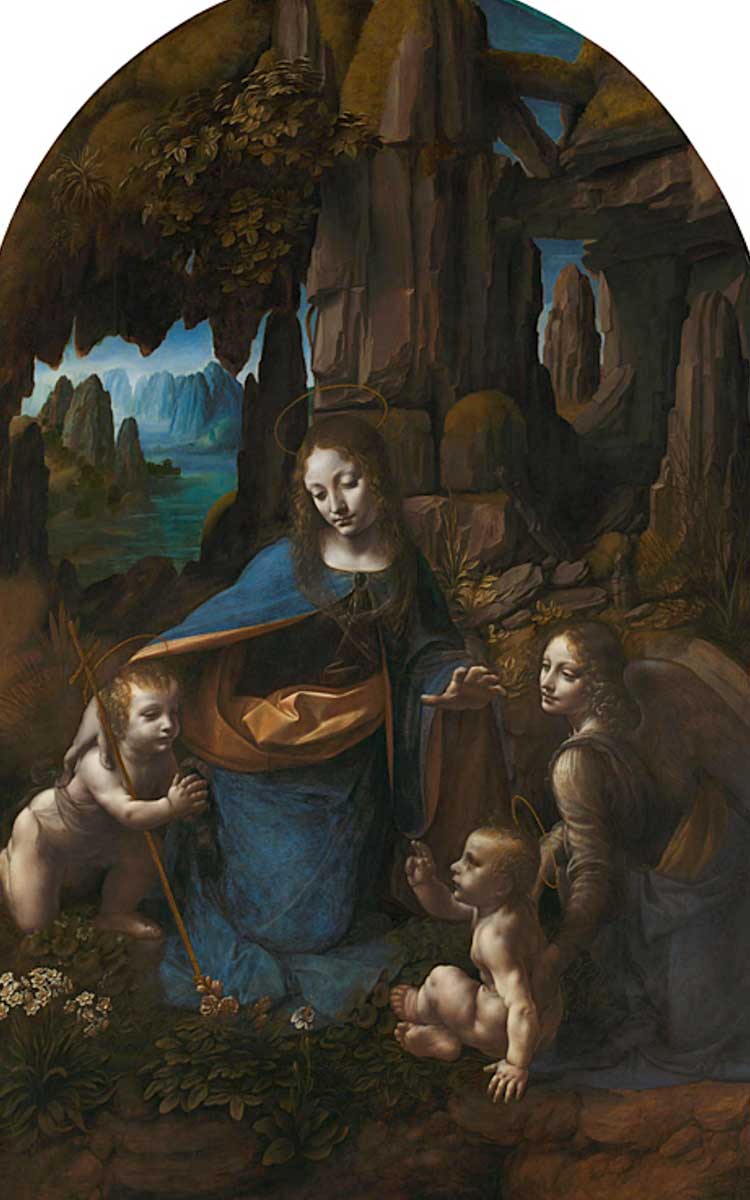
Created for the altarpiece in the San Francesco Grande church in Milan, the London version of Virgin of the Rocks continues Leonardo’s exploration of geological formations and relational gestures. The soft transitions of light unify the figures within an otherworldly setting that blends observation and imaginative vision.
The word was probably made to replace the one now in the Louvre that Leonardo sold because he was refused adequate pay. The underdrawing shows that he attempted a different design, but later changed his mind, making this work almost identical to the Louvre version.
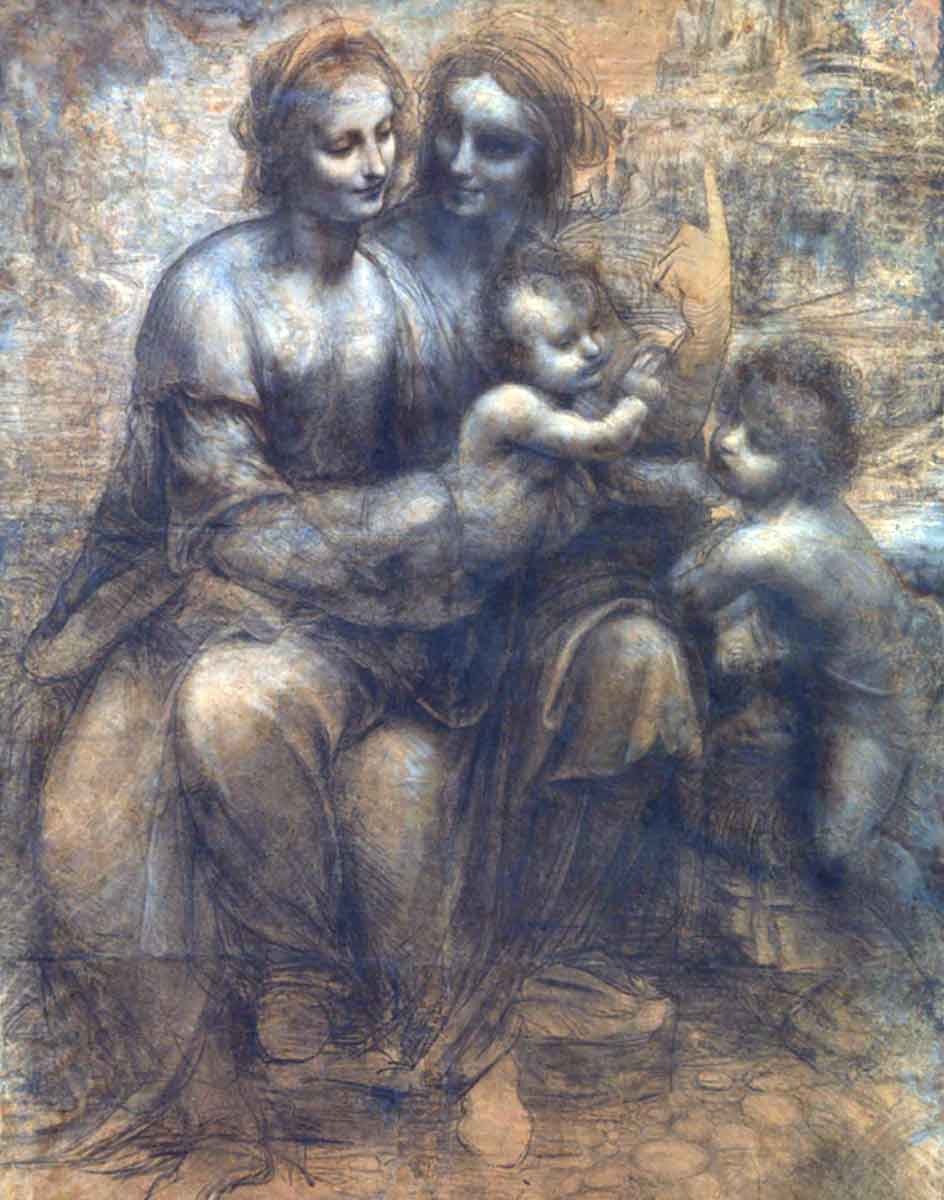
A full-scale drawing of the Virgin, Child, Saint Anne, and John the Baptist, The Burlington House Cartoon serves as both a preparatory design and an independent artwork. The drawing has traditionally been dated to around 1499-1500, based on Giorgio Vasari’s account, which described a cartoon by Leonardo displayed in Florence in 1501 that drew crowds. Technical and stylistic evidence, however, suggests that the Burlington House Cartoon might more plausibly be dated around 1506-8, when Leonardo was working in Milan.
The Royal Collection Trust, UK
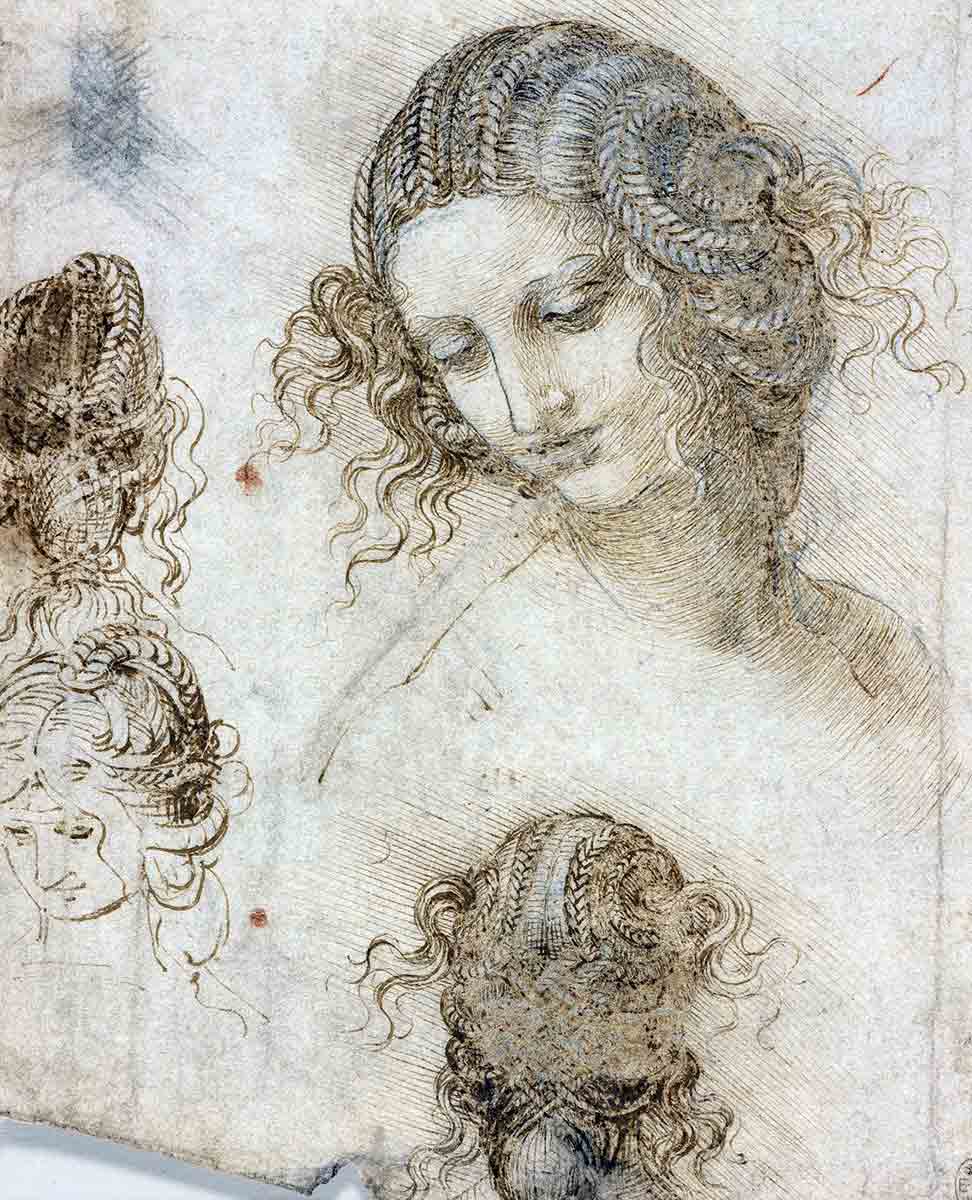
There are nearly 600 drawings by Leonardo da Vinci in the Royal Collection. They were originally bound together in a single album and likely acquired by Charles II in the 17th century. They are renowned for their technical skill and the breadth of ideas they represent. As only around 20 of Leonardo’s paintings survive, the drawings are the main source of our knowledge of the mind of this extraordinary man and his activities. The Study for the Head of Leda is a glimpse at the lost painting Leda and the Swan, which entered the French royal collection and was destroyed around 1700.
Czartoryski Museum, Kraków
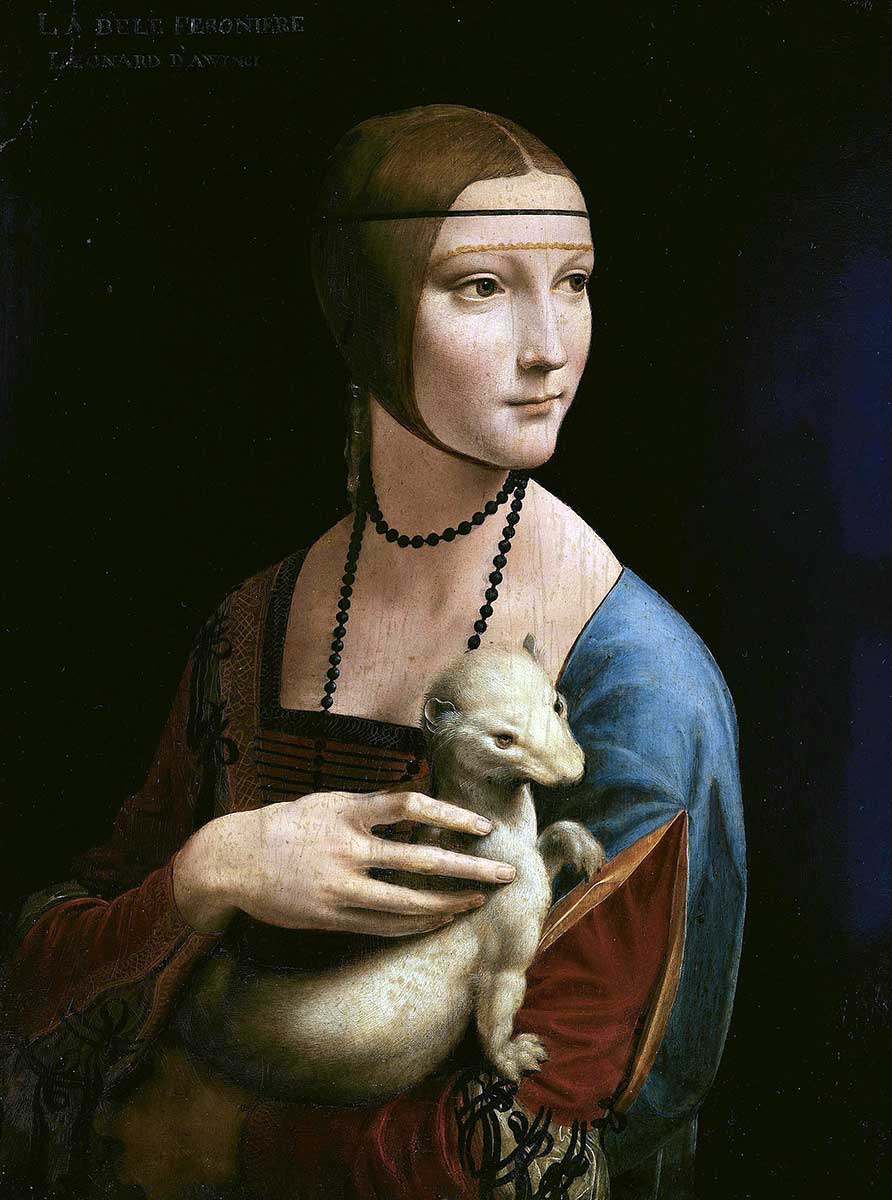
Cecilia Gallerani, the mistress of Ludovico Sforza, is portrayed in Lady with an Ermine with intelligence and alertness, her pose dynamically linked to the symbolic ermine. The signature “LEONARD D’AWINCI” (a Polish phonetic transcription of the name “da Vinci”) in the upper left corner is not original. Upon X-raying the painting, it was found that a window was painted behind the figure’s left shoulder, which was the source of the intense lighting.
State Hermitage Museum, Saint Petersburg
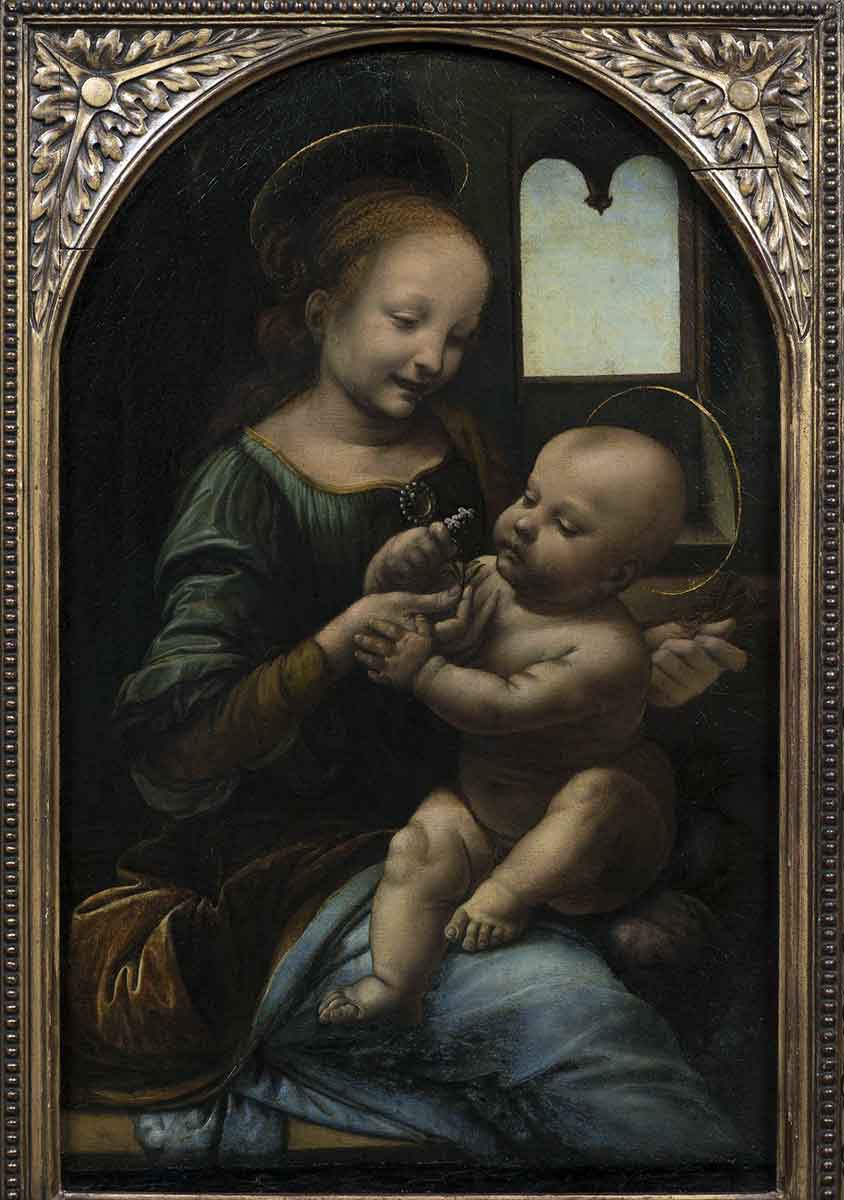
The Benois Madonna is an early work by Leonardo. If it were not for the golden halos the painting might pass for a genre scene of a young Italian woman playing with her son, instead of the religious icon that it is. Leonardo’s painting obtained its present name, the Benois Madonna, from that of its last owner, the wife of the court architect Leonty Benois. In 1914, this work was acquired for the Hermitage Museum.
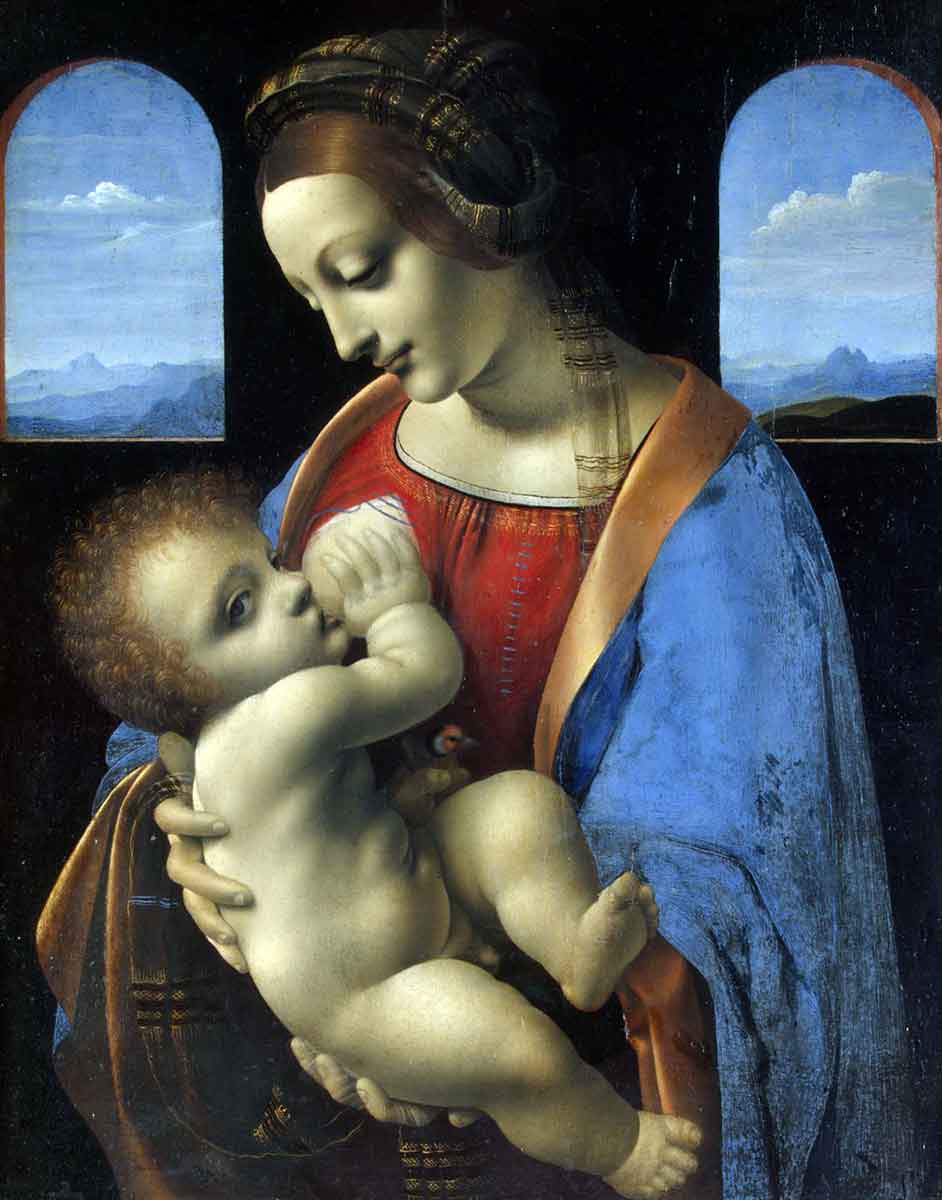
The Litta Madonna seems to have been produced in Milan, where the artist moved in 1482. The balanced composition and luminous modeling exemplify Leonardo’s mature Milanese style. The act of nursing conveys maternal devotion while integrating theological symbolism through the natural gesture. There is a preparatory drawing for this canvas in the Louvre. The painting gained its name from its previous owner, Count Antonio Litta, from whom it was acquired in 1865.
The National Galleries of Scotland, Edinburgh
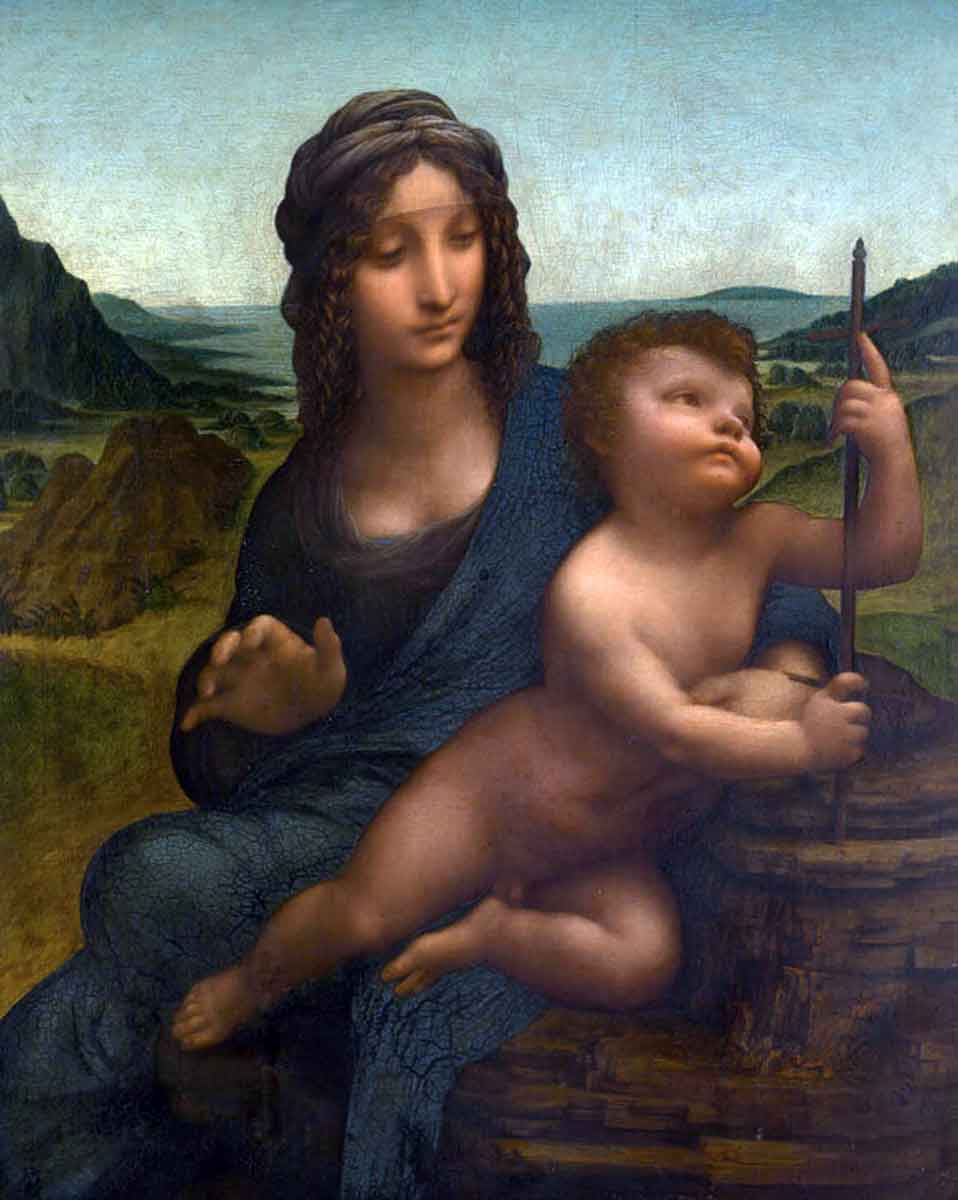
The Madonna of the Yarnwinder is a subject depicted by Leonardo in at least one, perhaps two, paintings begun in 1499 or later. Here, the Christ Child’s contemplation of the cross-shaped yarnwinder adds prophetic meaning to a seemingly ordinary domestic scene. Scholars disagree about the extent of Leonardo’s involvement in the painting, but it is likely that the overall design and the execution of the figures and the foreground rocks are entirely his. The landscape behind was probably added by another artist, covering one sketched in by Leonardo but never finished. In 2003, the painting was stolen from Drumlanrig Castle, the Duke of Buccleuch’s Dumfriesshire residence, but was fortunately recovered in 2007.
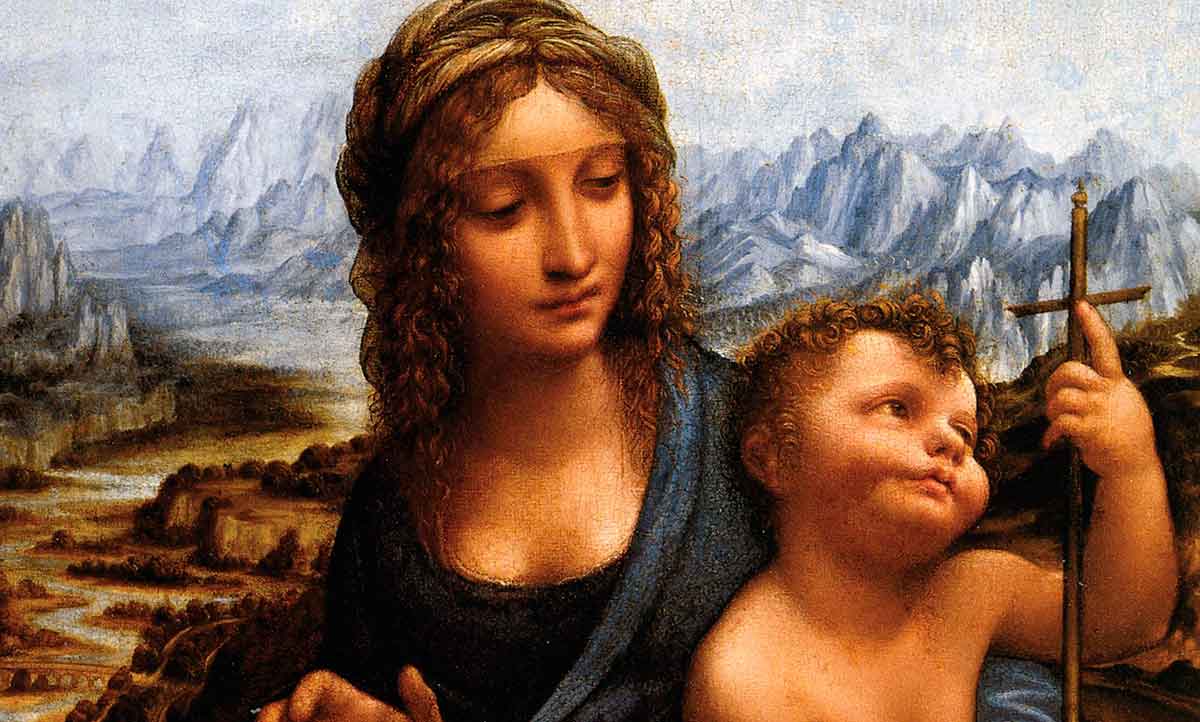
The Lansdowne Madonna takes its name from the Marquesses of Lansdowne, who owned the work in the 19th century. The painting was bought as a Sodoma work in 1928 by R. Wilson. In the 1930s, based on chemical analyses, scientists concluded that the Christ child and the landscape were painted by Leonardo, and the remainder by a Milanese pupil. In 1939, the painting was damaged and further restoration was undertaken. After several auctions, the painting was sold as a Leonardo work to its current owner, an anonymous private collector, in 1999.
Museum Boijmans, Netherlands
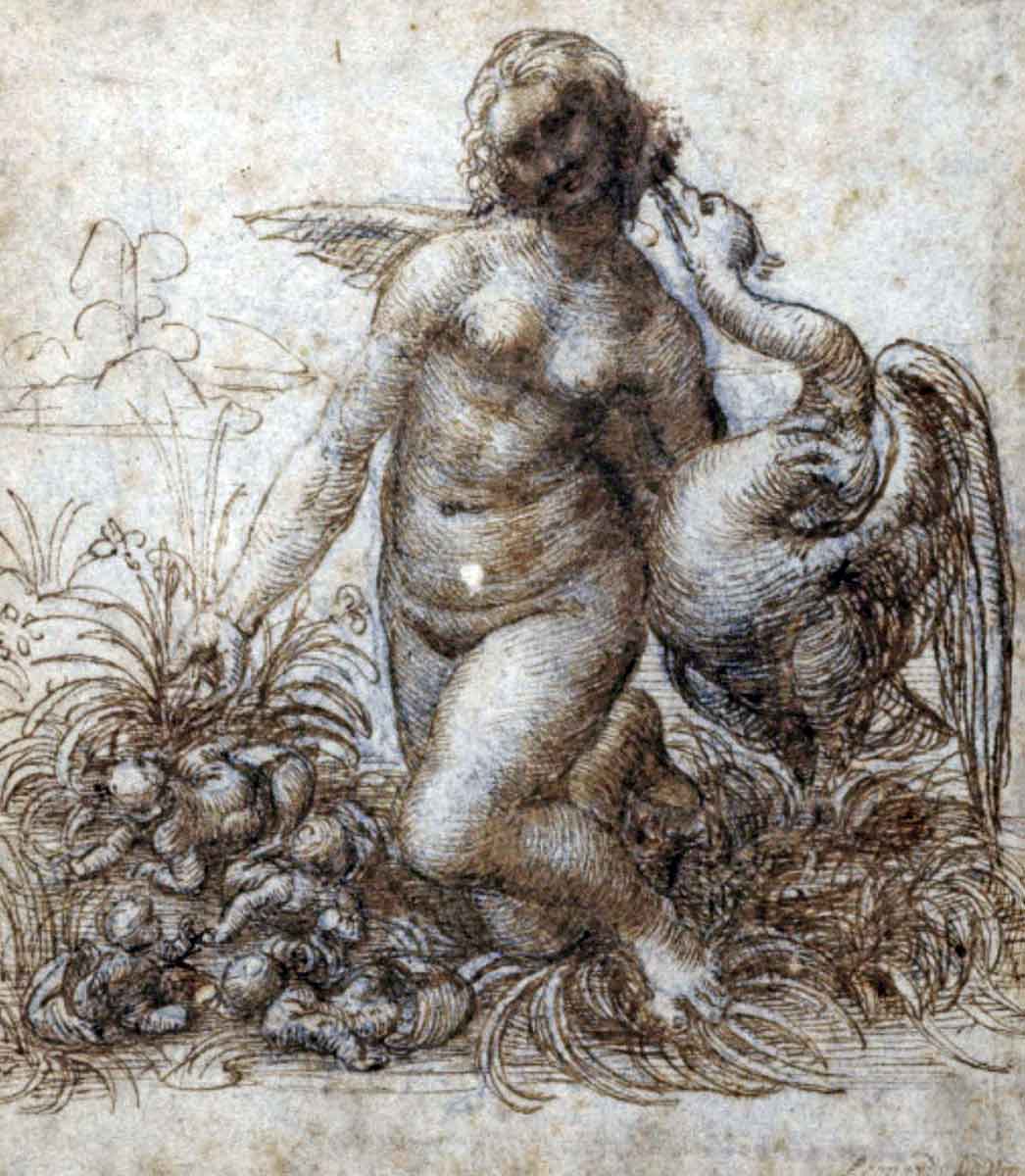
A lost painting known through preparatory drawings and later copies, Leda and the Swan explores themes of transformation, fertility, and mythological narrative. Leonardo’s studies again reveal his careful attention to anatomical movement and natural setting, suggesting he approached myth with the same observational rigor he applied to religious subjects. The surviving drawings indicate a graceful, dynamic composition, even if no final panel endures.
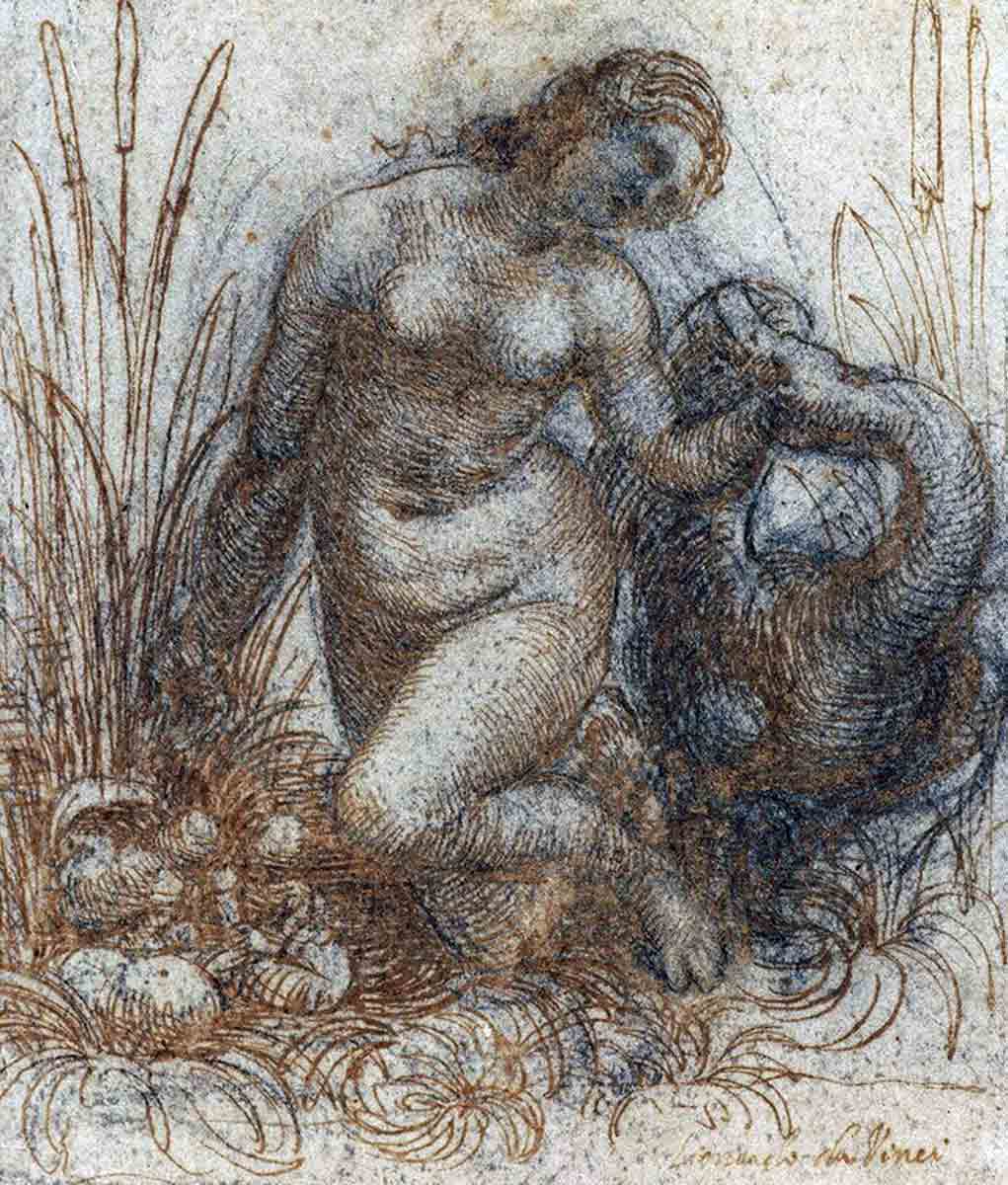
Study for a kneeling Leda and Swan entered the museum in 1940. It depicts a nude woman kneeling between different types of wetland vegetation. With her left hand, the woman touches the beak of a swan, while her outstretched right arm directs the viewer to two babies that have each hatched out of an egg. This drawing again makes one wish that the full, completed work had survived the test of time.