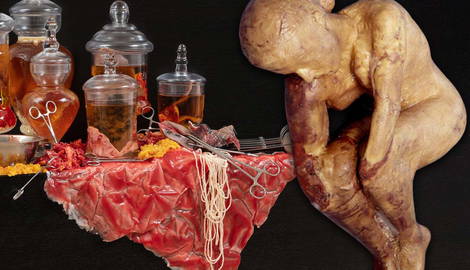

How can something be so disturbing, yet so hard to look away from? Some women artists who engage with body horror touch on a universal notion. Beauty and horror are not opposites; they are reflections of each other. Particularly, the female body has been made to belong to both sides of this reflection. It is equally desired and feared, idealized and violated, worshiped and dissected. Art tells the story that civilization has been trying to rewrite since its dawn.
Introducing Body Horror: When Beauty Becomes Grotesque
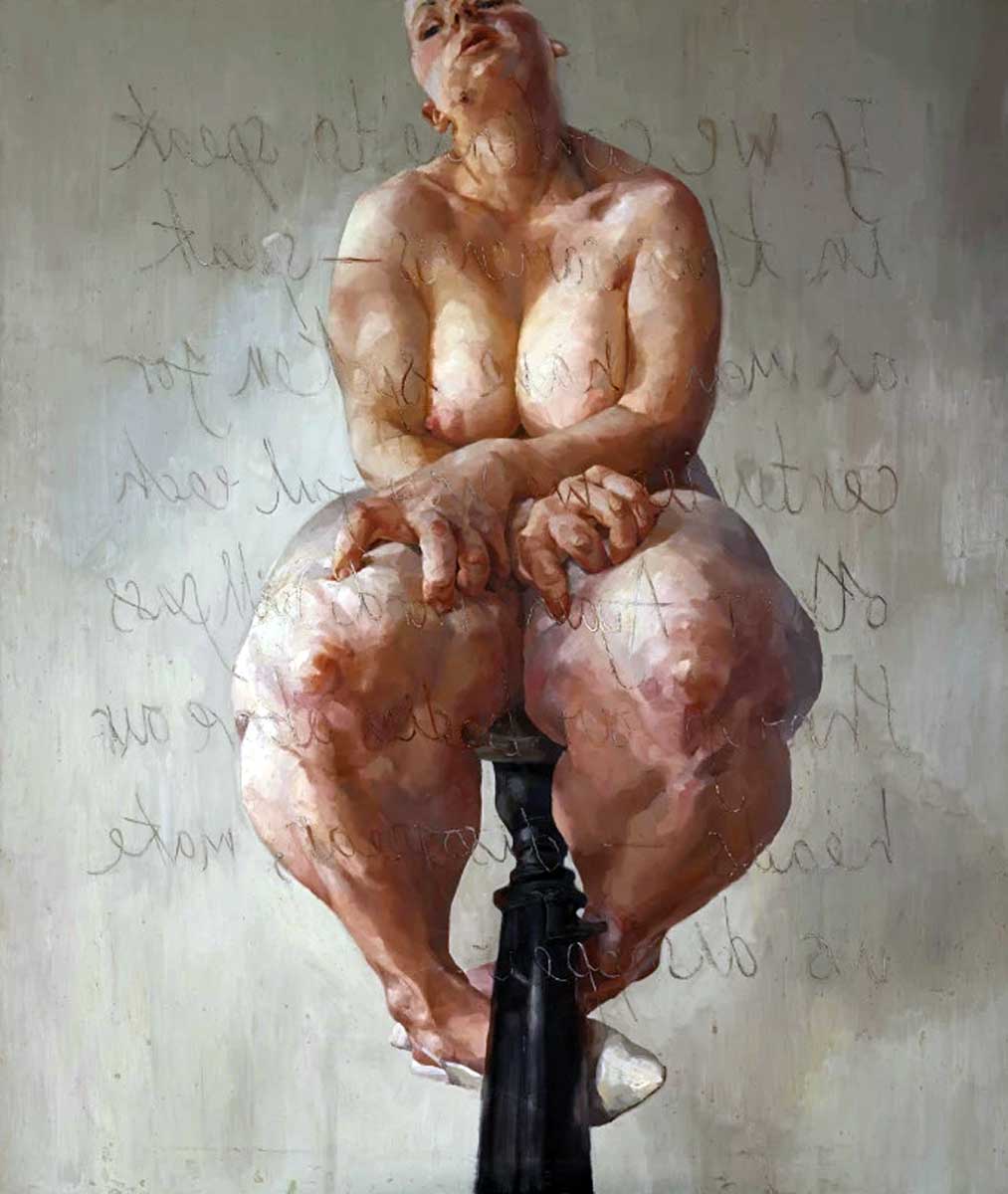
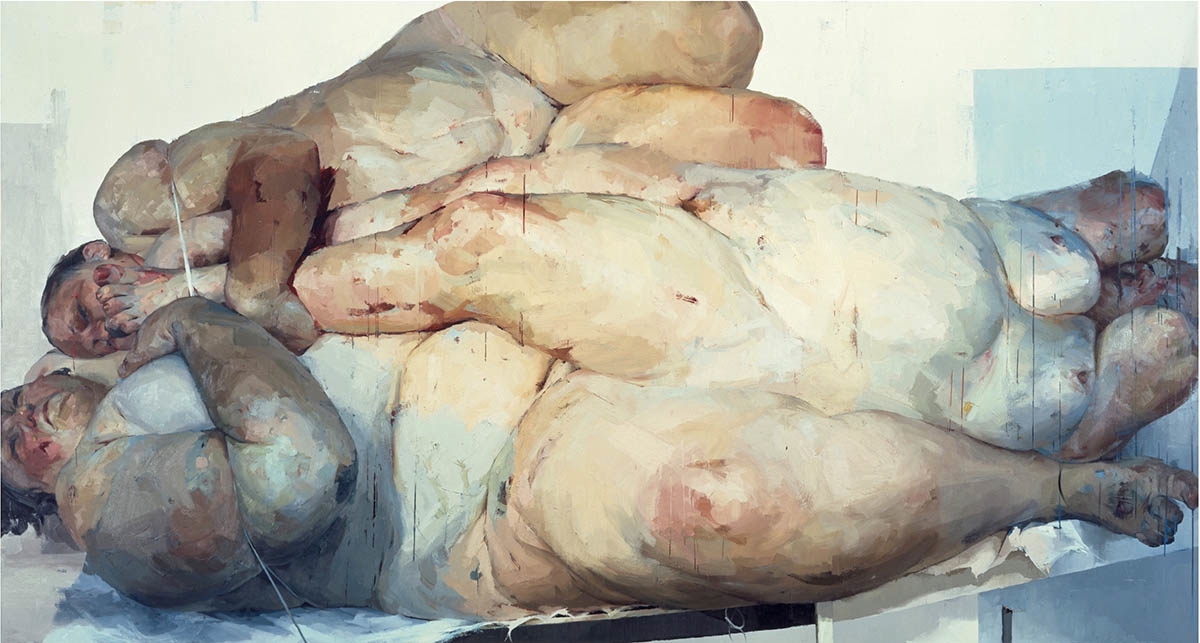
A woman’s body dominates the canvas; it is raw, distorted, impossible to ignore. In Jenny Saville’s Propped (1992), the flesh is heavy with brushstrokes and the gaze determined. She sits naked on a stool, with her monumental figure. Etched and barely visible through the paint are the words: If we continue to speak in this sameness — speak as men have spoken — we will fail. It is both a confession and a challenge. More than that, it is a refusal to perform beauty on anyone’s terms but her own.
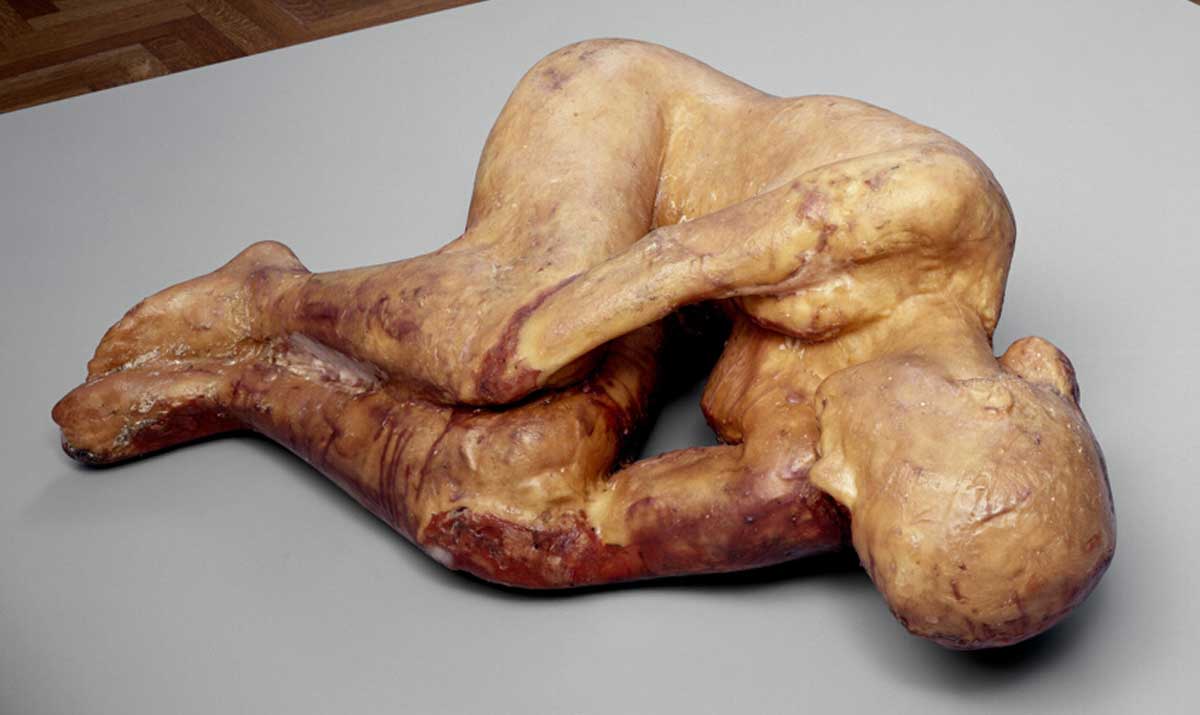
In another context, Doreen Garner makes silicone sculptures that glisten like relics of surgery or ritual. They treat skin as an archive with their pink, translucent, and stitched details. The effect is both horrific and seductive. We flinch at the first sight of them, but then we take a closer look.
For Saville, Garner, and a generation of women artists, body horror is not a shock tactic. It is a method, a way to expose the systems that want women to be perfect, silent, and small. Their work settles all issues around beauty, violence, and the unsettling truth of being female in the 21st century.
From Ideal to Abject: The Feminist Roots of Body Horror
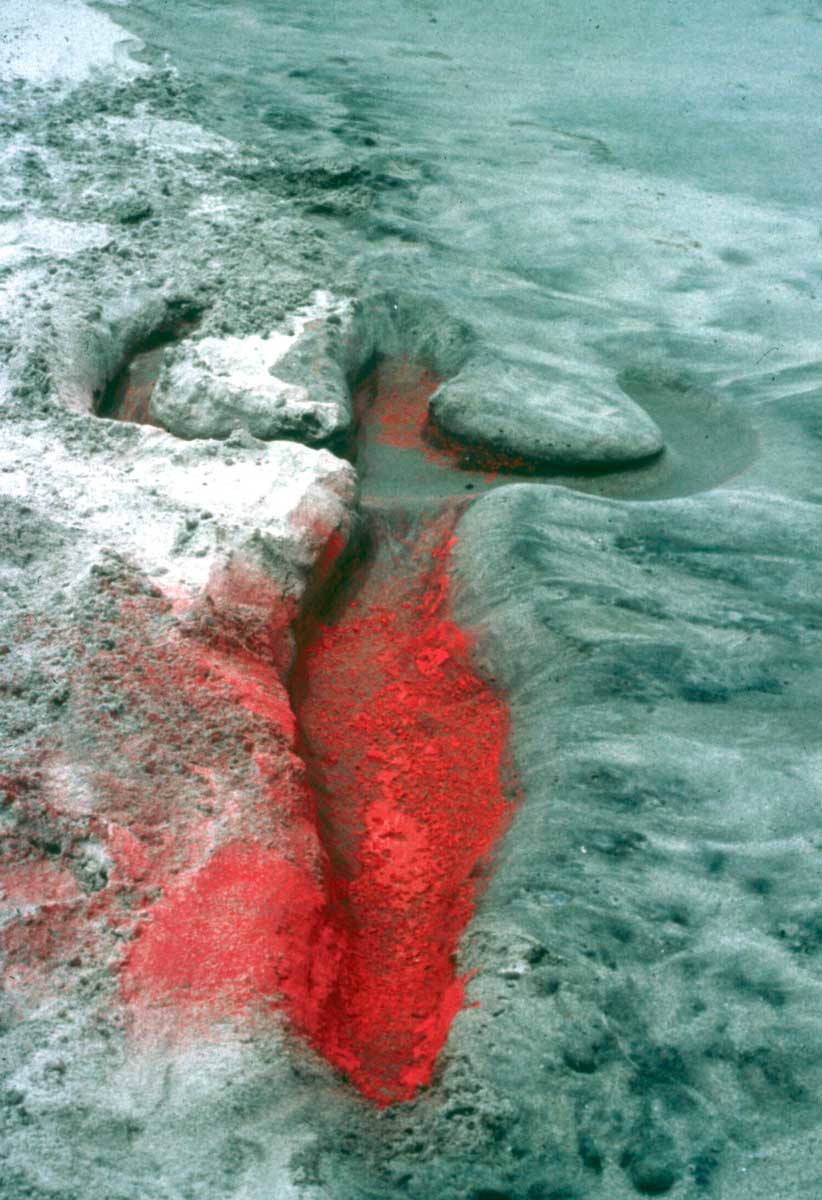
Before contemporary women artists turned to body horror, a different kind of rebellion began. In the 1970s, feminist art challenged the body in the art world. Several artists, such as Carolee Schneemann, Ana Mendieta, and Hannah Wilke, used their own bodies as both means and statements to challenge the visual norms that had traditionally defined femininity.
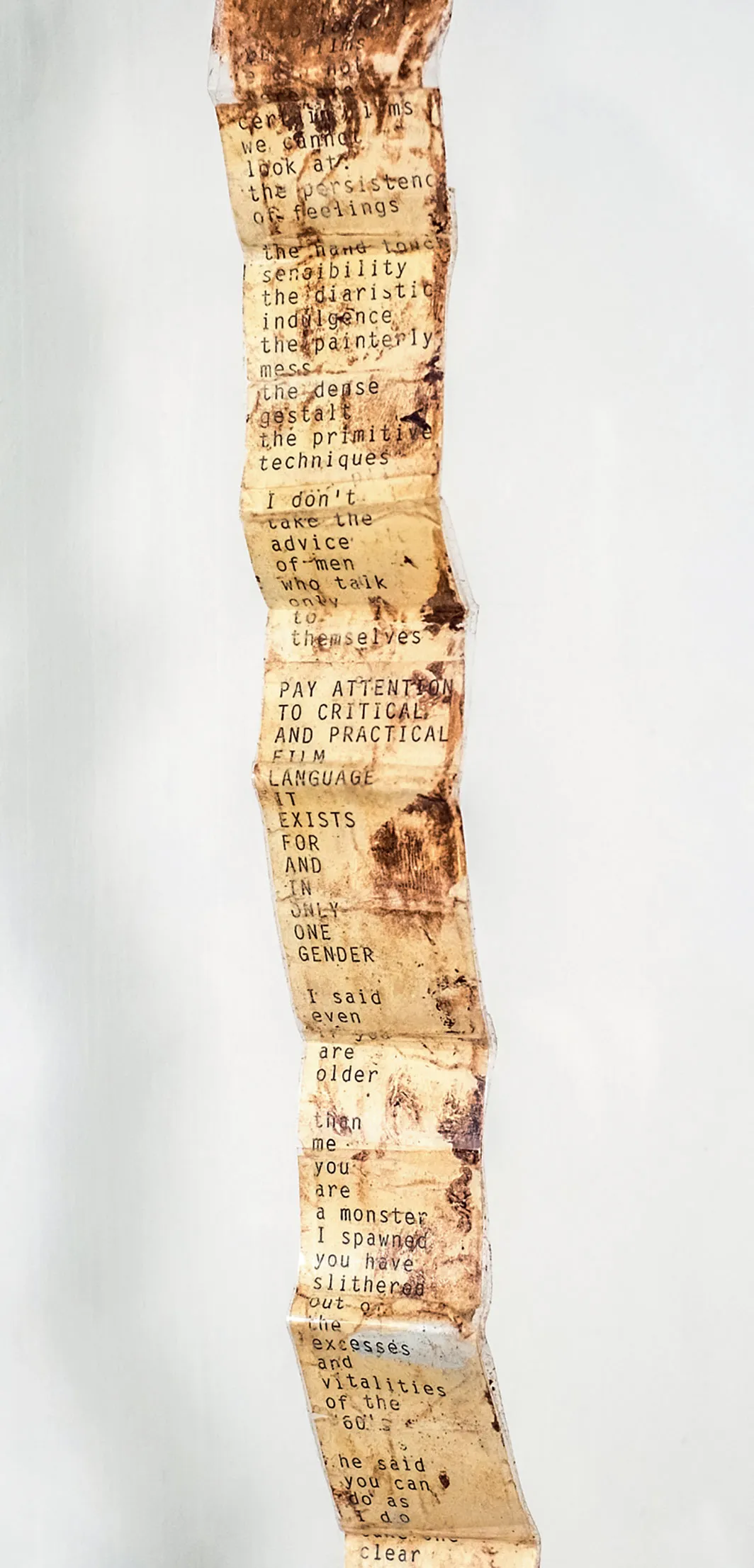
Carolee Schneemann’s Interior Scroll (1975) remains one of the most provocative statements. Her performance art included her standing naked on a table. She slowly pulled a paper scroll from her vagina and read it aloud. The gesture was very personal, shocking, and deeply political, asserting the artist’s own voice and authorship. On another note, Ana Mendieta created the Silueta Series, in which she pressed her body into earth, mud, and blood, leaving temporary imprints that blurred the line between woman and landscape, presence and absence. Hannah Wilke sculpted tiny vulvas from chewing gum and stuck them to her own skin, a commentary on beauty, desire, and the commodification of women’s bodies.
These artists rebelled against objectification by dismantling an entire aesthetic regime. For centuries, the female body in art was an ideal: smooth and contained. The feminist avant-garde replaced that ideal with something uncomfortably real: bodies that bled, aged, expanded, and existed beyond decorum.
Around this time, the philosopher and psychoanalyst Julia Kristeva offered a theory that helped explain why such images provoked discomfort: the concept of abjection. In her 1980 book Powers of Horror, Kristeva described the abject as whatever threatens our sense of order and identity, whatever is not considered “clean,” “whole,” or “civilized.” These things are bodily fluids, decay, and blood that blur the boundaries between inside and outside. They work as a reminder that we are not pure. Instead, we are made of matter that leaks, decomposes, and transforms.
For Kristeva, abjection is not just about disgust. It’s about the fear of losing control, that is, the moment when the body asserts its messy reality over our cultural illusions of perfection. And for feminist artists, that idea became radical fuel.
The aforementioned artists made the abject visible and turned shame into spectacle. Their work rejected conventional beauty standards and revealed what society suppressed. The abject body—open, leaky, and emotional—became a form of resistance.
This lineage allows contemporary women artists to wield body horror not as a genre gimmick but as an inheritance. From the raw scrolls of Schneemann to the bleeding silicone of Doreen Garner, the thread is clear: to show the body honestly is to challenge every system that insists it must be contained. In other words, the grotesque is not the opposite of beauty; it is its unspoken twin. And through abjection, artists found a language for everything that beauty alone could never say.
Body Horror in Contemporary Explorations
If the feminist artists of the 1970s cracked open the body, the women who followed learned to live inside that rupture, to paint, sculpt, and perform from within the wound. The result is a generation of work that doesn’t simply depict the body, but becomes it: a living, leaking archive of beauty, violence, and transformation.
Jenny Saville is a leading figure of this corporeal tradition. Her monumental canvases are vast fields of paint that mimic the tactility of skin. In Propped (1992) and Plan (1993), women’s bodies are distorted, swollen, or dissected by reflection. The brushwork is aggressive, sensual. Saville’s women are not muses; they are subjects. Their flesh is not a surface to be admired but a site of becoming, a record of existence that pushes against the frame.
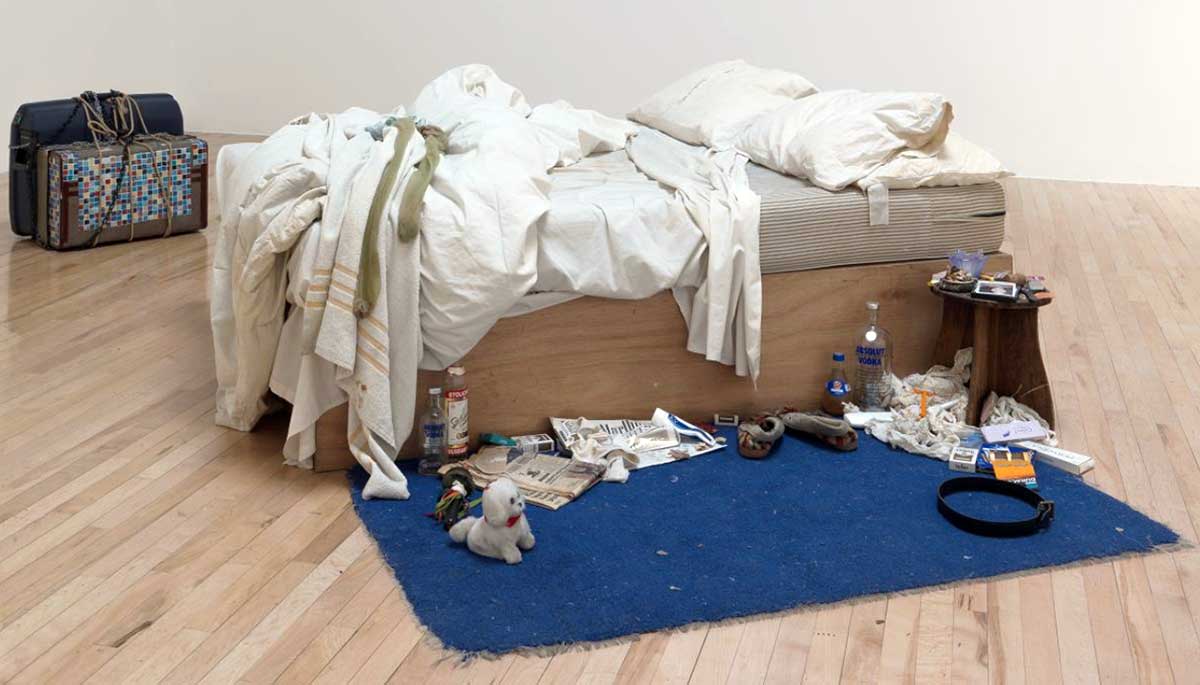
Tracey Emin approaches the body in a completely different way. Her famous installation My Bed (1998), with its crumpled sheets, cigarette butts, and blood-stained underwear, exposes what should be private according to social norms. Her art is intimate, chaotic, and tender all at once.
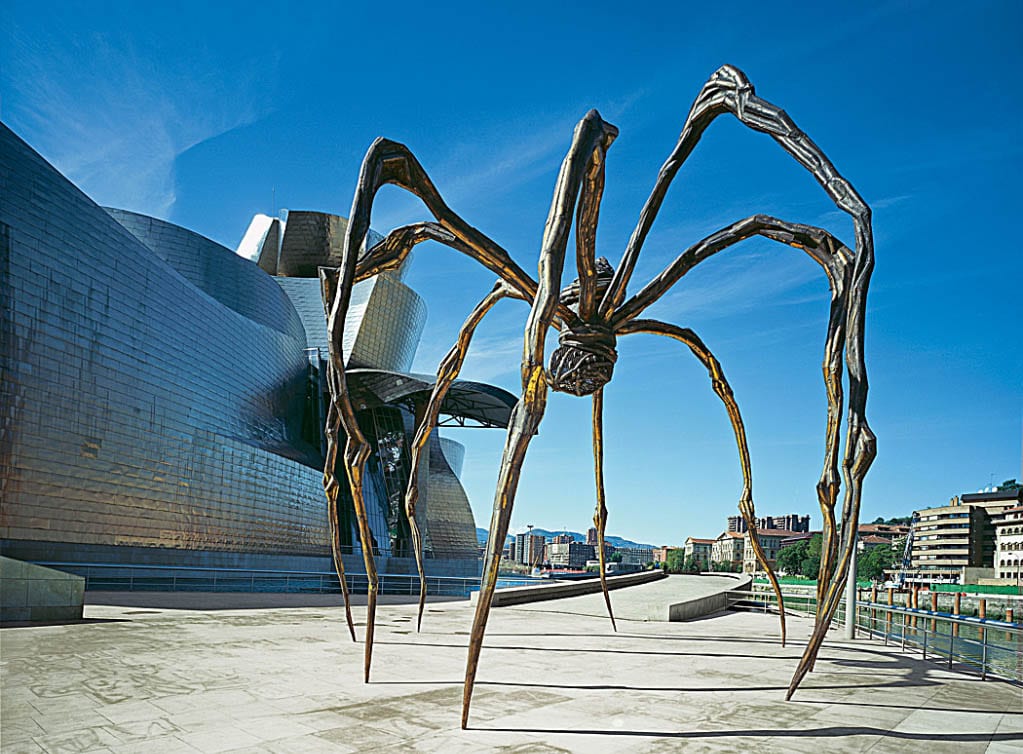
Louise Bourgeois’s work, on the other hand, bridges Surrealism and feminist discourse. The common motif of the spider (Maman, 1999) suggests both protection and danger; the mother has a dual role, both as shelter and threat. Furthermore, she made sculptures from soft fabrics, stitched from old clothing, that resemble textures of skin and memory. Bourgeois’s body is never repetitive, because it explores trauma, which is always a fluid concept.
Kiki Smith created sculptures and prints that explore the duality of the female body across history. It is both radiant and broken apart at the same time. Her piece, Untitled (Blood Pool) (1992), portrays a figure lying in a red puddle. It is a perfect example of Kristeva’s concept around attraction and repulsion, as it makes the injured, abject body poetic.
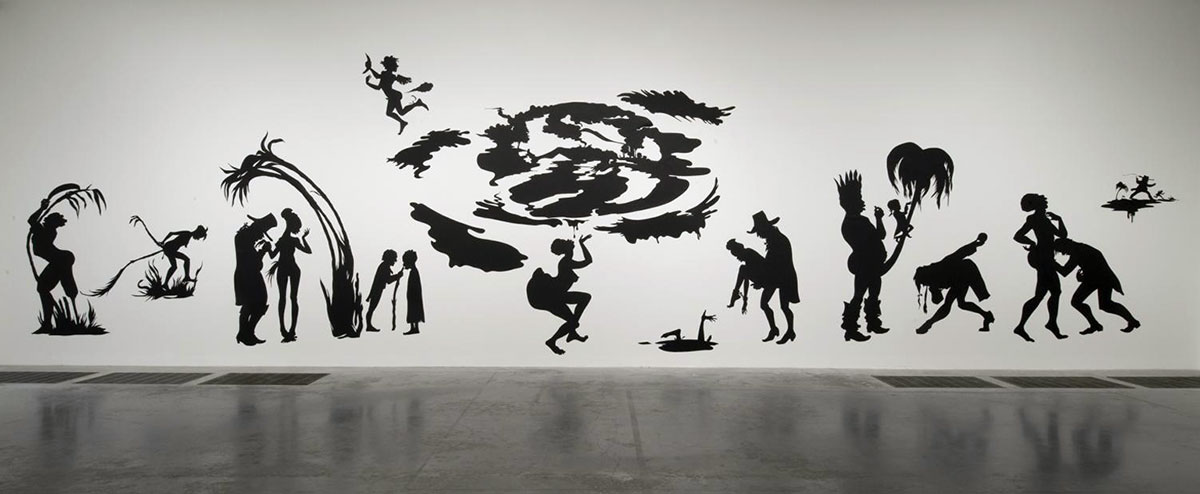
Kara Walker, on the other hand, believes that the body cannot be separated from history. She makes black silhouettes that depict historical scenes of racial violence against Black people. Even though her figures are flat and delicate, they express the body in extremis: torn, touched, and consumed. The true horror in this case is the acknowledgment of the history’s cruelty and the acceptance that it is a scarred and hunted entity.
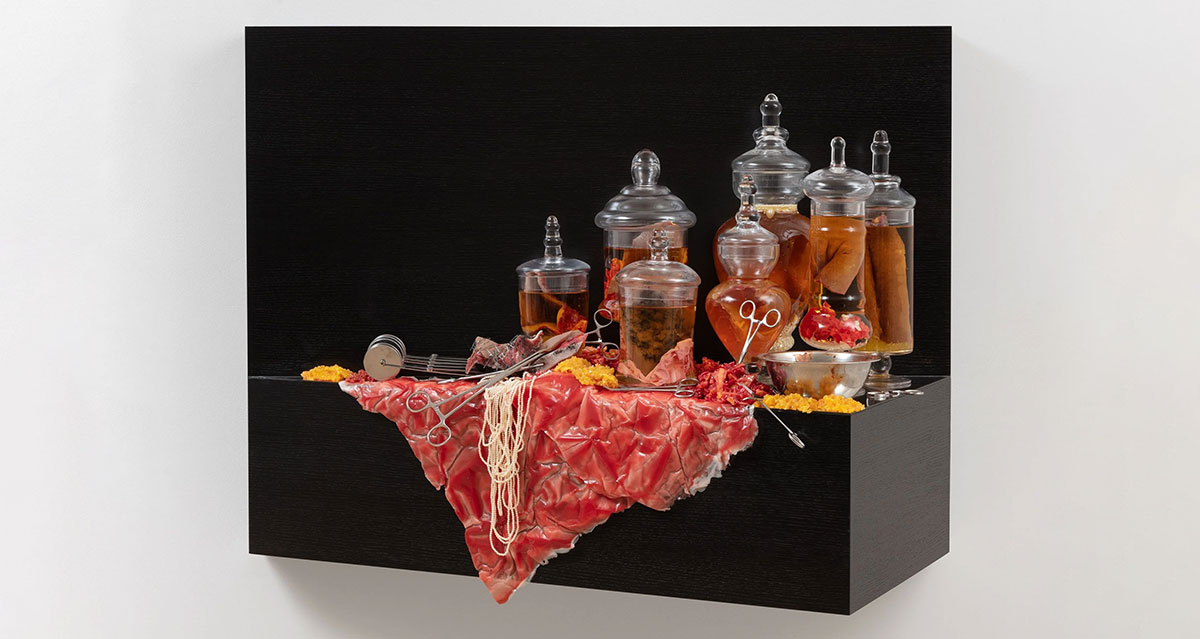
Doreen Garner confronts that same history but from a different angle. She makes silicone sculptures that are glossy, translucent, pierced with glass beads and metal, and reimagines the brutal medical experiments once performed on enslaved Black women. In works like Please God, I hope when I Die, it’ll be in the summertime (2020), she combines beauty and brutality into a single piece, forcing the viewer into uneasy intimacy with violence. Garner’s practice, too, literalizes Kristeva’s abjection: she makes us face the body horror we would rather not see, the history we would rather ignore.
Patricia Piccinini, meanwhile, awakens our empathy when we do not expect it. She creates hyperrealistic sculptures of hybrid beings—part human, part animal—that blur the line between the natural and the manufactured. On one hand, these creatures evoke maternal feelings. On the other hand, they make us flinch and stress about the evolution of the species. Is this where technology and biology will take us? So, yes, they are abject, but they are also cute and loved. Piccinini’s world asks: what if the monstrous is simply what we have not yet learned to accept?
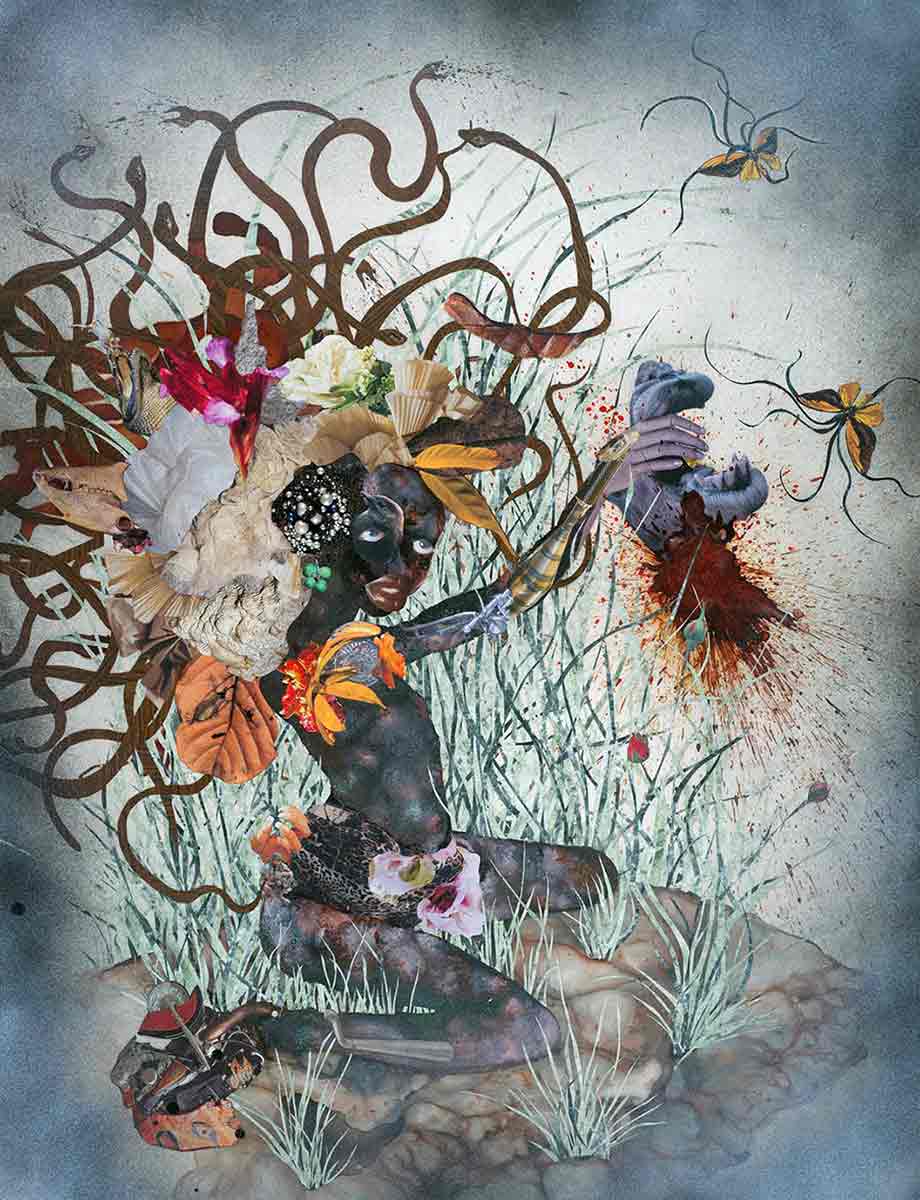
Wangechi Mutu brings elements of postcolonialism to this lineage. Her collages and sculptures are made from magazine pages, medical diagrams, and wildlife photography. The result is the creation of hybrid beings that are equal parts deities and monsters. In works like The Bride Who Married a Camel’s Head (2009) or her shimmering bronze sculptures, beauty and violence entwine: jeweled skin meets exposed sinew, femininity meets mutation. Mutu’s women are stitched from the residues of representation: Western fantasies of Africa, fashion imagery, and science fiction. At the same time, they stare back, powerful and uncanny.
Mutu’s art makes visible the ways race and gender fit within the language of beauty itself. Her creatures bleed glitter, their wounds shine. They are both cyborg and myth, forcing the viewer to confront bodies that are not easily categorized or contained. If Doreen Garner’s horror is surgical, Mutu’s is a reimagining of the monstrous as fertile, futuristic, and sovereign.
Among all these artists, the body is not an image but an argument. Body horror becomes almost a weapon in their arsenal they use to eventually empower. Distortion and fragmentation are the visual aids that work as acts of resistance against containment. But it must be clear that body horror in this context is not for the show. It is an almost literal depiction of how society sees the body and what it feels like for the woman inhabiting it.
The Theory of the Monstrous Feminine
In a different theoretical background, Barbara Creed spoke of the monstrous feminine. The term describes the various depictions inflicted upon the female body that make it terrifying. Not because it is actually weak, but because it can resist all sorts of containment. Drawing on Julia Kristeva’s idea of the abject, Creed argued that women’s bodies unsettle the boundaries on which civilization depends. Blood, birth, sex, and decay are reminders of our own mortality, our proximity to chaos. Contemporary women artists have reclaimed this image, turning fear into a form of ownership. So, when they embrace the monstrous, they reveal the power hidden in what society considers disturbing and unsettling.
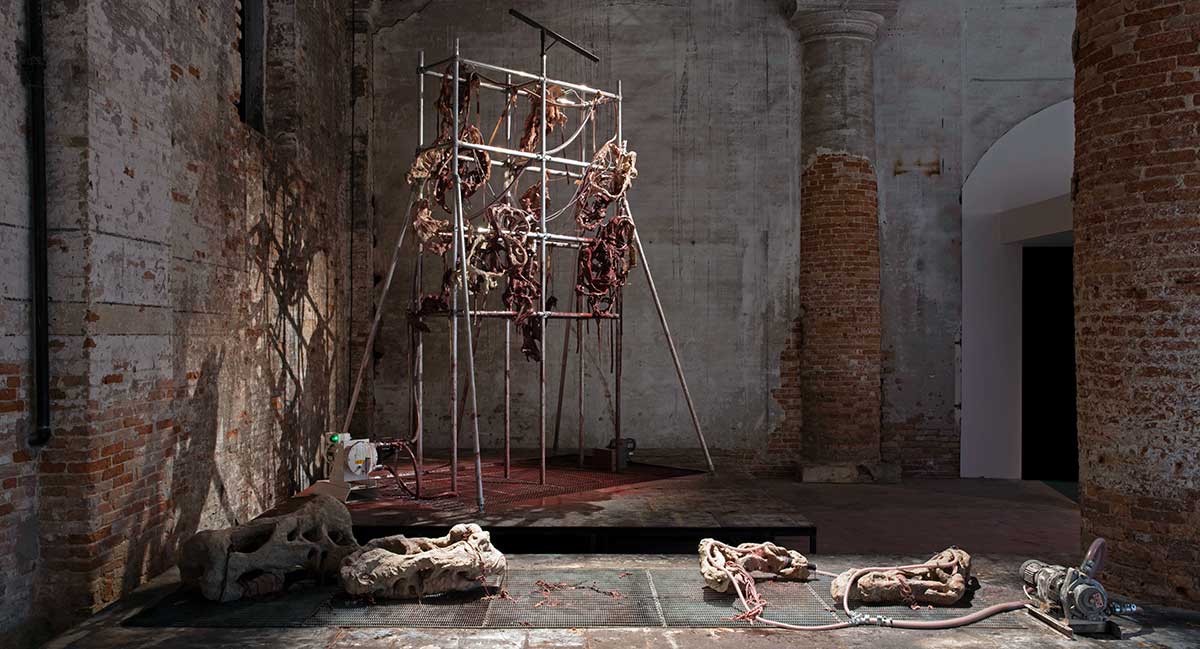
Mire Lee is one of the clearest embodiments of Creed’s thesis in visual art. Based in Seoul, she creates kinetic sculptures from latex, tubing, and lubricants that drip and ooze. The sculptures look almost alive from the way they move. They are disturbing to watch, yet we cannot look away; a mixture of nausea and fascination. Thus, it becomes clear that the monstrous feminine is not something that applies only to the cinema, nor is it just a theoretical frame. It is artistic, material, and transformative. All these artists redefine the cultural aesthetics. Body horror is no longer a fear imposed on women.
Contemporary Resonance
Today, people are filled with images of sanitized beauty and hyper-polished looks. Smooth skin, ideal proportions, and curated realities are all part of the new social media culture. This is where body horror enters. Since it focuses not only on the physical mutilation and the grotesque but also on the psychological, it becomes more relevant than ever. Art is one of the most direct platforms it can take place. Hence, the influence of this kind of art. It cuts through the illusion of perfection and brings us back to reality. The reality that is not dreamy or ideal; it disrupts, makes us flinch, and makes us reflect.
So, in the context of contemporary art, body horror helps us realize that the body itself is alive, complex, and messy. It is the exact opposite of the perfect image that circulates in the media. Seeing it deformed, exaggerated, or generally uncontainable may evoke our sympathy, curiosity, fear, or disgust. At the same time, it creates space for the recognition of its true nature, a resonance that inevitably goes beyond galleries and museums.
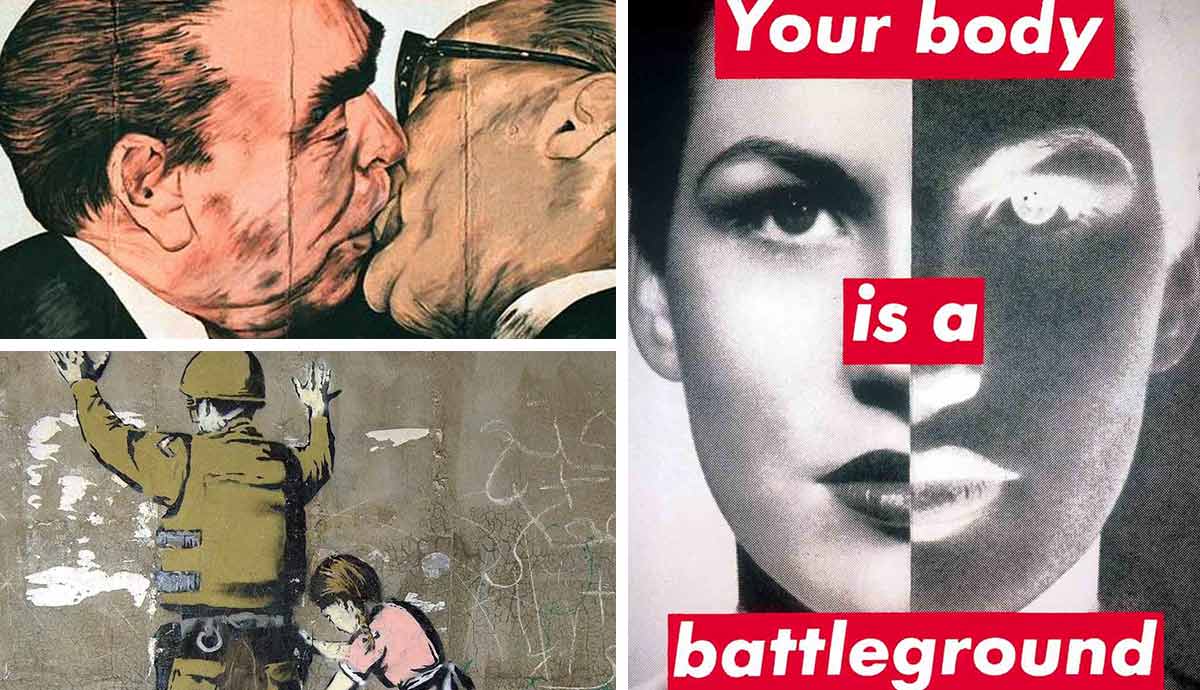
Current anxieties about identity, surveillance, and self-representation are the things humans face on a daily basis. The contradiction with social media is that they encourage perfection while hiding the trauma, the ugliness. By presenting abjection, distortion, and mutation, artists reveal the stakes of that contradiction. We come face to face with the fantasies imposed on female bodies, and the violence of the ideal beauty, the politics of it all. Because, after all, as Barbara Kruger states, our body is, indeed, a battleground.
Body Horror: The Body Reclaimed
Starting from Schneemann’s intimate confessions and reaching Doreen Garner’s stitched terrors, contemporary body horror shapes a fearless and provocative chapter in contemporary art. Feminist artists refuse conventional beauty and turn to the grotesque and unsettling side of it. Through fragmentation, the female body becomes both subject and medium. A medium to show that horror is not something graceful. Alas, it is used to reveal historical violence and contemporary cultural pressures. The contradiction between feelings of fascination and repulsion is where the truth lies. It is the things society wants to hide: vulnerability, mutation, and the complexity of our physical existence.
In a culture obsessed with polished perfection, body horror points out that disorder, excess, and transformation are not flaws to hide but vital parts of our existence. Horror and beauty exist side by side and expose the body in its most honest form. At the same time, they remind us why artworks like these raise such emotional, cultural, and political flags today.