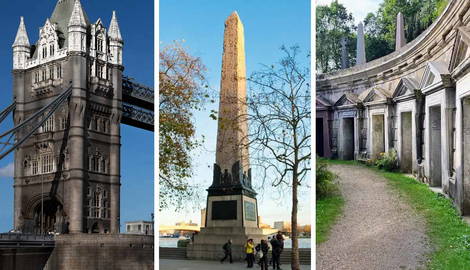
When most people think of exploring the history of London, they think of its iconic buildings, from the British Museum to Buckingham Palace to Westminster Abbey. But there are many fascinating places to discover in London that aren’t buildings, including monuments, cemeteries, and unexpected and unique historic landmarks that reveal the city’s 2,000 years of history. Read on to discover 13 London historical sites that aren’t buildings.
1. HMS Belfast
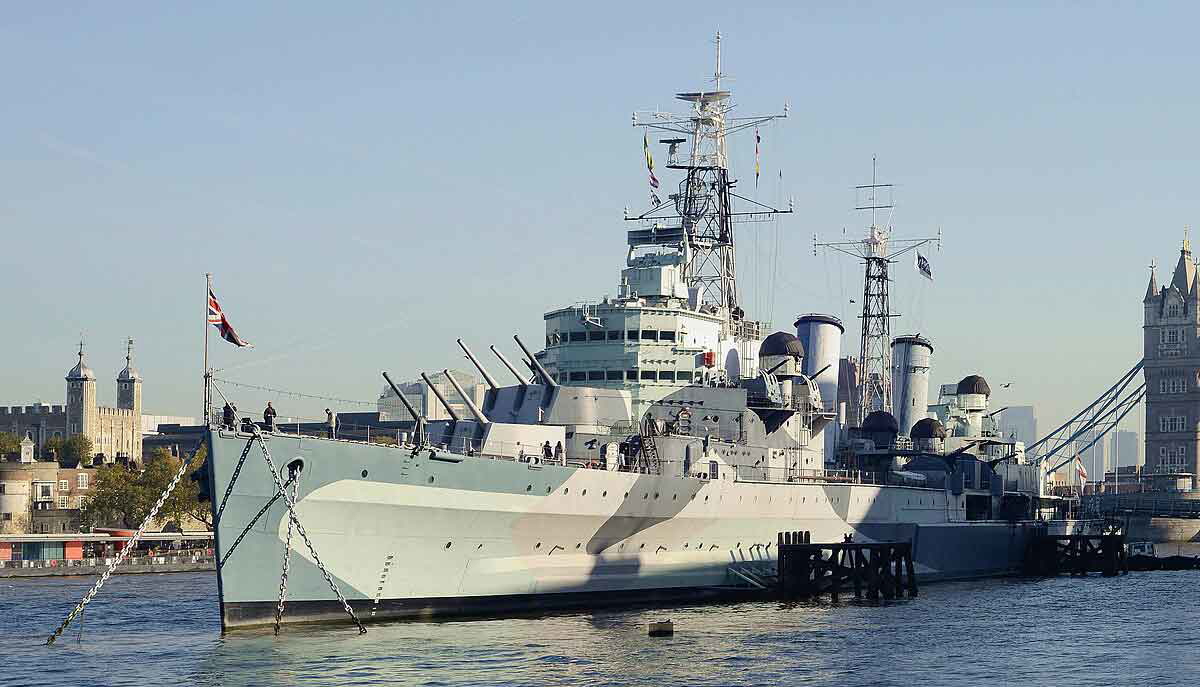
HMS Belfast, a Town-class light cruiser of the Royal Navy, was constructed in 1936 and launched in 1938, becoming the first naval vessel named after Northern Ireland’s capital. Commissioned shortly before the onset of the Second World War, she initially participated in the British blockade of Germany.
Damaged by a German mine in late 1939, the Belfast underwent extensive repairs and re-entered service in 1942 with enhanced capabilities. She played a pivotal role in Arctic convoy operations and supported the Normandy landings during Operation Overlord in 1944. In 1945, she joined the British Pacific Fleet and later saw combat during the Korean War from 1950 to 1952. Following modernization, she undertook further deployments before entering reserve status in 1963.
Efforts to preserve the Belfast began in 1967, culminating in the formation of the HMS Belfast Trust, despite governmental reluctance. The Trust successfully secured the vessel, which was moored on the River Thames in 1971 and opened to the public later that year. The ship was integrated into the Imperial War Museum and remains a prominent heritage site. She is supported by public funding and museum-generated income.
2. Mary Seacole Memorial Statue
Mary Seacole (1805-1881) was a pioneering Jamaican nurse and entrepreneur renowned for her contributions during the Crimean War. Born in Kingston, Jamaica, to a Scottish father and a Creole mother skilled in herbal medicine, Seacole later established the British Hotel near the front lines, offering food and care to convalescent officers. Though she missed early battles due to financial interests in London, she later assisted wounded soldiers directly on the battlefield.
Seacole’s 1857 memoir, “Wonderful Adventures of Mrs. Seacole in Many Lands,” details her wartime experiences and culinary services and was the first British autobiography by a Black woman. Despite being overlooked for decades, Seacole was posthumously honored with the Jamaican Order of Merit in 1990, which sparked debate over her legacy relative to Florence Nightingale.
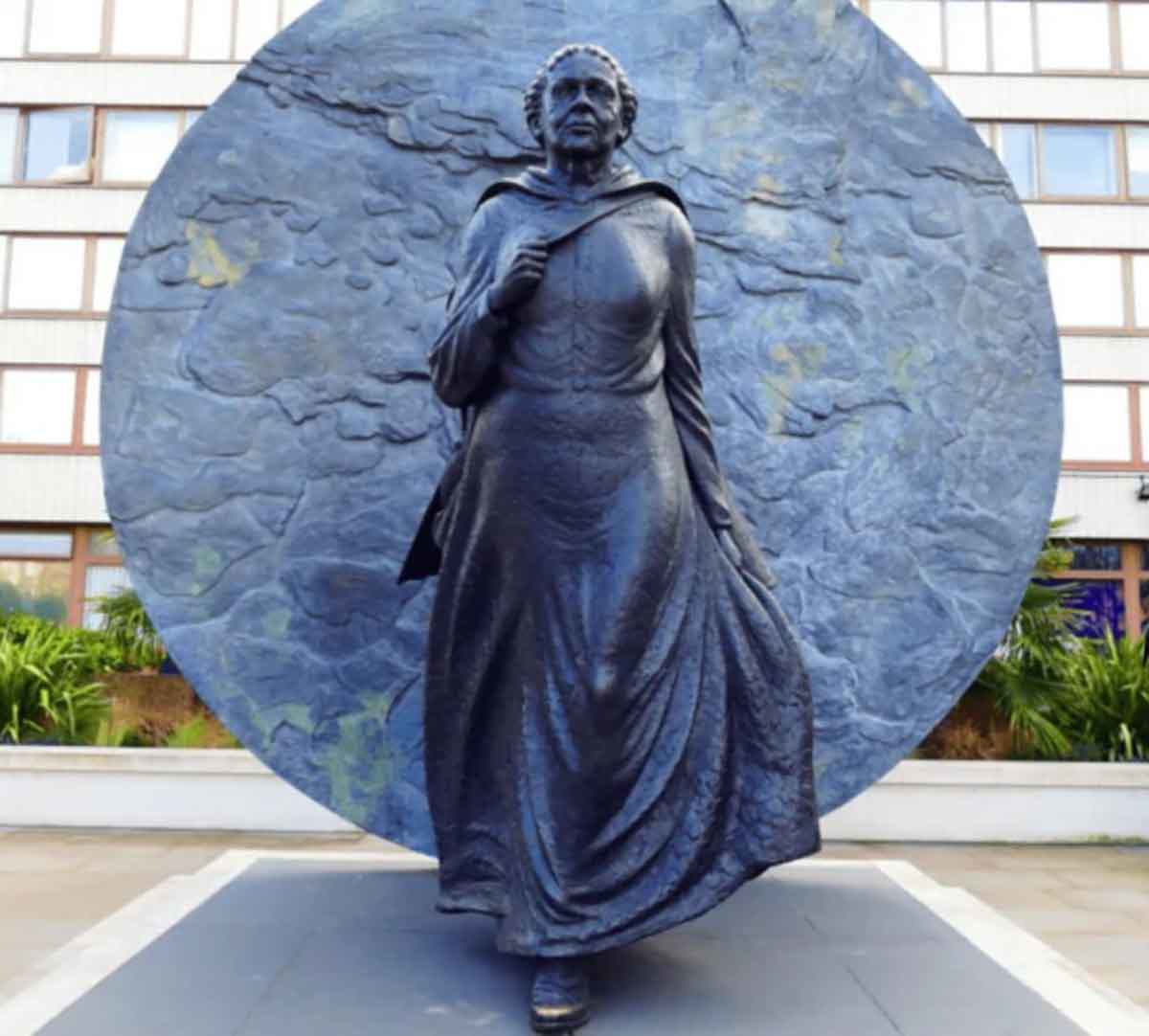
In 2016, a memorial statue of Mary Seacole was unveiled in the gardens of St. Thomas’s Hospital by Baroness Floella Benjamin OBE, who is a Trinidadian-British actress, presenter, and politician. The bronze work, created by artist Martin Jennings, was the result of 12 years of campaigning by the Mary Seacole Memorial Statue Appeal. It was the first statue in the UK erected to commemorate a named black woman.
3. Tower Bridge
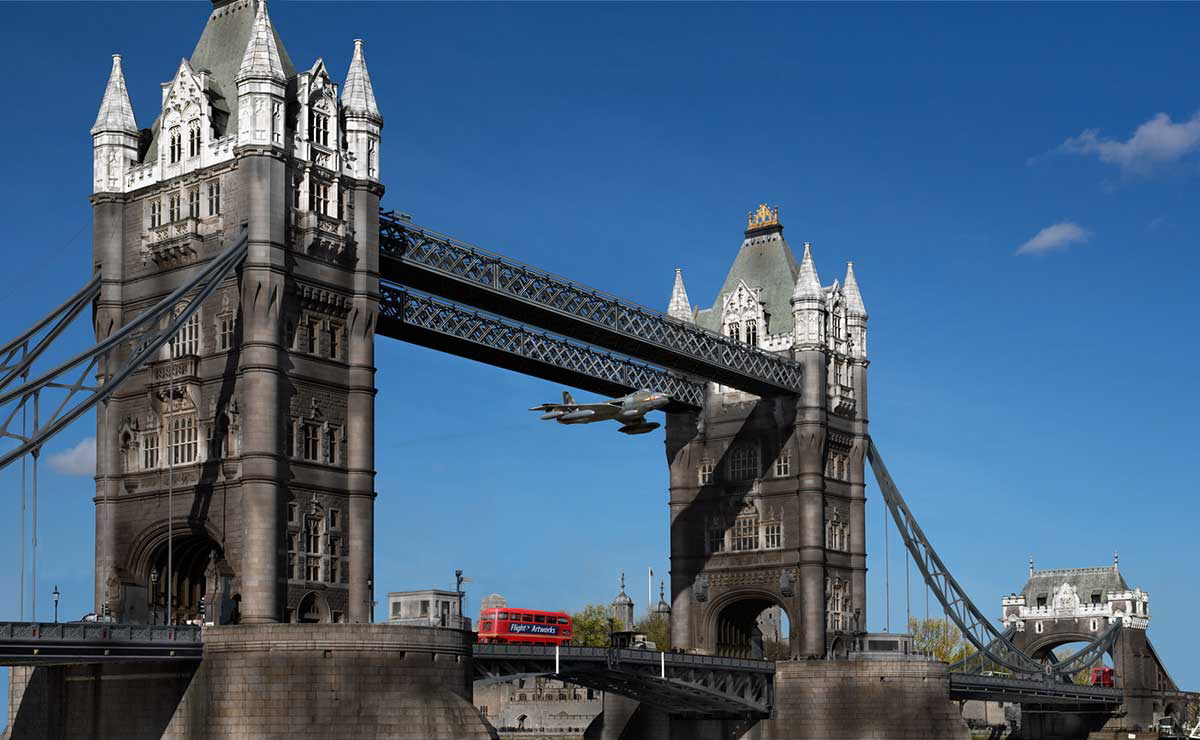
Tower Bridge emerged as a solution to the City of London Corporation’s challenge of constructing a crossing downstream from London Bridge without impeding river traffic. In response, a committee was formed in 1876, initiating a public design competition that attracted a number of submissions. The selected design, proposed in 1884 by city architect Sir Horace Jones and engineer Sir John Wolfe Barry, led to the construction of Tower Bridge beginning in 1886.
Completed in 1894, the bridge required eight years, five contractors, and the daily labor of over 400 workers. Its steel framework, supported by riverbed-anchored piers, was clad in Cornish granite and Portland stone for durability and aesthetic appeal. Tower Bridge was the most advanced bascule bridge of its time, powered by steam-driven hydraulics and massive accumulators enabling rapid lifting. Since 1976, it has operated on oil and electricity.
Throughout its history, Tower Bridge has witnessed notable events, including wartime damage, daring stunts, royal celebrations, and a prominent role in the 2012 London Olympics. Celebrating its 125th anniversary in 2019, Tower Bridge remains a symbol of Victorian engineering and a major cultural landmark.
4. Cross Bones Graveyard
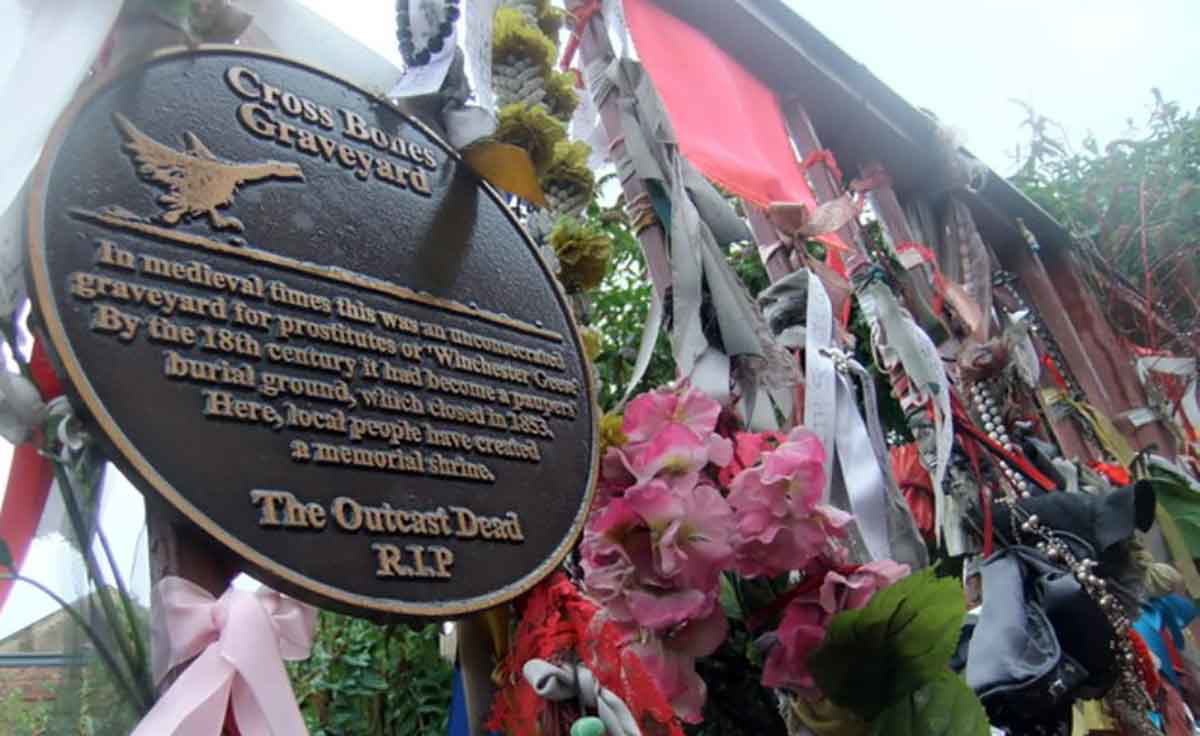
Cross Bones, a disused post-medieval burial ground located on Redcross Way in Southwark, London, is historically associated with marginalized populations. Initially established in the 17th century as a cemetery for single women, many of whom were sex workers known as “Winchester Geese,” it later became a paupers’ graveyard until its closure in 1853.
The site lies within the Liberty of the Clink, an area historically exempt from City of London jurisdiction and known for illicit activities. Here, one could find all manner of unlicensed enterprises such as brothels, theaters, and animal baiting. To preserve the site for the “outcast dead,” a group formed in 1996 called Friends of Cross Bones. Despite a bid from Transport for London for the site, Friends of Cross Bones eventually won a 30-year lease of the site in 2019. It is currently open to the public as a commemoration of ostracized people.
Excavations conducted by the Museum of London Archaeology Service between 1991 and 1998 revealed densely packed graves, with evidence of widespread disease. A 1992 dig uncovered 148 burials, predominantly perinatal and female, suggesting up to 15,000 individuals may be interred there. In 2022, a significant Roman archaeological site, including a mausoleum and mosaic, was discovered adjacent to Cross Bones.
5. St Dunstan-in-the-East Church Gardens
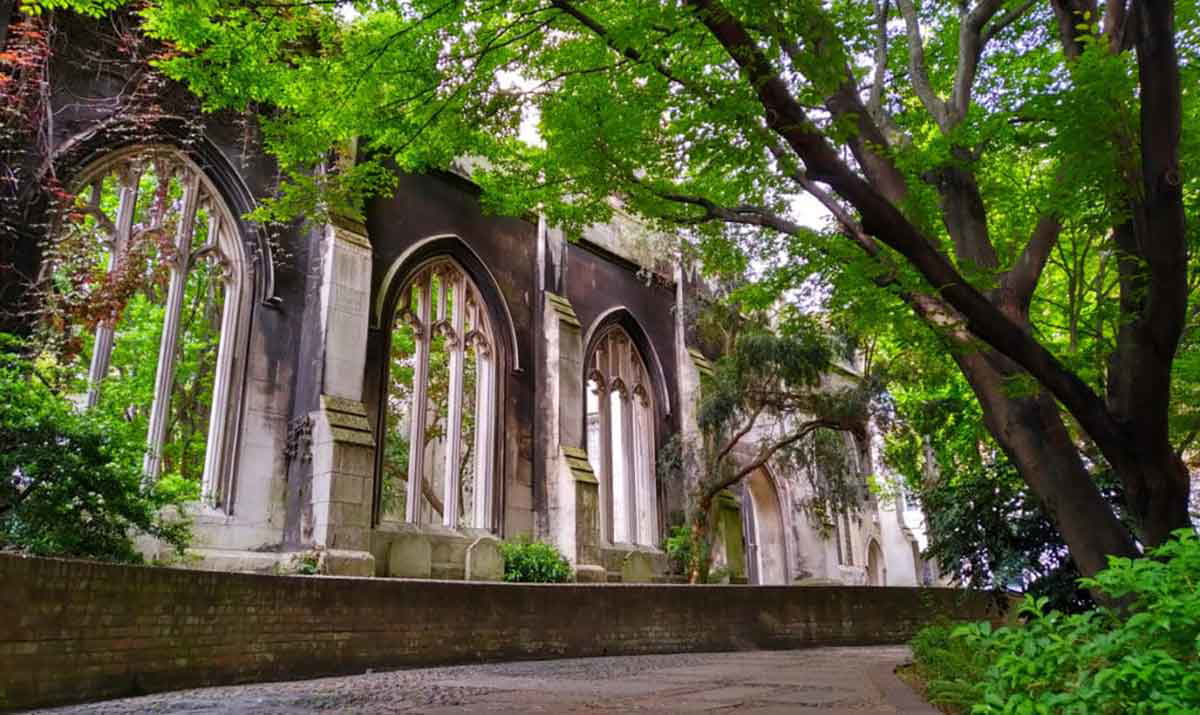
St Dunstan-in-the-East, a Church of England parish church located between London Bridge and the Tower of London, was originally constructed around 1100 CE. Over the centuries, it underwent several modifications. Severely damaged during the Great Fire of London in 1666, the church was partially restored rather than rebuilt. Between 1695 and 1701, Sir Christopher Wren designed a Gothic-style steeple featuring a needle spire. By 1817, structural instability necessitated a complete reconstruction, led by architect David Laing with assistance from William Tite. The new design, in the Perpendicular Gothic style, retained Wren’s tower and was completed in 1821. The building, made of Portland stone, accommodated up to 700 worshipers.
During the Blitz of 1941, the church sustained extensive damage, leaving only the tower and portions of the walls intact. In 1971, the City of London Corporation transformed the ruins into a public garden by planting grass and other plants as well as installing a fountain. Now part of the Benefice of All Hallows by the Tower, the site hosts occasional services and was designated a Grade I listed building in 1950.
6. Aldgate Pump
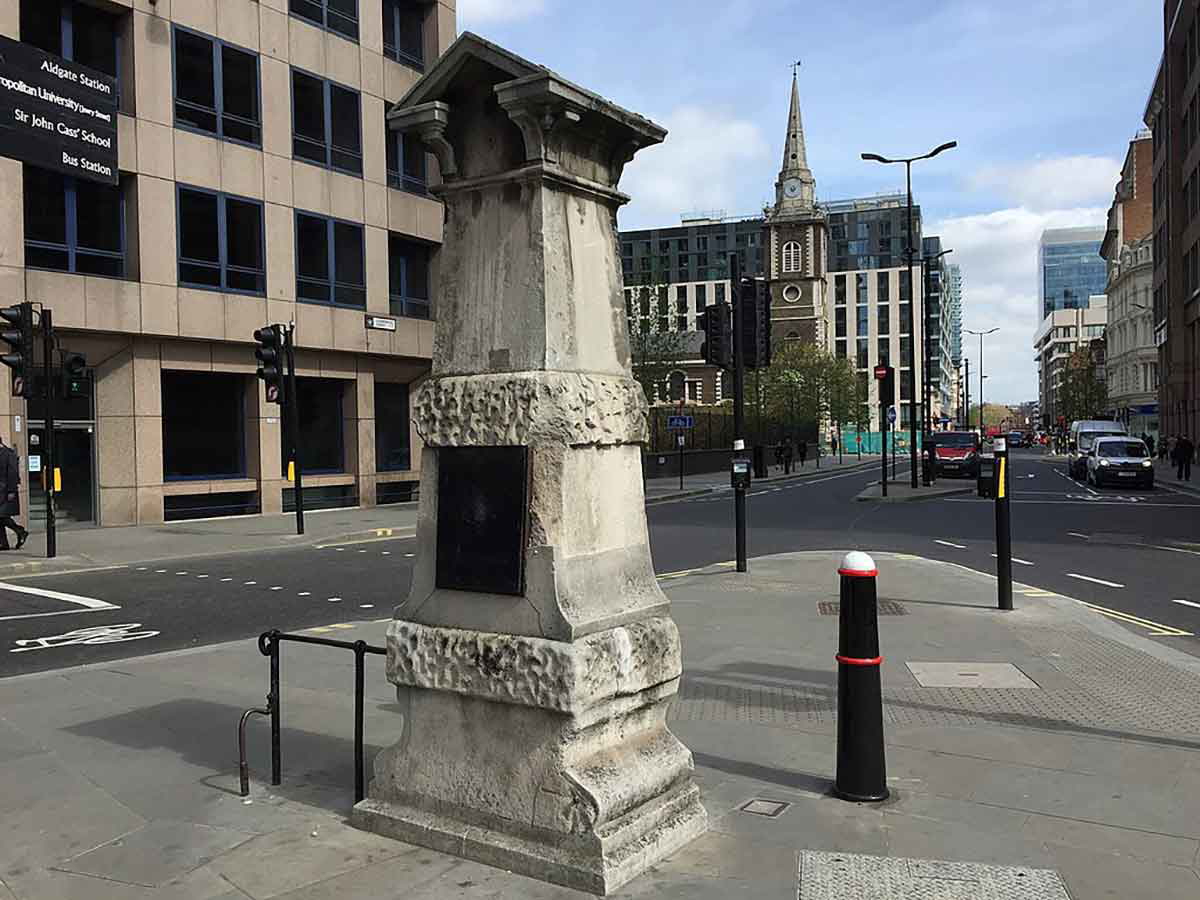
The Aldgate Pump, historically situated near Aldgate in London, has drawn water from subterranean streams since at least the 13th century. Referenced by John Stow in 1598, Charles Dickens in 1860, and likely used by Geoffrey Chaucer in the 14th century, it became a prominent local landmark.
A pump structure was installed in the 16th century, with the current version dating to the late 18th century and relocated in 1876. It marked the symbolic start of the East End and featured in Cockney rhyming slang. In the 19th century, the pump’s water, praised for its taste, was found to contain high levels of contaminants, likely due to seepage from overcrowded graveyards. Despite health concerns, some residents continued to consume it. The pump was eventually connected to a cleaner water supply and remains a historic, albeit neglected, feature of the city.
7. Cleopatra’s Needle
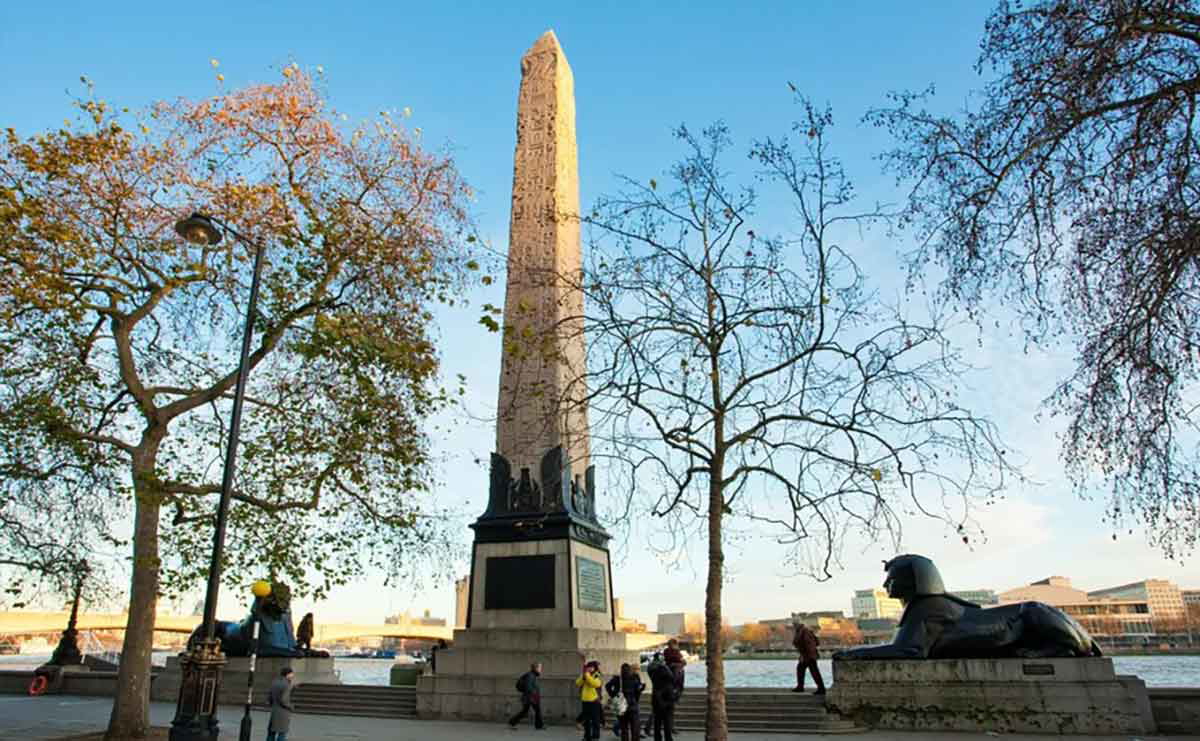
Cleopatra’s Needle in London is an ancient Egyptian obelisk originally erected in Heliopolis during the New Kingdom period. It bears inscriptions from Pharaohs Thutmose III and Ramesses II and was relocated to Alexandria by the Roman prefect Publius Rubrius Barbarus. Although commonly associated with Cleopatra VII, this attribution is a later Western invention. The obelisk remained in Alexandria for nearly two millennia before its re-erection in London in 1878.
Presented to Britain by Muhammad Ali Pasha, its transportation was delayed due to financial constraints. Renewed interest in the mid-19th century, particularly following the Great Exhibition, led to further proposals. In 1867, inspired by Paris’s Place de la Concorde, James Edward Alexander initiated a campaign to bring the monument to London.
With support from Sir William James Erasmus Wilson, who financed the project, the obelisk was transported in 1877, nearly 60 years after it had been presented to Britain, and installed on the Victoria Embankment in Westminster. During a German air raid in 1917, the monument sustained damage, still visible today on the adjacent sphinx. Restoration efforts were undertaken in 2005. The London Needle remains a prominent historical artifact, symbolizing Britain’s 19th-century engagement with Egyptology.
8. Giro the Nazi Dog
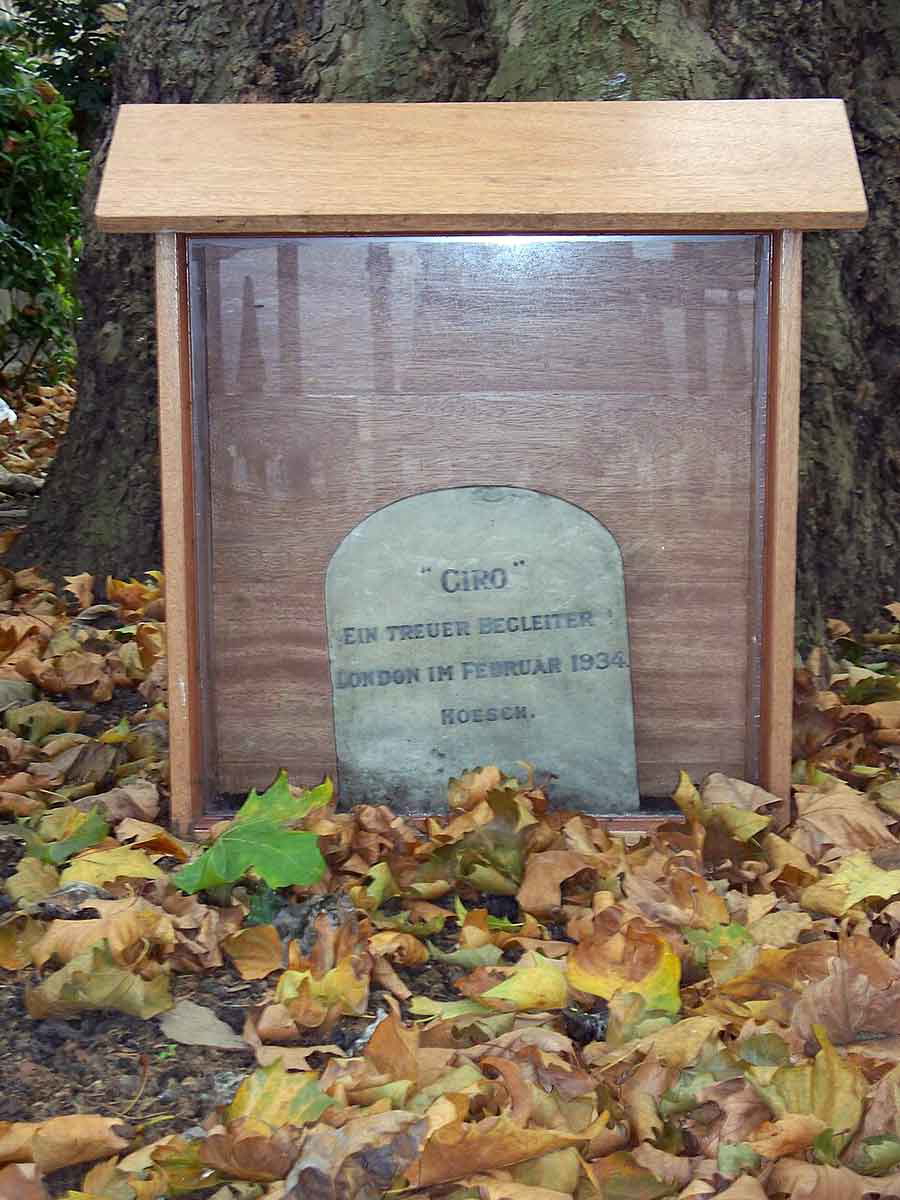
Located near The Mall, the ceremonial road between Buckingham Palace and Trafalgar Square in London, the tombstone of Giro, a pet terrier, constitutes Britain’s only known memorial linked to the Nazi regime. Giro belonged to Leopold von Hoesch, the German ambassador to the United Kingdom, who arrived in London in 1932, representing the Weimar Republic.
Following the 1933 Enabling Act, both Hoesch and Giro became representatives of the Third Reich, likely by circumstance rather than intent. Giro died in 1934 after chewing through an electrical cable in the garden of the German Embassy at 9 Carlton House Terrace. Hoesch, evidently affected by the loss, arranged a formal burial for the dog. The tombstone, relocated in the 1960s due to construction, remains visible today.
Hoesch was a respected diplomat among British elites, known for his charm, fluency in English, and efforts to keep the Anglo-German relationship alive. Upon his death in 1936, he was honored with a British-organized funeral procession that passed Buckingham Palace and continued to Dover, where his body was transported to Germany aboard HMS Scout. Notably, no Nazi officials attended his funeral in Germany, suggesting that both Hoesch and Giro were held in higher regard in Britain than in their homeland.
9. Nelson’s Column
Horatio Nelson (1758-1805) was a distinguished Royal Navy officer whose strategic acumen and innovative tactics secured pivotal British victories during the French Revolutionary and Napoleonic Wars. Widely regarded as one of history’s greatest naval commanders, Vice-Admiral Nelson’s career was marked by both personal bravery and professional brilliance. Born into a moderately affluent Norfolk family, Nelson entered naval service and rapidly ascended the ranks, gaining command by age 20.
Despite intermittent illness and unemployment following the American War of Independence, he returned to prominence during the French Revolutionary Wars, notably in the Mediterranean. He was wounded in Corsica, losing sight in one eye, and later lost his right arm at the failed assault on Santa Cruz de Tenerife in 1797.
Nelson achieved major victories at the Battles of Cape St Vincent (1797), the Nile (1798), and Copenhagen (1801). In 1805, while commanding the blockade of Cádiz, he led the British fleet to a decisive triumph at the Battle of Trafalgar, where he was fatally shot. Nelson’s body was returned to England and honored with a state funeral, cementing his legacy as a national hero and symbol of British naval supremacy.
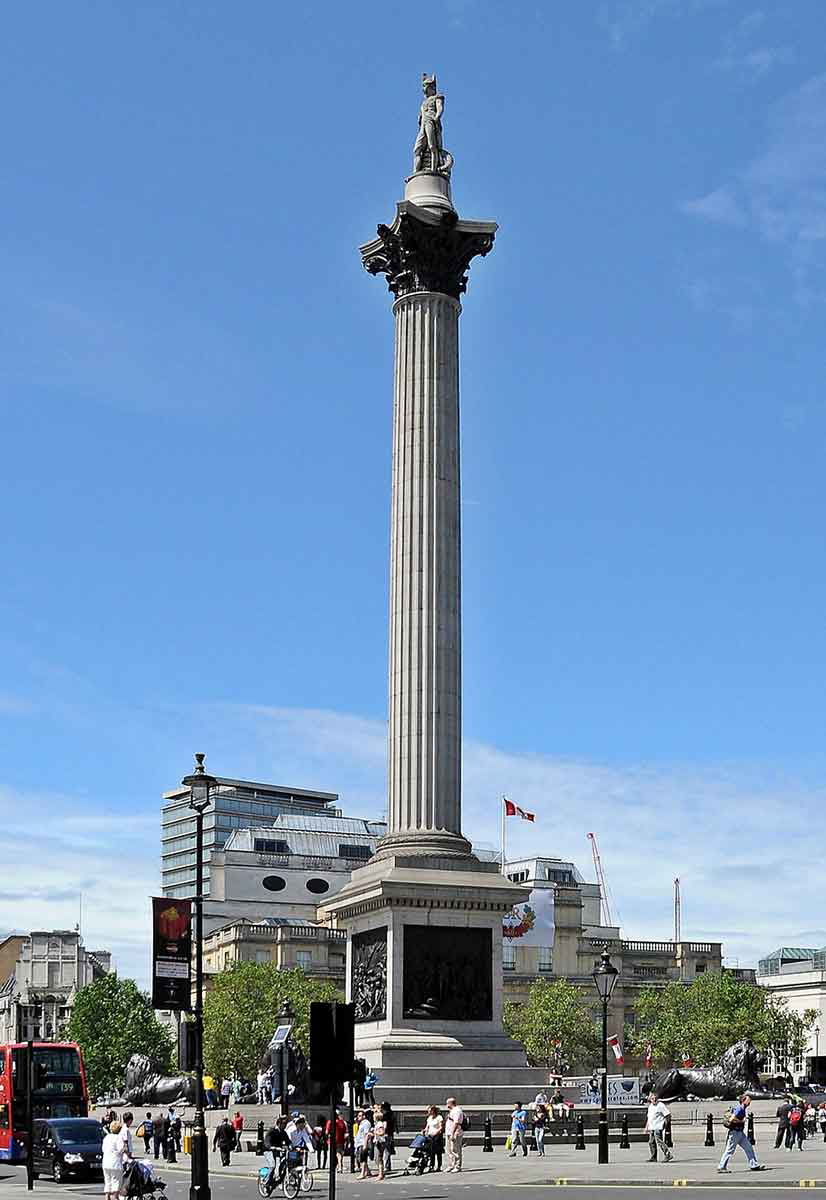
Nelson’s Column, located in Trafalgar Square, London, commemorates Vice-Admiral Nelson’s victory and death at the Battle of Trafalgar. Designed by William Railton and constructed between 1840 and 1843, the Corinthian column is made of Dartmoor granite and topped with a sandstone statue of Nelson, measuring 170 feet tall. The pedestal features four bronze relief panels cast from captured French guns, depicting Nelson’s major naval engagements, and four additional bronze lions were later added to the base.
10. Roman Walls
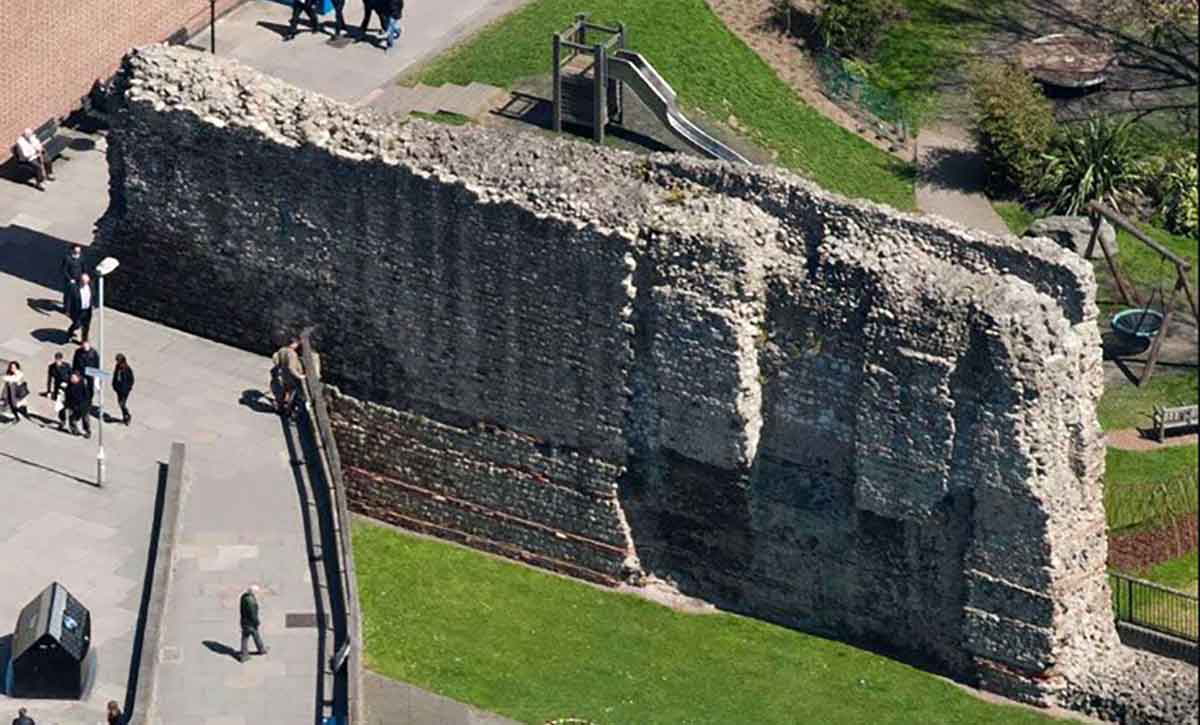
The London Wall, originally constructed by the Romans around 200 CE to defend the port town of Londinium, significantly influenced the urban development of the City of London. Initially, Roman London was protected by the Cripplegate Fort (c. 120-150 CE), which was later integrated into the city-wide fortifications, shaping the north-western boundary of the wall.
Following the end of Roman rule in Britain (c. 410 CE), the wall deteriorated, but was restored during the late Anglo-Saxon period, likely under Alfred the Great after 886. It continued to be maintained throughout the Medieval era and defined the city’s boundaries until urban expansion in the later Middle Ages blurred its perimeter. From the 18th century, much of the wall and its gates were demolished to accommodate increasing traffic. Post-World War II conservation efforts have preserved remaining sections as scheduled monuments.
The Tower Hill section of the London Wall, rising 10.7 meters, exemplifies both the Medieval height and Roman origins of the wall and is typically cited as the best place to visit the wall today.
11. Edith Cavell Memorial
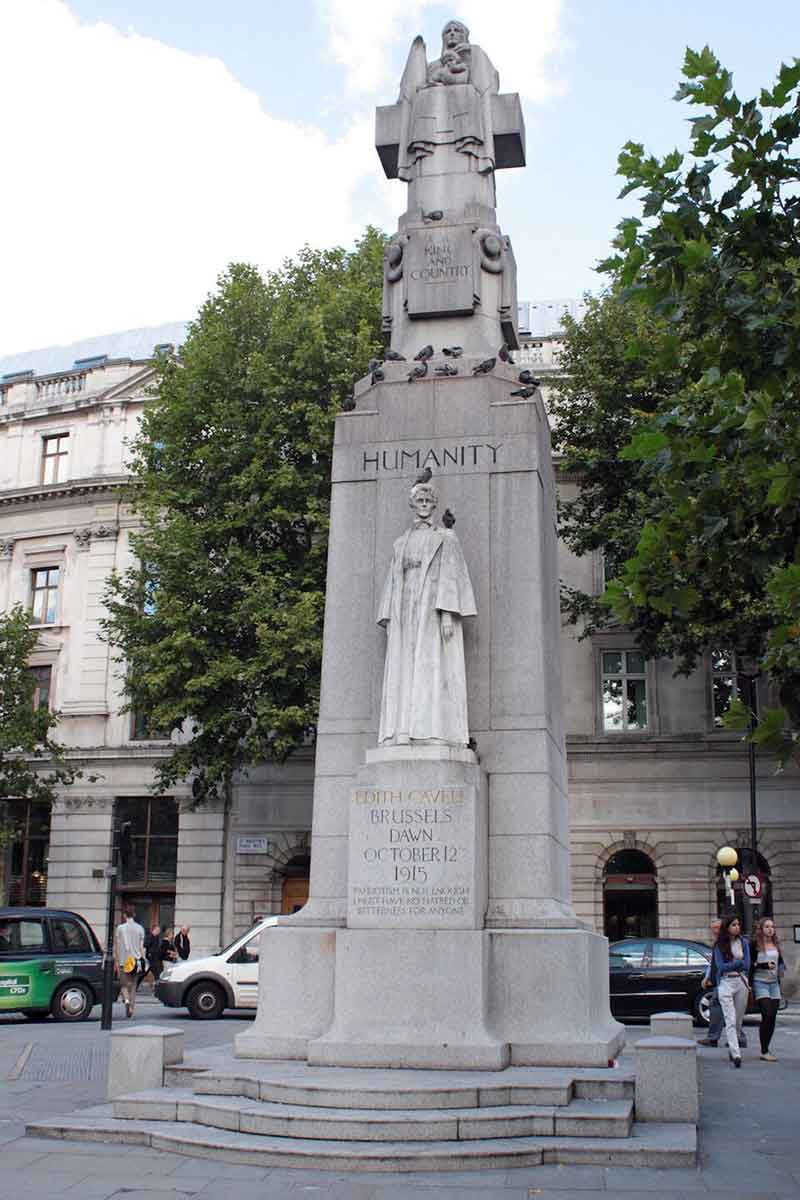
In 1896, Edith Cavell (1865-1915) had only been a nurse for a handful of months when she began working in the London Hospital. She gained recognition during the 1897 Maidstone typhoid epidemic, receiving the Maidstone Medal. At the outbreak of World War I, Cavell returned to Brussels, where she had worked various jobs previously, yet this time, she directed a Red Cross hospital treating soldiers of all nationalities.
Following the German occupation, Edith Cavell not only treated wounded soldiers of all nationalities at her Brussels clinic, but also played a pivotal role in an underground network that facilitated the escape of over 200 Allied troops to neutral Holland. She collaborated with Belgian resistance figures and helped to organize safe houses, guides, and routes. Cavell personally sheltered soldiers, provided them with civilian clothing, and coordinated their passage across borders.
Her efforts were driven by humanitarian conviction rather than political allegiance, and she maintained secrecy even from her nursing staff to protect them. Despite the grave risks, she believed that aiding stranded soldiers was a moral imperative equal to medical care. Though protected by the Red Cross, Cavell was arrested in August 1915 and confessed under interrogation. Convicted of treason under German military law, she was executed on October 12, 1915 by firing squad.
Immediately after Edith Cavell’s execution, a memorial subscription was launched in the Daily Telegraph. Sculptor Sir George Frampton undertook the commission, completed in five years due to material delays. Assisted by Cavell’s sister, he designed a granite pylon with symbolic motifs and a marble statue of Cavell in uniform, now located at St Martin’s Place, Westminster.
12. Execution Dock
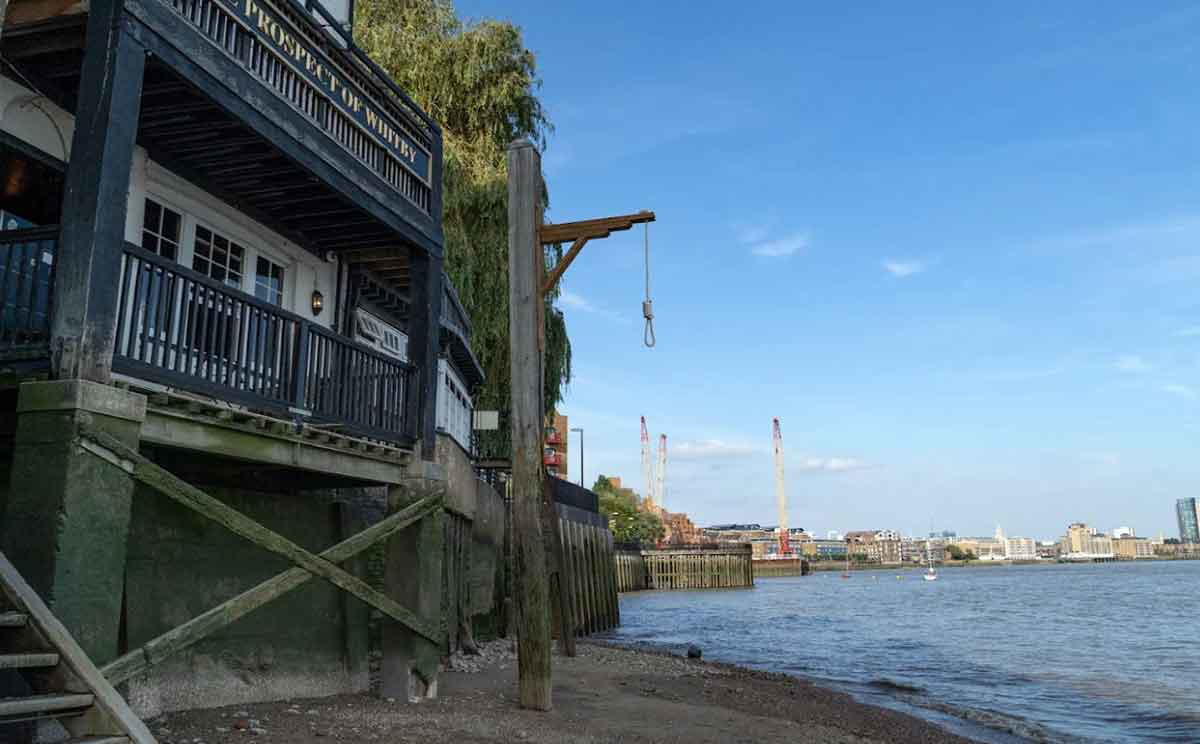
London’s maritime prominence once made it a hub for piracy, culminating in the establishment of the Execution Dock in Wapping. Pirates convicted by the Admiralty courts were held at Marshalsea Prison and paraded through London to the dock, led by the Admiralty Marshal bearing a symbolic silver oar. Crowds gathered along the streets and river to witness the executions.
Traditionally, condemned individuals were allowed a final quart of ale at the Turks Head Inn, possibly to encourage last confessions. The dock, situated below the low tide line to mark Admiralty jurisdiction, employed a shortened rope for hangings, resulting in slow suffocation, gruesomely dubbed the “Marshal’s Dance.” Bodies remained until washed by three tides. Notorious figures like Captain Kidd were tarred and displayed in iron cages along the Thames to deter piracy. Kidd’s execution in 1701 was notably botched, requiring a second attempt.
The final executions at the site occurred in 1830, which oversaw the deaths of George Davis and William Watts for unlawfully seizing a vessel. Though the original gallows are lost, the location is believed to be near the Town of Ramsgate pub, with the other most likely site being the Prospect of Whitby pub, both of which are situated within half a mile of each other. Visitors can access the foreshore via Wapping Old Stairs, offering a tangible connection to this grim chapter of maritime history.
13. Highgate Cemetery
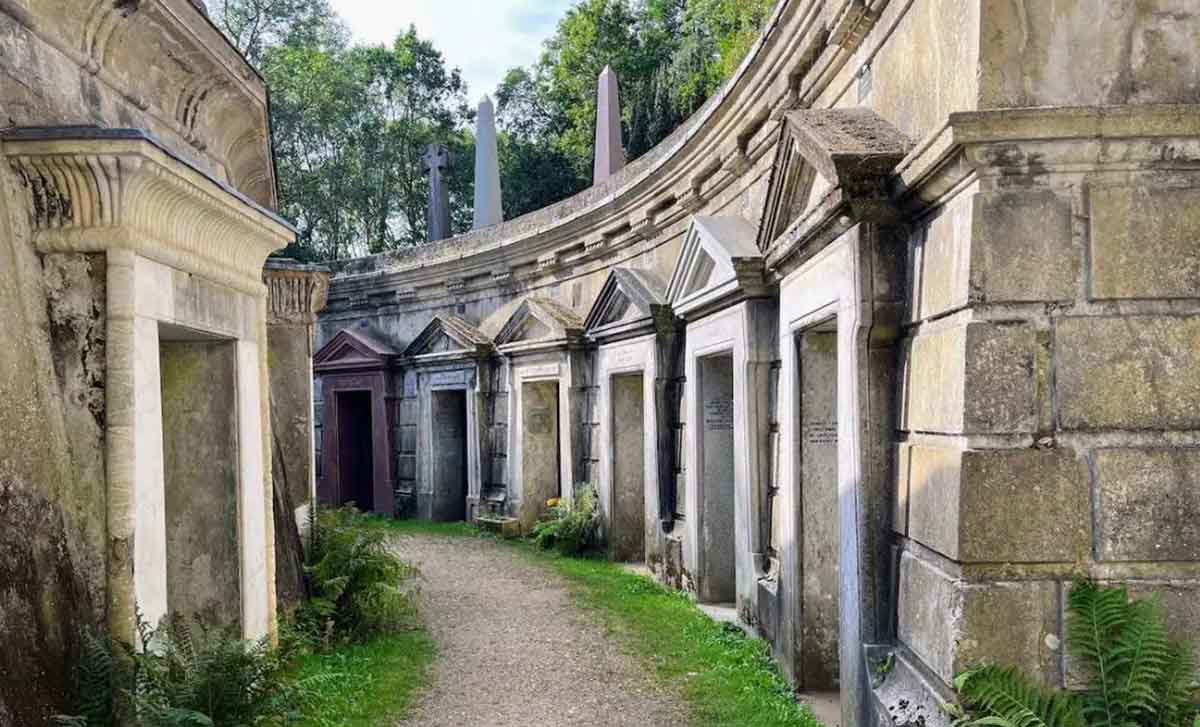
Highgate Cemetery, located in North London and designed by Stephen Geary, is one of the “Magnificent Seven” cemeteries established in 1839 to alleviate overcrowded urban graveyards. In addition to its historical and architectural significance, Highgate Cemetery functions as a de facto nature reserve, hosting diverse flora and fauna. Since 1975, it has been managed by the Friends of Highgate Cemetery Trust, which acquired full ownership in 1981.
Originally consecrated for Anglican and dissenting burials, it quickly became a fashionable site to be laid to rest. Its Gothic architecture and hillside setting contribute to its Grade I designation on the Register of Historic Parks and Gardens. The cemetery comprises two sections, West and East, with approximately 170,000 individuals buried across 53,000 graves. There is an enormous number of famous individuals interned there, including Karl Marx, Malcolm McLaren, Robert Liston, Claudia Jones, Jean Simmons, and George Michael.
The cemetery also gained notoriety in the late 1960s and 1970s due to the “Highgate Vampire” legend. Reports of a spectral figure led to public hysteria, media attention, and a rivalry between self-proclaimed vampire hunters David Farrant and Sean Manchester. The ensuing chaos resulted in grave desecration and legal consequences, including Farrant’s imprisonment. Although the vampire was never substantiated, the episode remains a curious chapter in London’s modern folklore.