Rituals and “mageia” (magic) played a crucial role in the lives of ancient Greek individuals. Archaeologists have discovered hundreds of ritual objects across the ancient world, including curse tablets, charms, amulets, and votive dedications to gods. These items were used to create an effect on the user or a chosen target. Evidence for love spells, meant to induce intense passion, includes lead curse tablets, wax effigies, and curse papyri.
What Is Love?
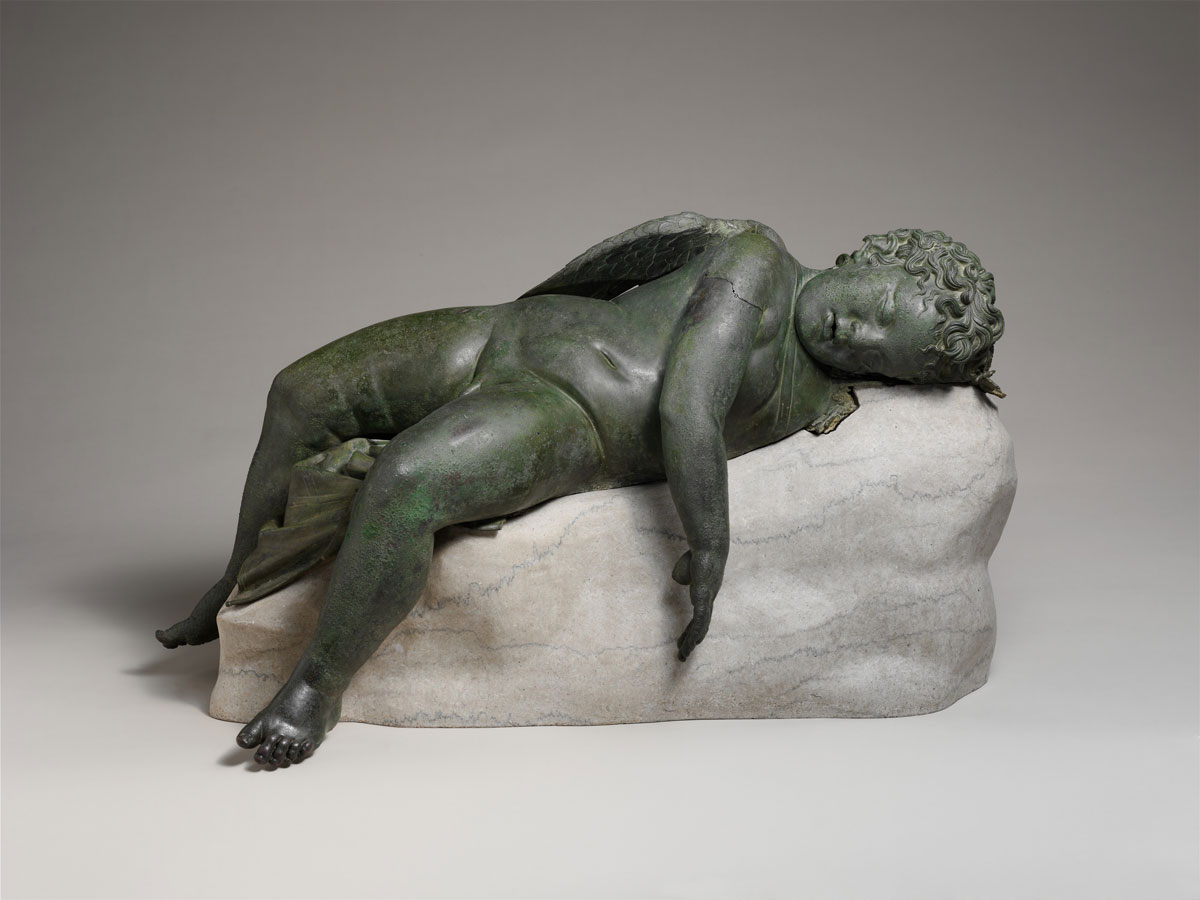
Love was a complex word in ancient Greece. The Greeks recognized several different types of love, expressed by Plato and Socrates in two dialogues, Lysis and Symposium. Plato explores the dynamic levels of love, for example, love of discussion and wisdom versus erotic love for another. Similarly, Xenophon’s Cyropaedia explores the relationship between emotion and persuasion, including how different types of love can lead to various outcomes depending on the context in which emotions manifest.
“Storge” was familial love, a parent’s love for a child. Funerary statues and figures show inscriptions of parents lamenting that their child did not get to grow past a certain age.
There was also “agape,” a selfless love for others, a community, or the polis. Another form was “philautia,” self-love or self-protection.“Pragma,” long-standing love between two people, is often shown in funerary rituals, as well as “ludus,” a playful love. There is also the famous “philia,” deep friendship, and finally, “eros,” which is romantic and lustful love.
Love Spells – What Did That Mean?
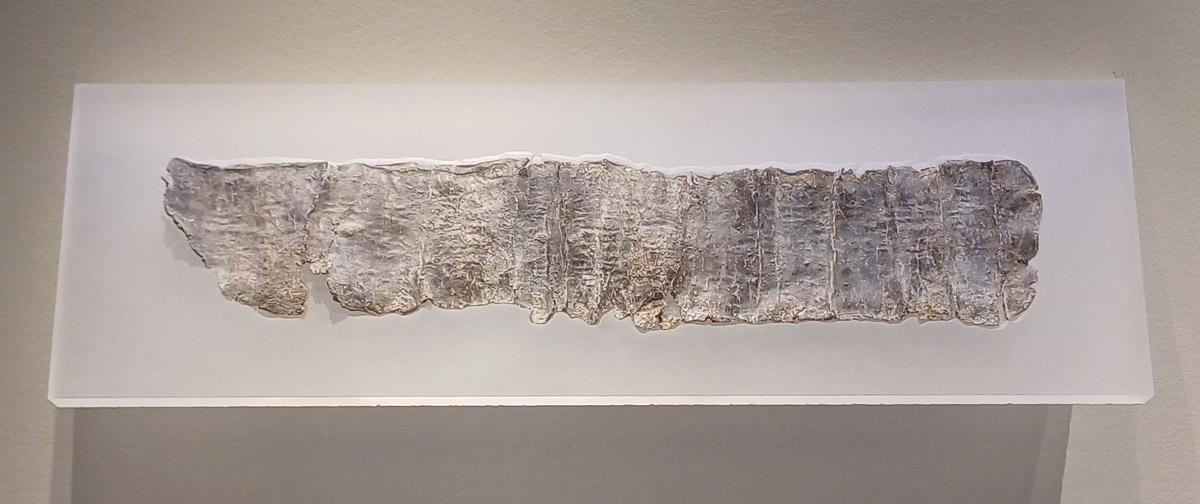
There is a wealth of material and written evidence for the use of spells and curses to bring about the love of another. A love spell, an inscribed piece of text on a tablet of lead or on papyrus, is one of the most common examples of the ancient Greeks and Romans using magic.
In archaeological evidence dated from across the Classical and Hellenistic periods, we see the use of a binding spell or “defixiones” written on a lead tablet and hidden in a secret place. Its use was to force another to do something against their will, which is a common thread in love spells. The most common categories are to prevent another person from marrying somebody else, to break apart a woman or man and their lover, or to bind somebody and pull them away from a situation.
Worshiping the Gods
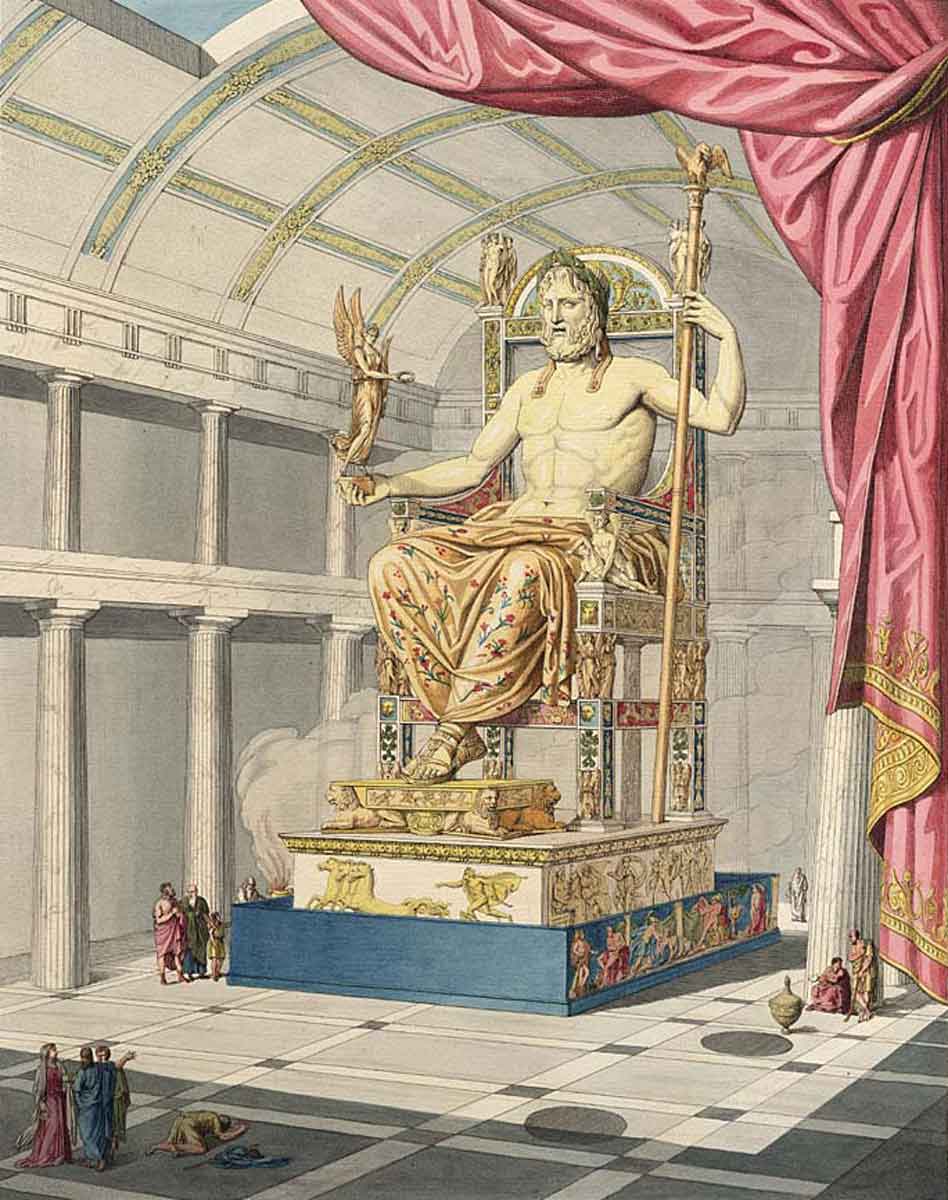
Religion in ancient Greece was a significant part of every individual’s life, involving communal offerings at temples such as at Ephesus for Artemis or Olympia for Zeus. Personal dedications included votive objects or animal sacrifices at major festivals. Athletic games honored gods like Zeus and Hera, with the latter games made for unmarried women. Piety was shown through respectful acts, like fasting during women’s festivals such as the Thesmophoria. Mystery cults like that dedicated to Demeter and Persephone, the Eleusinian Mysteries, included duties for devotees to perform. Prayers and spells invoked specific gods to aid with love or relationships.
Hit With Eros’s Hammer
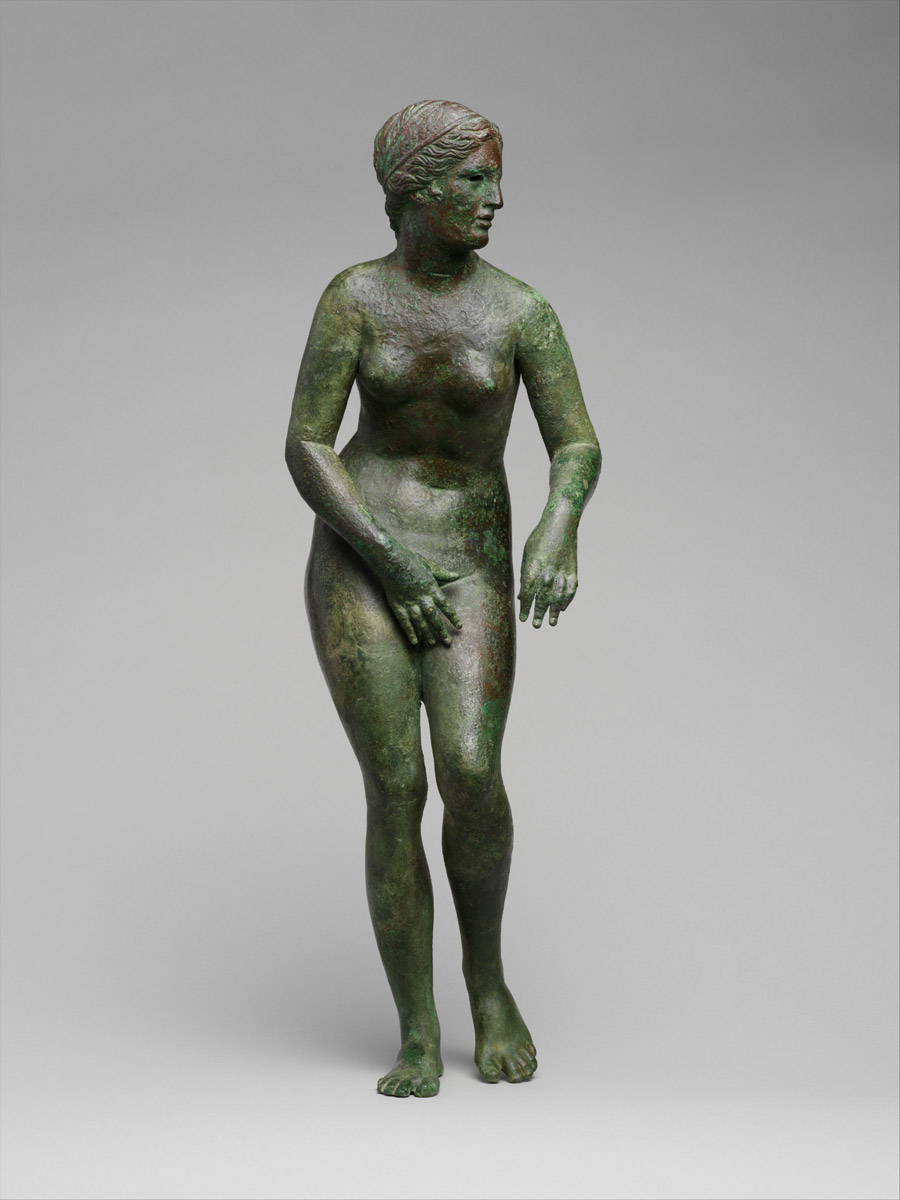
Different types of love magic appear in Homer’s works as well as in Hesiod’s Theogony. In these works, the feeling of erotic infatuation is expressed in a similar way to how dead and wounded warriors are described, whose limbs have been “loosened” or whose heads have had a mist poured into them. Greek lyric poets mark this feeling as an erotic seizure or illness, struck with a hammer by the god Eros. Indeed, the infamous female poet Sappho describes this love as a fire running under her skin, her ears buzzing (fragment 31).
In Homer’s epic poetry, the “kestos hima,” a magical belt belonging to Aphrodite, can steal away the mind of thoughtful men. Hera uses this belt in the fourteenth book of the Iliad to seduce her husband, Zeus. In the Odyssey, Circe, the witch Odysseus encounters, uses potions and charms as a form of love charm. The Siren’s song is considered to equate to an erotic incantation that distracts their victims from carrying out their duty. Hades uses magically charmed fruit in the form of pomegranate seeds to keep Persephone in the Underworld in the Homeric Hymn to Demeter.
The great emphasis in these works on the use of charmed objects with the intention to inflict or prevent passion represents the popularity of using magic to control other people in society.
Inflicting Passion (Eros)
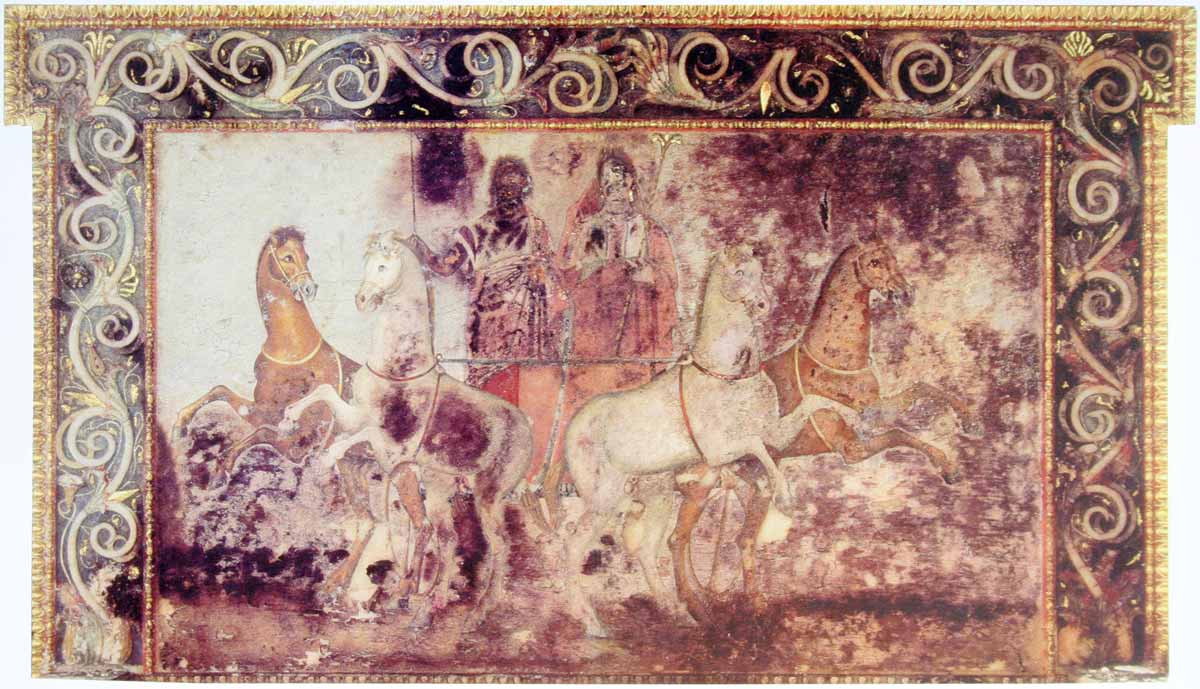
The god Eros is the main suspect in the wielding of passion in archaic and classical Greece, with some ancient authors also bringing in Pan, god of the wild, as the source of these seizures of passion.
In Lysistrata by Aristophanes, a man prays to Pan to ask the god to make another man fall in passion with him. Pan’s effect seems to be mostly negative, described as causing violent and sudden deaths. The term “panic attack” in modern vocabulary is thought to be derived from a literal “attack from pan.” These vicious attacks in Greek thought are linked specifically with disease and illness. Illness or disease and the writhing of bodies were a result of an invisible blow to the body by a god. Sophocles’s Ajax shows the chorus wondering if their leader Ajax had been a victim of Artemis due to his madness and feverish behavior.
It was therefore necessary to control these cases of erotic madness or use the power of prayer to Eros to bring about a benefit for an individual.
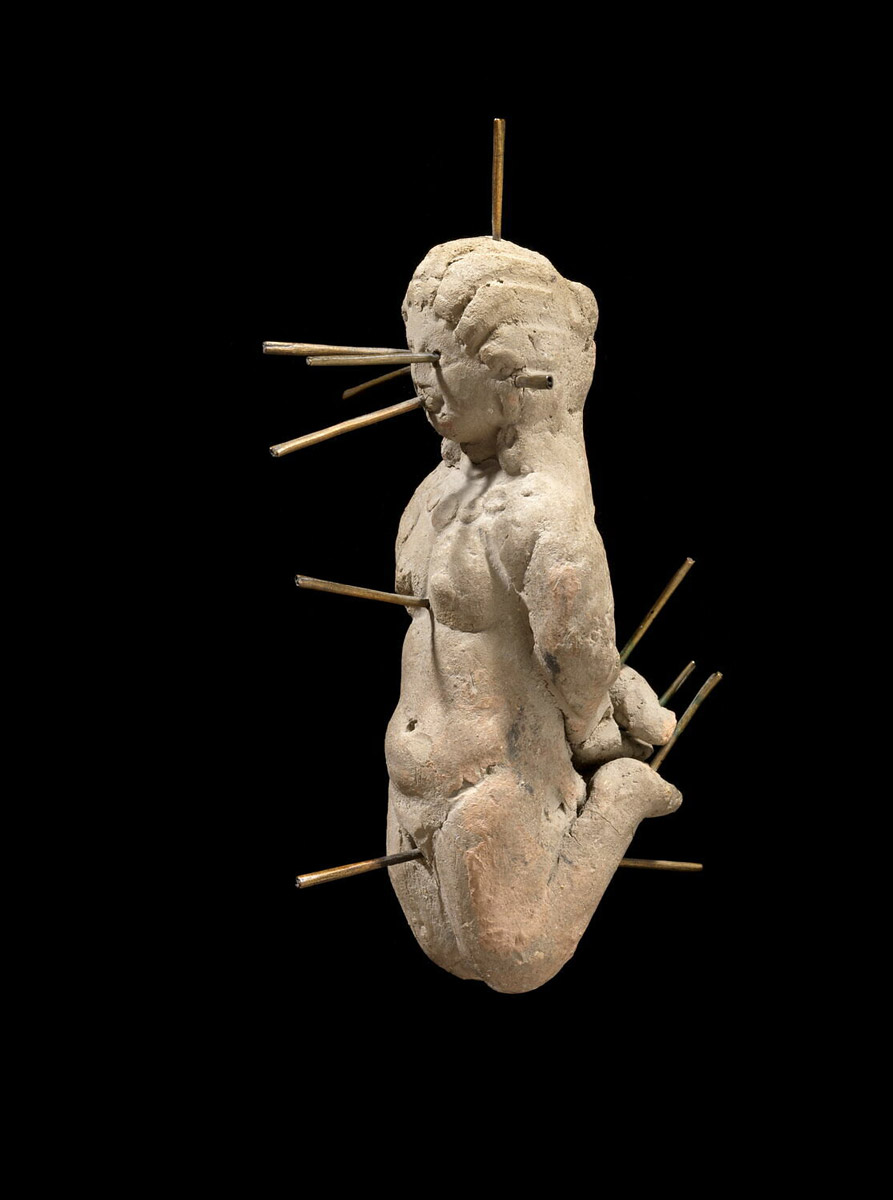
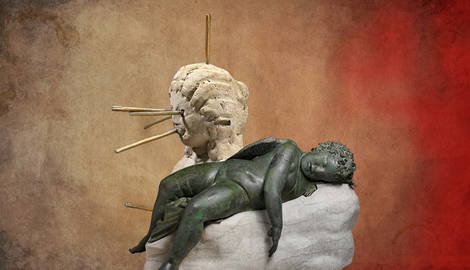
A clay effigy of a woman was discovered in Greek Egypt, sealed carefully with a folded lead tablet that had been inscribed with a magic spell. “Prevent her from eating and drinking until she comes to me… Sarapammon. do not allow her to have experience with another man.”
Her hands and feet were bound to her back, and 13 pins had been stuck across the clay body. Sarapammon conjures a ghostly spirit to prevent the victim from experiencing any joy before dragging her to him. The sharp pins in her clay body, vicious, like Eros’s hammer, cause her body to ache and feel pain.
The use of fire in passionate love spells also appears in material evidence from magical papyri. The performer of a spell places myrrh on a hot surface or burns myrrh on an open fire with an incantation of sorts said over it, such as “as you burn, so also will you burn her.” He seeks to burn or melt part of his female victim’s body or mind into compliance, perhaps.
Another spell from a classical Greek handbook spell (a collection of spells or curses on papyri) tells the enactor to pour burning coals on a live lizard to project the same state on his female victim.
Animal Invocation
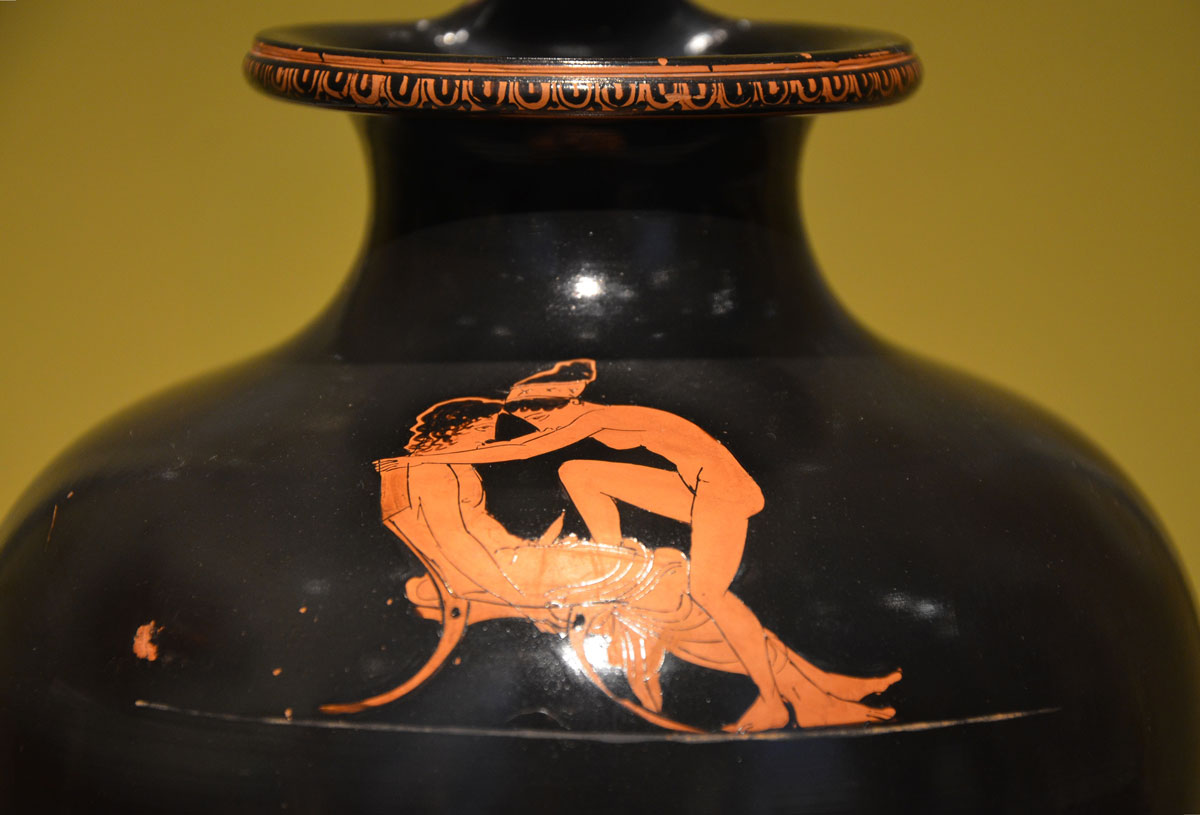
Other animals, such as birds, were used in erotic spells to represent madness, specifically the madness of the victim. They could be used in wider ritual practice, such as by an Athenian athlete who recorded a spell on the wing of a bat to ensure speed and advantage.
In another case from the Roman period, a spell recorded on a “magical papyrus,” attracts those who are uncontrollable and afflicted with sickness. This spell used field mice, crab, goat, and moon beetles as parts of the ritual. The writer of the papyrus notes, it had even been revealed to Emperor Hadrian, showing how consistent the influence of this type of magic and ritual was into the Roman era.
Within these recorded spells, a common theme is to seek dominion over a woman who is, in the eyes of the ritual creator, misbehaving, using her own will. Although women had more agency and an important role in religious ritual activity, it is clear that expectations of classical Greek women were confined to their homes, kept under watch. Indeed, most opportunities for women to partake in the polis were often restricted to young women. It meant confinement to the home and to the company of women only.
An Apple for a Good Marriage?
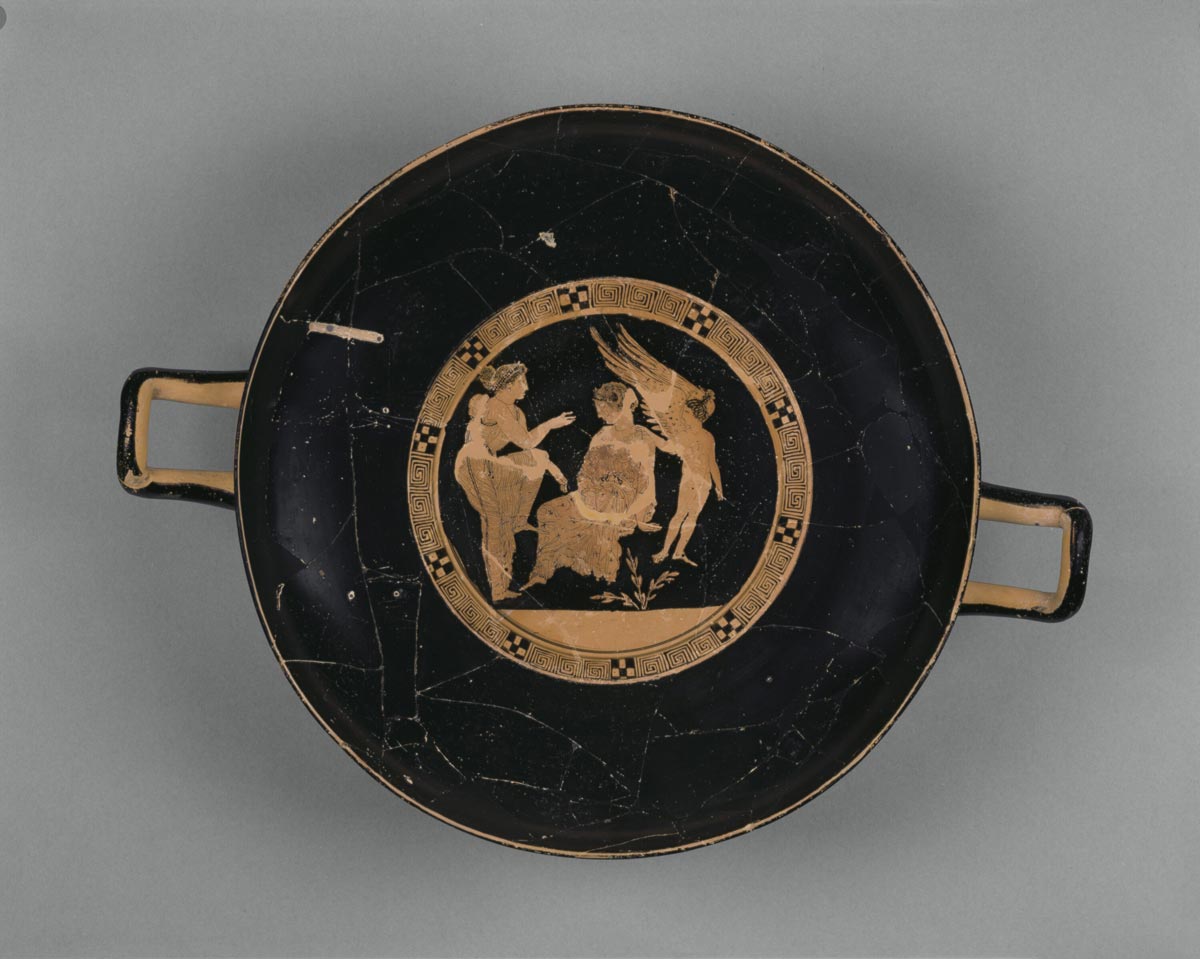
The eating of an apple or a quince was a representation of intimacy in a marriage, a symbol to support fertility. A fragment on a papyrus scrap, which contains part of Hesiod’s Catalogue of Women, a lost work, mentions apples in the story of Atalanta, who vowed she would only marry a man who could defeat her in a footrace.
Hippomenes carries three apples to the racetrack, according to the advice of Aphrodite, throwing them at various points in the competition, to distract Atalanta.
“And she, quick as a harpy [ . . .] snatched it. And he threw the second one to the ground with his hand [. . .] swift-footed Atalanta held two apples (mala), and she was near the end of the race. But he threw the third to the ground, and with it he fled death and dark destruction.”
Seeded fruit and nuts are recorded in evidence for ancient Greek agrarian fertility rites, with their many seeds, used to produce sexual desire in women, acting as an erotic spell of sorts. Strabo, a traveling Greek writer from the Roman Era, tells us that in Persia, a girl on her wedding day was only allowed to eat apples and camel marrow.
A spell from a Greek magical handbook dating to Augustan Rome mentions the lasting use of apples with the same association, “to whichever woman I give or at whichever woman I throw the apple or hit with it, setting everything aside, may she be mad for my love.”
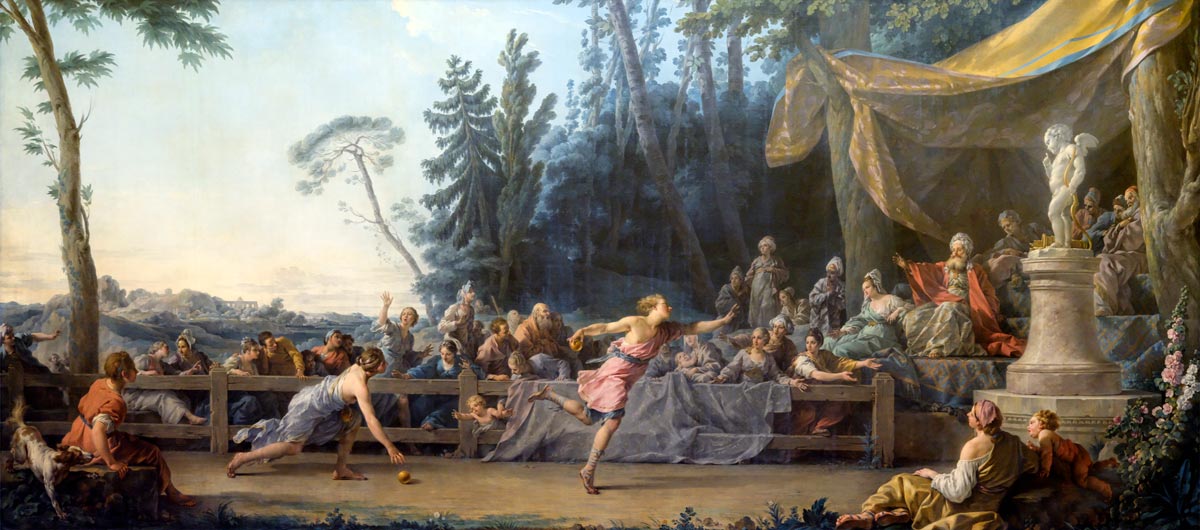
The symbol of the apple or the seeded fruit transforms from a traditional aphrodisiac to a symbolic rite. A spell in one of the most famous papyri detailing ritual and medical evidence, the Berlin Papyrus, has the man recite a charm and throw an apple to a woman, who takes it in her hands and eats it or places it on her upper chest. A woman knowingly subjects herself to the charm, in a Hellenistic epigram, “I hit you with an apple. And you yourself, if you willingly love me, receive it and give me a share of your virginity.”
The woman seems to be aware that this apple is a symbol of love and seduction, and she plays an active role in enacting it by accepting the fruit, whether in practice she had really wanted to or not. This is much different from the spells in which the woman is attacked by erotic powers and made to submit.
Healing the Pain – Spells for Philia
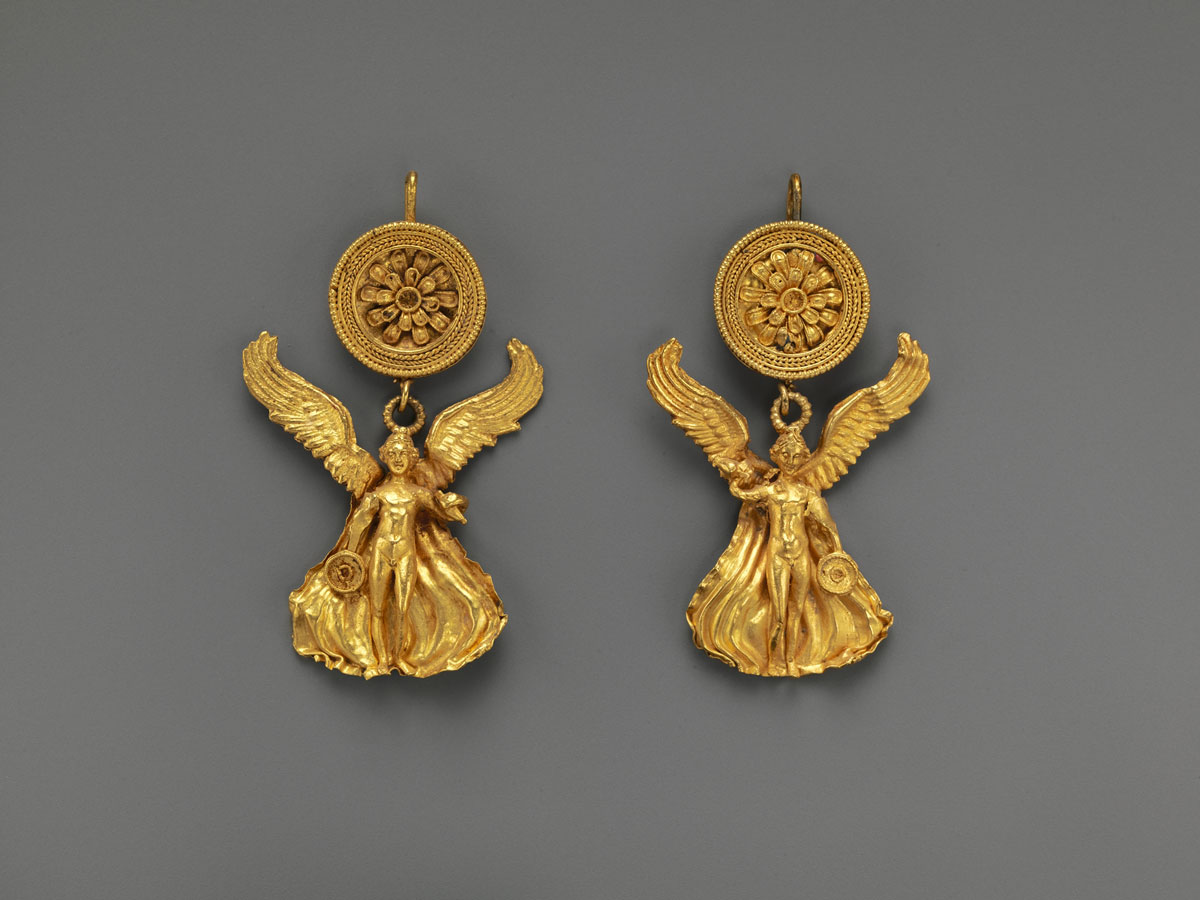
Other types of love magic crop up within classical sources, meant to heal a broken relationship, or protect an individual or a relationship. They were accompanied by amulets and ointments that heal rather than inflict. What evidence do we have of philia spells in the ancient world? We have evidence from Mesopotamia, Neo-Assyria, and Greece of magical charmed rings, as well as the use of personal objects such as an amulet, and facial ointments in order to increase favor in the eyes of authority figures.
“A little ring for success and for charm (charis) and for victory . . . The world has nothing better than this. For when you have it with you, you will always get whatever you ask from anybody.” (from a 4th-century AD Greek magical handbook)
The Hermetic text, the Cyranides, details the power of certain gemstones. If a man wears a sapphire engraved with Aphrodite, he will be charming and victorious in every lawsuit. For women, the techniques seem to use objects from their spheres of influence, such as the act of ointment making or rings and amulets, their jurisdiction being largely focused on medicine and managing home life. These philia amulets aimed to make the owner more charming to all and to improve the mood of those around them.
Herbal ointments are recorded in Theophrastus’s written works; herbs such as oleander and mandrake brought on intense mood change and relief from pain. We know now that these types of plants are narcotics which can cause death if ingested in high quantities—as well as arousal and madness—so their effect proved useful to the love spell enactor.

Ancient love magic in Greece and the wider Mediterranean has a rich history, across two millennia into the Byzantine Period. With each written love spell and amulet, our understanding of ancient ritual and religion grows, the web doubling and tripling with new beads of evidence. It shows the patterns in which social interactions operated and dynamics that are not dissimilar to today’s society.
Sources
- Faraone (1999). Ancient Greek Love Magic
- Katz, M. (1992). Ideology and “The Status of Women” in Ancient Greece. History and Theory, 31(4), 70–97. https://doi.org/10.2307/2505416\
- Betz Deiter, H. (.1985) The Greek Magical Papyri In Translation. University of Chicago Press.
- FOWLER, R. L. (1995). Greek Magic, Greek Religion. Illinois Classical Studies, 20, 1–22. http://www.jstor.org/stable/23065394