
Sandro Botticelli (c. 1445-1510), best known for his depiction of golden-haired allegorical beauties, approached a wide variety of subject matters in his art, including the illustration of ancient texts and stories of Roman heroes and heroines, lauded up to his day. Two such heroines were Lucretia and Virginia, legendary Roman noblewomen, whose stories found their way into the art of some of the greatest Renaissance artists.
Ancient and Renaissance Sources
The two stories, cited in different sources throughout history, from ancient texts to medieval and Renaissance treatises, highlight a single theme: violence towards women caused by lascivious men and societal norms and pressures. The outcome of such violence is presented as being for the greater good—it leads to the overthrow of political tyranny. Lucretia’s death led to the establishment of the Roman Republic, Virginia’s to the removal of the decemvirs, a special commission of ten men that had become tyrannical.
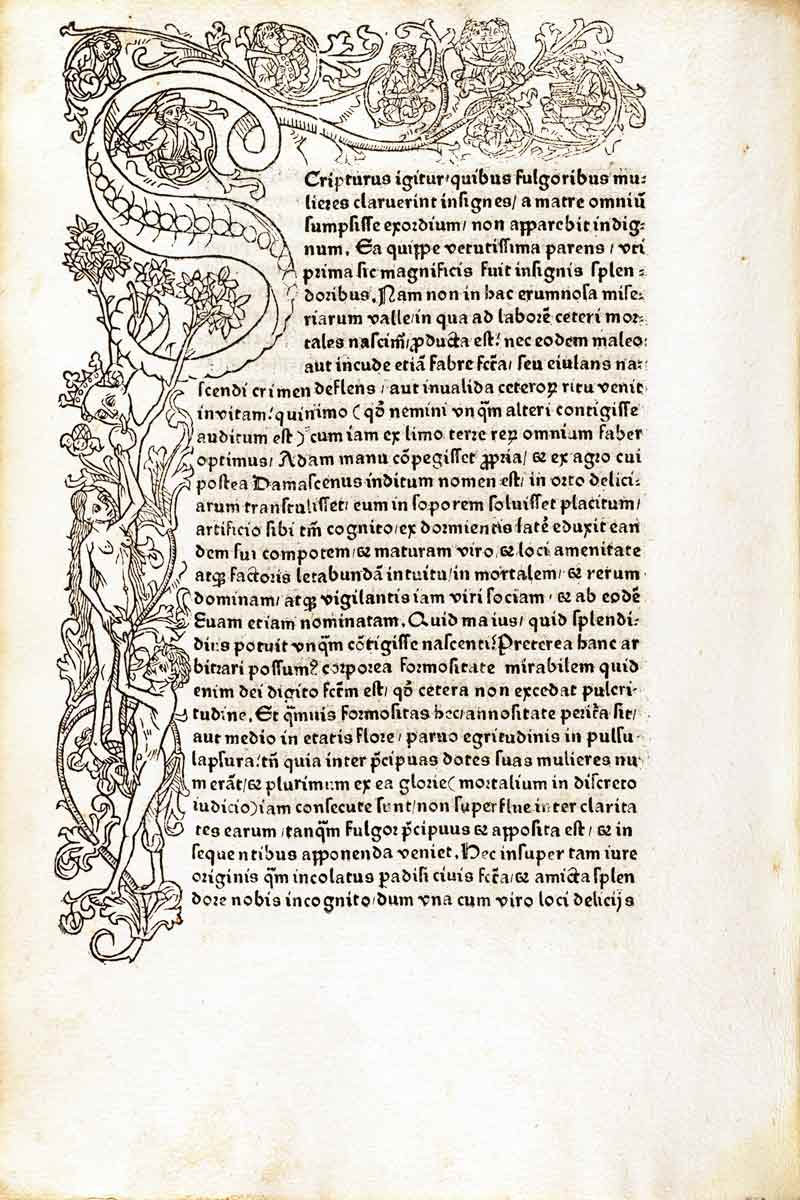
In 1361-1362, a famous Florentine writer, Giovanni Boccaccio (1313-1375), in his De Mulieribus Claris (Concerning Famous Women) wrote about the two women, praising Lucretia as the outstanding model of Roman chastity and sacred glory of ancient virtue, and Virginia as of excellent character. Around 140 years later, circa 1500, Sandro Botticelli approached these narratives in two panels: The Story of Lucretia and The Story of Virginia, now in Isabella Stewart Gardner Museum and Accademia Carrara, respectively.
Spalliere
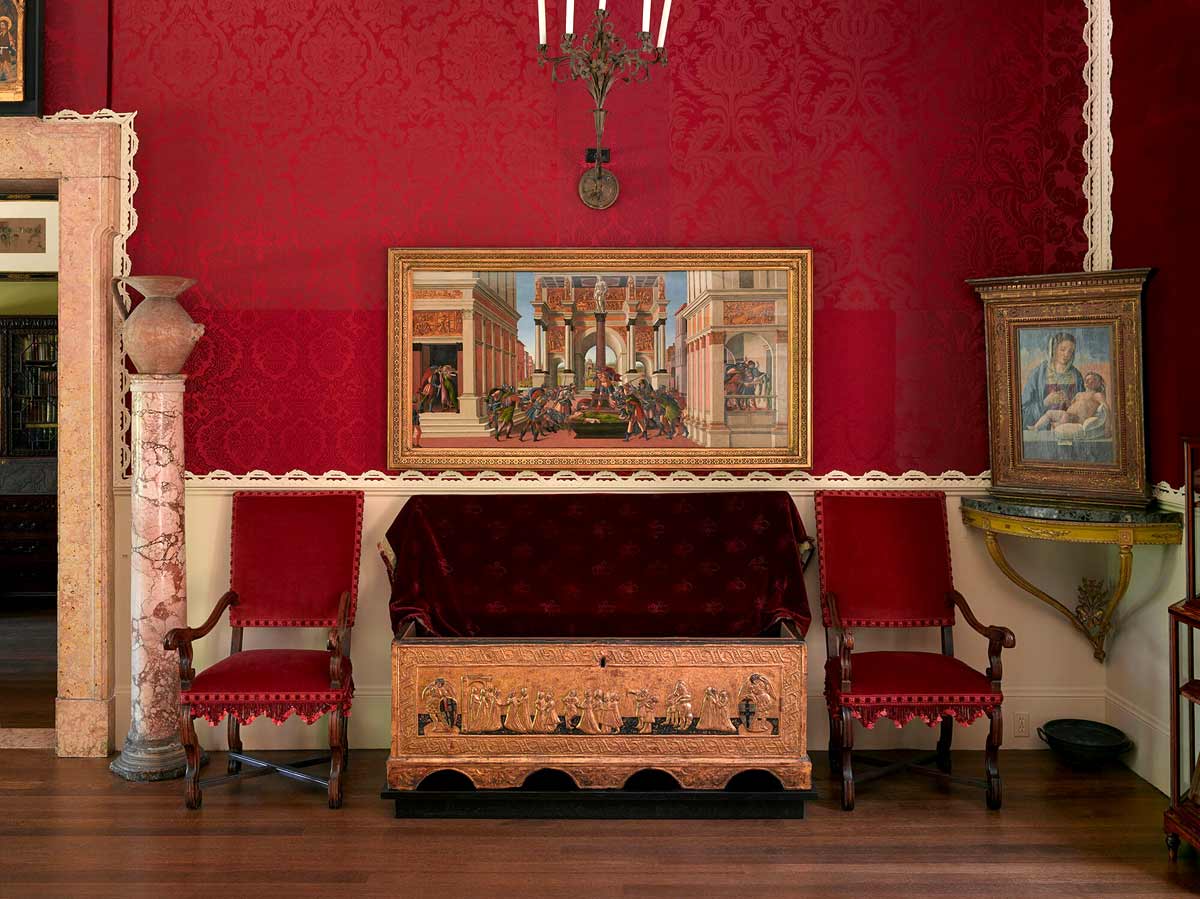
Both paintings adopt an elongated rectangular shape, characteristic of spalliere, fifteenth and sixteenth-century wall paintings hung around shoulder height and intended to decorate the household. They were more often than not commissioned as gifts for a newlywed couple to hang in their marriage chamber, and usually depicted stories of ancient heroes and heroines, as well as other non-religious narratives.
There have been many discussions about the function of these panels, particularly their didactic purpose as a guide to proper conduct for new brides. These images showed female violence and gory scenes, which to us may seem surprising. In Renaissance culture, however, these images were seen as precautionary and exemplary. Women depicted in spalliere, such as Lucretia and Virginia, often met tragic ends but were regarded as models of virtue to be emulated.
Lucretia: She Cleansed Her Shame Harshly
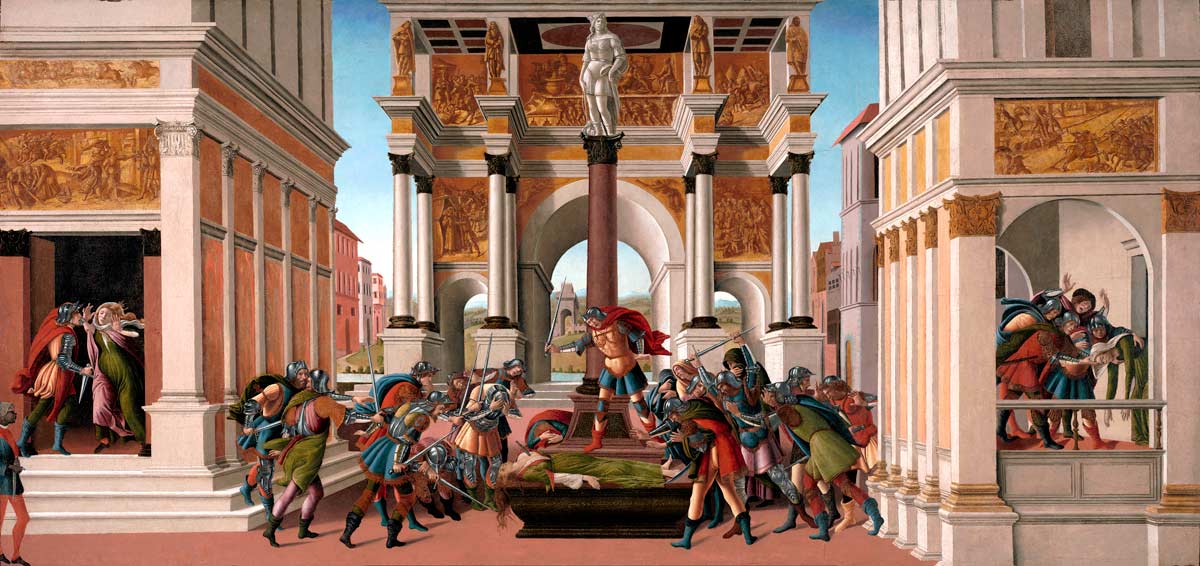
The tragic story of Lucretia, a young Roman noblewoman, is first found in the work of the earliest Roman historian, Fabius Pictor (late 3rd century BC). There are no contemporary sources confirming this story, but in its classic form, it comes from Livy’s History of Rome (late 1st century BC), which seems to be Botticelli’s source.
It begins with a drinking bet between some young men at the home of Sextus Tarquinius, son of the king of Rome. They decide to surprise their wives to see how they behave in their husbands’ absence. The wife of Collatinus, Lucretia, is behaving virtuously, while the wives of the king’s sons are not. Several days later, Tarquinius visits Collatinus’s home and is received with hospitality. When everyone else is asleep in the house, he goes to Lucretia’s bedroom and threatens her with a sword, demanding that she submit to his advances. She shows herself to be unafraid of death, so he threatens her virtue instead. Tarquinius claims that he will kill Lucretia and her servant, placing their naked bodies in bed together, implying adultery with her social inferior, thus bringing shame on her whole family. This ultimately drives her to submit.
In the morning, she calls her father, husband, and uncle to tell them that she has lost her honor and urges them to avenge her rape. The men are unsuccessful in convincing Lucretia that she bears no dishonor, but driven by shame, she takes her own life. Her act triggers the Roman Revolution; the men urge the crowd to help them drive the king and all his family from Rome. When her body is publicly displayed, it reminds many others of the acts of violence committed by the monarchy. Lucretia’s uncle and husband led the revolution and the newly established republic; the latter, along with Lucius Junius Brutus, became the first Roman consuls.
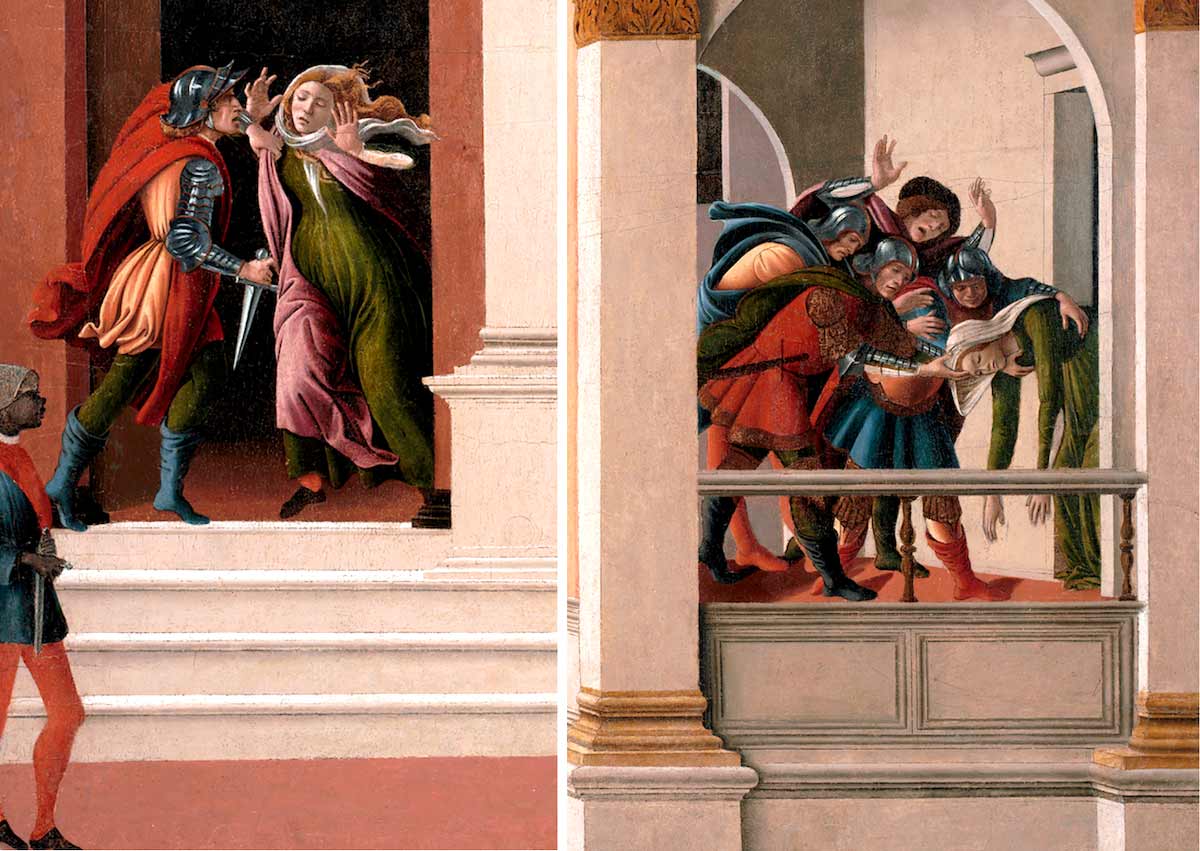
Botticelli depicts the entire story in a single panel, with a tripartite narrative structure. The scene is set in an idealized piazza, with the open middle space that concludes the story. On the left-hand side, Tarquin forces himself into the chambers of the main heroine, aggressively grabbing her pink colored cloak with one hand, and holding a dagger in the other. Lucretia displays clear protest and aversion, raising her hands, perhaps to push the man away or simply to prevent him from getting any closer.
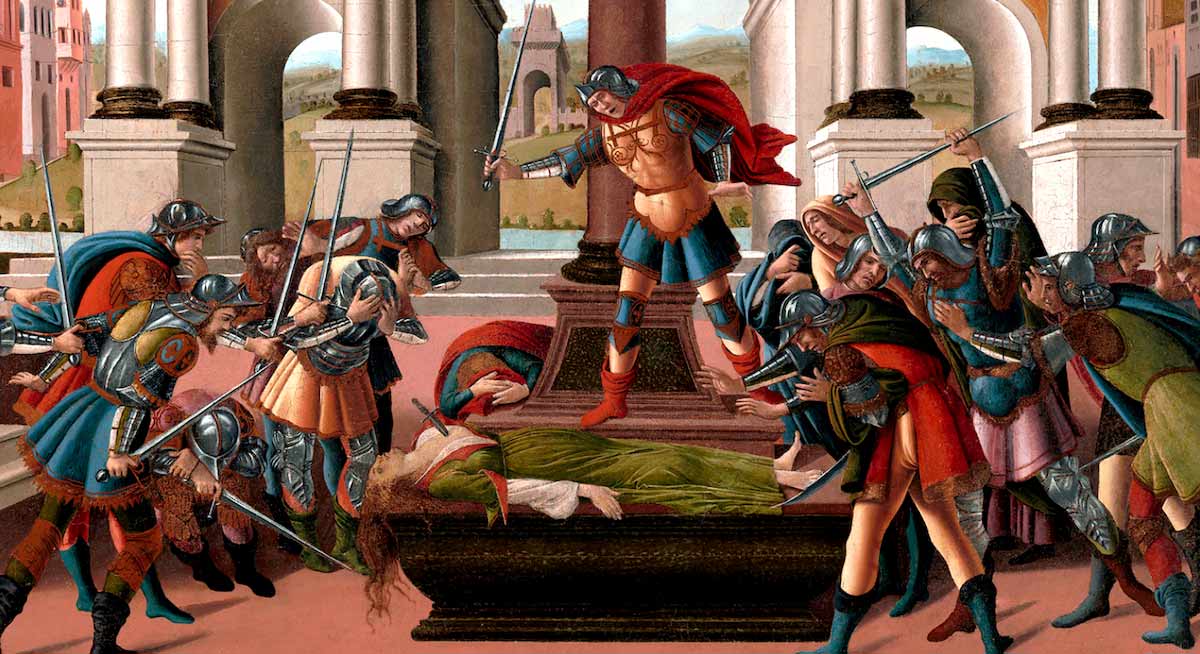
On the right-hand side, Lucretia is seen collapsing into the arms of her husband and father. The four men are standing as a unit, ready to catch her. The culmination of the story is shown in the middle: surrounded by vengeful soldiers, a weeping crowd, and her family, the body of Lucretia is laid out on the bier, her golden locks cascading down, chest pierced with a sword. Hovering above her, Brutus urges the Romans to take up their swords. Botticelli is sympathetic to the main character: he does not depict the violence itself, neither the one committed by Tarquinius, nor the one committed by Lucretia afterwards, and instead shows the antecedent and the outcome of the story. Lucretia appears to be a true heroine, a woman of chastity and honor.
Virginia: ‘Famous for Her Lover’s Wickedness’
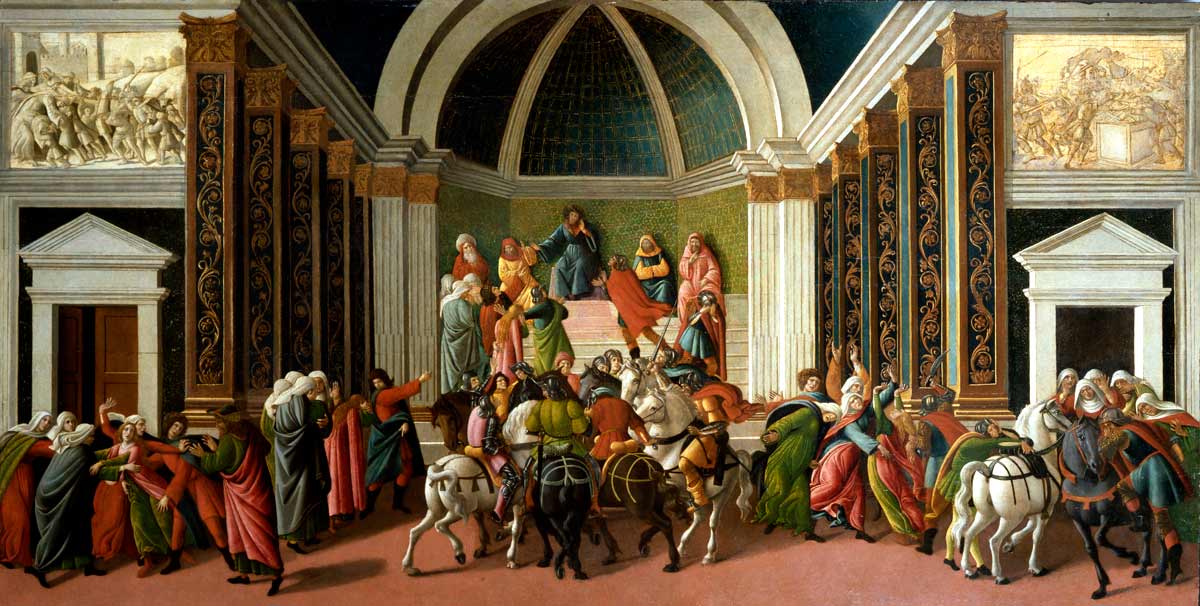
Livy’s account is the first, longest, and most detailed account of Virginia’s life in his history of Rome. This account opens with a comparison of Virginia’s life to Lucretia’s, which explains why these women were often linked since antiquity, thereby helping to identify Livy’s text as Botticelli’s source. The Latin historian Valerius Maximus, who lived during the reign of Tiberius (14 AD to 37 AD), also mentions the two women in his Memorable Doings and Sayings.
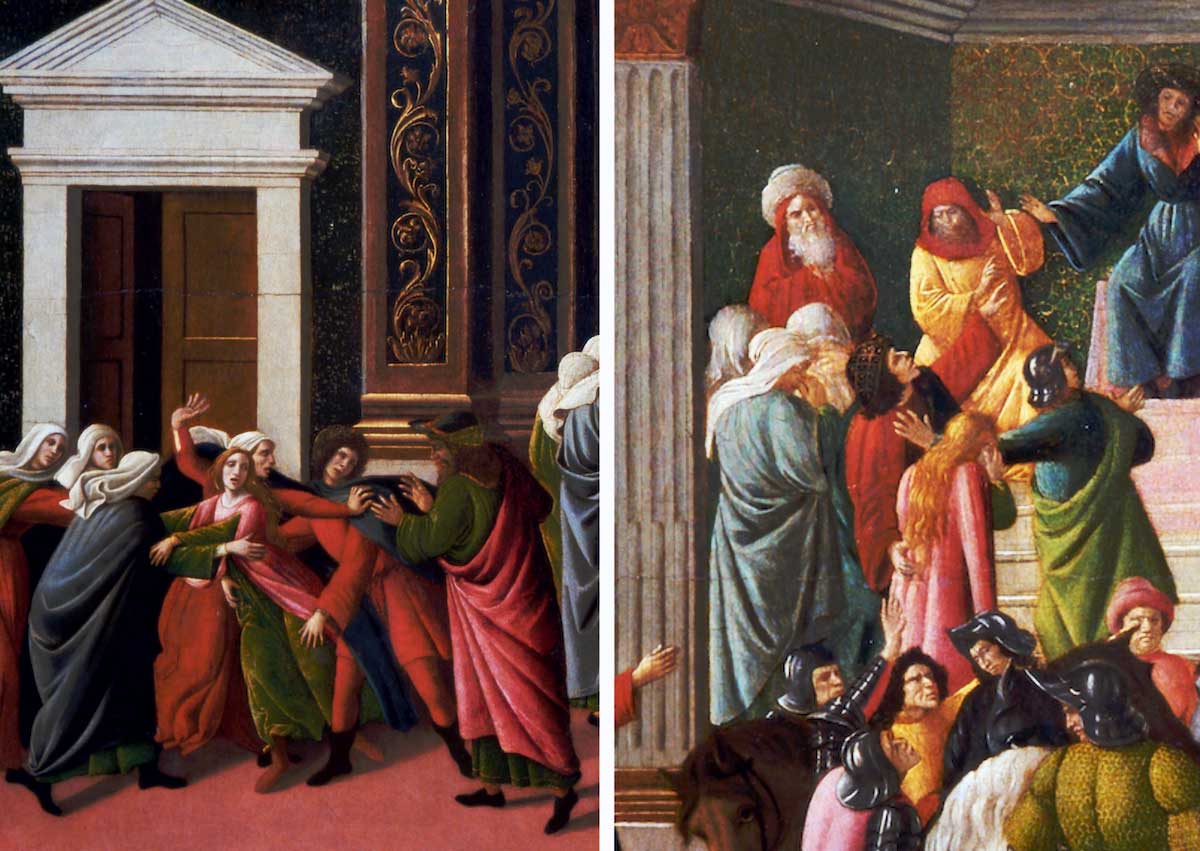
Virginia, a young schoolgirl, is the daughter of Lucius Verginius, a respected centurion. She is betrothed to Lucius Icilius, when Appius Claudius begins to lust after her. When she rejects him, Claudius has one of his clients, Marcus Claudius, claim that she was actually his slave. On her way to school and in the company of other women, Virginia is abducted by Marcus Claudius, and the crowd in the Forum objects to this, knowing that both her father and her husband-to-be are well-respected men. They force Marcus Claudius to bring the case before the decemvirs, led by Appius Claudius himself, who orchestrated the abduction. Virginia’s betrothed succeeds in having Virginia returned to her house while the court waits for her father to appear to defend her.
When Verginius arrives two days later, he gathers his supporters in the Forum. Claudius, however, will not let him speak and declares that Virginia is indeed Marcus Claudius’s slave. Rather than cause any violence, Verginius’s supporters leave the forum, and he begs to question Virginia himself. Claudius agrees to this, but Verginius grabs a knife and stabs his daughter in the chest, choosing murder as the only way he feels he can uphold her virtue. Verginius and Icilius are arrested, and their supporters return to attack the lictors and destroy their fasces. This leads to the overthrow of the decemviri and the restoration of standard republican governance.
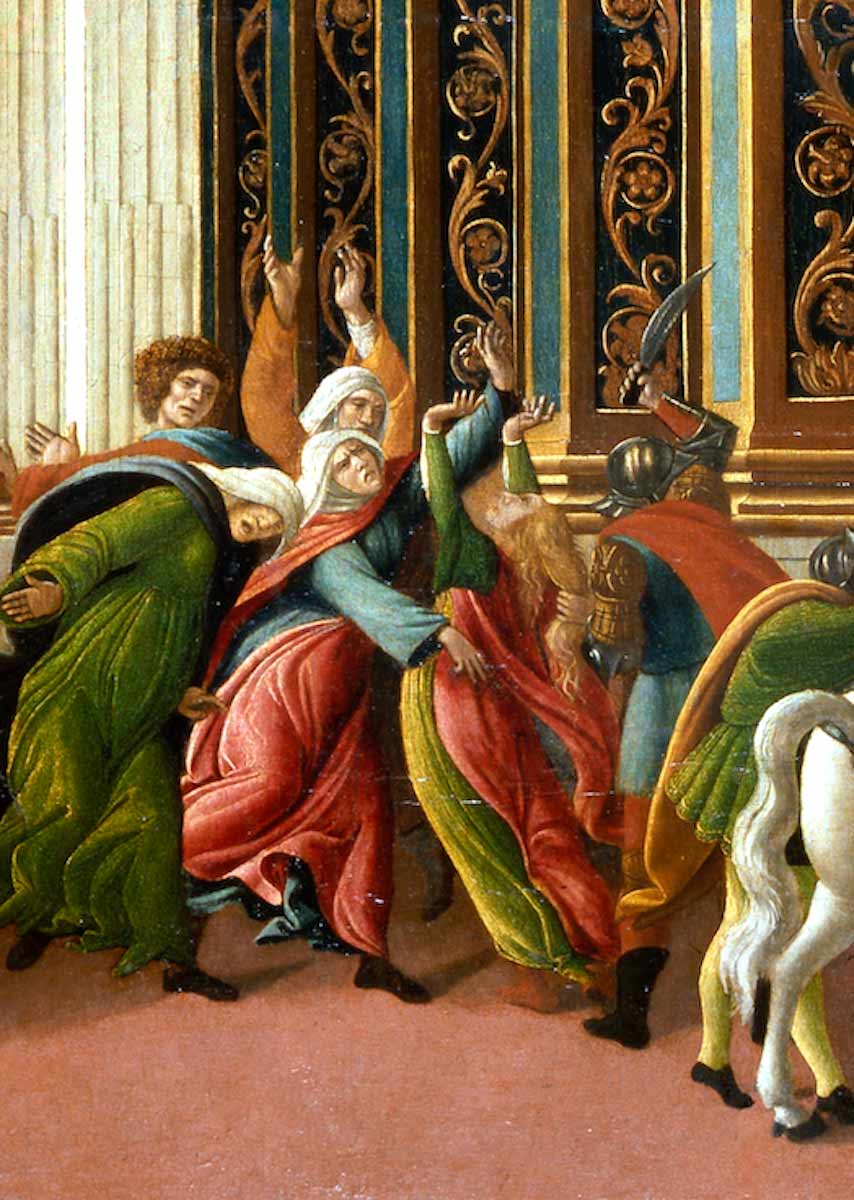
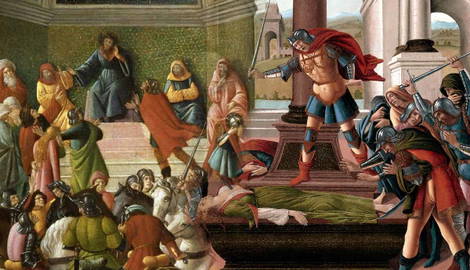
Botticelli, once again, chooses a single panel to illustrate the entire story, this time depicting seven episodes beginning on the far left. On the left, Virginia, dressed in green and crimson garments, attempts to escape Marcus Claudius, depicted as an older man reaching towards her. Her fiancé, dressed in red, tries to shield her from it; several women rush in to help. The following day unfolds in the second half of the painting, where Virginia, her face buried in shame in her hands, is led by the young man before the tribunal.
Summoned, her father, dressed in a uniform and wearing a helmet, arrives in the courtroom. Botticelli collapses two episodes into one scene. First, Virginius, with open hands, unsuccessfully pleads with the judge that Virginia is his own daughter. Then he raises his hands to his face in desperation at the unjust decision of the lustful Appius. Further right, Virginius is shown grabbing his daughter by her long hair and raising his sword to kill her. On the far right, Virginius mounts on the horse to raise his troops, who subsequently gather in revolution at the center of the panel.
Botticelli’s Lucretia and Virginia
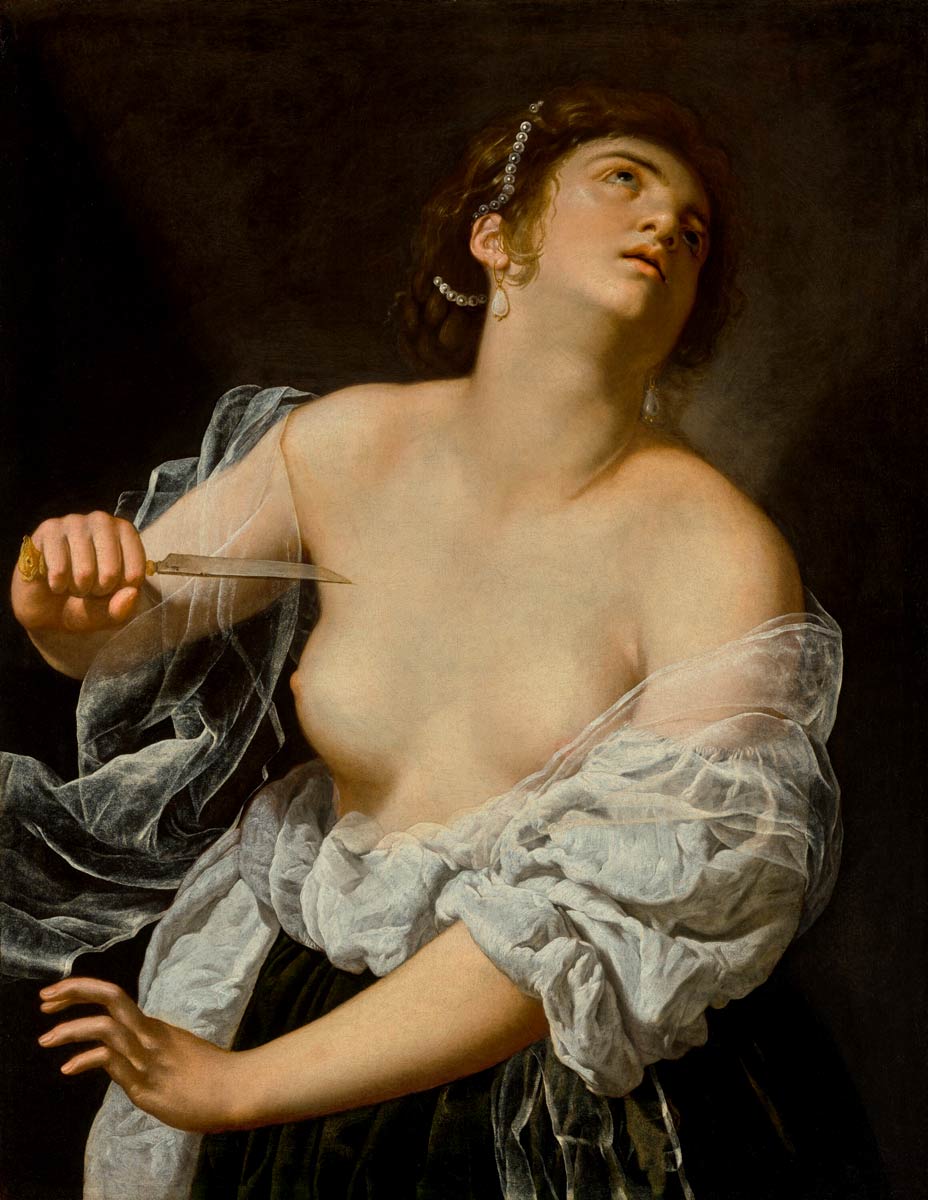
The biggest difference between the two women is Virginia’s complete lack of agency in the story. Her fate is fully decided and dictated by men, and her voice is heard in the story only once, when she refuses Appius Claudius. All acts of violence are done to her, while Lucretia chooses her fate herself, as limited as her options were. Botticelli equally sympathizes with both women. In his paintings, women emerge not just as mere examples of chastity but as Roman rebels, whose power rests in their ability to persevere in the face of tyranny, and even ignite revolts that change history. They are symbols of political and, more importantly, public resistance, as much as they serve as examples of virtuous daughters and wives.