
The School of London was part of the post-war art that attempted to rethink the current reality and the violence that unfolded. Instead of inventing canons anew, the School’s painters readapted them, painting landscapes and portraits. The human body was one of the central aspects of their work—vulnerable, unattractive, but adaptable to world conditions. Read on to learn six important facts about The School of London and its main artists.
1. The School of London Was Never a Cohesive Movement

Despite its heavyweight name, The School of London artists did not have a cohesive uniform style, consistent subject matter, or even a fixed list of members. Instead, they had a common experience of post-war trauma and life in London that was recovering from bombings. The group of artists associated with the School met each other in the 1960s and worked in close contact with each other. Although the composition of the group was never fixed, art historians usually name Francis Bacon, Lucian Freud, Frank Auerbach, R.B. Kitaj, Michael Andrews, and Leon Kossof as the key members. Sometimes Paula Rego, the famous painter and a friend of Auerbach and David Hockney, is also added to the list.
In part, the School of London could be considered a way of reinventing figurative painting in the years when abstract art dominated the art scene. Post-war reality made figuration harsher and gave it extra material qualities and a heavy, substantial presence. Freud and Bacon’s figuration was far removed from that of Pop Art: instead of scenes of contemporary urban life and consumerism, they preferred classical portraits.
Frank Auerbach also worked with the cityscapes of London, which were still in ruins but were gradually being reassembled, allowing life to bloom. In 2013, Auerbach directly admitted that he considered the attempts to connect his contemporaries into a cohesive art school. However, he also acknowledged he was not ashamed to be put in a group with such outstanding artists.
2. Violence Was One of Their Recurring Themes
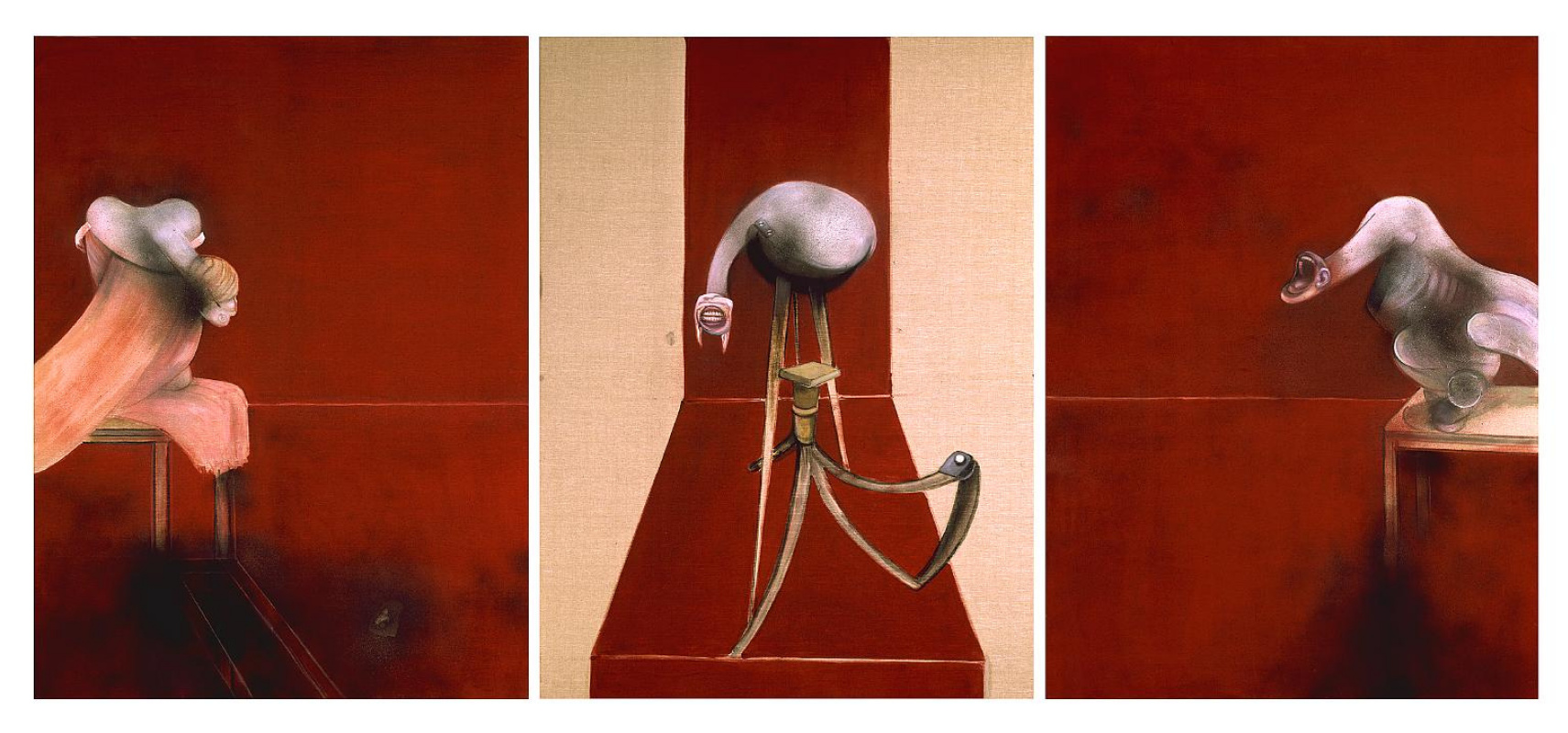
One of the principal triggers of the School of London visuals was the experience of war and wartime violence. The pain and suffering experienced during the long six years of war demonstrated how a mask of civilization and respectability could hide destructive animal impulses and cruelty beyond anything imaginable. Violence was one of the repressed forces clearly felt in the works of the School of London artists. Apart from reflecting the collective trauma, this violence was often self-inflicted, as some artists of the group were prone to machismo and violent outbursts.
Loss, grief, and suffering were personal for most artists of the group. Frank Auerbach lost his parents in the Auschwitz concentration camp. Francis Bacon grew up in Ireland during the Irish War of Independence and was later kicked out of the family house for wearing women’s clothing. Later, Bacon would go through another tragedy that was reflected in his art: in 1971, just a day before the opening of his show in Paris, his partner George Dyer died of a drug overdose in a hotel room. Deeply traumatized by this loss, Bacon reflected it in the series of triptychs that captured Dyer’s death.
3. They Painted Human Bodies in an Unusual Manner

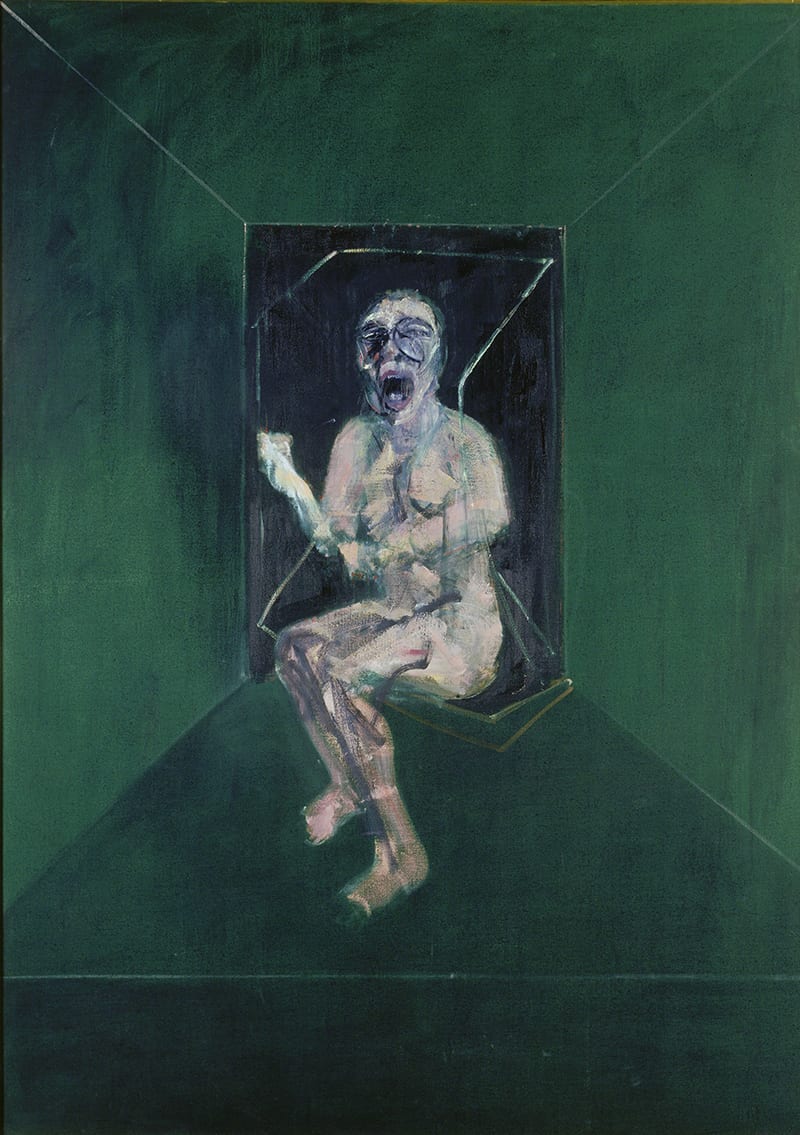
The human body was one of the central elements of The School of London’s art. Unapologetic, overtly physical, and often borderline repulsive, it brings confusion, embarrassment, or even a nervous laugh. There is something deeply uncomfortable in the ways these artists showed nudity, something that makes the viewers more painfully aware of the imperfections of their own bodies. Even sexuality, often referenced by Lucian Freud, is deeply discomforting. Lucian was the grandson of the famous Sigmund Freud, and although he rejected psychoanalysis, he used some of Freud’s methods when talking to models and analyzing their behavior.
For centuries, the notion of beauty was closely connected to the notion of the divine. Greek sculptors created gods from marble and bronze, and Christians referred to the idea that the human body was created in God’s image. For that reason, the painted and sculpted body was almost always present in its idealized form, as aspiration and glorification of the divine standard. The crisis of faith that began in the 19th century reached its peak after two devastating wars. God was dead, and the unattainable ideal of existence disappeared with him. As it turned out, the human body was not as beautiful as we wanted to perceive it, especially if this body experienced labor, poverty, trauma, and wartime limitations.
4. They Respected the Old Masters
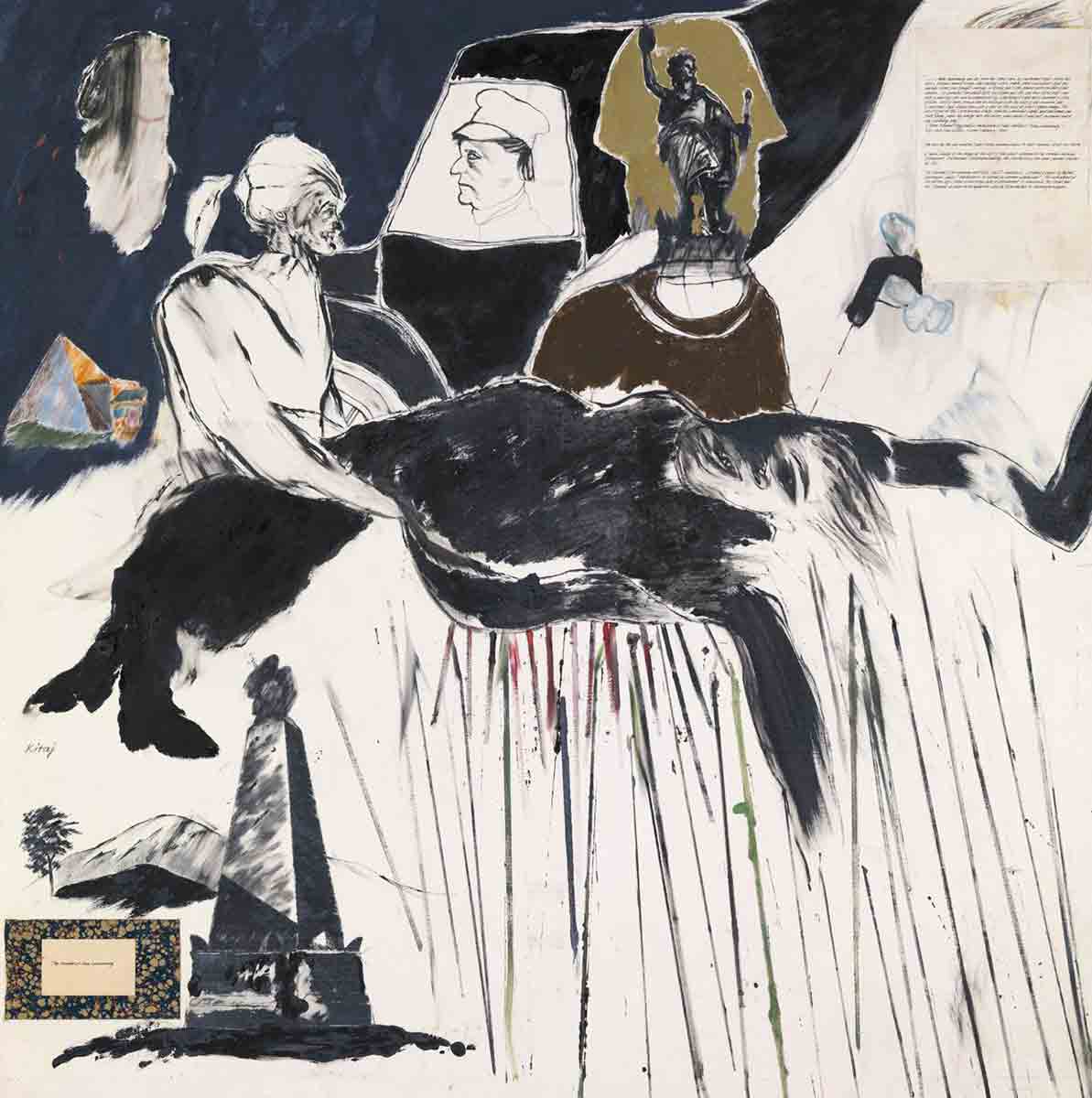
Despite being a modern and, in many ways, radical movement, the source material for the School of London paintings was found in the respected and monumental past. Instead of shattering the canons entirely, the artists borrowed the basics from them. Such a gesture looked much more radical in the post-war era than any reinvention could. Francis Bacon found inspiration in Goya and Velazquez, Frank Auerbach and Ron Kitaj referenced Titian and Rembrandt. Kitaj even brought new life to the genre of history painting, combining abstraction, propaganda poster design, and photography.
Like the Old Masters, artists of the School of London preferred to work with models, sketching and painting in sessions. Frank Auerbach and Lucian Freud, for instance, were notoriously slow painters. Auerbach spent days and days painting his subject and scraping off the paint to start anew until he decided he understood his scene thoroughly enough.
5. Music Can Be the Key to a Deeper Understanding
To better understand the paintings of The School of London artists, it might be useful to address another form of art. In the 20th century, music often ran parallel to the history of painting, like with the works of Wassily Kandinsky and composer Alexander Scriabin or the square paintings of Piet Mondrian and jazz scores he heard in bars. The School of London also had its musical analog in the compositions of a man slightly older than its artists.
Arnold Schoenberg was an Austrian composer and the pioneer of atonal music. Atonal music was a conceptual equivalent of avant-garde painting in terms of rejecting traditional laws of tones and harmony that defined both artistic domains for centuries. To save his life in the wake of antisemitic riots of the early 20th century, Schoenberg had to convert to Christianity from Judaism. In 1933, he converted back as a sign of his protest against the Nazis and had to flee to the USA with his family.
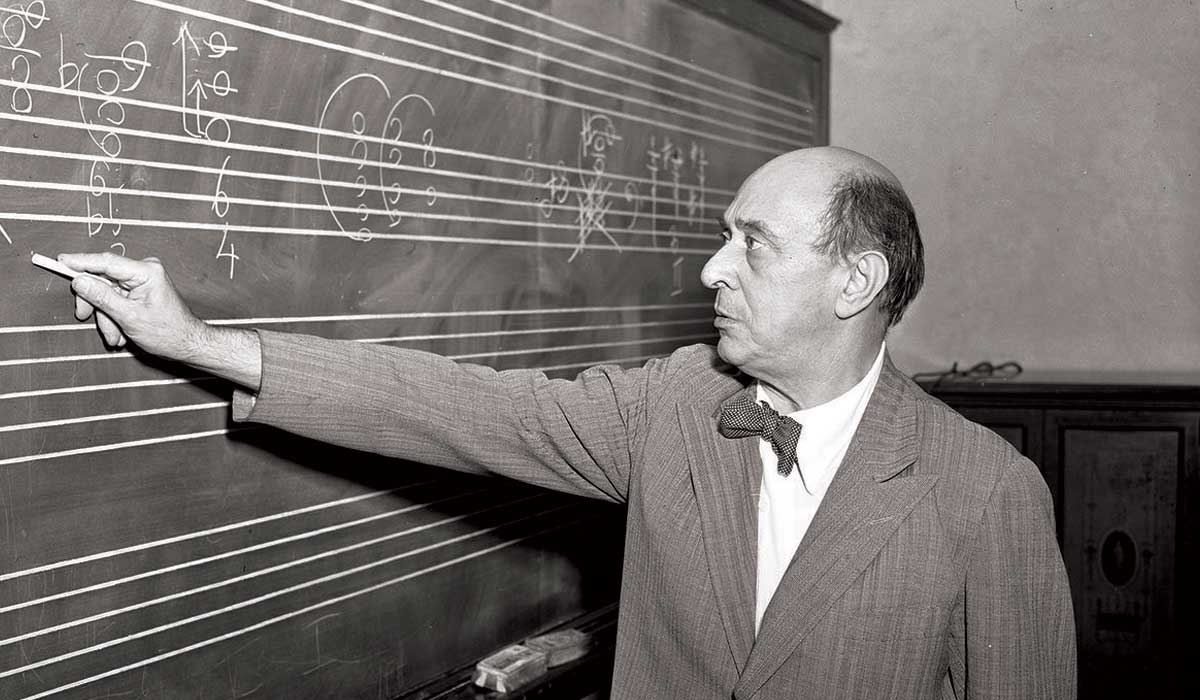
The post-war works of Schoenberg expressed the same trauma and relied on the same artistic principles as did the paintings of the artists of the School of London. One of his most famous pieces was A Survivor from Warsaw, a musical memorial to the Holocaust victims. The piece featured little musical elements, relying on rhythmic narration of the main character (an anonymous concentration camp survivor), a choir singing a Hebrew prayer, and German commands of the Nazi sergeant. A Survivor from Warsaw is a nauseating and claustrophobic experience that could be created and understood only after the horrors of gas chambers and concentration camps took place. It rejected the old laws because they were too weak and rigid to adequately reflect the post-war reality.
The paintings of the School of London artists create a similar impression. Deliberately ugly, deformed, and messy, their images reach new expressive heights that could be decoded and appreciated only by those who shared similar experiences.
6. The School of London Artists Collected Each Other’s Works

The School of London artists eagerly played the part of marginalized creatives even after receiving critical and financial success. Childhood traumas combined with the stereotypes of bohemian life led to alcoholism, drug abuse, gambling, and frequent fights. Francis Bacon’s sexuality was another boundary, especially before 1967, when Britain finally lifted the ban on homosexual relationships. A stable comfortable existence was seen as something unattainable and even unwanted, as this semi-marginalized lifestyle, in a way, facilitated their art and reputations.
Still, the artists supported each other. The alternative name for their group was The School of Colony Room, derived from the name of the bar they used to meet in. They eagerly bought each other’s artworks, although their relationships were not perfect. Notoriously, Lucian Freud could not say a single nice word about anyone and any work of art except for one drawing by Francis Bacon he owned.