
Easter eggs generally symbolize springtime renewal and Christian rebirth, but those Fabergé made for the Romanovs now represent the splendor of a bygone era, and the almost unimaginable luxury in which the ruling family lived, even as economic inequality drove Russia closer to revolution. When the House of Fabergé fell alongside its most famous clientele, the two became inextricably linked, and Fabergé’s eggs became irreplaceable—and often damaged, missing, or incomplete—artifacts of Russian imperial history. They retain an egg’s aura of fragility, but for Fabergé Easter eggs that aura has less to do with the fragility of hope than of memory, or power.
How a Sentimental Childhood Memory Started the Imperial Egg Tradition
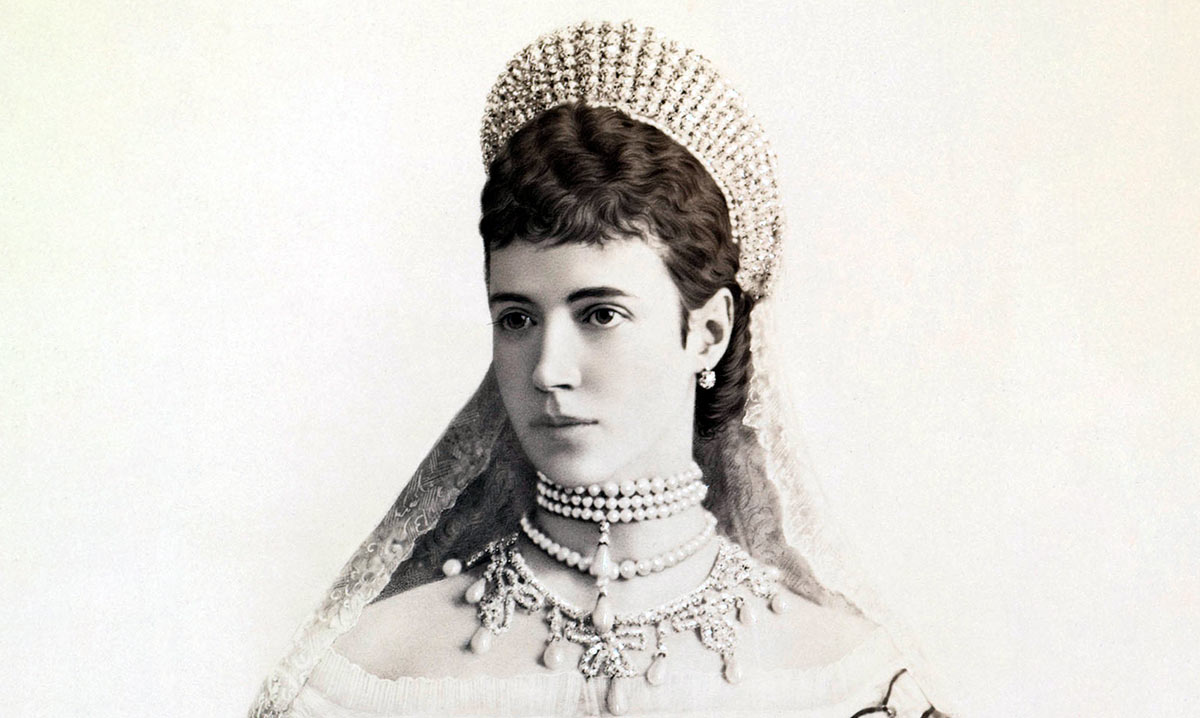
In 1885, Tsar Alexander III gave his wife an Easter gift that started an era-defining family tradition: a gold egg enameled in white that opens, matryoshka-like, to reveal a series of surprises inside. The first is a matte gold “yolk” orb, then a gold hen with ruby eyes, then a ruby pendant and a miniature imperial crown. It was not the first jeweled Easter egg Tsarina Maria Feodorovna had ever received from the tsar, but the First Hen egg was the first from the House of Fabergé.
The First Hen egg was inspired by a similar objet d’art in Maria Feodorovna’s native Denmark, a carved ivory confection dating to approximately 1720, which opens through similar layers down to a tiny crown, but with a ring instead of a pendant. Fabergé’s Russian near-replica of this earlier piece made a childhood memory tangible for Maria Feodorovna. That focus on the personal and sentimental would guide the designs of many of the 52 imperial Fabergé eggs to come.
How Fabergé Turned Everyday Window Frost into High-End Luxury
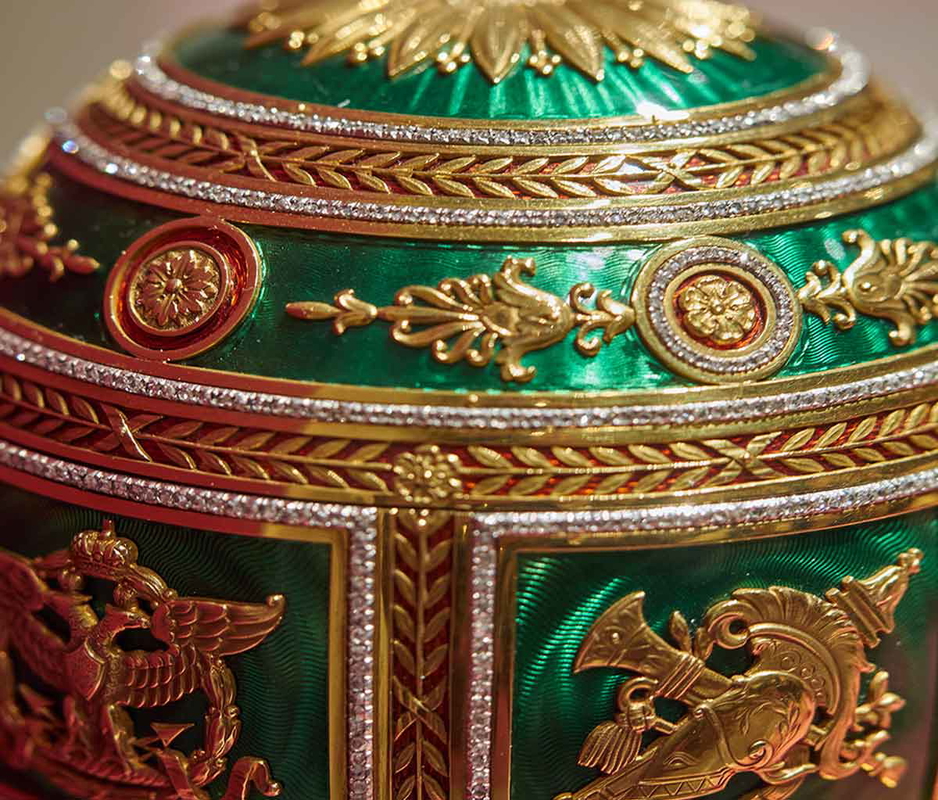
Peter Carl Fabergé ran his family firm by prioritizing artistry over raw material value. Despite his robust education as a commercial jeweler, under Carl’s leadership, the House of Fabergé began contracting other workshops to exclusively create items after Fabergé designs. Being a jeweler, Fabergé’s products were worked in gold, platinum, and precious gems, but the company also employed specialists in crafts as varied as stone carving, watercolor painting, and, of course, the enamel which makes so many of the Fabergé Easter eggs so recognizable. The Romanovs gave Fabergé absolute creative control over the eggs—on the condition that each be unique and contain a surprise. The diversity of media in which the company’s workmasters were fluent left plenty of room for creativity.
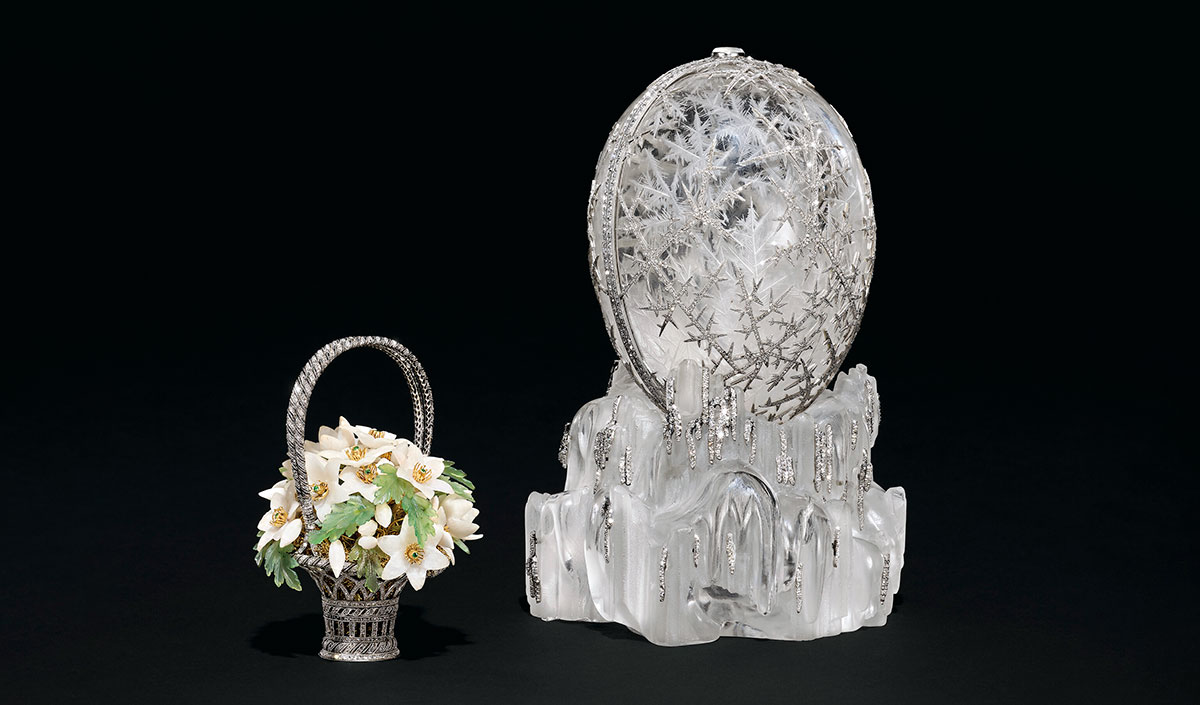
Two of Fabergé’s most creative Romanov Easter eggs are 1913’s Winter and 1914’s Mosaic. Both were designed by workmaster Alma Pihl, whose grandfather, uncle, aunt, father, and brother had also worked for Fabergé in various capacities. The 1913 Winter egg is carved from frost-textured rock crystal and wrapped in a network of branching hoarfrost made of platinum and diamonds; the 1914 Mosaic egg is made of hundreds of tiny stones set to resemble a needlepoint pattern of flowers. Each is an exquisite piece of decorative art, inspired by something commonplace: frost on a window and domestic needlework. That juxtaposition of accessible, traditional pleasures elevated to almost otherworldly luxury could be seen as emblematic of the entire Fabergé Easter egg endeavor, but is an especially apt representation of the imperial family.
Why Tsar Nicholas II Doubled the Family’s Fabergé Obsession
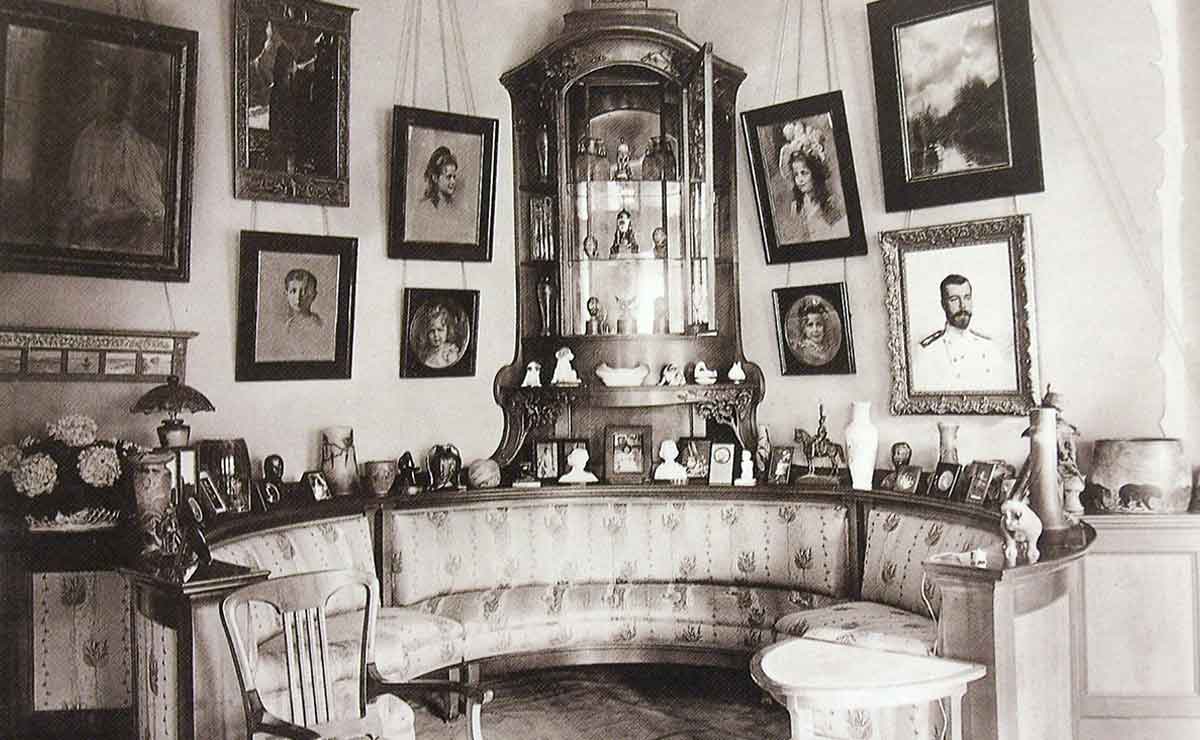
After Tsar Nicholas II married and ascended the throne in November 1894, he not only continued his father’s Easter arrangement with Fabergé, but doubled it. Thereafter, his mother and his wife, Alexandra, each received a completely unique Fabergé egg every Easter beginning in 1895. Alexandra was welcomed into the tradition with her first egg’s surprise: a ruby pendant and miniature imperial crown akin to those from the First Hen egg. Fabergé’s eggs often featured imagery personally significant to the family. Over the years, both tsarinas received several eggs featuring portraits of family members and sentimental locations, including ships.
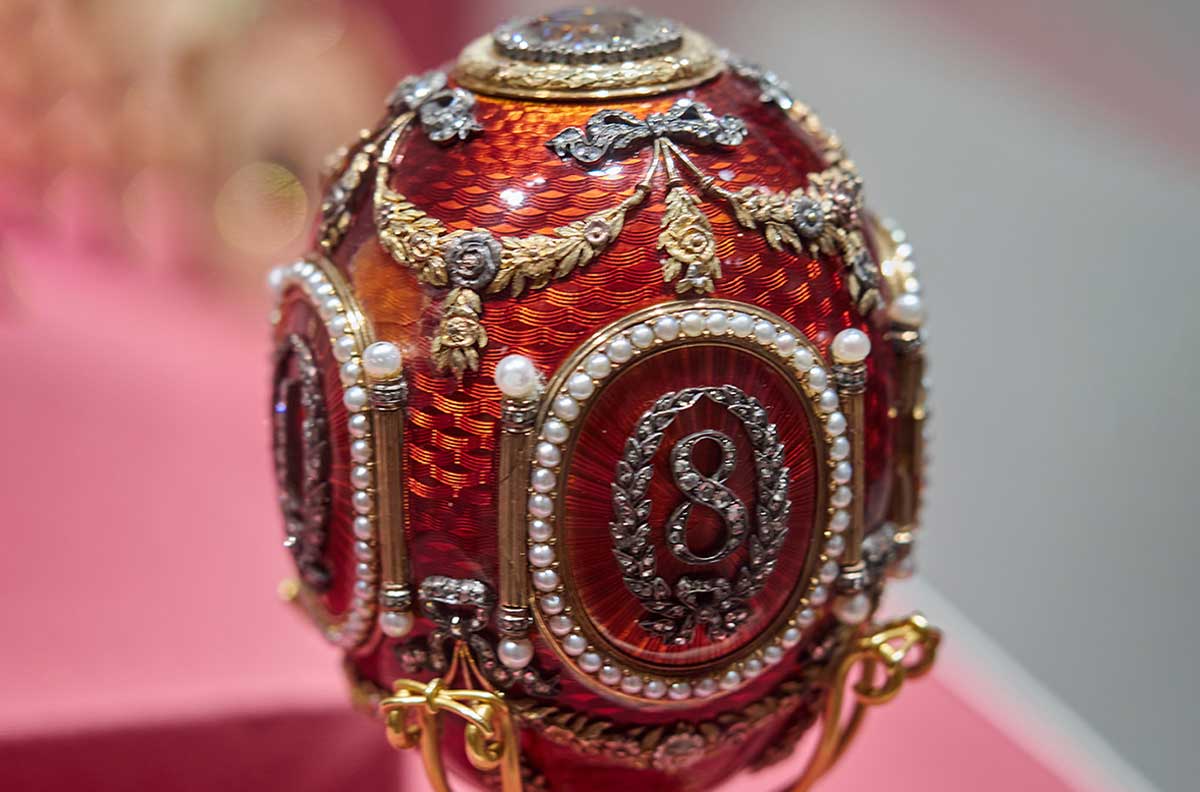
Other eggs evoked history and dynasty, such as Maria Feodorovna’s 1912 Napoleonic egg (for the centenary of Napoleon’s invasion of Russia) and the 1914 Catherine the Great egg. Others celebrated political events in Nicholas’s own reign, notably Alexandra’s 1900 Trans-Siberian Railway egg, which anticipated the completion of that massive project. The actual railway had begun nine years before with a foundation stone laid by Nicholas at Vladivostok, the railway’s eventual eastern terminus. His journey there was also captured in Maria Feodorovna’s 1891 Memory of Azov egg. Its namesake surprise is a golden miniature of the ship Nicholas and his brother George were traveling on.
How War and Revolution Ended Imperial Russia’s Grandest Tradition
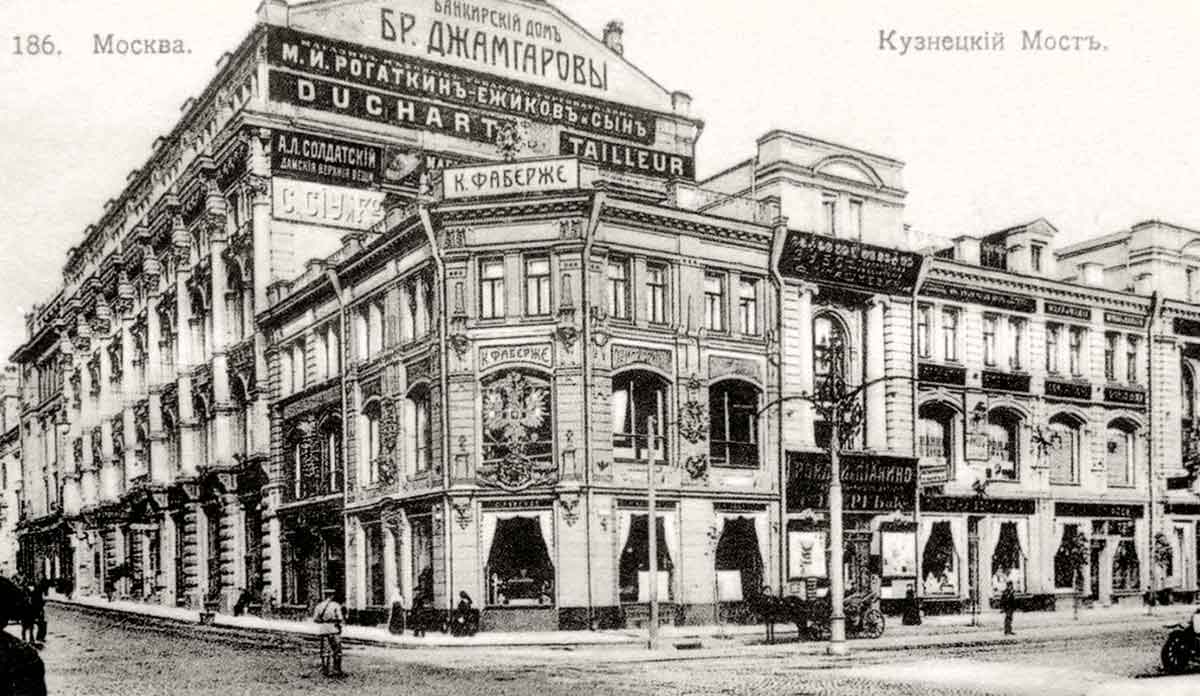
The Fabergé Easter eggs always cost more than even most of the wealthiest Russians could afford. Smaller items were more popular with Russia’s middle and upper classes, and some did commission eggs like the Romanovs’, albeit not annually. For example, the Yusupovs bought an egg for a milestone wedding anniversary. Industrial heiress Barbara Kelch collected seven. Through Maria Feodorovna’s gifts to her sister, the British royal family became acquainted with Fabergé’s work, and in 1903 the company established a branch in London to sell to them directly, though business there was not as robust as in Russia—which is not to say that the House of Fabergé would thrive there forever.
Imperial Easter eggs were paused in 1904 and 1905 as a minor concession for the Russo-Japanese War. The eggs intended for 1904 were eventually given for Easter 1906, and the tradition continued for another decade, even into World War I. The wartime eggs have a more streamlined appearance than earlier ones. Compare 1914’s jewel-encrusted Mosaic egg and glittering Catherine the Great egg to 1915’s pair of Red Cross eggs, which share the Red Cross’s simple logo.
The Red Cross eggs are, however, still made of gold beneath their white enamel, not unlike the First Hen egg. 1916’s eggs were still more austere in appearance, though they nevertheless cost more than almost any non-aristocratic Russian made in a year, including military officers. 1917’s Easter eggs were still in production when Nicholas abdicated on March 2 of that year. Peter Carl Fabergé fled the Bolsheviks in 1918.