
On September 27, 1821, Mexico became an independent country, ending 300 years of Spanish colonization. But achieving independence from a major colonial power and building a nation-state are two beasts of their own. Mexican political leaders then struggled to unite millions of people into a single cultural community. They used art as a medium to project beliefs, ideas, values, costumes, traditions, shared history, and foundational myths, many of which still survive today. Here are 12 paintings that showcase how Mexico became a nation through art.
Mexico and Its Chaotic 19th Century
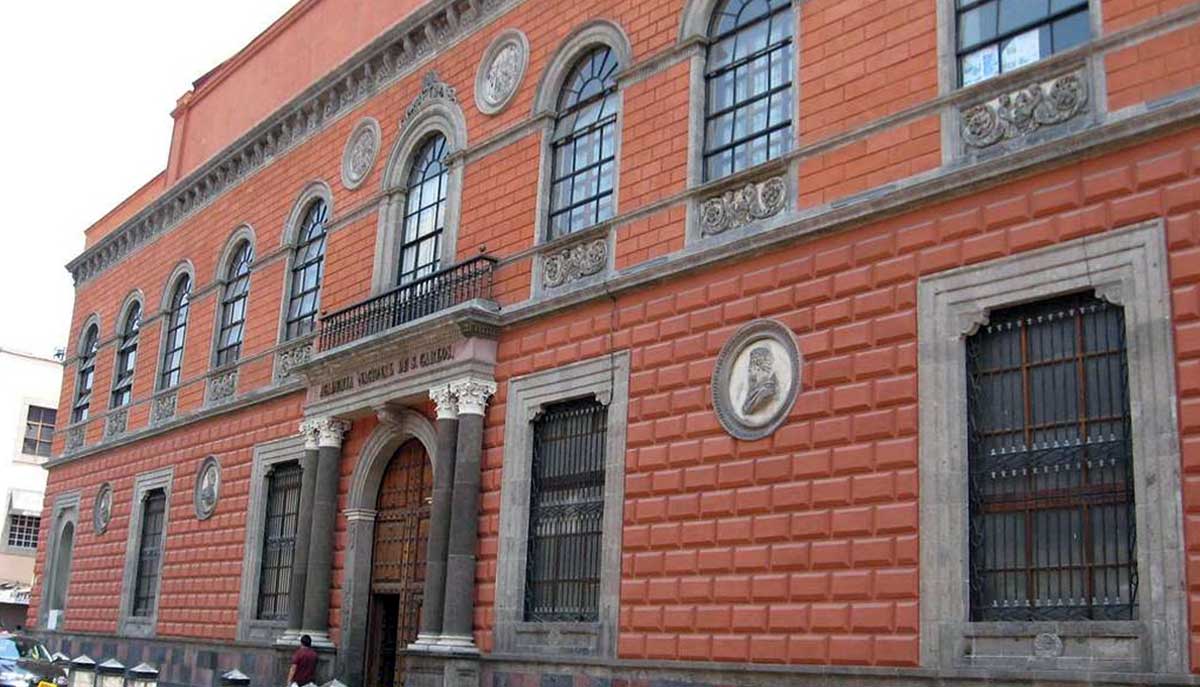
After independence, the Mexican political elite divided into two major sides, liberal and conservative. This led to decades of internal conflicts that weakened the State, made it vulnerable to foreign interventions, and hindered efforts towards building a national identity. In the art realm, a lack of funds halted art production at the Academy of San Carlos until 1843.
President Santa Anna (1794–1876) granted the organization of the lottery to this institution to revive it. But it was not until the 1860s that history paintings began to portray nationalistic themes to ignite a sense of identity and shared history. The government sponsored or acquired these paintings and presented them in international exhibitions around the Western world.
1. “The Foundation of Mexico Tenochtitlan” by José María Jara
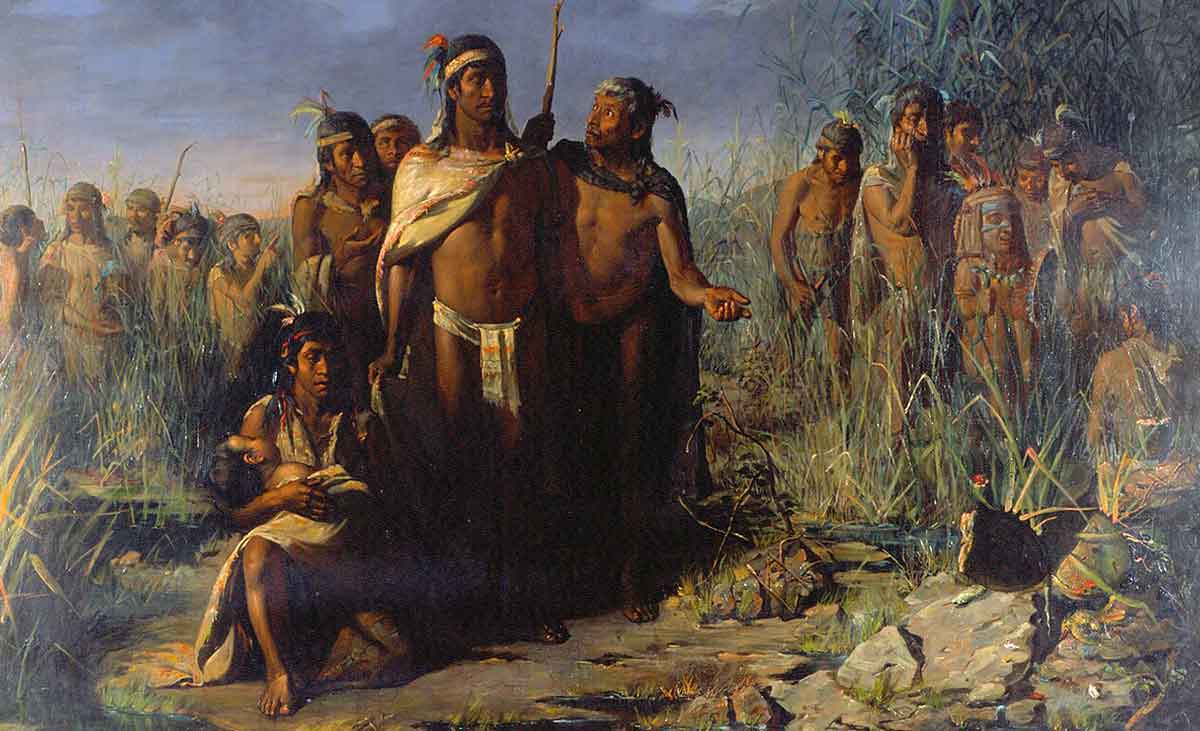
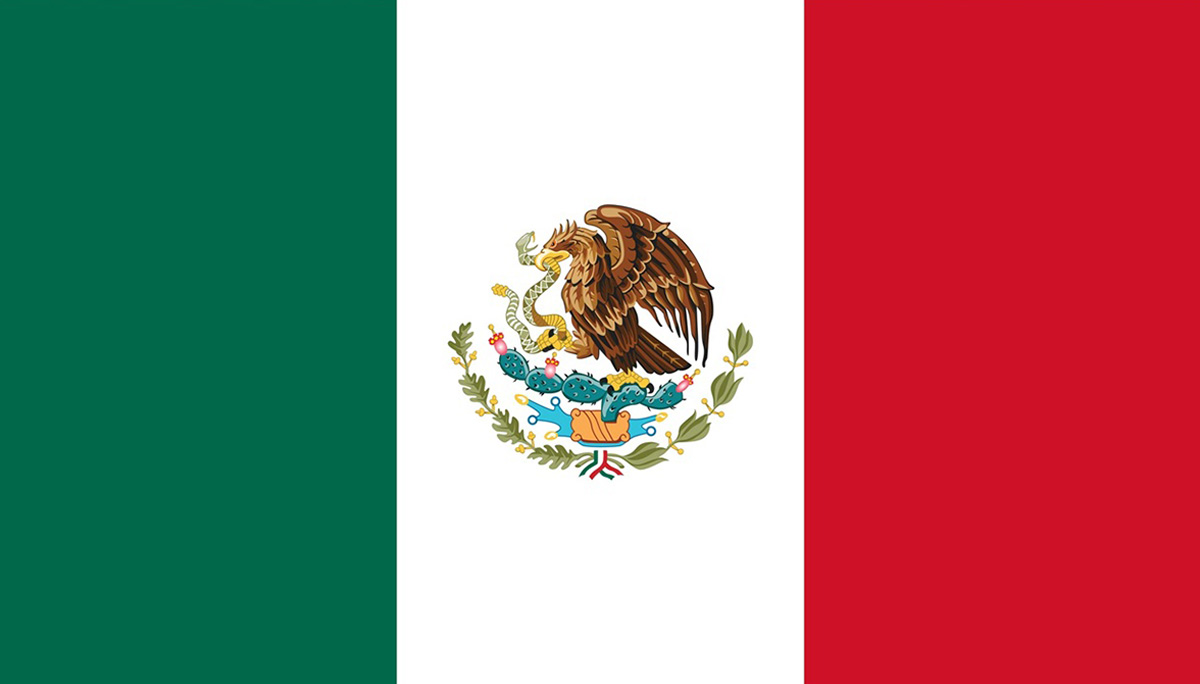
This painting by José María Jara (1866–1939) represents the mythical birth of the Mexican nation: the foundation of the Mexica (Aztec) city of Tenochtitlan. According to tradition, Huitzilopochtli, the sun god, told the Aztecs to look for an eagle standing on a cactus with a serpent in its mouth. That signaled the location to build their city. Since 1821, the eagle stands at the center of the Mexican flag as one of the most important national emblems.
Instead of representing the exact moment of the encounter with the eagle, Jara depicted the moments after the event. On the canvas, we see Tenoch, the Aztec leader, accompanied by Cuauhtloquetzqui, the priest who tells him of the eagle.
2. “The Discovery of Pulque” by José María Obregón
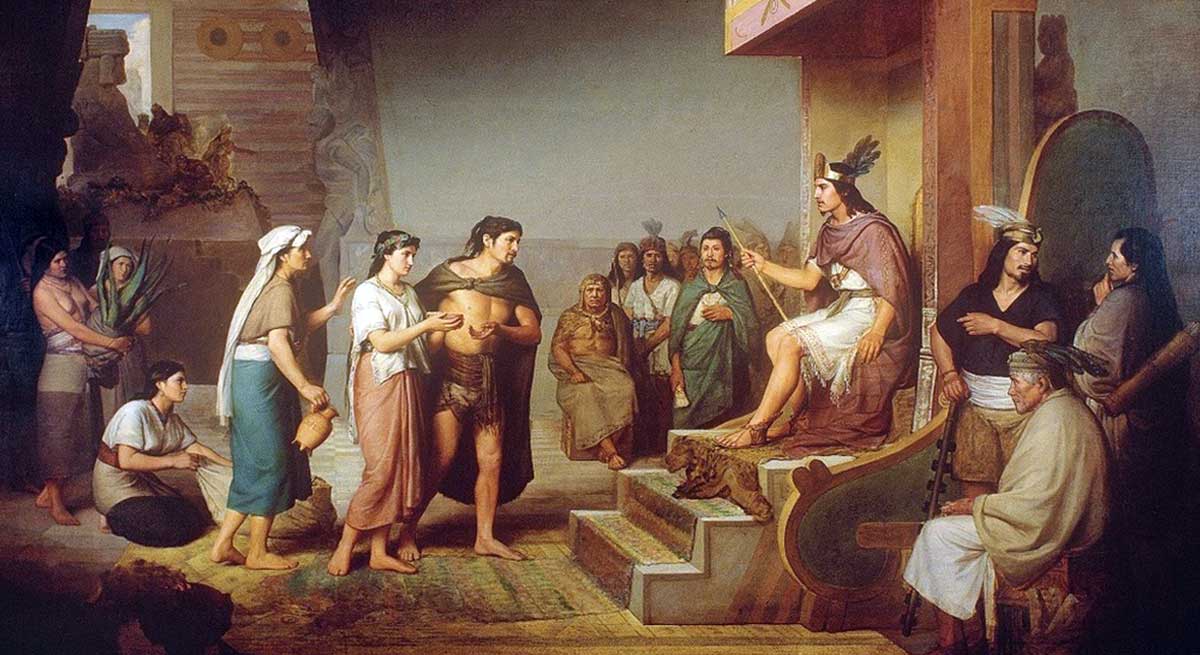
For the political elite, pre-Hispanic times represented the nation’s glorious past. The Academy of San Carlos, the State, and private patrons encouraged artists to dive into history for legendary stories that supported this idea. For instance, The Discovery of Pulque depicts the moment Princess Xóchitl presented her newly discovered beverage to the king of Tula, Tecpalcatzin. Pulque is a pre-Hispanic alcoholic beverage obtained from the maguey plant, a perfect subject for a large-scale painting. Nevertheless, this is far from an authentic depiction of the past. The architecture is idealized, and the human figures resemble more the traditional depiction of ancient Greeks than Indigenous people.
3. “The Torture of Cuauhtémoc” by Leandro Izaguirre
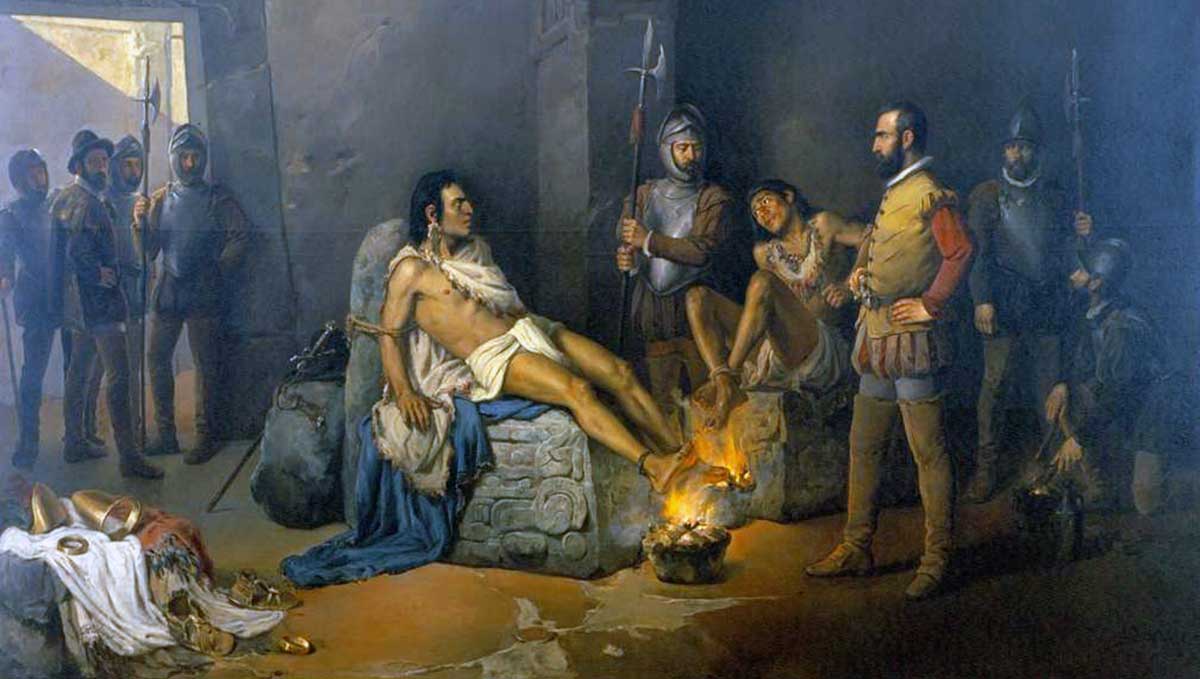
There is nothing like a martyrized hero and a brutal villain to inspire nationalism. In 1893, Leandro Izaguirre portrayed the last Mexica leader, Cuauhtémoc, being tortured by the Spanish. Their ambition led the Spanish to burn his feet until he confessed the location of the gold. Cuauhtémoc, though, remains stoic without even removing his feet from the fire, a contrast to the painful expression of his cousin, Tetlepanquetzal, lord of Tlacopan. In this painting, Cuauhtémoc represents all the Indigenous people and their cultures that perished under colonial rule. The composition reminds the viewer of tortured saints, such as Saint Lawrence.
4. “Moctezuma II Visiting the Tombs of His Ancestors” by Daniel del Valle
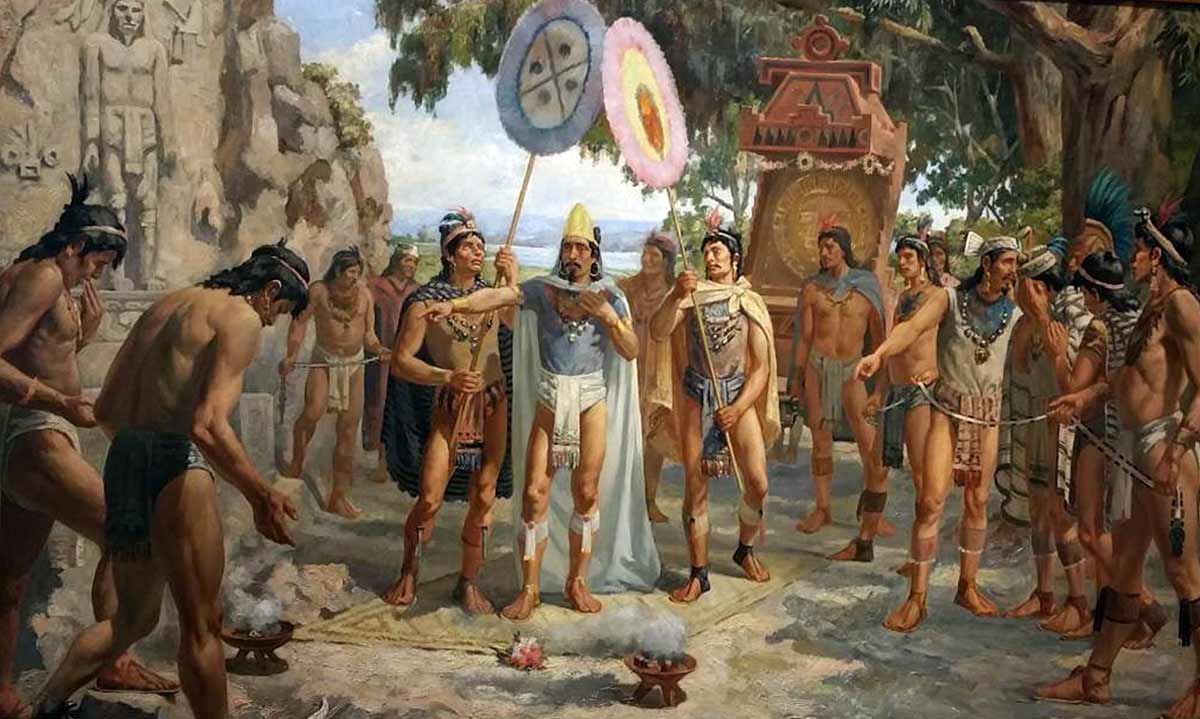
Towards the end of the century, the image of Moctezuma II (c. 1466–1520) gained popularity. For this reason, Salomé Piña, director of painting at the San Carlos Academy, proposed the theme of this painting: Moctezuma II visiting the boulders of Chapultepec, where he commissioned his carved portrait. Being the tlatoani who had the first contact with the Spanish, he can sometimes be considered a failure against the conquering forces that destroyed the Mexica civilization and all other Indigenous groups. In any case, the painting received critical acclaim, and Del Valle won a prize at the Academy’s exhibition.
5. “The Senate of Tlaxcala” by Rodrigo Gutiérrez
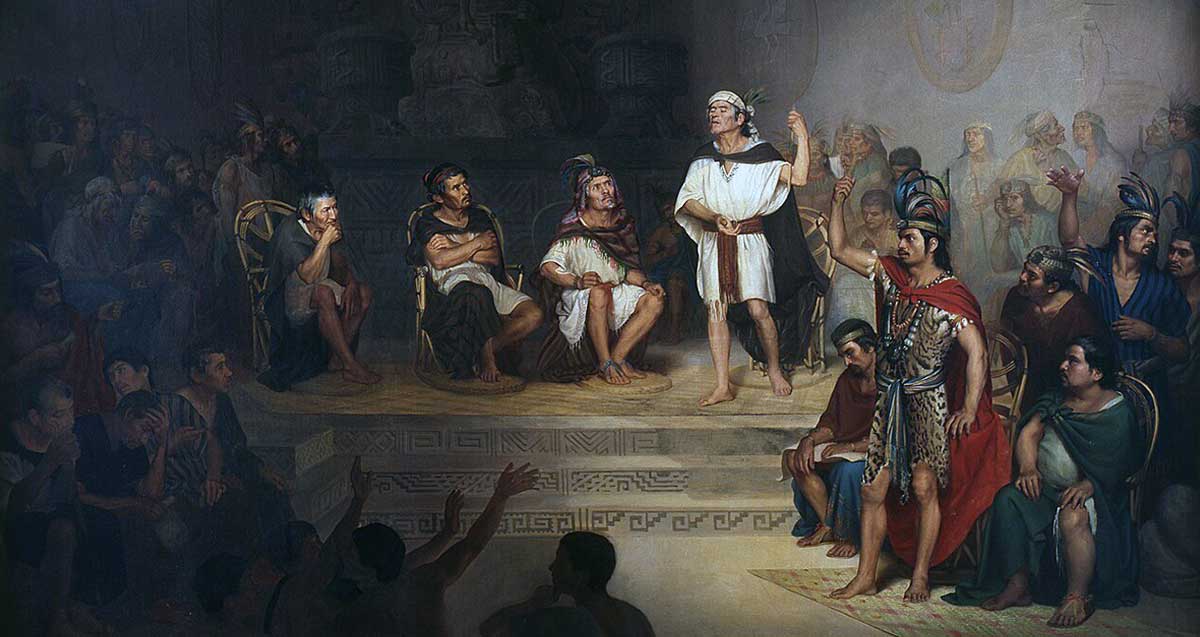
This painting represents a crucial moment in Mexico’s history: the alliance between the Tlaxcalan people and the Spaniards against the Mexicas. The standing figures depict the intense debate between Maxixcatzin, who argued for an alliance with Cortés, and the young general Xicoténcatl Axayacatzin, who passionately urged the senate to reject the Spanish. For this, the Tlaxcalans became a symbol of treason, a perspective that is partial towards the Mexicas’ perspective. Nonetheless, this is exactly the type of narrative required to build a national history centered around “the good” and “the bad.”
6. “The Massacre of Cholula” by Félix Parra
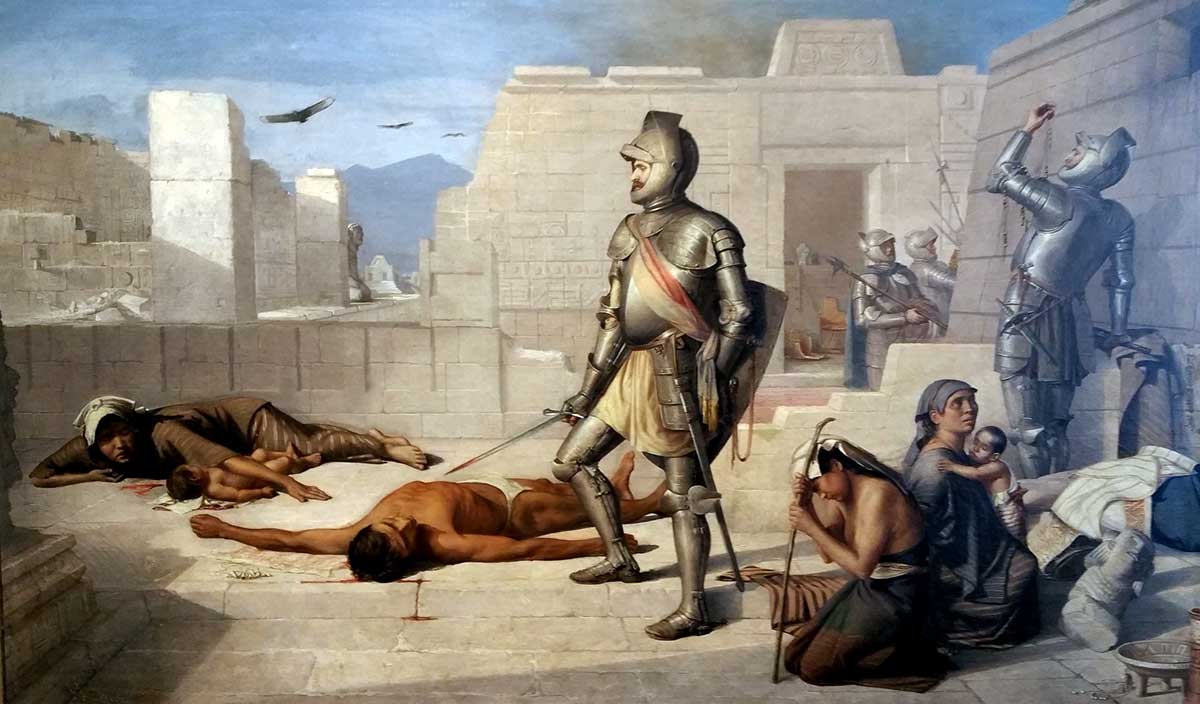
The Conquest, to this day, is one of the most controversial moments in Mexico’s history. In the 19th century, conservatives believed it to be a stepping stone in the country’s path to progress. In contrast, liberals believed it to represent the death of the glorious past. Félix Parra’s painting adheres to the latter by depicting a real event that cements the Spanish conquerors as the villains of history. On October 18, 1519, the Spanish conquerors, led by Hernán Cortés, perpetrated a brutal massacre against the population of Cholula (currently in the state of Puebla). They murdered thousands of people, including priests, rulers, and unarmed civilians.
7. “Battle of Puebla” by Patricio Ramírez y Ortega
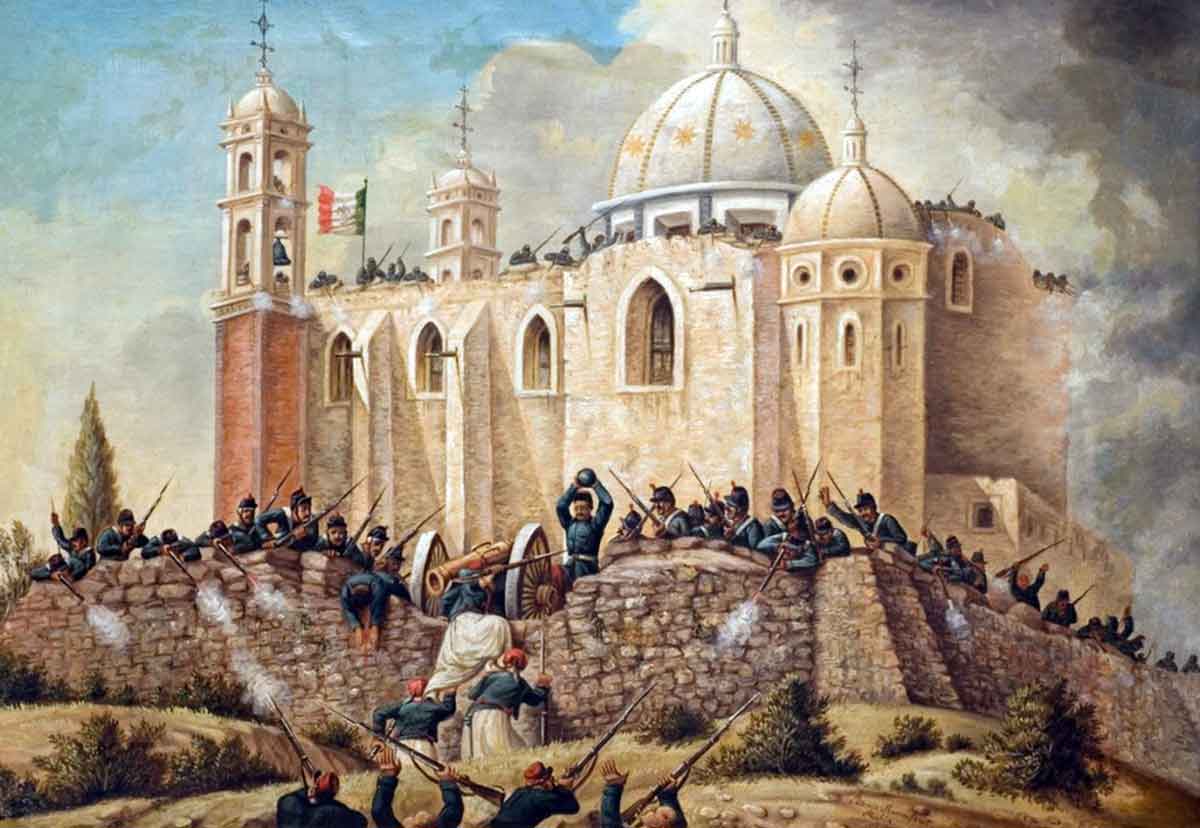
Liberals replaced religious festivities with civic ones, such as battles, to create a secular nation. On May 5th, 1862, the Mexican army won “the Battle of Puebla” against the French. Eventually, the French defeated Mexico, expelled President Benito Juárez, and imposed the foreign Emperor Maximilian I (r. 1864–1867). Nevertheless, that battle remained a national festivity. This painting by Patricio Ramírez depicts a close scene of the battle, right in front of the cathedral. The artist was recruited two days before the battle, making him the first witness to the events of that day. This is the first of four paintings he did of the historic victory.
8. “Fray Bartolomé de las Casas” by Félix Parra
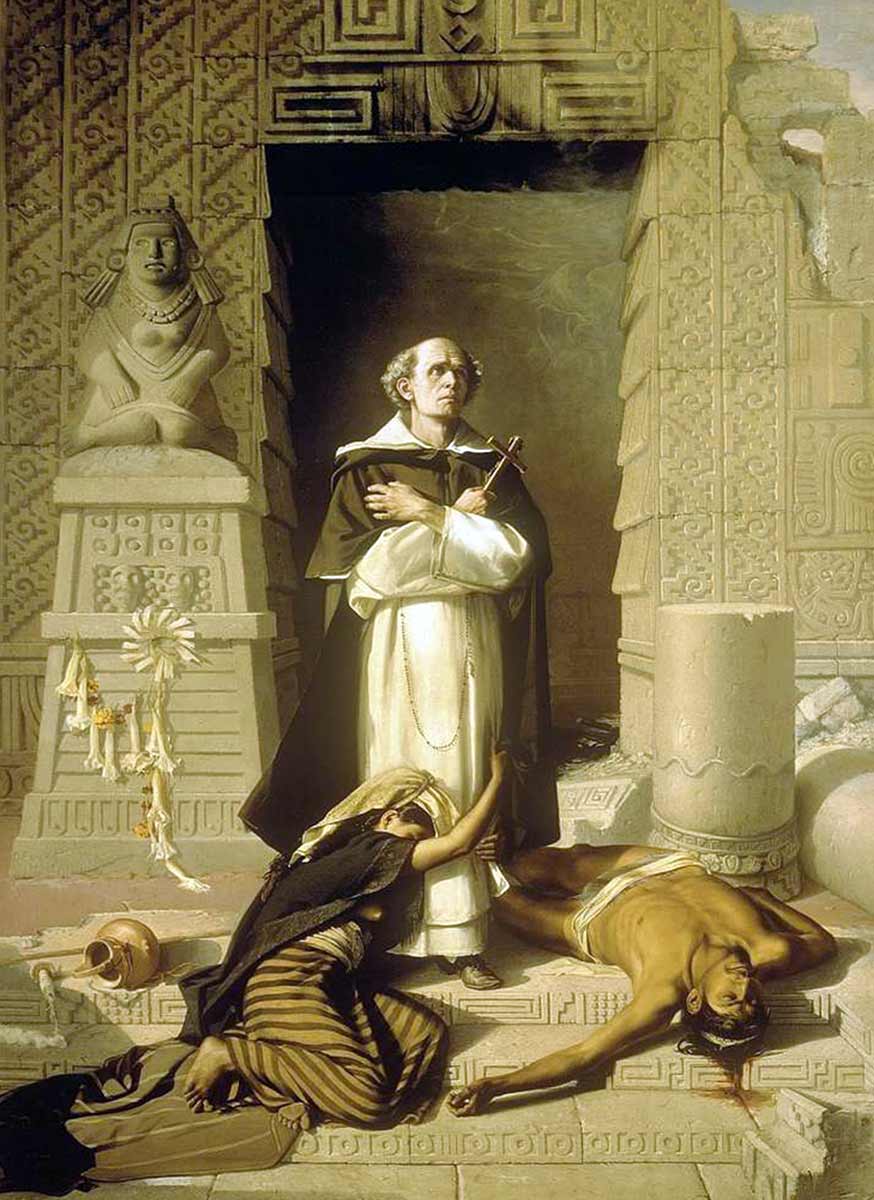
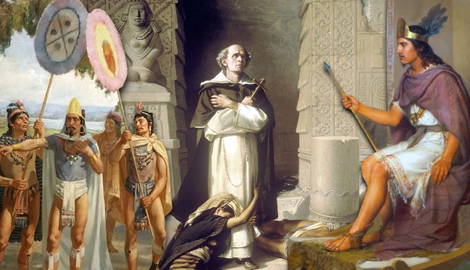
Even though religious themes were not the preferred choice for the nationalist project, the reality was that most Mexicans were Catholic. Parra painted Fray Bartolomé de las Casas (1474/1484–1566), a Dominican missionary who defended the Indigenous population against the abuses of the Spanish colonizers. For his efforts, he earned the name of “Protector of Indians.” In the work, we see him at the entrance of an idealized pre-Hispanic building, flanked by Indigenous people. The woman to his right kneels and hugs his leg in desperation; meanwhile, the man on his left lies dead.
9. “Charity in the First Times of the Church” by José María Ibarrarán y Ponce
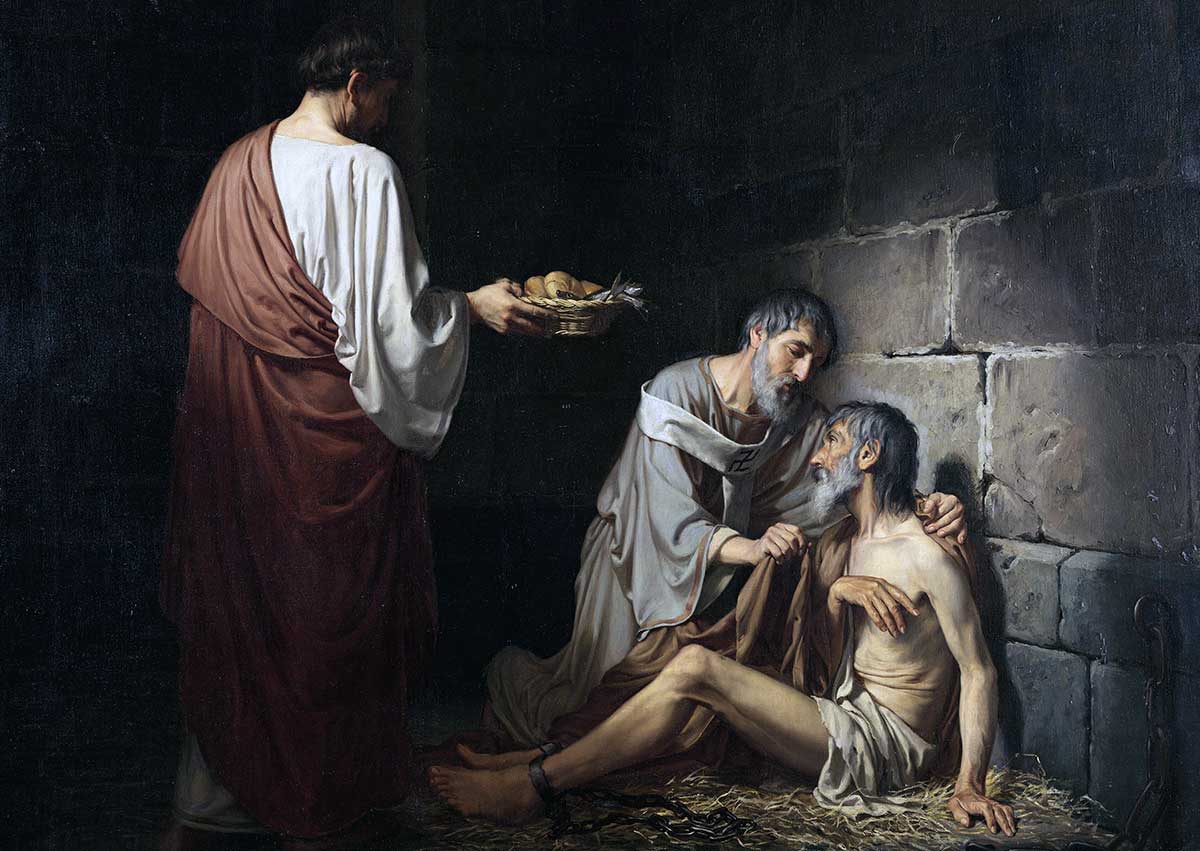
Religious paintings dominated the Academy’s production until the 1860s. They did not disappear, but artists reinterpreted Biblical stories to support the nationalistic narrative and values attached to it. Moreover, after decades of confrontation, the governments of the end of the century tried to fix the relationship between Church and State. In 1883, the Academy set up the theme of Charity for its biennial contest. Ibarrarán’s painting depicts an old man, chained in a dungeon. The man standing with his back to the viewer offers him bread, while another kneels beside the old man to cover him with a blanket of sorts. The painting appeared in international exhibitions in Paris (1889) and Chicago (1893).
10. “The Metlac Ravine” by José María Velasco
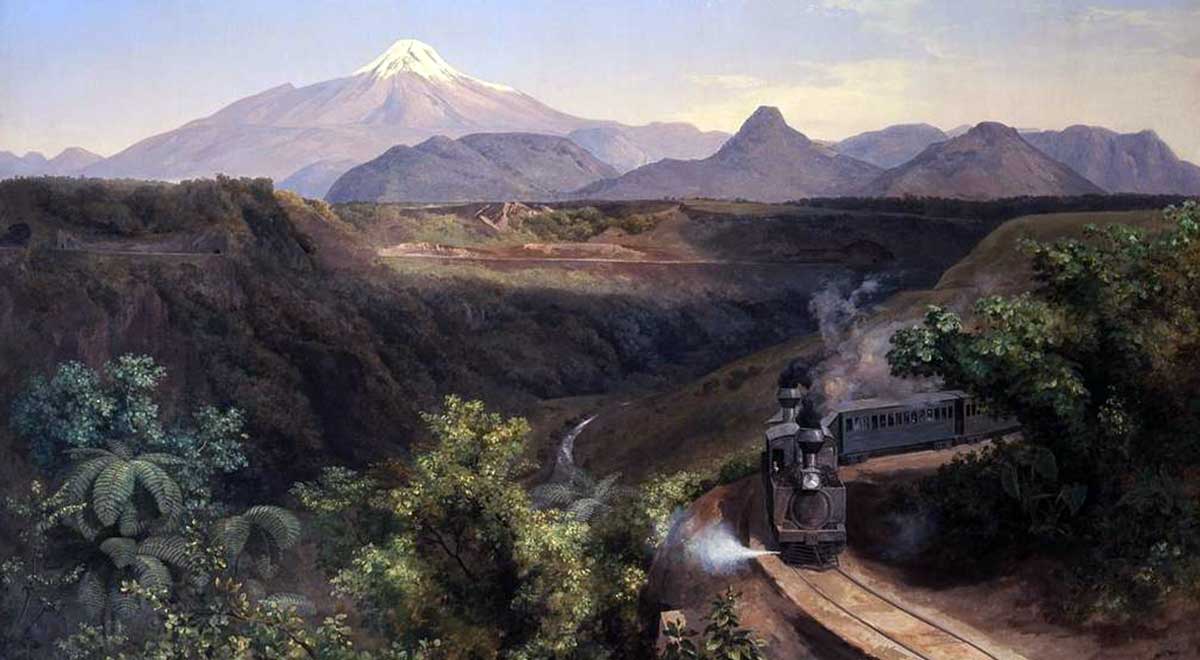
Landscapes became fundamental for the nation-building project because they highlighted the territory with its flora and fauna. This painting, for instance, by José María Velasco (1840–1912), depicts a foreground full of local vegetation, while the background depicts the volcano Pico de Orizaba. Even more, the train that passes through the Metlac Ravine represents Mexico as a modern nation, capable of surpassing the hardest engineering challenges to make way for progress. This message not only reached Mexicans but foreigners too, as the painting participated in the Paris International Exhibition in 1889 and 1900.
11. “Miguel Hidalgo y Costilla” by Joaquín Ramírez
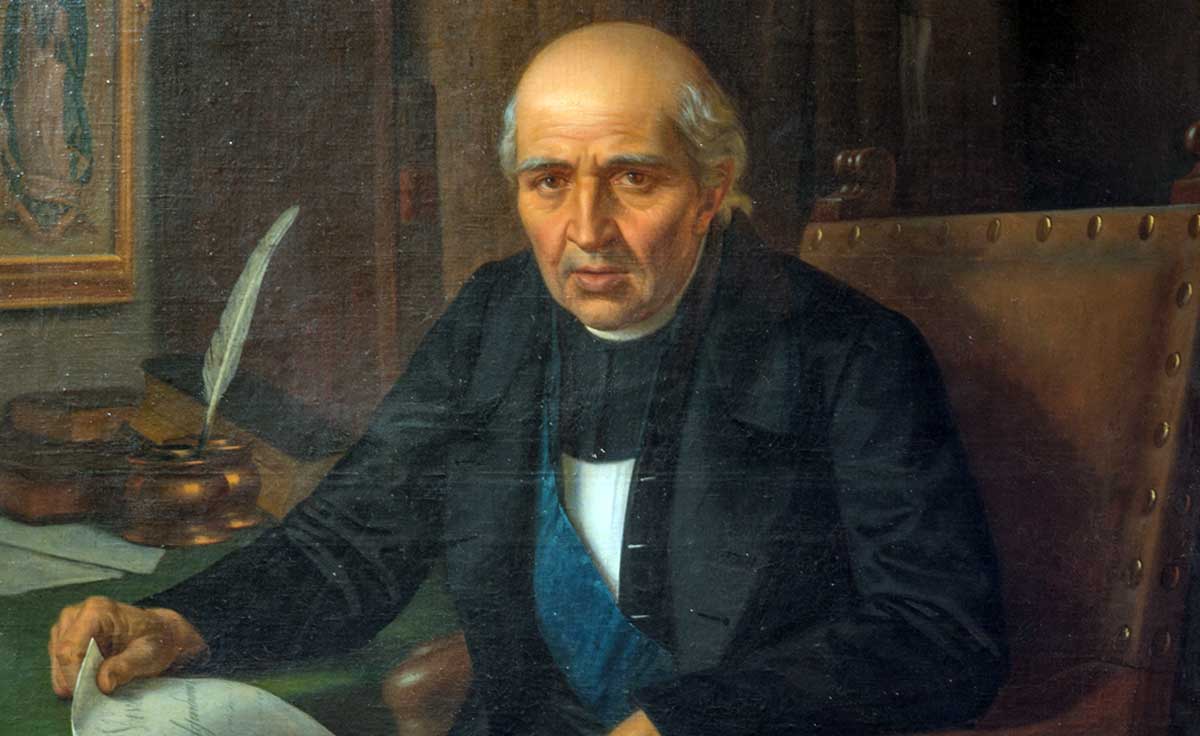
Maximilian understood the importance of heroic figures in the construction of a national identity and employed some of the greatest artists from the Academy of San Carlos to create a series of six portraits of heroes of the Independence war: Miguel Hidalgo y Costilla (1753–1811), José María Morelos y Pavón (1765–1815), Agustín de Iturbide (1783–1824), Ignacio Allende (1769–1811), Vicente Guerrero (1782–1831), and Mariano Matamoros (1770–1814). Joaquín Ramírez (1832–1866) did this portrait of the “Father of the Nation,” exhibited at the Academy’s Exhibition of 1865 and later hung in the Imperial Palace.
12. “Allegory of the Constitution of 1857” by Petronilo Monroy
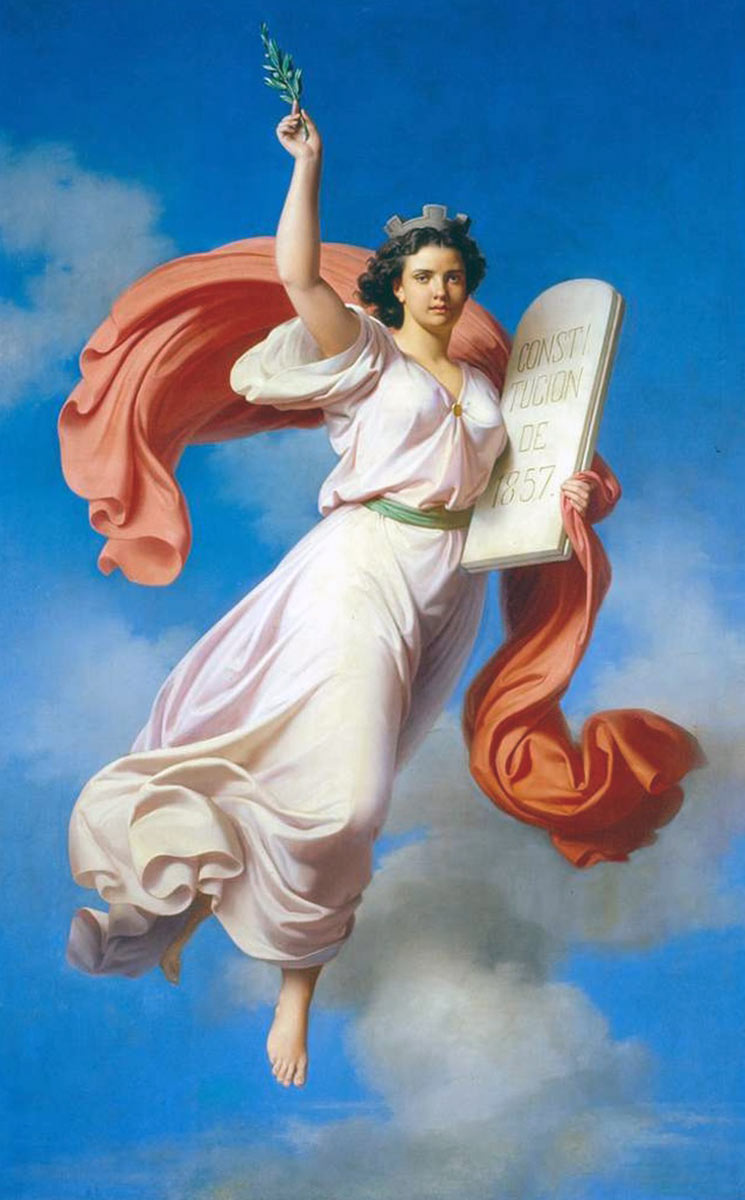
The promulgation of the liberal Constitution of 1857 was one of the greatest victories for the Mexican liberals, but not an easy one. It sparked the Reform War (1857–1861) against conservatives, who called Maximilian I to rule Mexico and depose President Juárez. Liberals had the definitive victory once Maximilian was executed in 1867. Two years later, Monroy’s allegory celebrated the Constitution held by the Motherland. The woman is depicted as a mestiza (mixed-race), central to the 19th-century nationalist discourse of mestizaje that framed Mexican identity as the joint inheritance of Spanish and Indigenous cultures.
Mexico Built a Nation
Tomás Pérez Viejo, author of Mexico, the suffering nation, states, “a nation is as intangible as divine will, it only exists if one believes in it.” The Mexican politicians and intellectuals knew this and were conscious of the power of art to build the nation. Over the last decades of the 19th century, they invested plenty of resources to commission or acquire paintings on this list, and many others. The population could see them at national and international exhibitions, and eventually in museums. Moreover, the middle and lower classes, as well as people outside the capital, could access them through lithographies, engravings, and art critiques in newspapers and magazines. All of this contributed to the interiorization of a collective imagery that persisted in Mexican culture, even after political changes.