
Money and art have served as political tools to convey visual narratives and make powerful statements for millennia. Combined, they are powerful cultural assets. Today, governments invest considerable resources in selecting artworks and artists to create attractive banknotes, valued not just for their exchange value but also for what they represent. They have become symbols of their countries, coveted by the public and collectors. Here are 14 examples of banknotes from all around the world that display artworks or famous artists.
1. British 20-pound Banknote Featuring Famous Artist JMW Turner
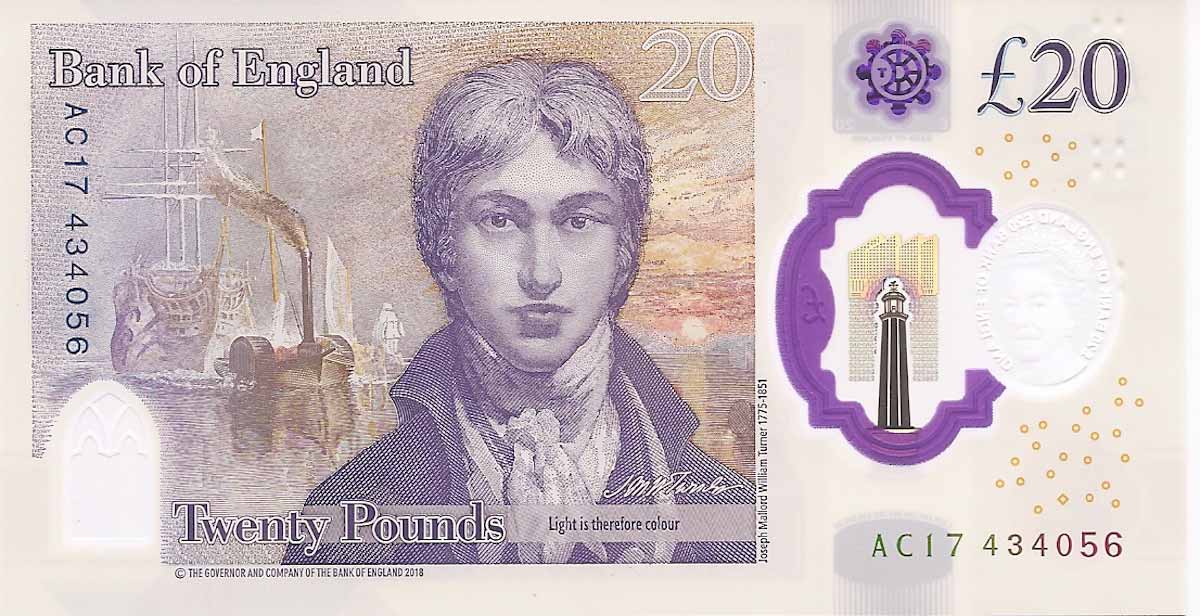
In 2016, J.M.W. Turner (1775–1851) became the first artist to appear on a British banknote, specifically on the £20 banknote. The public nominated him, and an expert panel selected him for his contributions to the visual arts and British society. The decision was not merely aesthetic. As the governor of the Bank of England said, “Money is memory.” Turner’s self-portrait from 1799 appears on the reverse of the note. Behind it, there is a reproduction of one of his most famous paintings, The Fighting Temeraire, tugged to her last berth to be broken up (1838). Additionally, one can read one of his quotes, which says, “Light is therefore colour,” delivered at a lecture in 1818. The sovereign, as always, appears on the obverse of the note.
2. Mexican 50 Pesos Banknote Featuring Teocalli
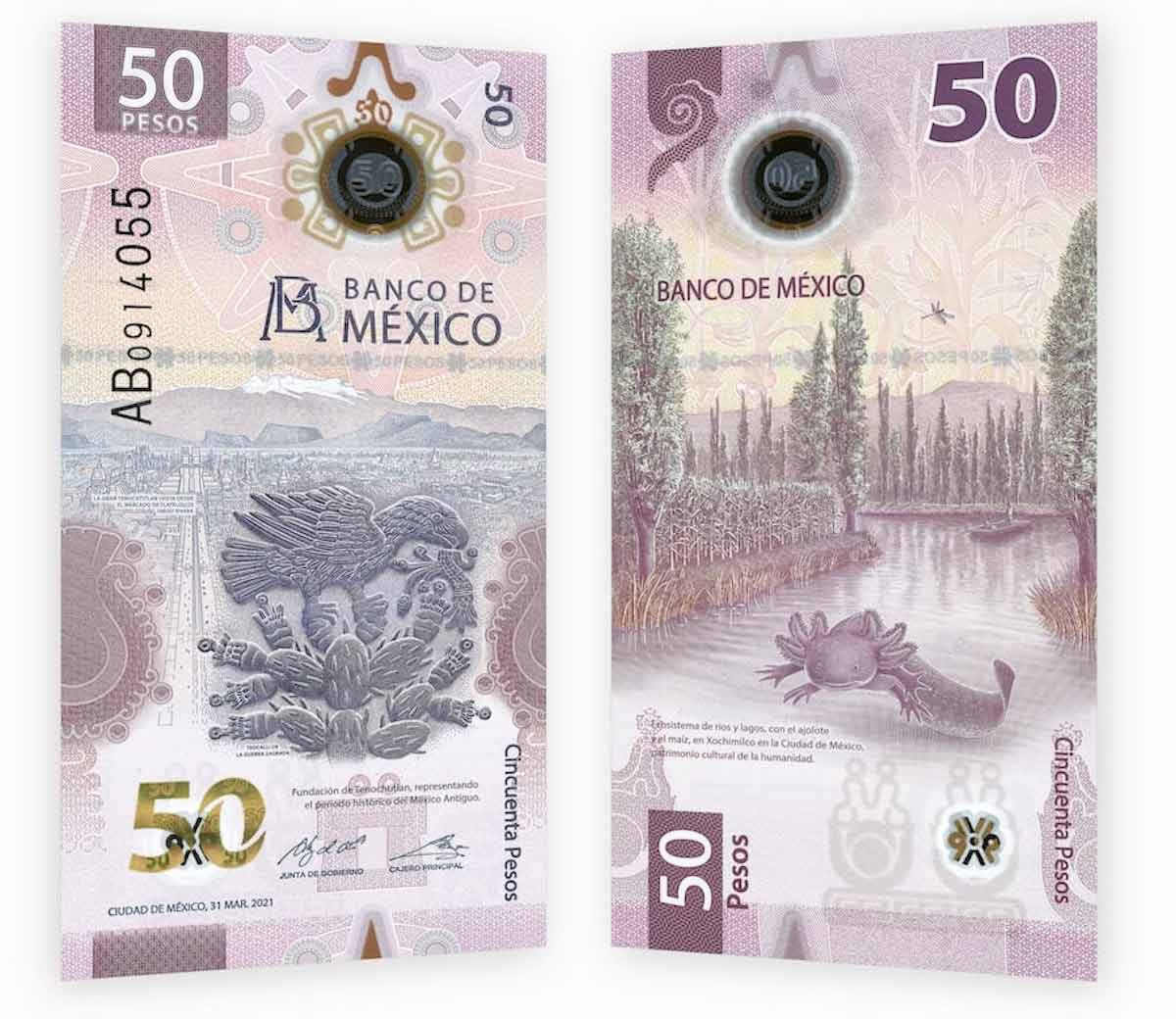
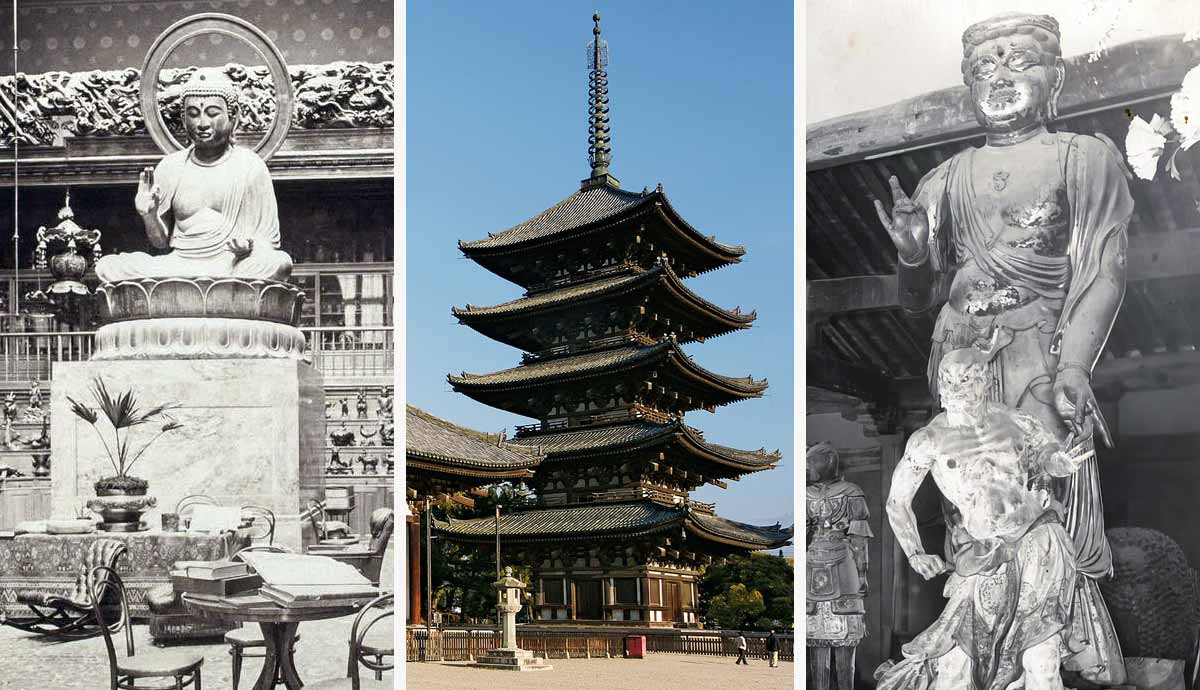
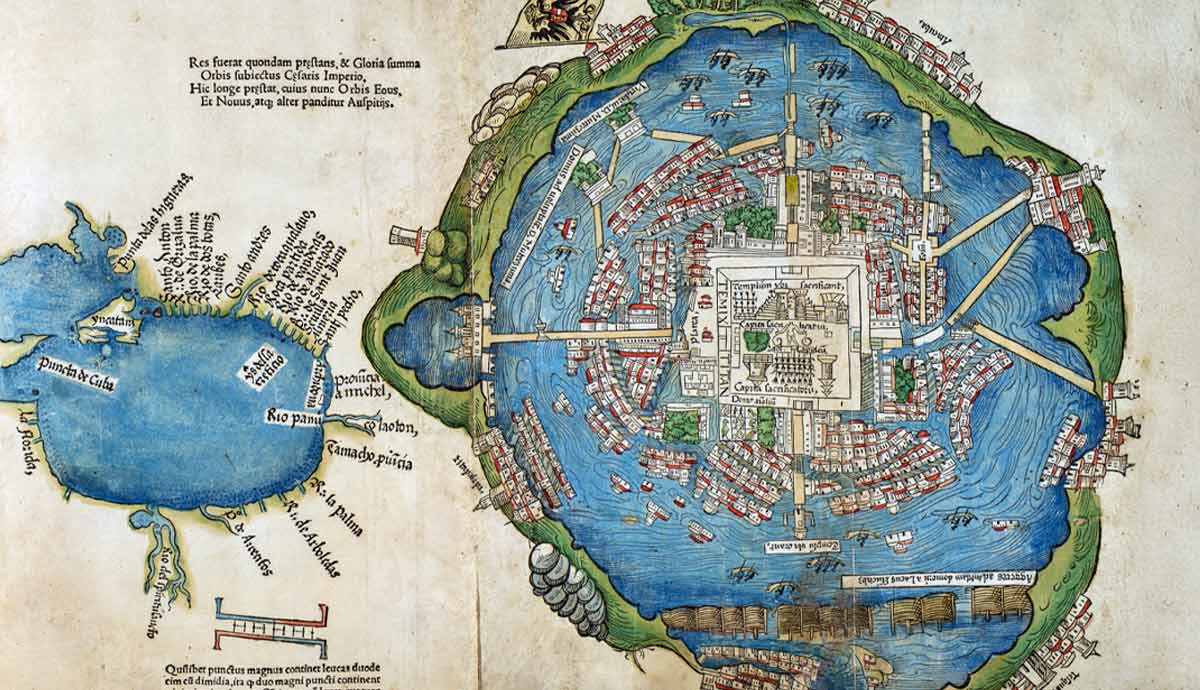
Mexicans were filled with pride when the 50-Mexican-peso banknote was named the most beautiful one in 2022 by the International Bank Note Society (IBNS). The back of the Teocalli of the Sacred War appears on the obverse of the note. This is a Mesoamerican stone sculpture from the Mexica culture (1325–1521) representing a temple in miniature. Although the Teocalli is a three-dimensional sculpture with relief all around it, the government highlighted the back side because it shows the eagle standing on a cactus, devouring a snake. This image is the symbol of the Mexican flag and one of the most important visual elements of Mexican culture. Behind it, a part of Diego Rivera’s (1886–1957) mural The Great Tenochtitlan seen from the Market of Tlatelolco (1945) serves as background.
3. Armenian Banknote featuring Hovhannes Aivazovsky
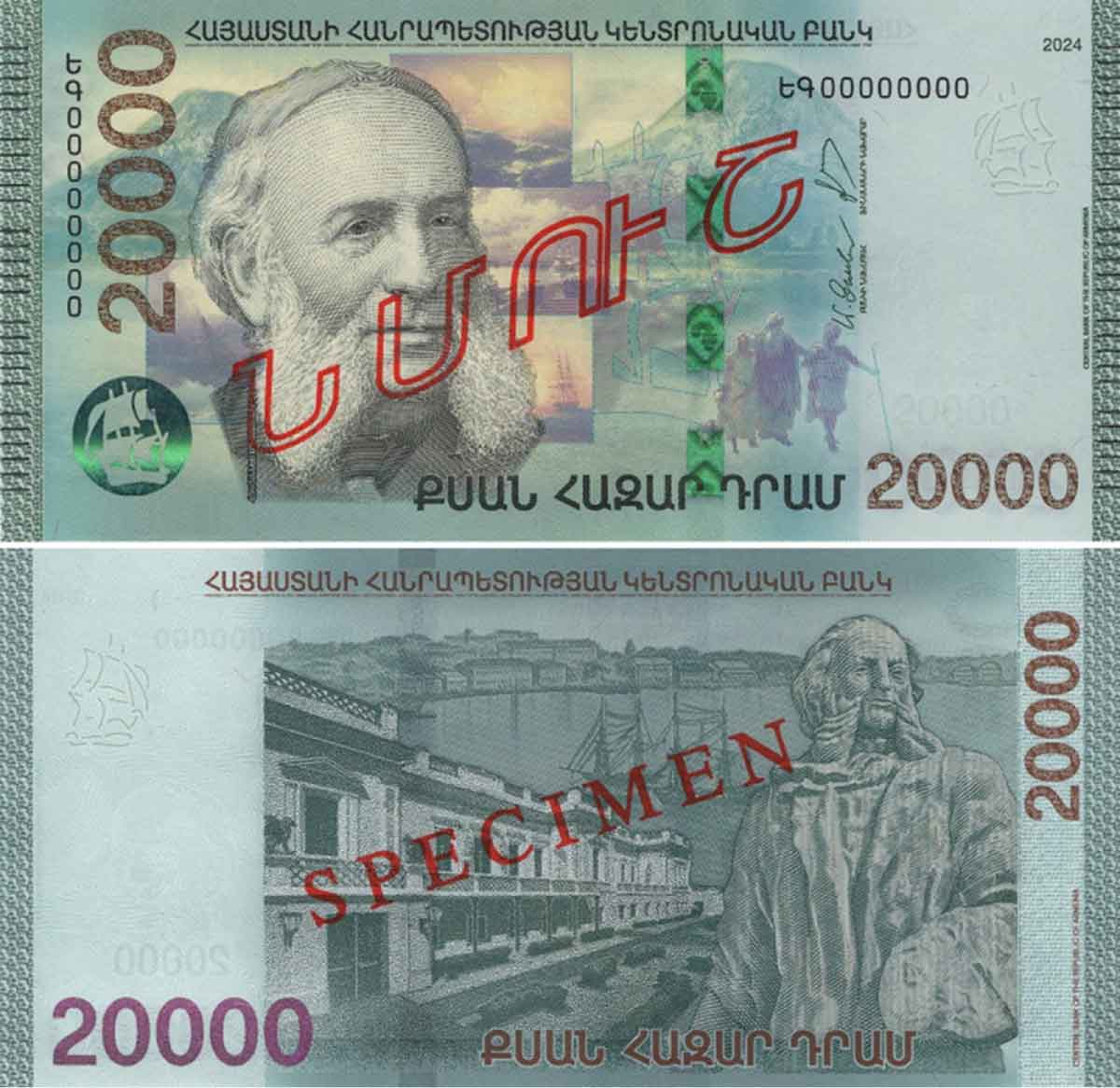
The Armenian banknote featuring a portrait of Hovhannes (or Ivan) Aivazovsky (1817–1900) is a perfect example of how money can be used to make political statements, and how important an artist’s national identity can be. Aivazovsky is worldwide known as a Russian painter, famous for his extraordinary seascapes, which are present in this note alongside his portrait. However, Russia, Armenia, and Ukraine have engaged in a long dispute to define his national identity. Since the invasion of Russia into Ukraine, these two nations’ claims have escalated. Meanwhile, Armenia recognizes that the artist lived and studied in Russia but still considers him an Armenian artist. As such, the Armenian government put him on their banknotes.
4. Indian Banknote Showing Cultural Heritage
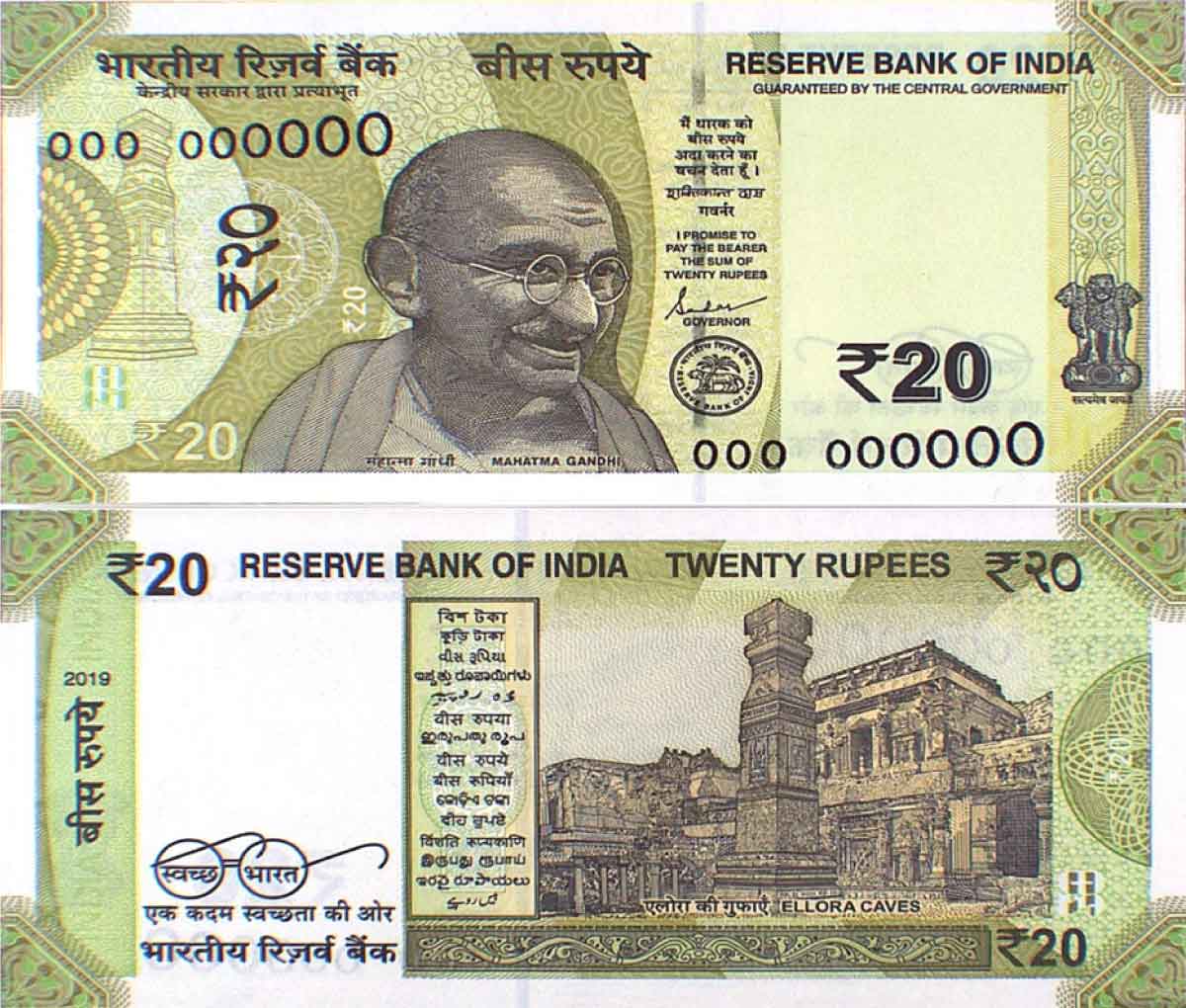
All Indian banknotes feature Mahatma Gandhi on the obverse, but the reverse shows the most important archaeological sites in the country. The 20-rupee note shows the Ellora Caves (600–1000 AD), a complex of 34 caves located in Maharashtra, India. These are masterpieces of architecture, sculpture, and painting. Apart from its artistic qualities, the importance of this site lies in its message of religious tolerance. These temples represent Buddhism, Hinduism, and Jainism, all in one place. It is a testament to the long history of India’s multiculturalism. For this reason, UNESCO included the caves on the World Heritage List.
5. South Korea Banknote Featuring Shin Saimdang
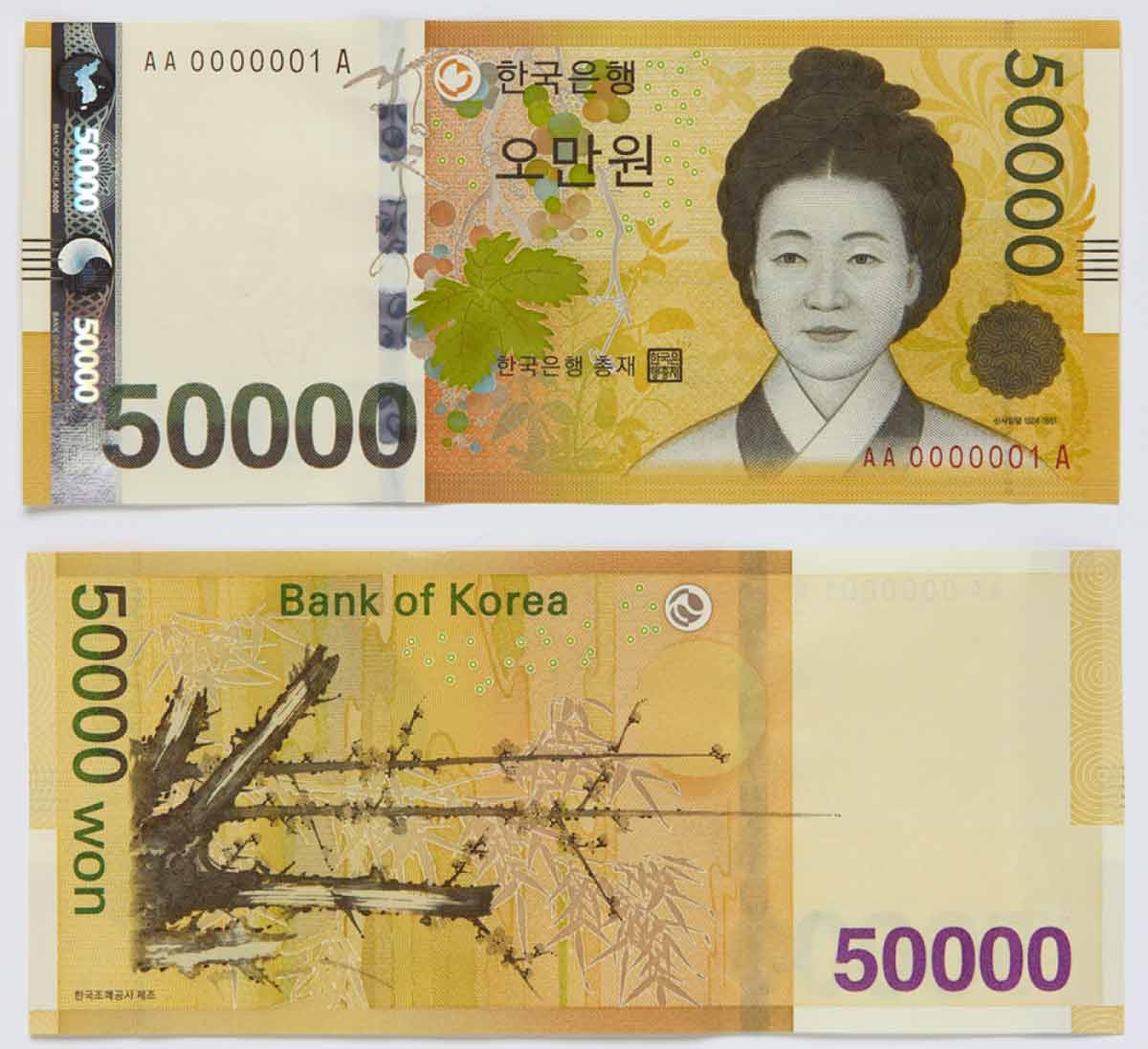
Shin Saimdang (1504–1551) became the first woman to appear on South Korean banknotes in 2009. She was a recognized artist of the Joseon Dynasty (1392–1910) era. The 50,000-won banknote showcases her portrait along with details of the plants and insects she painted.
The selection of this painter caused a stir among Korean feminists. The exclusion of women and other vulnerable groups from appearing in banknotes sends as strong a message as the inclusion of others. Consequently, including a woman artist is a sign of gender equality in South Korea, or at least what the government tried to convey. Nevertheless, for certain feminist groups, Shin symbolized traditional views of women and their domestic roles in society. Aside from her artistic legacy, Shin was the mother of the Confucian scholar Yi I.
6. Colombian Banknote Featuring Débora Arango
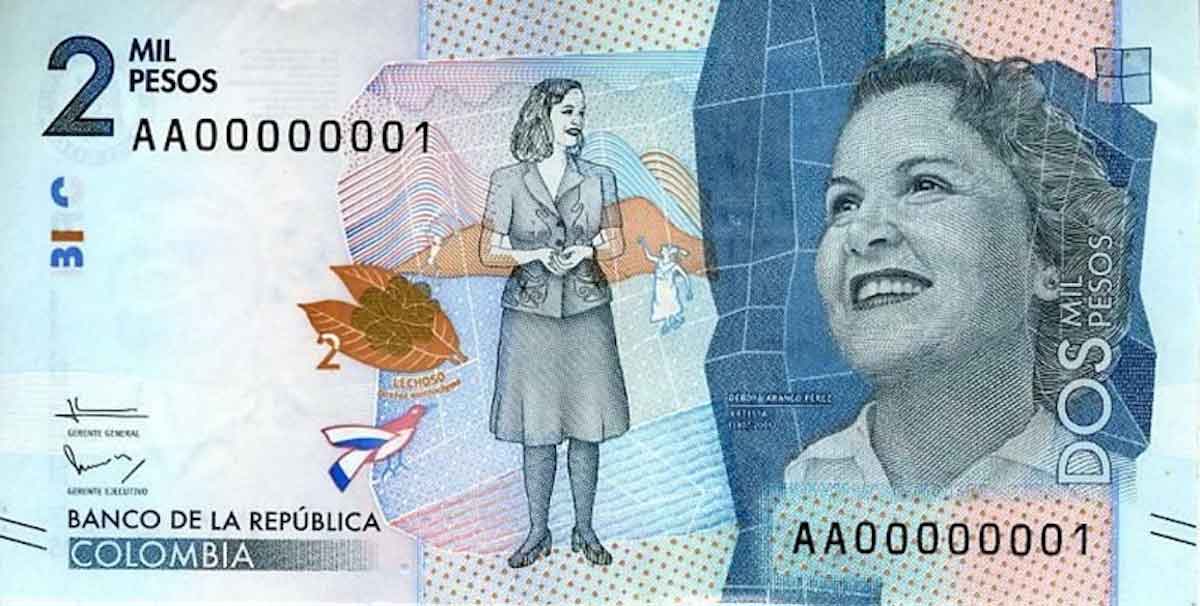
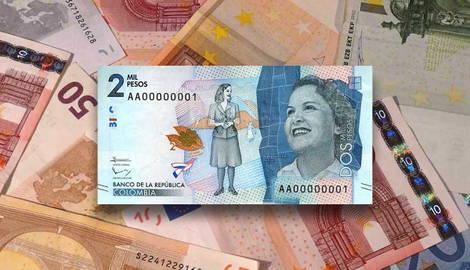
Débora Arango (1907–2005) was a Colombian expressionist painter and watercolorist. She defied convention by choosing a career usually reserved for men, painting female nudes, and making social commentary through her art. Since 2015, the 2,000-Colombian-peso banknote featured Arango and her artworks. The obverse contains details of The Nuns and the Cardinal (1987) and 13th of June (1986). The latter illustrates a political uprising where conservatives, liberals, and other social groups joined to support the coup d’état by General Gustavo Rojas Pinilla against President Laureano Gómez.
7. Turkish Banknote Featuring Mimar Kemaleddin Bey
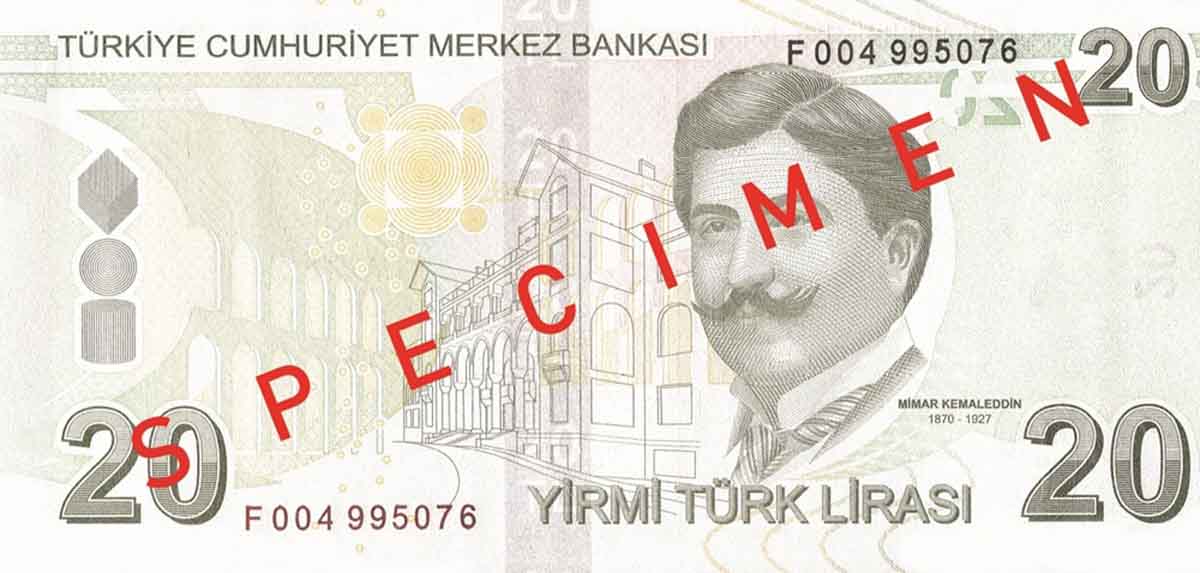
The reverse of the 20 Turkish lira features the architect Mimar Kemaleddin Bey (1870–1927). He was one of the leaders of the First National Architectural Movement, also known as the National Architecture Renaissance or Turkish Neoclassical architecture, at the beginning of the 20th century. If banknotes are part of a medium to showcase nations’ cultural heritage, then it is no surprise that Turkey chose an architect who worked to give his nation their own style by returning to Ottoman influences. Behind his portrait appears the last work of his movement, the Rectorate Building of Gazi University.
8. Banknotes Featuring Congolese Artworks
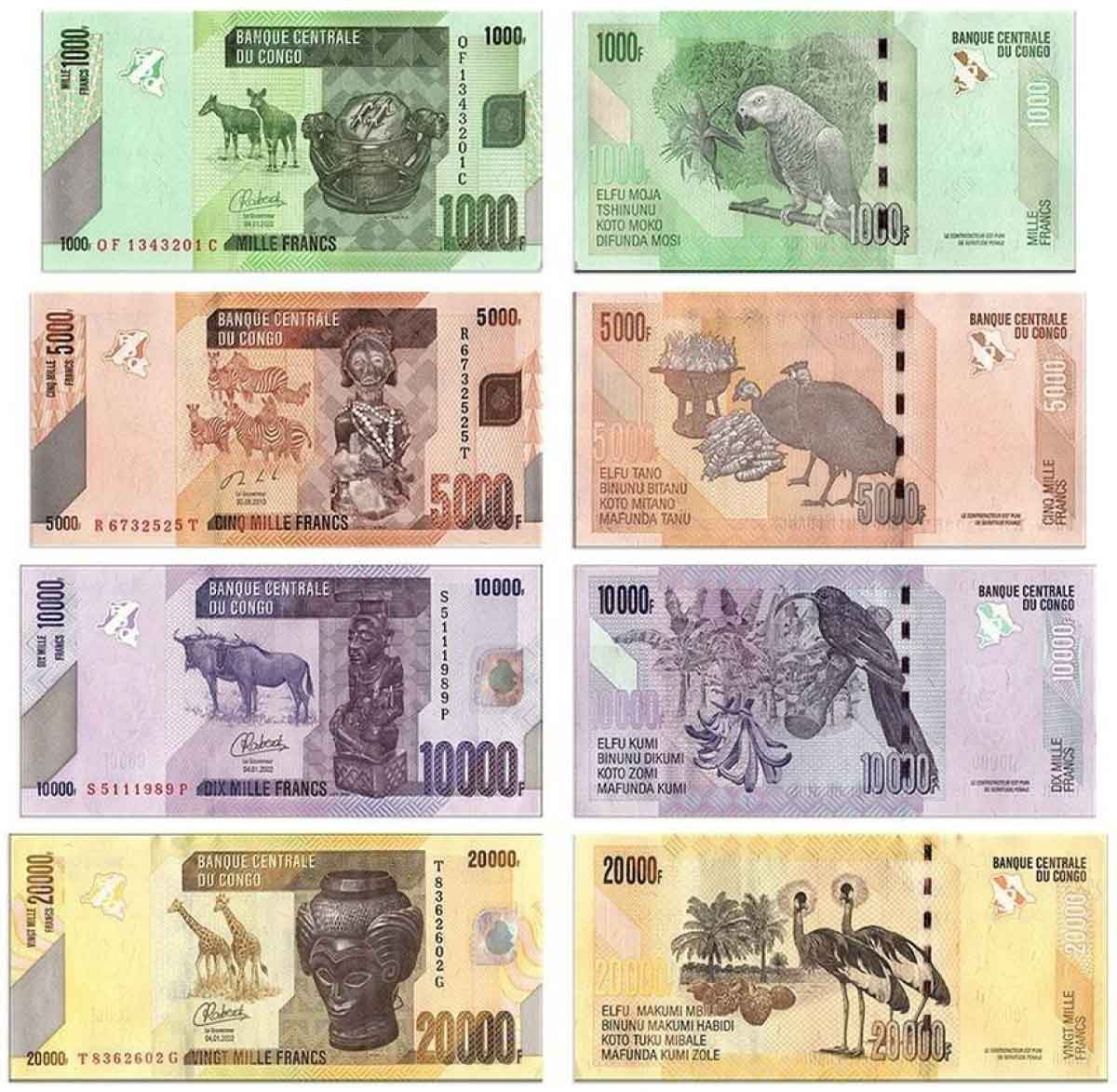
The Democratic Republic of the Congo’s banknotes feature a variety of examples of the country’s history of art. For instance, the 1,000-Congolese-francs note features the Coffret Kanioka, a carved casket of the Kanioka people; the 5,000-note, a wooden sculpture from the Hemba people; the 10,000-note, a statue of the Kuba people; and the 20,000-note, a head carved by the Bashielele people. This diversity in the artworks reflects the country’s cultural, linguistic, and artistic diversity.
9. Banknotes Featuring Singaporean Artworks
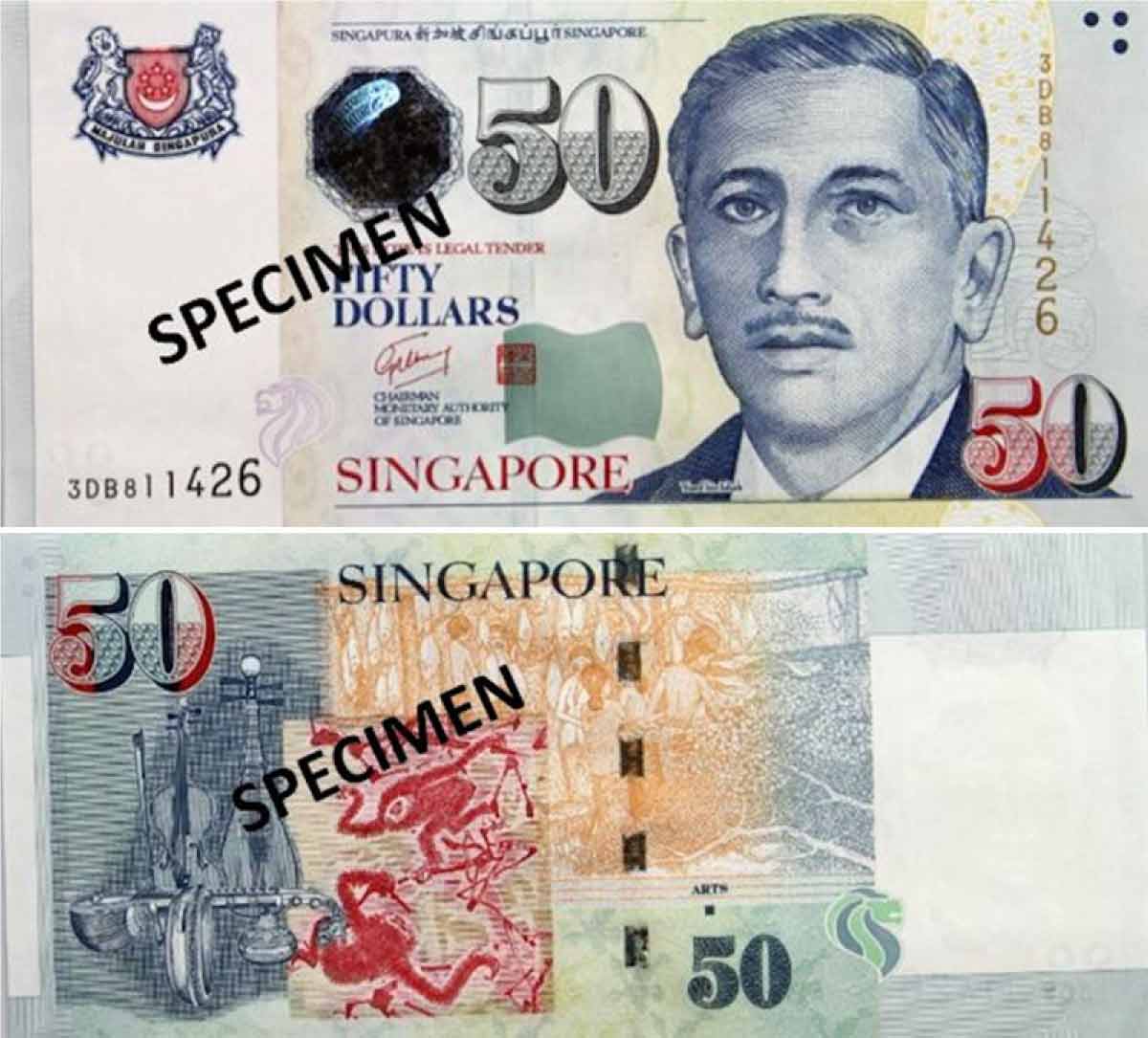
Singapore chose local artworks from the Singapore Art Museum to adorn its 50 Singapore-dollar banknote. Two Gibbons Amidst Vines by Chen Wen Hsi (1906–1991) and Drying Salted Fish (1978) by Cheong Soo Pieng (1917–1983) appear on the obverse of the note. These paintings represent the coming-of-age of the Singapore Arts scene. Both artists migrated from China to Singapore, where they created the Nanyang style. Overall, it is a combination of Southeast Asian themes, Chinese ink painting, and Western oil painting. To accompany the artworks, the note includes four instruments: The Chinese Pipa, Malay Kompang, Indian Veena, and Classical Violin. All these elements convey a message of multiculturalism.
10. Egyptian Banknote Featuring Ancient and Modern Architecture
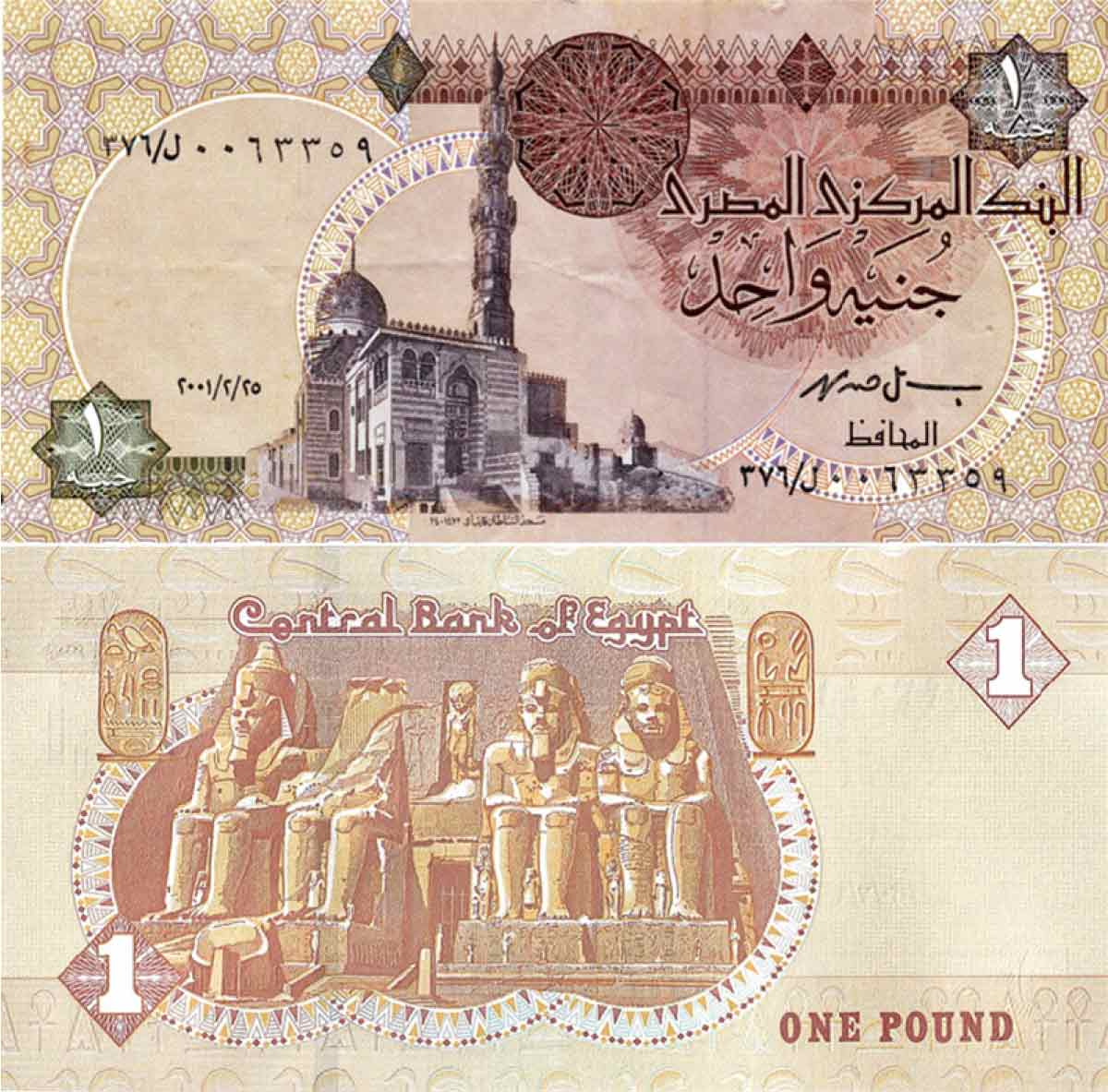
The magnanimity of ancient Egyptian architecture attracts millions of visitors every year. Wisely, the government put those marvels in their banknotes. The obverse of the one-pound banknote features the Madrasa and Mosque of Sultan Qaytbay, built in 1474 AD during the Mamluk sultanate. Meanwhile, the Great Temple of Ramesses II in Abu Simbel (ca. 1264 BC) decorates the reverse side. This way, both modern and ancient Egypt are represented in the banknote.
11. Japanese Banknote Featuring Hokusai
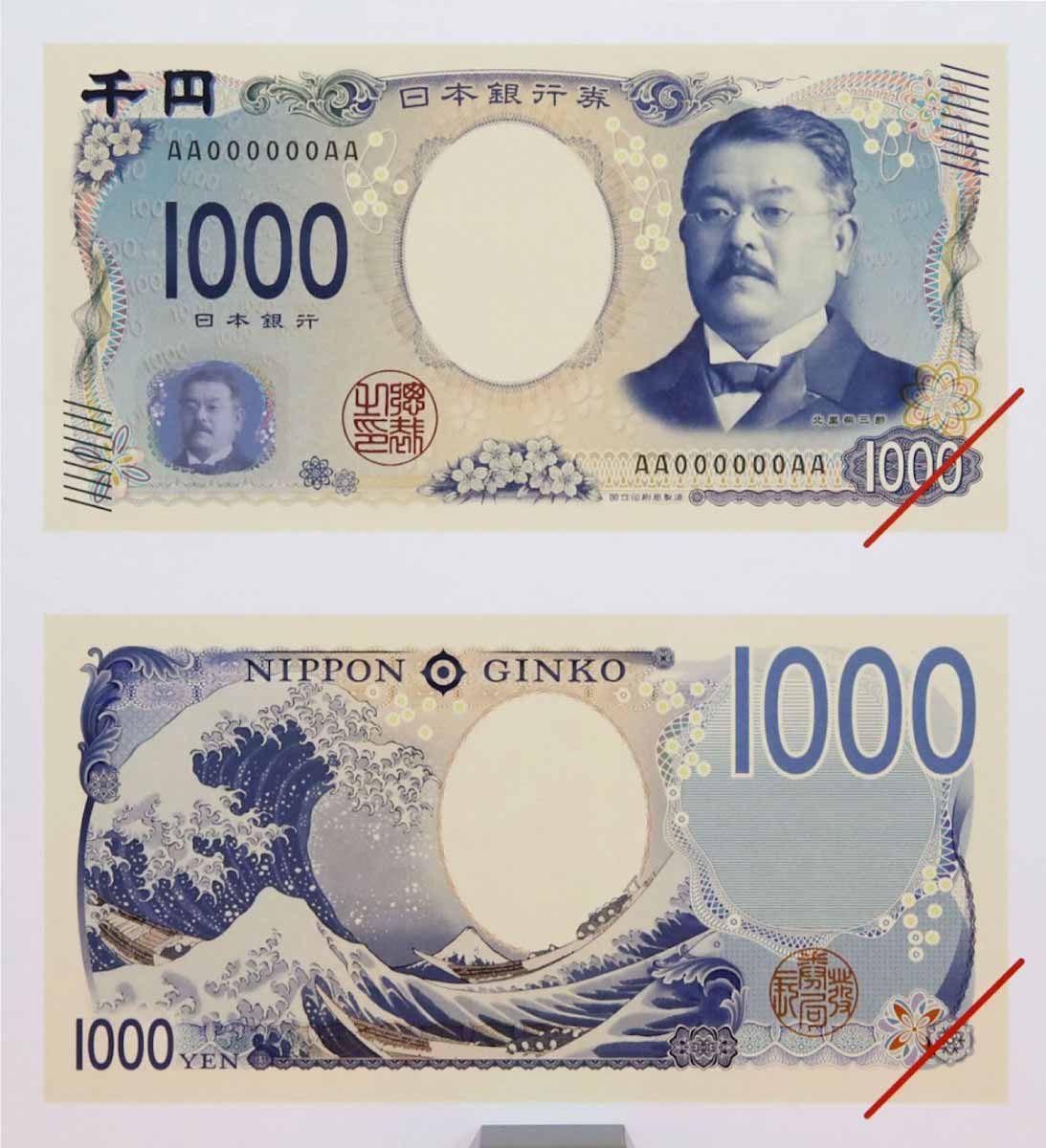
Hokusai (1760–1849) was one of the greatest woodprint artists in Japan. In 2019, the government included his most famous work, The Great Wave off Kanagawa (1830), in the 1,000-yen note. During the Meiji period, woodprints like this one became popular in Europe, inspiring dozens of artists to create a new style called Japonism. The artwork features a view of Mount Fuji, a natural icon of Japan.
12. Georgian Banknote Featuring Niko Pirosmani
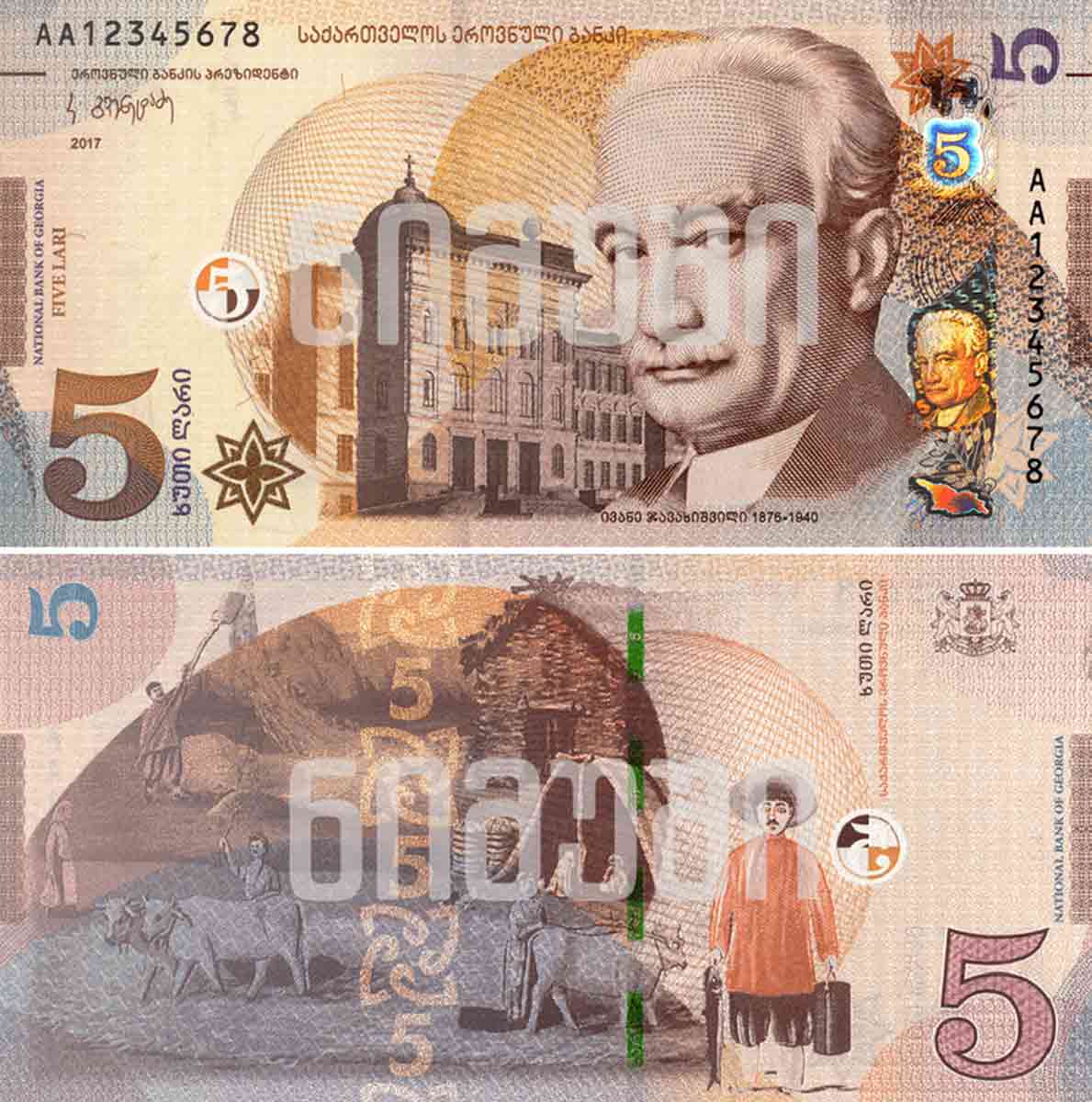
If Niko Pirosmani (1862–1918) had known that his artworks would appear on Georgia’s 5-lari banknote, he would not have believed it. He was a self-taught artist who lived and died in poverty and never enjoyed fame. However, today, according to the National Bank of Georgia, he is the greatest Georgian artist. He painted country scenes that depicted Georgian life and traditions, all while the nation suffered under Russian rule. The banknote features two of Pirosmani’s Primitivist paintings: Kalo or Threshing Floor at Dusk (1915–1916) and The Fisherman in the Red Shirt (1908).
13. Romanian Banknote Featuring Nicolae Grigorescu
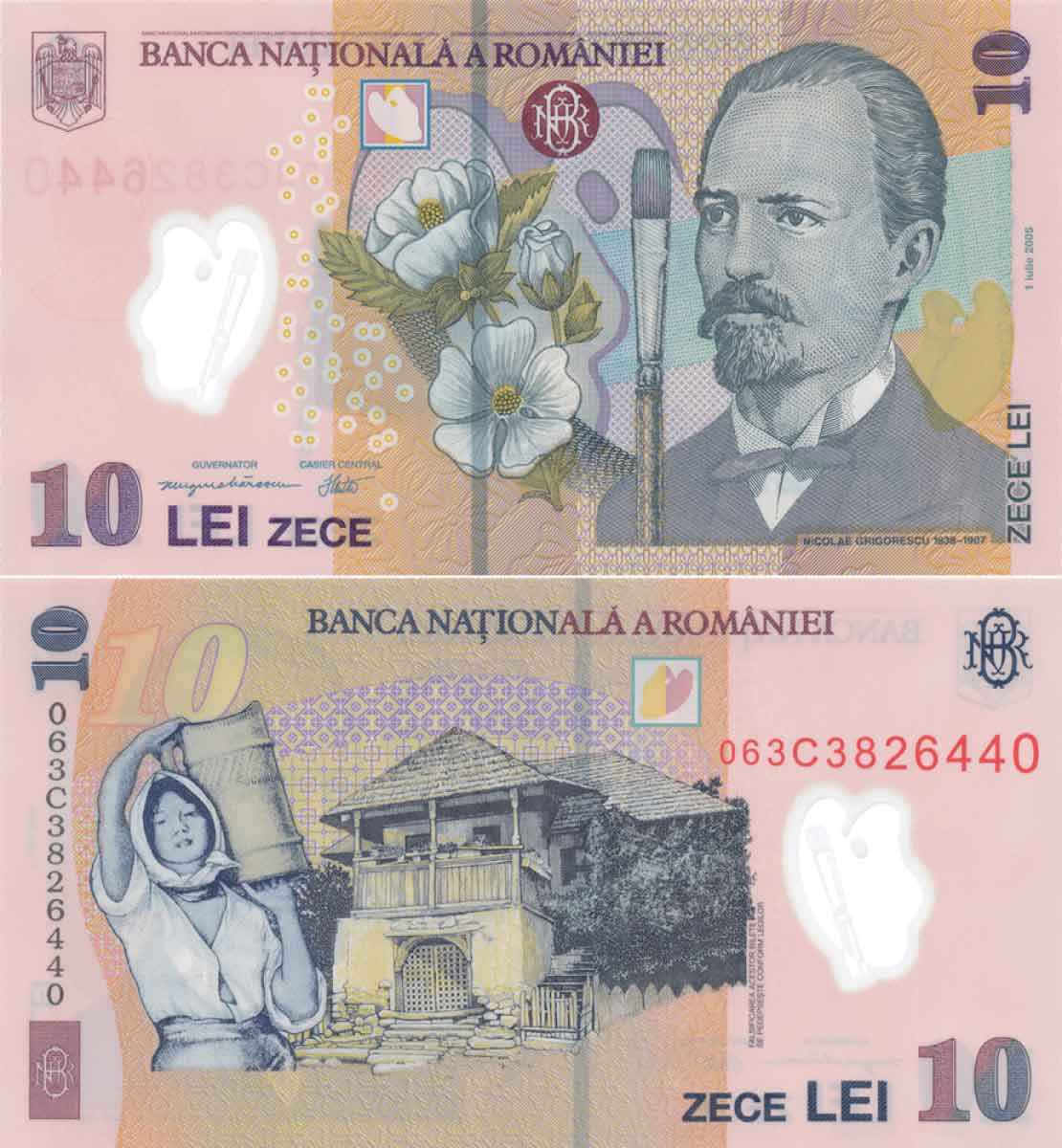
The 10-lei Romanian banknote celebrates the painter Nicolae Grigorescu (1838–1907). He is known as one of the founders of Romanian modern art. The obverse shows his portrait next to a standing paintbrush, and even the clear window has the shape of a palette and paintbrush. Moreover, on the reverse side, Grigorescu’s Rodica, the Water Carrier appears next to a traditional home from the Province of Oltenia. As many painters recognized for bringing forth their national traditions and identity, he focused on painting rural life.
14. European Architecture on Euros
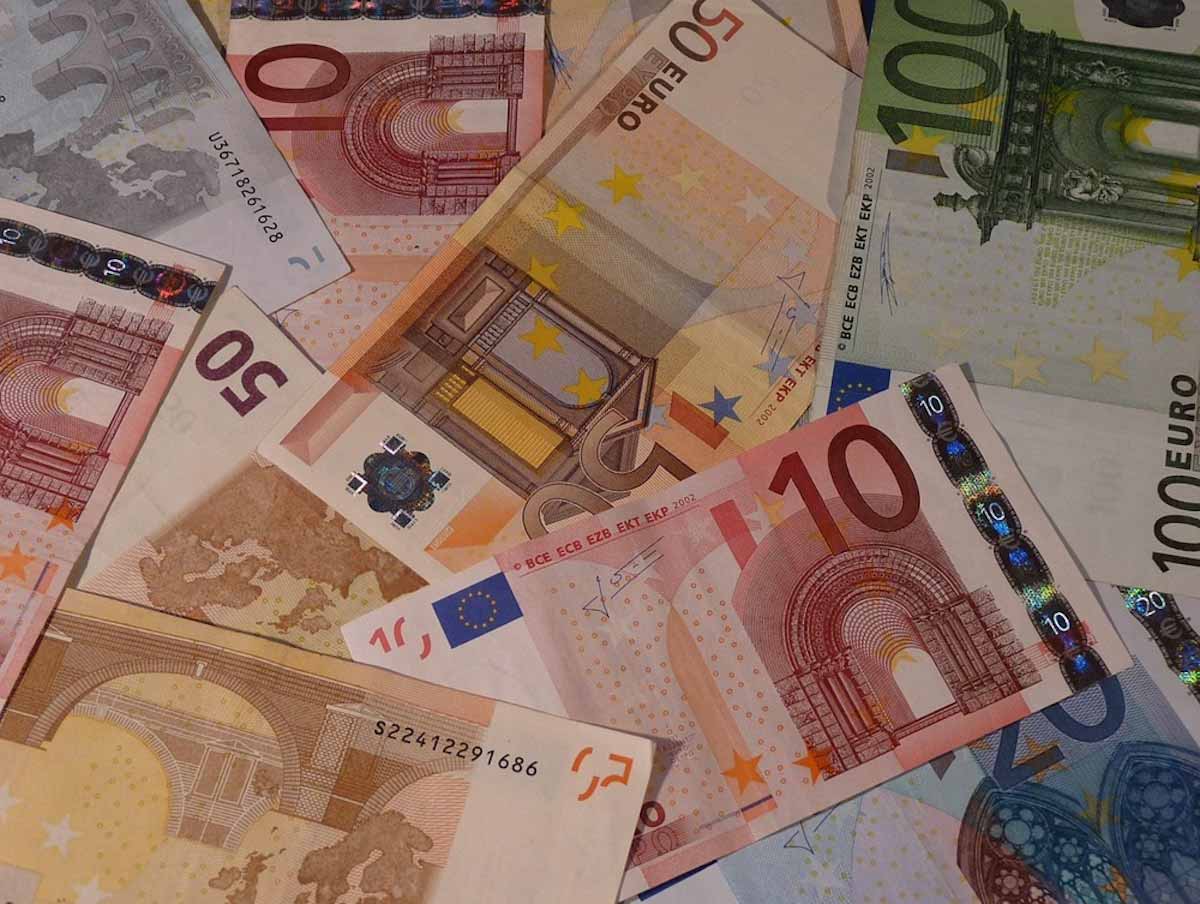
Today, 20 of the 27 countries in the European Union use the Euro as their official currency. Their banknotes illustrate the history of the European continent through their architecture. Each banknote features a historic style: the 5€ note pays homage to classical Greek and Roman cultures; the 10€ and 20€ notes go further to Medieval times with the Romanesque and Gothic styles, respectively; the 50€ note, the Renaissance; the 100€ note, the Baroque; the 200€ note, Art Nouveau; and the 500€ note finally reaches the modern era.
Famous Artists in Our Pockets

Every day, millions of banknotes all around the world pass from one hand to another. These 14 examples show how countries use them as media to promote their culture. There are many more examples of this. Perhaps you have kept some notes from your travels, or even from your own country, or you might collect old ones, because they are more than simple papers for trade. They hold part of a country’s cultural heritage.