
President Ford didn’t actually say “Drop Dead” to the city of New York in 1975, but it didn’t matter—the city was suffering, and there wasn’t going to be much help from the federal government. In the Bronx, landlords burned down their own buildings for insurance money, basic utilities and services suffered as city workers went on strike, and crime and police corruption were rampant. But none of this precluded artists from living and working in the city and ultimately creating art that showcased both the city’s heaven and hell.
1. Thomas Struth
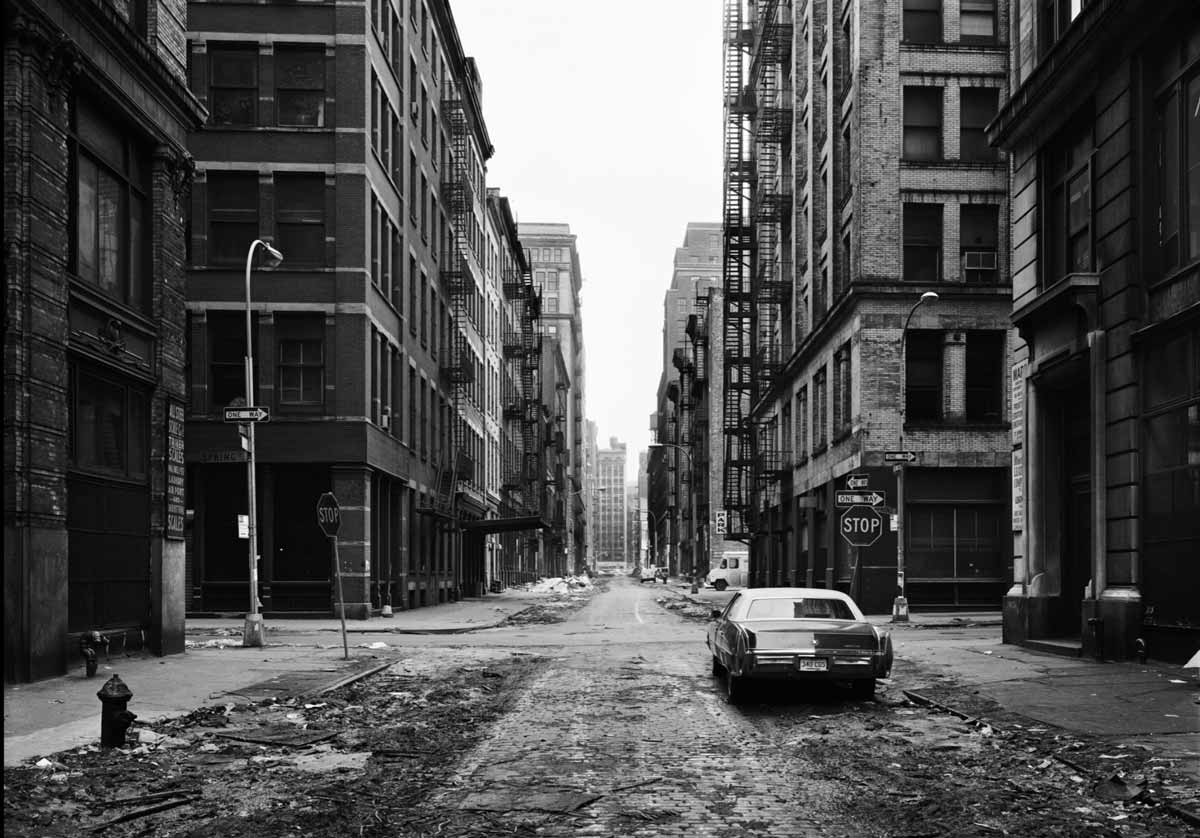
A scholarship brought Thomas Struth to New York in December 1977, and he called it “a life changing experience.” He found the city “very intimidating and scary. For the first two weeks, I could hardly speak, I was so shocked by it.” With money from his parents to purchase equipment, he set out with his 5×7 camera to “photograph the streets, and hope that they might reveal their nature.” Ruefully, on the first day, he was “immediately attacked by homeless, drunk guys.” He also recalled: “I had no money for taxis, so I carried everything by foot and on the subway.”
Traveling the length and width of the island, Struth captured street scenes from the Financial District to Harlem, Chelsea to the United Nations Plaza. The images were shot in the early morning to avoid sharp contrasts between shadow and light, infusing them with a documentary, dispassionate quality. Crosby Street, SoHo, New York is one of the most iconic in the series, its depiction of dereliction striking to contemporary viewers used to the area’s luxury boutiques and expensive restaurants.
2. David Wojnarowicz
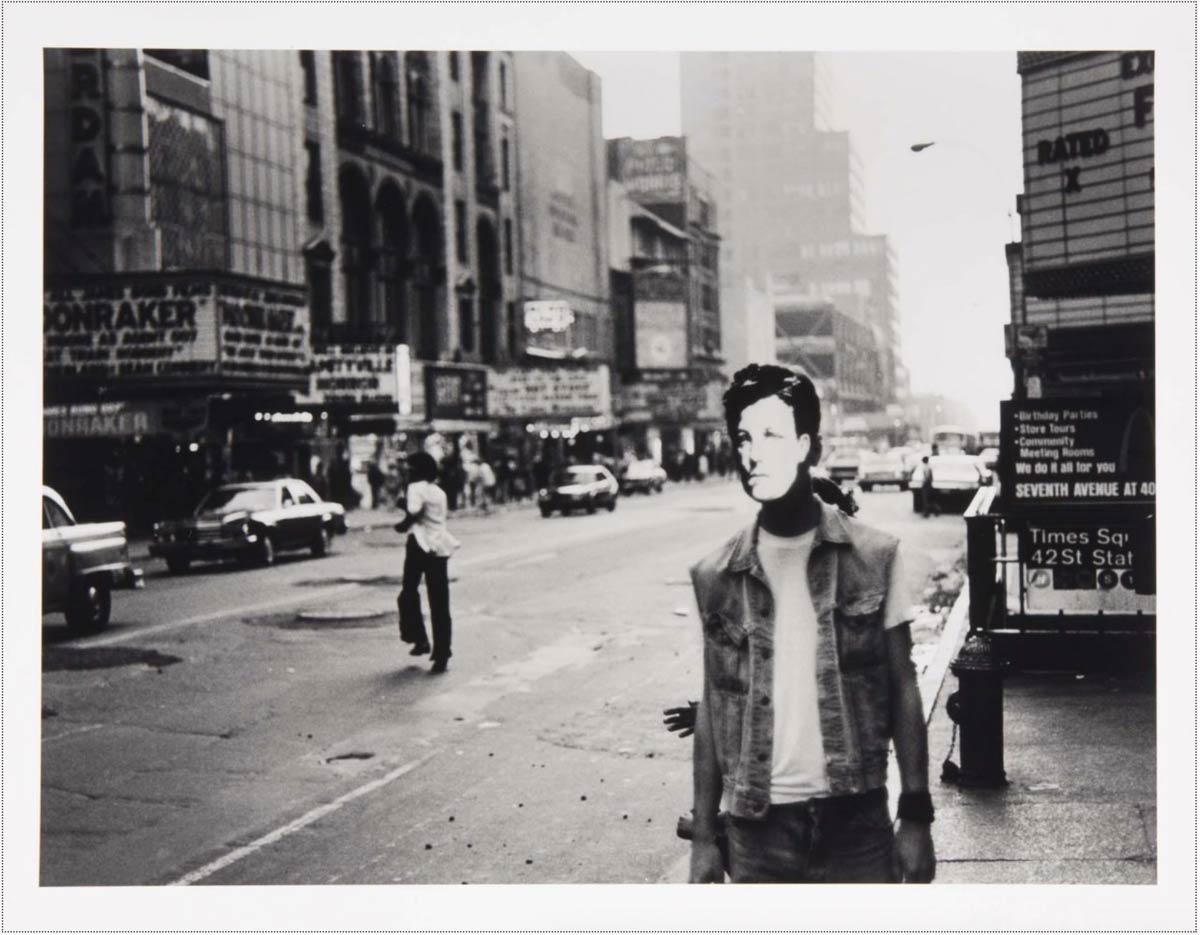
David Wojnarowicz was drawn to the Symbolist poet Arthur Rimbaud, seeing himself in the poet’s impassioned pursuit of an art that infused all aspects of one’s life. Other similarities are even more striking: both men were openly gay, experienced periods of impoverishment and vagrancy, were enfants terribles of their respective scenes of New York and Paris, and died tragically at the same age of 37.
Wojnarowciz turned his interest into art. The series Rimbaud in New York, first printed in Soho Weekly News in 1980, encompasses several hundred photographs. In each, a slender male figure (Wojnarowicz called on several friends to model for him while he remained behind his borrowed camera) with a paper mask of Rimbaud affixed to his head appears in both public and private spaces of the city. The images are liberating in their presentation of queerness, but the city life they depict is also often lonely or discomfiting.
Rimbaud shoots up, has sex, holds a gun to his head, haunts the gay cruising grounds of the West Side Piers, and stands in dark shadows, isolated and always wearing the same inscrutable expression. In the piece above, Rimbaud is in Times Square. In the 1970s and 1980s, the area was far from the Disneyfied playground for tourists and theatergoers that it is today. It was sordid and sketchy, filled with porn theaters, peep shows, video stores, and grungy diners. Rolling Stone called 42nd Street “the sleaziest block in America” in 1981, but for Wojnarowicz and other artists, it was a site of constant aesthetic fascination.
3. Camilo Jose Vergara
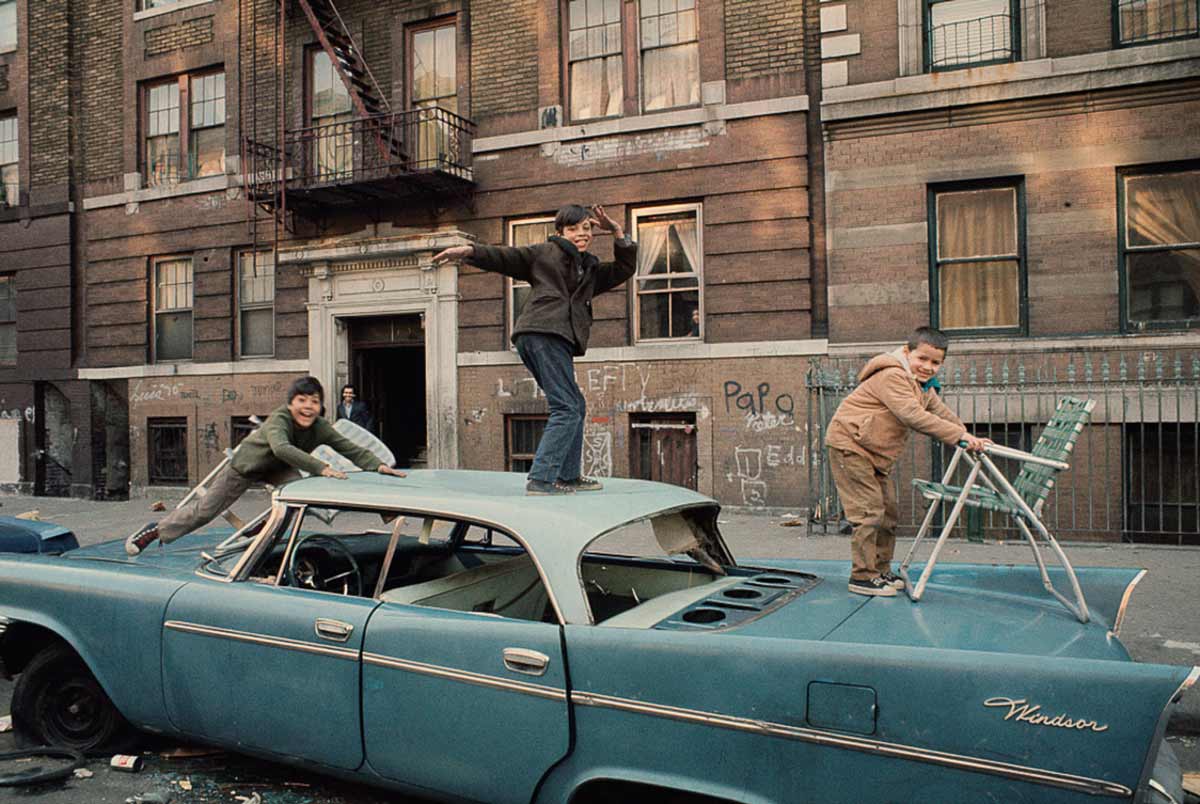
Camilo Jose Vergara Vergara arrived in New York from Chile at the beginning of the decade, enrolling in a sociology program at Columbia University in 1970. When he moved to New York, he gravitated toward Harlem, the South Bronx, and the Lower East Side, where he began taking photos that would eventually form the Old New York (1970-1973) series of which Duane Street is a part.
Vergara is perhaps best known for his Tracking Time series, in which he revisits the same places in a city—storefronts, residences, libraries, train stations—over the years, chronicling their evolution or erosion. He says: “I’m really interested in issues, what replaces what, what’s the thrust of things. Photographers don’t usually get at that—they want to show you one frozen image that you find amazing. For me, the more pictures the better.”
The Old New York series includes images of children playing, burnt-out cars and piles of debris, movie theaters and bodegas, painted brick walls, political posters, chatting neighbors, and vestiges of the built environment and modes of living that were quickly vanishing (in one photograph, a man is driving a horse and cart, seemingly his primary mode of conveyance. In another, the two World Trade Center towers are in the process of being built, looming over the older portions of the neighborhood). The series gives the viewers a look at a city undergoing a profound transformation, whether from the wrecking ball, patterns of immigration, city policies, or cultural shifts.
4. Tseng Kwong Chi
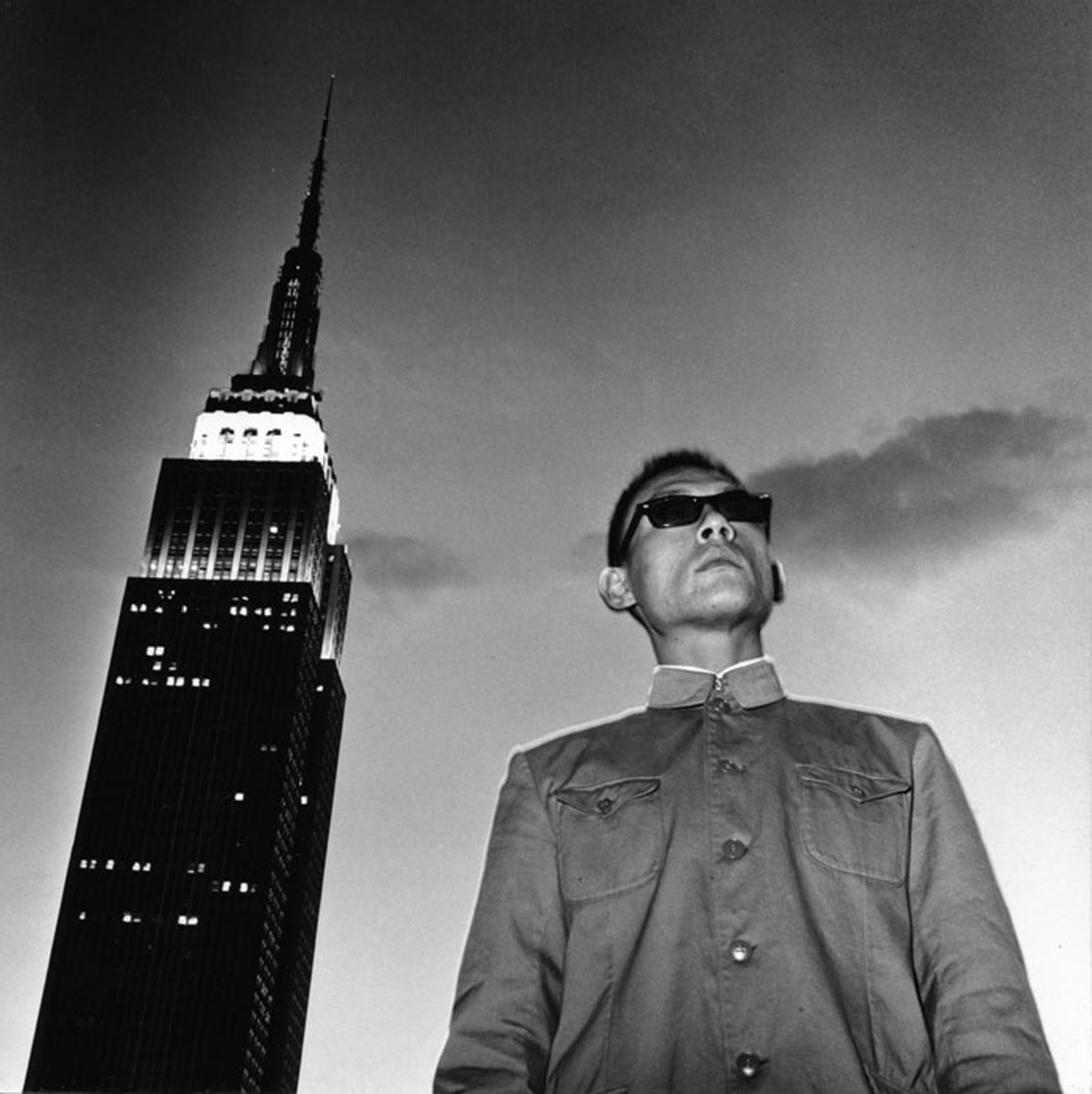
Tseng Kwong Chi was born in Hong Kong in 1950 and immigrated with his parents and sister to Vancouver, Canada. As a young man, he studied in Paris at the Academie Julian and eventually made his way to New York in 1978, settling in among the downtown art scene. In the city, Chi formed relationships with luminaries such as Andy Warhol, Jean-Michel Basquiat, and Julian Schnabel. He also became Keith Haring’s official photo-chronicler. Like too many other gay men in New York in the 1980s, Chi died young from complications due to AIDS.
Chi’s East Meets West series features the artist in black-and-white standing before iconic tourist sites such as Disneyland, the London Bridge, and the Grand Canyon. In New York, he posed before the Statue of Liberty, the World Trade Center towers, the Empire State Building, and the Brooklyn Bridge, all while wearing dark sunglasses and a classic Mao suit.
Even though he lived in the “grungy” part of New York, his photos showed the more glamorous places that still drew tourists (despite a 1975 NYPD-issued pamphlet entitled Welcome to Fear City: A Survival Guide for Visitors to New York). He genuinely celebrated the city’s famous historical, architectural, and cultural sites while offering a subtly humorous commentary on the relationship between insider/outsider.
5. Christy Rupp
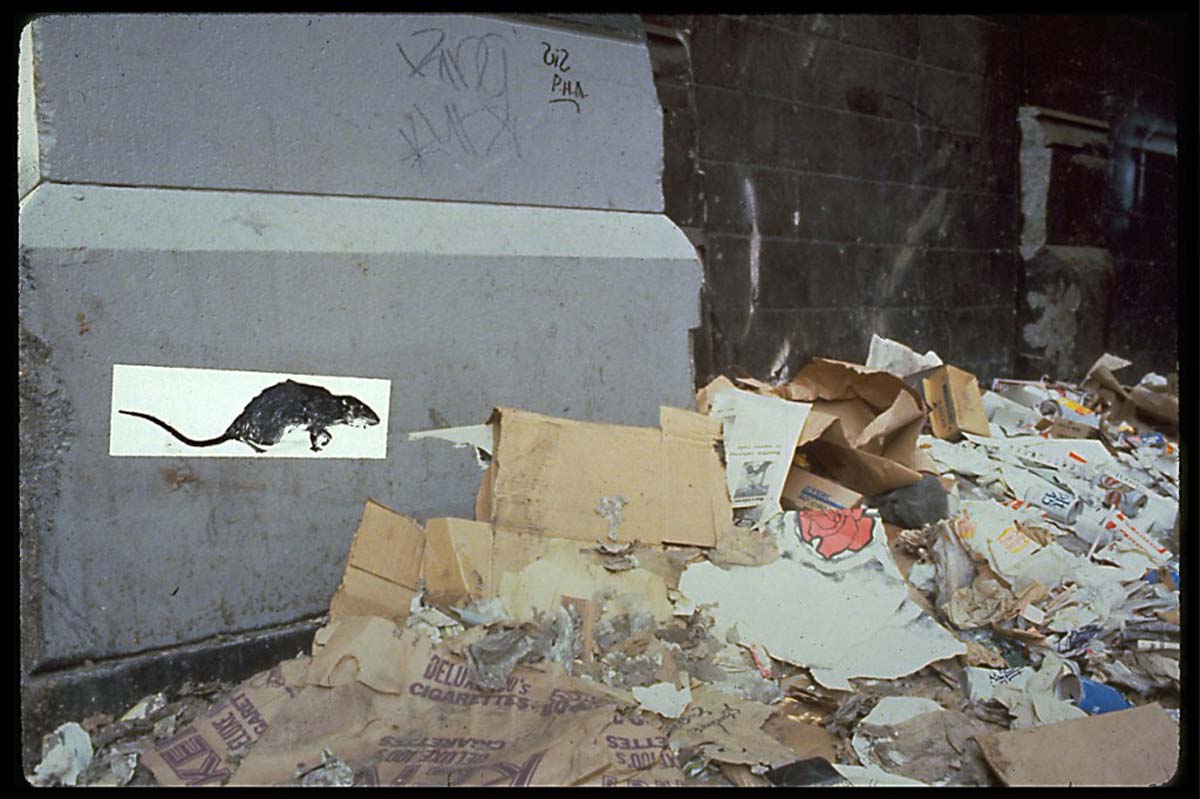
In the summer of 1979, it seemed like rats ran the city of New York. A three-week strike by tugboat operators and another by apartment maintenance workers meant the streets were filled with rotting mountains of garbage. Over 130 buildings were declared menaces to public health, and the Board of Health Director warned of “a perilous increase in rodent and insect infestation.” Reports of higher rates of rat bites filled news reports. A woman was reportedly attacked by rats in downtown Manhattan one night, only escaping from the swarm by jumping into her car.
Christy Rupp, a young “eco-artist,” as she labeled herself, had officially settled in the city in the summer of 1977. During the sanitation strike, she was living on Fulton Street and saw firsthand how the conditions made by humans emboldened the rats to defend what they saw as their space.
In Rat Patrol, Rupp took one of the ubiquitous posters from a subway car sanitation ad, which featured a lifesize photo of a rat, disturbing facts about its behavior, and a concluding warning in bold that exhorted the viewer to “Starve a Rat Today” by being careful with their garbage. Rupp had the rat photo offset-printed and began, as she recalled, “pasting these up as a way to mark areas that were infested, so people could avoid walking through dangerous areas in which rats were defending their territories.” She did not want to “defend rats…[but] point out how we had created a habitat for them, and they would naturally occupy it.”
6. Fab Five Freddy
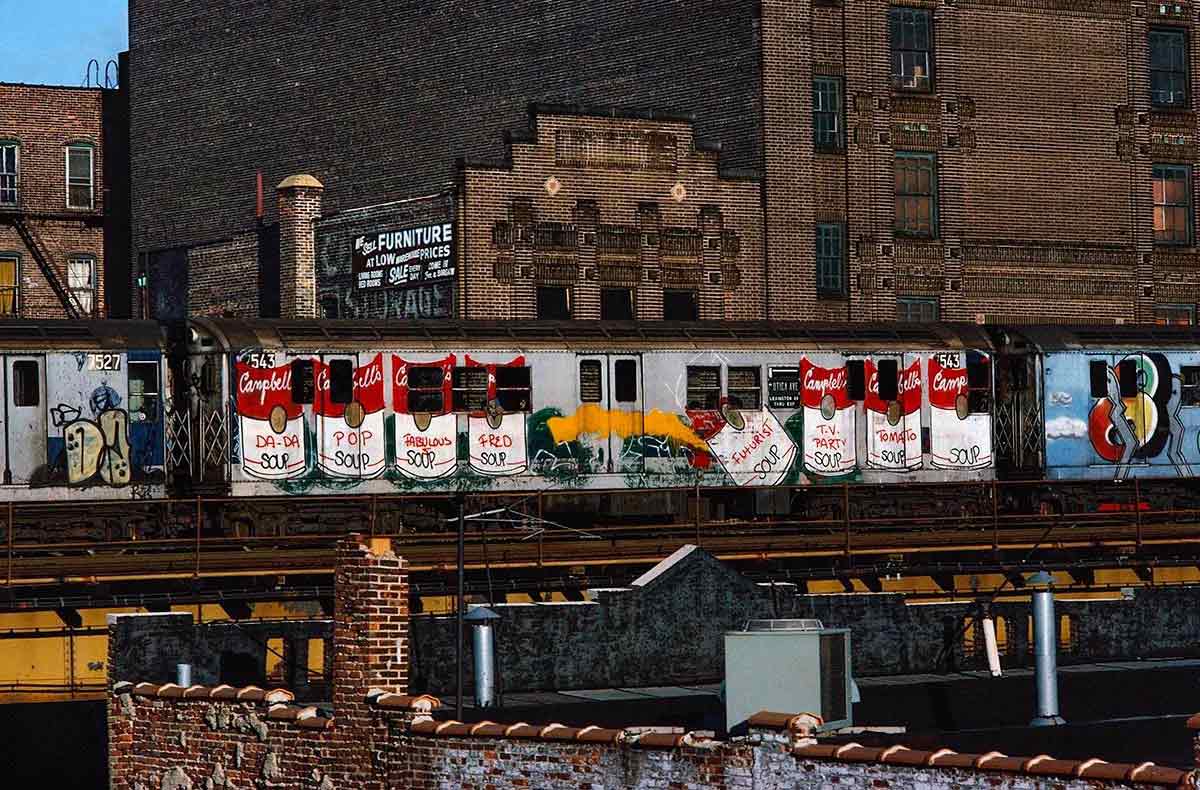
Fab Five Freddy, born Fred Braithwaite in the Bedford-Stuyvesant neighborhood of Brooklyn, was one of the most revered street artists of the 1970s and 1980s, decorating walls and subway cars with his signature style. He became deeply interested in art in college, particularly admiring the Pop artists, many of whom he would soon become friends with. He said of Andy Warhol and Jean-Michel Basquiat in 1991: “Andy was the biggest influence on me. I hung around with him as much as I could. For me and Jean-Michel [Basquiat], coming from where we were coming from, being young black males in this happening downtown scene, we were just operating on another planet, and Andy was it.”
Freddy’s most famous work is arguably the Campbell’s Soup train, which debuted in early 1980 and ran for several years. A collaboration with friend and fellow graffiti artist Lee Quinones, the train features eight soup cans, some referencing past art movements such as Dada and Pop Art, with others featuring versions of Freddy’s name. Lee and Freddy, along with a few friends helping spray, worked quickly in the night, racing against the dripping of the paint in the cold air, the fumes in the tunnel, and the ever-present threat of the train moving or the police finding them. Painting a subway car was a surefire way to get your work noticed. It was also a way to show that art did not need to be on a canvas to be art. It could be embedded in the fabric of the city itself.
7. Peter Hujar
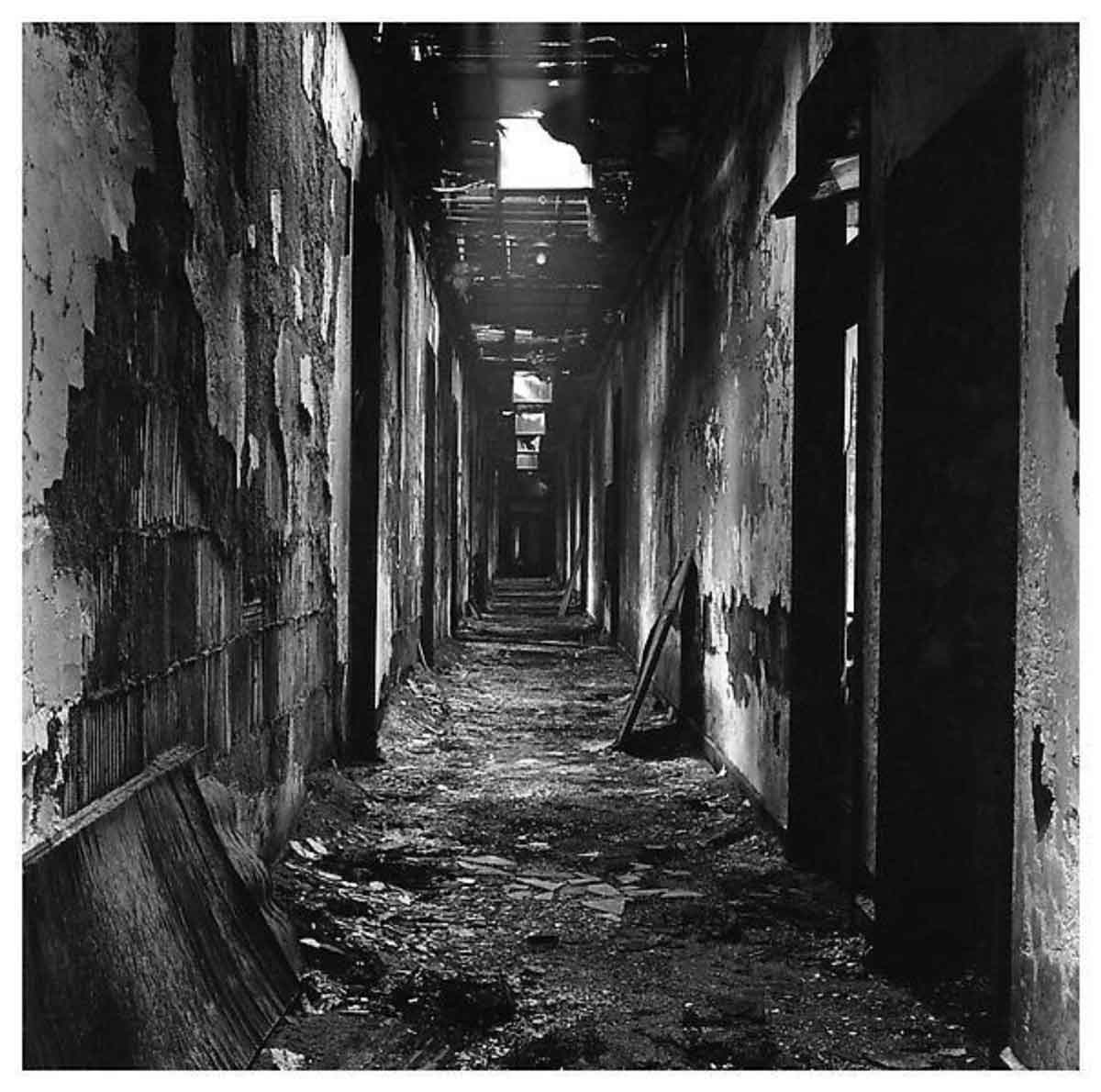
By the 1970s, the West Side piers were crumbling, derelict, and dangerous. The diminishing of commercial shipping after WWII left them unused and prone to rot and decay. The collapse of a portion of the West Side Highway in 1973 further sealed them off from the rest of the city. But these modern ruins did not stay abandoned for long, as they attracted young people, many of them unhoused, as well as artists and gay men.
There, under the sun with the waters of the Hudson below them, men could sunbathe and carouse. In the dark, dank halls and holes of the pier edifices, they could cruise, fornicate, and watch. Art historian Douglas Crimp, who visited the piers in their heyday, remembered that “the abandoned and dilapidated industrial piers presented extraordinary opportunities for experimentation and mischief.”
It was a utopia of sorts in a period before AIDS, a site of sexual and personal liberation. David Wojnarowciz said of them: “What I loved about [the piers] was that they were about as far away from civilization as I could walk, and I really loved that sense of detachment. It was like sitting with the entire city at your back and looking across the river.” However, the piers were also dangerous, with criminals preying on people otherwise occupied and “gay bashers” spoiling for a fight—and, of course, the piers themselves were in many cases literally crumbling into the water.
Peter Hujar captured both the human visitors and the atrophying structures they frequented, finding a sordid beauty even amid the ruins. In Hallway, Canal Street Pier from 1983, the walls and roof peel away, and the floor is covered with debris, but the hallway and the doorways beckon with the promise of privacy. The light streaming from the open roof has an almost spiritual tone. Hujar’s photos are of a place that would not last much longer. Even beyond the obvious decay captured in the images, it is clear that this isolated, utopian space was not fated for forever.
8. Perla de Leon
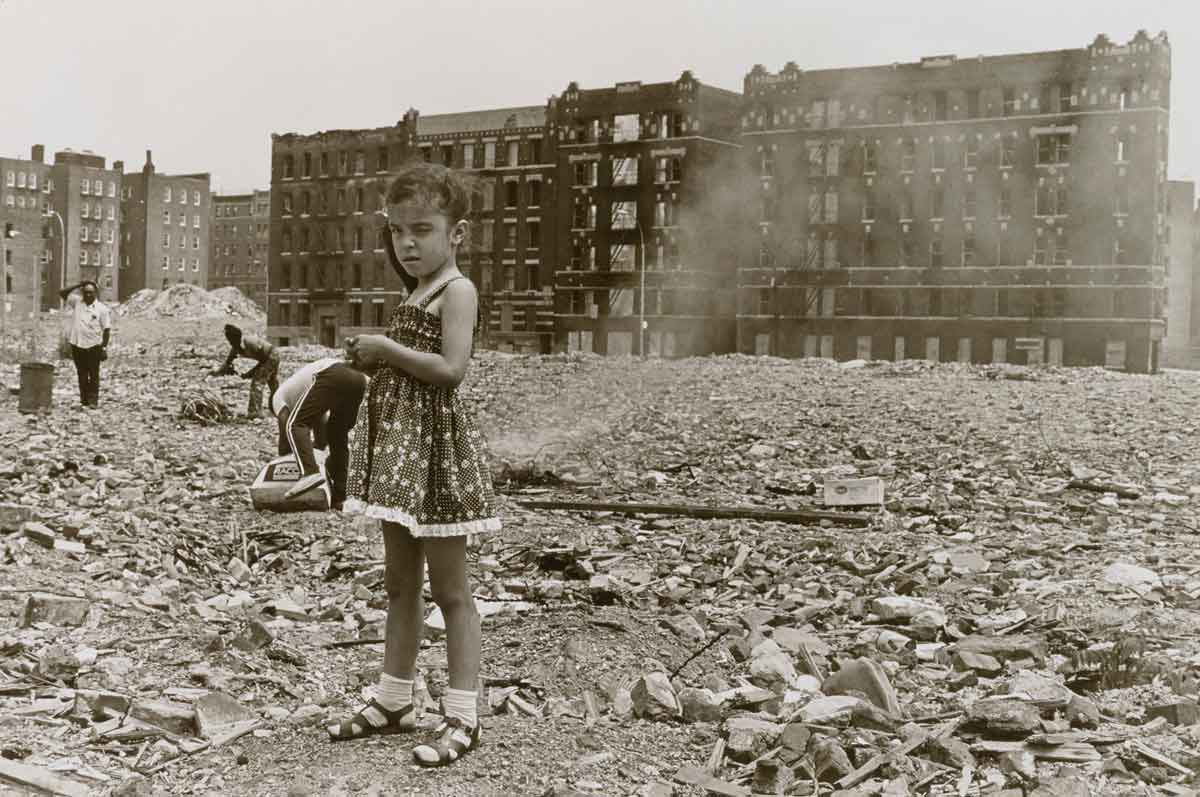
While many parts of the city were suffering in the 1970s, the Bronx was a special case. Block after block, the borough was filled with crumbling and burned-out buildings, piles of debris, abandoned cars, and boarded-up windows. Whereas popular narratives of the time blamed its blight on the working-class, mostly Black and Brown, residents, it was the city’s “urban renewal” policies and greedy landlords who were responsible for the destruction.
The South Bronx was slated as an “Enterprise Zone,” meaning the city encouraged factories to move in and said they would give their owners tax incentives to do so. Normally, the destruction of buildings would be accomplished with wrecking balls and demo crews, but the city looked the other way as landlord-arsonists did the work instead. The Bronx was burning, as the common refrain went.
However, De Leon’s 1979-1980 photographic project of the Bronx, South Bronx Spirit, was not about the burning. She had grown up in Hamilton Heights, Harlem, and was drawn to the South Bronx while working with a grammar school as part of a grant program (she taught children pin-hole photography with shoe boxes since there was no equipment at the school). With her own camera, she captured the people who lived in the neighborhood, showing how the fires were not the defining feature of their existence.
9. Alvin Baltrop
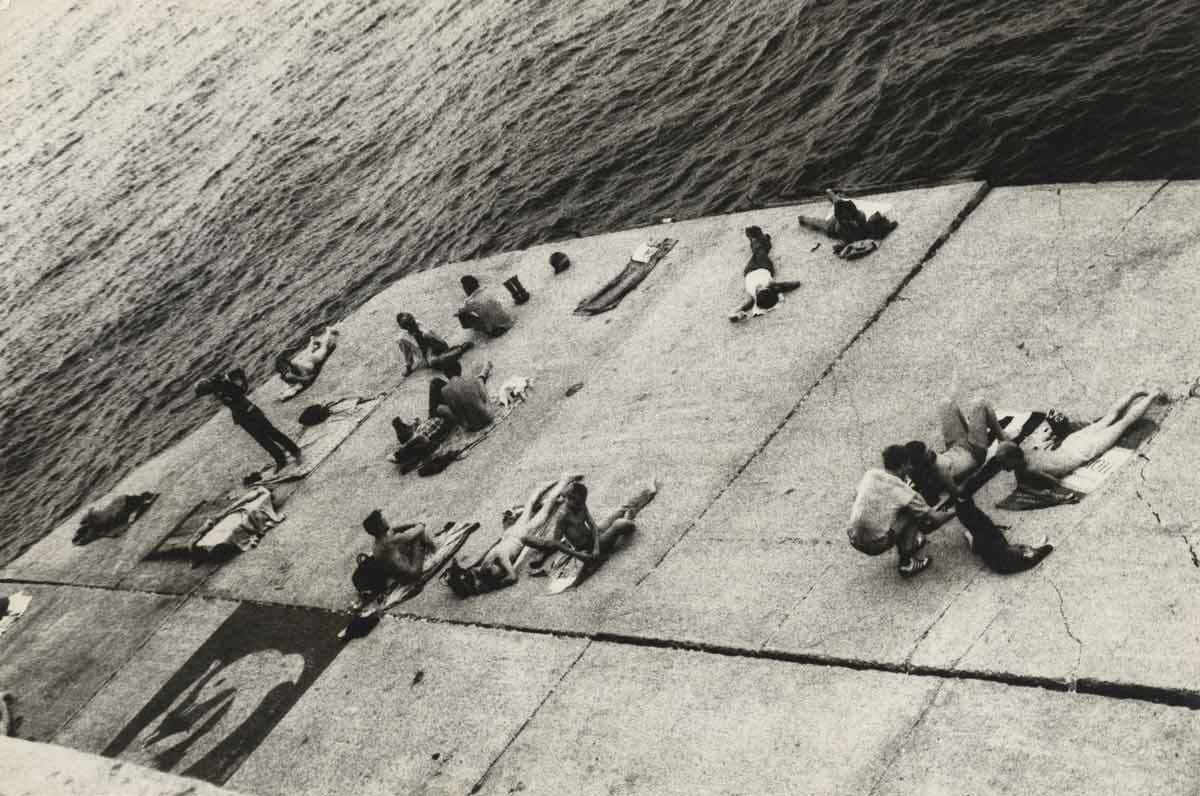
Like Peter Hujar, Alvin Baltrop was a frequent perambulator of the piers. He had taken up photography as a young man. After a stint in the Navy during the Vietnam War, he made his way back to New York, where he had been born in 1948. As a queer man himself, the piers beckoned with their seemingly unfettered freedom. He purchased a moving truck and used it as a mobile developing lab and a place to live while photographing Pier 52.
His thousands of images captured the place’s allure as well as the pitfalls of this ruin on the outskirts of civilization—languid sunbathers in front of Gordon Matta-Clark’s Days End, a work of art that consisted of large cuts into the walls and ceilings of the pier; police standing over a dead body that had been fished out of the water; naked men embracing, posing, sleeping, and cruising; the piers themselves, rotting, crumbling, sinking into the river.
Baltrop did not attain the same sort of recognition as other chroniclers of the pier, his images often being seen as too inclined to the lewd or tawdry. It was not until after his death that his body of work emerged as a powerful and empathetic chronicle of gay life before AIDS decimated the community and of city spaces before they were cleaned up and homogenized.
Sergio Bessa of the Brooklyn Museum sees Baltrop’s work as “diaristic,” but “maybe unbeknownst to him, there was an idea of an archive, of documentation. I don’t know if at the time he was aware of that, but now you look back and you have this unbelievable archive of those piers.” Baltrop himself commented: “Although initially terrified of the piers, I began to take these photos as a voyeur [and] soon grew determined to preserve the frightening, mad, unbelievable, violent, and beautiful things that were going on at that time.”
10. Hiram Maristany
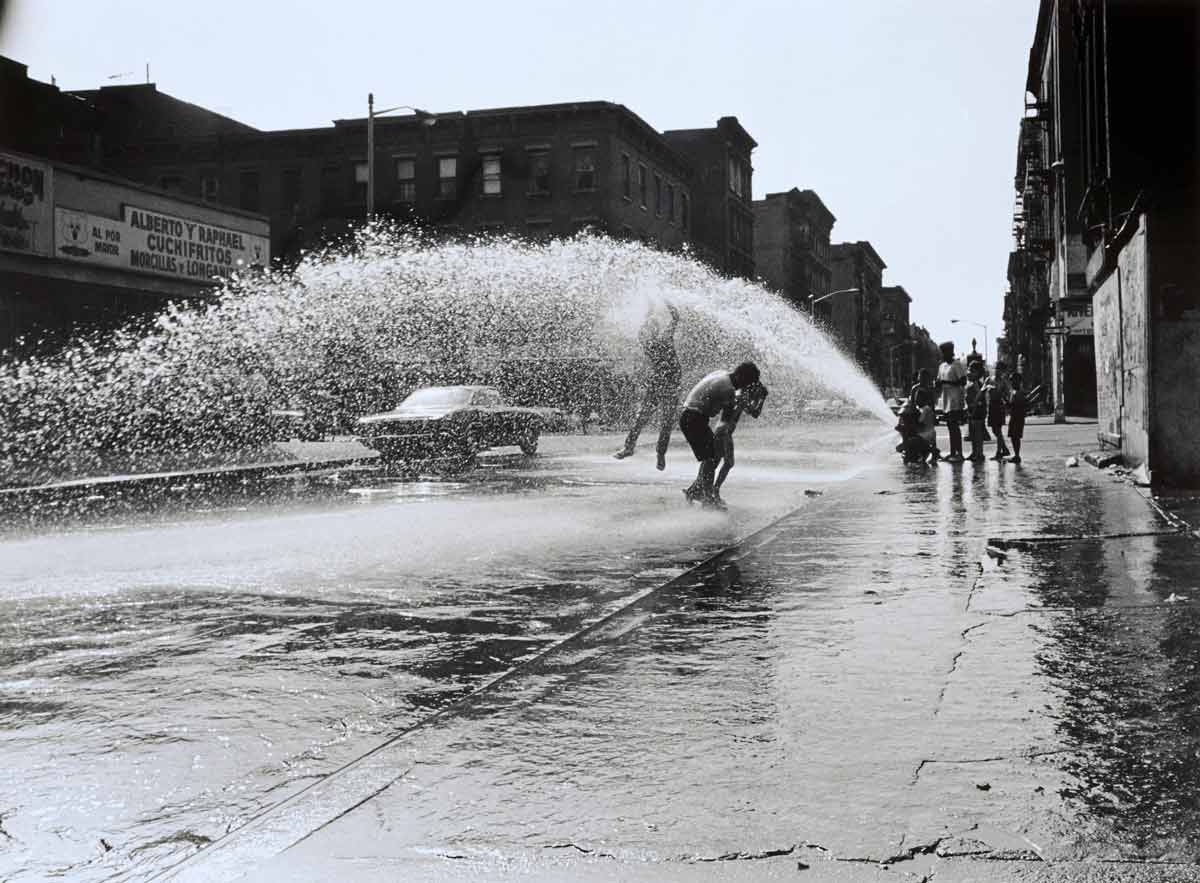
Hiram Maristany was born and raised in New York to parents who had migrated to the city from Puerto Rico. His beloved neighborhood was East Harlem, or El Barrio, and it was there as a young man that he met like-minded young activists and became part of the Young Lords Party. He remained an integral part of the Nuyorican (Puerto Ricans living in New York) political and cultural movement in the 1970s, lending his photography skills to chronicle the Garbage Offensive and the occupation of the First Spanish United Methodist Church. A founding member and eventually the director of El Museo del Barrio, Maristany was deeply committed to using his camera and his curatorial and community-organizing skills to celebrate the arts of his people.
His photographs are documentary in nature, capturing the everyday realities of life in El Barrio. The neighborhood was a poor one, and the images of it that tended to circulate in the media were often voyeuristic and one-dimensional. While Maristany wanted to show the difficulties of the neighborhood, he also wanted to show the real people who lived, played, and worked there.