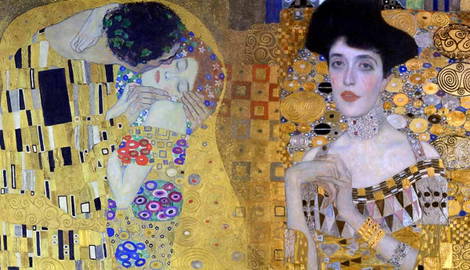

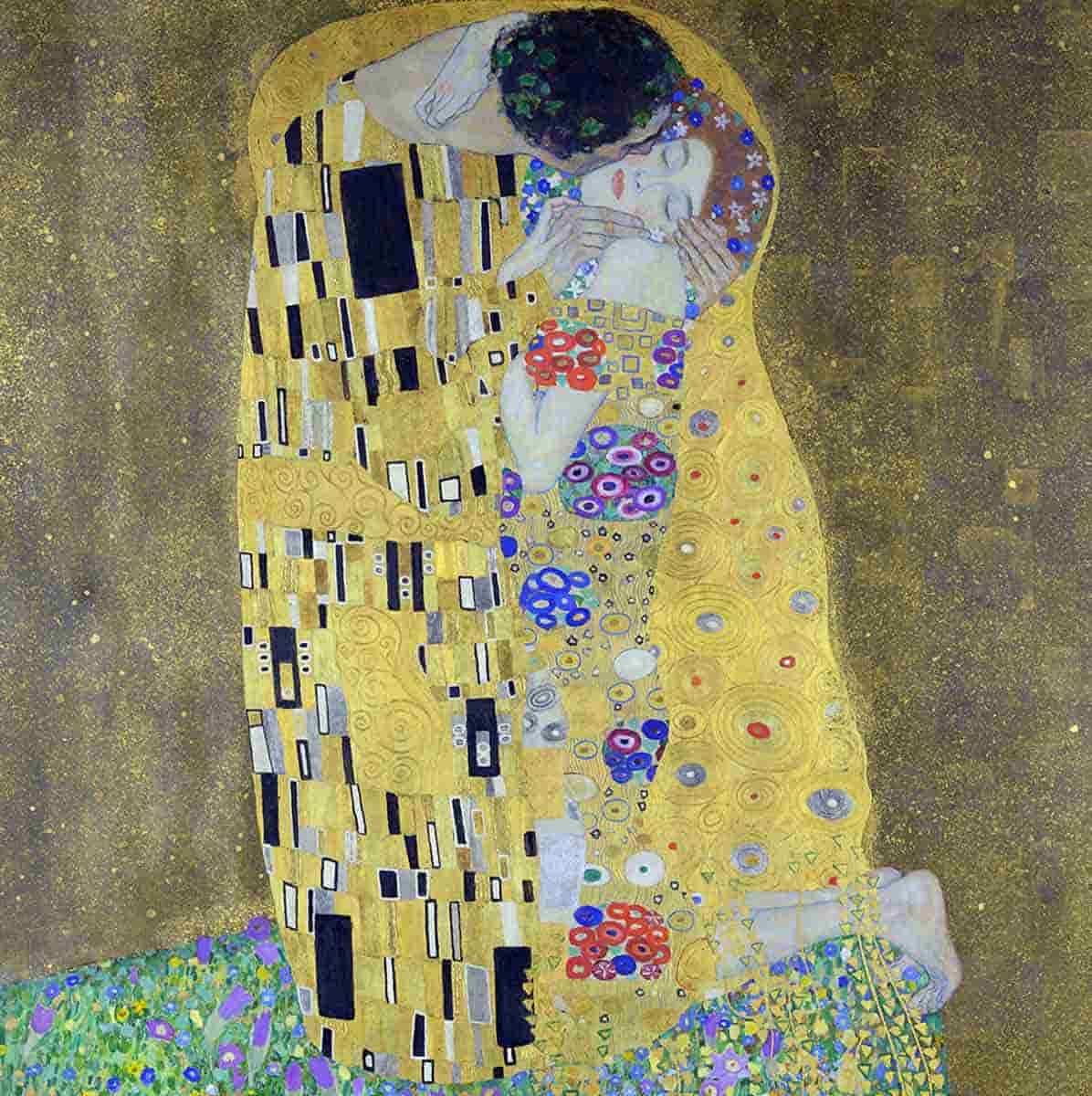
Gustav Klimt was an Austrian painter who was one of the figureheads of the Vienna Secession. The artist is recognized today for his most famous works, such as The Kiss, which was painted in 1907-08 and is currently displayed in the Belvedere Palace in Vienna. A significant feature of Klimt’s works was the abundance of female figures portrayed, be it drawings of nudes or intricately finished oil paintings. In fact, women were often the primary subjects both in his paintings and drawings. Klimt painted women in depictions of religious and mythological narratives as well as in portraits, often with extensive ornamentation.
Gustav Klimt: The Painter of Women
In Gustav Klimt’s oeuvre, women appear in many forms—from erotic creatures to elite society ladies. Many of these compositions depict partially or fully nude women, as has been the tradition in Western art for centuries, but Klimt broke several conventions in terms of style and subject matter when depicting nude women. These works were made after a number of models who Klimt hired for his studio, who were paid a higher fee for their service than the usual rate. At the same time, the artist was known to have had intimate relationships with some of his models. The artist never married but was claimed to have fathered fourteen children.
The early 20th century was also a time when women’s role in society was changing. Women moved outside the domestic space and became more active in educational and professional spaces. In fact, many of Klimt’s models were professionals and relied on modeling to earn a living. At the same time, the rising popularity of the suffrage movement gave women space in the public and political spheres, which would not have gone unnoticed by artists like Klimt. His portrayal of women was thus influenced by this context wherein society was in a transitional state, holding on to old values while trying to embrace the new.
Women as Ornament: Klimt’s Golden Phase
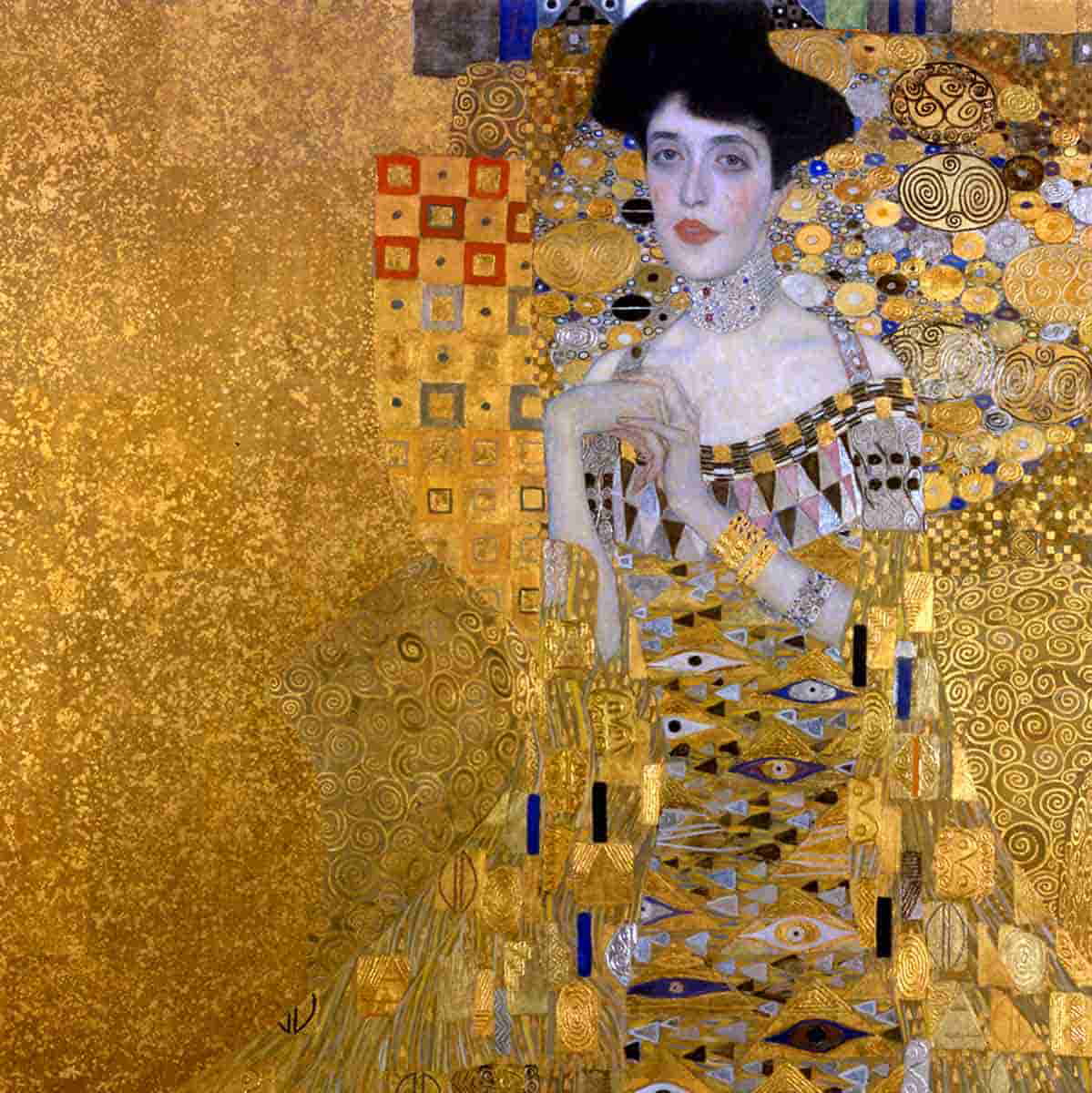
Painting women with extravagant ornamentation was a common practice in fin-de-siècle Vienna. This style of painting was centered around decorative elements, as can be seen in Klimt’s employment of abstract patterns and designs. Being the son of a gold engraver, Klimt became renowned for his use of gold in paintings between 1901-1909, which is recognized as his Golden Phase. It became an important material for creating decorative paintings, and women in his works seemed gilded and glorious. It can be said that Klimt saw the female form as equivalent to decoration—he mostly painted decorative works, and his subjects were almost exclusively women. This has also led to arguments by feminist scholars that Klimt reduced the identity of the women he portrayed to their aesthetic value, particularly with certain works such as the Portrait of Adele Bloch Bauer I painted in 1907.
Adele Bloch-Bauer was the wife of one of Klimt’s patrons, Ferdinand Bloch-Bauer, who commissioned Klimt to paint this portrait in 1903. The artist was at the peak of his Golden Style, which becomes clear as soon as one looks at the painting. Adele sits or stands in the center of the frame, surrounded by gold, with only her arms, shoulders, and head visible. Her skin is pale, but she has rosy cheeks. She is wearing a floor-length dress that is entirely golden, merging into the gold background. The golden background is punctuated with a variety of patterns in black, white, blue, and red. Due to the overwhelming use of gold in the painting, this portrait is often referred to as The Woman in Gold. It has also been suggested that Klimt had an intimate relationship with Adele Bloch-Bauer, though there is no clear evidence.
Mythological Women
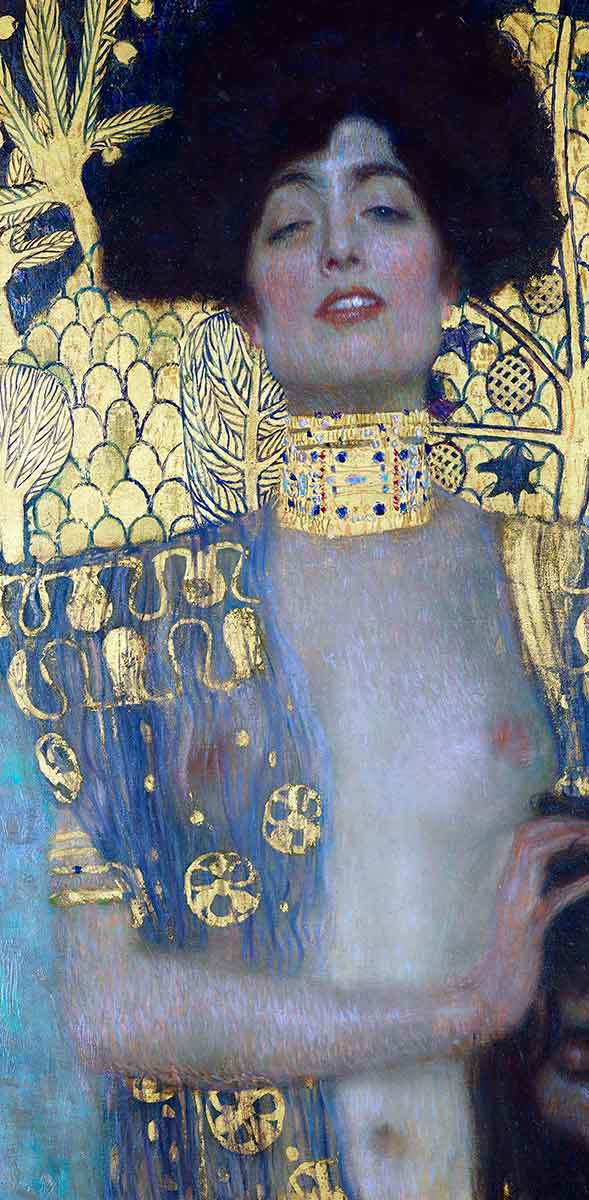
Apart from commissioned portraits, Klimt also painted women from mythological stories. However, this artist’s representation of traditional mythical themes had a modernist twist, such as in the paintings Judith I, Pallas Athene, and Water Serpents. Displayed in 1901 at the 10th Secessionist Exhibition, Judith I (or Judith and the Head of Holofernes) is meant to represent the story of Judith, a Biblical figure who seduced and beheaded Holofernes, a general who was sent to attack her hometown. She has been famously depicted in the act of beheading or holding the head of Holofernes in her hands by Renaissance painters such as Caravaggio and Artemisia Gentileschi.
Klimt painted the same theme but with Judith at the center and the head of Holofernes in her left hand, cut off from the frame. Klimt’s portrayal of Judith focuses on her sexuality with her chest exposed, lips parted seductively, sleepy eyes, and her body decorated with gold. Despite being portrayed erotically, Judith appears fearsome and powerful, taking charge of her own sexuality and using it as a weapon. She embodies the femme fatale, combining sexuality and violence and implementing her agency.
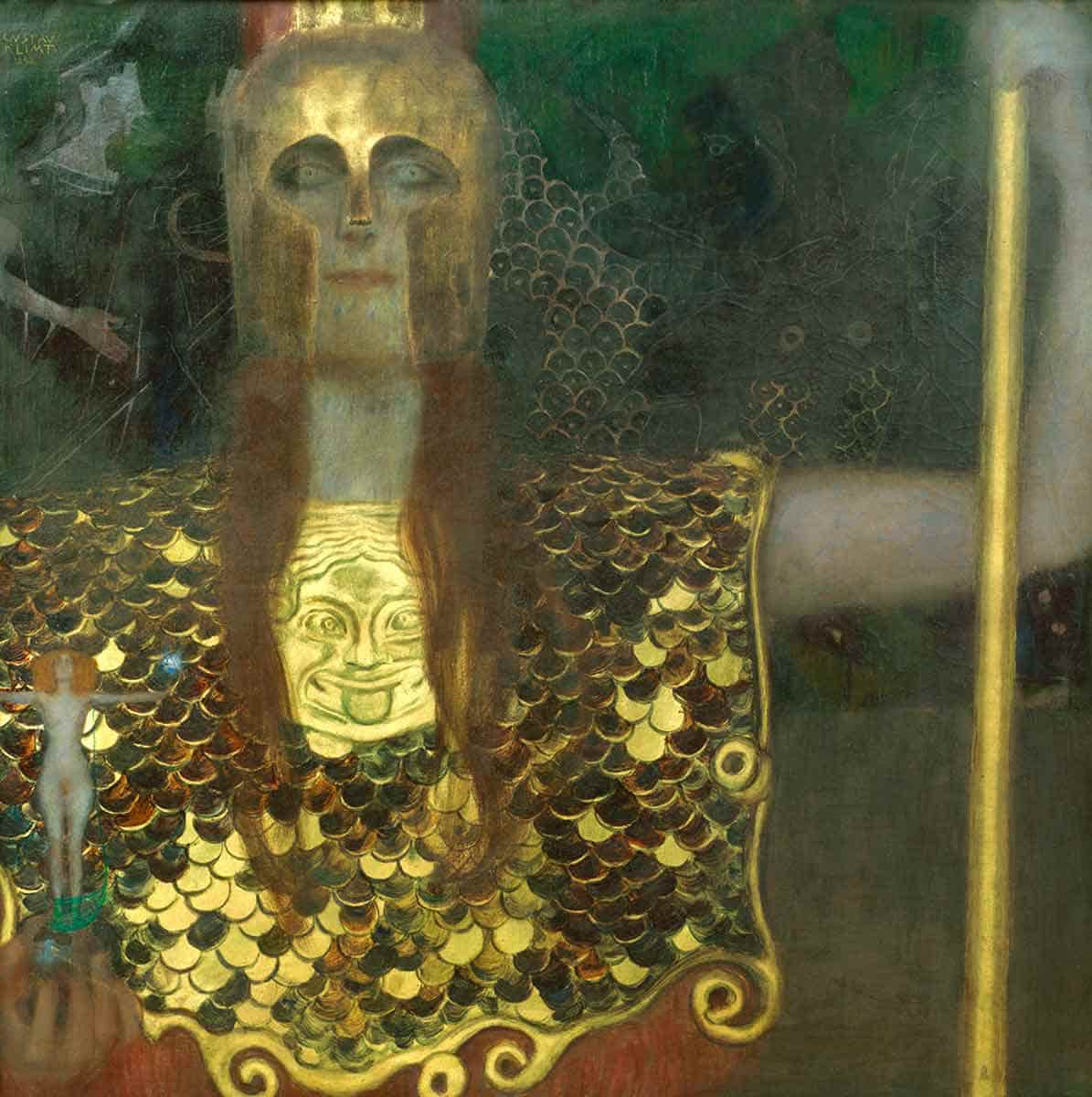
This oil painting of the Greek goddess of art and wisdom was symbolically significant for the Viennese Secessionists. She instantly comes across as a powerful figure—her intense gaze holds the viewer, and the shimmering gold armor illuminates her. The background depicts Hercules and Triton in an encounter, which was an allegory to the changing cultural ideals of the time with new art pushing against traditional styles. Pallas Athena was also depicted in the poster of the first Secessionist exhibition in 1898, and the production of this oil painting solidified her importance as a symbol of the Secession.
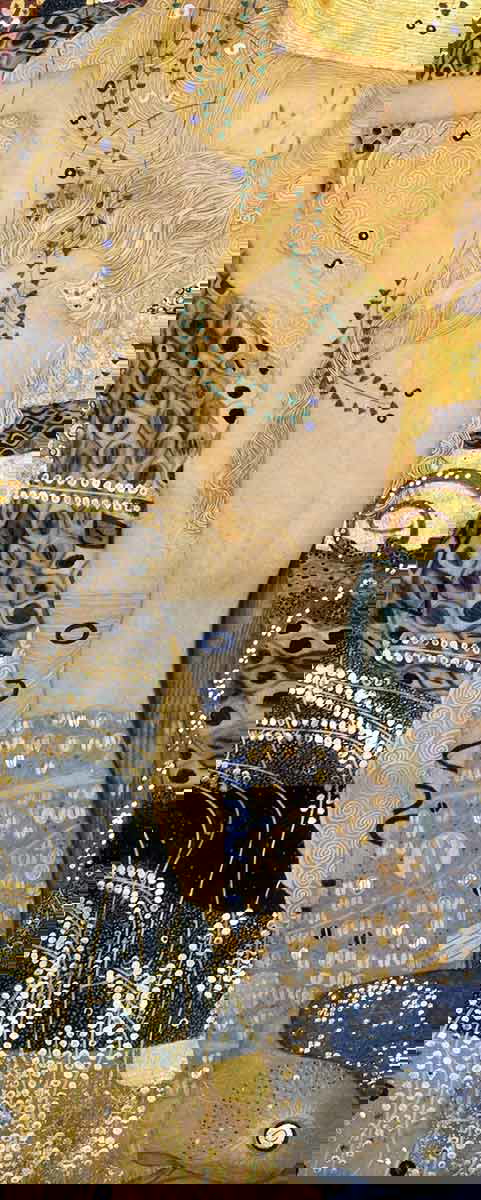
This consisted of two works—Water Serpents I and Water Serpents II—painted between 1904 and 1907. These paintings depict water nymphs surrounded by colorful patterns. These paintings are also highly decorative depictions of women in the nude, as was the common theme in Klimt’s Art Nouveau works. It has been suggested that while the painting is supposed to represent mythical figures, Klimt used this as a means to represent lesbian relationships.
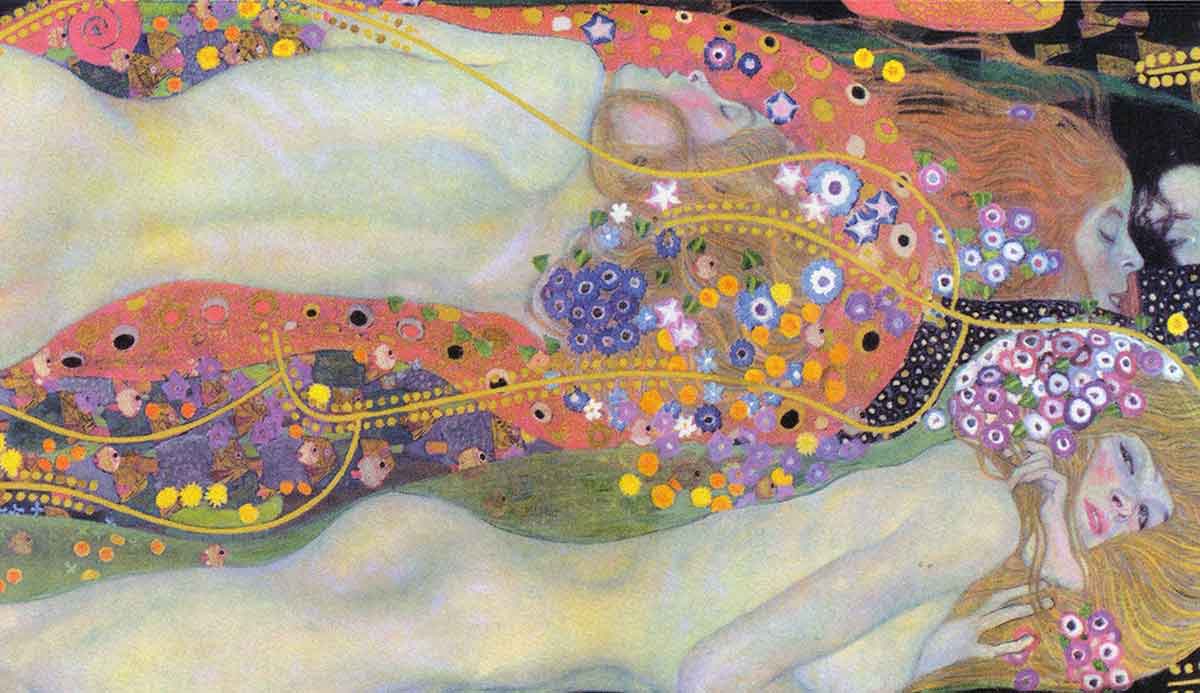
This is particularly true in Water Nymphs II, which depicts women in a sensual embrace. Klimt not only held unconventional artistic ideals but also challenged conservative social norms through these paintings by suggesting same-sex intimacy.
Gustav Klimt’s Version of Eroticism and Challenging Artistic Norms
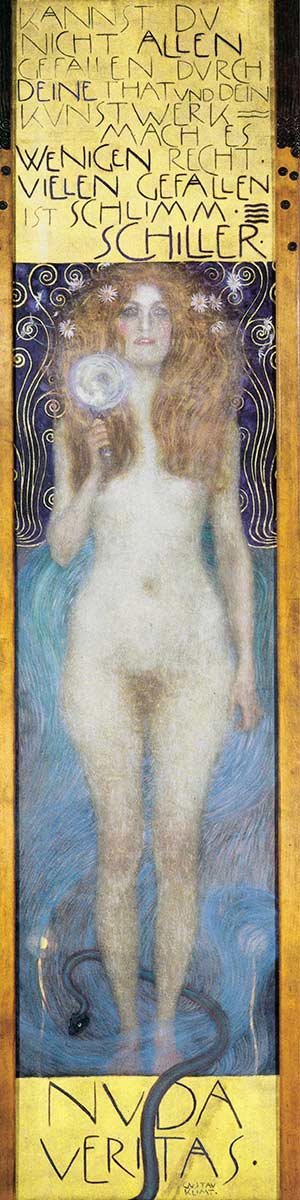
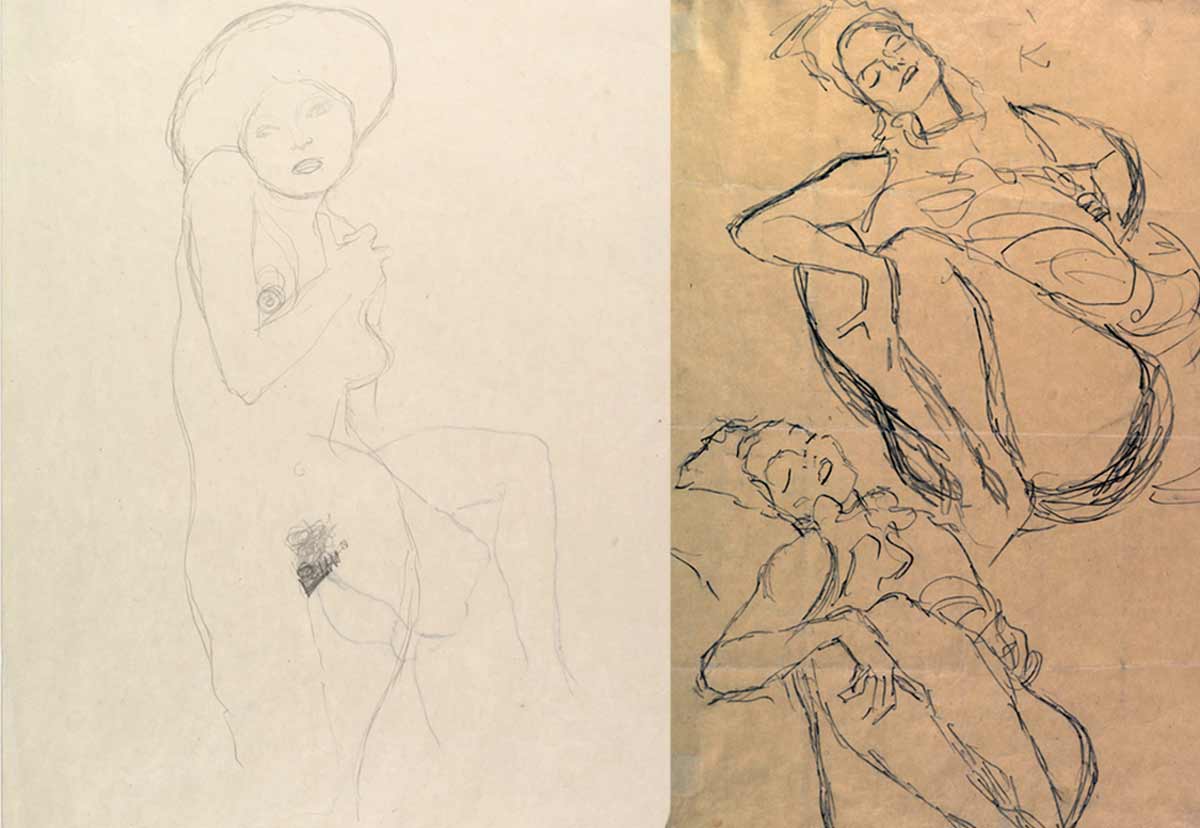
Klimt’s portrayal of women often has a sense of eroticism to them. He painted and sketched many nudes, including the depictions of mythical women shown as sensual beings. Klimt also studied the female body through sketches by exploring different—often erotic—poses, including a series of drawings depicting women pleasuring themselves. His portrayal of the female body was a cause for social disapproval due to the unconventional way he handled the subject. Two of his works broke important traditional rules that truly set him apart as a revolutionary artist—Nudas Veritas and Hope.
Translating to Naked Truth, Nuda Veritas was one of Klimt’s most controversial paintings. The painting was completed in 1889, showing a young woman in the nude. The controversial aspect of this work was Klimt’s decision to depict pubic hair on the woman, something that had not been done before. Traditionally, nude images of women did not depict body hair, so the depiction of pubic hair certainly raised eyebrows. This painting was an allegory for the naked truth artists present without any barriers, an idea that was foremost for the Secessionists and is also emphasized in the text on top of the painting, which translates to: “if you cannot please everyone with your actions and your artwork – please only a few: to please many is bad.”
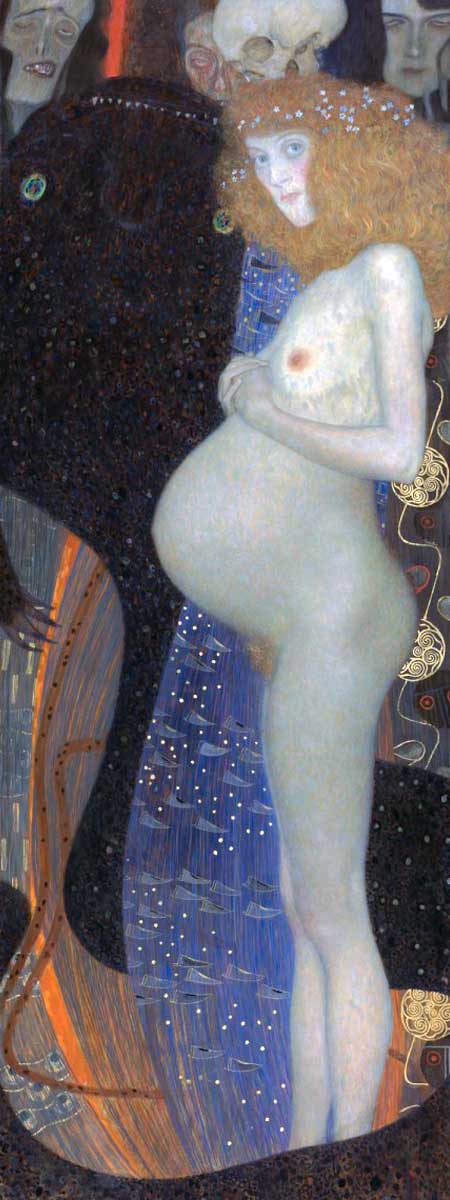
Hope, a painting depicting a nude pregnant woman, is one of the most revolutionary works by the artist. Traditionally, women have been depicted in the nude throughout art history. However, not many works showing pregnancy and pregnant women can be found, despite the process being a natural part of life. Klimt’s decision to take up the task of depicting this subject fits within the artist’s ideals and makes him stand out in art history. He was not concerned with maintaining traditional notions of beauty and aesthetics—instead, Klimt challenged these norms and painted a pregnant model nude.
The model’s name was Herma, and she is depicted in her profile with her loose, fiery hair giving her a sexual dimension. In the background, Klimt depicted disfigured faces and a skull looming over the woman at the center. The symbolism of these figures is not well-defined, but they likely present a contrast to the pregnant woman who is illuminated in the composition and is turning away from these dark figures. Klimt was certainly a painter of women and sought his subjects from a wide range of sources, from mythological scenes to commissioned portraits. His perception and representation of women challenged many traditional rules and social conventions, which is why the artist is considered a revolutionary figure in Western art.
He portrayed women as taking charge of their sexuality and being powerful creatures, such as Judith and Pallas Athena. Still, at the same time, he often treated them as ornamentation or desirable objects. The transitional nature of the late 19th and early 20th centuries led to an expansion in women’s role in society. Still, the emergence of the Art Nouveau style in fin-de-siècle Vienna reinforced the image of women as decorative and erotic beings, and this duality was embraced by Klimt.