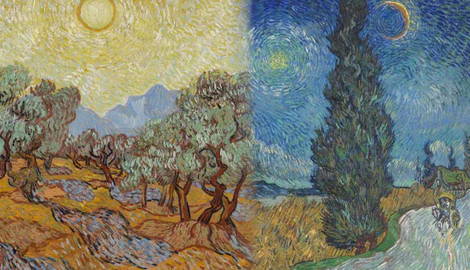

When Van Gogh was living in Saint-Rémy-de-Provence in 1889-90, olive trees and cypresses became his most cherished subjects to paint. These trees were abundant in the region, and the artist believed they created a favorable impression of the Provençal landscape. In a letter to his brother Theo in 1889, he compared them to the willow tree in the Netherlands: “Now what the willow is in our native country, the olive tree and the cypress have exactly the same importance here.”
Vincent Van Gogh’s Olive Trees
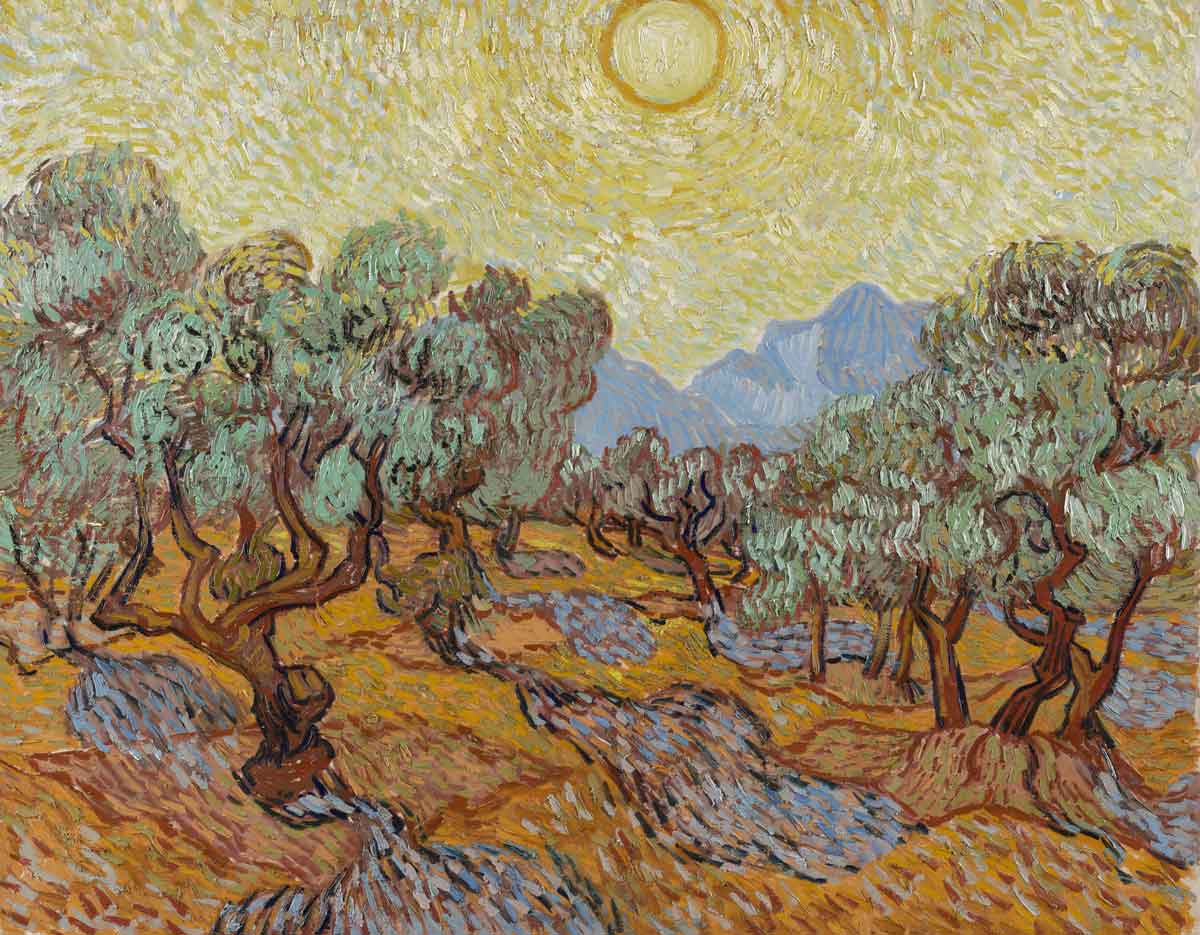
The olive tree, with its sinuous branches, which thrived in the harsh conditions of Saint-Rémy, evoked great admiration in Van Gogh, who compared the cypress to an Egyptian obelisk and described its striking role in the Provençal landscape. Since the Provençal land was arid, not many trees bloomed there. However, olive trees took over the entire land, growing amid the dry and rocky terrain. Van Gogh produced numerous paintings of olive groves while residing at the Saint-Paul-de-Mausole asylum in Saint-Rémy. During his early days, he was confined within the asylum walls and painted several works of the interior and the garden out front. However, after some time, he was allowed to walk around the land to paint outdoors. He visited olive groves often due to his fascination with them.
Van Gogh found them visually interesting due to their serpentine branches and the ever-changing effect of the bright Provençal sunlight on their colors, as depicted in the painting above. In fact, he struggled to capture its colors and treated it as a challenge: “On the other hand the olive trees are very characteristic, and I’m struggling to capture that. It’s silver, sometimes more blue, sometimes greenish, bronzed, whitening on ground that is yellow, pink, purplish or orangeish to dull red ochre. But very difficult, very difficult.” He tackled this issue by instilling the effects of silver on the leaves and painting the shadows of the trees in blue.
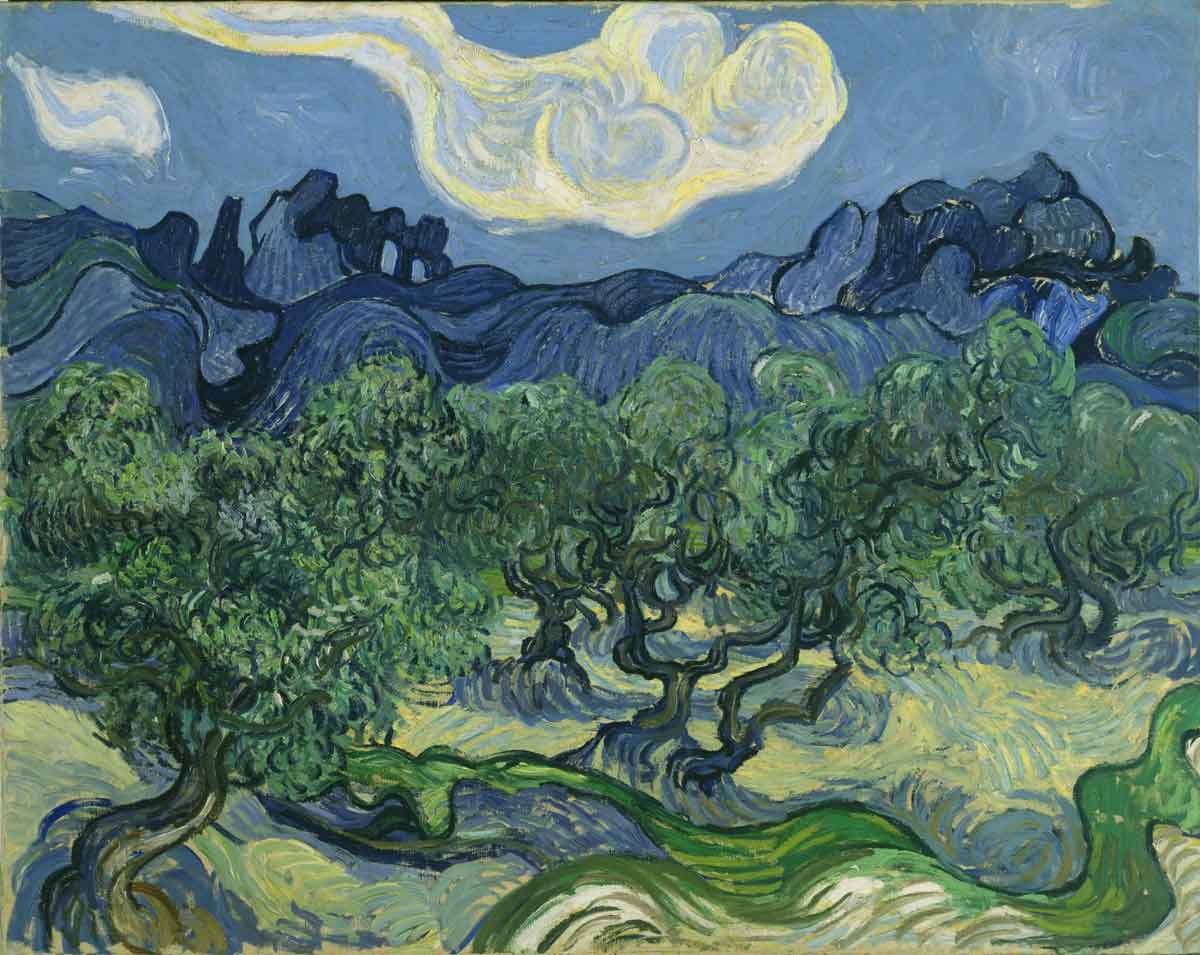
In The Olive Trees or Olive trees with the Alpilles in the background, Van Gogh depicts a summer scene with a wonderful effect of greens and yellows of the olive trees on the land with blues of the mountains and the sky. A white cloud highlighted with blue and yellow swirls on top of the mountains, which are contoured with bold outlines. The swirling lines and dramatic outlines in the composition create a sense of movement in the landscape. The olive trees with their twisting branches and trunks appear to be floating away along with the undulating hills. Due to its swirling lines, Van Gogh compared this painting to The Starry Night: “These are exaggerations from the point of view of the arrangement, their lines are contorted like those of the ancient woodcuts.”
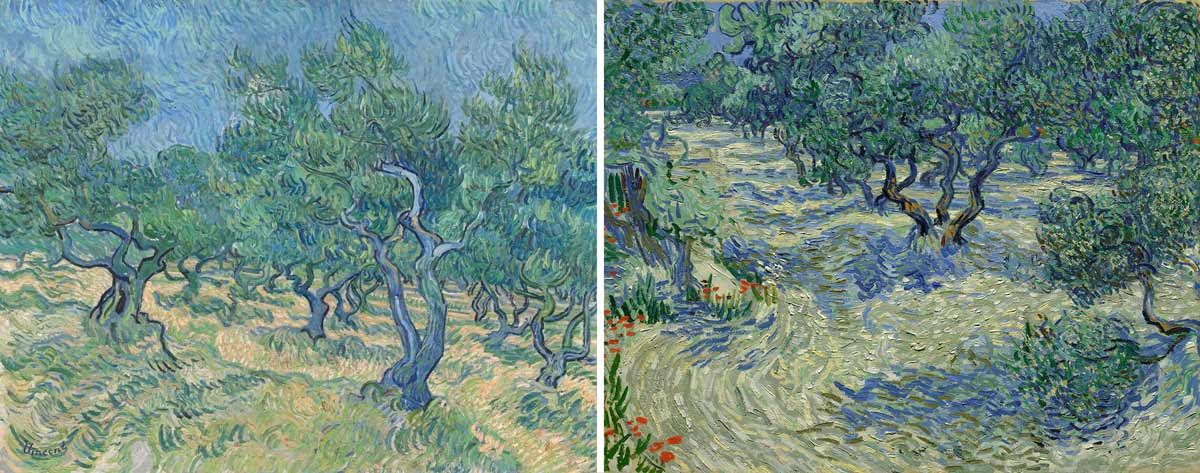
Paintings of olive groves in Provence became a means for Van Gogh to convey the bright and hot climate of the region, as well as the aridity of the land. He wrote: “The olive trees are more in character, just as in the other study and I’ve tried to express the time of day when one sees the green beetles and the cicadas flying in the heat.” The color palette consists largely of yellows, greens, and blues, while the brushstrokes are short and curving.
Cypress Trees
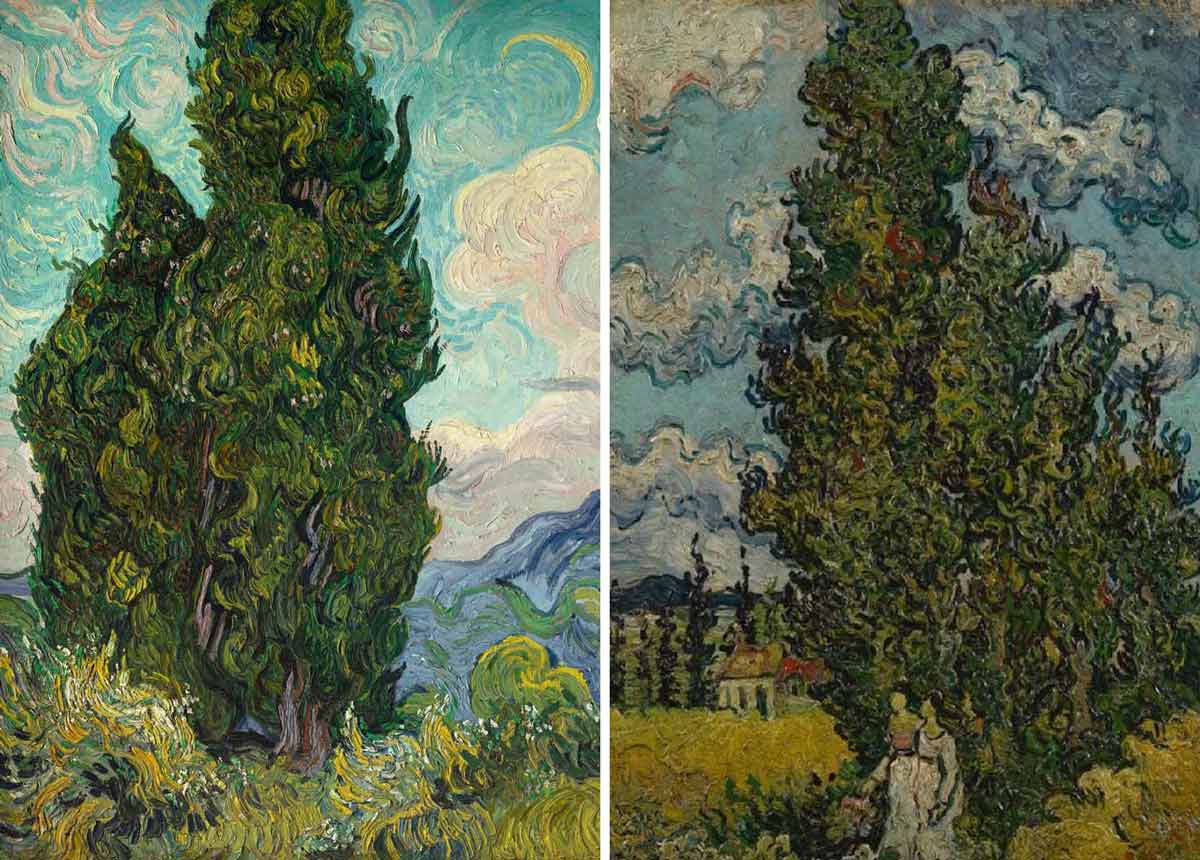
The cypress tree was a towering presence both in Provence and in Van Gogh’s creative imagination. He expressed his wish to paint the cypress like his Sunflowers as both were challenging and interesting to paint in terms of their colors and forms: “When I’d done those sunflowers I was seeking the contrary and yet the equivalent, and I said, it’s the cypress.” He wanted to capture the character of the cypress through its deep colors and proportions against a luminous Provençal landscape: “It’s the dark patch in a sun-drenched landscape, but it’s one of the most interesting dark notes, the most difficult to hit off exactly that I can imagine.”
Both paintings above depict a massive tree in dark green, with a distinguished quality highlighted in yellow, standing in front of a cloudy sky with shrubbery in the foreground. In one of the paintings, a yellow crescent moon peeks through on the right side of the canvas, while the other depicts two women walking in front of the cypress.
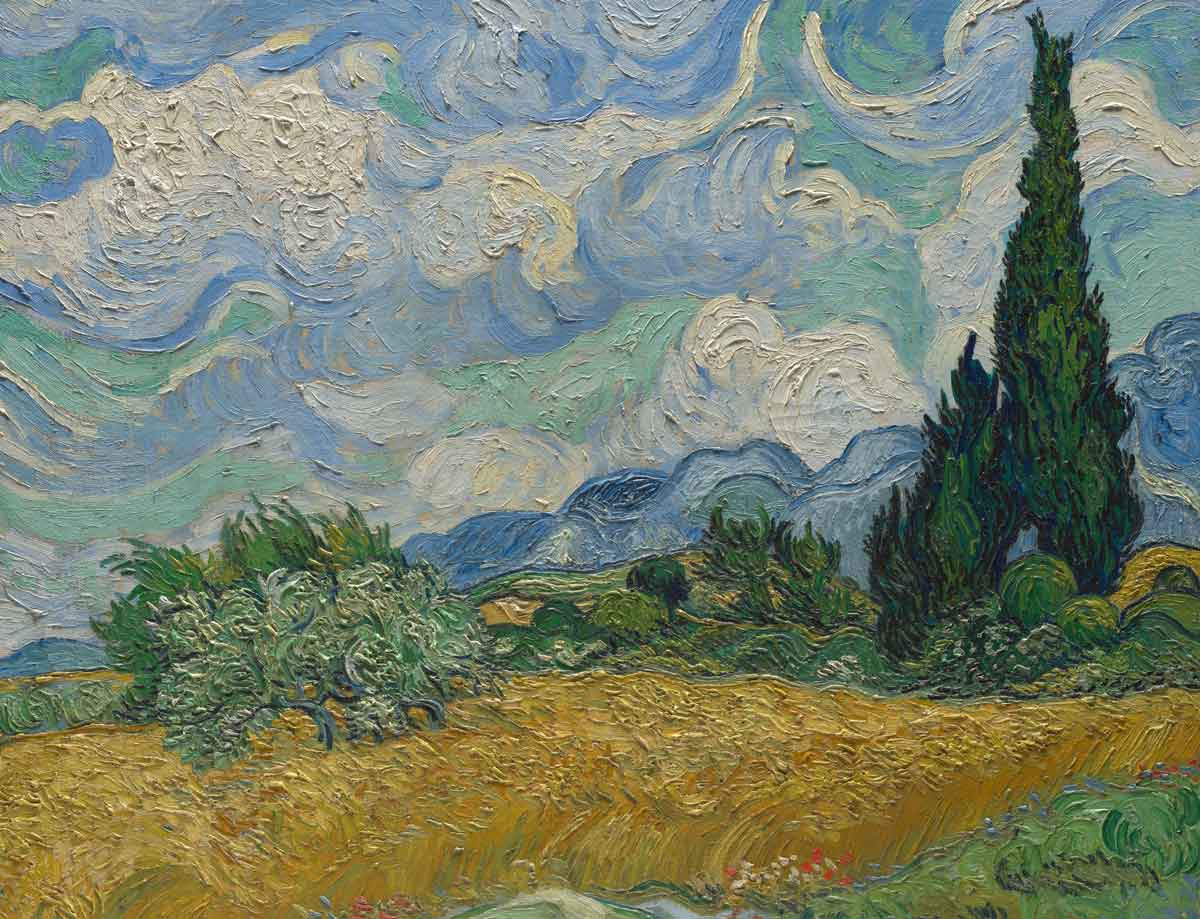
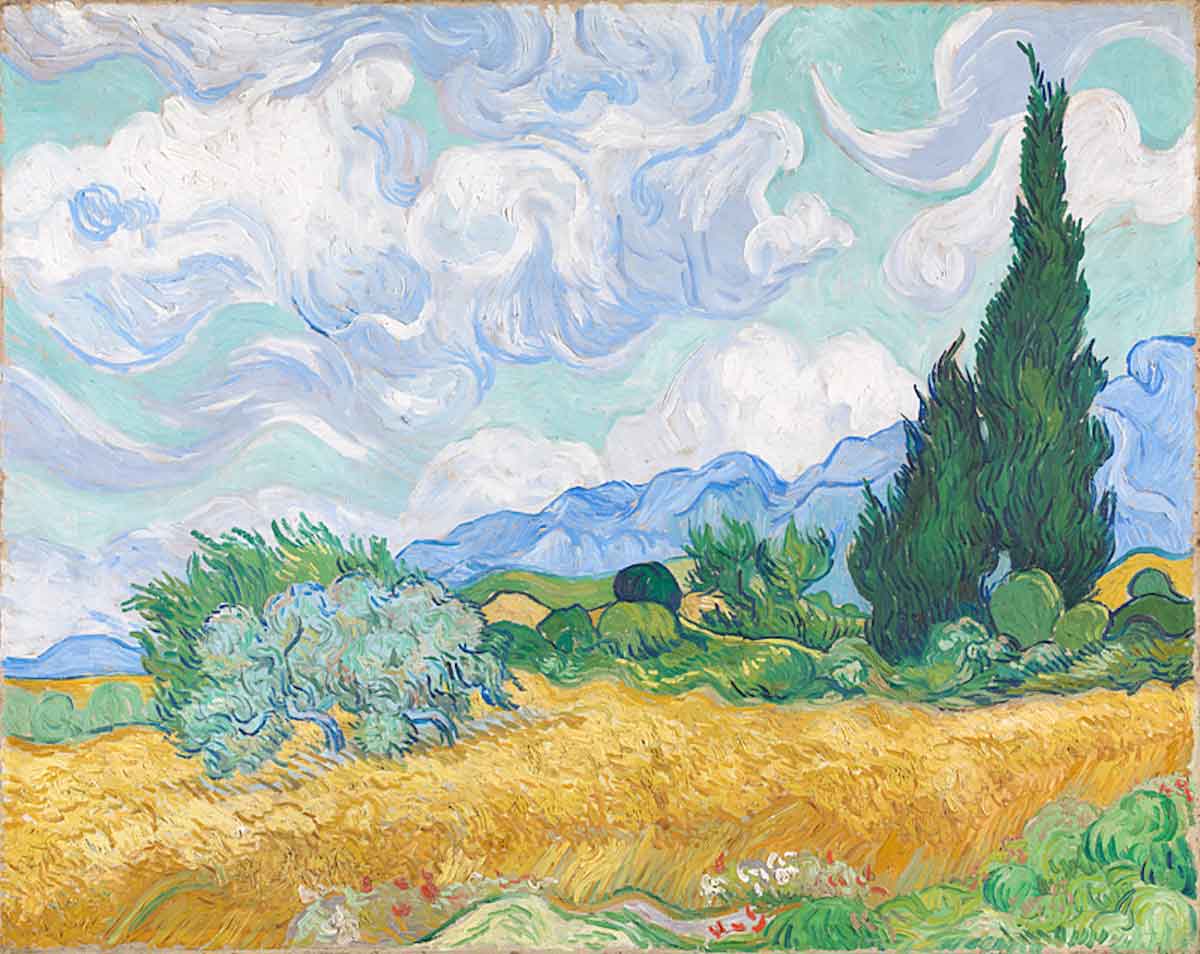
In Wheatfield with Cypresses, Van Gogh created a beautiful contrast between the dark green cypress standing amid a lively yellow wheatfield. On the left stands an olive tree painted in a lighter green, bringing together his two favorite Provençal motifs in one composition. This composition of a summer landscape sits under a blue sky with winding blue and white clouds. The entire scene, which was painted in situ, is enhanced with impasto, undulating lines, and vibrant colors that convey the bright sunlight and natural abundance of Provence. “The cypress is so characteristic of the landscape of Provence,” Van Gogh once wrote, and this painting is a testament to its position within the colorful land and azure sky of the region.
Van Gogh’s “The Starry Night”
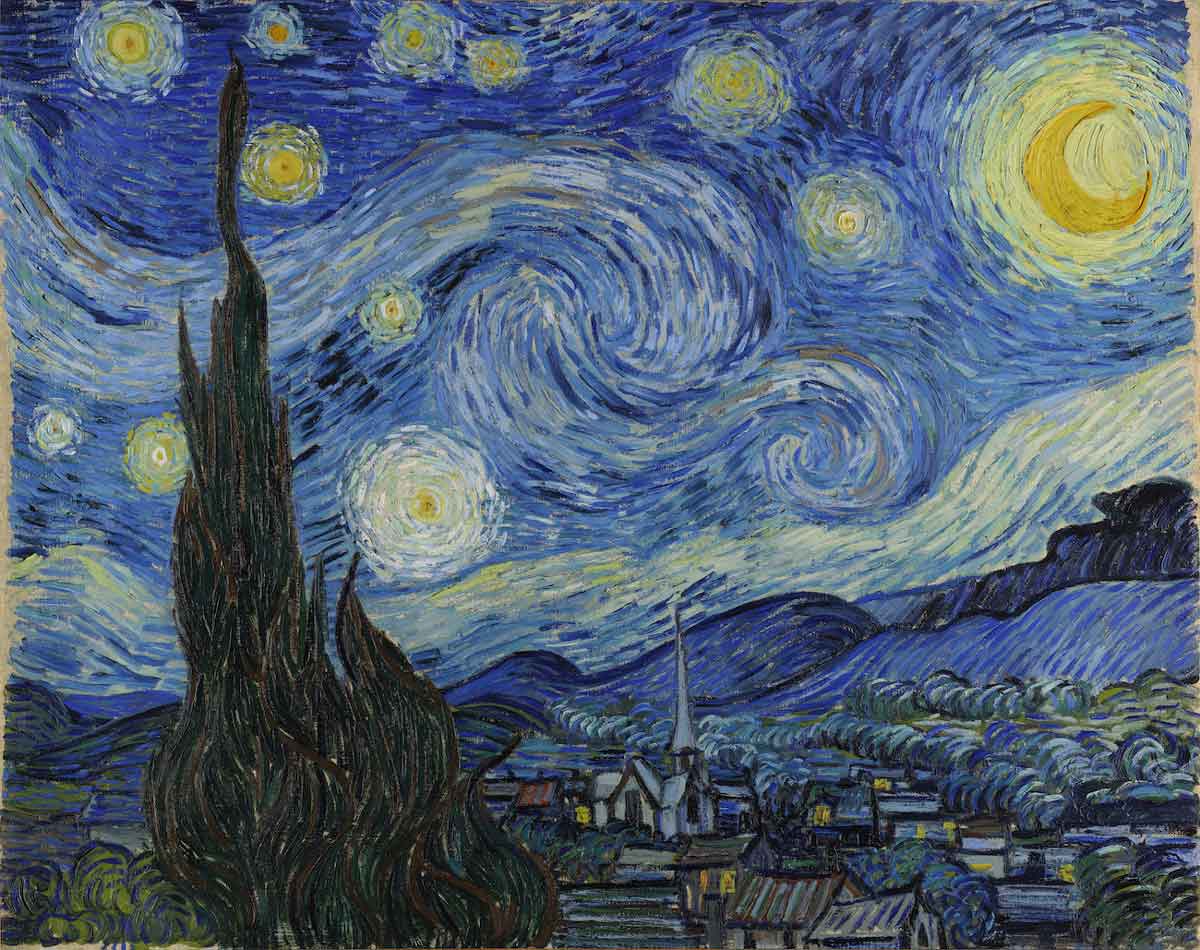
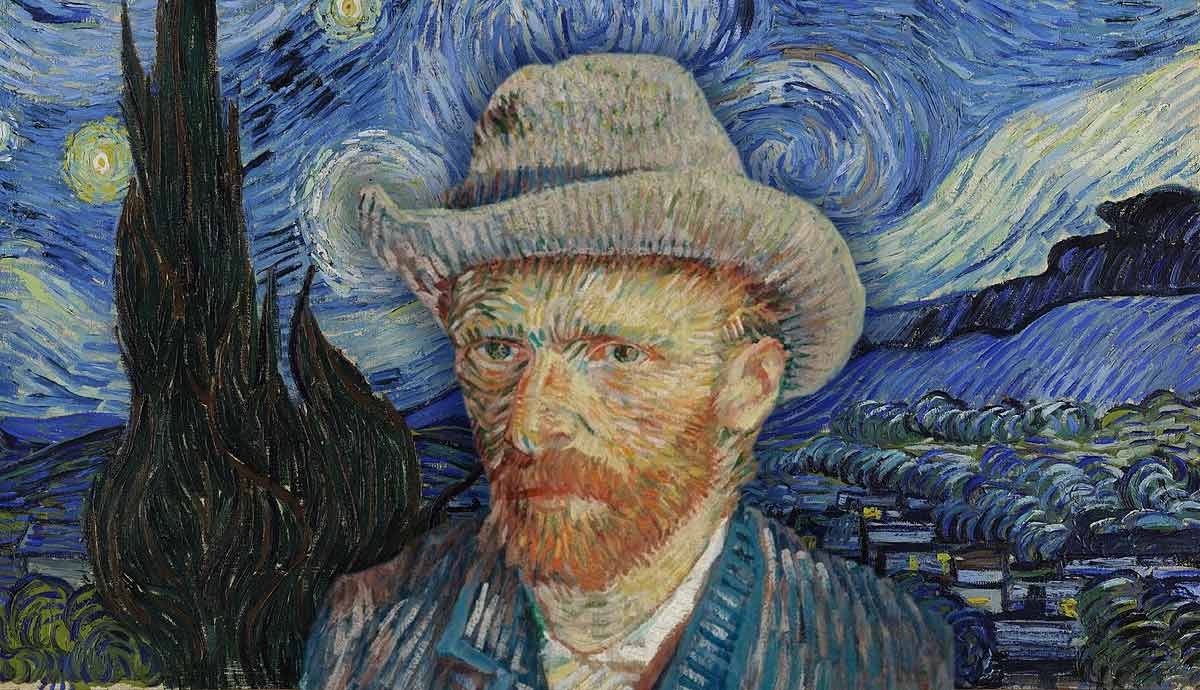
The Starry Night, one of Van Gogh’s most famous works, also features the cypress. It is the opposite of the bright summer landscape above and depicts the region during nighttime. The swirling lines in the sky, luminous twinkling stars, and a bright moon are usually the most captivating features of the painting. However, in the center stands a tall, dark silhouette of a cypress tree. As in the daytime paintings, this tree towers over the entire region and creates a stark contrast with the blues and yellows in the background. While painted in Provence, The Starry Night depicts imaginative elements that merge Van Gogh’s memories of Dutch and Provençal landscapes.
He painted this work from his asylum window, which would not have afforded such an expansive view of the village. The church steeple in the middle of the town is reminiscent of Dutch churches, which are different from Provençal churches. And yet, he considered including the cypress necessary to complement the turbulent sky and signal the Provençal character of the painting.
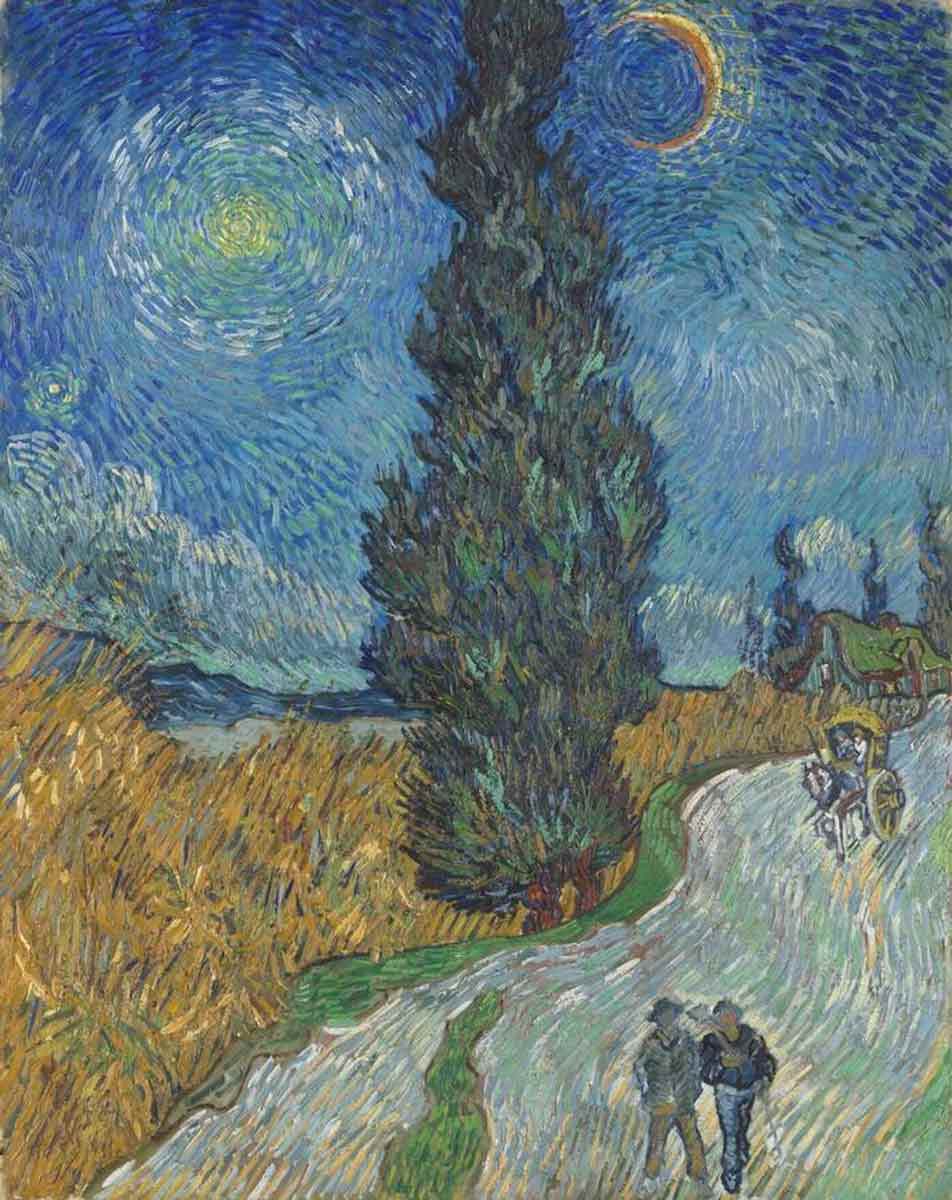
Country road in Provence by night was the last painting of the cypress tree Van Gogh made in Provence. With a tall cypress reaching for the sky, it became the central Provençal feature that was embedded in his mind by the end of his stay. There is a dimly lit crescent moon and a bright North Star in the evening sky on top of the canvas, while two people walk along the road in the foreground. The meandering path is occupied by a carriage and lined with a small house, while other tall cypresses punctuate the landscape behind.
The short brushstrokes and swirling lines of the composition exemplify Van Gogh’s signature technique to instill a sense of movement in his paintings that is accentuated with an array of colors placed next to each other harmoniously. At the same time, they give the painting a dream-like effect, perfectly showing how Van Gogh viewed and remembered Provence through the cypress.