
The famous—and highly problematic—French Post-Impressionist Paul Gauguin hardly enjoyed fame in his life. Yet, several years after he died, he became a superstar among the artists of a land he never visited. Thanks to the effort of an ambitious art collector, young painters of the Russian Empire developed a cult of Gauguin and invented their own avant-garde art based on his ideas. Read on to learn more about the role of Paul Gauguin in the genesis of the Early Soviet avant-garde.
Paul Gauguin in Russian Collections: The Origins of Soviet Avant-Garde
One of the most controversial and disputable figures in art history, Paul Gauguin, hardly needs an introduction. However, in the early 1900s, he remained an obscure figure who was mostly ignored by the wider public of art lovers and collectors. Among the few who managed to recognize his artistic innovation were two art collectors from the Russian Empire: Sergei Shchukin and Ivan Morozov. Ridiculed by their contemporaries at first, they would soon launch an aesthetical and artistic revolution far away from Paul Gauguin’s native land.
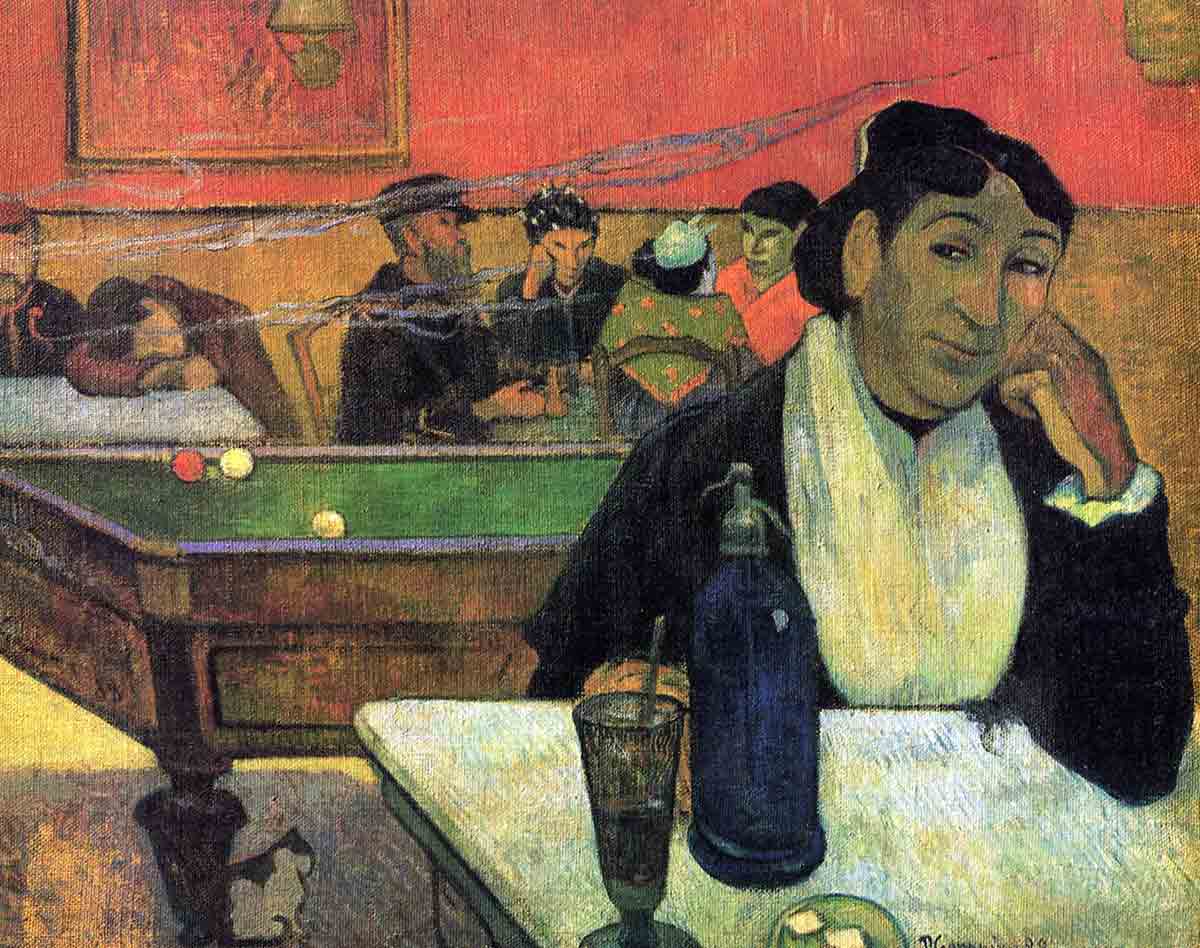
Both Shchukin and Morozov came from prominent families that made their fortunes in the textile industry by producing printed fabrics. Both were well-educated and shared their collecting hobby with their family members. Still, they had radically different strategies for looking for new treasures. Morozov preferred relatively safe and expensive artworks: he was famous for approaching Parisian dealers and asking them for “their best Cezannes.” He never tried to negotiate and had a clear strategy of collecting, carefully choosing tones, subjects, and styles. Morozov bought eight paintings by Paul Gauguin, which were made both in France and abroad. One of them was the famous At the Cafe, painted during his short stay with Vincent van Gogh.
Sergei Shchukin collected chaotically, fueled by momentary passion rather than clear strategy. Instead of asking art dealers for help, he dove into their storage rooms and searched for something that would spark his interest. This was not necessarily something that he genuinely liked—at least, at first. He chose artworks that made him feel something, even if it was irritation, confusion, or shock. He gave himself time to observe the work and get used to it and he rarely made mistakes.
Shchukin described his experience with Picasso’s Cubist works as walking barefoot on broken glass but nonetheless bought 51 paintings by him. He collected works from various movements, starting with the Impressionists and arriving at Cubism and Fauvism, rarely, if ever, returning to his past obsessions.
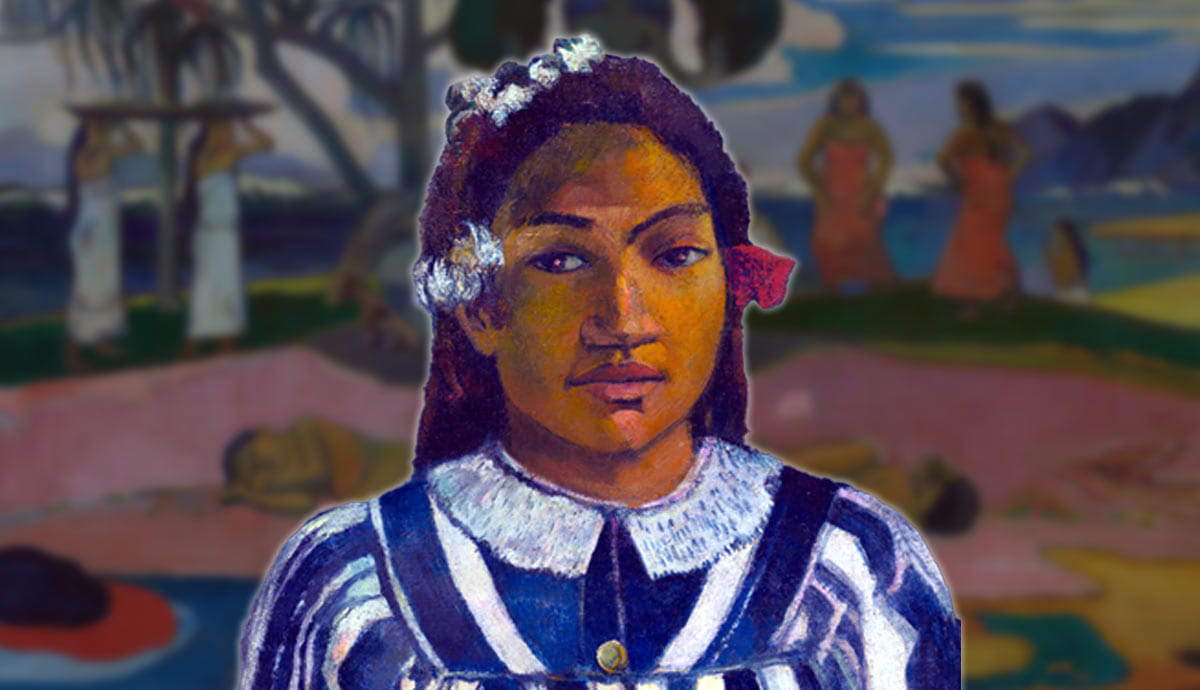
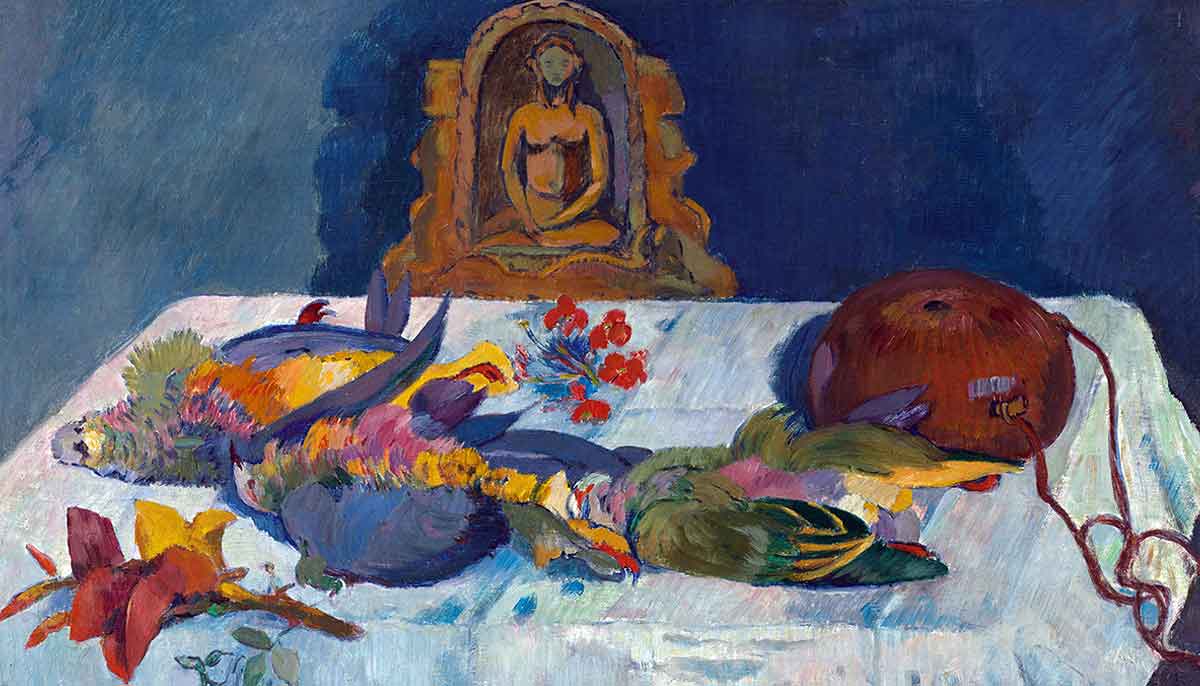
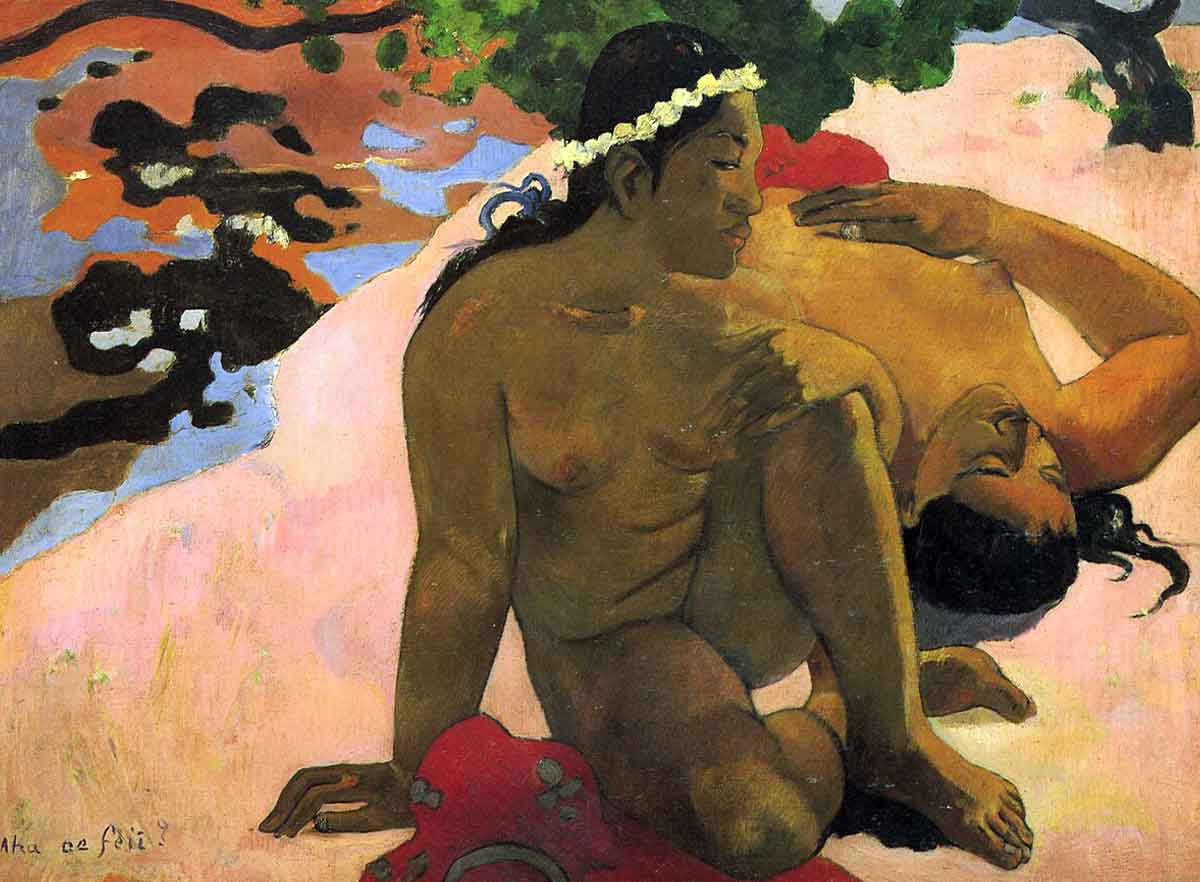
His fascination with Gauguin represented a short but intense phase in Shchukin’s collecting journey. From 1903 to 1908, he bought sixteen paintings, all of which were from the artist’s Tahitian period. These bright paintings, with their bright tones and exotic figures, became therapeutic for Shchukin, who suffered one tragedy after another.
Gauguin’s Altarpiece
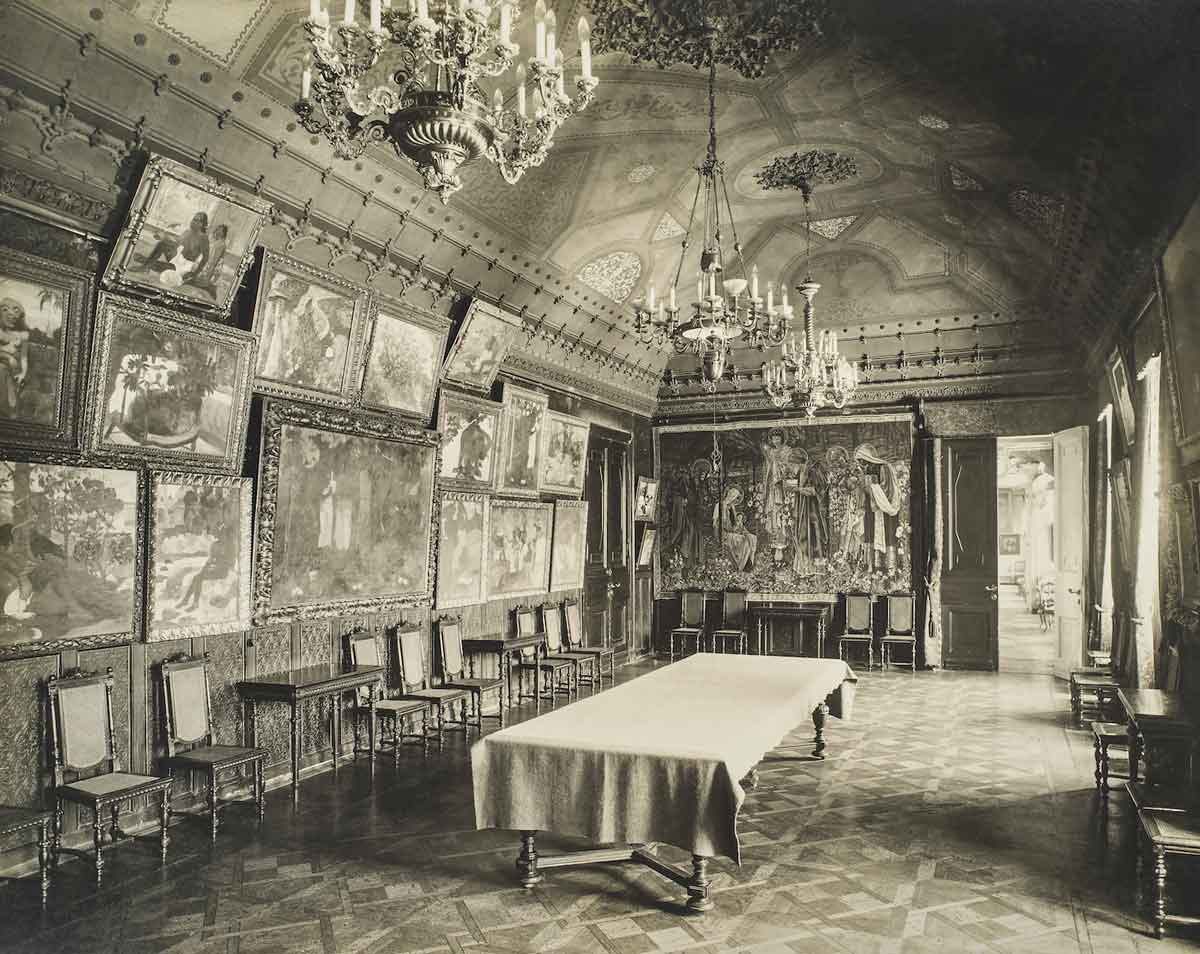
Sergei Shchukin’s mansion in Moscow city center was crammed with artworks of all shapes and sizes that were constantly moved and rearranged. Paintings were hung in rows, dozens in every room. For sixteen paintings by Gauguin, Shchukin chose a specific place on a dining room wall. The wall was covered with brown leather wallpaper that made golden frames and yellow paint tones glow. Shchukin’s guests called the arrangement Gauguin’s altarpiece, noting its similarity with the traditional decoration of Orthodox Christian churches. Placed together with little to no space between each frame, the paintings created a cohesive and uniform work, a narrative of the lost paradise, human desires, life, and death.
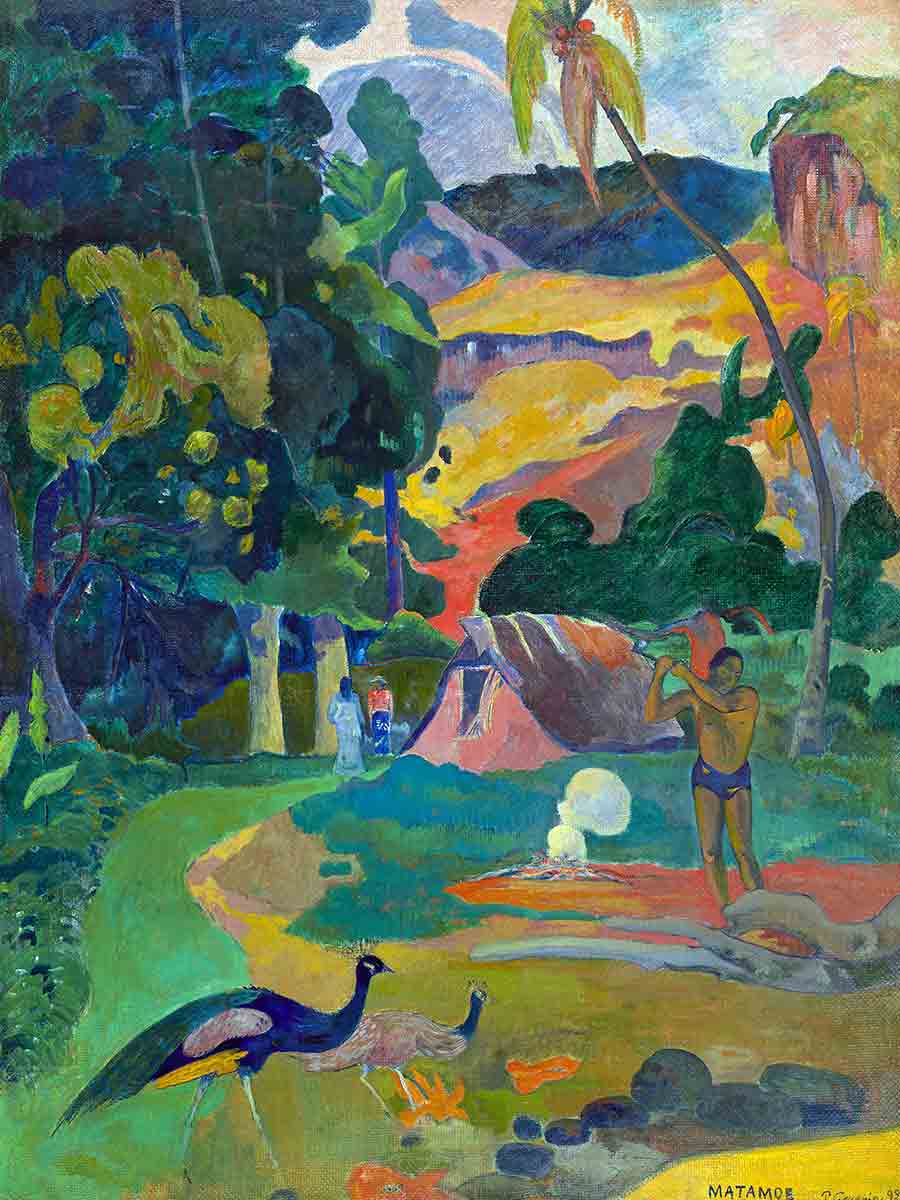
The gradual accumulation of Gauguin’s works coincided with a series of tragedies in Shchukin’s family. In 1905, his youngest son went missing, and his body was found in a river only months later. In 1907, Shchukin’s wife passed away from cancer, and over the next three years, his brother, also an art collector, and another son died by suicide. Around Moscow, rumors circulated that the main causes of the family’s misfortunes were the cursed paintings that filled the mansion. Sergei Shchukin knew that the public would not appreciate the cutting-edge modern painting he brought to Russia. Still, he felt that it was his duty to support artists and look into the future. During the time of tragedy, Gauguin’s altarpiece was his consolation and way of escapism.
Moscow Artists in Shchukin’s Mansion
If Morozov preferred to keep his doors closed, showing his remarkable collection only to a handful of friends and close acquaintances, Shchukin chose the opposite strategy. His vast collection of art, including avant-garde Frenchmen and great examples of African sculpture, was open to the public. Moreover, he personally guided visitors through the rooms, telling stories of his acquisitions and meetings with artists. Curiously, the Moscow School of Painting, Sculpture, and Architecture, one of the most influential art institutions of the time, expressed their great concern about it. They believed that the harmful influence of supposedly talentless and hideous Westerners could irreparably damage the minds of young Russian artists. As it turned out, they were not as far from the truth: French art would help trigger a revolution and raise Russian and early Soviet art to international quality levels.
Still, young artists were among the most frequent visitors to Shchukin’s mansion. At a time when public museums were still too conservative to demonstrate contemporary art, such visits were almost the only option for interacting with foreign art since art students rarely could afford trips abroad. Moreover, art collectors were invaluable sources of information on artists and their ideas in the absence of specialized literature.
Paul Gauguin’s Influence on Natalia Goncharova, Mikhail Larionov, and Others
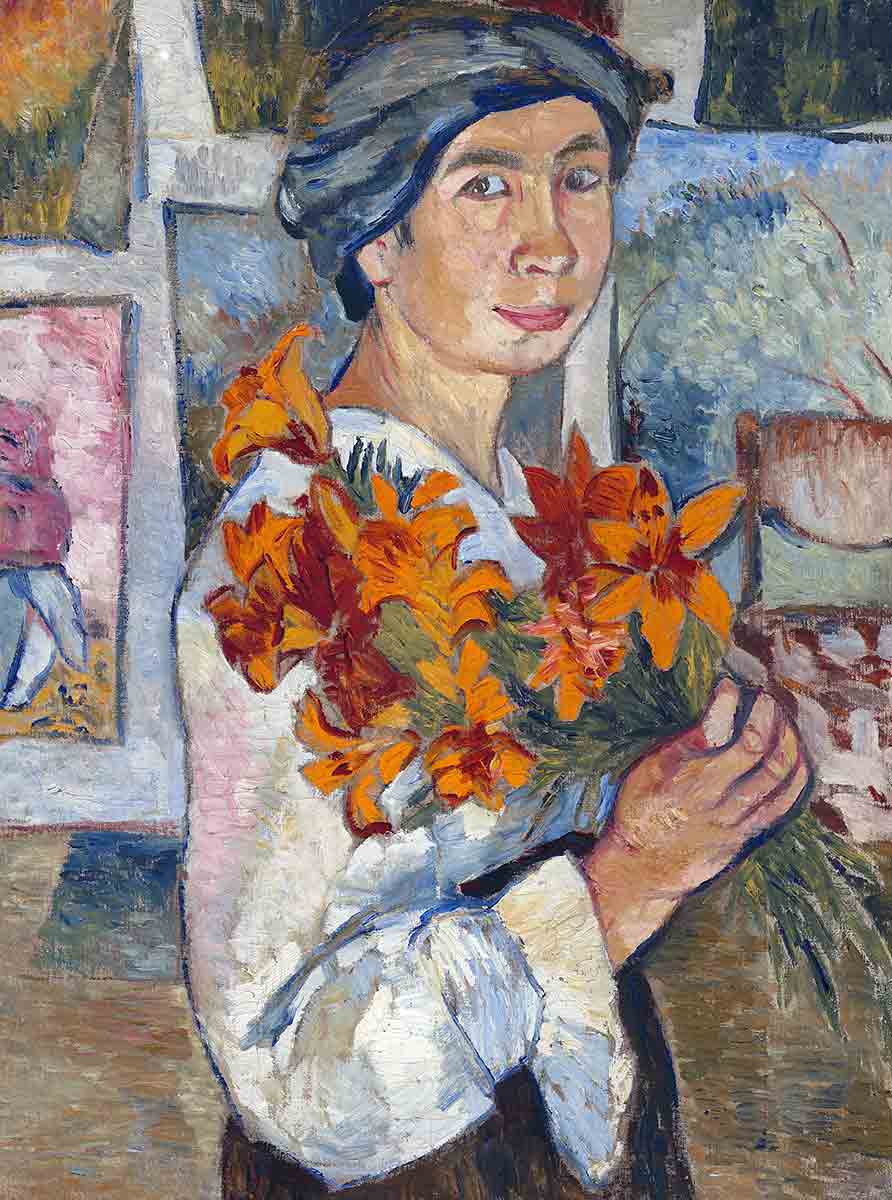
Gauguin’s innovation was in his reflection upon the non-Western artistic legacy and the quest for alternative visual systems in the cultures previously deemed primitive. Although Gauguin’s approach was abhorrently arrogant and unethical, he nonetheless opened the doors to a new treatment of color and shape. One of the first artists to recognize and adapt Gauguin’s methods was Natalia Goncharova, a young painter and costume designer who would become one of the most prominent avant-garde artists of Russian origin.
After visiting Shchukin and Morozov’s collections, she became obsessed with Gauguin, adopting his radical approach to color and thin layering of paint. At first, she directly quoted elements of his paintings by adding statues, flowers, and puppies to her works. Later, however, her approach became more refined. Another of Goncharova’s obsessions was Orthodox religious painting, and she could not avoid noticing the similarities between Gauguin’s ultramodern figures and the power of Medieval saints.
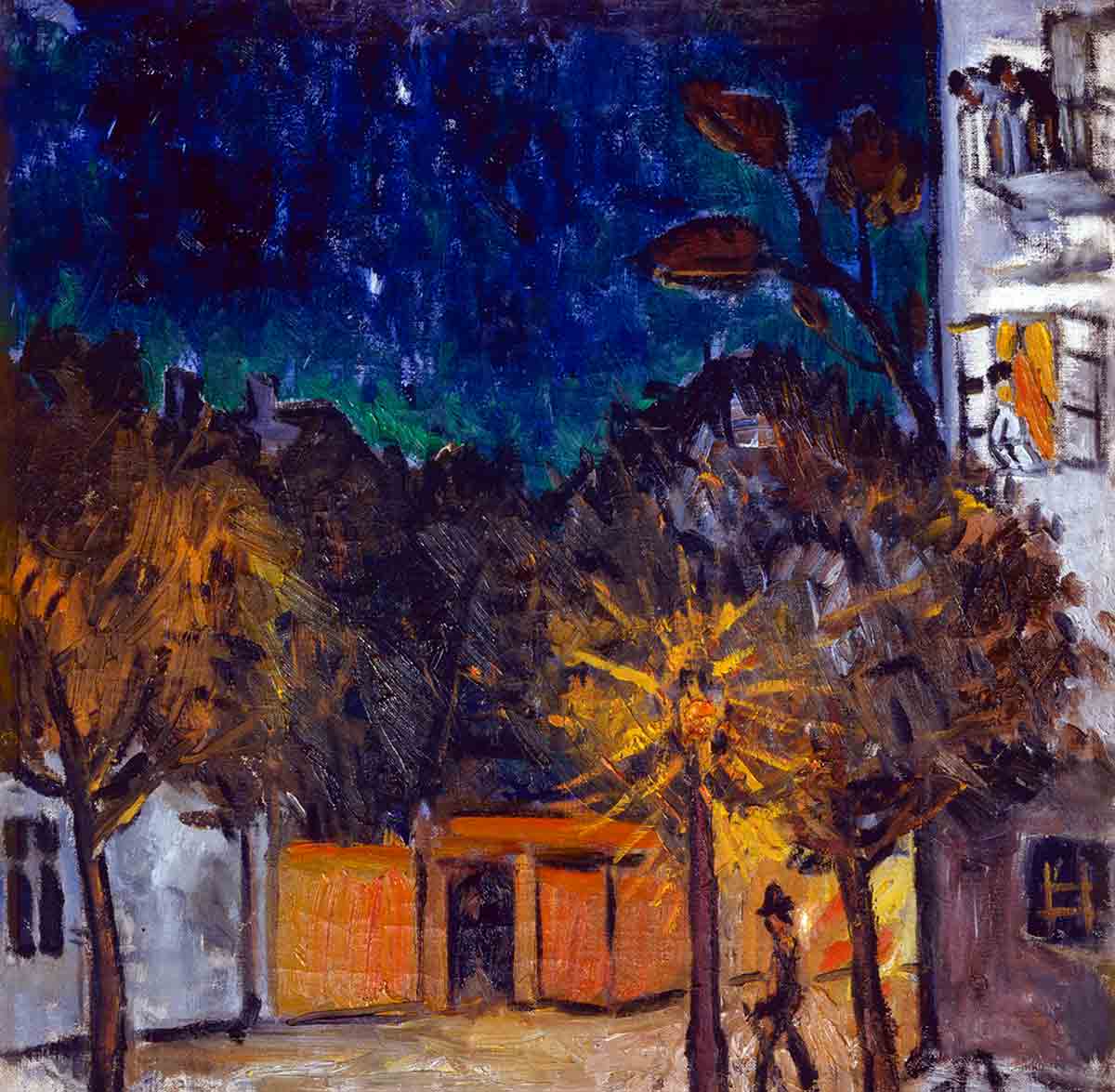
Goncharova’s lifelong partner and collaborator Mikhail Larionov was lucky enough to visit a 1906 retrospective exhibition of Paul Gauguin’s works in Paris. He shared Gauguin’s obsession with life as something inseparable from art but somehow long forgotten by the mainstream. Like Gauguin’s, Larionov’s still lifes were far from curated arrangements on artificial draperies: they seemed living and existing as if taken momentarily from their functional state.
In 1909, Goncharova, Larionov, and a group of other students were expelled from art school for imitating Western modernists. As a reaction, they formed an artistic group called the Jack of Diamonds to exhibit and experiment together, adopting the ideas of the French avant-garde. Other members included the famous Constructivist Lyubov Popova, Ukrainian artists David and Wladimir Burliuk, and, occasionally, Kazimir Malevich. In 1911, the Jack of Diamonds artists pronounced Sergei Shchukin an honorary member of the group even though he was not a painter himself.
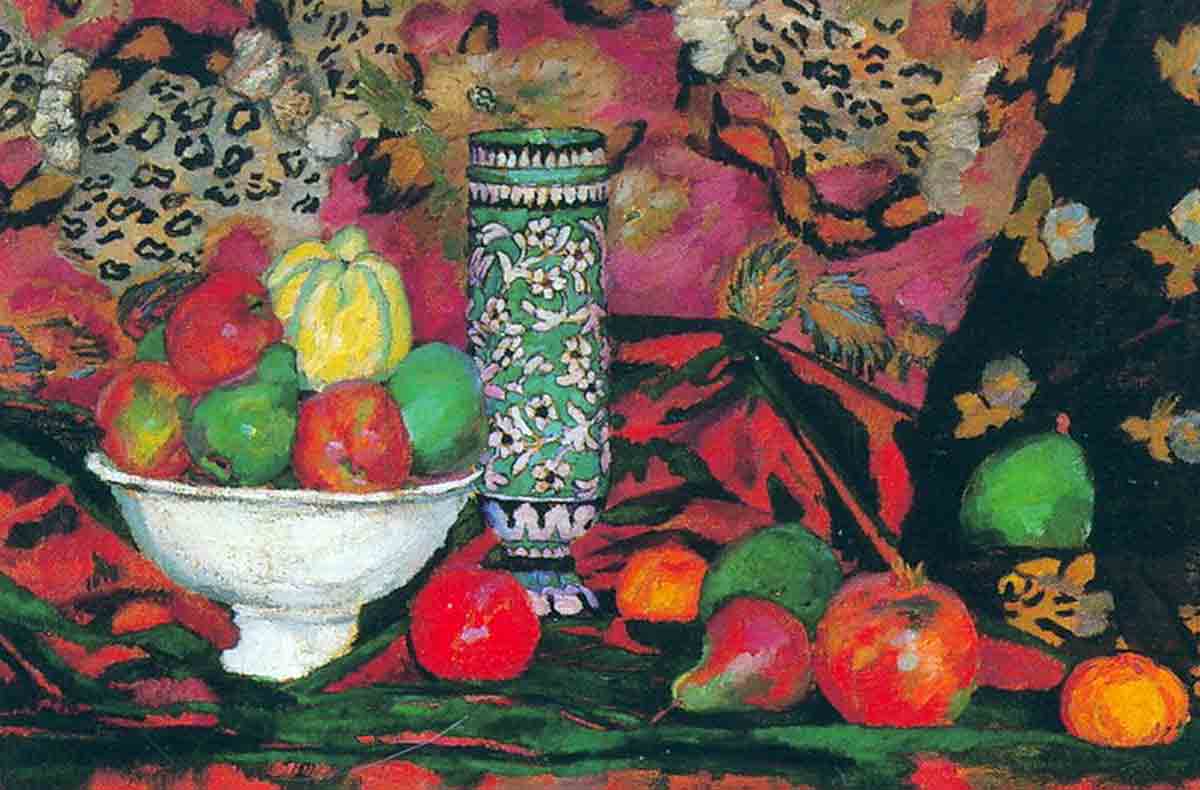
Unlike Gauguin, the artists of Goncharova and Larionov’s circle did not feel the need to travel abroad to find their mysterious fantasy land. They managed to grasp it in various corners of the Russian Empire in the daily life of the working class and peasants. Larionov found his Tahiti in his native city of Tiraspol, present-day Transnistria. Even after the couple moved to France to escape the chaos of the Russian Revolution, they retained their focus on folk art and the liveliness of their native cultures.
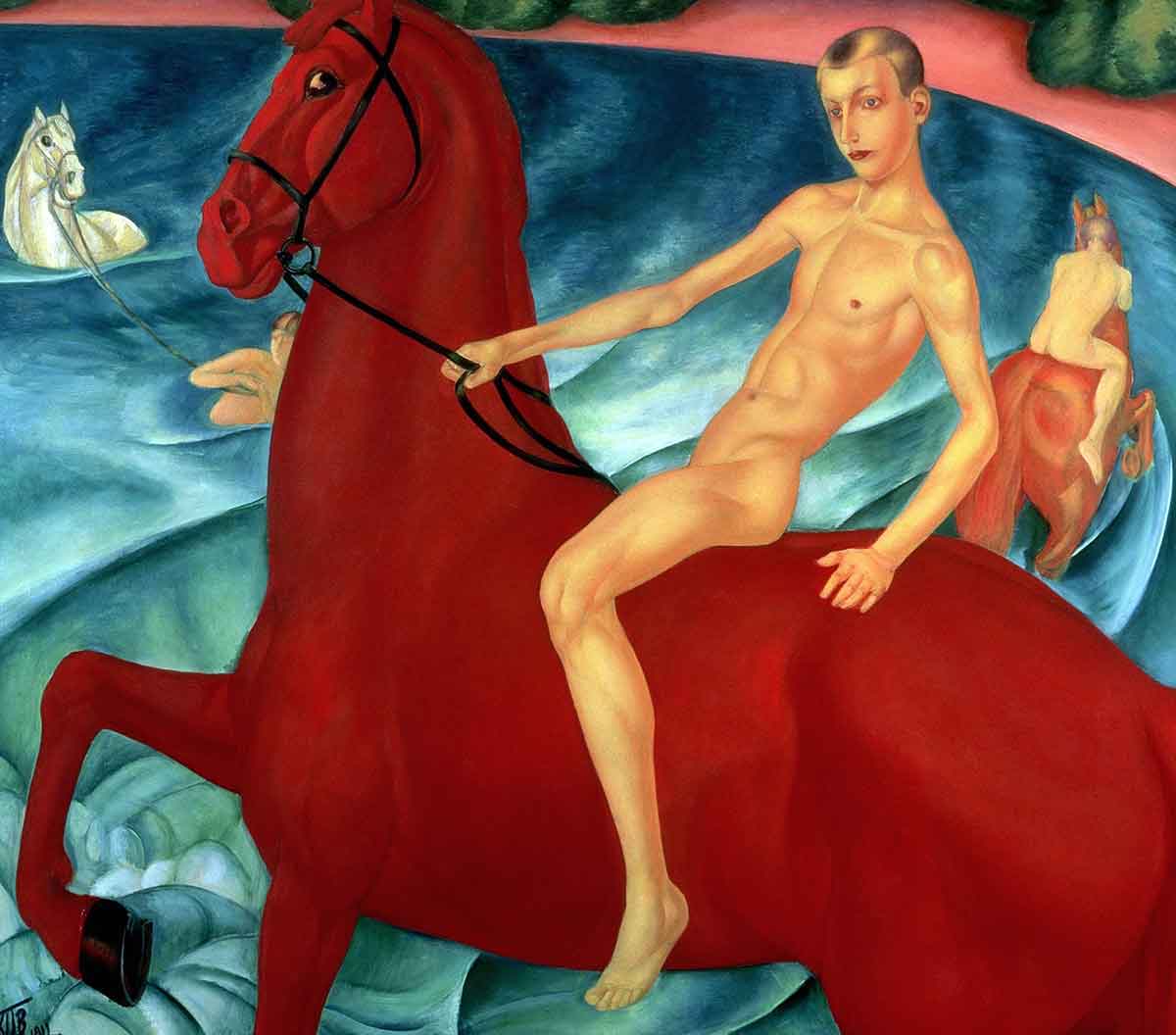
The artist who came the closest to Gauguin’s experience was Kuzma Petrov-Vodkin, who, in 1907, traveled to North Africa. The series of paintings from that period were so remarkably similar to Gauguin’s that Petrov-Vodkin was even accused of plagiarism. His most aggressive critic was the famous Realist painter of Ukrainian origin, Ilya Repin, who called Petrov-Vodkin an illiterate slave of the West.
Repin represented the old-fashioned tradition of Russian painting that was becoming increasingly outdated in the 20th century. Kuzma Petrov-Vodkin was one of the most adaptive Russian avant-garde painters who managed not only to rework French influences into a unique style but also to build a successful career at home after the Revolution. The contact with Paul Gauguin’s art, facilitated by Russian art collectors, allowed artists of the late Russian Empire and the early Soviet Union to construct an internationally renowned and recognized artistic language.