
The notorious Grand Guignol theater specialized in outstandingly naturalistic and gruesome representations of violence, horror, and torture at a time when these shocking displays were not as abundant in popular culture. The inventive and darkly creative nature of the theater’s writers required special skills from many skilled makeup and prop masters, who were essential in bringing these terrifying scenes to life. Read on to learn more about the fascinating and macabre Grand Guignol stage effects.
The Grand Guignol and the Violence in the Theater
The Grand Guignol was a sensationalist exploration of collective phobias and repressed desires in their ugliest form. Its audiences were diverse—from groups of high-brow intellectuals to marginalized drug addicts looking for a new thrill. Occasionally, a flack of unsuspecting tourists would attend a show, intrigued by the stories of a popular experimental theater. The Grand Guignol had its regulars, for whom the staff often reserved specific seats.
The most successful Grand Guignol writer, Andre de Lorde, stated that every human had a potential monster in them. De Lorde believed horror plays were a healthier substitute for centuries-long shows made from public executions and gladiator fights. The Grand Guignol was one of the first theatrical projects in history where violence was not hidden behind the stage but highlighted and turned into one of the most important components of a show. Such an approach needed outstanding technical means to convince the audience and manipulate their fears.
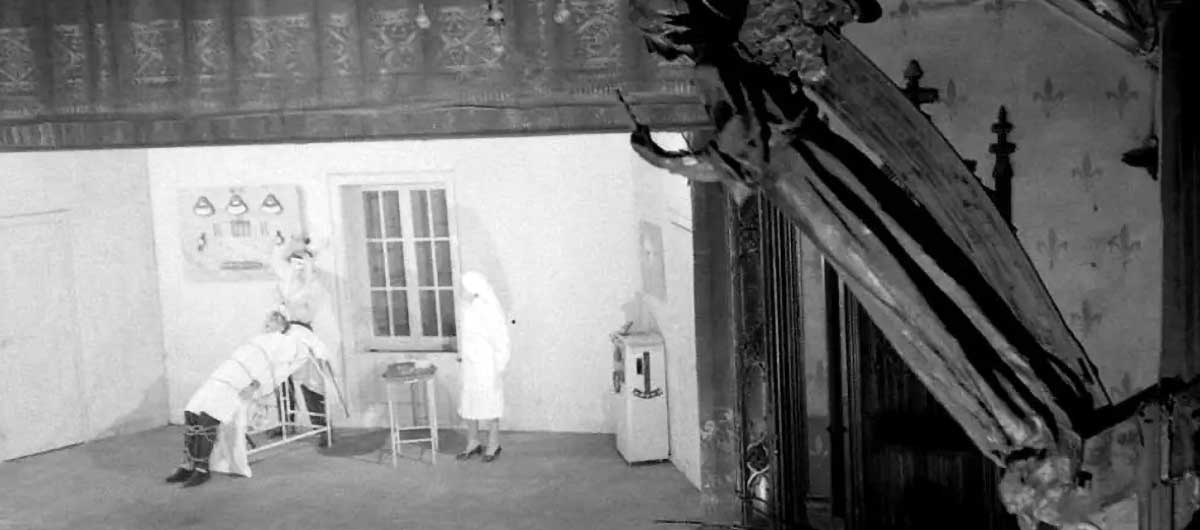
Paul Ratineau was the man behind the physical appearance of the unbelievable amounts of gore imagined and written out by de Lorde. Ratineau was a stage manager, a special effects designer, and an actor in The Grand Guignol. In combination, all these occupations made him indispensable. His artistic practice greatly helped him come up with the most convincing effects since he had a clear idea of how an actor was supposed to move on stage.
Most secrets of The Grand Guignol state effects remained undisclosed. Some became known thanks to the stories of theater staff and their writings, including the memoir of Paula Maxa—the theater’s grand celebrity who was reportedly murdered on stage tens of thousands of times.
Paula Maxa: The Most Assassinated Woman in The World
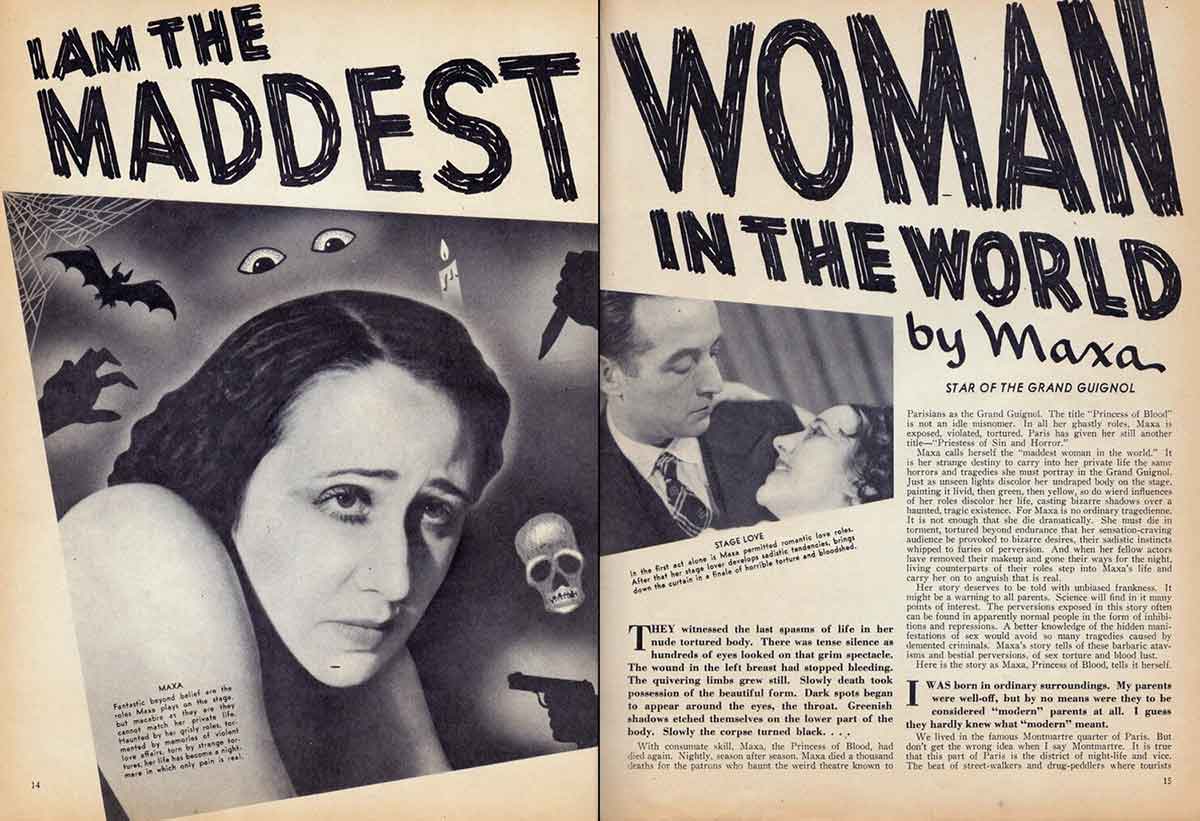
The diversity of The Grand Guignol’s violence and stage effects could not be illustrated better than by the example of its greatest celebrity. Actress Paula Maxa was the superstar of the theater, reportedly murdered on stage more than 10,000 times in at least 60 ways. She was devoured alive by a puma, cut into 90 pieces and stitched back, disemboweled with her intestines stolen, crucified, burnt alive, and generally murdered and sexually assaulted in every possible way. To the disdain of a present-day viewer, sexualized violence was an important part of Grand Guignol’s plays. Sometimes, it was extremely fetishized, and it was always deeply unsettling.
Paula Maxa made a successful career out of her onstage suffering but had no luck in her personal life. It seemed that her onstage persona of a tormented and suffering woman attracted men ready to take advantage of her. With a twist of bitter irony, Maxa’s artistic identity turned into her own downfall. During one of her performances that featured her signature high-pitched scream, she injured her vocal cords and could never fully recover.
Fake Blood
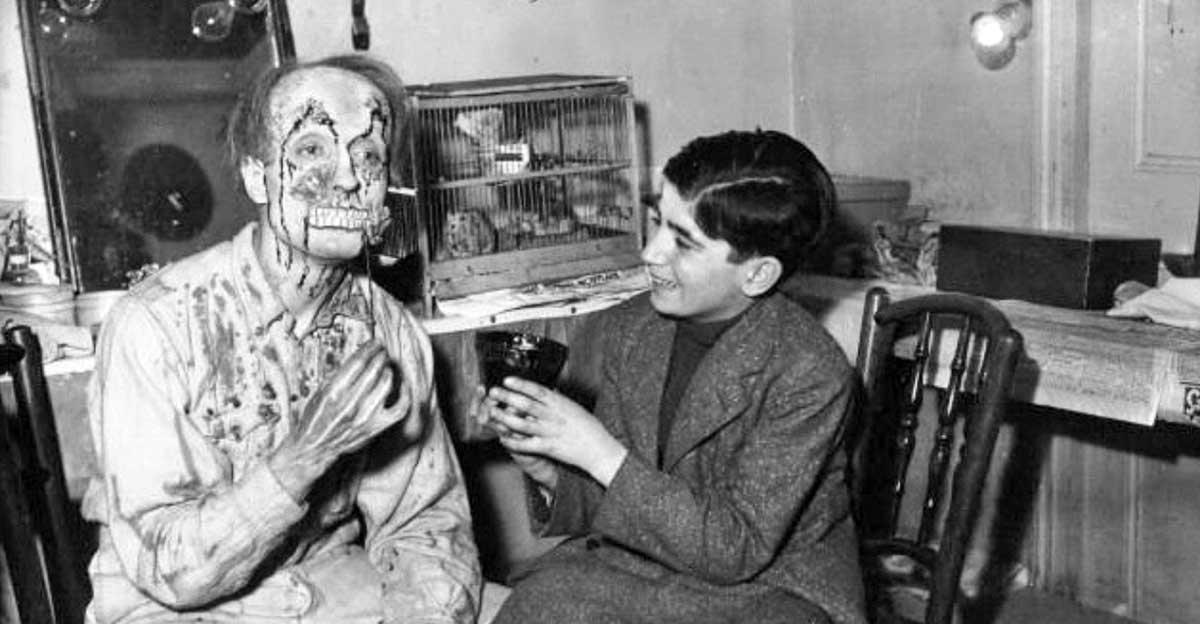
At The Grand Guignol, fake blood was measured not in drops or vials but in buckets. Paula Maxa remembered how, after every performance, she had to soak in a bathtub for hours, washing off liters of red liquid. Clothes soon became ruined after constant harsh washings, while hair became a mess too, sticky with clots of dried fake blood. Paul Ratineau had a specific blood recipe for each type of wound and the time that supposedly passed after it was inflicted. Fake blood was usually gelatine-based, which allowed it to coagulate if needed. Sometimes, prop designers failed to make the right blood tone, and then the whole mixture was re-made into puddings and flans for the entire theater team.
Eyes and Limbs
Despite its popularity, The Grand Guignol always ran on limited funds, so the solutions for stage effects had to be both impressive and cheap. Many of the props, like knives with retractable blades or hidden pumps with fake blood, were pretty standard for the time. Some inventions were more impressive: for the illusion of limb amputation, Ratineau and his team designed furniture with hidden compartments so that actors could hide their actual arms or legs and replace them with props.
The most impressive tricks were usually simple yet not always pleasant. To imitate eye-gouging (one of the most popular torture techniques in The Grand Guignol shows), Paul Ratineau bought animal eyes in bulk from local butchers. Another popular way of inflicting trauma was to throw acid in someone’s face. To imitate burns, actors hid plastic containers of stage blood, vaseline, and raspberry jam that they generously smeared over their faces while pretending to writhe in agony.
The Grand Guignol stage was small and closely adjacent to the seats, thus making every artistic manipulation extremely complicated and easily visible to the audience. For that reason, Gatineau had to come up with clever and unconventional ways to imitate wounds and apply makeup. One of the classic Grand Guignol plays featured a scene of torture by cutting off strips of flesh from the victim’s back. To make the scene convincing, Gatineau proposed to cover the actress’ back with strips of adhesive plaster, flesh-colored from the top and red from the bottom. During the torture scene, her tormentor discreetly spilled fake blood over her back and slowly removed the plaster strips while seemingly cutting her skin with a knife.
PR Tricks
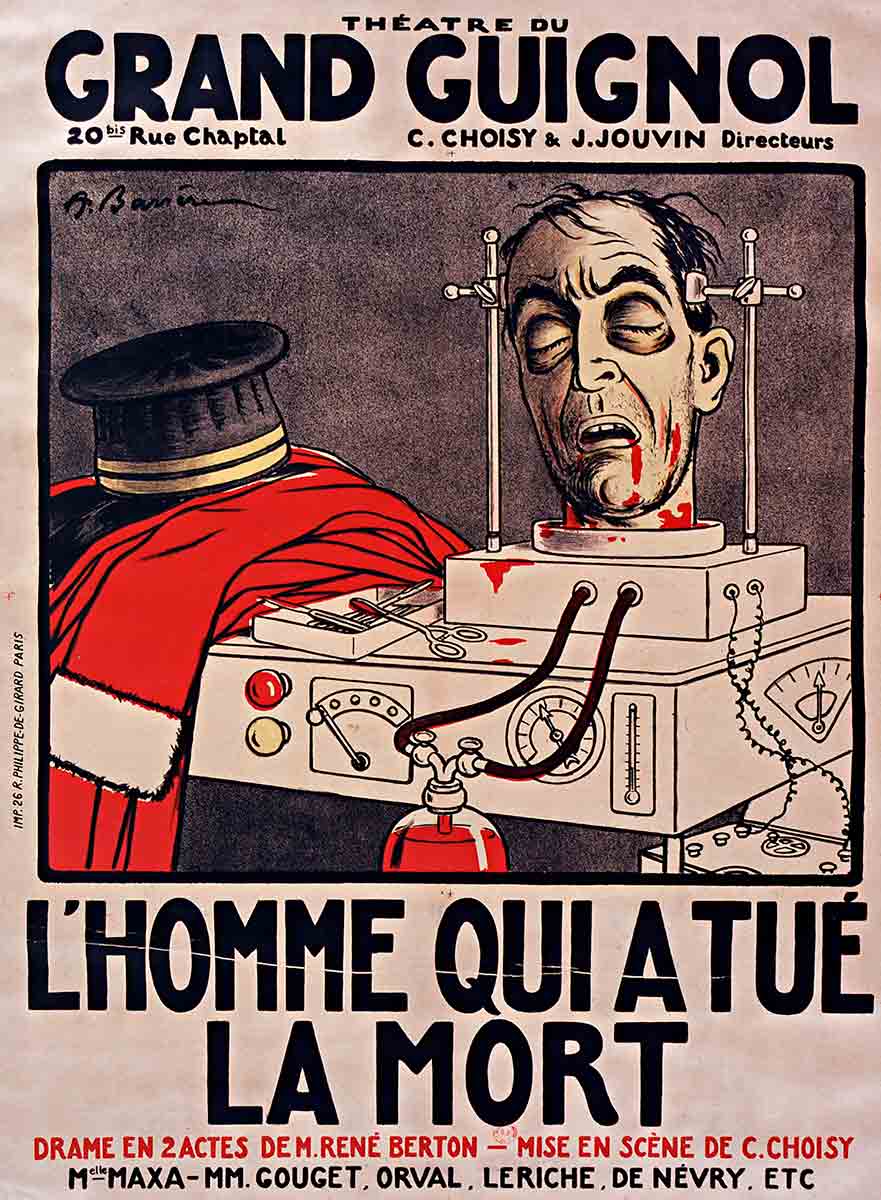
The manipulation of The Grand Guignol was not limited to stage performance. Publicity stunts were common occurrences and started with the first owner of the place, Oscar Metenier. Before performances, he strolled the streets of Pigalle dressed in all black and accompanied by two bodyguards. He loudly recounted details of the most recent and most horrific crimes he read in a fresh newspaper.
During the golden age of The Grand Guignol, under the guidance of Max Maurey, PR stunts became more refined and subtle. Maurey started by hiring a permanent doctor for the theater. A seemingly innocent gesture, it nonetheless provoked interest since there was a kind of theater that required the presence of a medical professional.
Furthermore, Maurey spread rumors about the audience members constantly needing medical help. The most notorious anecdote eagerly spread by the director stated that once, during a particularly gruesome performance, a man in the audience collapsed in shock. Actors and spectators desperately called the doctor until they realized that the unconscious man was, in fact, the theater’s doctor. Popular newspapers reprinted (after Maurey’s endorsement) a caricature of a physician checking the health of audience members before admitting them to The Grand Guignol.
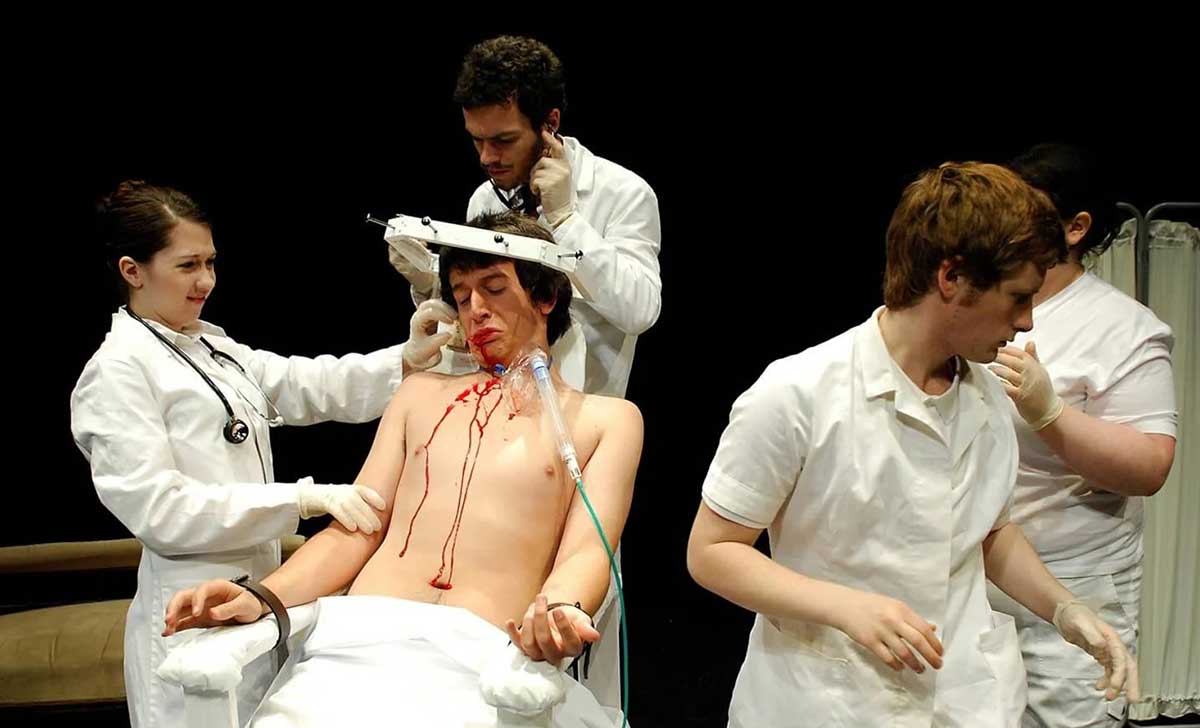
According to The Grand Guignol statistics, audience members fainted at the average pace of two per performance. The record was fifteen faintings per one show during a particularly graphic scene of blood transfusion. Contrary to popular expectations, men lost consciousness much more frequently than women.
Apart from faintings and occasional outbursts of anger, there was another sort of public reaction in the crowd. The theater building was previously a pseudo-Gothic chapel with its inner architecture still intact. Thus, confessional booths were used by those who wanted to remain anonymous or those who became too excited while watching a show. A small yet significant part of The Grand Guignol’s audience came to be people aroused by violence onstage. Sometimes, the sounds became so intense that the actors had to stop the show and ask the anonymous guests to be quiet. For sure, The Grand Guignol was a revolutionary and impactful theater project, yet the building’s cleaners certainly had different opinions on it and its visitors.
Violence as Therapy: The Ethical Implications of The Grand Guignol
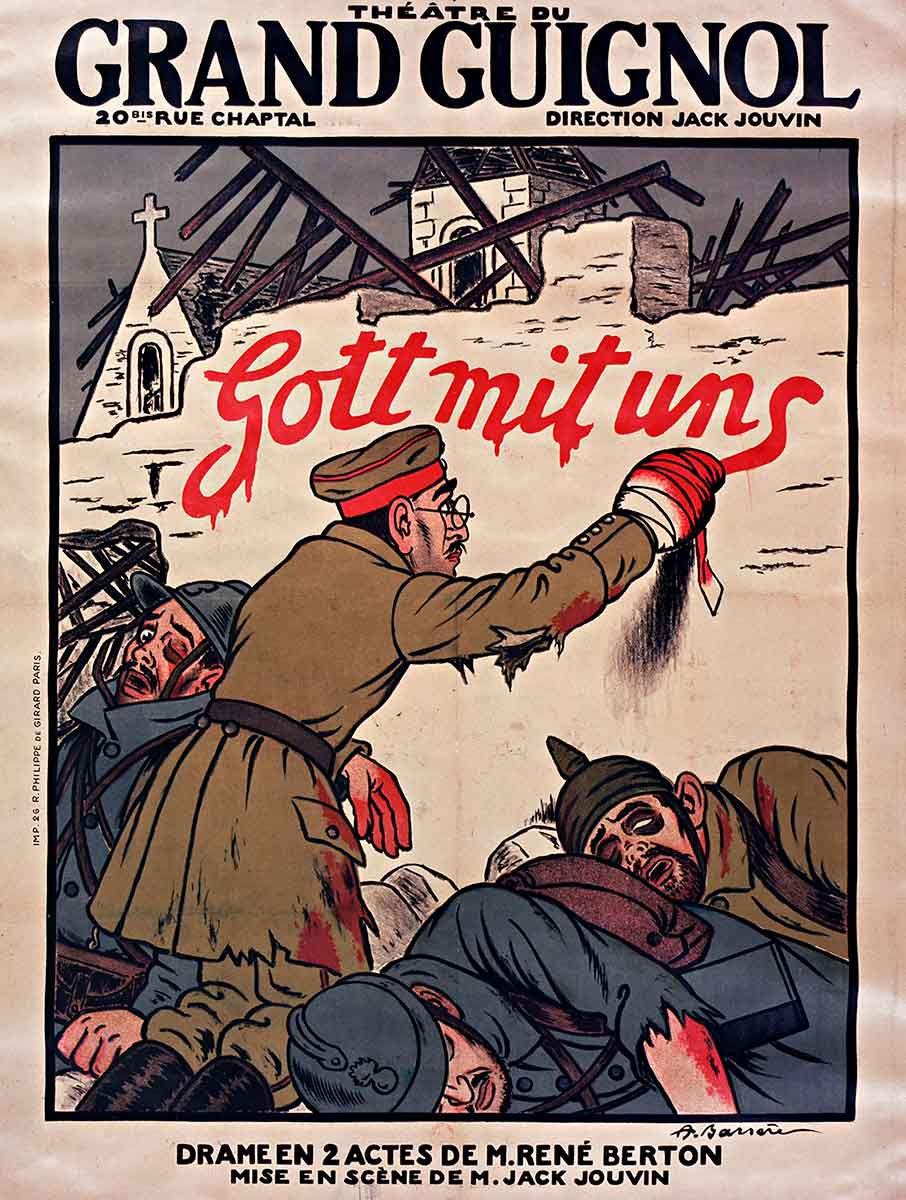
Once, during the final phase of World War I, a group of severely wounded soldiers was awarded a trip to Paris. The veterans dined in the best restaurants and were brought to watch a Grand Guignol performance, allegedly to boost their morale. Military reports called the event a great success. Yet, present-day psychiatrists would definitely question the idea of entertaining war veterans, who were already traumatized physically and mentally, with more violence, even if it were fabricated.
However questionable this decision was, most experts agree that The Grand Guignol acted as a safe container of shared violent impulses that could be expressed in a safe setting and with no harm. Collectively repressed feelings and desires found their way to the stage in their most grotesque and exaggerated form. This was the case until reality caught up and surpassed any form of fiction. After World War II, with its concentration camps, bombings, and medical experiments, fake violence displayed for fun had lost its charm and stopped being as exciting.