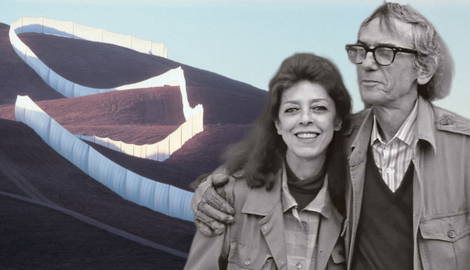

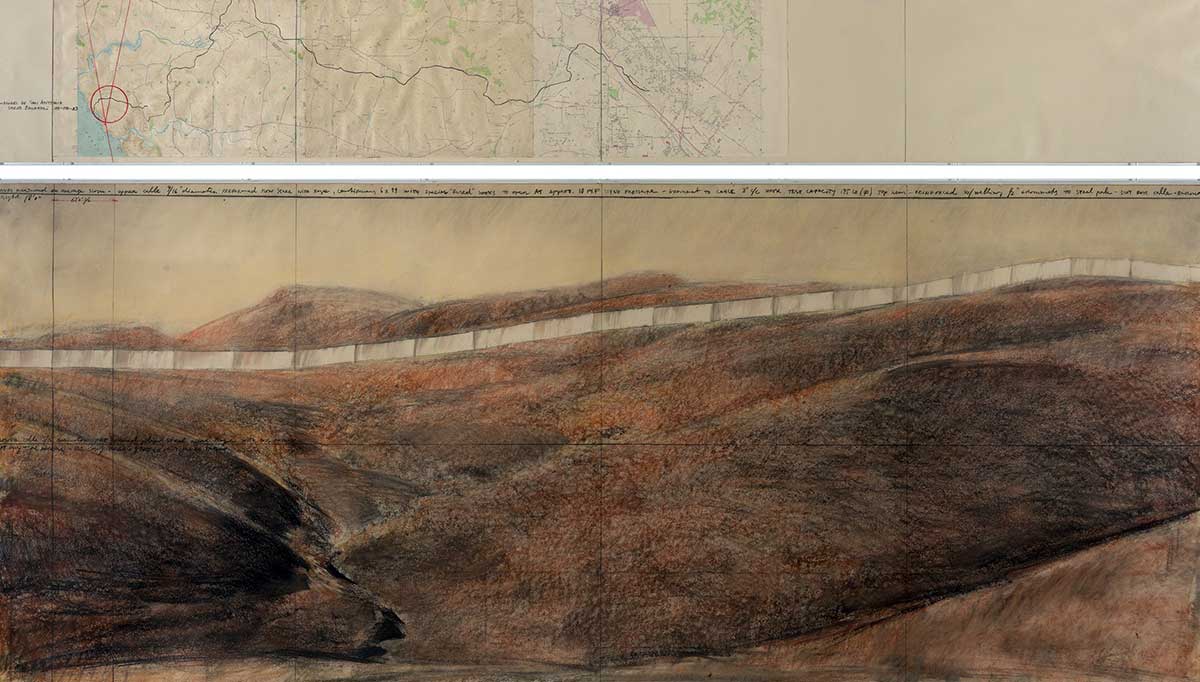
Born on the same day at the same hour, Christo and Jeanne-Claude spent most of their lives together as partners in life and work. Their large-scale installations usually involved wrapping objects or manipulating fabric, creating the illusion of movement. One such project was the Running Fence, a white nylon wall that crossed 25 miles of Californian hills. Read on to learn more about the artistic significance of the Running Fence, the famous work by Christo and Jeanne-Claude.
Who Were Christo and Jeanne-Claude?
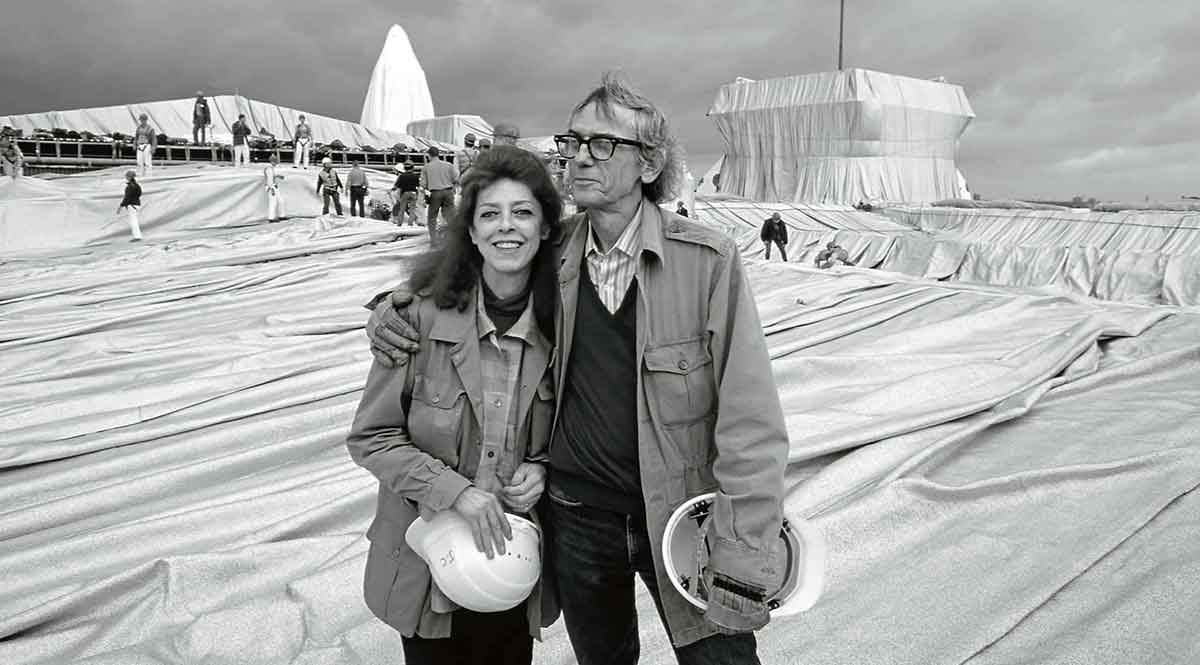
Christo (Christo Vladimirov Javacheff) and Jeanne Claude (Jeanne-Claude Denat de Guillebon) were famous artists who shared professional and personal lives for more than five decades. They were born on the same day at the same hour in 1953 and spent most of their lives creating large-scale works that interacted with already existing landscapes.
They came from dramatically different backgrounds. Christo was born in Bulgaria to the family of a fabric factory owner, who lost his business after World War II. As a poor art student, Christo traveled through Europe painting portraits. One such commission was for Jeanne-Claude’s mother in 1958.
Jeanne-Claude was born into a privileged family of French officers in Tunisia, studied in Switzerland, and could have lived a conventional life—had it not been for her meeting with Christo. In 1961, they began creating works together. Jean-Claude died in 2009, and Christo continued to work on their artistic projects for ten more years until he passed away in 2020.
The Origins & Legal Battles of “Running Fence”
Many of Christo and Jeanne Claude’s works were in some way connected to the movement of fabric and the idea of wrapping something in it. They used draperies, so prominent in art of all ages, as separate artistic materials that gave fluidity and dynamism to objects, and transformed them into purely aesthetic elements, erasing their functions. Another important component of their works was their impermanence. Christo and Jeanne-Claude always limited the lifespan of their installations and never repeated those that were already presented once.
The idea for the Running Fence came to Christo and Jeanne-Claude seemingly out of nowhere. In the winter of 1972, they saw a long snow-covered fence that somehow emphasized the landscape it separated with its thin white line. They decided to reconstruct it in California, by asking sixty local farmers permission to use their land. It took them almost two years to obtain all necessary permissions, as California authorities were concerned about the possible ecological impact of the work, as well as the actual artistic value of it. After eighteen public hearings, the couple finally received all the necessary permissions. The construction work began in 1976.
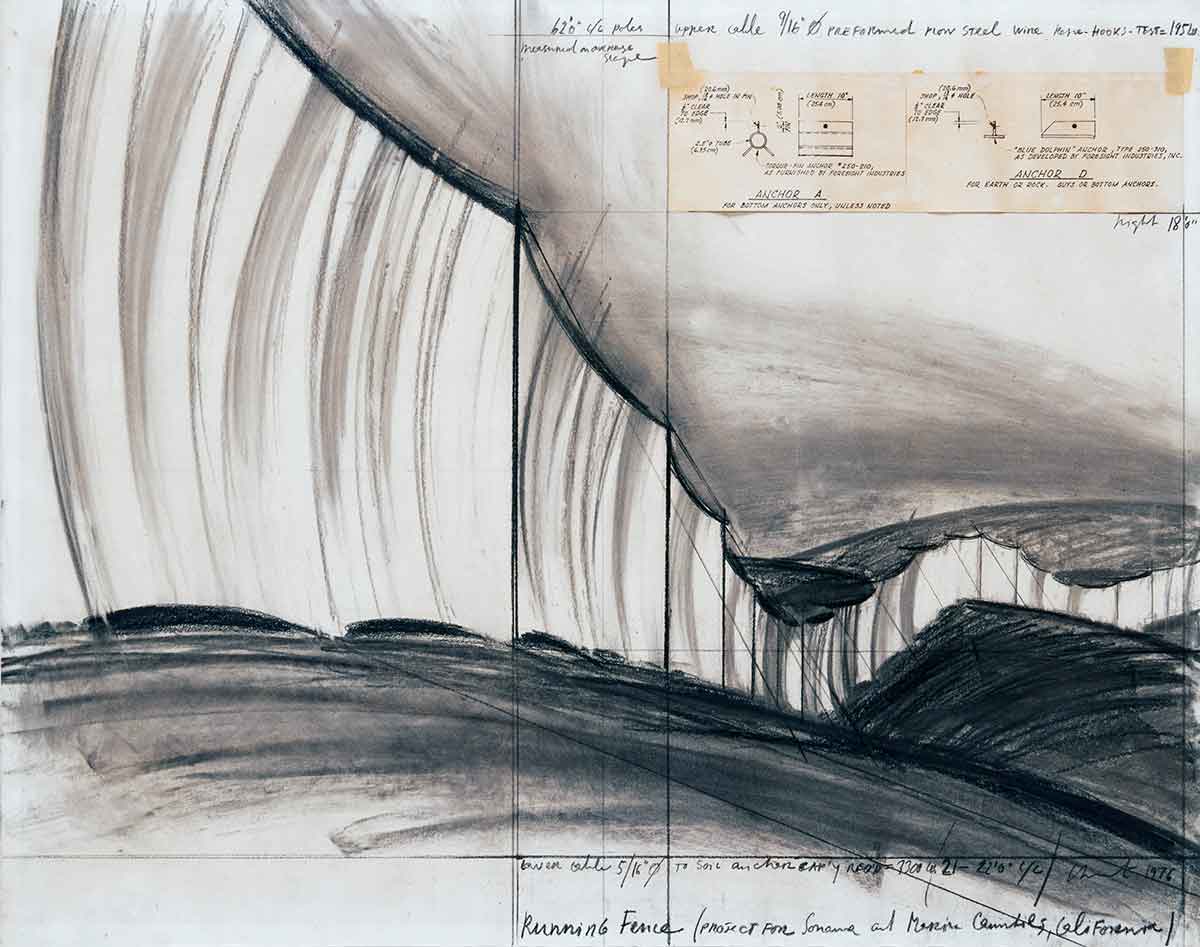
California was not Christo and Jeanne-Claude’s first choice. The initial project had much more grave and politically charged connotations, as it was intended to be built in West Berlin. The fabric fence was supposed to cover the view of the Berlin Wall as if erasing it from the city. However, obtaining permission for such a project in Germany was next to impossible, and artists decided to sacrifice political connotations to ensure the realization of their project.
Constructing the “Running Fence”
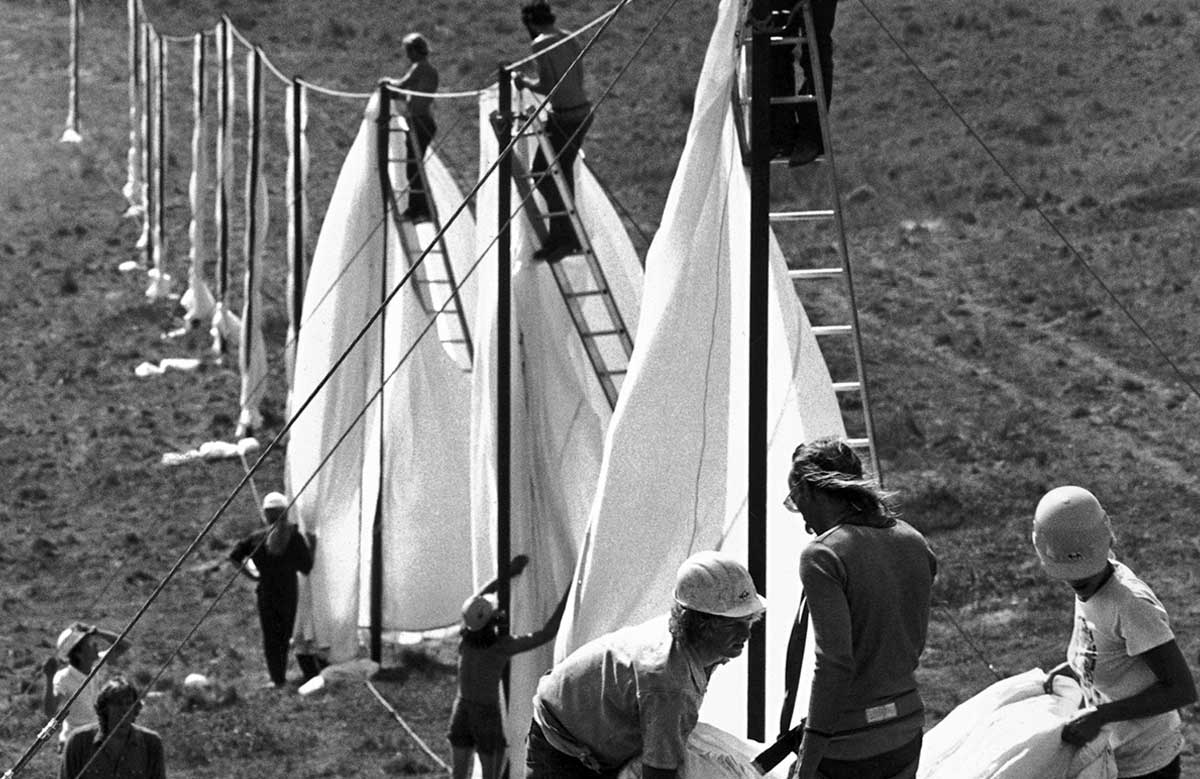
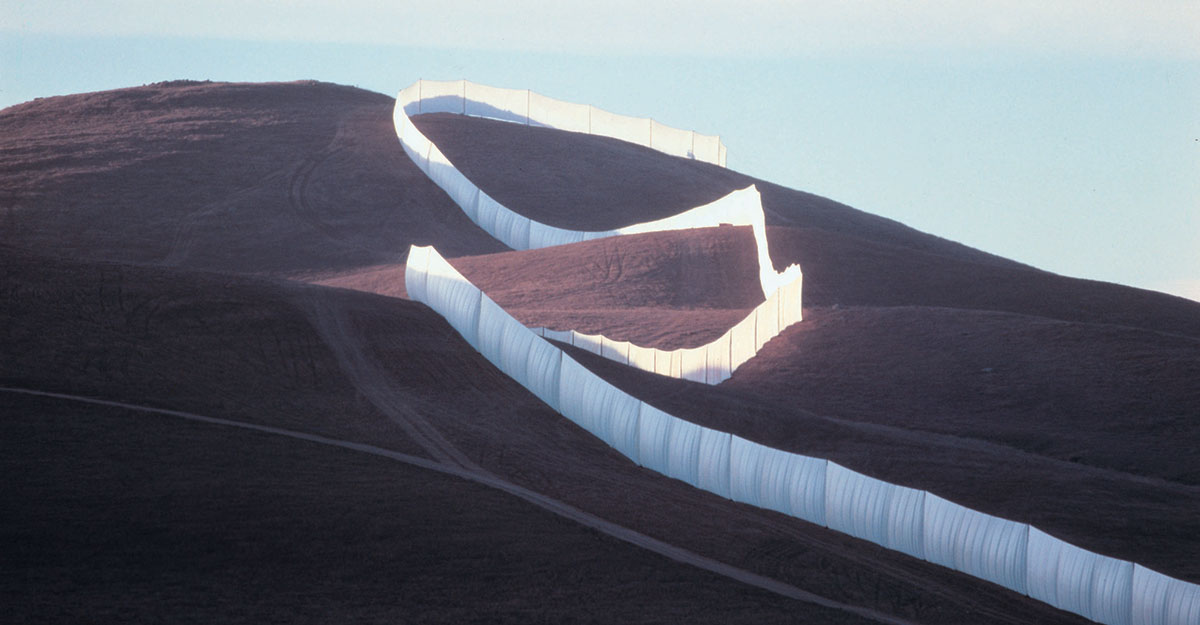
The structure of the Running Fence consisted of 238,400 square yards of white nylon fabric, 2,000 steel poles, 145 miles of steel cable, 350,000 hooks, and 13,000 anchors that connected the structure to the ground. The crucial part of Christo and Jeanne-Claude’s concept was its complete reversibility. After the project was finished, the artists planned to remove the work leaving no trace of its past presence, and give the remaining materials to construction workers so they could either sell them or repurpose them for their own needs. Economic sustainability was another important aspect of Jeanne-Claude and Christo’s work, as they fully financed their projects on their own, selling artworks specifically created for raising money.
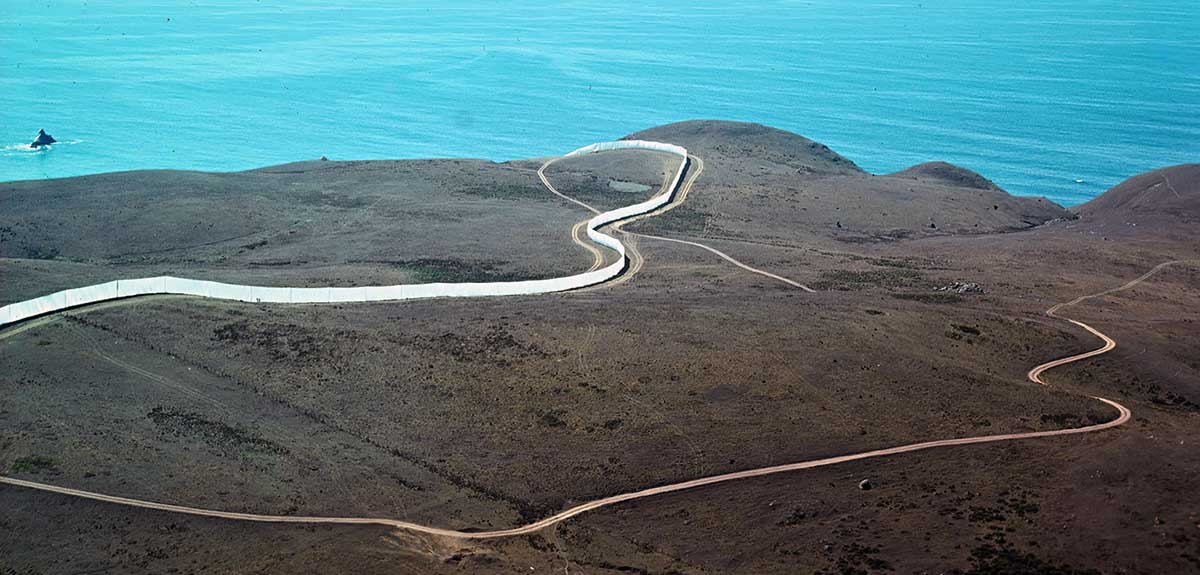
The construction took four months and involved more than 400 workers. All of them were local residents who were fully paid by Christo and Jeanne-Claude. The final result was a flowing white wall 16 feet tall and 25 miles long. The artists considered all paperwork and blueprints for the project equally important parts of the work, as well as the 400-page report on the ecological impact of the work on local ecosystems.
Over its short two-week existence, the Running Fence attracted more than 2 million visitors. The thin white strip of a fence seemed to be constantly moving, shaped by the wind and highlighted by rays of sun. One end of the wall dropped directly into the Pacific Ocean, and the other hit US Route 101.
The Reception and Influence of the “Running Fence”
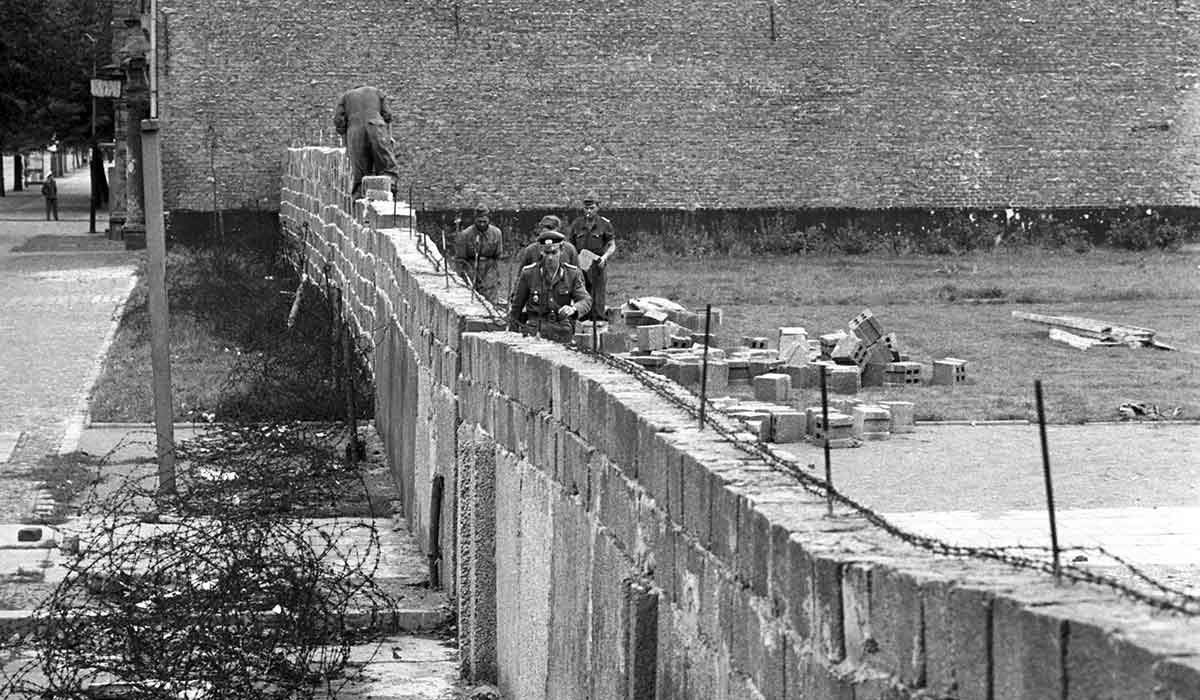
In 1989, just a few months before the demolition of the Berlin Wall, Russian-American poet Joseph Brodsky visited Berlin. Born in Leningrad (currently Saint-Petersburg, Russia), in 1940, Brodsky was expelled from the Soviet Union for his anti-Soviet stance and unconventional poetry in 1972 and spent the rest of his life in the USA. During his trip to Berlin, Brodsky wrote a poem. He called the Wall the “concrete forerunner of Christo” that runs through cities and fields that were colored with scoured blood. Although there is no proof that Brodsky and Christo knew each other, the poet likely visited the couple’s exhibitions or at least read about them.
The Berlin Wall and Christo and Jean-Claude’s fence look formally similar, yet represent entirely different purposes: separating communities versus building them, constructing artificial borders versus cherishing the natural landscape. Despite the appearance of permanence and stability, from the historical point of view the Berlin Wall proved to be not much more durable than the nylon structure of Christo and Jeanne Claude.
Running Fence became one of the key works that invited other artists to interact with environments in a sustainable way, and consider natural landscapes as already existing artistic expressions. Over time, it also developed new political connotations regardless of the artists’ involvement. In 2016, after the first presidential victory of Donald Trump and his announcement of plans to build a wall separating the US from Mexico, conceptual artist Luis Camnitzer published a petition addressed to the president. He proposed to commission Christo with the creation of the new Running Fence version, turning “a racist project into a public art event.”