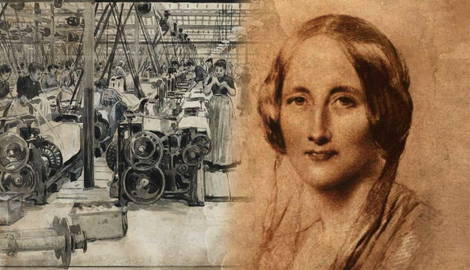

Before her rediscovery by feminist literary critics in the 1970s, Elizabeth Gaskell was not as highly thought of as male contemporaries who wrote in a similar genre and style, such as Charles Dickens and Anthony Trollope. Invariably known as Mrs Gaskell as if to dismiss her work as the jottings of a housewife, she was discussed much like her predecessor Jane Austen, as a writer of sentimental novels about relationships between men and women. But this tells only half the story, neglecting how Gaskell thought of the novel, especially social realism, as a vehicle for real political change.
Elizabeth Gaskell & Unitarianism in England
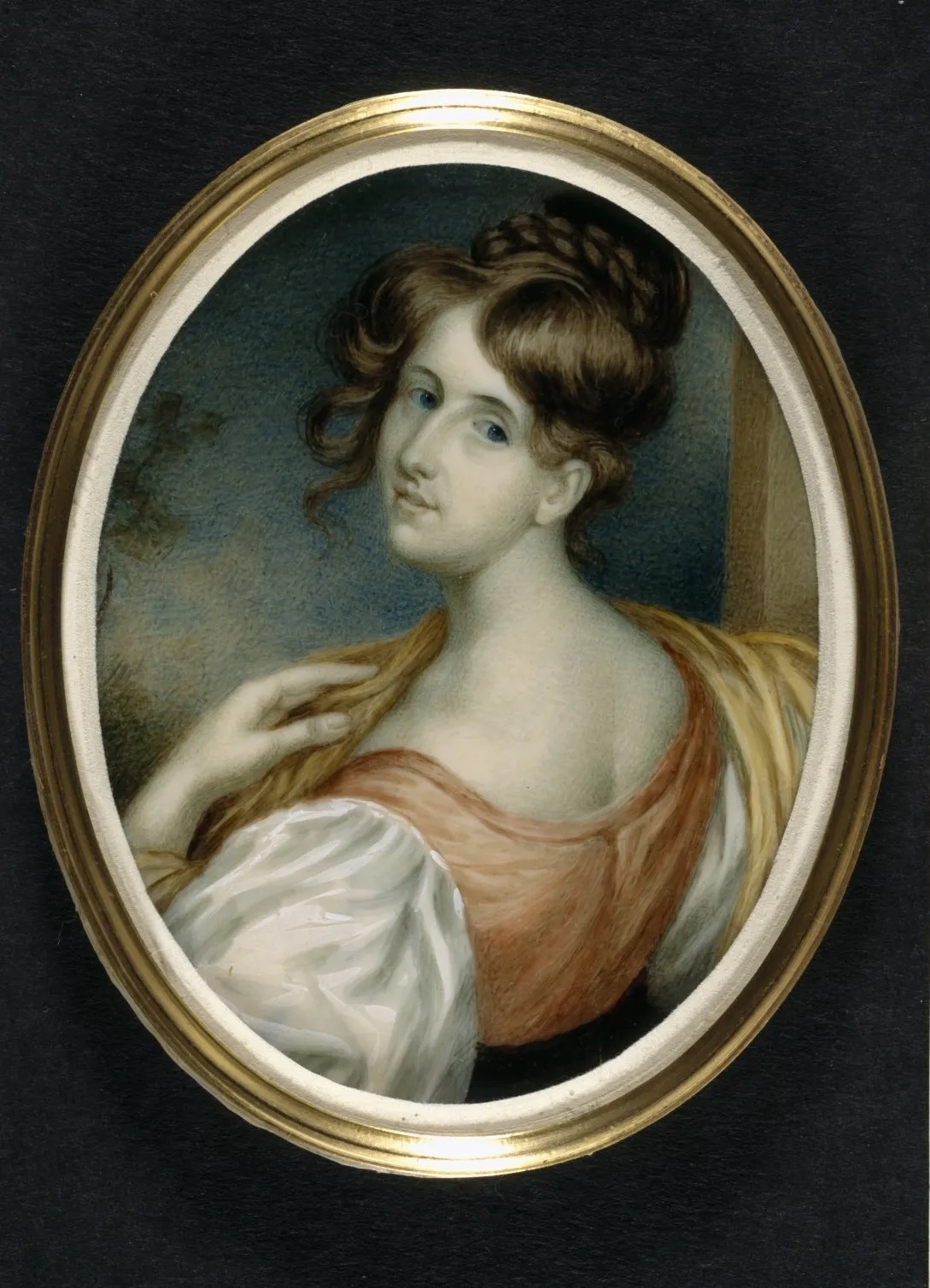
Two parts of Elizabeth Gaskell‘s background are especially important: firstly, that she was born into, then married into, a fervently Unitarian household, and secondly, that she lived in Manchester.
Gaskell was born in 1810, the daughter of a Unitarian minister, William Stevenson. She was raised by relatives in northwest England, where Unitarianism thrived, including in prominent families such as the Wedgwoods and the Darwins. When she was 21, she married William Gaskell, who was also a Unitarian minister.
In the days before Parliament decreed to extend legal rights to those of all religions, being a Unitarian meant subscribing to a nonconformist way of life, not just a set of beliefs. Its crucial divergence from the established faith of the Church of England lay in its rejection of belief in the Trinity. Unitarians believe in the historical existence of Jesus Christ as redeemer of mankind, but in God alone as creator of the universe.
Because of this, Unitarians were unable to attend Oxford or Cambridge, where all students were required to affirm the Thirty-Nine Articles in line with Anglican doctrine. In earlier centuries, this exclusion would have been a significant hindrance for any men wishing to enter ‘traditional’ professions, such as law and medicine. Women, regardless of faith, were unable to attend the universities at this time anyway.
By the early 19th century, however, Unitarians were attending other universities around the country and setting up institutions for the growing numbers in their community, founded on their principles, which prized education and charity.
Victorian Unitarians believed in extending access to education, along both class and gender lines. At a time when around two-thirds of men and only half of women were literate (Lemire 2013, 249), Unitarians like William and Elizabeth Gaskell firmly believed in teaching children to read and write, thus giving them access to a better life.
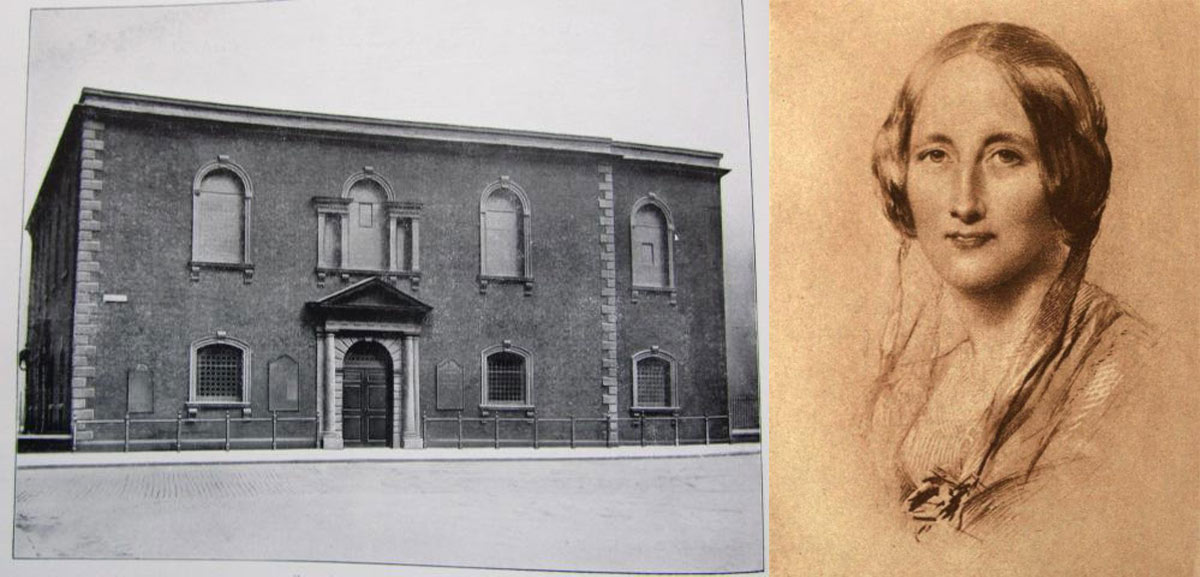
In addition to supporting the Unitarian community at Cross Street Chapel, where William Gaskell preached, the couple undertook outreach work. This involved teaching and lecturing, but also collecting charitable subscriptions and alleviating people’s suffering during outbreaks of cholera and typhus. The hardest-hit communities in these epidemics were the poor, especially in the Gaskells’ home city of Manchester.
Victorian Manchester
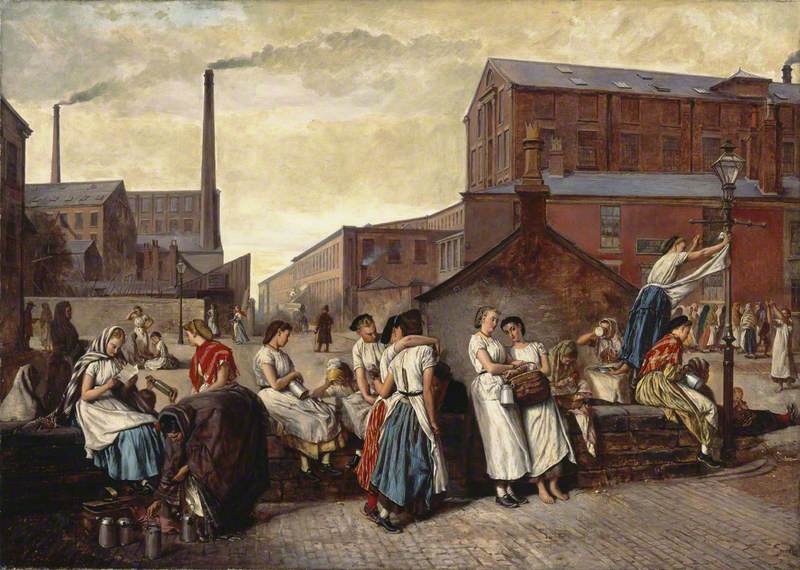
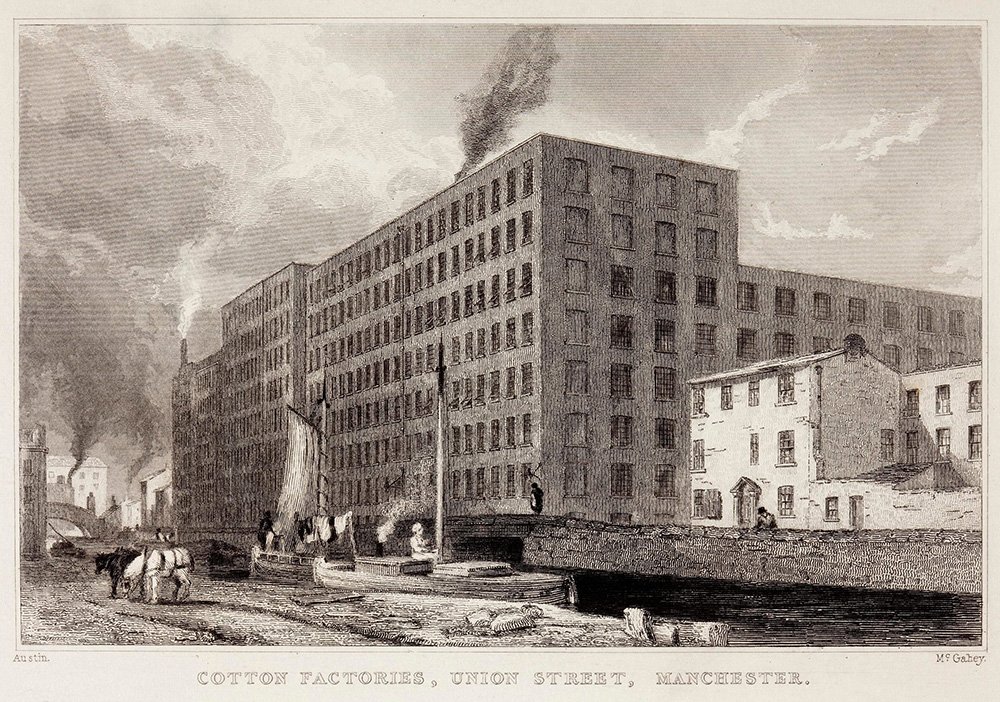
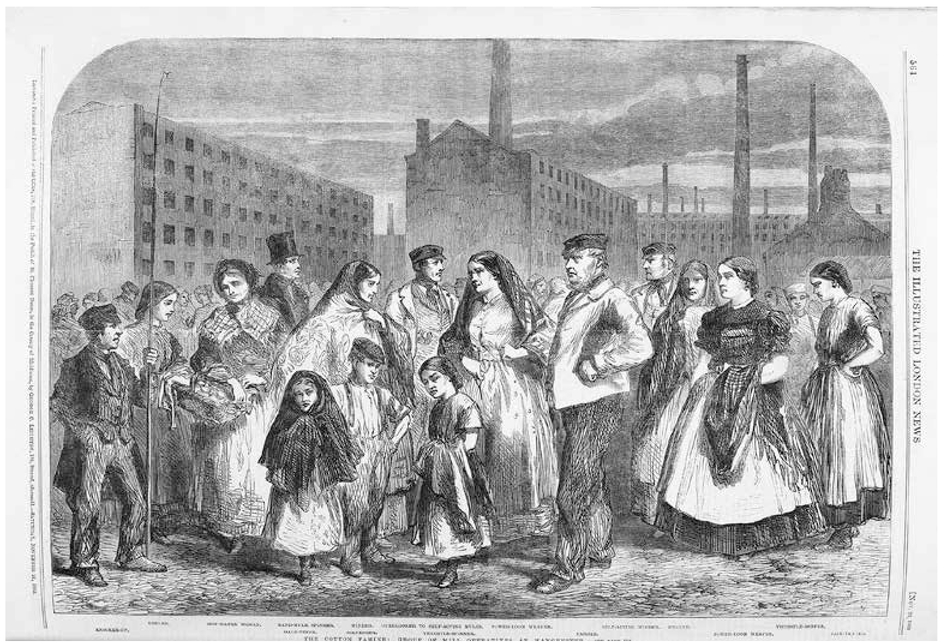
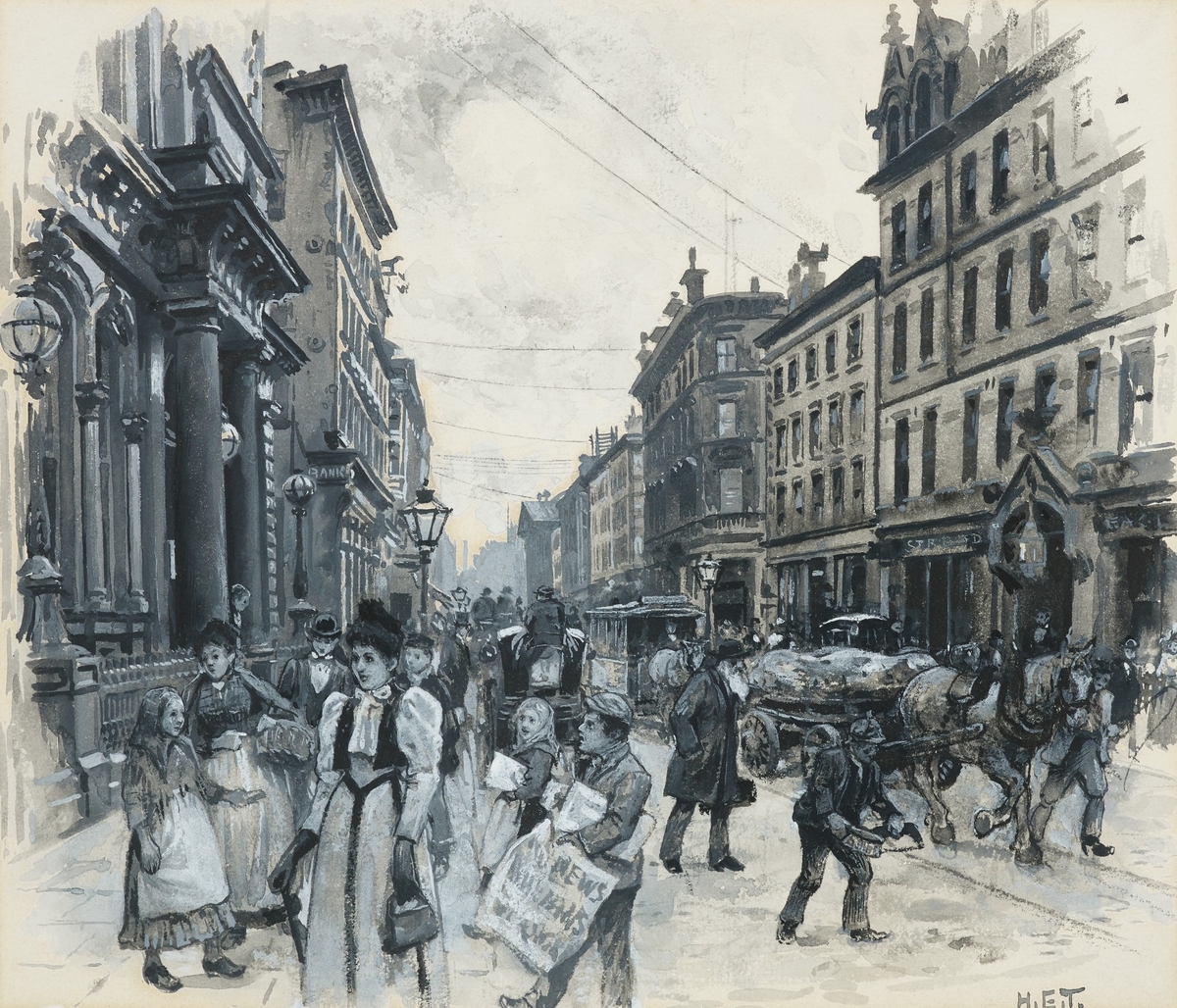
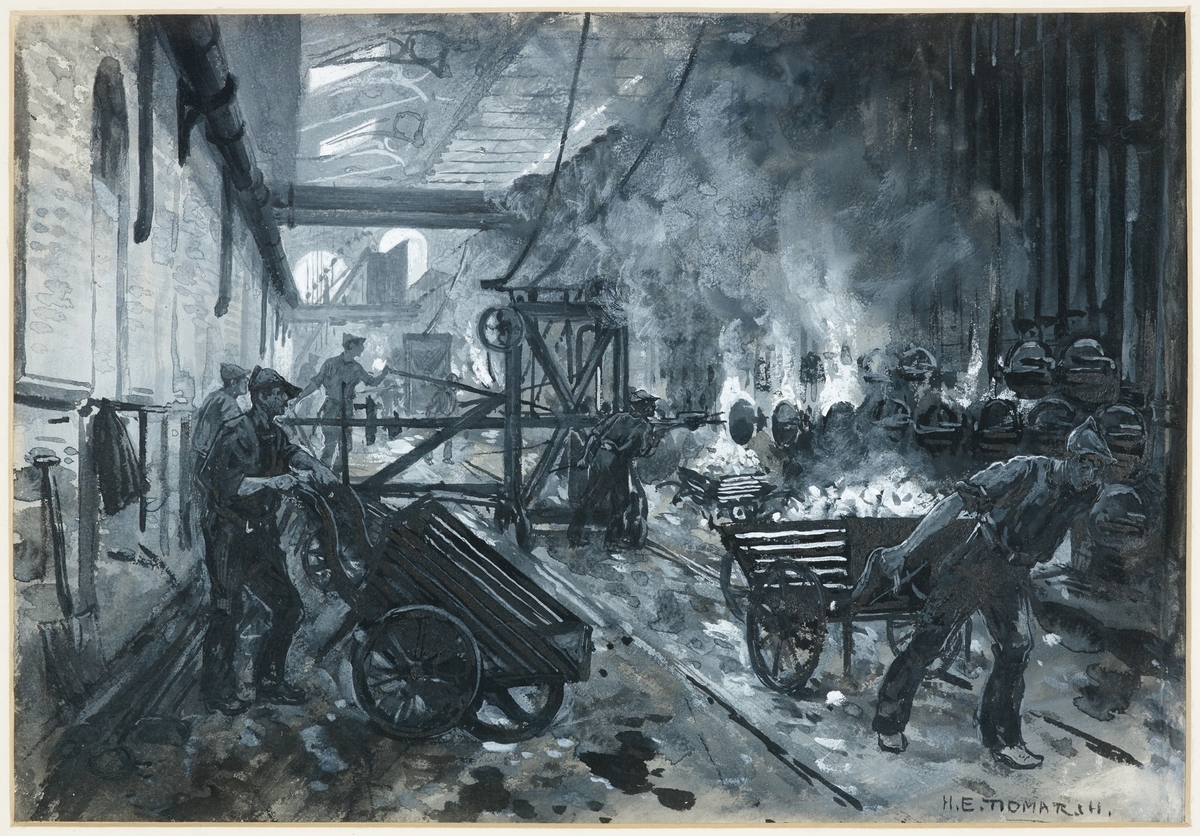
Several of Gaskell’s novels are set in Manchester or a fictionalized version of the city. Around 1800, Manchester’s population was about 4,000, but within just a few decades, and by the time Gaskell was living there, this figure had jumped to 400,000. The city’s growth was fueled by its industries, especially its cotton mills. One writer in Charles Dickens‘s periodical Household Words, where Gaskell would publish many of her stories, referred to Manchester in 1854 by its common nickname, Cottonopolis. At this point, there were 108 cotton mills in the city.
As many eminent visitors to the newly famous city remarked, Manchester’s booming industry had various negative side effects, some more immediately noticeable than others. They remarked on its dark, smoky skies, its thick and cloying air, and the omnipresent clatter of machinery. Nearby Salford, now part of Greater Manchester, was similarly buoyed by its factories in the 19th century, giving the place an atmosphere that Ewan MacColl would later capture in the song Dirty Old Town (written in 1949).
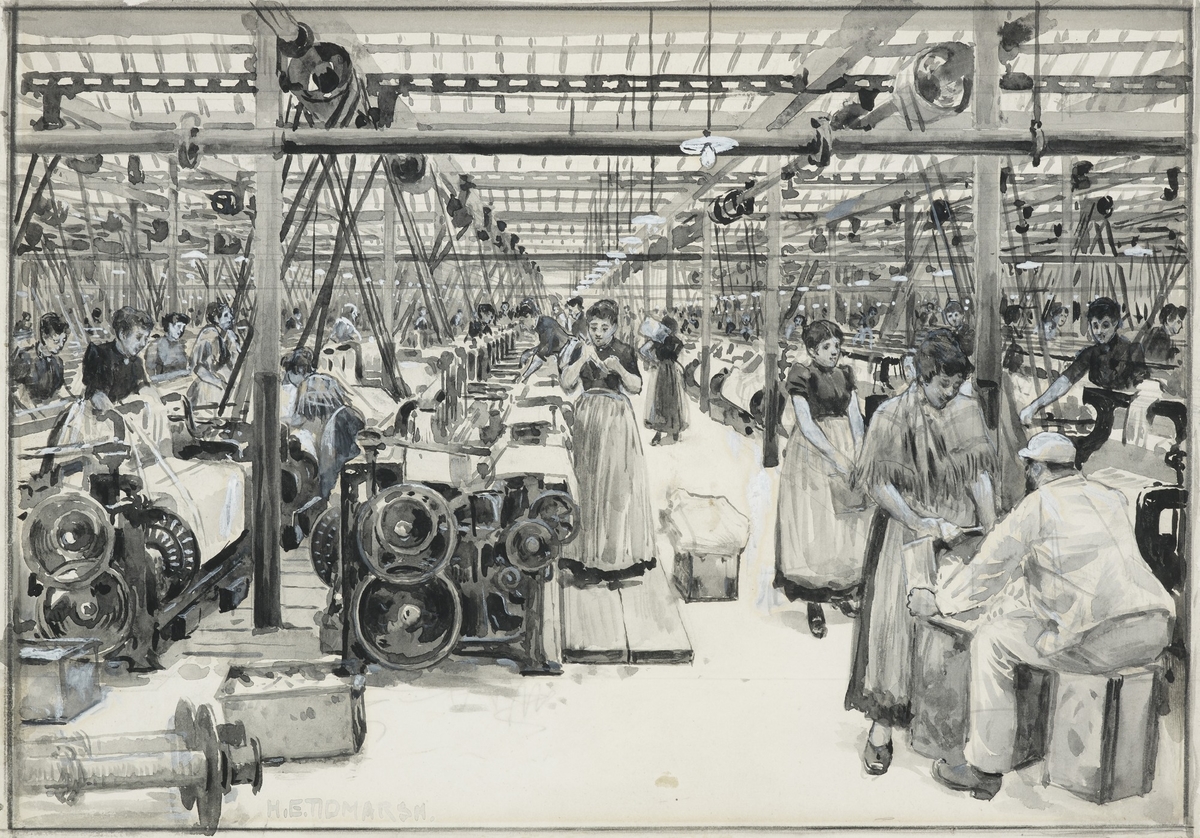
If you could see through the smog, as Friedrich Engels tried to do during his stay between 1842 and 1844, you might notice too the vast disparities in living conditions produced by the city’s rapid onward march. In The Condition of the Working Class in England (first published in German in 1845), Engels explained the detrimental effect of the Industrial Revolution on working people.
Whatever capitalists might claim about these machines representing progress, city-dwellers, especially in Manchester, were dying in higher numbers than before, crammed into close, unsuitable housing, which in many areas amounted to slums, where diseases spread quickly. To lose at least one child was a common occurrence for families, whether to illness or starvation, since low wages and an increasingly uneven distribution of wealth meant that many families struggled to support themselves.
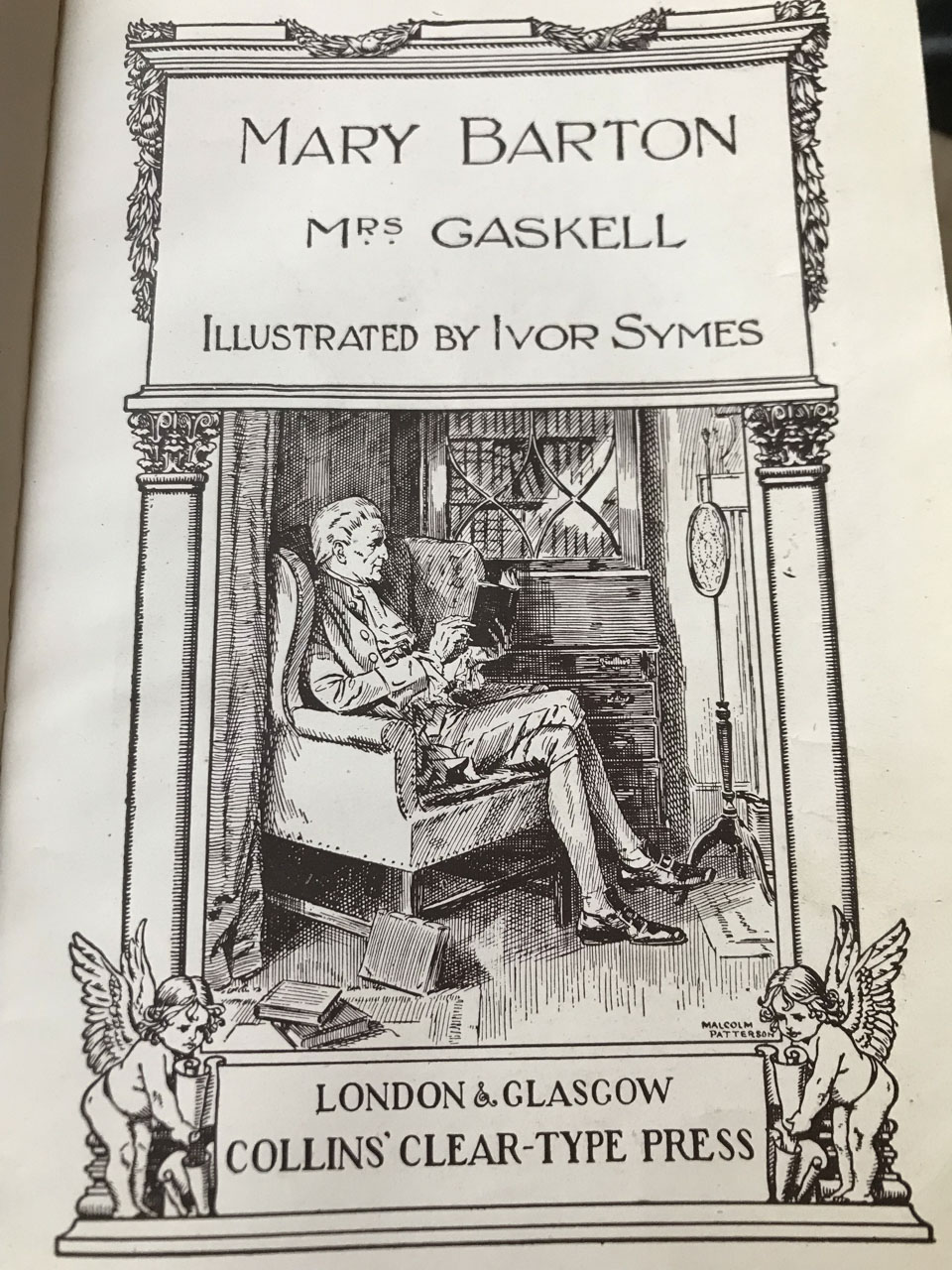
All of the conditions that Engels described found their way into Gaskell’s writing. Her first novel was published just a few years after Engels’s book, in 1848, and arose from her own experience of losing a child.
Her son, William, died in 1845, aged just nine months, and Elizabeth and her husband discussed the possibility that writing might help with her grief. As it turned out, Gaskell’s firsthand knowledge of losing a child equipped her to write about it with deep sympathy in this first novel, Mary Barton, which is full of the prevalent loss and grief faced by ordinary families in Manchester at this time.
Gaskell was not of the same class as Mary Barton and many of the families she wrote about, but she had strong connections with working people through the work she and her husband undertook around Manchester. This also meant she was able to fill the book with authentic dialect words and snatches of local poetry and song, which she used as epigraphs for the novel’s chapters.
Mary Barton is about the disparity between mill owners and mill workers. There are industrial strikes early in the novel, and these tensions result in a mill owner’s son being murdered, which became the catalyst for the more sensational parts of the plot later in the novel.
Gaskell’s narration shows sympathy for both sides, drawing parallels between the family who loses their child to poverty and the wealthy family who loses their child to murder. Indeed, she believed in the realist novel’s capacity to foster understanding between people of different backgrounds. This did not mean, though, that she would shy away from depicting working-class living conditions in all their horror, just as Engels had.
Contemporary Controversies
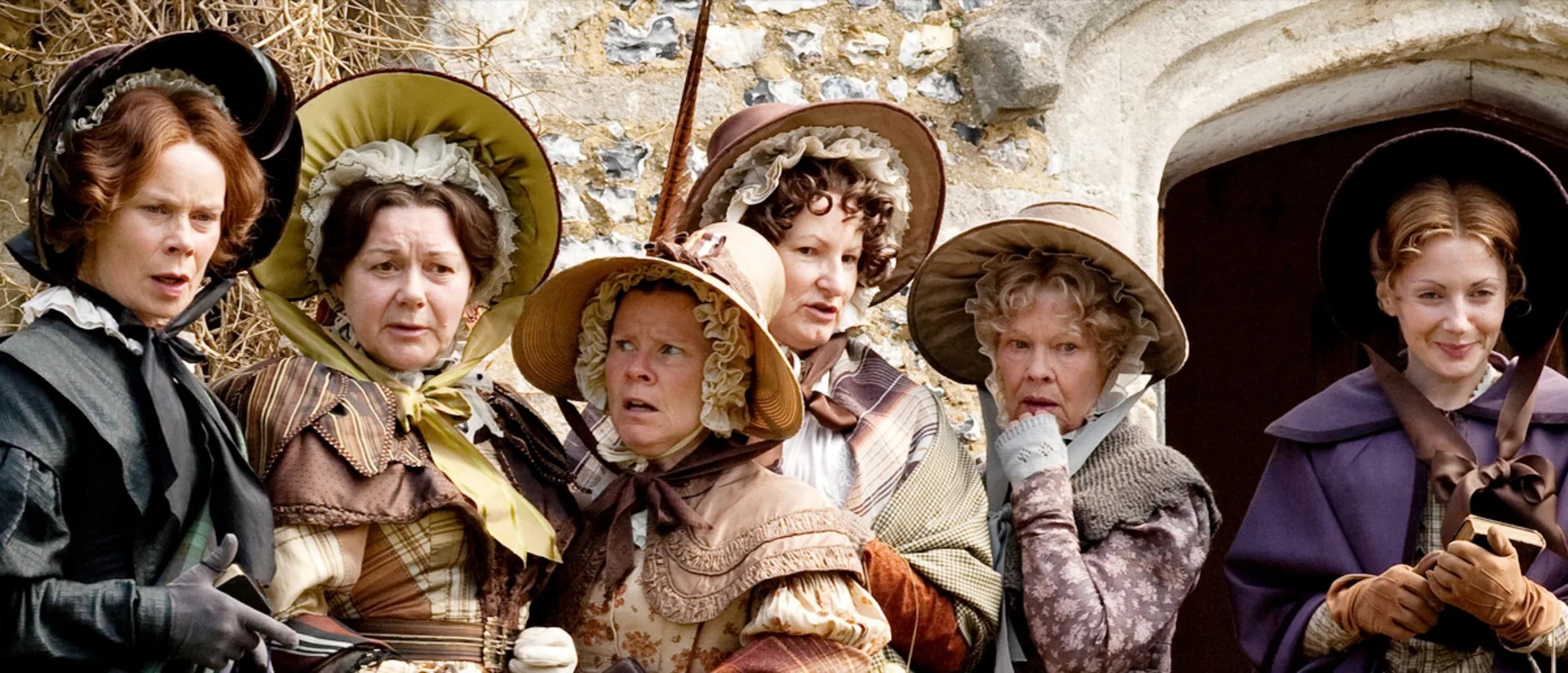
From the way critics well into the 20th century wrote about “Mrs Gaskell,” or perhaps from her reputation as the author of works which formed the basis for the BBC period drama Cranford—set in a countryside village and replete with ladies in bonnets—it might be surprising to learn that Elizabeth Gaskell’s early writing caused controversy.
Mary Barton was published in 1848, and while Britain did not witness the kinds of uprisings which took place on the Continent that year, commentators in the British press were still keenly conscious of the issue at the core of these revolutions: democracy and the rights of working people.
Chartism was at its height at this time, a movement that called for extending the vote to all men over 21 years old and for a more egalitarian system of government that represented the needs of everyone in society. Mary Barton spoke directly to these ideas, despite its plot ultimately leaning towards sensationalism and revolving around the heroine’s desperate quest to exonerate her lover from the false charge of murder.
Gaskell had originally wanted to call the novel John Barton, focusing on the heroine’s father, a mill worker and trade union man who is increasingly worn down (physically and spiritually) by the struggle to alleviate the woes of his family and those around him. Had the novel been this more unstinting portrait of the plight of an ordinary man, its political impetus might have been more obvious.
But even so, the novel struck contemporary reviewers as contentious, unfairly biased against the oppressive mill owners. Gaskell’s refusal to shy away from the realities of working-class life—from minor things, such as the inclusion of dialect, which some readers may not have understood, to major ones, such as the scenes of infant death—was too much for some.
Mary Barton had been published anonymously, so these critiques were not directly aimed at Gaskell. But when her next novel, Ruth, came out in 1853, it was identified as being “by the author of Mary Barton,” and some readers who had begun to suspect that this was Gaskell were scandalized. Taking up one of the subplots of Mary Barton, which dealt with an aunt of Mary’s who had been outcast and was forced to turn to sex work, Ruth also reveals the hardships of working-class women, and their dependence on exploitative men.
The eponymous heroine of Ruth works in the Victorian equivalent of a modern-day sweatshop. She is seduced by a man who represents the promise of social elevation and a better life, falls pregnant out of wedlock, and is abandoned. Importantly, Ruth is assisted by a nonconformist minister, and in a further reflection of Gaskell’s Unitarian views, Ruth herself is devoted to acts of charity, eventually working as a nurse in a poor community, where she fatally contracts typhus.
Despite this clearly moralizing outcome to the plot, Ruth was nonetheless controversial for even daring to portray what contemporaries called a fallen woman. Even Gaskell’s friends were unhappy about it, and reportedly some readers burned their copies. Gaskell’s subsequent novels were less controversial, but she continued to address the same social themes in the same bluntly realist style.
North and South & the Values of Social Realism
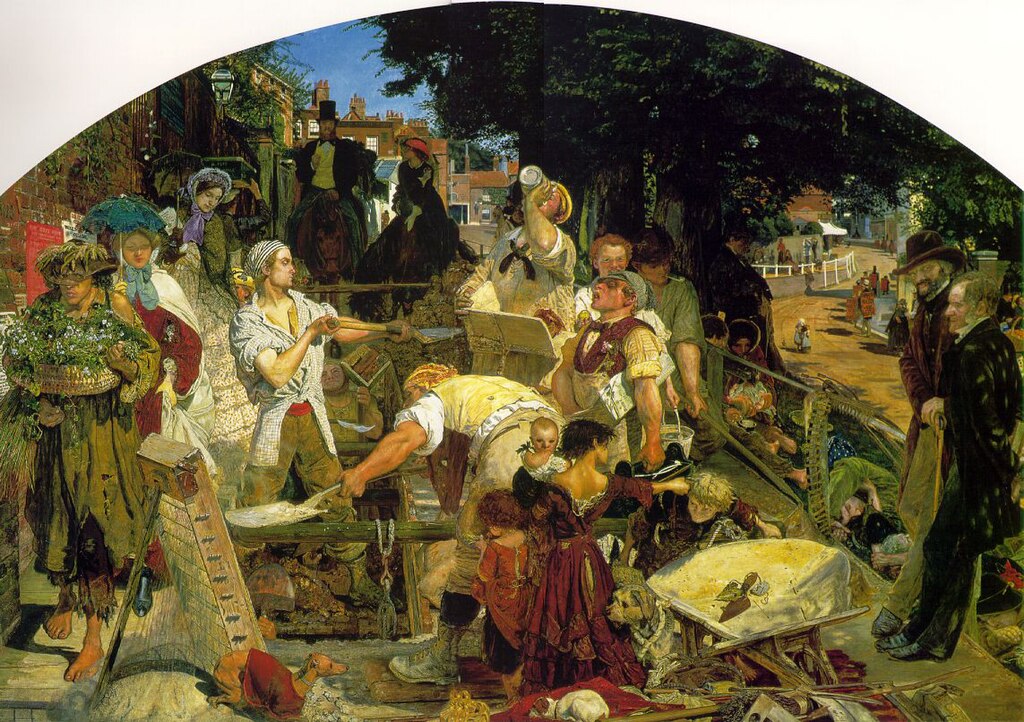
Like other realist novelists of her time, Gaskell tended to employ omniscient narration, telling events in the third person and moving freely between the thoughts and feelings of a wide cast of characters. One characteristic of Victorian realist writing is the occasional switch into first person as the narrator interjects and reflects on the story they are telling. Gaskell sometimes used these interjections to prove what she saw as the value of social realism.
In Mary Barton, the narrator breaks off while describing John Barton’s reflections as he walks through a crowd, and asks the reader: “did you ever think where all the thousands of people you daily meet are bound?” We cannot know, the narrator encourages us to reflect, “the wild romances of their lives; the trials, the temptations they are even now enduring, resisting, sinking under.”
The moment is a nice analogy for the intent of social realist novels, focusing the reader’s attention, even for a short while, on one of these unknown passersby in a crowd and revealing their romances, trials, and temptations.
Gaskell’s narratorial interjections indicate that she anticipates her readership to be middle-class like herself, and reveal an intention to make this readership understand and sympathize with working-class characters. In Mary Barton and North and South (serialized in Dickens’s magazine Household Words between 1854 and 1855), Gaskell depicts characters from working- and middle-class backgrounds as having essentially the same humanity, even though their surroundings, as she meticulously describes, are very different.
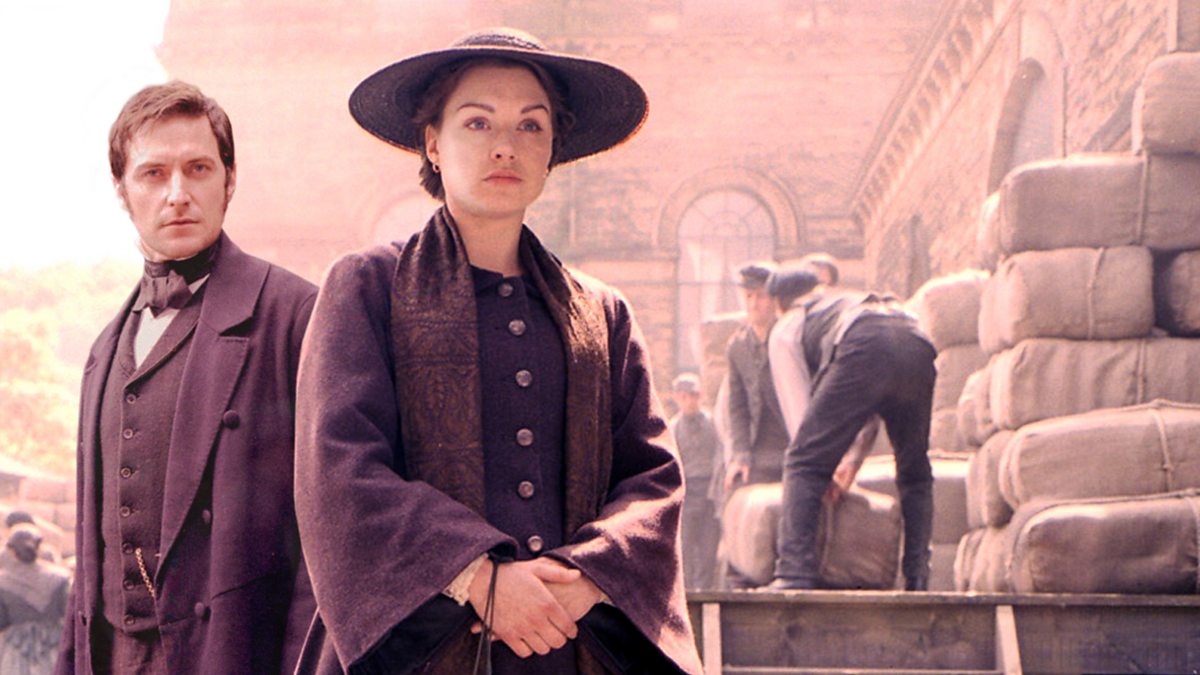
North and South is, in some ways, a more sympathetic representation of middle-class mill owners than Mary Barton. Its heroine, Margaret Hale, is not working-class like Mary Barton but a middle-class girl from southern England who is forced to move north to a fictional town based on Gaskell’s native Manchester. The novel is full of binaries like the one in its title. Margaret experiences the conflicts between rich and poor, employer and employee, and man and woman. The romantic plot is woven in with Margaret’s attempt to make the mill owner, John Thornton, a more lenient and generous employer.
Gaskell felt that novels, with their opportunities to dive into a character’s psyche and to develop plots which move through crises to resolutions, were uniquely fitted (in contrast, say, to journalism) to address social problems. Add to this that novels were increasingly widely read in the mid-19th century, and the emphasis that Gaskell, as a Unitarian, placed on reading as a means for self-improvement and a guide to social conduct.
In other words, Gaskell hoped that her readers would be moved not only to change their hearts and minds, but to take real action, after encountering the arguments of trade unionists in Mary Barton and North and South, or the abject living conditions of the poor, or the struggle of her heroines to make their voices heard.
Elizabeth Gaskell, the Political Writer
Following 1970s feminist literary criticism, Elizabeth Gaskell’s ability to integrate political ideas into apparently domestic tales of romance is appreciated as a demonstration of the argument that the personal is political. Why did Gaskell’s reputation languish for a whole century after her death, before this appreciation?
Many of Gaskell’s male contemporaries produced realist novels that combined social commentary with romance plots. Charles Dickens is the best known, but Anthony Trollope and Benjamin Disraeli (the future English Prime Minister) also wrote novels which depicted a cast of characters in a domestic setting and, then, the wider context in which they lived, thus dramatizing the effect of social conditions on ordinary people and their relationships.
There is certainly an argument that gender is the reason these male writers have been credited for the political content of their work, while Gaskell’s political side has been overlooked. It is also true that Gaskell, when not employing a highly realist style to describe (for example) the interior of a working family’s house, took up a sentimental style which had gone out of fashion even later in the Victorian period, with heroines often fainting and weeping profusely.
Moreover, Gaskell may have been primarily remembered as a romance novelist rather than a political novelist because politics are so changeable and linked to the specifics of time and place, while the human feelings of romantic novels are perennial. Readers picking up Gaskell’s novels after the Victorian period may not have related to the intricacies of employer-employee relations in the 1840s. On the other hand, they could connect with the “enemies to lovers” arc of Margaret Hale and John Thornton (not dissimilar to that of Elizabeth Bennet and Mr Darcy in Jane Austen‘s Pride and Prejudice).
However, Gaskell proves that novelists who focus on sentiment, the home, and women should not be dismissed as apolitical. Informed by her Unitarian beliefs, Gaskell sought to show the importance of the domestic realm in shaping the political sphere, as well as vice versa, with the conditions in which characters live directly informing how they move through the world.
She made a case for literacy in a rapidly industrializing era, arguing that novels could be used both to educate and to instill a sympathetic perspective. Her novels do not offer perfect solutions to the social problems they depict. However, they stand as valuable historical sources and testaments to the Victorian faith in the power of reading as a call to action.
Sources
- Gaskell, E. (2000). Mary Barton.
- Lemire, D. (2013). ‘A Historiographical Survey of Literacy in Britain between 1780 and 1830’. Constellations (University of Alberta Student Journal) 4 (1).