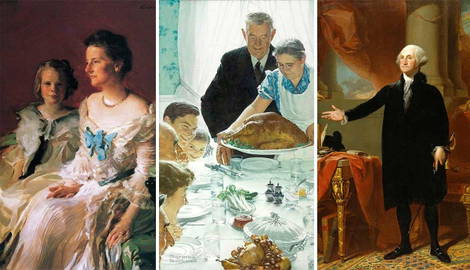

These famous American paintings span many years, styles, genres, and historical events. The artworks showcase political struggles, everyday life, idyllic scenes, abstracted forms, and much more. What’s showcased through all the art is the skill, grit, and nuance of American life through its ever-changing history. We hope one work sparks you to visit one of the museums or to continue to delve deeper into learning about one of the famous American artists.
1. George Washington, Lansdowne Portrait, by Gilbert Stuart – 1796
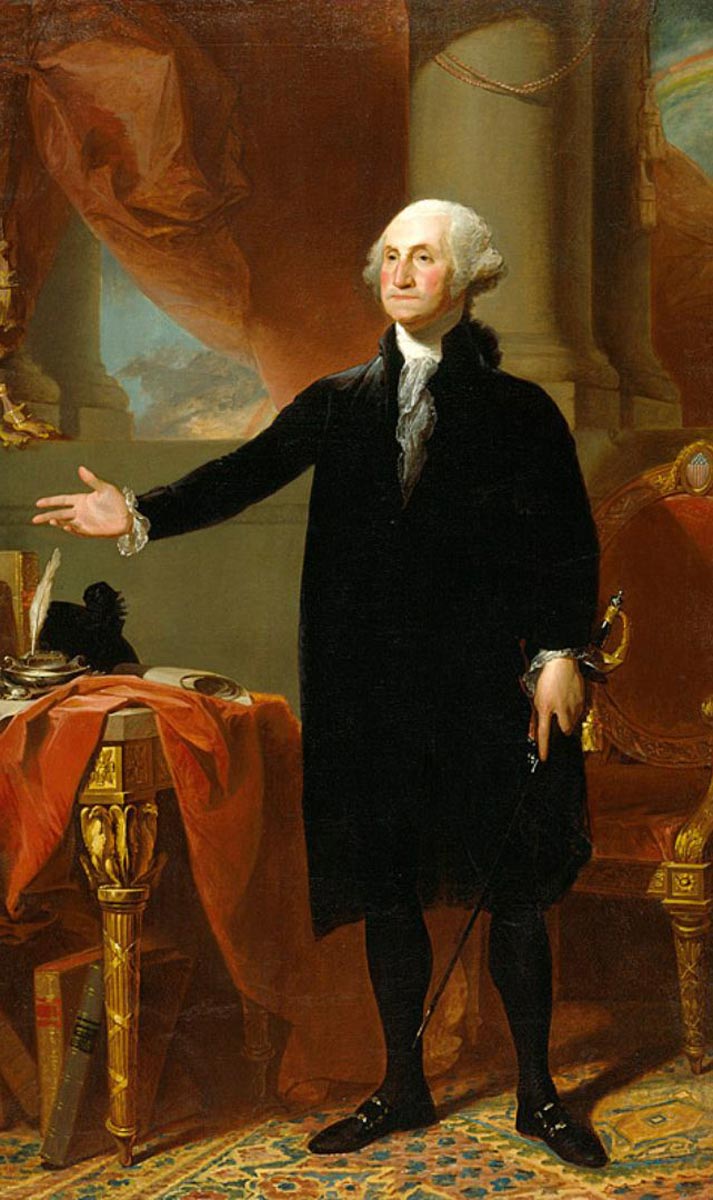
Starting with a painting of the very first president of the United States, this portrait of George Washington is among the most famous images of his likeness. Gilbert Stuart created many copies of the work, but this was the original. According to the Pennsylvania Academy of the Fine Arts, Stuart painted only George Washington’s head from life, with the body painted from a stand-in. The Academy noted that Washington notoriously disliked sitting for portraits, especially for Stuart. During the time the painting was done, George Washington was dealing with a lot, from ill-fitted false teeth to differences in policy between him and his cabinet in relations with England, and many other political issues at home and abroad.
The portrait shows a strong leader dressed in black, his hand outstretched in a “Grand Manner” style, also used in other aristocratic portraiture. Stuart added allegorical elements, such as Republican Rome (a political model for young America), a rainbow for peace and prosperity, and George Washington laying down his arms, harkening back to the ancient warrior Cincinnatus, who symbolized and established peace.
2. The Voyage of Life, Old Age, Thomas Cole – 1842
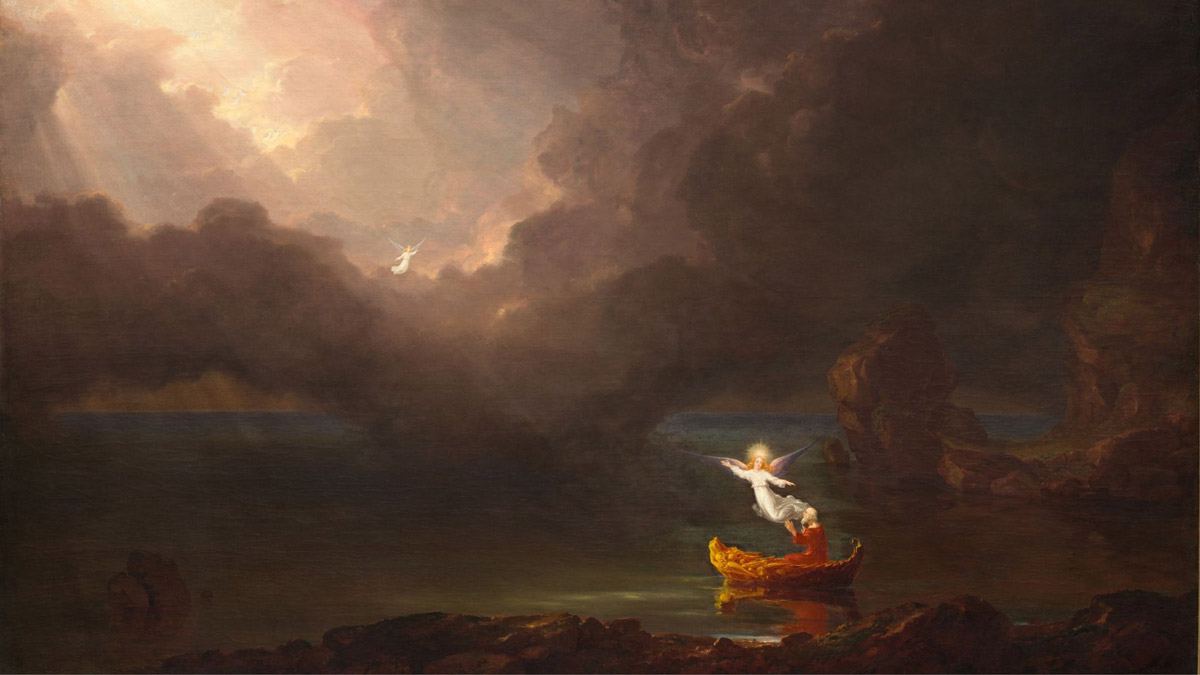
On View at the National Gallery of Art in Washington, D.C., this work is part of a four-part series titled The Voyage of Life, which shows four phases of life: Childhood, Youth, Manhood, and Old Age. A small figure is surrounded by nature in each scene, and a river flows throughout the work. The voyager makes his way towards a castle symbolizing the daydreams of youth or perhaps glory and fame. As the voyager travels, the stream becomes more turbulent, symbolizing self-doubt. Cole suggests that prayer and faith help to save the voyager from tragic fates.
These works have a deep link to Christian values and symbolism. The works could also be seen as reflecting the turbulent state of the growing United States, with industrialism emerging and the West expanding. The work may serve as a warning to man in swapping nature for industrialism, and focusing on greed, instead of faith. The piece, Old Age, depicts brooding clouds and a vast ocean. On the waters, there’s an old figure in a small boat with a guardian spirit overhead and a smaller spirit in the distance. These spirits come from the heavens to welcome him to immortal life.
3. The Power of Music, William Sidney Mount – 1847
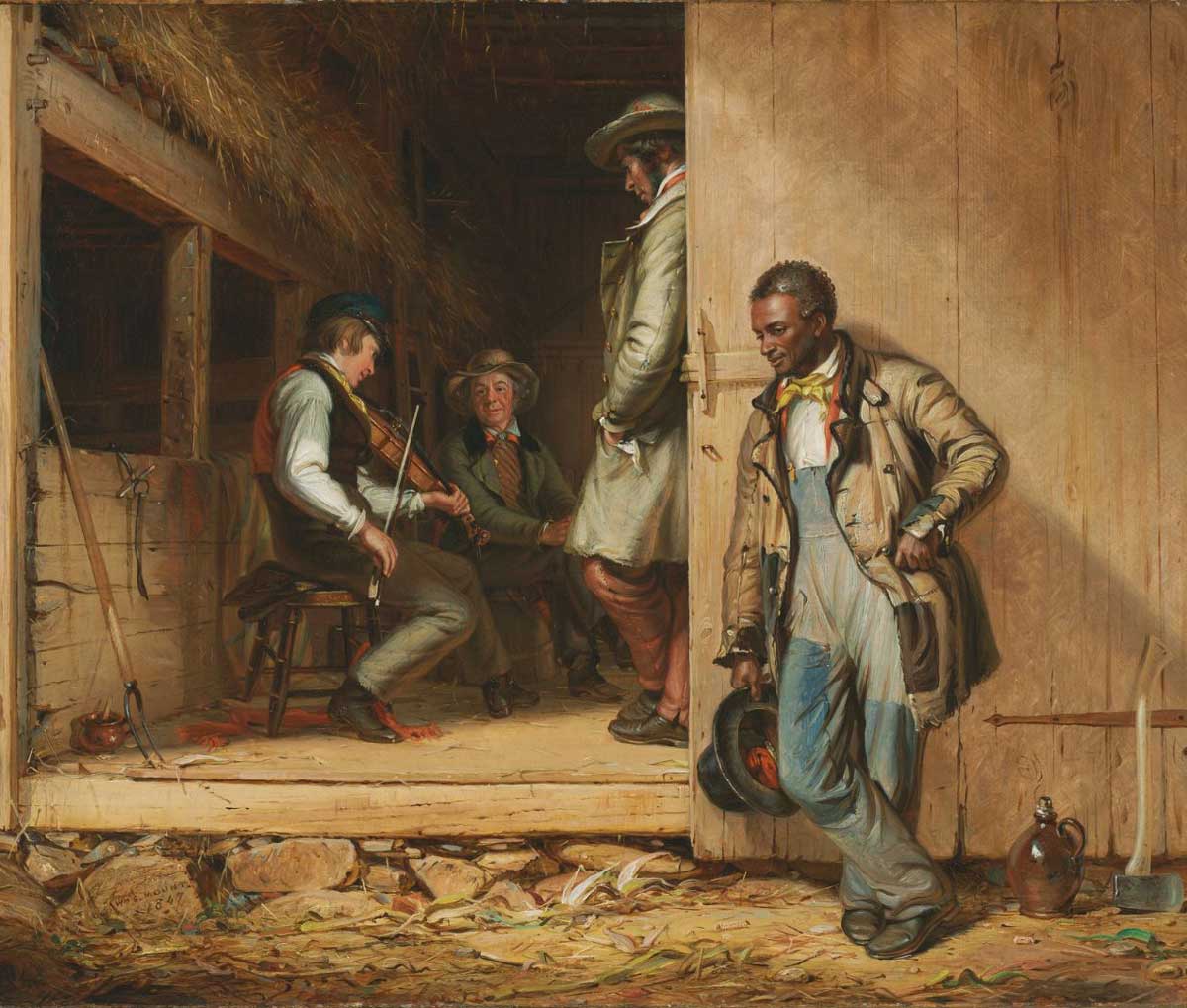
This realistically painted piece shows an old barn in rural Long Island, New York, before the Civil War. The painting depicts an African American laborer standing outside the barn, listening to a man playing the fiddle, while two other white men enjoy the tune inside. Though the scene shows a shared appreciation for music, it also shows the division between races in America at that time. The Power of Music by William Sidney Mount is currently shown at the Cleveland Museum of Art.
4. Stage Fort Across Gloucester Harbor, Fitz Henry Lane – 1862
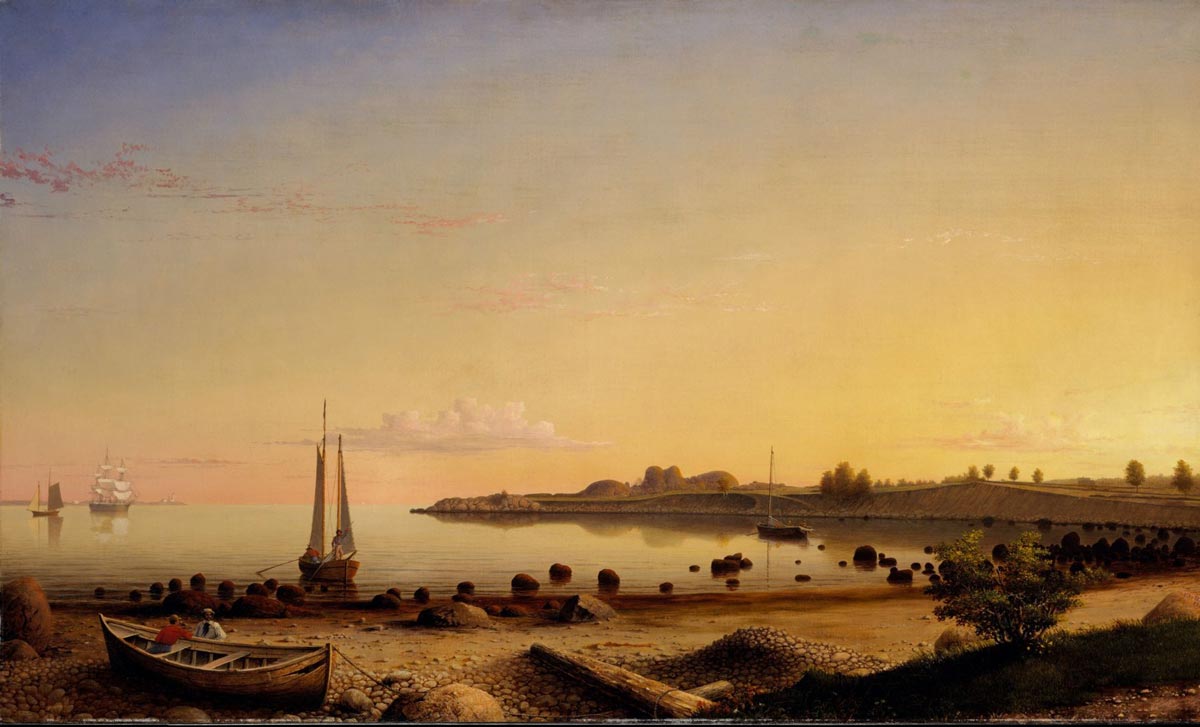
Stage Fort across Gloucester Harbor by Fitz Henry Lane is a realistic and luminist piece that depicts a quiet, serene harbor inlet, with ships in the distance, small figures with their backs to the viewer in the foreground, and large, bulbous rocks dotting the shore. The scene appears to be set at sunset or sunrise, with the sky blending hues of yellow, orange, and pink. The slack sails note a stillness in the air, perhaps hinting at hope or suspense.
The area of Stage Fort was known to be a fishing town, and people often waited for sailors to come home in the harbors. The scene reflects either a sense of calm or suspense in waiting for fishermen, friends, and family to come home. This same mood may also reflect the growing tensions of the civil war at the time. How long would the war go on for? How many men would they lose? All valid questions Fitz Henry Lane likely reflected on in this work.
5. The Rocky Mountains, Lander’s Peak, Albert Bierstadt – 1863
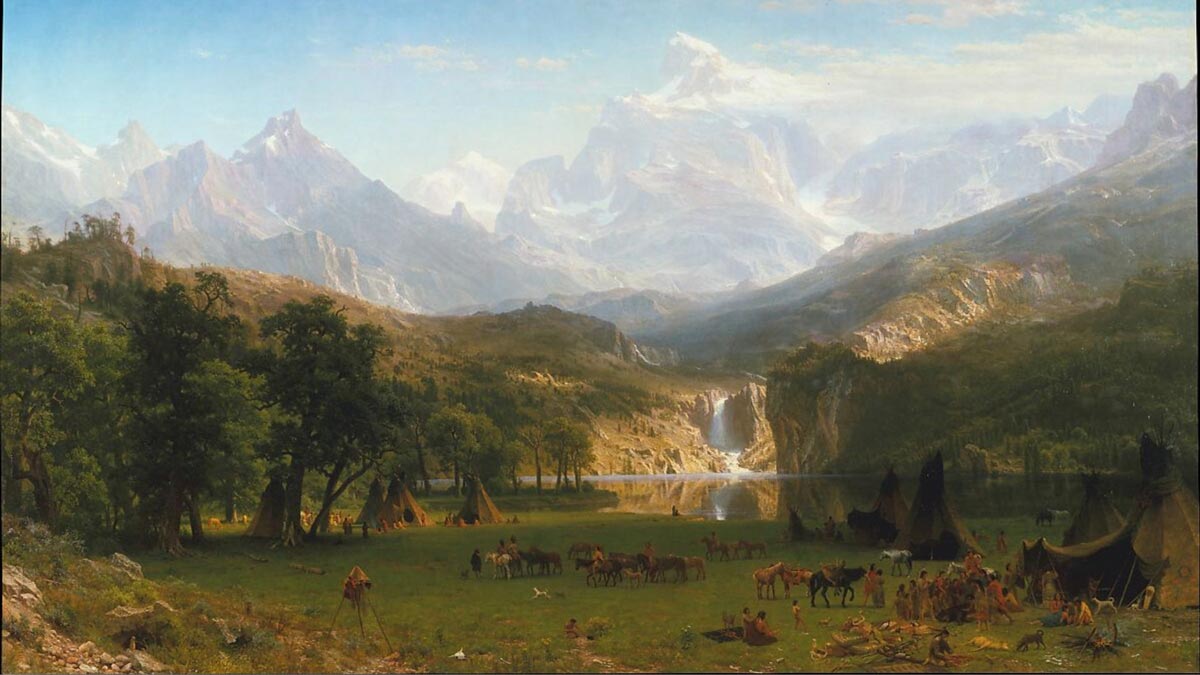
Albert Bierstadt is an artist categorized under Luminism, Romanticism, and the Hudson River School. His art often depicted grandiose landscapes, often in the United States, capturing their sublime, vast, and beautiful nature. His work, The Rocky Mountains, captures this idyllic American scene in just this way, showcasing the Rocky Mountains in the background, lush trees, fields, and waterfalls in the middle ground, and many Native Americans, the Shoshone people, with teepees, horses, and children dotting the foreground.
According to the Metropolitan Museum of Art, in early 1859, Bierstadt joined a government survey expedition to Nebraska territory and explored the Wind River Range and what is now Wyoming. Bierstadt painted the scenery when he was back in New York, depicting an ideal frontier landscape, one destined to be claimed by white settlers, according to the doctrine of manifest destiny. This belief that Americans were to “master” the land ignored the consequences, such as the already settled native people, as well as the dangers, rough mountain terrain, and hardships of building on the land.
6. The Boating Party, Mary Cassatt – 1893
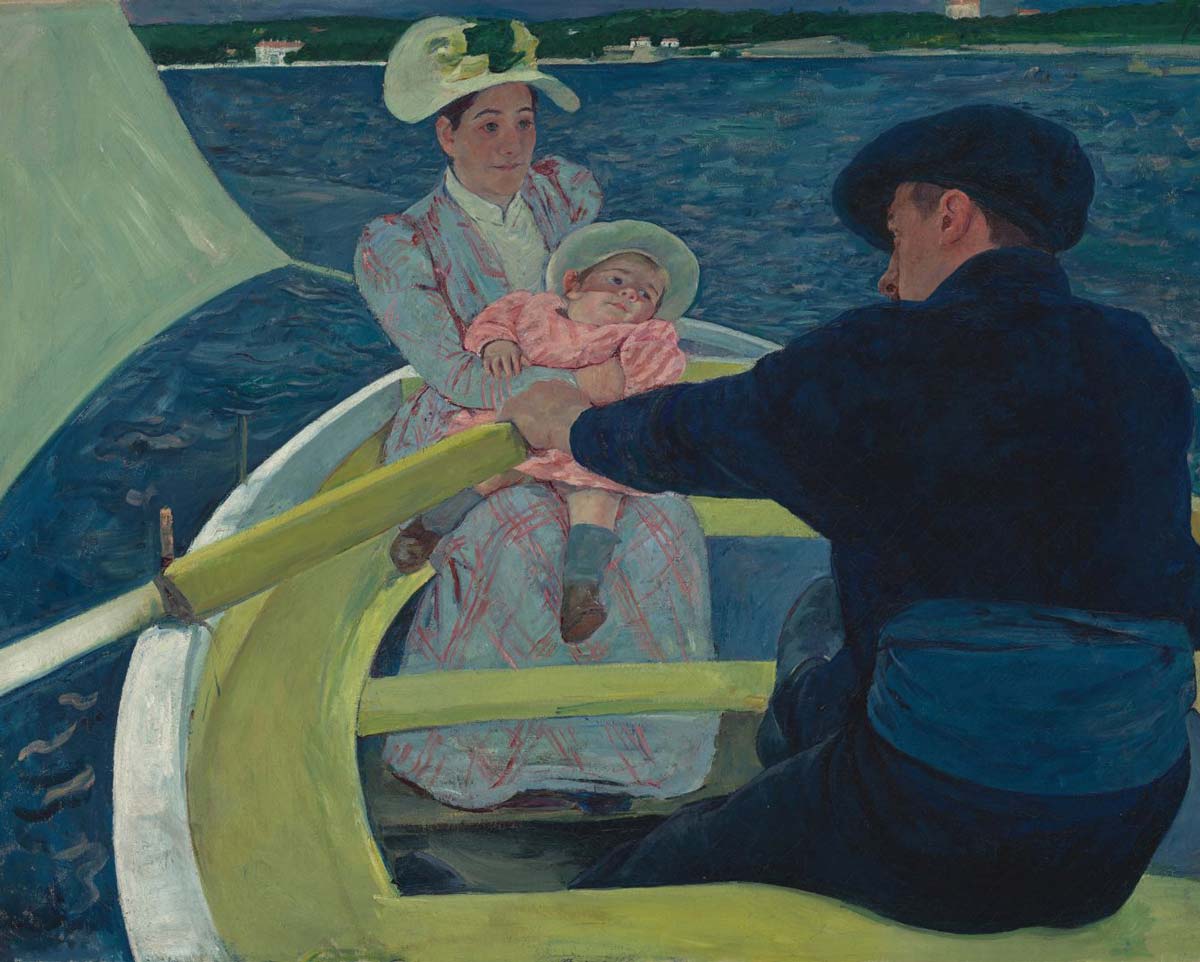
Mary Cassatt, the famous American Impressionist painter, was born and raised in the United States but spent much of her adult life in France. Her work, The Boating Party, was the centerpiece of her first solo exhibition in the United States in 1895. The work has a bold composition and reflects the style of Japanese prints, with its simplified color palette, unusual angles, and flat surfaces.
In this work, Cassatt shows a baby resting in the mother’s arms as they watch a man row. The boat’s curves are carved with bright, more abstract shapes and colors. The viewer’s higher vantage point gives a unique look into the boat and the calm scene. This work is shown at the National Gallery of Art in Washington, D.C.
7. Mrs. Theodore Roosevelt and Daughter Ethel, Cecilia Beaux – 1902
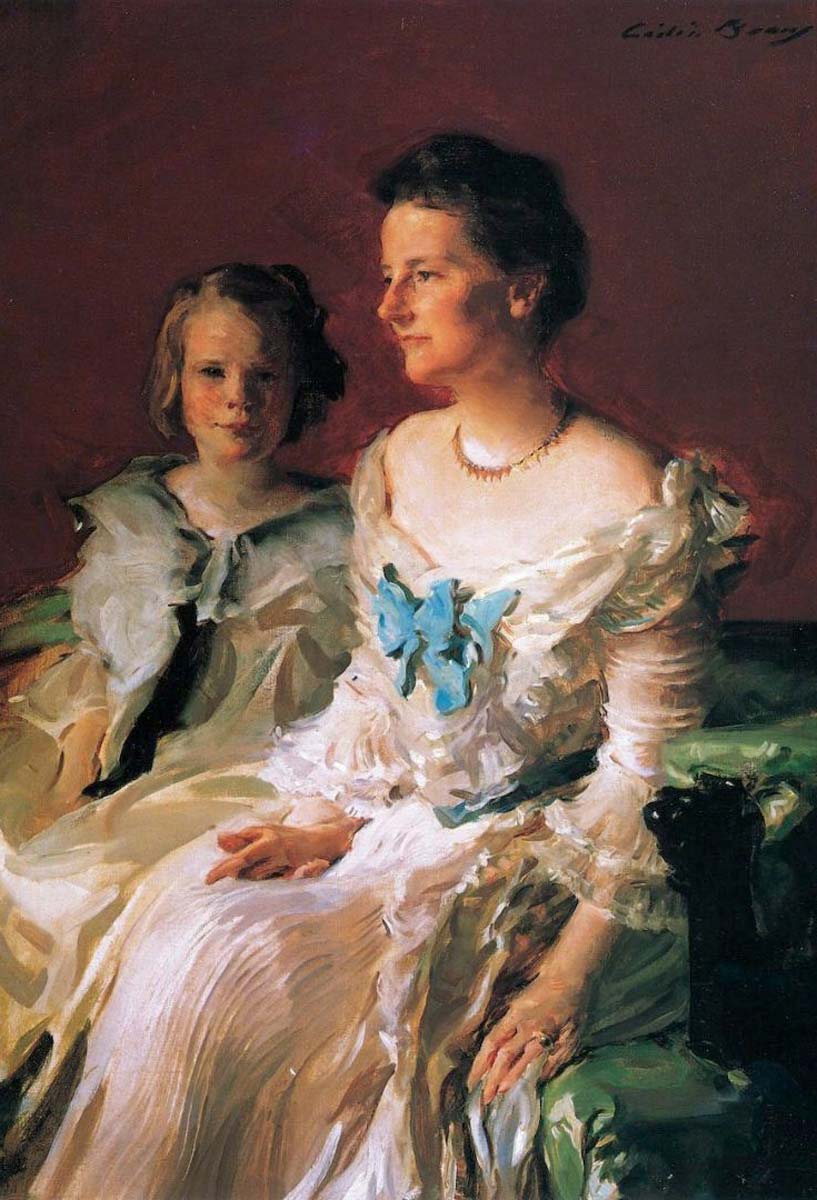
Cecilia Beaux captures the First Lady, Mrs. Theodore Roosevelt, and her 11-year-old daughter Ethel. Though the mother-daughter duo is finely dressed, the work presents a relaxed, non-ceremonial moment between them. Beaux was commissioned to create a charcoal drawing of Theodore Roosevelt and was then invited to complete the portrait of the first lady. Beaux uses bright and pastel colors and balances them with darker contrast. Blending Realism with a touch of Impressionism.
8. The Avenue in the Rain, Childe Hassam – 1917
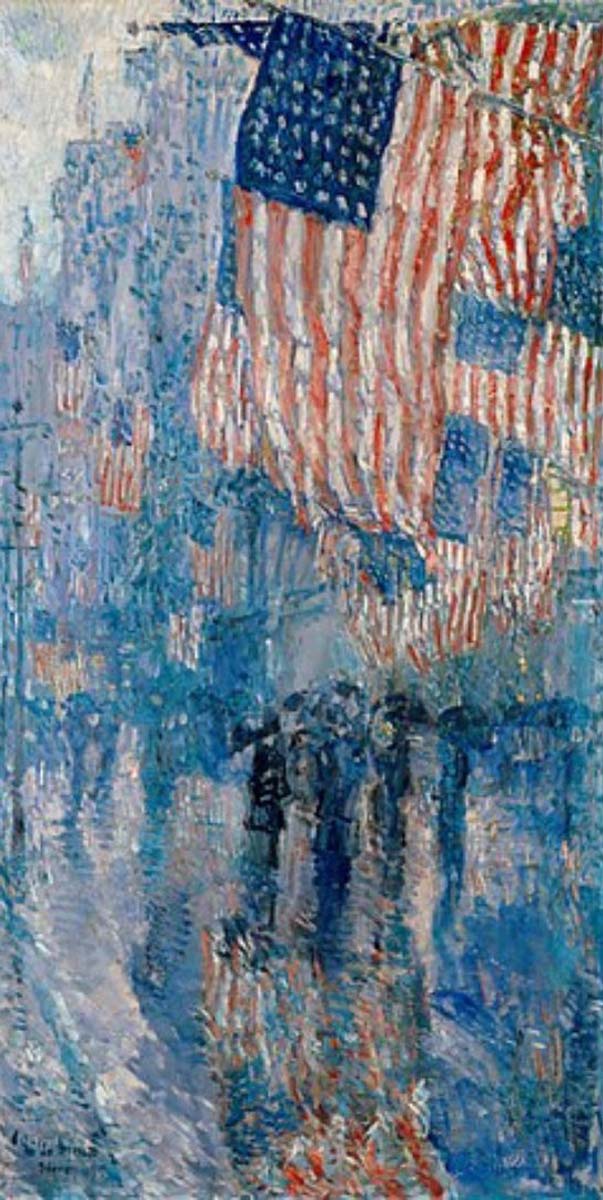
Childe Hassam was an American Impressionist painter and printmaker known for his bright, loose-brushed cityscape scenes of Paris, Boston, New England, and New York. After training in Paris, he was influenced by French Impressionist painters. The Avenue in the Rain shows Fifth Avenue in New York City dotted with American flags during a rainstorm. The work uses bright colors and quick brushwork to depict the wet, rainy street. Various dots and dollops of blue dominate the scene, blending to create the rain and abstracted figures walking through the street. The work was created during World War I and is part of a series of flag paintings that express American patriotism.
9. Red Canna, Georgia O’Keeffe – 1925-1928

This bright and bold work, Red Canna, frames the view of a magnified view of a red canna flower. It’s painted with bold shapes and lines highlighting the inside and petals of the flower. The flower is slightly abstracted and uses red, yellow, and orange tones. The work is a part of a series of red canna flower works inspired by the canna lilies at the Lake George, New York, home of her partner Alfred Stieglitz. Georgia O’Keeffe’s close-up flower studies are among her most iconic works, and she said she painted them in this style because she felt some people never took the time to see flowers truly. Some critics interpret her works through a sexual lens, but she often maintained that her focus was on color, organic form, and shape.
10. American Gothic, Grant Wood – 1930
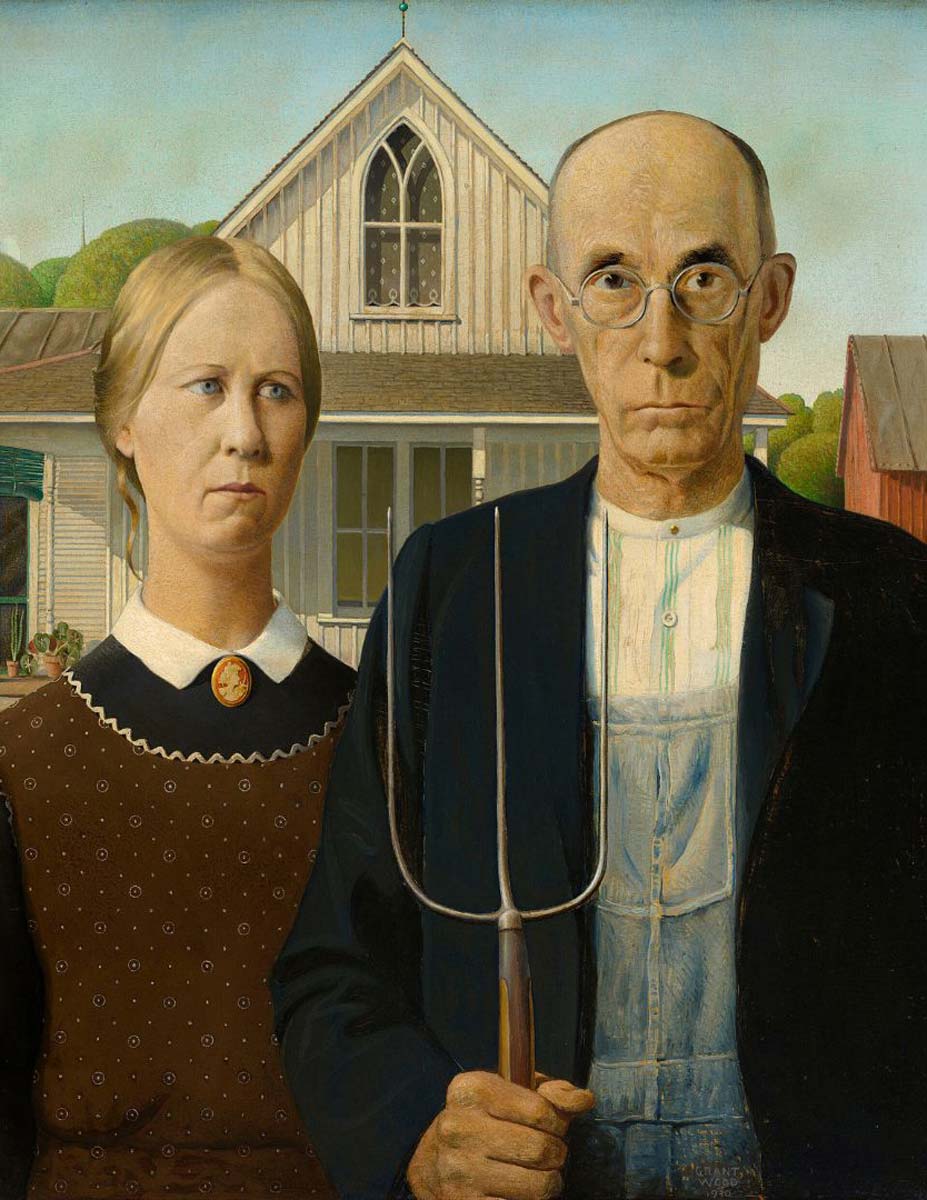
Grant Wood evokes images of past farm life and rural America in this iconic work, American Gothic. The work shows a farmer staring intently out at the viewer, and his daughter gazing to the side, with a furrowed expression. They are posed stiffly and dressed in an older style, perhaps from the late 1800s. The man and woman fill much of the foreground and stand outside their home, built in the 1880s style known as Carpenter Gothic.
The work became an instant sensation, its ambiguity prompting viewers to question who the figures were and what their story was. Some guessed the work was a satirical nod to Midwesterners out of step with a modernizing world. Though Wood intended the work as a positive piece in line with American rural values and as a source of reassurance for American society at the beginning of the Great Depression.
11. Nighthawks, Edward Hopper – 1942
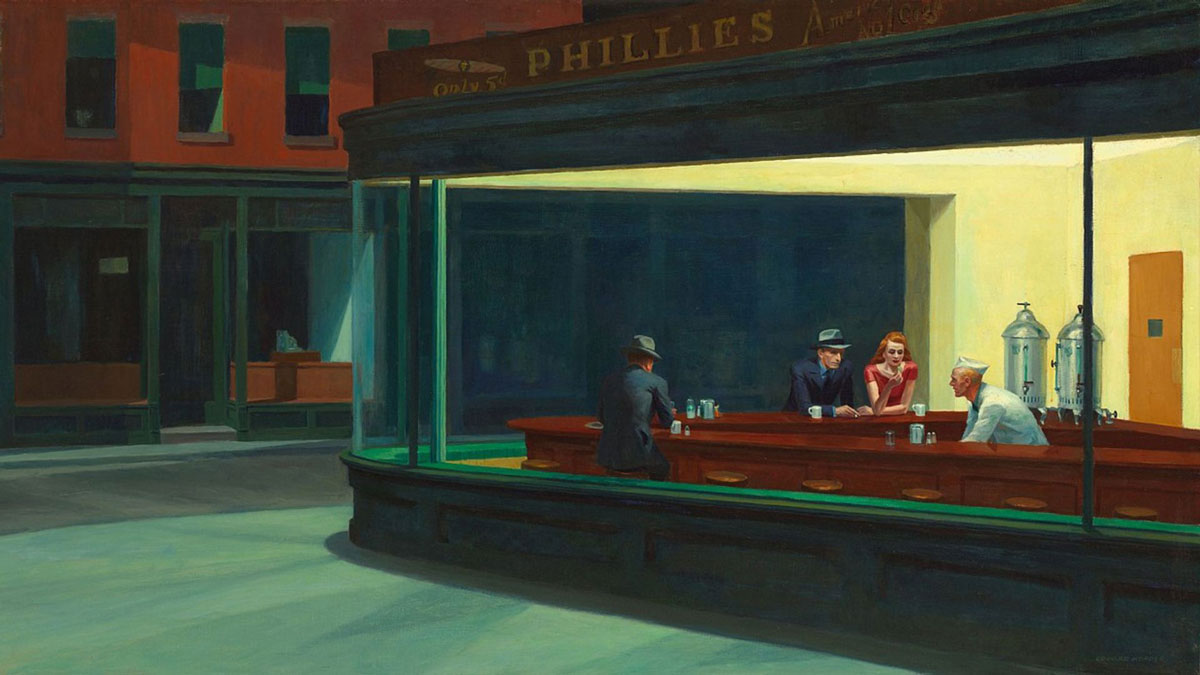
Edward Hopper is known for his isolated, realistic scenes of early 20th-century American life, showcasing the inner worlds of figures through their dwellings in cityscapes, barren seascapes, or New England scenery. Nighthawks shows four figures in a brightly lit, Greenwich Village-style diner surrounded by a dark, desolate urban landscape. Hopper painted the work shortly after the events of Pearl Harbor. It captured themes of isolation, quiet contemplation, and urban alienation.
The scene’s dark coloring, with the eerie, luminous glow of the diner, adds to the mood, as do the empty streets and the large, seamless glass window of the diner. All the figures are disconnected, not making eye contact or having much interaction. The piece reflects not just a copy of a real place, but an imagined yet lifelike world that reflects on the loneliness of the world and war.
12. Sugaring Off, Maple, Grandma Moses – 1943
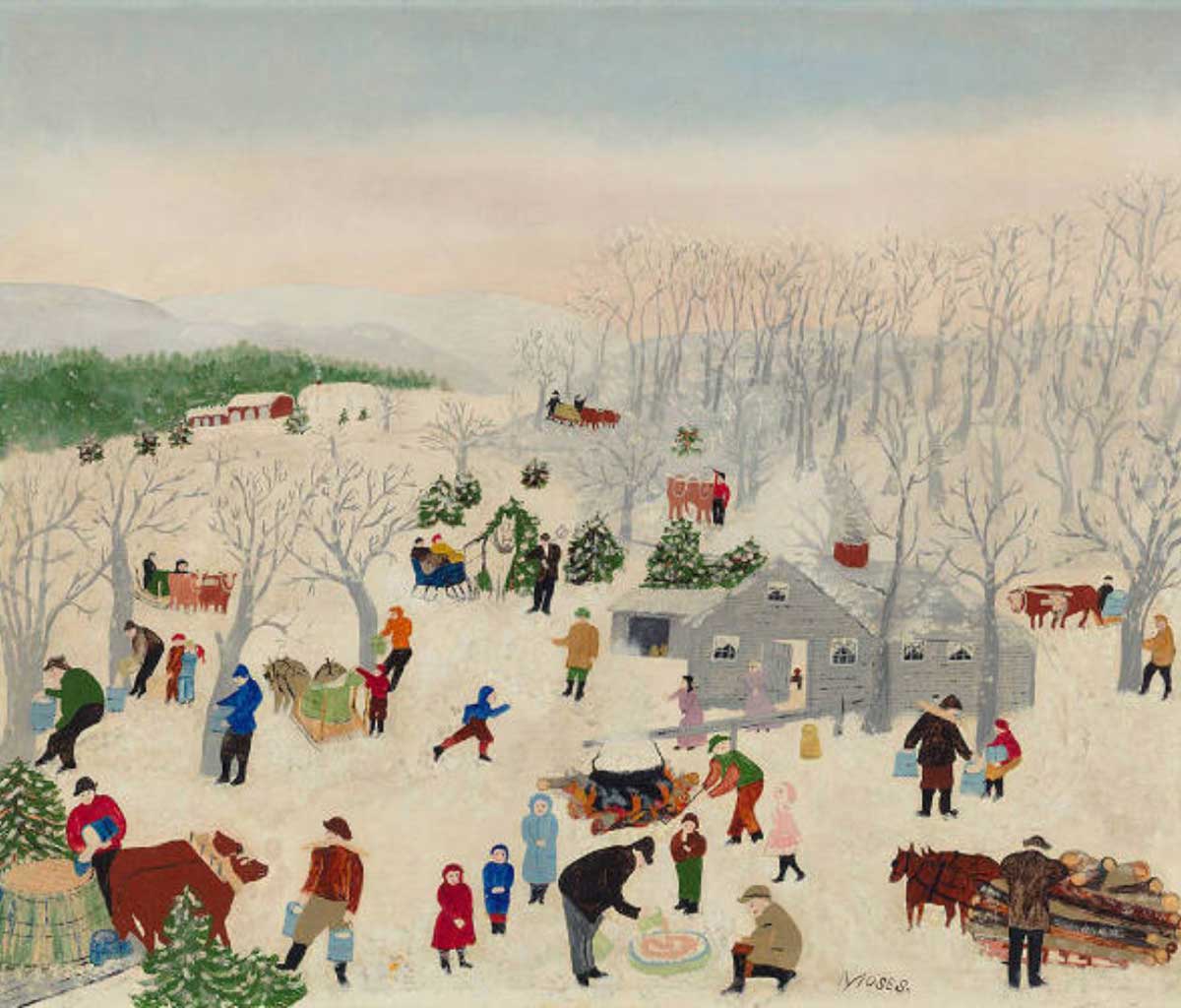
Grandma Moses, or Anna Mary Robertson Moses, painted Sugaring Off, Maple, to show the communal and traditional process of making maple syrup in rural New England. She completed the work at the age of 83. The famous American artwork features a vibrant scene of figures tapping trees, boiling sap, and making syrup candy in a snowy landscape. The work showcases her signature folk style with bright colors and a panoramic, high-horizon style. This scene shows a nostalgic and idealized view of rural American life.
13. Freedom From Want, Norman Rockwell – 1943
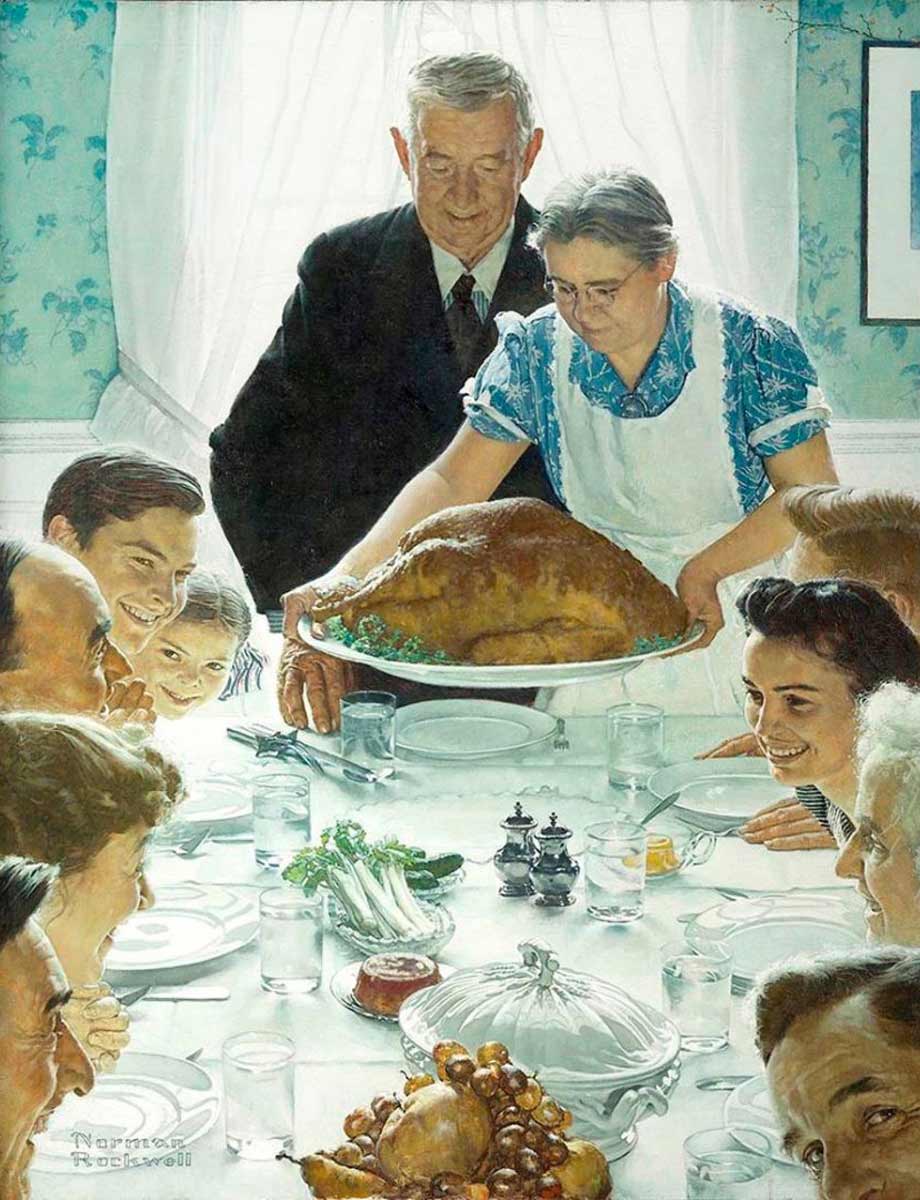
Norman Rockwell is famous for his 1940s and 1950s illustrations in the Saturday Evening Post, often depicting sentimental or humorous aspects of American life and showing family life in a wholesome light. Freedom from Want is a famous oil painting depicting a classic American Thanksgiving celebration. The work was created to illustrate Franklin D. Roosevelt’s “Four Freedoms” war aims. The artwork features a family gathered around a table, with the matriarch, Mrs. Thaddeus Wheaton, presenting a large turkey.
The work was published in the Saturday Evening Post. It symbolized abundance, family, and safety, and urged support for World War II war bonds. The scene represented a safe and abundant America free from the fear of war and hunger. Norman Rockwell skillfully created his characters in a realistic, yet expressive style and often used his own friends and neighbors as models.
14. Achelous and Hercules, Thomas Hart Benton – 1947
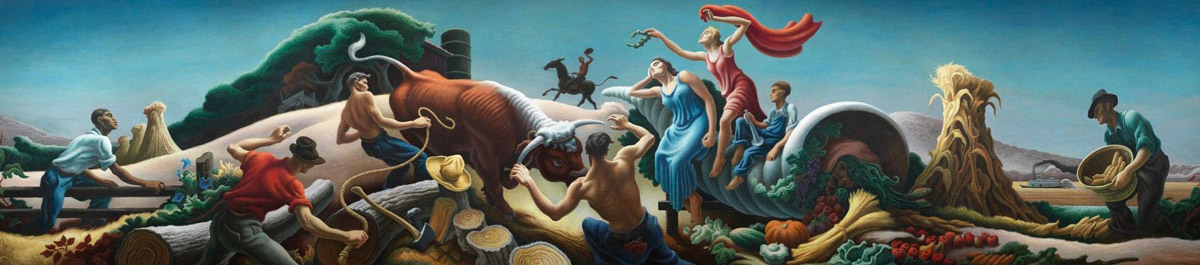
The 22-foot mural Achelous and Hercules is a painting created for Harzfeld’s department store in Kansas City that reinterprets a classic Greek myth as an allegory for the American Midwest. The work features men, women, and animals working in the fields of the Midwest. Thomas Hart Benton used curvilinear figures with intense, vibrant colors, and the figures feature his signature muscled appearance. The mural represents the struggle between Hercules and the river god Achelous, symbolizing taming the rivers to create agricultural abundance in the Missouri River valley.
In the myth, Hercules wrestles the river god Achelous, who is represented as a bull, and breaks off a horn that becomes the cornucopia, or horn of plenty. Benton reimagines the Greco-Roman struggle as a modern victory of engineering over the volatile river system. The work is an expressive and vast showcase of the blending of ancient myths and 1940s Midwest current events.
15. Christina’s World, Andrew Wyeth – 1948
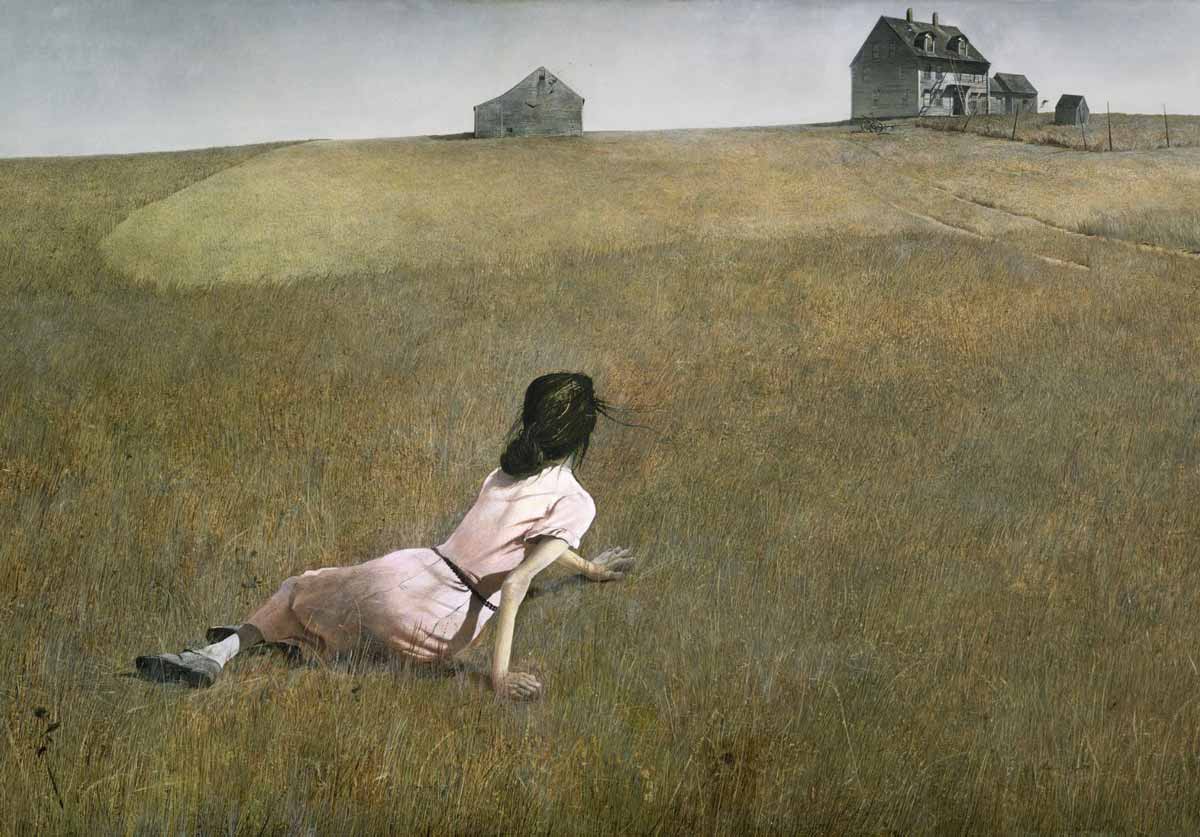
Christina’s World is an iconic American painting showcased at the MoMA. The work depicts a young woman, her back to the viewer, in a light pink dress, lying in the grass of a prairie, with houses in the background. The work depicts Andrew Wyeth’s neighbor, Christina Olson, who had a degenerative muscular disorder, crawling across a field in Maine towards her home. Anna Olson lost the ability to walk and refused to use a wheelchair, preferring to crawl. It is noted that Wyeth saw her crawling across a field from his studio window and was inspired to paint the work. The painting symbolizes human struggle, quest for independence, resilience, and longing.
16. Number 1 (Lavender Mist), Jackson Pollock – 1950
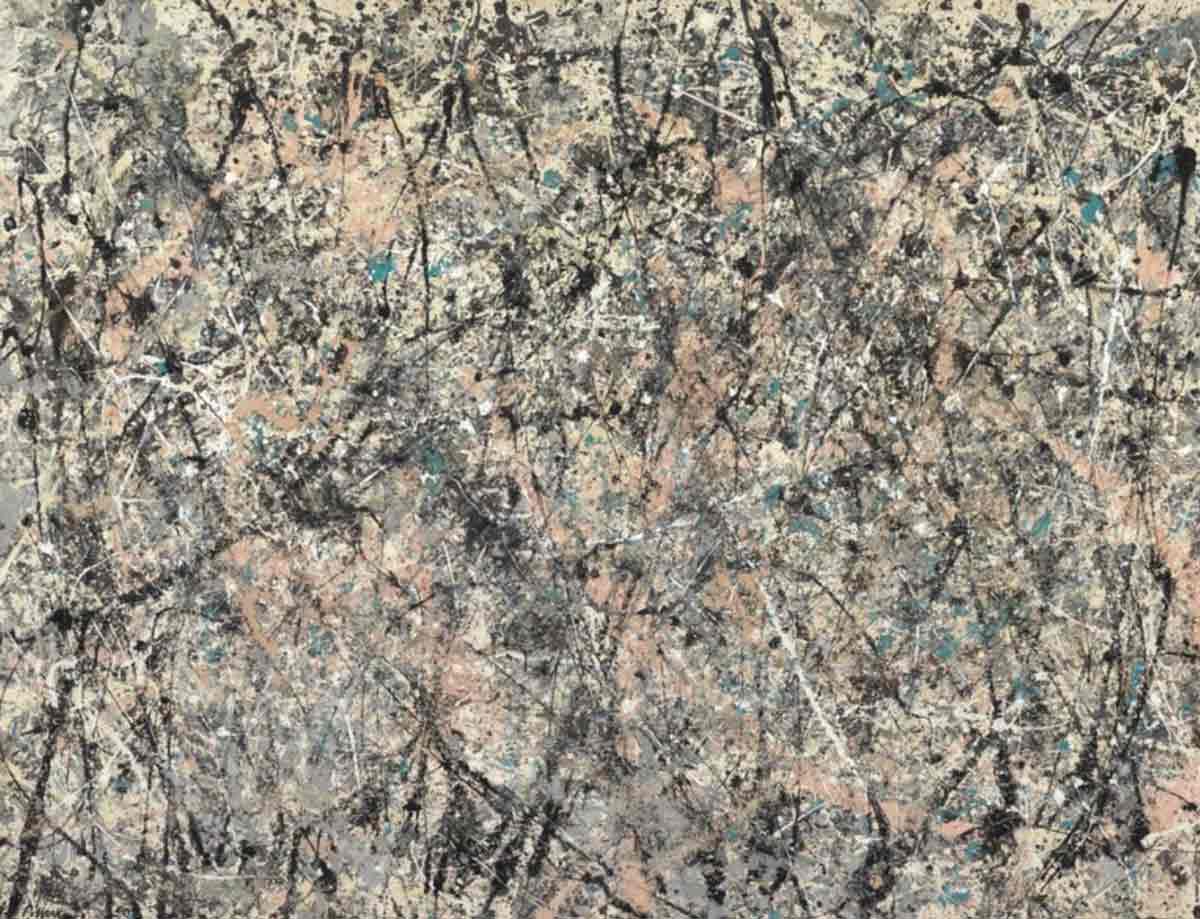
Lavender Mist or Number 1 by Jackson Pollock features his signature technique of dropping, pouring, throwing, and sweeping paint over the canvas to represent action and movement. This Action Painting masterpiece features dense layers of paint in teal, black, white, and rust, creating a splattered masterwork with no central focal point. The artwork has been a part of the National Gallery of Art in Washington, D.C. since 1976.
17. No. 61 Rust and Blue, Mark Rothko – 1953
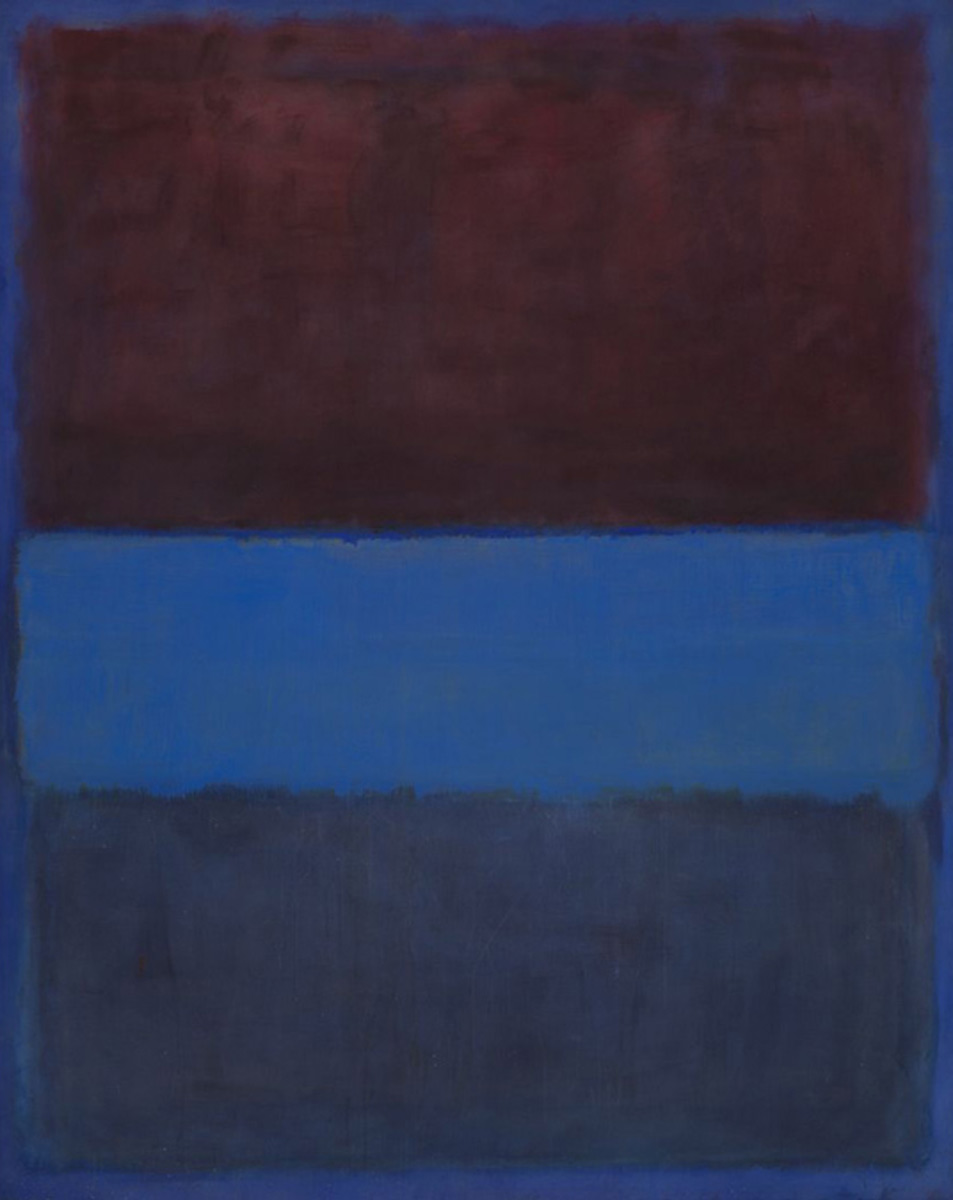
This Abstract Expressionist piece shows simple, layered, softly defined blocks of color on a blue background. There is a block of a rust color, a smaller block of a lighter blue in the center, and a mix of both underneath. Rothko stated that he aimed to express human emotions, such as tragedy or doom, through his minimalist approach, wanting viewers to feel surrounded and enveloped by the simple colors. He often aimed to have a meditative or emotional effect on viewers through his art.
18. Campbell’s Soup Cans, Andy Warhol – 1962
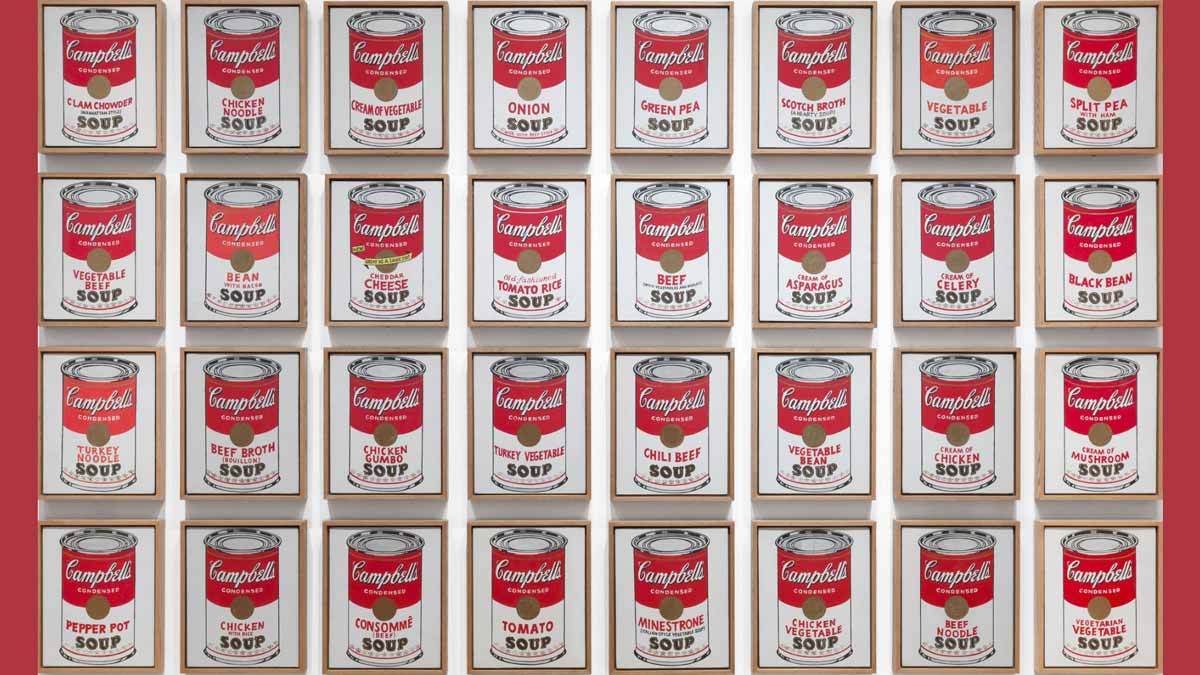
Andy Warhol is known as one of the most iconic American Pop artists. His works spanned many types of media, including painting, printmaking, filmmaking, sculpture, and music. He often turned commercial products and well-known celebrities into iconic artworks. Warhol is best known for his Campbell’s Soup Cans, Marilyn Monroe portraits, and for blending high art with consumer culture. Campbell’s Soup Cans consists of a series of 32 painted canvases, one for each soup flavor offered at the time. The work showcases a linear, supermarket-style arrangement, with all the canvases neatly arranged in rows.
The Campbell’s Soup Cans explores themes of mass production, monotony of modern life, consumerism, and turning an everyday object into fine art. The canvases are painted with acrylic and metallic enamel, with subtle variations on the labeling and coloring. Like Warhol, who ate soup every day for 20 years, everyone has a routine and a continuous cycle of consumerism in their modern life. The work prompts viewers to reflect on their everyday habits and routines.
19. First Lady Michelle Obama, Amy Sherald – 2018
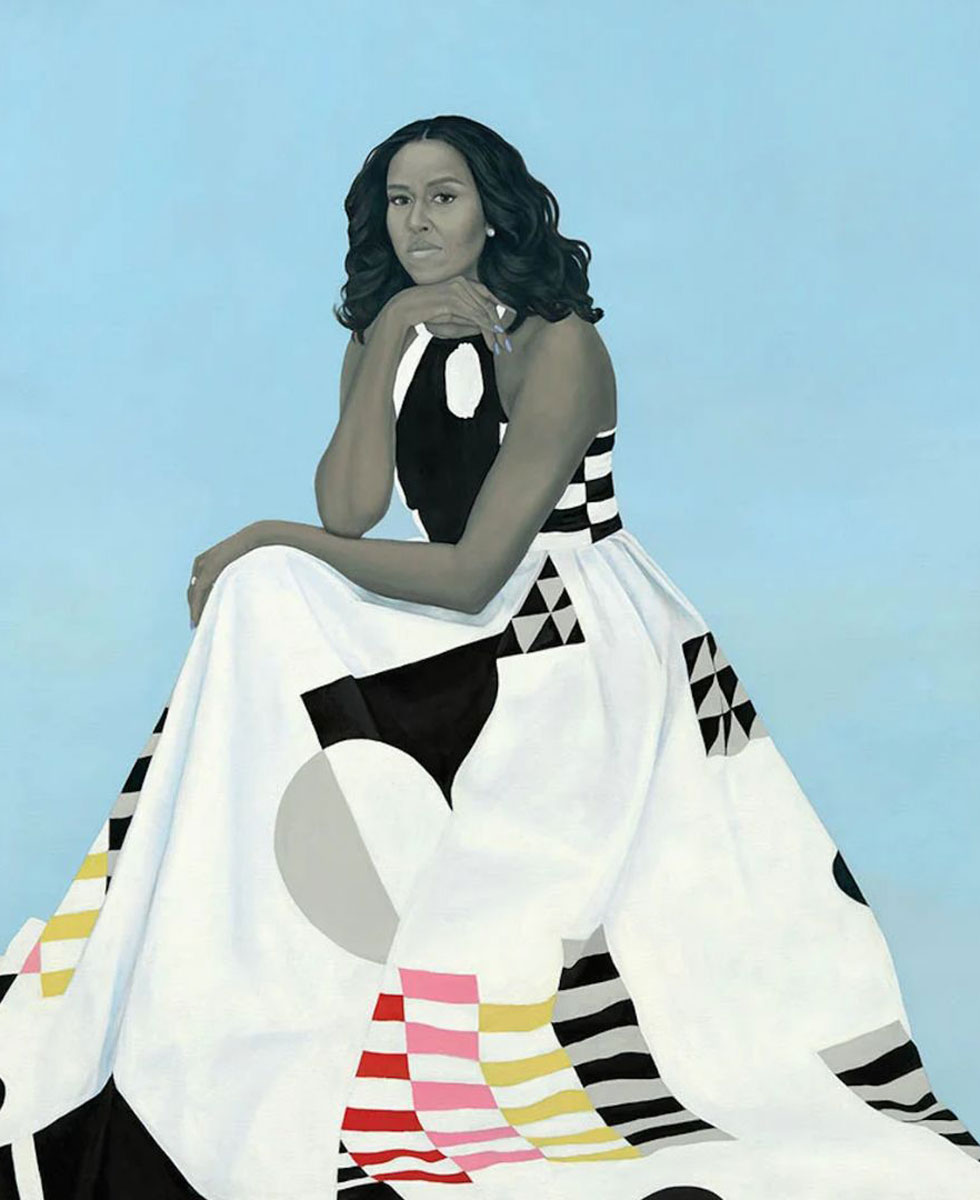
The portrait of former First Lady Michelle Obama by Amy Sherald was first unveiled in February 2018 at the Smithsonian National Portrait Gallery in Washington, D.C., where it still resides. The portrait is a 6-foot-tall oil-on-linen painting featuring the styled grayscale figure of Michelle Obama against a light blue background. In the piece, Michelle Obama wears a geometric-patterned black, white, and gray gown with blocks of pink, yellow, and red. Michelle gazes out at the viewer, her head resting on her hand.
The modern style and simplicity of the colors in First Lady Michelle Obama represent her being an accessible and modern icon. Amy Sherald used her signature technique of painting skin tones in shades of gray, rather than true to tone, to challenge race-based readings of portraiture and to focus on the individual themselves. This was the first time an African American artist was commissioned to create an official portrait of a First Lady for the National Portrait Gallery.