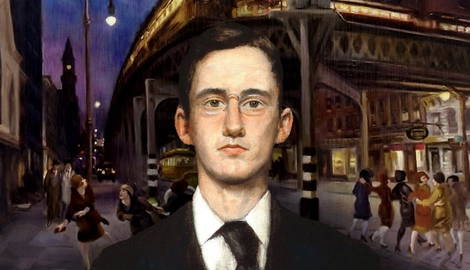

Initially a commercial artist and an illustrator for newspapers and magazines, John Sloan became part of the Ashcan School and one of New York’s greatest painters. He was fascinated by the city’s hustle and bustle, the alluring vignettes of life found on every city street. He painted prostitutes, drunks, street urchins, laborers, and European immigrants, all with an evenhanded and realistic touch. He didn’t sentimentalize urban poverty or suffering but instead chose to faithfully and fairly render life and leisure in the city.
John Sloan Biography
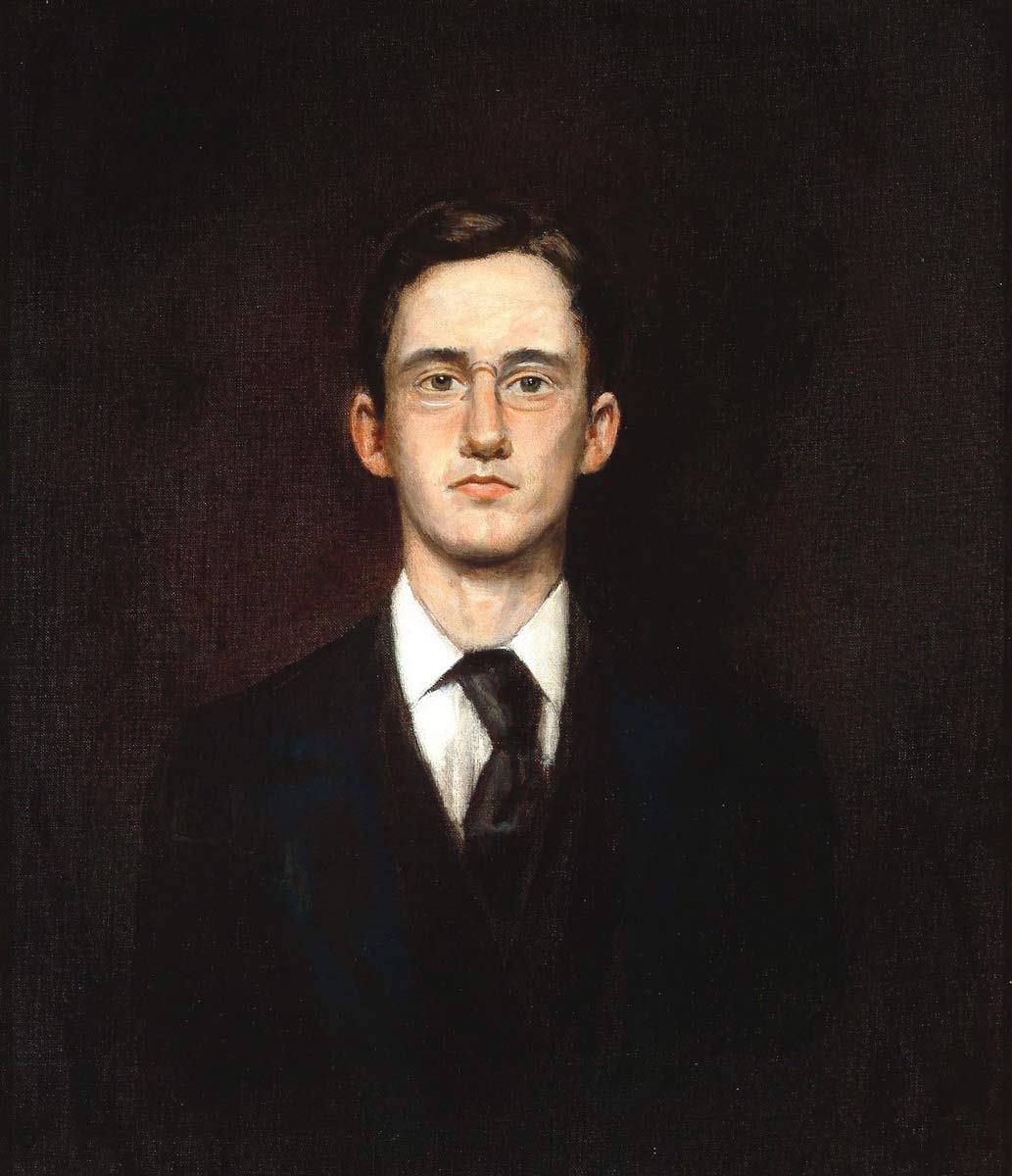
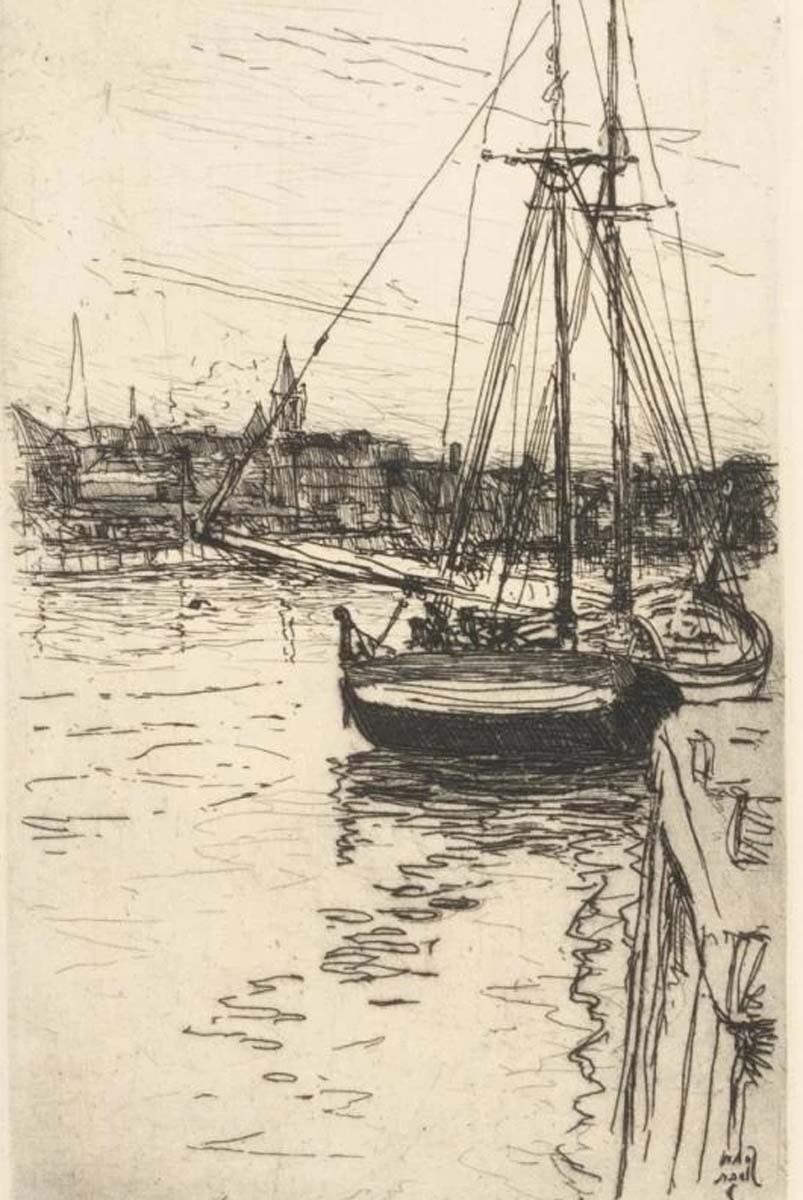
Sloan was born in Lock Haven, Pennsylvania, in 1871 and moved to Philadelphia when he was only a few years old. He taught himself how to etch when he was a young man and then chose to attend drawing classes at the Spring Garden Institute. His first work was as a freelance commercial artist, joining the art department of the Philadelphia Inquirer in 1892 and the Philadelphia Press in 1895. In the meantime, he was also one of the artists who formed the Charcoal Club, seeking to escape the confines, and tuition, of the Pennsylvania Academy of Fine Arts. He was inspired by Robert Henri, one of the most important art teachers of the day, and began painting portraits and the city of Philadelphia in the 1890s.
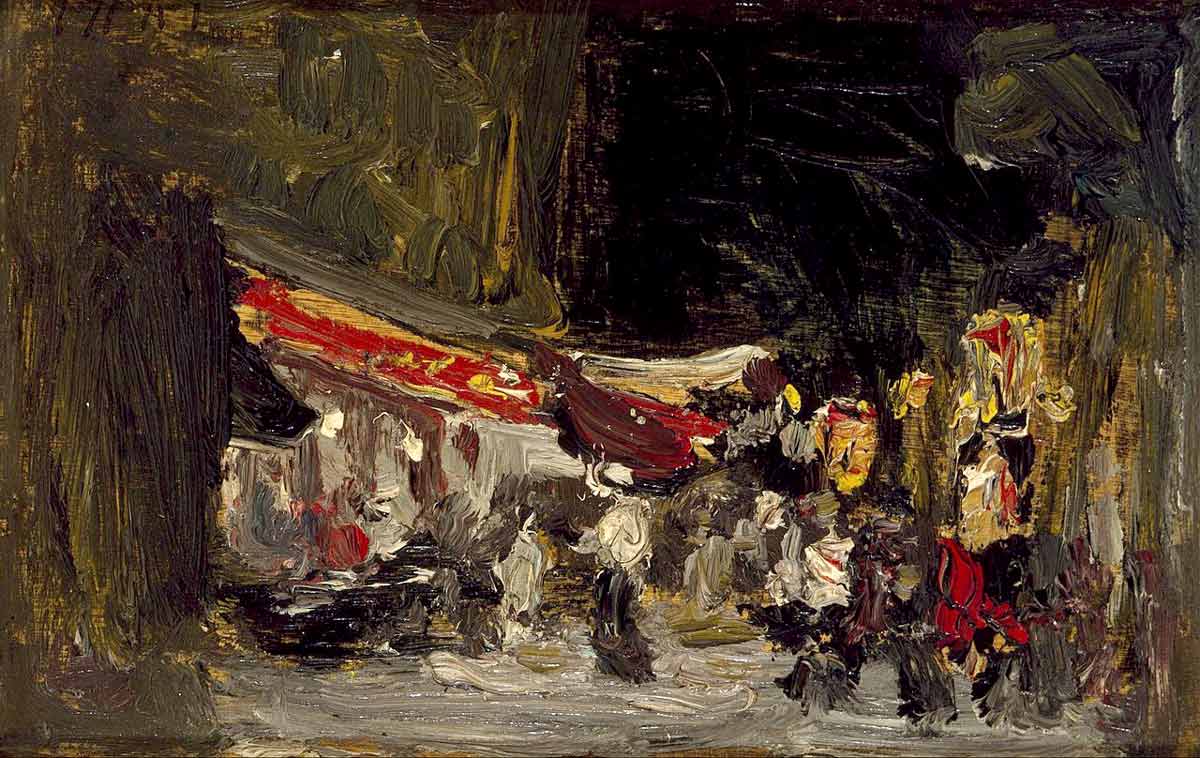
In 1904, Sloan and his wife, Dolly, whom he’d married in 1901, moved to Greenwich Village in New York City. There, he joined like-minded painters in “The Eight” exhibition at Macbeth Gallery, which inaugurated the formation of the Ashcan School. He was also drawing for The Masses, a radical publication, and organized the Exhibition of Independent Artists in 1910. The Whitney Museum notes that in New York, “he harnessed the skills he had learned from newspaper work—the ability to memorize characteristic details and sketch quickly on the street—to paint impressionistic images of squalid tenements, streets and storefronts, parks, restaurants, and bustling crowds.”
Sloan participated in the famous Armory Show of 1913 (contributing two oils and five etchings), taught at the Arts Student League, and was president of the Society of Independent Artists. His style was emphatically realistic; he once said, “I am a realist…I am more interested in the noble commonplace of nature than in the curious: believing that form and color are tools of the artist’s imagination in re-creating life.” Later in life, he began spending summers in New Mexico and admired Native American art and Mexican muralists. He died of cancer in 1951.
Ashcan Art
The Ashcan School of Art was so named because of its focus on the grittiness of urban life at the expense of moralizing content and aesthetic appeal. The term’s originator was Art Young, who contributed to the socialist publication The Masses along with many of the painters who would make up “The Eight” (Sloan, Robert Henri, George Luks, Arthur B. Davies, William Glackens, Ernest Lawson, Maurice Prendergast, and Everett Shinn; later Glenn Coleman and George Bellows would be considered core parts of the School).
The “ashcan” moniker was not meant to be flattering. Young complained of Henri’s followers in general that they “want to run pictures of ash cans and girls hitching up their skirts in Horatio Street…For my part, I do not want to be connected with a publication that does not try to point out the way out of a sordid materialistic world.” Young disliked the depiction of the homeless, prostitutes, orphans, and working men on their own terms, without heavy-handed sympathy. It seemed like the Ashcan artists were alright painting the world as it was, without trying to change it.
But it wasn’t just the down-and-out that the Ashcan artists took for their subjects; rather, they were painting life in New York City at the turn of the century with all its complexity, change, and opportunity. There were scenes in restaurants and bars; of immigrant women and street peddlers; of dancers, revelers, boxers, and circus performers; of people sitting on roofs and stoops; of children playing and swimming, women gossiping and working, and men smoking and drinking. The city itself was a character, as the skyscrapers, subways, elevated railways, riverfront parks and piers, rooftops, and crowded avenues formed the backdrop for its denizens.
Sloan’s own interpretation of New York City is brought to life in these six works of art.
1. Election Night, 1907
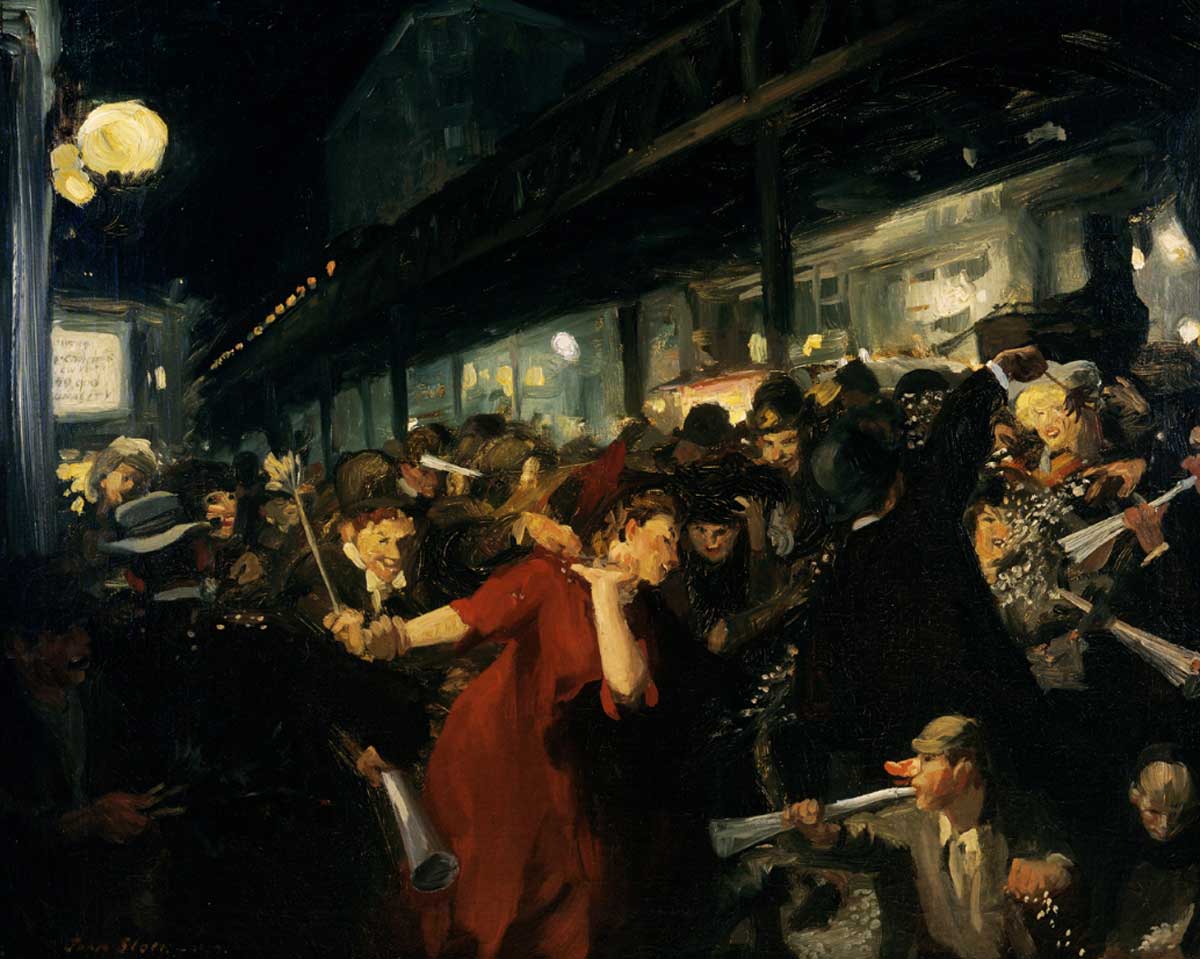
The scene depicted here, which Sloan witnessed, is a public celebration in Herald Square where people gathered to find out the results of local, state, and federal elections, which were projected on the side of the New York Herald building at Sixth and Broadway. The mood is raucous and exhilarating. People are throwing confetti, blowing tin horns, and tickling each other with “ticklers,” one of which the woman in red at the center of the canvas is holding. Everyone is in motion, jostling against each other and laughing. Under the gleam of the streetlamps, windows of the El, and lights from the buildings, the scene is more like a New Year’s Eve celebration than a political gathering.
Art historians Robert W. Snyder and Rebecca Zurier find this painting notable for its depiction of new uses of public spaces in the city. The subjects of the painting “breach all rules of correct decorum on city streets” and, referencing an article in Harper’s Weekly from 1908 that sniffed at the unseemliness of the behavior on Broadway on election night, said, “[the painting] reveals another truth that most urban images concealed: in a city, especially during special moments of celebration, one can expect to be jostled and not mind it.”
2. Hairdresser’s Window, 1907
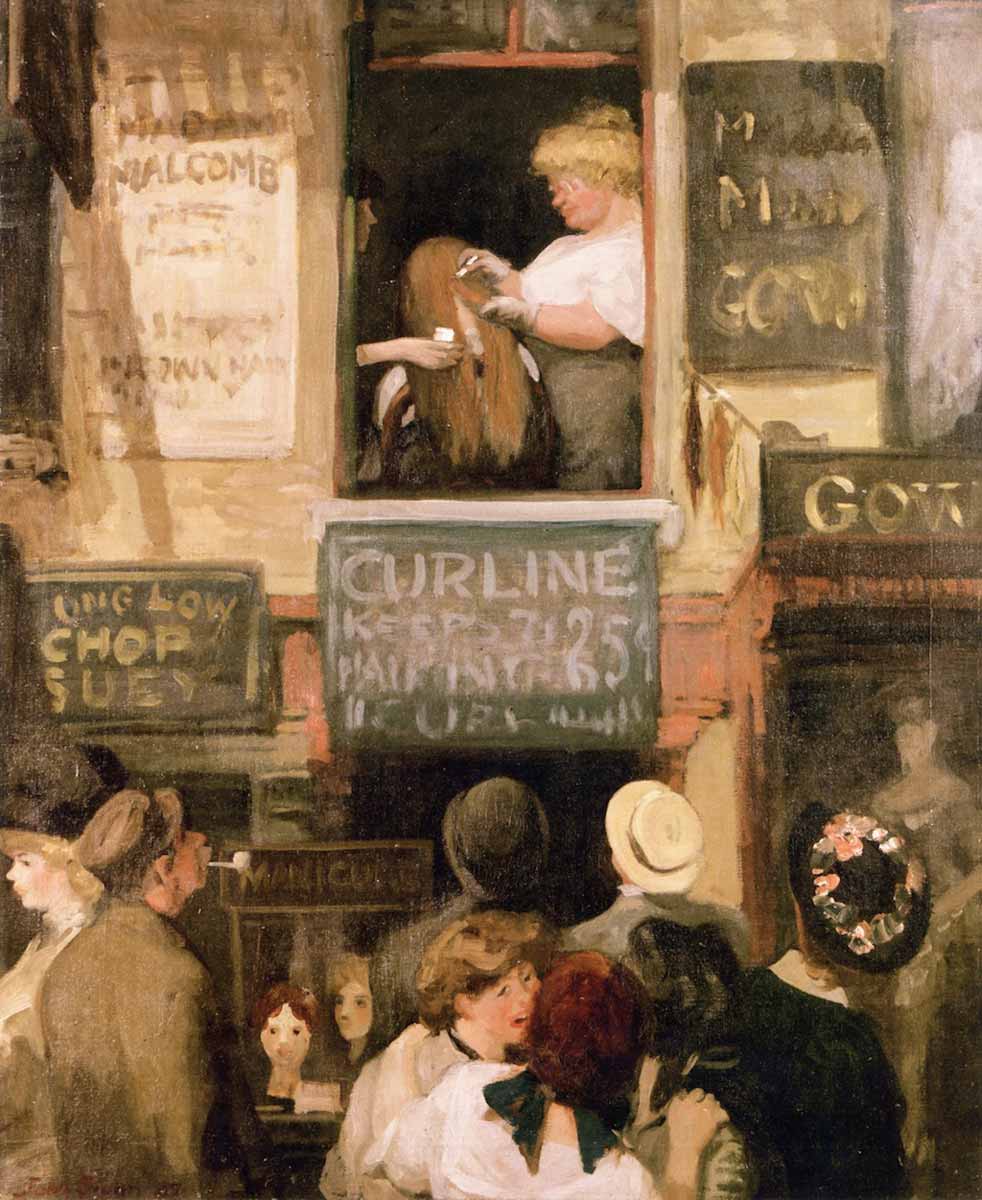
Sloan painted this scene more or less as he actually saw it, explaining in his diary that he had been walking to Henri’s studio and saw a woman in a window with bleached blonde hair, also bleaching the hair of her client as others on the street below watched. This scene exemplifies Sloan’s comment that, “In between illustration jobs I roamed the streets, finding human incidents to etch and paint.”
The scene features the hairdresser and client as Sloan wrote of them in the diary, totally oblivious to the curiosity they are engendering below, which is represented by a woman’s rather aghast expression and the fixed stares of several men. The window is surrounded by signs and advertisements, but the hairdresser actually doing her work is the most effective advertisement of them all. Susan Fillin-Yeh has argued persuasively that Sloan’s positionality in this painting makes little rational sense, as he is sort of hovering above the crowd; she notes that perspective, in general, is never really fixed or stable and that Sloan’s “slapdash and robust yet carefully observed constructions only appear to be uninflected scenes of daily life.” Sloan is actually illuminating as much about the nature of painting as the nature of life in a modern metropolis.
3. Chinese Restaurant, 1909
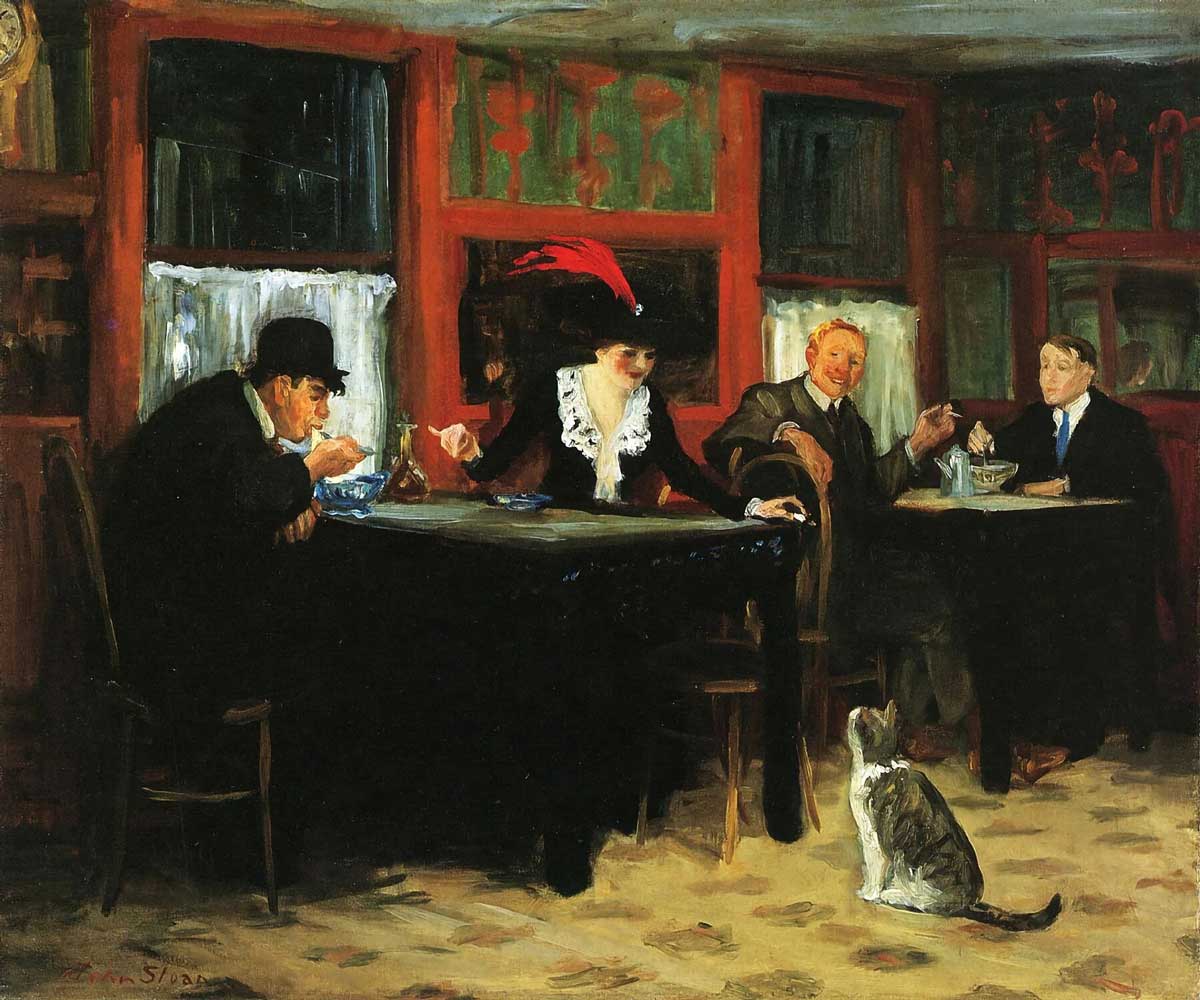
Sloan believed that “you must…paint the things that you know.” For him, that was his city and its quotidian spaces, like restaurants. Chinese Restaurant derived from a memory he had of a restaurant in which a female patron had a red feather atop her hat; he wrote in his diary, “I saw a strikingly gotten up girl with dashing red feathers in her hat playing with the restaurant’s fat cat. It would be a good thing to paint. I may make a go at it.” He revisited the restaurant to refresh his memory, and it was “just in time, for tomorrow, they move to the corner below (29th St.).”
The scene features two sets of dining companions: the aforementioned woman with the red feather and a man in the foreground, and two men slightly behind them. The woman laughingly reaches forward to give the eager cat a bit of her food while her companion slurps his noodles from a porcelain bowl. A Chinese restaurant was not a typical subject of fine art, especially as the interior of this place is both dingy and rather lurid, but Sloan’s embrace of “what he knew” made for a compelling image of how real New Yorkers lived (and ate).
4. Sunday, Women Drying Their Hair, 1912
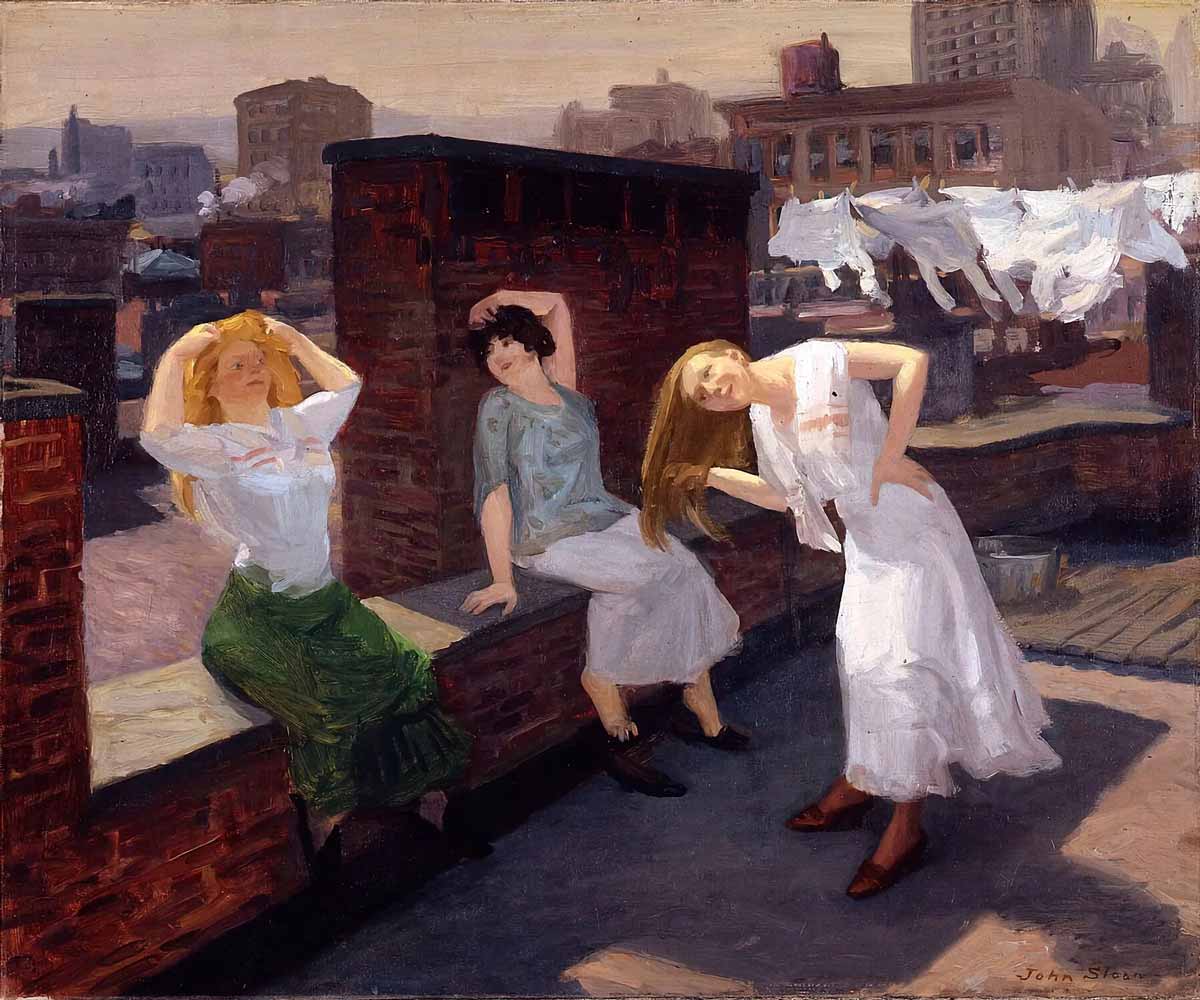
New York City skyscrapers rose to new vertical heights in the early 20th century, and along with them, the horizontal space of the rooftops became more important for urban dwellers. In 1929, the New York Times wrote of discovering “a city above the city” and how people no longer ignored their rooftops, that “[the] varied uses of roofs in a crowded city pile up to an amazing total.” On rooftops, apartment dwellers could string up their laundry, sleep under the stars to escape the stifling interior heat, sneak away for an amorous interlude, or, in Sloan’s 1912 painting, gather with friends and dry their hair.
The three women in this painting are conversing amiably and drying their hair in the fresh air. Laundry hangs nearby, suggesting, along with the simple coarseness of their dress, that they will need to return to their work soon. Sloan called the women in this painting “humble roof-top players” and brought back scenes of three women on rooftops engaged in conversation in 1913’s Roof Gossips and 1944/50’s Roof Chats. He also painted other rooftop scenes, which included subjects like raising pigeons, sunbathing, admiring the sunset, and stealing someone else’s laundry.
5. McSorley’s Bar, 1912
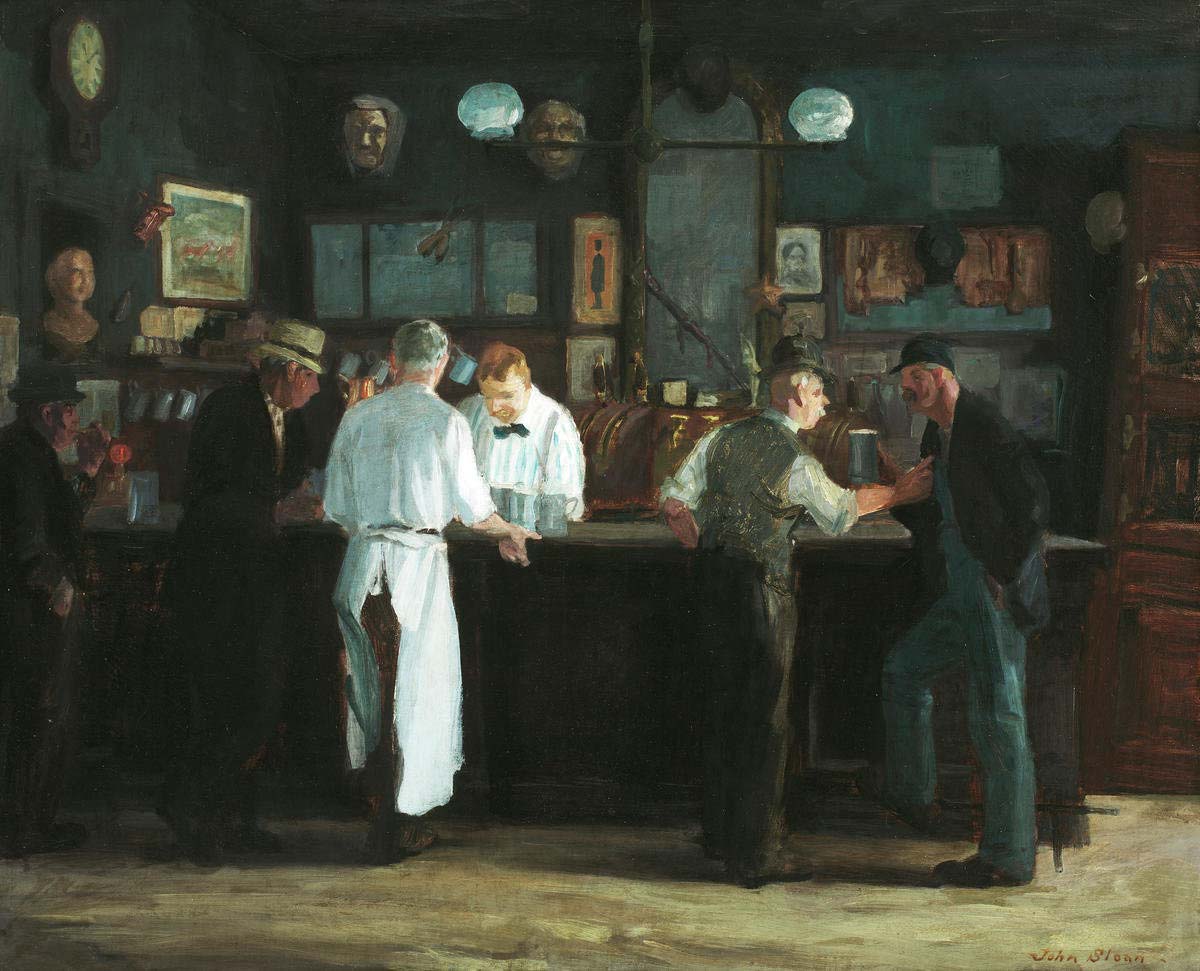
McSorley’s Old Ale House, established in 1854, is New York’s oldest continually operated saloon. Initially only open to men (it would remain this way until 1970!), it was a watering hole par excellence. John McSorley, an immigrant from Ireland who arrived in New York in 1851, opened his bar at 15 East 7th Street and referred to it as “The Old House at Home.” His son, William J. McSorley, took over its management in 1911 after his father’s death. For a brief period of time, the bar sold hard alcohol but ultimately decided to stick with just ale. During Prohibition, it sold “near beer” and remained open.
John Sloan painted the bar five times: “I have never gone slumming to get subject matter. I was in McSorley’s ale house about ten times in my life and painted five pictures of the place.” This version, exhibited at the Armory Show but remaining unsold, shows five patrons engaged in conversation and imbibing pints of beer. The mood is relaxed and convivial, the setting homey and familiar with its eclectic array of tchotchkes and small paintings.
6. Sixth Avenue Elevated at Third Street, 1928
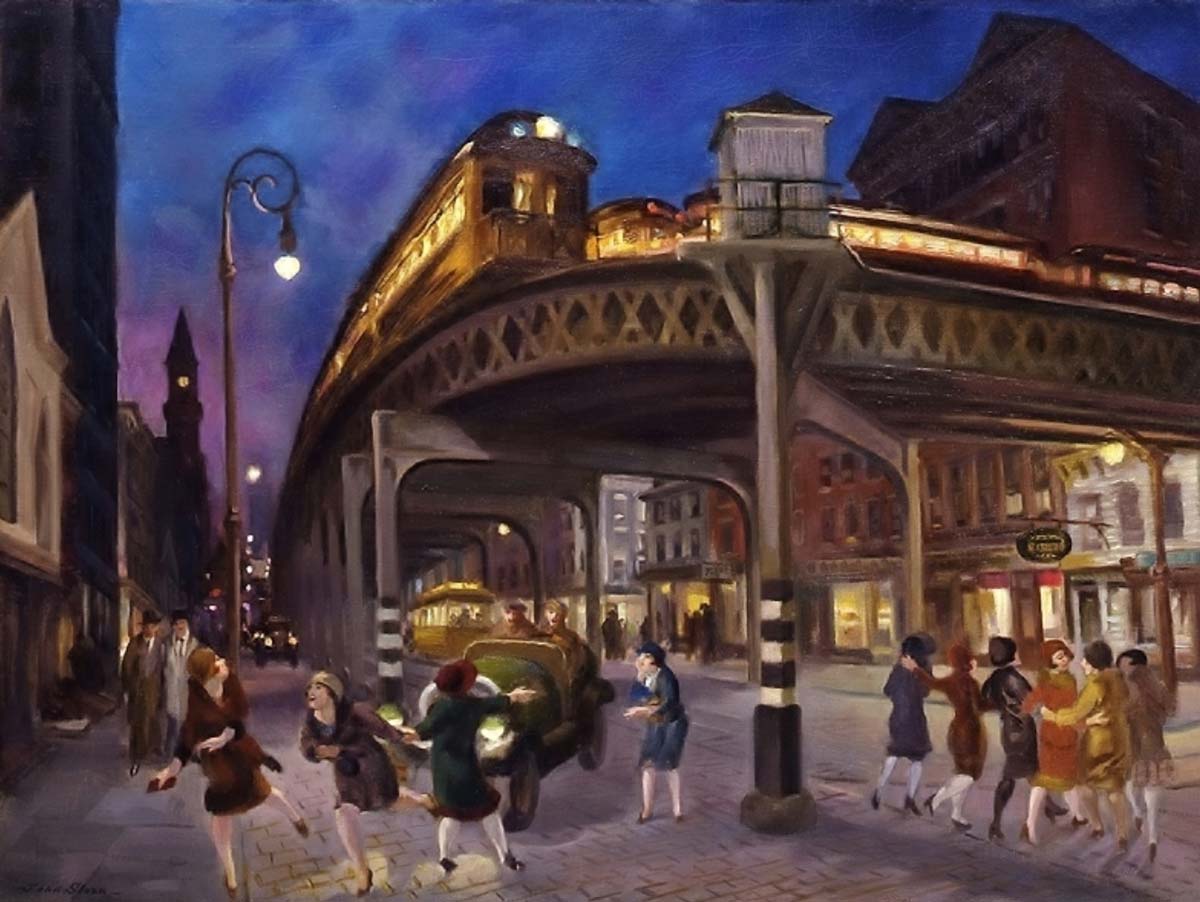
As Sloan painted into the decade that would be known as “The Roaring Twenties,” his art seemed less ashcan and more jazz club. In this piece, Sloan pays equal attention to the built landscape—the Elevated, Jefferson Market Courthouse in the background, storefront, and streetlamps—as he does to the people enjoying it.
In this painting, it is mostly women out for a night on the town, which is an indication of just how much was changing for “The New Woman” of the early 20th century. These women weren’t rich, but they were dressed well, wearing the new flapper style of shorter dresses, bobbed hair, small hats, high heels, and stockings. Some of them may be enjoying a flirtation with two young men in a car; one woman seems unable to tear herself away. A group of six others is all arm-in-arm, laughing and crossing the street, probably on their way to their next speakeasy or dance. It is a classic scene of New York nightlife, able to be replicated in nearly any era with just a few tweaks to clothing and architecture.
Bibliography
Fillen-Yeh, S. (2007). Images as Imaginary Documents: John Sloan’s Sidewalks and Thresholds. In Heather Campbell Coyle & Joyce F. Schiller (Eds.), John Sloan’s New York. Delaware Art Museum.
Sloan, H. Farr. (1978). John Sloan New York Etchings (1905-1949). Dover Publications, Inc.
Snyder, R. W. and Zurier, R. (1995). Picturing the City. In Snyder et al., Metropolitan Lives: The Ashcan Artists and Their New York. National Museum of American Art, Smithsonian Institution.
Thomas, Adam M. (2019). From the Rooftops: John Sloan and the Art of a New Urban Space. Pennsylvania State University Press.
Tottis, J. (2007). Bars, Cafes, and Parks: The Ashcan’s Joie de Vivre. In Tottis et al., Life’s Pleasures: The Ashcan Artists’ Brush with Leisure, 1895-1925. Merrell Publishers Limited.