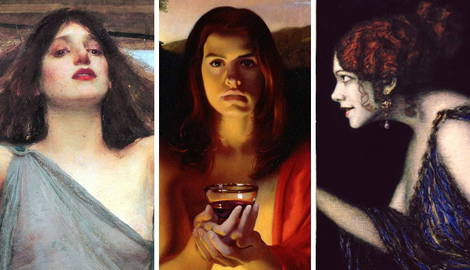

Circe is a powerful figure from ancient Greek tradition. Representing femininity, power, danger, and magic, she is both an enemy and an ally to Odysseus in Homer’s Odyssey.
Her sexuality and sorcery, set in a world of epic voyages and ancient fantasy, have made her a particularly popular subject for artists over the ages. From ancient Greece to the modern day, Circe is a figure who has been portrayed in art for almost three millennia, with many aspects of her ambiguous nature portrayed in various forms.
Here are 15 examples of Circe as she has been represented in paintings.
1. Archaic Era
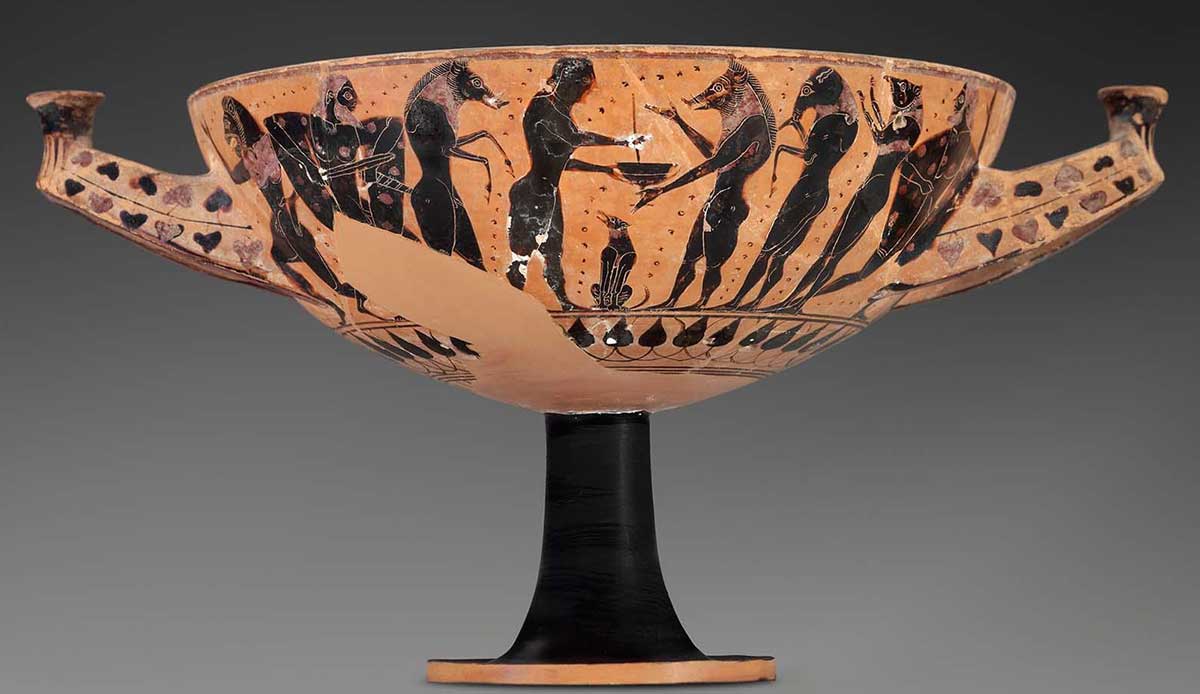
Unsurprisingly, the ancient Greeks provided the oldest depictions of Circe in art, most notably on vases, with the oldest known example going back to at least the 6th century BC. Dating to around 550 BC to 525 BC, a kylix (shallow drinking cup) depicts a scene from the Odyssey in which Circe transforms Odysseus’ men into swine by offering them cursed drink. The piece incorporates a magnificent amount of detail from the scene, and adds its own, with some of the men being transformed into other animals, such as a lion and a wolf.
In this depiction, Circe is already nude, perhaps hinting at the fact that in the story’s following events, Odysseus lies with her. The other side of the cup shows another scene from the Odyssey: that of Odysseus’ encounter with the cyclops Polyphemus.
2. The Classical Era
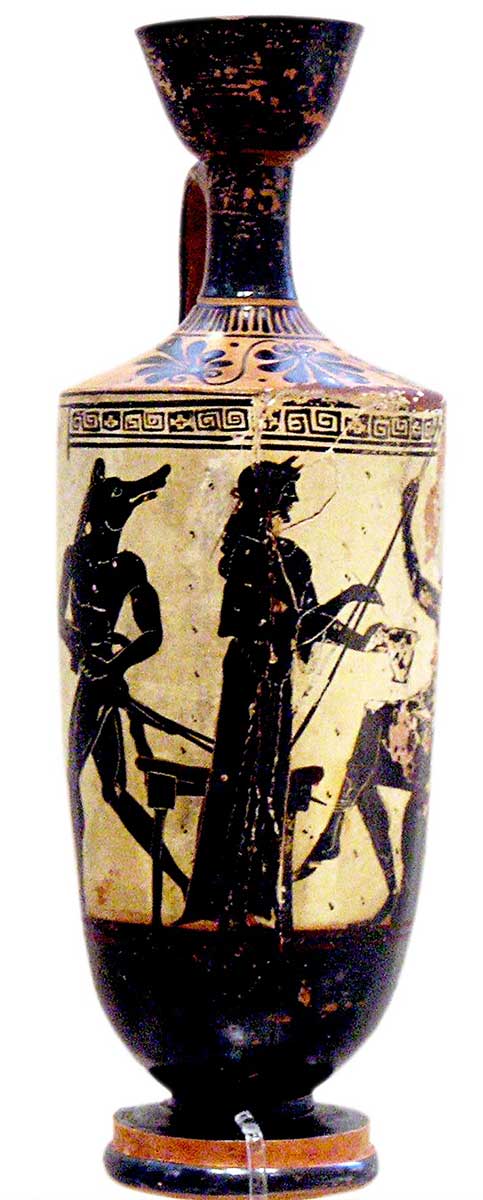
Dated to the late Archaic Era or Early Classical Period is a famous lekythos (jar for storing oil) that depicts a similar scene. In this example, Circe wears a chiton and offers the contents of her skyphos (deeper and narrower than a kylix) to a seated Odysseus. Behind Circe, a man transformed into a pig runs away.
Found in Eretria, this lekythos is dated to between 490 BC and 480 BC, putting it on the cusp of the Archaic and Classical periods when ancient Greek art was in a transitional style.
3. Circe and Her Lovers in a Landscape by Dosso Dossi, ca. 1525
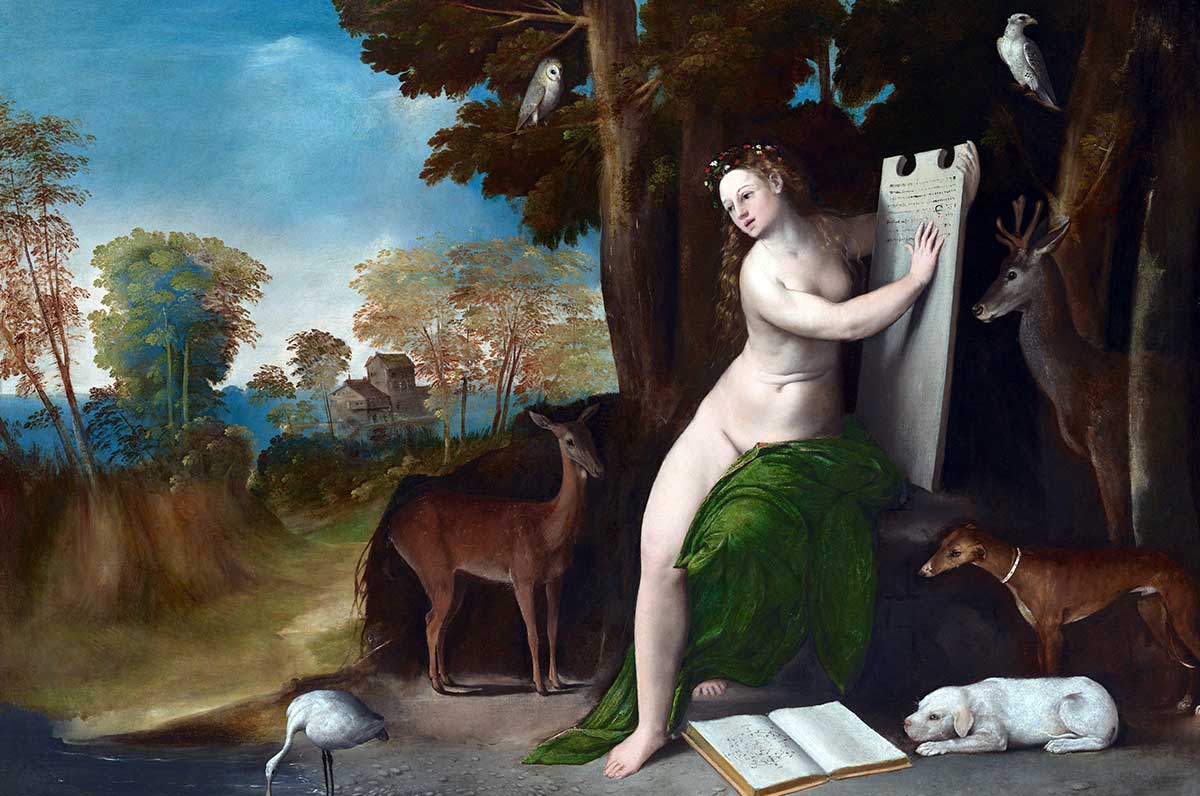
Painted by the Italian Renaissance painter Dosso Dossi, Circe and Her Lovers in a Landscape exemplifies Circe’s role as a sexualized figure. In this work, painted around 1525, partly covered by a green cloth, a nude Circe sits in the wilderness, likely her island of Aeaea, and is surrounded by her lovers, whom she has turned into animals, including dogs, birds, and deer. Circe holds a stone tablet with an illegible inscription upon it, and at her feet is her book of spells.
Despite her reputation as a dark and dangerous sorceress, she seems unthreatening in her dreamy surroundings, and there is no malice in her features. Her lovers are passive and docile, perhaps accepting of their emasculated role.
4 & 5. Two Paintings of Ulysses and Circe by Bartholomeus Spranger, ca. 1580s
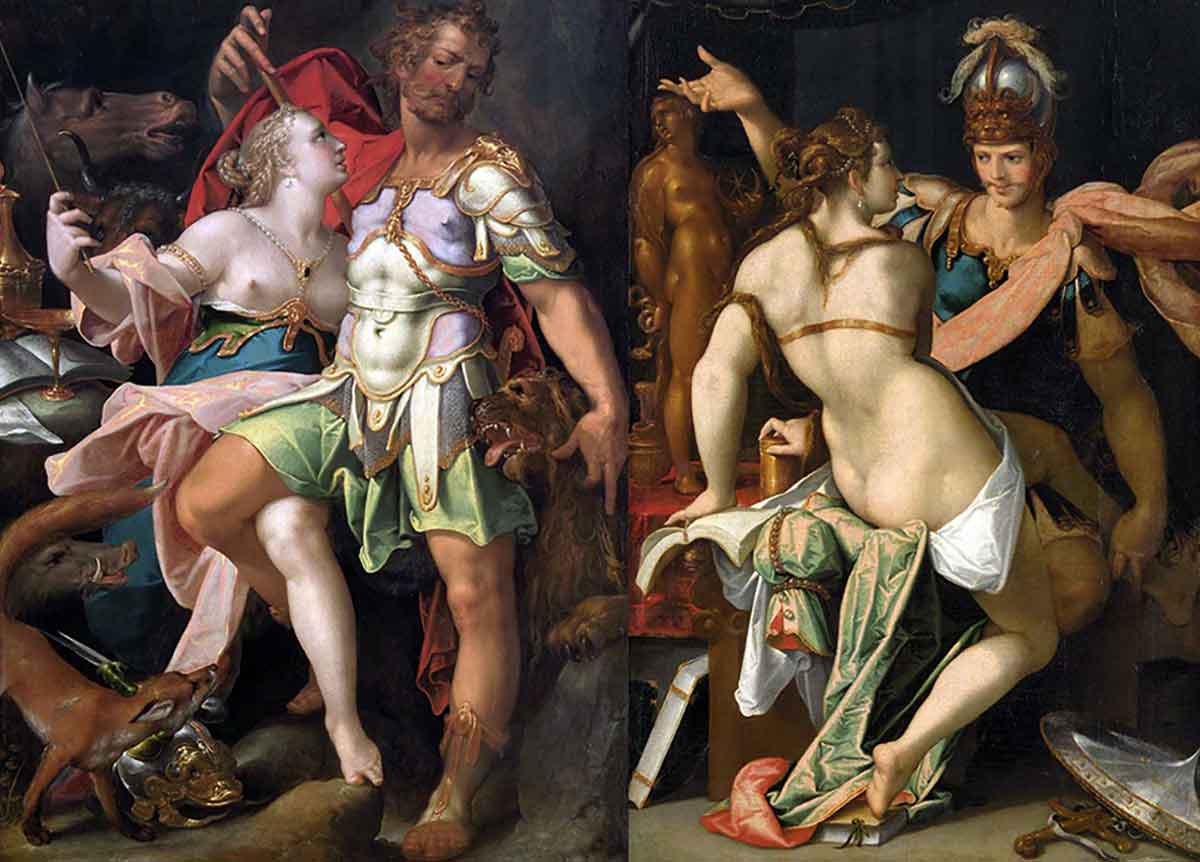
Classic examples of Late Renaissance Mannerism, these two paintings by Bartholomeus Spranger stand out as significant examples of Circe in art. Painted a few years apart, they show a dramatic shift in how Circe is perceived. The biggest difference is who has their leg over whom (quite literally)! The first painting shows Odysseus firmly in control, grasping Circe with his right leg, and clasping the head of a lion in his left hand, while his right hand rests on the haft of a weapon (likely a spear). While Circe looks up at him, his gaze at her is sideways and dismissive. Around them, animals are in a state of confusion and concern, powerless and unable to intervene.
In the second painting, Odysseus has been disarmed, although it seems, willingly. The roles have been reversed, and Circe has her leg over Odysseus; not in a forceful way, but rather in a way that is erotically suggestive. Here, Circe is conquering the hero with her sexuality; a common “Circean” theme in the way she has been depicted throughout history.
6. The Sorceress Circe by Giovanni Benedetto Castiglione, 1651
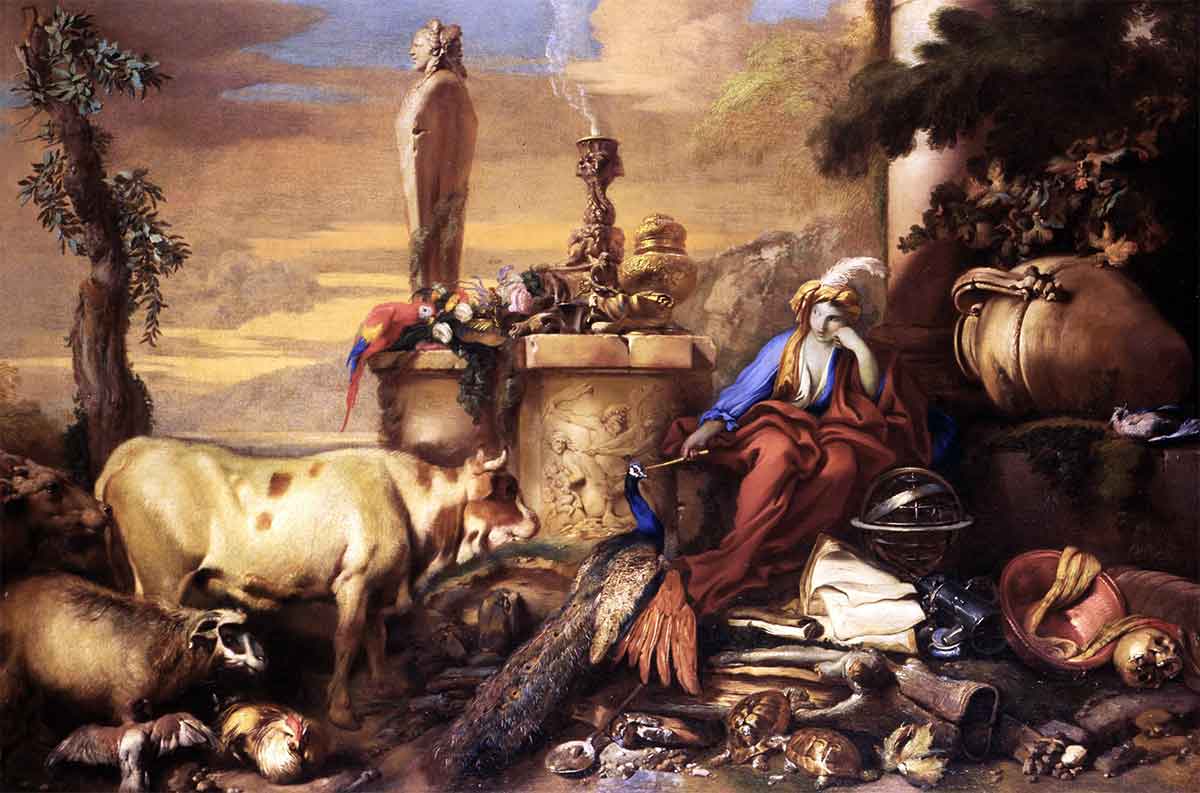
One of the few depictions of Circe where she is not in a state of undress, The Sorceress Circe by Giovanni Benedetto Castiglione shows Circe as a powerful figure, the object of adoration for a host of animals surrounding her. Particularly known for his skill in rendering animals, Circe was a very appropriate theme for Castiglione, as animals feature heavily in this episode of the Odyssey.
Known as “Il Grechetto,” Castiglione depicted Circe eight times throughout his career and was known for his pastorals and his elaborate style. Each of his depictions of Circe shows her as a wand-wielding melancholic figure. At the time, melancholy was thought to be linked to sinful behavior, and thus Castiglione’s depiction of the enchantress carries extra weight, as she is actually being portrayed as a scheming manipulator rather than a subject who is simply suffering from depression or boredom.
7. Circe Enticing Ulysses by Angelica Kauffmann, 1786
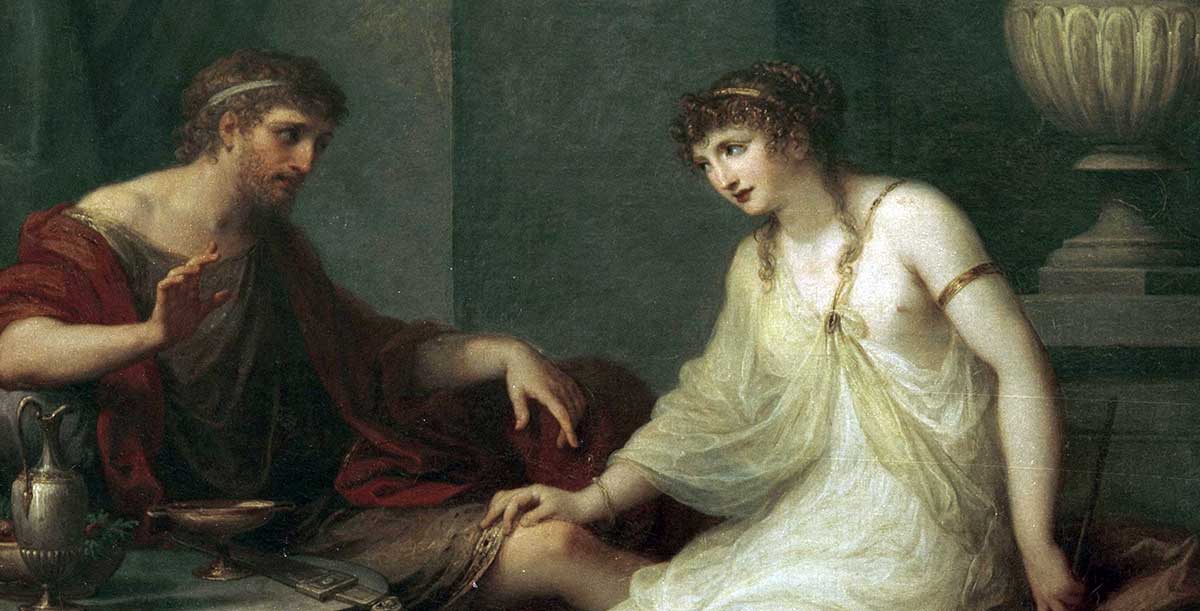
A Swiss painter of considerable renown, Maria Anna Angelika Kauffmann was, along with Mary Moser, one of two women among the group who formed the Royal Academy of Art in London in 1768. Kauffmann considered herself a “history painter” first and foremost, and aimed to capture human action through her artistic study of the subject. Ancient Greek history and myth feature prominently in her portfolio.
Kauffmann depicted Circe and Odysseus with grace, hinting at a subtle romantic tension rather than an overt display. Circe’s hand rests gently on the hero’s knee, while the two are locked in eye contact. Unnoticed at first, a wand is held in her left hand, out of sight of Odysseus, introducing a deceptive and dangerous undercurrent to the intimate scene.
8. Circe and the Friends of Ulysses by Briton Rivière, 1871
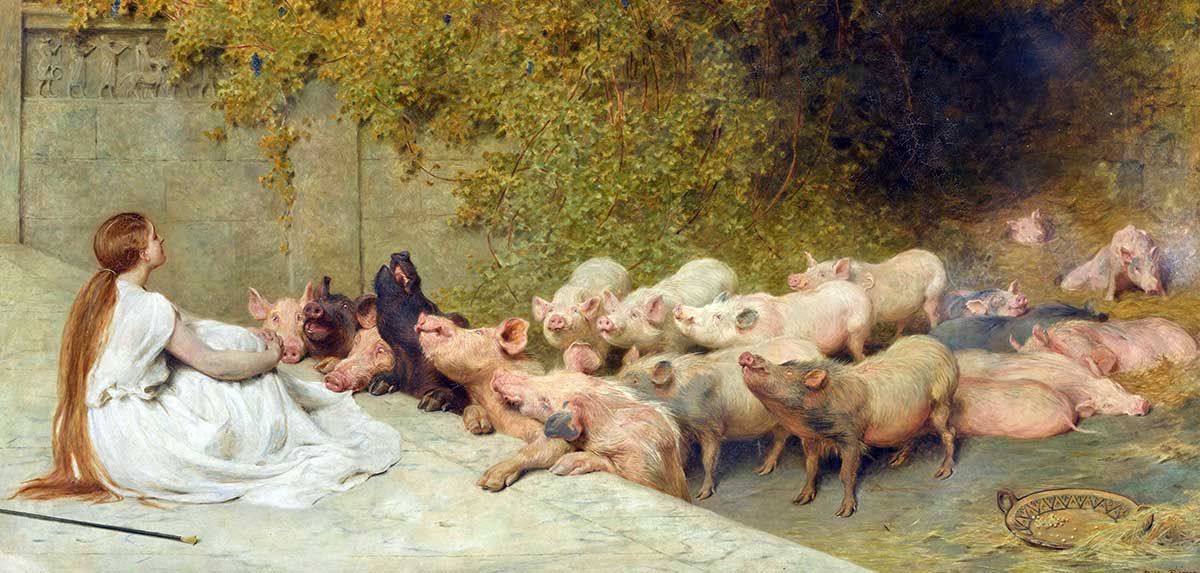
Known for his paintings of animals, Briton Rivière was an adherent to the Realism style, and incorporated strong elements of Romanticism, giving emotional qualities to his subjects and effectively displaying the human relationship with animals. The story of Circe and turning Odysseus’ men into pigs, thus, seems an unsurprising choice for this artist.
Clothed in a white dress, Circe seems innocent in Rivière’s realization. On closer inspection, however, the dynamic is very different. Circe sits comfortably, holding her head aloft, lauding superiority over the fawning swine, enraptured by her presence. One pig even gnaws at the hem of her dress in desperation. Behind her lies a wand, an instrument of her power.
9. Circe by John Collier, 1885
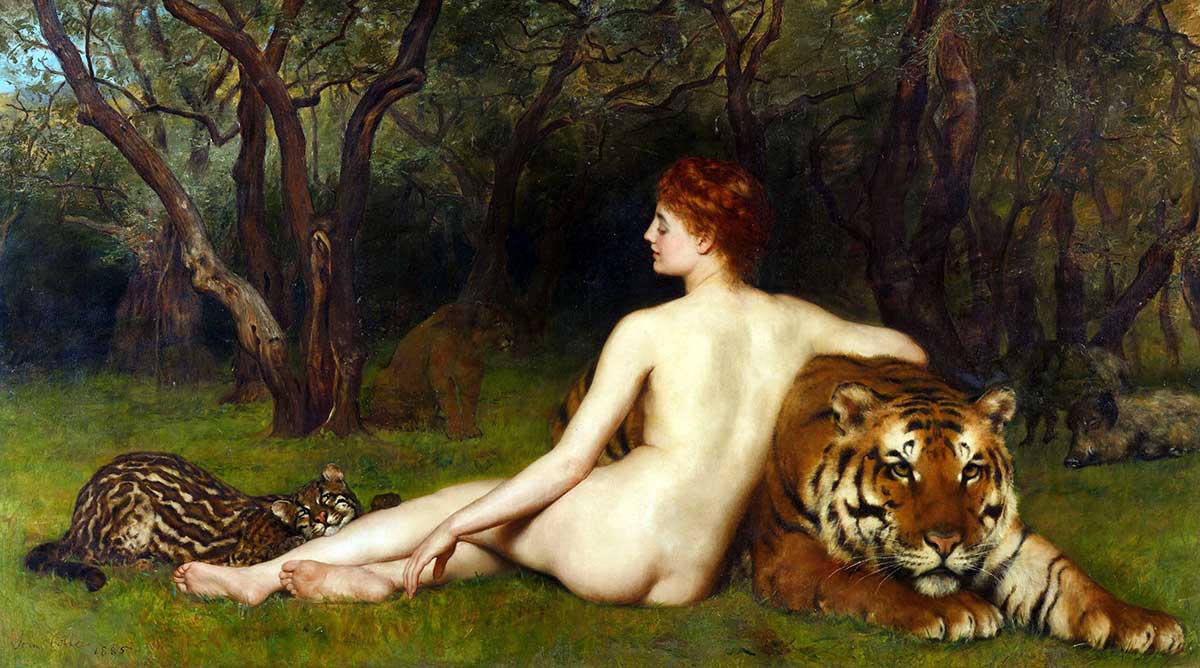
John Collier was an English painter in high demand in his day for his portraits. Masterfully able to capture evocative and emotional subtlety, his works included many other subjects from myth and legend as well as from history.
Nude women were popular subjects, and his painting of Circe certainly falls into the category. Relaxing on the grass with her back to the viewer, she leans on the powerfully dangerous form of a tiger while an ocelot rests its paws on her leg, glancing at her playfully. In the forest background is a puma and two boars, the latter possibly being transformed versions of Odysseus’ men.
10 & 11. Circe Offering the Cup to Ulysses, 1891, and Circe Invidiosa by John William Waterhouse, 1892
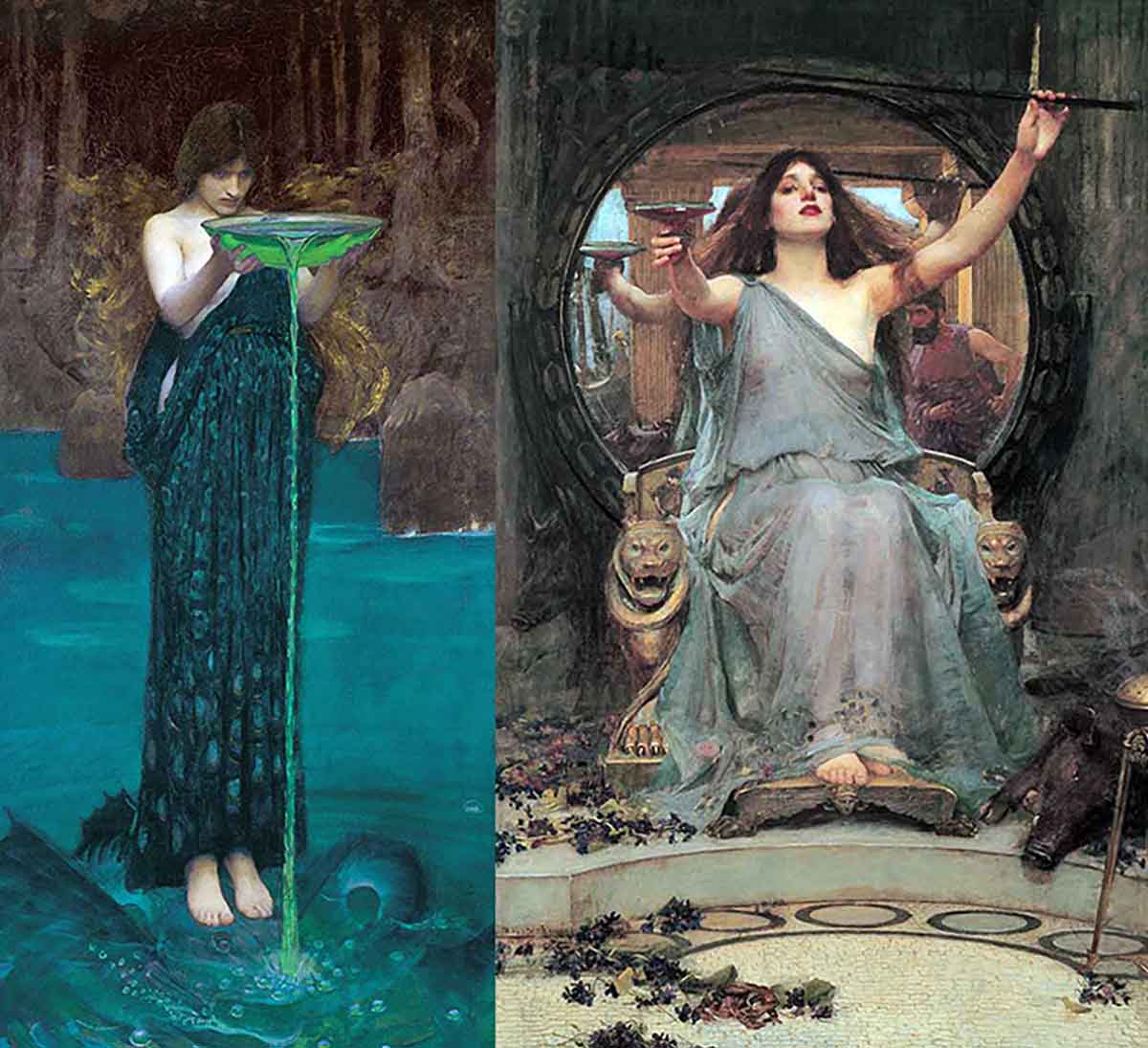
From his Academic beginnings to his Pre-Raphaelite style, John William Waterhouse gained attention for his depictions of historical and mythical women, evoking sensuality, passion, power, and danger.
His depiction of Circe in 1891 shows a bold sorceress wielding the instruments of her power, a wand and a cup of potion, while at her feet are Odysseus’ sailors as pigs, fallen prey to her sorcery. Odysseus can be seen in the mirror behind her, clutching the hilt of his sword, ready to challenge Circe’s confidence.
In 1892, Waterhouse painted another Circe. The bright green of this composition reflects the title of the painting, “Invidiosa,” which means “envious.” Circe from Ovid’s Metamorphoses is the subject as she transforms the nymph Scylla into a deadly sea monster.
12. Circe by Wright Barker, 1889
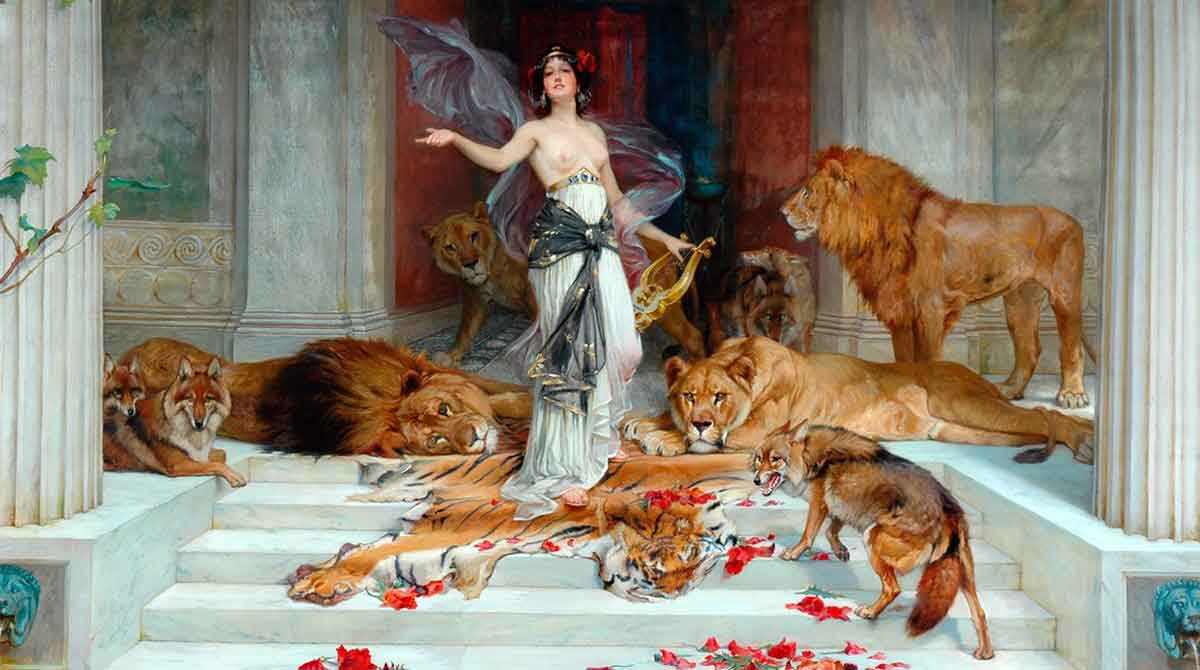
Wright Barker was an English painter whose subjects were mainly domesticated animals, landscapes, portraits, and hunting scenes. Occasionally, he explored other avenues, such as Greek mythology, and his imagination of Circe is an example of this.
In Wright Barker’s vision of Circe, 1889, the subject is seen as a musician, holding a lyre in her hand, while the traditional elements of her character, the tamed wild animals, surround her, devotedly offering their protection with menacing looks towards the viewer. Here, Circe is relaxed and, with a subtle smile, displays the power of her accomplishments at the entrance to her marble home.
13. Tilla Durieux as Circe by Franz von Stuck, ca. 1913
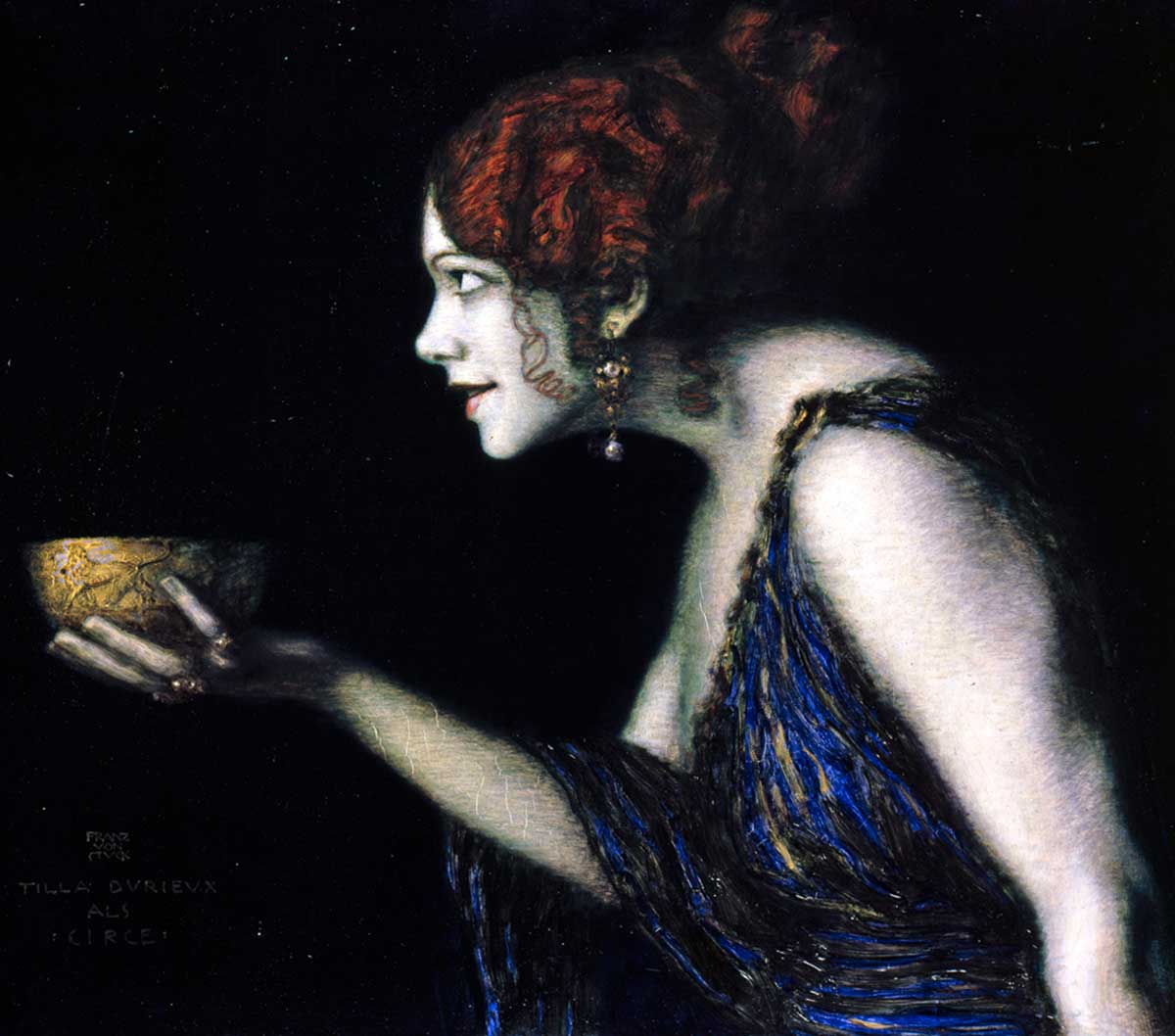
An indirect depiction of Circe, Franz von Stuck painted Austrian actress Tilla Durieux in her role as Circe in the stage production of the same name performed at the Munich Künstlertheater in 1912.
An example of an Art Nouveau subject painted with a Symbolist influence, the critical moment Circe offers Odysseus the poisoned drink is shown; the golden cup, the bright red hair, and the pale skin illuminated by the high contrast and the pitch black background.
14. Circe by Boris Vallejo, 1991

One of the most famous contemporary fantasy artists, Boris Vallejo, has spent a lifetime painting figures from myth, fantasy, and his own imagination. His hyper-realistic, dramatic fantasy scenes form part of the foundation of modern fantasy art, and his interpretations of feminine beauty are highly regarded as fine art despite the commercialized intent as book covers and such.
His representation of Circe is a typical rendition of his colorful and figurative style, full of the precision and detail that earned him such esteem. Vallejo’s Circe is shown as a powerful sorceress holding a globe, an object of obvious magical significance. Behind her, the wild and fantastic forms of a wolf and a horse flank a forward-pointing image of a skull, a visual reinforcement of Circe’s threatening presence.
15. Circe by Kirk (Stephen Kirk) Richards
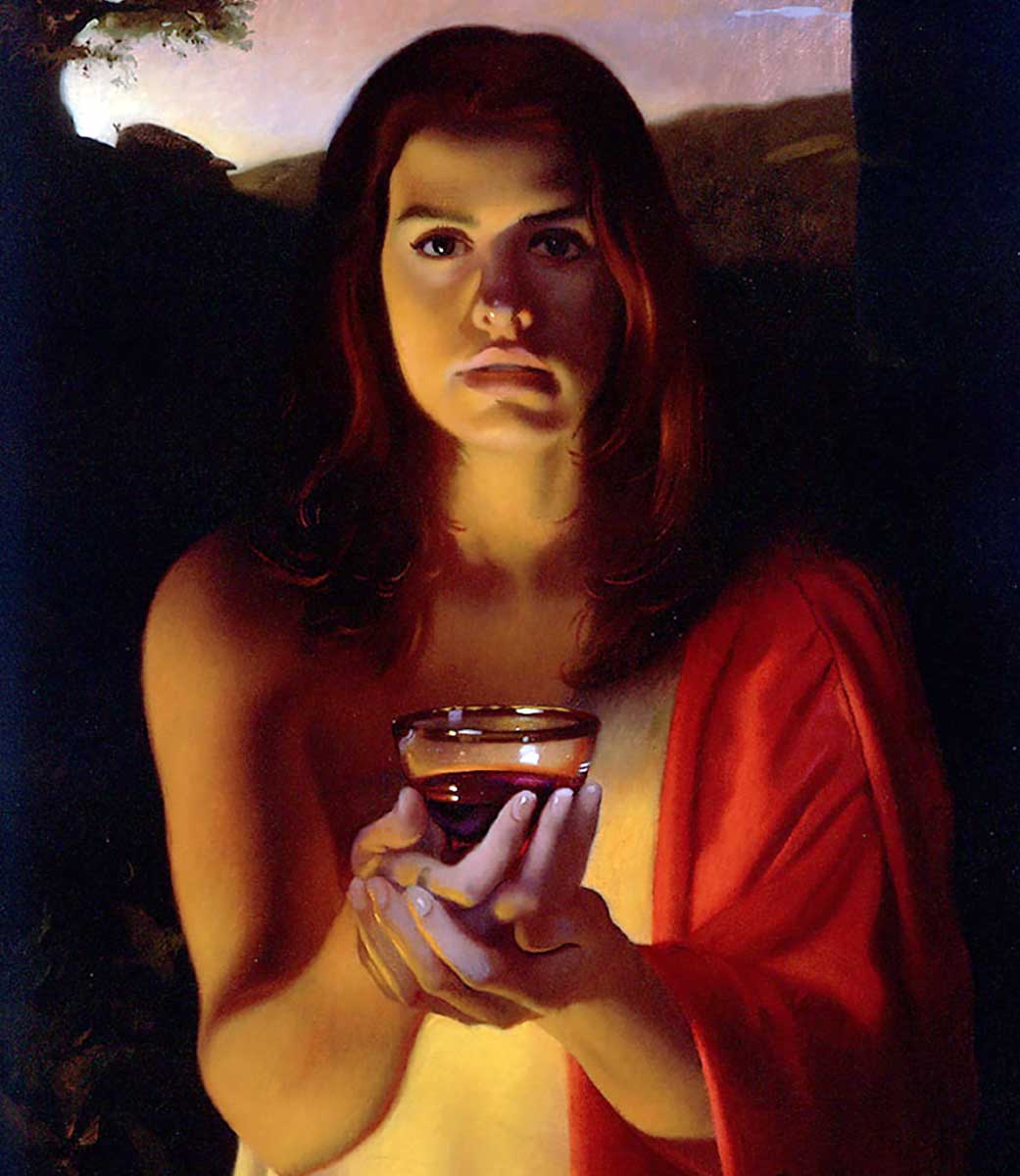
A prominent figure in the revival of Realism in the visual arts, Kirk Richards is a Classical Realist noted for his figurative and portrait painting. His depiction of Circe is a superb example of his work, which also explores historical and mythological themes.
In this realization, Circe is the subject of bold light and shadow, offering a contrast between the dark unknown and the brightness of her beauty. Here, she offers the poisoned potion without the emotional severity of clichés demanded by previous eras of art. Despite her godly lineage, there is a human element here; a figure who is believable as an actual person, rather than a fantastical figure with generic features. In the darkened background, the subtle form of a pig can be made out, a previous victim of Circe’s treacherous intent.